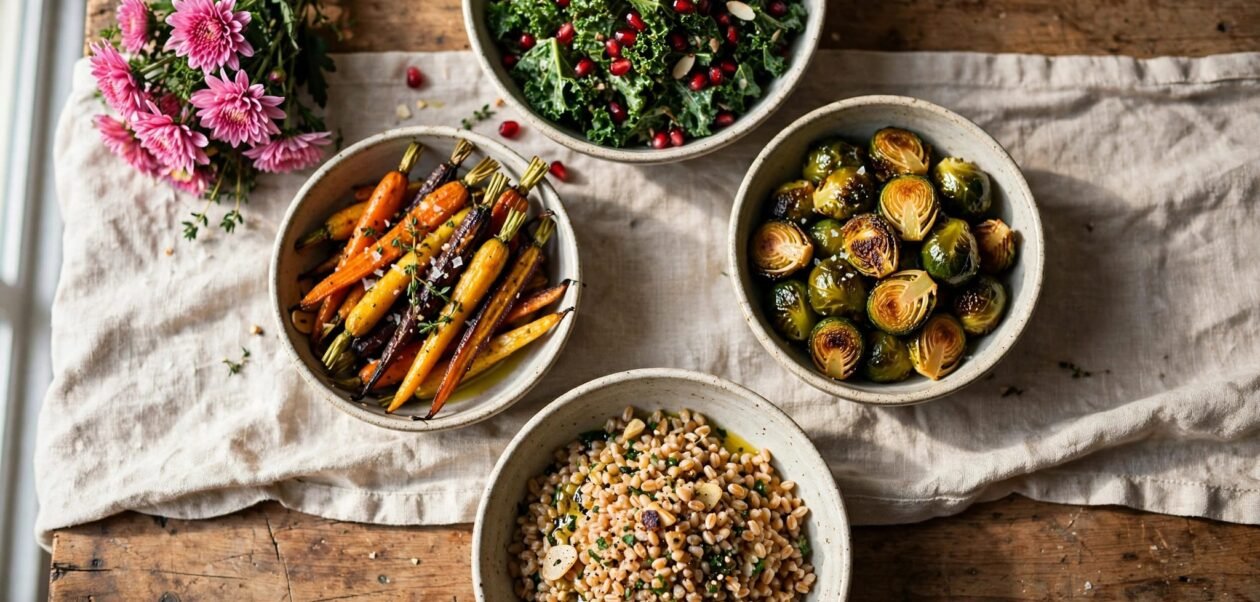
Holiday sides can feel generous and satisfying without depending on rich sauces. We like to build the menu around roasted roots, crisp Brussels sprouts, fresh greens, and hearty grains, then season them simply with herbs and a bright finish.
The best choices depend on what’s available near you and what your guests enjoy, so there’s no need to squeeze every fall vegetable onto one table. With a few flexible dishes, we can bring color, contrast, and plenty of flavor to the meal. Let’s start with the seasonal vegetables that make the easiest, most welcome sides.
Healthy Thanksgiving Side Dishes with Seasonal Vegetables
A few well-chosen vegetables can bring color, flavor, and contrast to a Thanksgiving table without crowding it with sides. Availability varies by region and weather, so we like to check what looks good locally and build the menu around what our guests enjoy. The USDA Seasonal Produce Guide offers a useful starting point, but your local market is the best guide to what’s available.
Choose Fall Vegetables That Fit Your Table
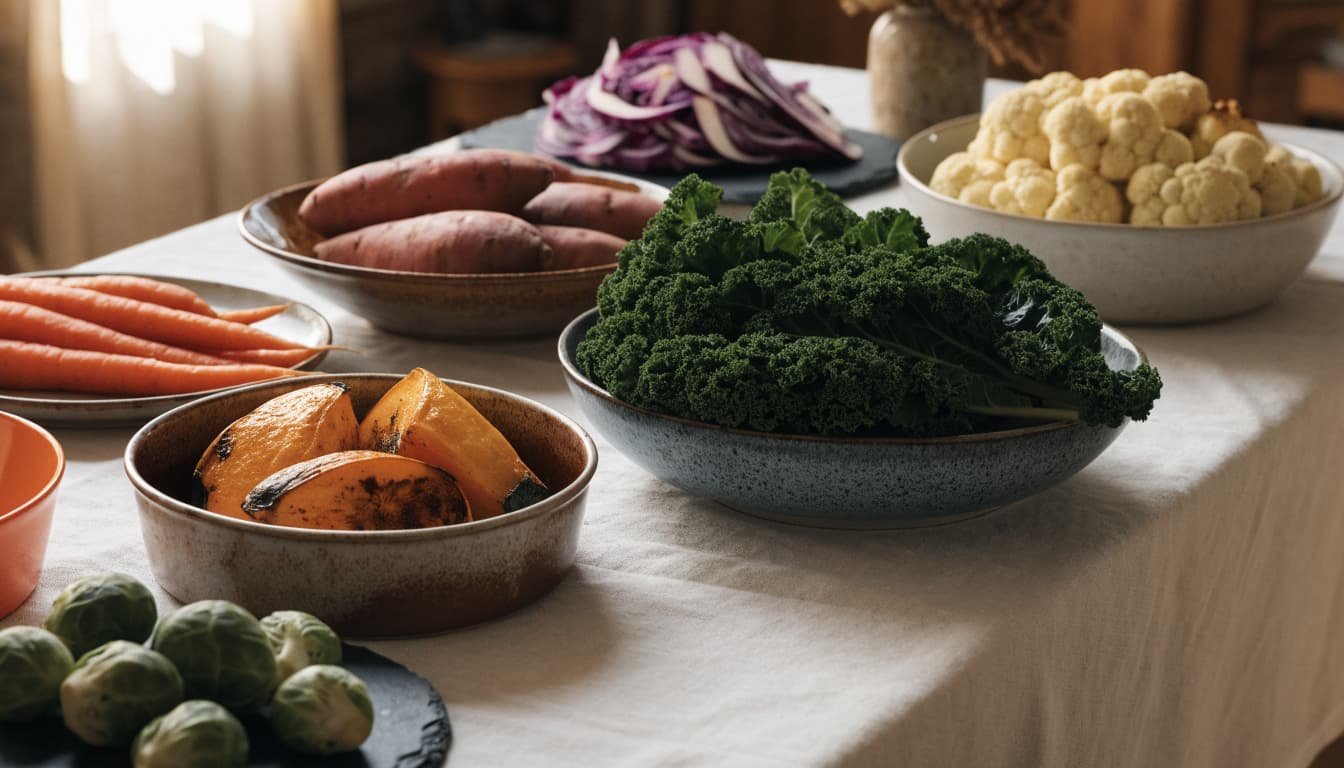
Squash, sweet potatoes, and carrots bring natural sweetness and hearty texture. Brussels sprouts and cabbage offer a more savory bite, while kale and cauliflower give you flexible options for warm or fresh sides. You don’t need to serve all of them. Choosing just a few makes the menu easier to prepare and gives each dish room to stand out.
We suggest starting with the vegetables your family and guests already like, then adding one new choice if it suits the menu. For example, pair a tender, roasted vegetable with something crisp or fresh. If you’re considering a salad, sturdy greens and shredded cabbage can add a cooler contrast; our easy fall salad ideas offer more ways to use seasonal produce.
Use Herbs, Citrus, and Light Seasoning for Big Flavor
A little olive oil helps vegetables brown, while garlic and black pepper bring savory flavor without a heavy sauce. Rosemary, thyme, and sage fit naturally with autumn vegetables, but I’d choose one or two herbs rather than using every seasoning at once. That keeps the flavors clear and lets the vegetables remain the focus.
Because squash, sweet potatoes, and carrots are naturally sweet, a squeeze of lemon juice or a small splash of vinegar can bring welcome balance. Maple syrup, cheese, and nuts can add richness, but I treat them as optional finishes and use them modestly. Guests can also add toppings at the table, so everyone can choose how much sweetness, crunch, or richness suits their plate.
Roasted Thanksgiving Vegetables with Crisp, Golden Edges
Roasting brings out the sweetness of fall vegetables while keeping the preparation simple. I focus on even pieces, a hot oven, and enough space on the pan; crowded vegetables release moisture and steam instead of browning. The University of Minnesota Extension also advises against overcrowding a pan when roasting root vegetables.
Roast Brussels Sprouts and Carrots with Herbs
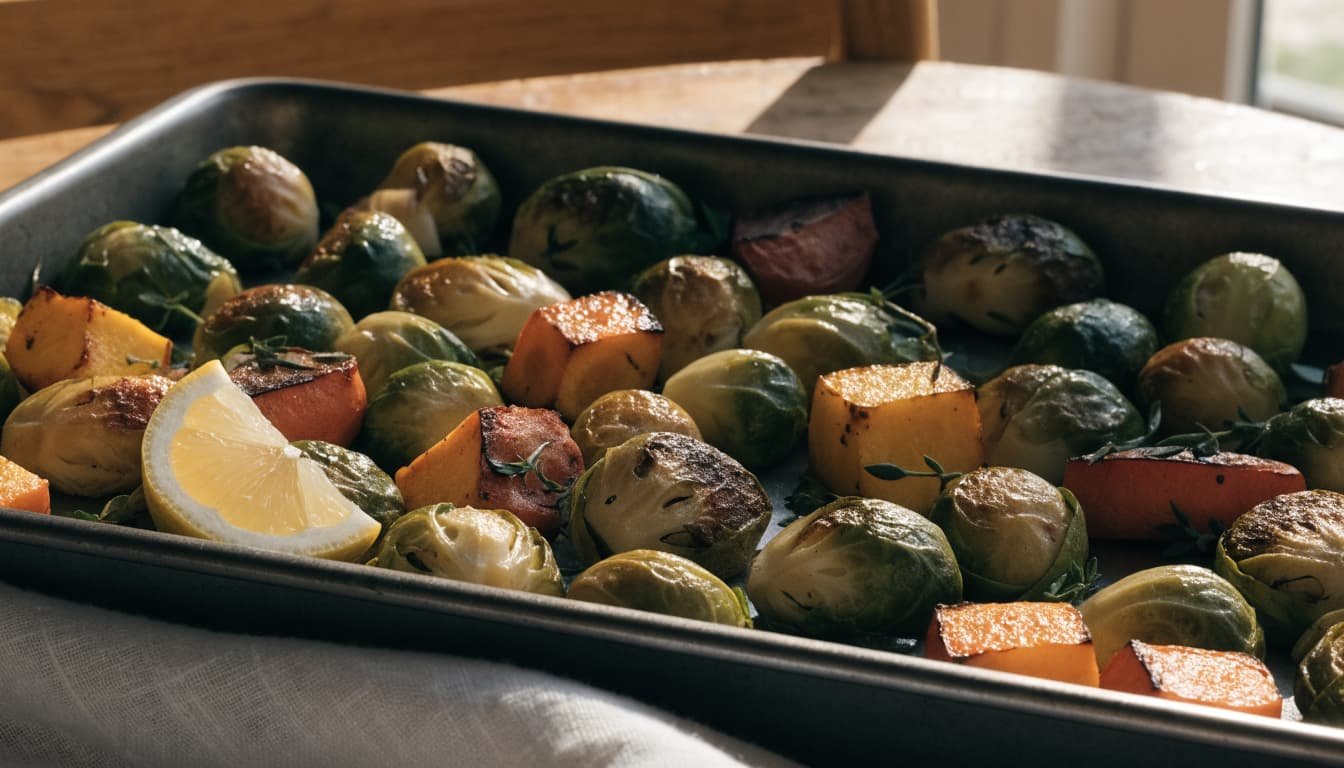
For an easy Thanksgiving side, halve the Brussels sprouts and cut the carrots into pieces of similar size. Toss about 1½ pounds of vegetables with 1 tablespoon olive oil, ½ teaspoon salt, ¼ teaspoon black pepper, and ½ teaspoon dried thyme or rosemary. Add a little more oil only if the vegetables still look dry.
Spread them in a single layer on a baking sheet, leaving small gaps between pieces. Roast at 425°F, turning once, until the carrots are tender and the sprouts have browned edges. The exact timing depends on the size of your cuts, so check a thick piece with a fork rather than relying only on the clock. Finish with lemon juice or a small splash of balsamic vinegar. For another take on the same vegetable, try our roasted Brussels sprouts with balsamic glaze.
Bring Out the Sweetness in Squash and Sweet Potatoes
Sweet potatoes and winter squash roast well as cubes or wedges. I cut them to a similar size, then toss them with a little oil, salt, pepper, minced garlic, and thyme or rosemary. Spread the pieces out on the pan so their surfaces can brown.
Roast until the centers feel tender when pierced and the edges turn golden. Since thick wedges take longer than small cubes, use tenderness as your guide and check the largest piece. A small maple drizzle is optional, but I keep the seasoning savory. A squeeze of lemon or orange adds a bright finish that balances the vegetables’ natural sweetness.
When cutting firm squash, set it on a stable board. If it wobbles, trim a thin slice from one side to make a flat base before continuing.
Add a Fresh or Tangy Side for Contrast
A sturdy kale salad or shredded Brussels sprout slaw gives the plate a crisp, tangy counterpoint to warm roasted vegetables. Toss the greens with thin apple slices and a light lemon or cider vinaigrette. The apple adds a fresh bite, while the vinaigrette keeps the salad lively beside richer holiday dishes.
For easier prep, keep the dressing separate until serving. Then toss the greens shortly before they go on the table, and add seeds or chopped nuts at the end for crunch. This mix of roasted and fresh sides gives you a balanced menu without crowding the table with heavy dishes.
Make Vegetable Sides More Filling with Grains and Beans
Grains and beans can turn seasonal vegetables into satisfying meat-free sides without making the Thanksgiving menu feel too rich. I like to keep each combination simple, then use herbs and a bright dressing to let the vegetables shine.
Pair Roasted Squash with Quinoa or Brown Rice
Roasted squash pairs well with quinoa or brown rice in a warm grain salad. Fold in chopped parsley or thyme, then add a light lemon vinaigrette. For a dish that serves neatly, layer the same ingredients in a casserole and warm it before serving. A few tart cranberries can add contrast, but I’d keep extras modest so the squash and grains stay at the center.
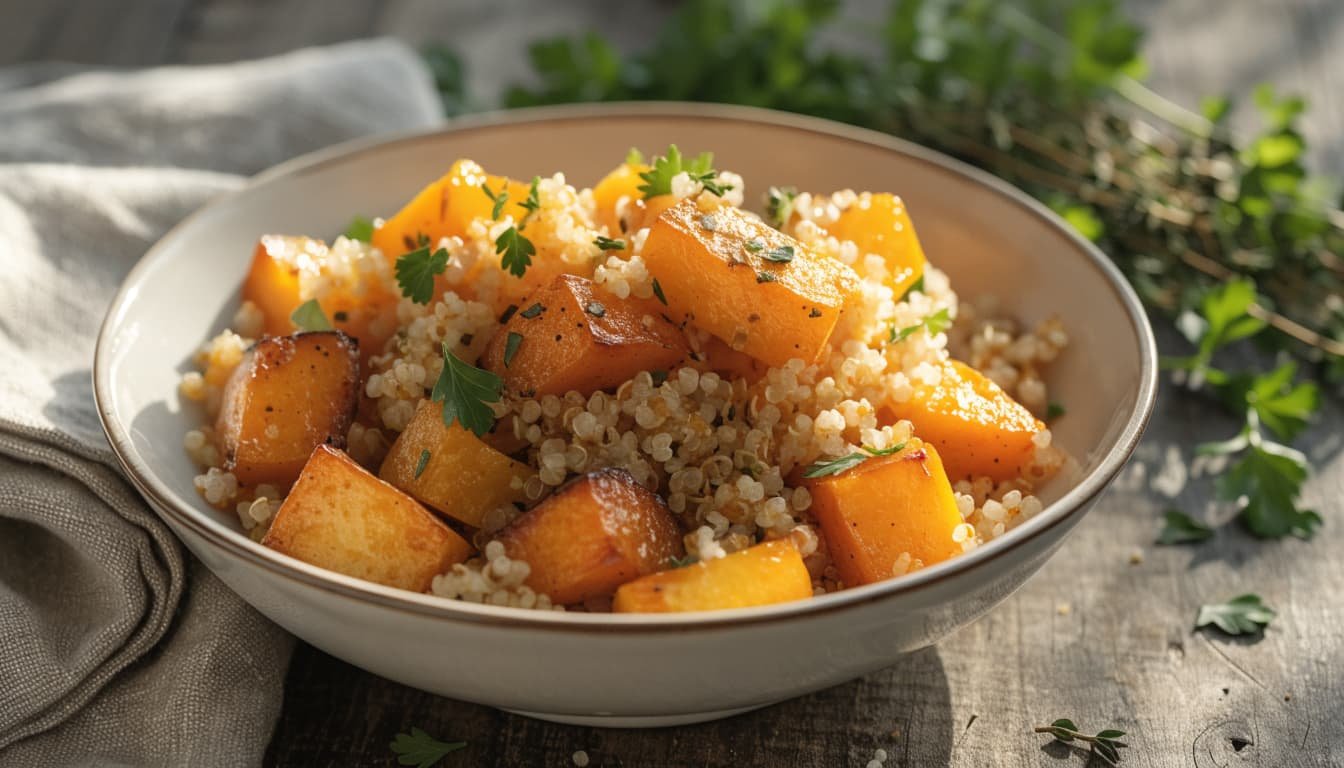
Cook the grain ahead to make holiday prep easier, then combine it with the squash closer to serving. Package directions vary by grain and brand, so follow the instructions for the quinoa or rice you choose. For another seasonal grain pairing, try our quinoa and cranberry stuffed acorn squash.
Serve Greens with White Beans for a Cozy Side
For a savory side, quickly sauté kale, spinach, or cabbage with garlic, then stir in drained white beans. Cook sturdy greens until tender but still bright; add spinach near the end because it wilts faster. The beans need only enough time to warm through, so fold them in gently to keep them whole.
A small splash of vegetable broth can help the greens soften and bring the ingredients together. It also works in place of other broth if you want to keep the dish meat-free. Beans add plant protein and fiber, as described in the USDA’s guide to beans, peas, and lentils. See our white bean and kale skillet for another easy combination.
Keep the Flavor Balanced and the Portions Comfortable
I find these sides work best when each one has just two or three main ingredients. Squash with quinoa and herbs, or greens with white beans and garlic, already offers enough flavor and texture without filling the dish with add-ins.
Finish with lemon juice, fresh herbs, or a little vinegar to brighten the savory notes. Then serve a moderate scoop alongside the other Thanksgiving dishes. That gives guests a satisfying meat-free choice while leaving room on the plate for the rest of the meal.
Build a Balanced Thanksgiving Menu Around Your Kitchen
A Thanksgiving menu feels generous when each side has a clear purpose, not when every vegetable gets its own dish. I choose a small mix based on the main course, guests, oven space, and serving time. That keeps the table varied and the cooking manageable.
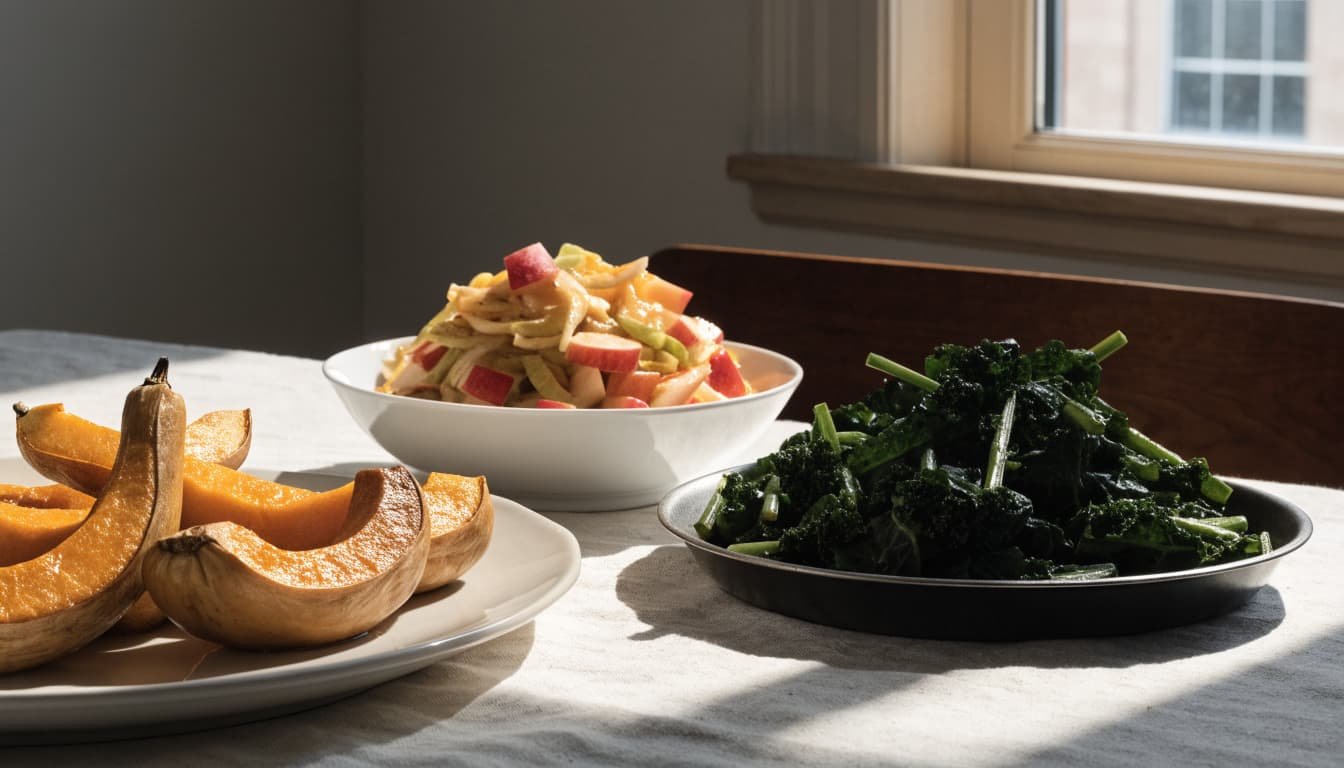
Balance Rich, Fresh, Soft, and Crisp Dishes
Pair one tender or roasted side with a crisp, bright dish. For example, roasted squash can sit beside cabbage slaw, while browned Brussels sprouts pair well with a sturdy green salad. This contrast gives the plate more appeal without adding another rich casserole.
A tangy side also cuts through gravy, buttery stuffing, and creamy sauces. I like a light lemon or cider vinaigrette because its acidity balances the sweetness of carrots, squash, and sweet potatoes. Keep the dressing separate until serving so the greens stay crisp. For more options, browse these crunchy cabbage slaw recipes.
Spread the Work Between the Oven and Stovetop
When oven space is limited, I plan around one roasted vegetable, one quick stovetop side, and a make-ahead salad or slaw. Reserve the oven for vegetables that benefit from browning, such as squash, carrots, or Brussels sprouts. Meanwhile, kale or cabbage cooks quickly in a skillet with garlic and a little oil.
A prepared slaw or sturdy salad adds freshness without needing oven space at the busiest moment. You can wash and cut sturdy vegetables ahead, then keep dressing and crunchy toppings separate until serving. These make-ahead Thanksgiving vegetable sides can help you plan dishes around your available cooking space.
Make Simple Swaps for Different Dietary Needs
Keep cheese, butter, nuts, and crunchy toppings on the side when practical. That lets guests choose what works for them without changing the base dish. Label dishes with their ingredients, and check packaged broth, dressings, and seasonings for allergens. The FDA’s food allergy guidance explains how allergens appear on packaged food labels.
Separate serving utensils can reduce mix-ups, but they don’t prevent all cross-contact. If a guest has an allergy, ask what they can safely eat and handle that dish with clean utensils and preparation surfaces. I keep the menu simple: a few seasonal vegetables, varied textures, and options that fit the meal and the kitchen.
Prep Thanksgiving Vegetable Sides Ahead and Store Them Safely
A little advance work can make Thanksgiving cooking easier without leaving you with limp greens or soft toppings. I prepare sturdy ingredients first, store each component separately, and finish fresh sides just before serving.
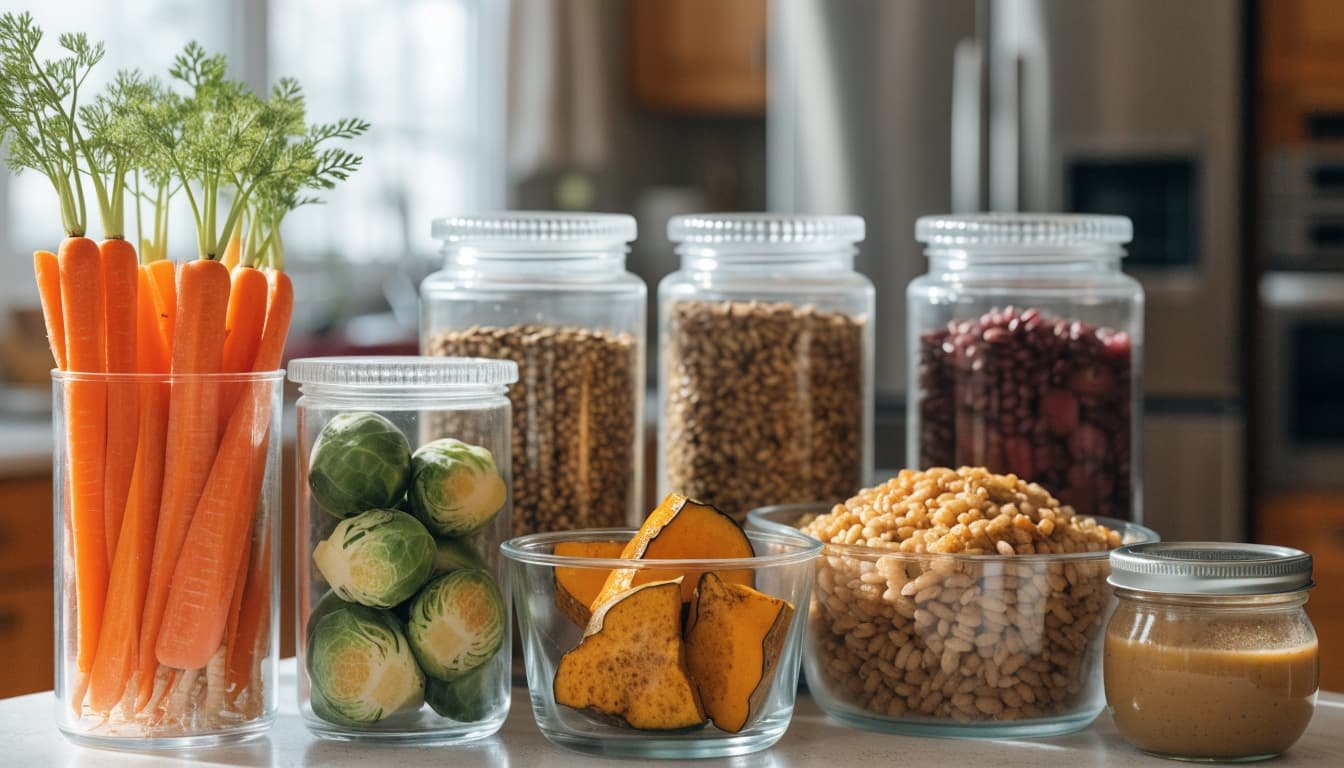
Wash and Cut Sturdy Vegetables Before the Holiday
A day ahead, rinse carrots, squash, cabbage, and Brussels sprouts under running water, then dry them thoroughly before cutting. Keep the pieces in covered containers in the refrigerator. Dry surfaces help vegetables brown instead of releasing extra moisture in the oven. For more ideas on cutting and storing produce, see our guide to prepping vegetables ahead.
You can also cook grains, such as quinoa or brown rice, a day or two ahead if your recipe allows. Roast sturdy vegetables in advance when convenient, too. Let cooked components cool briefly, then transfer them to shallow, covered containers and refrigerate. They may be softer after chilling, so reheat them close to serving and add lemon or fresh herbs afterward.
Keep Dressings and Crunchy Toppings Separate
Make vinaigrette ahead and keep it in a covered jar in the refrigerator. Wash and dry salad greens, then store them separately from dressing and roasted vegetables. If you’re using tender spinach, arugula, or mixed greens, wait until mealtime to dress them. Kale and shredded Brussels sprouts hold up better, but keeping their dressing on the side still protects their texture.
Slice apples and add toasted nuts, pepitas, seeds, citrus, and fresh herbs just before serving. That timing helps prevent fruit from browning and keeps crunchy toppings from softening. If you’re making a grain salad, cool the grains before combining them with greens; warm ingredients can wilt delicate leaves.
Refrigerate Leftovers Promptly and Reheat Them Thoroughly
Once the meal is served, put perishable sides away within two hours, or within one hour when the temperature is above 90°F. Divide large portions into shallow containers so they cool faster, and keep the refrigerator at 40°F or below. The USDA’s food safety guidance recommends using most cooked leftovers within three to four days.
Reheat leftovers to 165°F, checking the center with a food thermometer. I reheat only the amount likely to be served, since repeated warming can make vegetables softer. Keep leftover greens, roasted vegetables, apples, and toppings in separate containers, then assemble fresh portions as needed.
Conclusion
Healthy Thanksgiving side dishes with seasonal vegetables come together with a few thoughtful choices. We like to start with vegetables guests enjoy, season them with herbs and a bright squeeze of citrus, then balance warm roasted sides with something crisp or hearty.
Prep sturdy vegetables, grains, or dressings ahead when you can, and keep fresh toppings separate until serving. Serve comfortable portions, then refrigerate leftovers within two hours, or within one hour when the temperature is above 90°F. Simple, well-seasoned sides make room for everyone to enjoy the whole meal.
Save the pin for later

- Air Fryer Salmon Bites with Quick Lemon-Dill Yogurt Sauce - November 26, 2026
- Healthy Spinach Pasta with White Beans and Parmesan - November 26, 2026
- Easy Tofu Stir-Fry with Vegetables and Ginger Sauce - November 26, 2026