Crisp-edged, tender salmon bites and a cool lemon-dill yogurt sauce make an easy meal or snack, with little hands-on prep. I like this simple pairing because the sauce adds a bright, creamy contrast without covering up the salmon’s savory flavor.
Cut the fish into roughly 1-inch pieces, which cook quickly, but remember that air fryers and cube sizes vary. Use the cooking time as a guide and check the thickest bite with a thermometer; fish should reach 145°F. I’ll start with the straightforward method, then share easy sides and simple seasoning swaps. For another serving idea, try these salmon grain bowls with roasted vegetables.
Air Fryer Salmon Bites with a Quick Yogurt Sauce
These salmon bites have lightly browned edges and a tender center, while the lemon-dill yogurt sauce adds a cool, tangy contrast. I keep the fish seasoning simple so it complements the sauce instead of competing with it. This recipe makes about four servings.

Ingredients for the salmon and lemon-dill sauce
For the salmon, you’ll need:
- About 1 pound skinless salmon, cut into evenly sized pieces
- 1 tablespoon oil, or enough to lightly coat
- Salt and black pepper
- Optional garlic powder, paprika, or lemon zest
For the sauce, gather:
- 1/2 cup plain Greek yogurt
- 1 tablespoon lemon juice
- 1/2 teaspoon dried dill
- 1/4 teaspoon garlic powder
- Optional chopped parsley
Plain Greek yogurt makes a thick, tangy dip that clings to each piece. Plain yogurt works too, though the sauce may be thinner and milder. If you’re using fresh dill instead of dried, start with a little, then add more to taste. Parsley is optional, and a light hand with the salmon seasoning lets the lemon and herbs shine.
How to prepare and air-fry the salmon bites
Before you start, keep the raw salmon and its juices away from the sauce and other ready-to-eat ingredients. Wash your hands, knife, cutting board, and work surface after handling the fish. Patting the salmon dry also helps the surface brown, while a wet marinade can drip into the basket and create steam.
- Make the sauce. Stir the Greek yogurt, lemon juice, dried dill, and garlic powder together in a small bowl. Add chopped parsley if you like, then cover and refrigerate the sauce while you cook the salmon.
- Cut and season the fish. Pat the salmon dry, then cut it into roughly 1-inch pieces. Aim for similar sizes so the bites cook at about the same pace. Toss them with the oil, salt, and black pepper. Add a small amount of garlic powder, paprika, or lemon zest if desired, keeping the seasoning light.
- Preheat the air fryer. Follow your appliance’s instructions for preheating. Then arrange the salmon in a single layer in the basket, leaving space around each piece. Crowding blocks airflow, so cook in batches if needed.
- Air-fry and turn gently. Cook at 400°F, checking roughly 1-inch pieces after about 6 minutes. Cooking time varies with the size of the bites and the air fryer, so treat the timer as a guide. Around halfway through, gently turn the pieces or shake the basket to brown more than one side.
- Check and rest. Use a food thermometer to check the thickest bite. Fish should reach 145°F for safe doneness, according to the USDA safe temperature chart. If needed, return the salmon to the air fryer briefly and check again. Let the bites rest for a short time before serving with the chilled sauce.
Serve the salmon on its own, with vegetables, or over rice. For another easy bowl idea, see these baked salmon bowls with brown rice and cucumber.
How to Keep Air Fryer Salmon Bites Tender and Safely Cooked
Salmon bites cook quickly, so the difference between tender centers and dry edges can be just a little extra time. I recommend treating the timer as a prompt to check, not proof that every piece is done.

Use spacing, light seasoning, and a thermometer
Cut the salmon into pieces that are close to 1 inch across, then toss them with just enough oil to coat. Evenly sized bites cook at a similar pace, while a light coating helps the surface brown without leaving excess liquid in the basket. Keep wet marinades to a minimum, since they can collect under the fish and soften the exterior.
Arrange the pieces in a single layer with a little space around each one. When the basket is crowded, hot air can’t circulate as well, and the salmon may steam or cook unevenly. If the bites don’t fit comfortably, cook them in batches. A few extra minutes are worthwhile if they help the pieces brown instead of crowding them together.
At 400°F, start checking roughly 1-inch bites at about 6 minutes. They may take around 6 to 10 minutes total, but your air fryer and the size of each piece affect the timing. Gently turn or shake the bites about halfway through if needed, using tongs or a thin spatula so the delicate fish doesn’t break apart.
Check the center of the largest bite with an instant-read thermometer. Fish should reach 145°F for safe doneness. For a thin bite, the USDA advises inserting the thermometer from the side so its tip reaches the center; see its food thermometer placement guidance. Check larger pieces carefully, since small bites may finish first.
The flesh should look opaque and separate into flakes, but those visual signs don’t confirm a safe temperature. If the center is below 145°F, return the salmon to the air fryer briefly, then check again. Avoid adding extra cooking time just because the timer suggests it; overcooking dries the fish, while a thermometer gives you a clearer endpoint. Rest the bites for a couple of minutes before serving with the chilled sauce. For the full recipe and serving details, see these air fryer salmon bites.
Stir Together a Creamy Lemon-Dill Yogurt Sauce
This quick lemon-dill yogurt sauce brings a cool, tangy contrast to warm salmon bites. I keep it simple, with enough lemon and herbs to brighten the fish while letting its savory flavor come through.
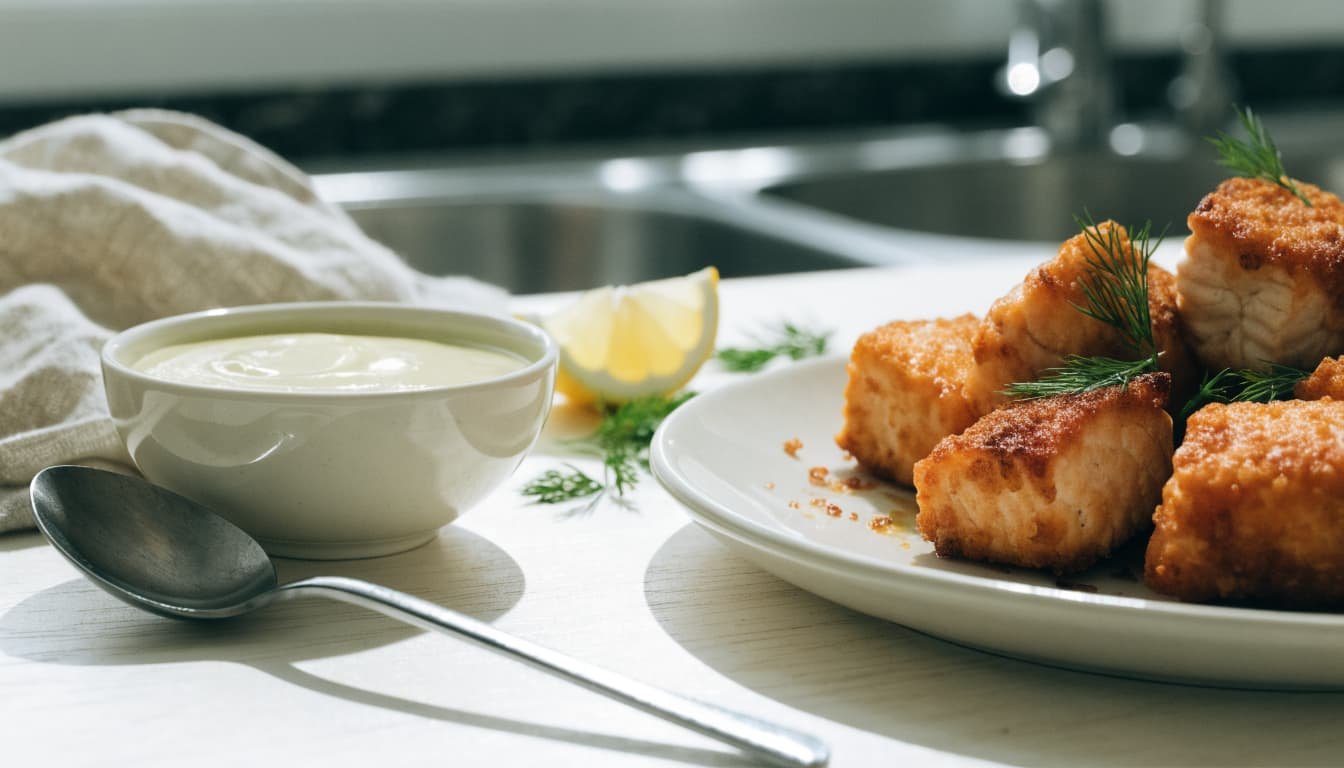
Adjust the sauce without overpowering the salmon
Add the Greek yogurt, lemon juice, dried dill, and garlic powder to a small bowl. Whisk until smooth, then stir in chopped parsley if you like. Finish with a small pinch of salt and pepper, since the salmon may already be seasoned.
Before changing anything, taste a little sauce with a piece of salmon. The flavors should complement each other, so I adjust the sauce gradually rather than making it sharper, saltier, or more garlicky on its own. A bite with the fish gives you a better sense of the balance you want at the table.
If the sauce needs more brightness, add lemon juice a little at a time and stir between additions. When it feels too thick for dipping, mix in water one teaspoon at a time. If the lemon or garlic tastes too strong, stir in a little more yogurt to soften it.
Fresh dill can replace the dried dill, but its flavor is lively, so add chopped dill in small amounts and taste as you go. For a briny variation, fold in a few chopped capers. Taste before adding more salt, because capers can make the sauce salty quickly. These small tweaks keep the yogurt sauce easy and familiar, rather than turning it into a separate, complicated recipe.
Cover the sauce and keep it chilled while the salmon cooks. Bring it to the table just before serving, alongside the bites, so the salmon stays crisp and everyone can choose how much sauce to use. FoodSafety.gov advises refrigerating perishable foods within two hours, so return the sauce to the refrigerator if it sits out longer than that. For more simple ideas with a similar base, see these Greek yogurt dips for vegetables and crackers.
Serve the Salmon Bites with Easy Sides, Swaps, and Leftover Tips

Air fryer salmon bites can anchor a quick grain bowl, a simple platter, or a lighter meal with salad. I keep the sides flexible and serve the lemon-dill yogurt sauce separately, so the salmon’s browned edges stay intact.
Build a bowl or platter that stays fresh
Start with warm rice, quinoa, or farro, then add the salmon and a couple of vegetables. Cucumber and shredded cabbage bring cool crunch, while roasted carrots or green beans make the plate heartier. A crisp salad works well, too, especially if you want a lighter meal. For another adaptable dinner, try our salmon and vegetables served over rice.
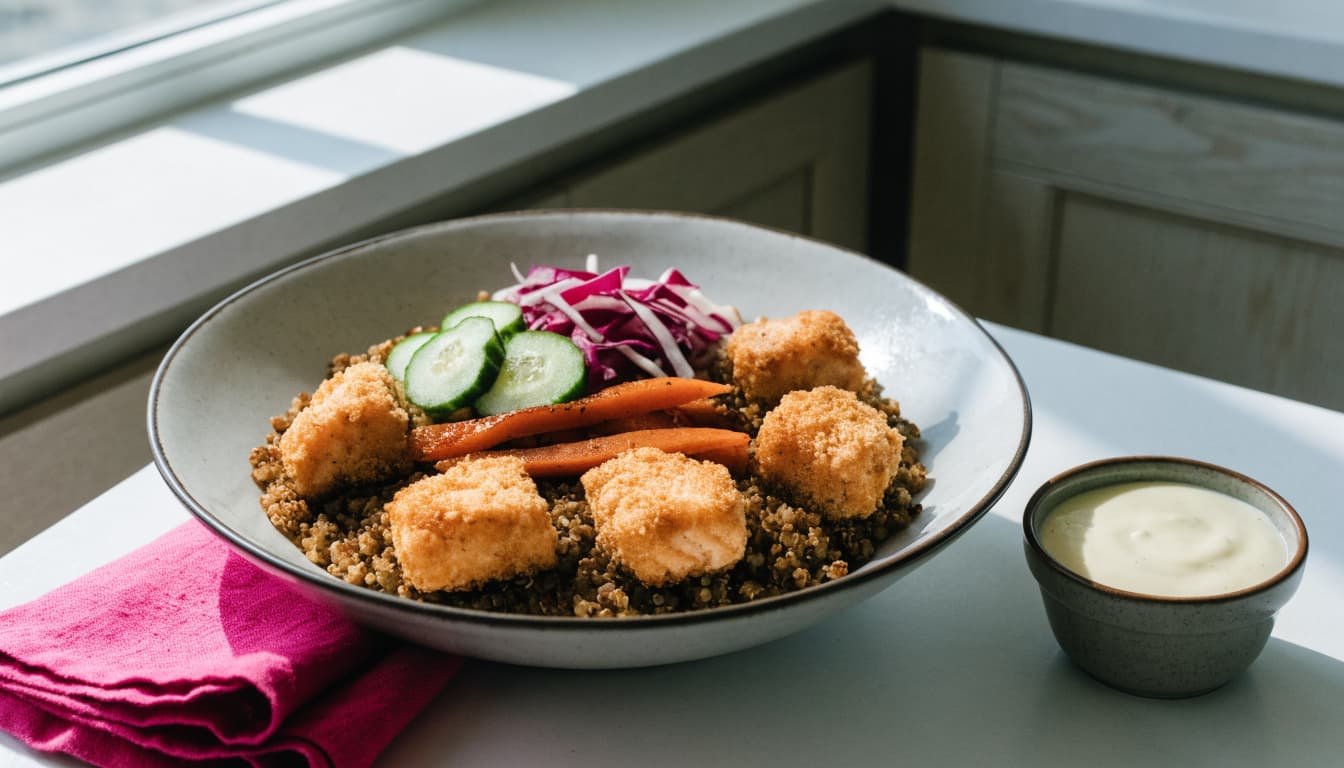
Add cucumber, cabbage, scallions, or fresh herbs just before serving. Keeping these toppings away from the hot ingredients helps them stay crisp. If you’re setting out a platter, place the sauce in a small bowl on the side, and let everyone add as much as they like. A little avocado or edamame can fit, too, but use what’s already in your kitchen.
Change the seasoning with a light touch
The lemon-dill sauce pairs with several simple seasoning swaps. Garlic powder with a little paprika gives the salmon a savory warmth, while ginger and lemon make a brighter match for rice and cabbage. For a sweet-salty variation, use a thin coating of honey and soy sauce. Soy sauce adds salt, so reduce the salt you add to the fish. Honey can brown quickly in the air fryer, so keep the coating light and watch the bites as they cook.
Keep the yogurt sauce on the side with any variation. That way, its lemon and herbs won’t compete with the salmon’s seasoning, and the bites won’t soften under a layer of sauce.
Prep ahead and store leftovers safely
For easier serving, mix the yogurt sauce and prepare sturdy sides, such as cooked grains or roasted carrots, ahead of time. Cover and refrigerate them, then cook the salmon close to mealtime for the best texture. Add the fresh toppings just before you eat.
Refrigerate leftover salmon promptly in a covered, shallow container, and store extra sauce separately. Keep cold foods at 40°F or below, and don’t leave perishable food at room temperature for more than two hours. If it’s hotter than 90°F, refrigerate food within one hour. FoodSafety.gov’s food-safety steps cover these time and temperature limits.
Use cooked leftovers within three to four days. Reheat only the portion you plan to eat, until it reaches 165°F, and add fresh cucumber, herbs, or sauce after warming.
Conclusion
For Air Fryer Salmon Bites with a Quick Yogurt Sauce, cut the salmon into even pieces and leave space between them in the basket so they cook evenly. Use the cooking time as a guide, then check the thickest bite with a thermometer to confirm it reaches 145°F.
The tender, savory salmon pairs beautifully with cool, tangy lemon-dill yogurt sauce. I like keeping the sides and seasonings flexible, so you can shape this simple meal around what you have on hand.


- Air Fryer Salmon Bites with Quick Lemon-Dill Yogurt Sauce - November 26, 2026
- Healthy Spinach Pasta with White Beans and Parmesan - November 26, 2026
- Easy Tofu Stir-Fry with Vegetables and Ginger Sauce - November 26, 2026