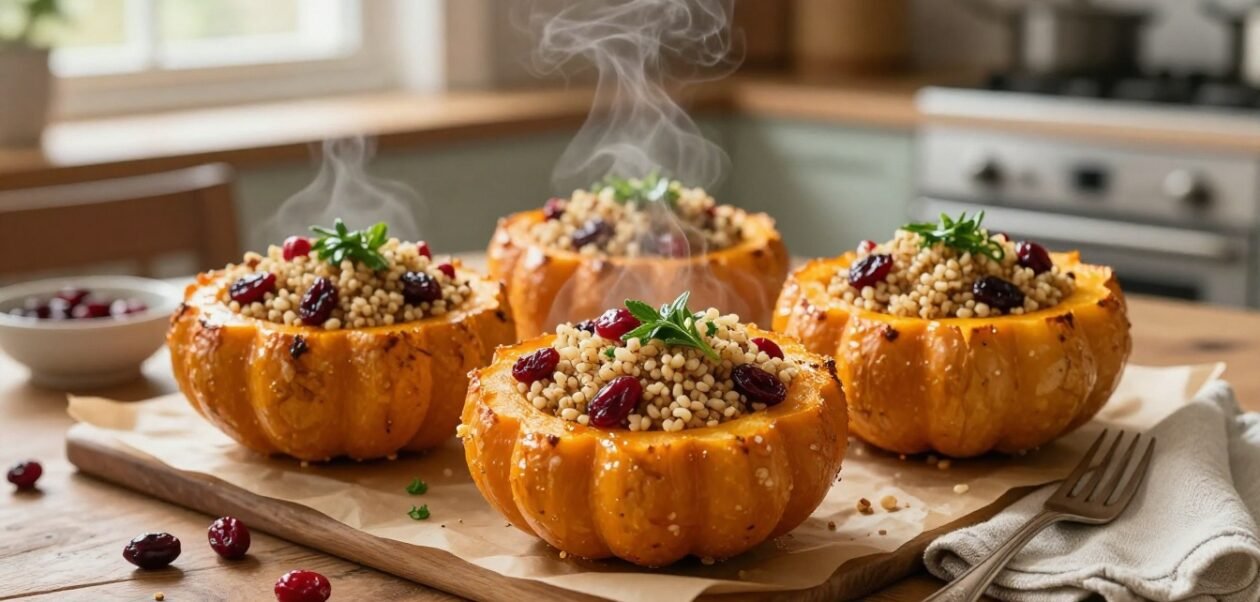
Tender roasted acorn squash makes a cozy bowl for fluffy quinoa, tart cranberries, and savory herbs. This stuffed acorn squash with quinoa and cranberries is meat-free and filling, with a simple mix you can adjust to suit what you have on hand.
Roast the squash until it’s tender, cook the quinoa until fluffy, then stir together the filling and season it to taste. A short final bake warms everything through and lets the flavors come together. Start by preparing the squash, then cook the quinoa while it roasts.
Stuffed Acorn Squash with Quinoa and Cranberries: Recipe at a Glance
This recipe makes four generous servings, with one roasted squash half for each person. The squash turns tender and sweet in the oven, while quinoa, tart cranberries, and herbs make a fluffy, savory filling.

What you’ll need for four generous servings
Choose two acorn squash that feel firm and heavy for their size. A heavier squash often has plenty of flesh inside, and firmness helps you avoid squash with soft spots.
For the squash
- 2 medium acorn squash, halved and seeded
- 1 tablespoon olive oil, plus more for the baking dish
- Salt and black pepper, to taste
For the quinoa
- 1 cup dry quinoa, rinsed if the package says it isn’t prewashed
- Vegetable broth or water, in the amount listed on the quinoa package
- 1/3 cup dried cranberries
For the aromatics
- 1/2 cup finely chopped yellow onion or shallot
- 2 garlic cloves, minced
- 1 teaspoon chopped fresh thyme, or 1/2 teaspoon dried thyme
- 2 tablespoons chopped parsley
- 1/4 teaspoon ground cumin, optional
For the finishing touches
- 2 tablespoons toasted pumpkin seeds or chopped pecans, optional
- 1 tablespoon lemon juice or a little lemon zest, optional
- A small handful of chopped greens, such as spinach, optional
- Crumbled feta or goat cheese, optional
Broth gives the quinoa a more savory base, while water lets the herbs and cranberries stand out. Quinoa varieties and brands can call for different liquid amounts and cooking times, so follow the package directions. Bob’s Red Mill’s quinoa cooking guide offers a useful reference if you need one.
Why cranberries, herbs, and crunchy toppings work together
The filling balances the squash’s gentle sweetness with chewy, tart cranberries, savory onion and garlic, and fresh herbs. Toasted pumpkin seeds or pecans add a crisp bite against the soft squash and fluffy quinoa. Keep the toppings optional, so everyone can finish a serving to taste.
For a brighter flavor, stir in lemon juice or add a little zest just before filling the squash. If you’d like a sweeter, warmer note, use a small drizzle of maple syrup or a pinch of cinnamon. Start with a little, taste the filling, and adjust as needed.
How to Roast Acorn Squash Until Tender and Easy to Fill
Roasted acorn squash should be soft enough to scoop and fill, but sturdy enough to hold its shape on the plate. A few careful prep steps make the squash easier to cut, and checking the thickest part keeps you from relying on the timer alone.
Cut and season the squash without making a mess
Wash and dry the squash, then set it on a stable cutting board. A damp towel underneath can help keep the board from sliding. Use a sharp chef’s knife and keep your hands clear of the blade as you cut the squash in half lengthwise, from stem to base. If it feels very firm, work slowly and avoid forcing the knife.
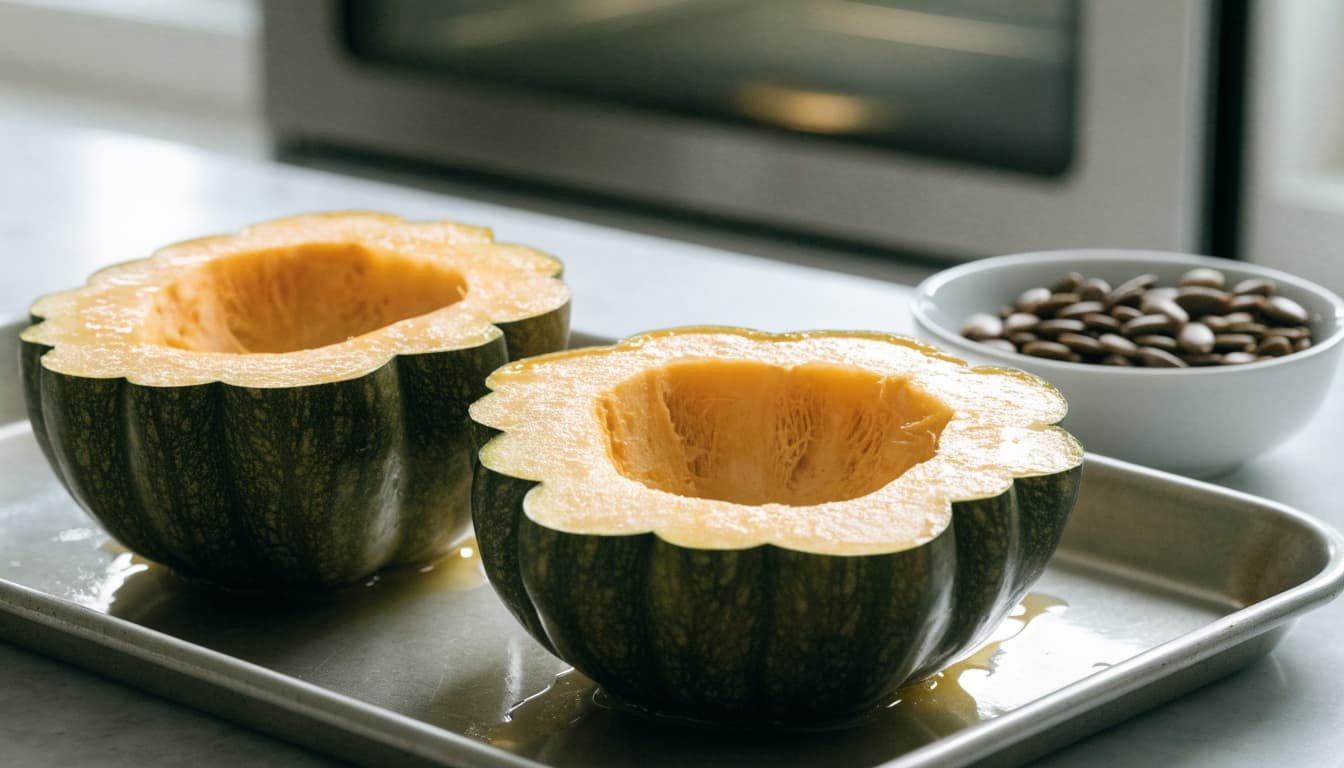
Scoop out the seeds and stringy pulp with a sturdy spoon. Brush the cut sides lightly with olive oil, then season with salt and black pepper. If a half rocks on the board or baking sheet, trim a thin slice from its rounded side so it can sit flat. Take care not to cut through to the hollow center.
Roast cut-side down, then check the thickest part
Heat the oven to 400°F. Place the squash halves cut-side down on a baking sheet, leaving a little space between them. Roast for about 35 to 50 minutes, and start checking toward the earlier end of that range. Smaller squash may be ready sooner, while large halves or thick-fleshed squash can take longer.
Use the flesh as your guide. Pierce the thickest part with a fork or the tip of a knife; it should slide in easily, with little resistance. The cut surfaces may look browned, but color alone doesn’t mean the center is tender. If it still feels firm, return the squash to the oven and check again after a few minutes. Recipe-tested times vary, with roasted acorn squash guidance from Cookie and Kate giving a similar reminder to check tenderness rather than depend on the clock.
Let the squash cool just enough to handle before turning the halves over. The flesh should be tender throughout, while the outer shell still holds its shape. If you’re roasting it ahead for stuffed acorn squash with quinoa and cranberries, leave the halves cut-side up after roasting so they’re ready to fill.
Make a Fluffy Quinoa and Cranberry Filling
The filling should be tender and savory, with separate quinoa grains and enough moisture to hold together without turning soupy. Cook the quinoa while the squash roasts, then stir in the aromatics and cranberries before filling the squash.
Rinse, simmer, rest, and fluff the quinoa
Rinse the quinoa in a fine-mesh strainer under cool running water, unless the package says it’s prewashed. This removes any bitter-tasting residue from the grains. Drain it well, then add it to a saucepan with water or vegetable broth, using the liquid amount and cooking time on the package.
Bring the liquid to a simmer, cover the pan, and cook until the grains are tender and the liquid has been absorbed. The package timing is a useful guide, but doneness matters more than a single set number of minutes. Remove the pan from the heat and let it sit, still covered, for a few minutes. Then fluff the quinoa gently with a fork so the grains stay light and separate.
Soften the aromatics and keep the filling from getting wet
While the quinoa rests, warm a little olive oil in a skillet over medium heat. Add the chopped onion or shallot and cook until soft. Stir in the garlic and thyme, plus cumin if you’re using it, and cook just until fragrant.
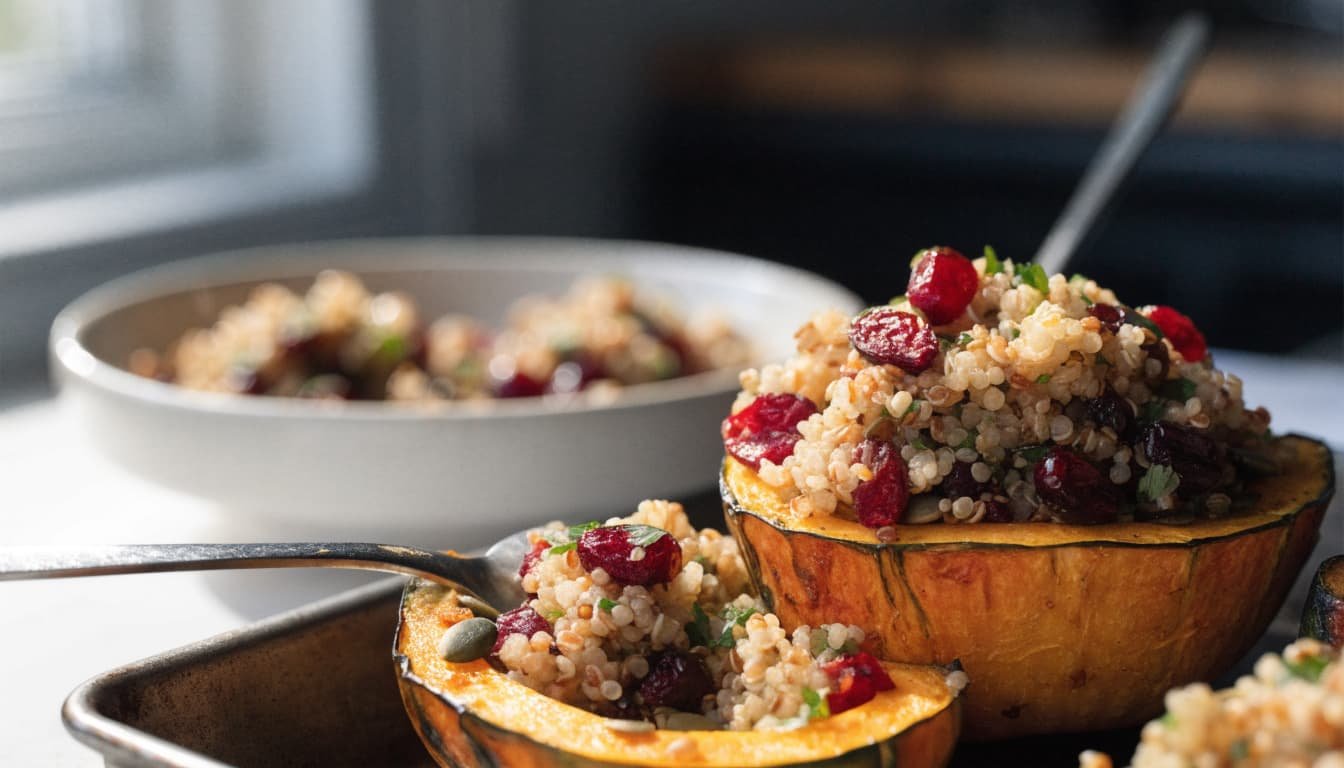
Add the cranberries and cooked quinoa, then fold everything together. Stir in parsley and any optional pumpkin seeds or pecans, greens, or lemon. If you’re adding chopped apple or cooked greens, let excess moisture cook off first. Too many juicy add-ins can weigh down the filling.
Check the texture before you season it. The mixture should look moist and hold together on a spoon, but it shouldn’t pool liquid in the pan. If it seems watery, cook it uncovered briefly, stirring as needed. If it feels dry, add a small splash of broth. Taste, then adjust the salt, pepper, or lemon.
Fill the squash and bake until everything is hot
Spoon the quinoa mixture into the roasted squash cavities, leaving it loose rather than pressing it down. A light fill lets heat move through the grains and keeps the texture fluffy. Add a little more on top if you have extra.
Return the filled squash halves to the oven for a short final bake, until the filling is hot and the flavors have had a chance to come together. If you’re adding feta or goat cheese, sprinkle it over the filling near the end so it warms without overbrowning. The squash should be tender, and the center of the filling should be hot before serving.
Easy Ways to Change the Flavor and Serve Each Squash
The quinoa and cranberry filling is easy to adjust for different tastes. Add one or two extras, then taste before adding more. A modest amount keeps the filling fluffy and easy to scoop into each squash half.

Choose a savory, sweet, or extra-crunchy variation
For more crunch, fold in pumpkin seeds, chopped pecans, or walnuts. Toasted nuts add a warm, savory flavor, while pumpkin seeds keep the filling nut-free. Add a small handful so the quinoa still holds together.
Chopped kale or Swiss chard brings color and a little more substance. Cook the greens with the onion until tender, and let any excess moisture evaporate before mixing them into the quinoa. For a creamy, salty finish, add crumbled feta or a little grated cheese near the end of baking.
To make the filling sweeter, stir in a small amount of diced apple, maple syrup, or cinnamon. Apple adds soft pieces of fruit, while maple syrup and cinnamon bring a gentle, warm note. For a brighter savory version, finish with lemon juice and chopped parsley or thyme. A pinch of curry powder or cayenne can add warmth and mild heat; Food Network’s vegan quinoa-cranberry squash offers one example of using spices with cranberries and squash.
The basic filling is easy to keep vegan. Use water or vegetable broth, olive oil, and no cheese, then set any dairy toppings out separately. Choose just one or two additions, since too many can make the filling crowded or wet.
Pair the stuffed squash with a simple side
Each squash half makes a generous serving, so you don’t need a complicated side. A crisp green salad or cabbage slaw adds a fresh contrast to the tender squash and soft quinoa. Dress it lightly just before serving, especially if you’re using tender greens. A sturdy kale salad can be prepared a little earlier, but keep the dressing modest so the leaves stay pleasant to eat.
For a warm option, quickly sauté spinach, kale, or cabbage with olive oil and garlic. You can also serve a small portion of roasted seasonal vegetables, such as Brussels sprouts or sweet potatoes, seasoned with salt, pepper, and thyme. The squash is already filling, so a small accompaniment is usually enough.
Set chopped herbs, salsa, or extra seeds on the table for finishing touches. That gives everyone a simple way to adjust their serving without changing the main filling.
Make-Ahead, Storage, and Reheating Without Losing Texture
You can prepare stuffed acorn squash with quinoa and cranberries ahead, then finish it close to mealtime. Keeping the squash, filling, and crunchy toppings separate until assembly helps each part keep its texture.
Prepare the squash and quinoa filling in advance
Roast the squash halves and cook the quinoa filling ahead of time. Let each component cool, then transfer them to separate, shallow covered containers and refrigerate promptly. Keeping the filling out of the squash cavities helps the roasted halves hold their shape, while separate storage keeps the quinoa from becoming too soft.
For food safety, refrigerate cooked food within two hours, or within one hour when the temperature is above 90°F. Keep the refrigerator at 40°F or below, and use most cooked leftovers within three to four days. The USDA’s leftover food safety guidance covers these storage and reheating basics.
When you’re ready to serve, spoon the chilled filling into the squash and bake until hot throughout. Add delicate herbs, lemon juice, toasted seeds, or nuts close to serving. They keep their fresh flavor and crunch instead of softening in the refrigerator.
Reheat gently and refresh the toppings
For several assembled squash halves, place them in a baking dish and warm them in a 350°F oven until the filling is hot in the center. Cover the dish loosely with foil if the tops begin to brown before the squash is heated through. Use a food thermometer to check that leftovers reach 165°F.
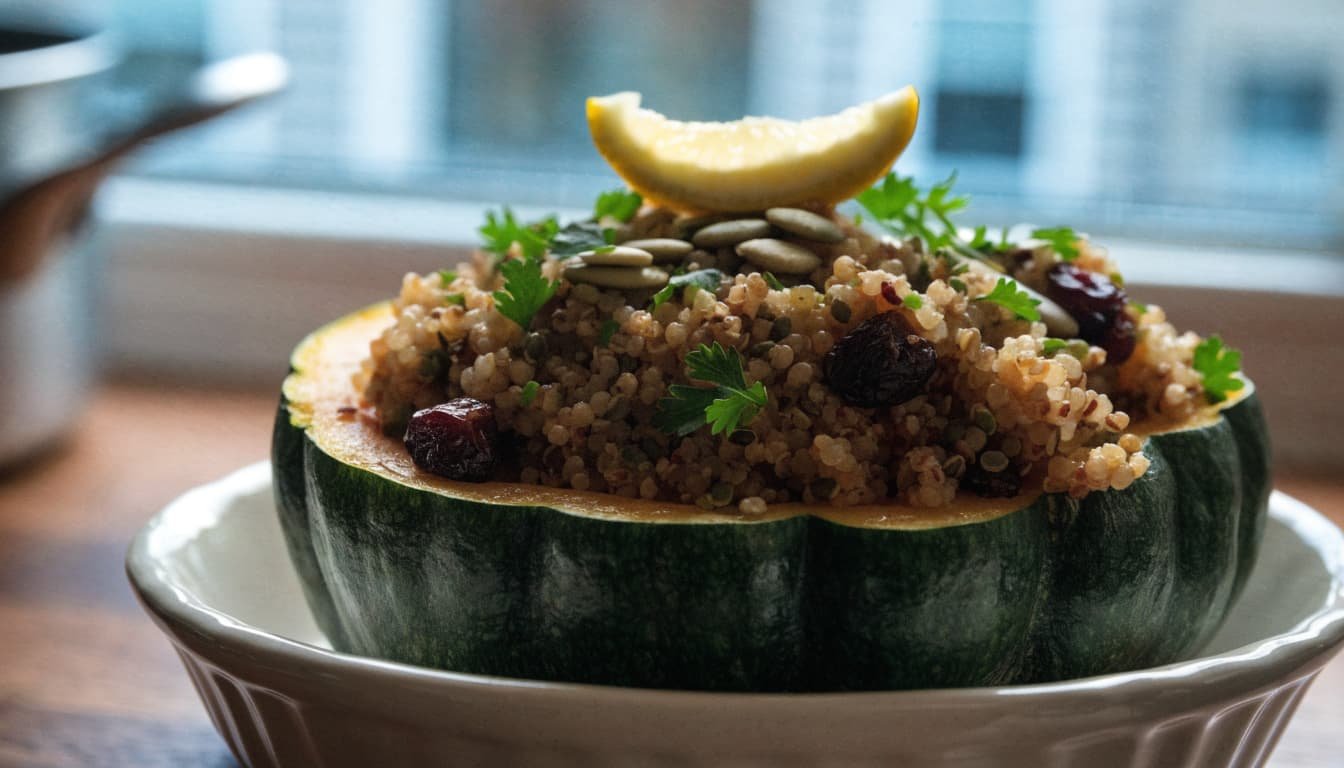
A microwave works well for one portion. Place the squash in a microwave-safe dish, cover loosely, and heat until hot throughout, checking the center. The squash may turn softer than it does in the oven, so reheat only the portion you plan to eat.
Finish with fresh parsley, toasted pumpkin seeds, or a squeeze of lemon after reheating. These simple additions bring back the bright, crisp contrast that makes the tender squash and fluffy quinoa filling satisfying.
Conclusion
Stuffed Acorn Squash with Quinoa and Cranberries comes together with a few simple checks: roast the squash until fork-tender, cook the quinoa until its liquid is absorbed, then let it rest before fluffing. Keep the filling moist enough to hold together, but not wet, so it stays light when spooned into each squash half.
Try the basic version first, then adjust the herbs, fruit, or greens to suit your table. Add toasted seeds or nuts for crunch, or set toppings out so everyone can finish a serving as they like.

- Christmas Cookie Ideas for Every Holiday Baker - November 9, 2026
- Christmas Cocktails: Party Drinks, Cozy Sips, and Mocktails - November 9, 2026
- 20 Christmas Appetizer Ideas for Every Holiday Spread - November 9, 2026