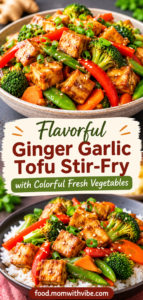
A good stir-fry brings crisp-edged tofu, colorful vegetables, and a bright ginger sauce together in one pan. This flexible dinner pairs well with familiar vegetables such as broccoli, carrots, or bell pepper, and you can serve it over rice or another grain.
We find that the cooking order makes the biggest difference: prepare the ingredients first, brown the tofu, cook the vegetables according to how quickly they soften, then add the sauce at the end. That simple sequence helps the tofu keep its golden edges and the vegetables retain a little bite.
Easy Tofu Stir-Fry with Vegetables and Ginger Sauce
This tofu stir-fry is a practical, adaptable meal for dinner. Choose a few vegetables you enjoy, prepare a ginger-soy sauce, and serve everything over rice, quinoa, noodles, or another grain.
Gather the tofu, vegetables, and ginger sauce ingredients
Extra-firm tofu is easier to cube and keep intact than softer varieties. Drain it, pat it dry, and press it briefly if you have time. Drying the surface helps the tofu brown; a light coating of cornstarch can help it develop a crisp exterior.
For the vegetables, choose two or three options rather than crowding the pan. Broccoli, carrots, bell pepper, and snap peas all work well. Cut the pieces into similar sizes where possible, so they cook at a similar pace.
The sauce combines soy sauce, fresh ginger, garlic, rice vinegar, a modest amount of sweetener, and water or vegetable broth. Soy sauce gives it savory saltiness, ginger and garlic add warmth, and vinegar brings a tangy note. A little sweetener rounds out the sharper flavors. Maple syrup makes the sauce vegan, and low-sodium soy sauce or tamari are useful alternatives.
Whisk the sauce before heating the pan, then taste it. Soy sauces vary in saltiness, so it’s better to adjust gradually than to add extra salt automatically. If the mixture tastes too strong, loosen it with a little water or broth. For a thicker, glossy coating, stir a small amount of cornstarch slurry into the sauce.
Brown the tofu, then cook the vegetables in stages
Drain and pat the tofu dry, then press it briefly if time allows. Cut it into bite-size cubes and toss gently with a light coating of cornstarch and a pinch of salt.
Heat a lightly oiled skillet until hot. Arrange the tofu in a single layer, leaving space between the cubes. Let it cook undisturbed for about 3 to 4 minutes before turning. Brown the remaining sides, then transfer the tofu to a plate. The full browning time can vary with cube size and the pan, so look for golden edges rather than relying on the clock alone.
Cook the firmest vegetables first. Carrots and broccoli stems need a head start, while bell pepper and snap peas soften more quickly. Stir the vegetables often, but give them time against the hot pan to develop some color. They should be hot and tender with a little bite.
If the skillet looks crowded, cook the vegetables in batches. A packed pan loses heat, and the vegetables can release enough moisture to steam instead of sauté. Keep each cooked batch on a plate and combine everything near the end.
Add the sauce at the end for a bright, glossy finish
Lower the heat slightly, then add the garlic and ginger. Stir for about 30 seconds, just until fragrant. They can burn in a very hot pan, so have the whisked sauce ready before adding the aromatics.
Pour in the sauce and scrape up any browned bits from the bottom of the skillet. Let it bubble until it begins to thicken. Return the tofu and toss everything for 1 to 3 minutes, just long enough to warm and coat the cubes. If the sauce thickens too much, stir in a spoonful of water.
Serve soon after tossing. The brief finish brings the tofu, vegetables, and ginger together without leaving the vegetables in the pan long enough to lose their bite.
Keep the tofu crisp and the vegetables tender
A few cooking choices help preserve the textures in this stir-fry. Dry tofu browns more readily, vegetables cook better when they have room, and adding the tofu back at the end keeps it away from the moisture vegetables release as they cook.
Avoid crowding the skillet or moving tofu too soon
Moisture on tofu can slow browning, and cubes packed tightly together may steam instead of turning golden. Pat the pieces dry, spread them in a single layer, and cook them in batches if needed.
Give each side time to form a golden surface before turning the cubes. Constant movement can make them harder to brown and more likely to break. Once they’re browned, transfer them to a plate rather than leaving them in the skillet while the vegetables cook. That keeps them from sitting in the moisture released by the vegetables.
For more tofu preparation ideas, see our guide to crispy air fryer tofu.
Match each vegetable to its cooking time
Dense vegetables need longer in the skillet than tender ones. Start carrots and broccoli stems first, then add bell pepper or snap peas once the firm vegetables begin to soften. Similar-sized pieces cook more evenly, so slice or chop with that in mind.
Broccoli stems sometimes need extra time even after the florets have browned. Add a small splash of water and briefly cover the skillet to help them soften. Then uncover the pan and let the excess moisture evaporate before adding the sauce.
Tender greens need very little cooking. Stir in spinach near the end, just until it wilts. If your vegetables brown at different rates, remove each type when it reaches the texture you like, then return everything to the skillet for the sauce.
Choose easy swaps, serving ideas, and gentle flavor changes

The ginger-soy sauce gives the dish its flavor anchor, so you can change the vegetables or toppings without changing the basic cooking order. Keep the additions modest, taste as you go, and let everyone adjust their bowl at the table.
Swap vegetables and adjust the sauce to taste
Mushrooms, shredded cabbage, zucchini, snap peas, and spinach can all replace or join the vegetables in the recipe. Choose two or three so the skillet stays roomy. Frozen vegetables can work, too, but they may release extra moisture. Cook them separately if needed, then drain away liquid before combining them with the tofu.
For more tang, add a little rice vinegar or lemon juice. Chili flakes or sriracha bring heat, while a few drops of toasted sesame oil add a nutty finish. Start with a small amount of each and taste before adding more. Tamari or low-sodium soy sauce can suit different preferences, though the finished sauce may still need tasting before you adjust it.
Serve the stir-fry over rice, noodles, or another grain
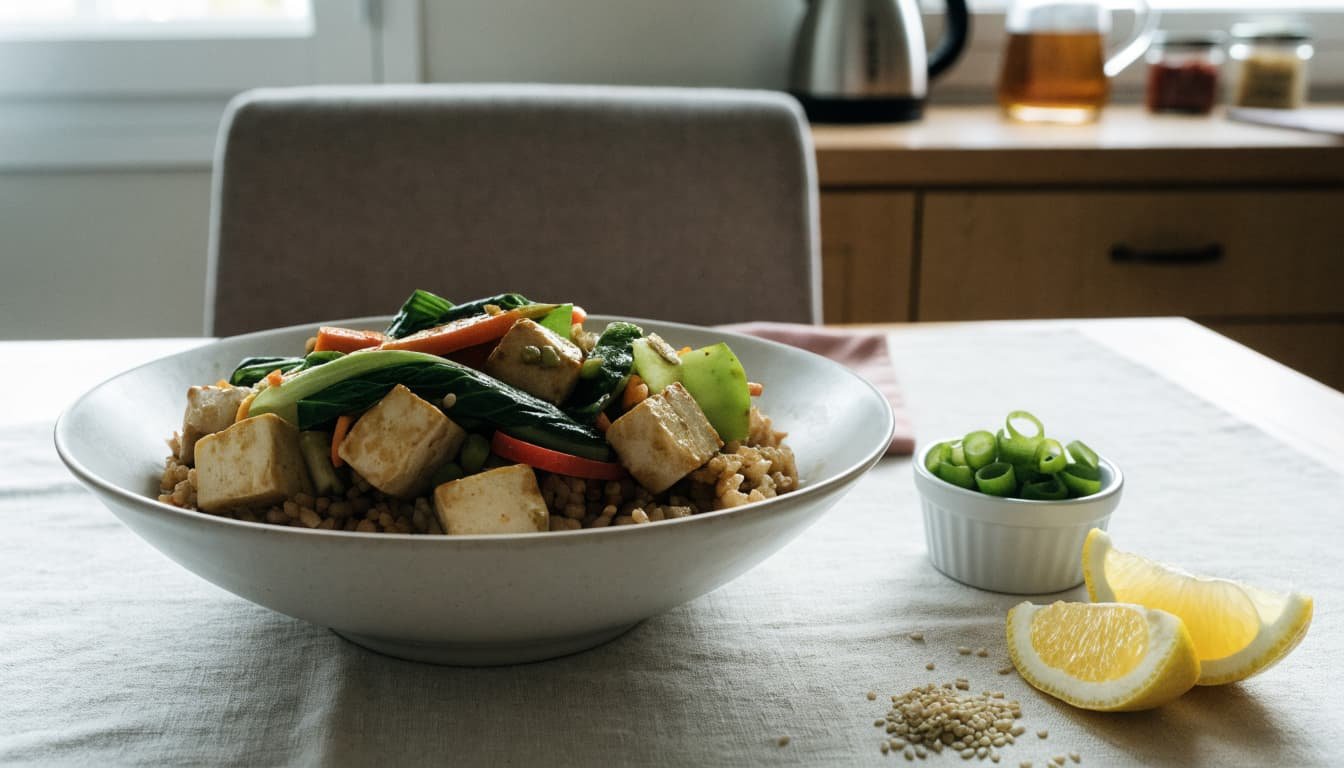
Serve the tofu and vegetables over brown rice, white rice, quinoa, noodles, or another cooked grain. Follow the package directions for the cooking time and liquid, since they vary by type. Add the stir-fry just before serving so the grain doesn’t soak up too much sauce.
Scallions add a fresh finish, while sesame seeds bring a little crunch. A squeeze of citrus can brighten the sauce. Keep toppings optional, and put extra chili flakes or sriracha on the table for anyone who wants more heat.
For more ideas built around flexible, meatless meals, browse our easy vegetarian dinner ideas.
Make the stir-fry your own
The useful part of this recipe is its simple order: dry and brown the tofu, cook firm vegetables before quicker ones, then add the ginger sauce at the end. Start with vegetables you already have, and keep the skillet uncrowded so they sauté rather than steam.
Taste the sauce before it reaches the pan, then make small adjustments to suit your table. With a few practical choices, you can bring together a satisfying tofu dinner that works with a range of vegetables and grains. Golden tofu, crisp-tender vegetables, and bright ginger sauce make this flexible stir-fry a satisfying dinner in about 30 minutes. It serves four and pairs familiar vegetables like broccoli, carrots, or bell pepper with rice, quinoa, noodles, or another grain.
We find the key is to prepare everything before the pan gets hot, then cook each ingredient in the right order. Start by gathering your tofu, vegetables, and sauce ingredients.
Easy Tofu Stir-Fry with Vegetables and Ginger Sauce
This easy tofu stir-fry brings golden tofu, colorful vegetables, and a bright ginger-soy sauce together in one pan. We serve it over rice, quinoa, noodles, or another cooked grain for a flexible dinner.
Recipe overview: Serves 4 | Prep time: about 15 minutes | Cook time: about 15 minutes | Total time: about 30 minutes

Gather the tofu, vegetables, and ginger sauce ingredients
Extra-firm tofu is easier to cube and keep intact in the skillet. Drain and pat it dry, then press it briefly if you have time. A light coating of cornstarch helps the cubes develop golden edges, while a pinch of salt seasons them. Use a neutral oil, such as canola or avocado oil, for browning.
Choose a few vegetables, such as broccoli, carrots, bell pepper, or snap peas. Cut them into similar-sized pieces where possible. If you want help getting the vegetables ready before the pan heats, see our tips for prepping vegetables for weeknight dinners.
For the ginger sauce, gather soy sauce, freshly grated ginger, minced garlic, rice vinegar, a modest amount of sweetener, and water or vegetable broth. A little optional sesame oil adds a nutty note. Low-sodium soy sauce or tamari can replace regular soy sauce, and maple syrup makes the sauce vegan.
Whisk the sauce before heating the pan, then taste it. Soy sauces vary in saltiness, so adjust with care. If the flavor feels too strong, add a little water or broth. For a glossy, thicker coating, whisk a small amount of cornstarch with cold water and stir the slurry into the sauce.
Brown the tofu, then cook the vegetables in stages
Drain and pat the tofu dry, pressing it briefly if time allows. Cut it into bite-size cubes, then toss them gently with a light coating of cornstarch and a pinch of salt.
Heat a lightly oiled skillet until hot. Arrange the tofu in a single layer and leave it undisturbed for about 3 to 4 minutes, until the bottoms turn golden. Turn the cubes and brown the other sides. The total browning time is about 8 to 10 minutes, depending on cube size and the pan. Transfer the tofu to a plate.
Cook firm vegetables, such as carrots and broccoli, first. Add quicker-cooking bell pepper or snap peas after the firmer pieces begin to soften. Keep the vegetables hot and tender with a little bite. If the skillet is crowded, cook in batches so the vegetables sauté instead of steaming. Canada’s Food Guide follows a similar staged approach in its tofu and vegetable stir-fry recipe.
Add the sauce at the end for a bright, glossy finish
Lower the heat slightly, then stir the garlic and ginger in the skillet for about 30 seconds, just until fragrant. Keep the prepared sauce close by, since the aromatics can burn in a hot pan.
Pour in the sauce and scrape up any browned bits from the skillet. Let it bubble until it begins to thicken, then return the tofu and toss everything for 1 to 3 minutes, just long enough to warm and coat the cubes. If the sauce gets too thick, stir in a spoonful of water.
Serve soon after tossing so the vegetables keep their bite.
Keep the tofu crisp and the vegetables tender
The textures in an easy tofu stir-fry with vegetables and ginger sauce depend on giving each ingredient room and the right amount of time. Dry tofu browns more easily, while vegetables stay brighter and firmer when you cook them in stages. We keep the tofu separate until the sauce goes in, so it doesn’t sit in the moisture from the vegetables.

Avoid crowding the skillet or moving tofu too soon
Water on tofu’s surface slows browning, so drain the block and pat it dry before cutting it into bite-size cubes. If you have time, press it briefly with a clean towel or paper towels. Then add just enough cornstarch for a thin coating. A heavy layer can turn powdery rather than crisp.
Heat the skillet and arrange the cubes in a single layer with space between them. When tofu pieces touch or pile up, they trap moisture and steam instead of developing golden edges. Cook in batches if the pan feels crowded; a tofu and vegetable stir-fry from Canada’s Food Guide also cooks the tofu separately before combining it with the vegetables.
Let the first side form a golden crust before turning the cubes. Moving them constantly interrupts browning, and the pieces can break apart as you toss them. If a cube sticks, give it a little more time before trying again. Once browned, transfer the tofu to a plate instead of leaving it in the skillet while the vegetables cook. That keeps it away from the moisture they release.
Match each vegetable to its cooking time
Cut vegetables into similar-sized pieces where possible, then add them according to how quickly they soften. Carrots and broccoli stems need a head start, while bell pepper and snap peas cook faster. Thin carrot slices will soften sooner than thick chunks, so check a larger piece before deciding the whole batch is ready.
Broccoli stems can take longer than the florets. If they’re still firm while the pan looks dry, add a small splash of water and briefly cover the skillet. Then uncover it and let the extra moisture evaporate before adding the sauce. This keeps the sauce from becoming diluted and gives the stems time to soften.
Add spinach or other tender greens near the end, stirring only until they wilt. If some vegetables brown faster than others, lift out each type when it reaches the texture you want, then return everything to the pan for the finish. Cook in batches when the skillet fills up; a packed pan loses heat, and the vegetables can steam before they brown. For another example of cooking vegetables in stages, see our shrimp and broccoli stir-fry.
Choose easy swaps, serving ideas, and gentle flavor changes
The ginger-soy sauce is the flavor anchor in this stir-fry, so the vegetables and serving base can change without changing the basic cooking order. We like to keep additions simple, then make small adjustments and taste as we go. That way, the ginger, garlic, and savory sauce still come through.
Swap vegetables and adjust the sauce to taste
Mushrooms add a savory note, while shredded cabbage softens into the sauce and zucchini brings a tender bite. Snap peas keep a little crunch, and spinach wilts quickly when stirred in near the end. Choose two or three vegetables rather than packing the pan, since too many additions can release moisture and soften the tofu. For another combination with mushrooms and crisp vegetables, see the Cleveland Clinic’s sweet ginger stir-fry.
Frozen vegetables are convenient, but they can release extra water as they heat. Cook them separately when needed, then drain off excess liquid before combining them with the tofu. This helps the sauce stay flavorful and keeps the tofu from sitting in a watery pan.
Make small changes to the sauce, tasting after each one. Add a little extra rice vinegar or lemon juice for more tang, or stir in chili flakes or sriracha for heat. A few drops of toasted sesame oil give the sauce a nutty finish, but its flavor is strong, so start with just a little. Tamari or low-sodium soy sauce can suit different preferences; either way, taste before adding more salt.
Serve the stir-fry over rice, noodles, or another grain
Brown rice makes a hearty base, while white rice has a mild flavor that lets the ginger sauce stand out. Quinoa, noodles, or another cooked grain also work well. Follow the package directions for the cooking time and amount of liquid, since both vary by type. Spoon the stir-fry over the base just before serving, so the grain doesn’t soak up too much sauce while it sits.
For another flexible grain-bowl idea, try our Mediterranean chickpea bowls. A smaller scoop of rice with extra vegetables also makes a lighter serving.
Finish each bowl with sliced scallions for freshness or sesame seeds for a little crunch. A squeeze of lemon can brighten the sauce, too. Keep toppings optional, and set out chili flakes or sriracha so everyone can add heat at the table.
Store leftovers safely and reheat them without drying them out
Leftover tofu stir-fry makes an easy next-day meal, but the refrigerator changes its texture. The vegetables soften, and sauced tofu won’t regain the crisp edges it had straight from the skillet. I recommend storing the components separately when practical, then warming only the amount you plan to eat.
Refrigerate the stir-fry promptly
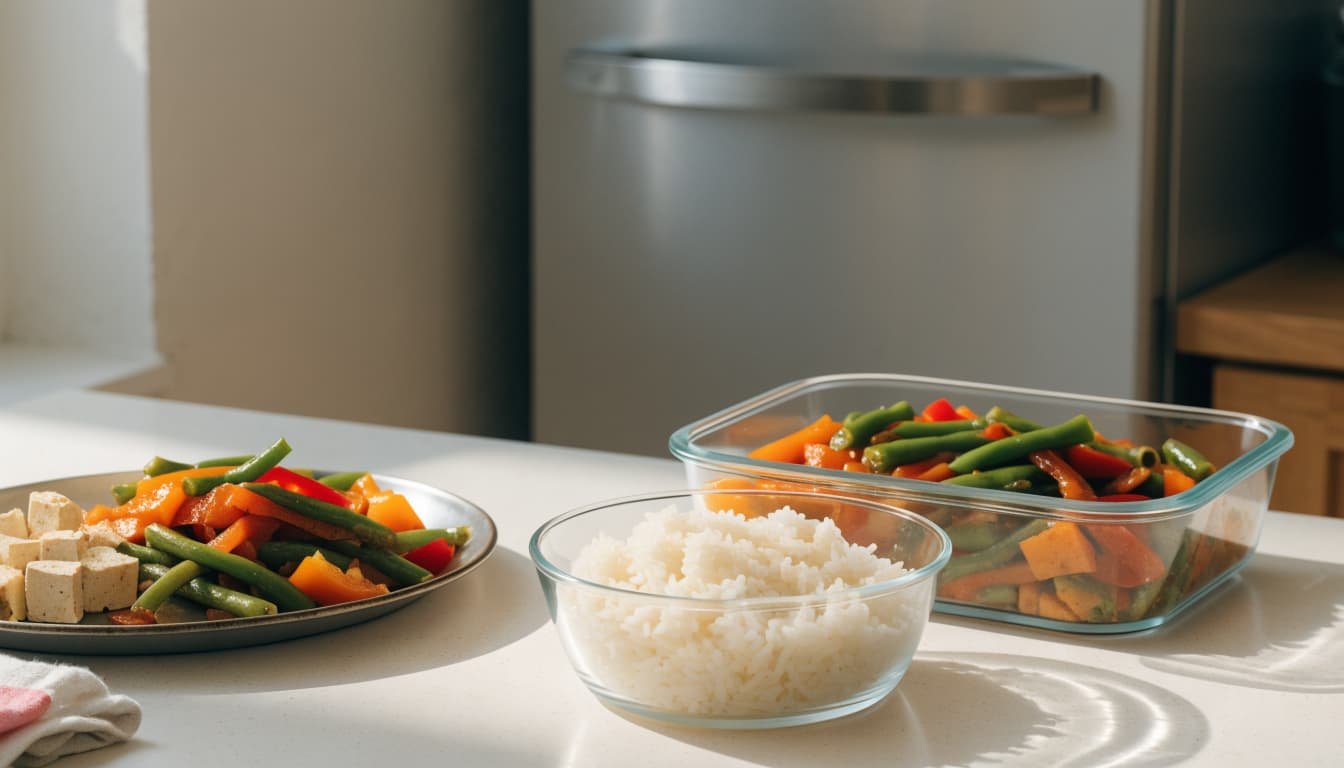
Divide leftovers into shallow, covered containers and refrigerate them within two hours of cooking. If the room is above 90°F, put them away within one hour. You don’t need to wait for the food to cool to room temperature first; smaller portions cool more quickly. Keep your refrigerator at 40°F or below, and use the stir-fry within three to four days.
These time limits follow the USDA’s guidance for leftovers and food safety. Once food has sat out too long, reheating won’t reliably make it safe, so don’t leave the skillet on the counter while you finish other tasks.
When you’re making extra for lunches, store rice separately from the tofu and vegetables if you can. This helps keep the grains from soaking up sauce and turning overly soft. For more make-ahead meal ideas, see our chicken and brown rice meal prep bowls.
Reheat gently and check the temperature
For the stovetop, transfer one serving to a skillet and warm it over medium-low heat. Add a small splash of water if the sauce looks thick or the tofu and vegetables seem dry. Stir occasionally as everything heats, adding more liquid only if needed. Gentle heat helps warm the food without cooking away its moisture.
A covered, microwave-safe dish works well, too. Heat the portion in short intervals, stir partway through, and cover it again. Stirring helps distribute heat, while the cover holds in moisture. Whichever method you choose, reheat until the food is hot throughout, ideally to 165°F. Check the center with a food thermometer, since some spots can stay cooler than others.
Keep rice and fresh toppings separate
If you stored rice apart, warm it in its own covered dish with a small splash of water. Stir halfway through heating, then check that the center is hot. Reheat only the rice and stir-fry you’ll serve, rather than repeatedly warming the full batch.
The tofu will be softer after chilling, especially when it’s been stored in sauce. I treat leftovers as a tender, saucy version of the original rather than expecting the first-night crunch. Add scallions, sesame seeds, or a little citrus after reheating; keeping fresh toppings separate preserves their texture and brightens each serving.
Conclusion
The key to an easy tofu stir-fry with vegetables and ginger sauce is cooking each ingredient in the right order. I recommend drying and browning the tofu first, giving firmer vegetables a head start, then adding the ginger sauce at the end so it coats everything without softening the vegetables too much.
Use the vegetables you have on hand, and adjust the sauce gradually to suit your taste. With that simple method, this flexible dinner comes together beautifully over rice or another grain. For the full recipe, see our tofu stir-fry with vegetables and ginger sauce.

- Air Fryer Salmon Bites with Quick Lemon-Dill Yogurt Sauce - November 26, 2026
- Healthy Spinach Pasta with White Beans and Parmesan - November 26, 2026
- Easy Tofu Stir-Fry with Vegetables and Ginger Sauce - November 26, 2026