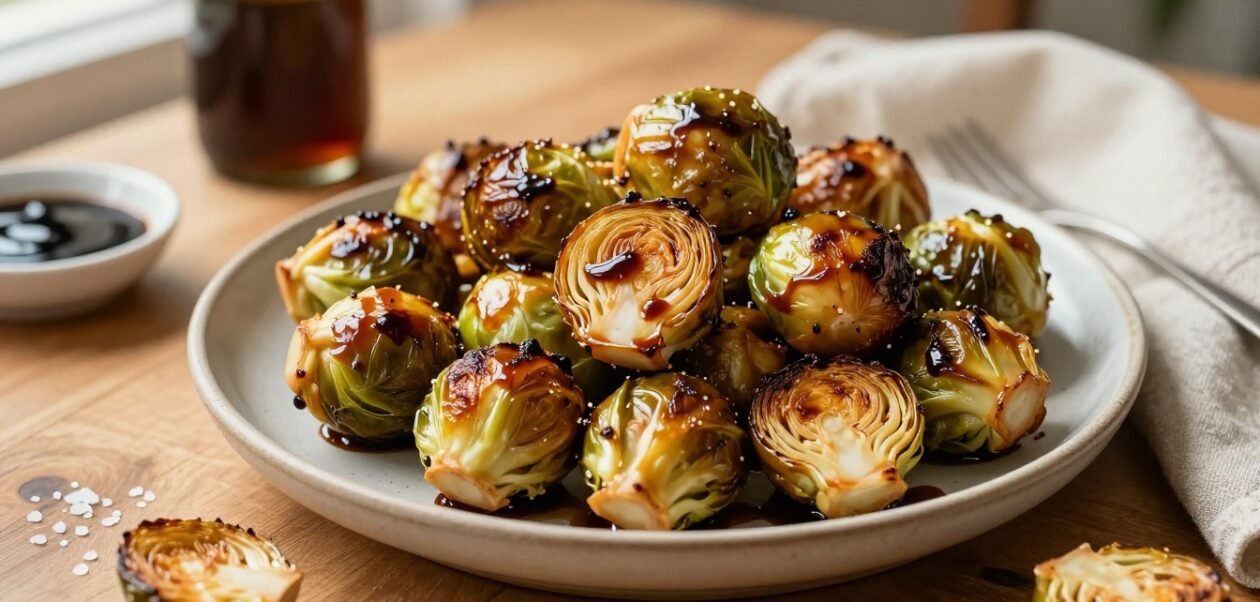
Roasted Brussels sprouts are an easy side with browned edges, tender centers, and a sweet-tart balsamic glaze. With a few simple ingredients, you can bring out their nutty flavor without adding much work.
For reliable browning, dry the sprouts well, spread them out on the pan, and add the glaze near the end so it doesn’t burn. Here’s how to make this easy side and get the texture right.
Roasted Brussels Sprouts with Balsamic Glaze for an Easy Side
This recipe makes four side servings with browned edges, tender centers, and a light sweet-tart finish. Dry the sprouts well and leave space between them on the pan so they roast instead of steam.
Ingredients and timing
Prep time: 10 minutes Cook time: 20 to 30 minutes Oven temperature: 425°F Serves: 4
- 1 pound Brussels sprouts
- 1 to 1½ tablespoons olive oil
- ½ teaspoon salt, or to taste
- ¼ teaspoon black pepper
- 1 to 2 tablespoons balsamic vinegar or balsamic glaze
- ½ teaspoon honey or maple syrup, optional
Use a little honey or maple syrup if you want a sweeter finish. Start with a small amount, then taste before adding more so the sprouts keep their savory, tangy balance.
Trim, season, and arrange the sprouts
Heat the oven to 425°F. Trim a thin slice from the stem ends and remove any loose or damaged outer leaves. Rinse the sprouts, then dry them very well with a clean towel. Halve small and medium sprouts through the stem; quarter larger ones so the pieces cook at a similar pace.
Toss the sprouts with olive oil, salt, and pepper until lightly coated. Arrange them in a single layer on a baking sheet, with the cut sides facing down. Leave a little room between pieces. If the pan is crowded, use two pans so moisture can escape and the cut sides can brown.
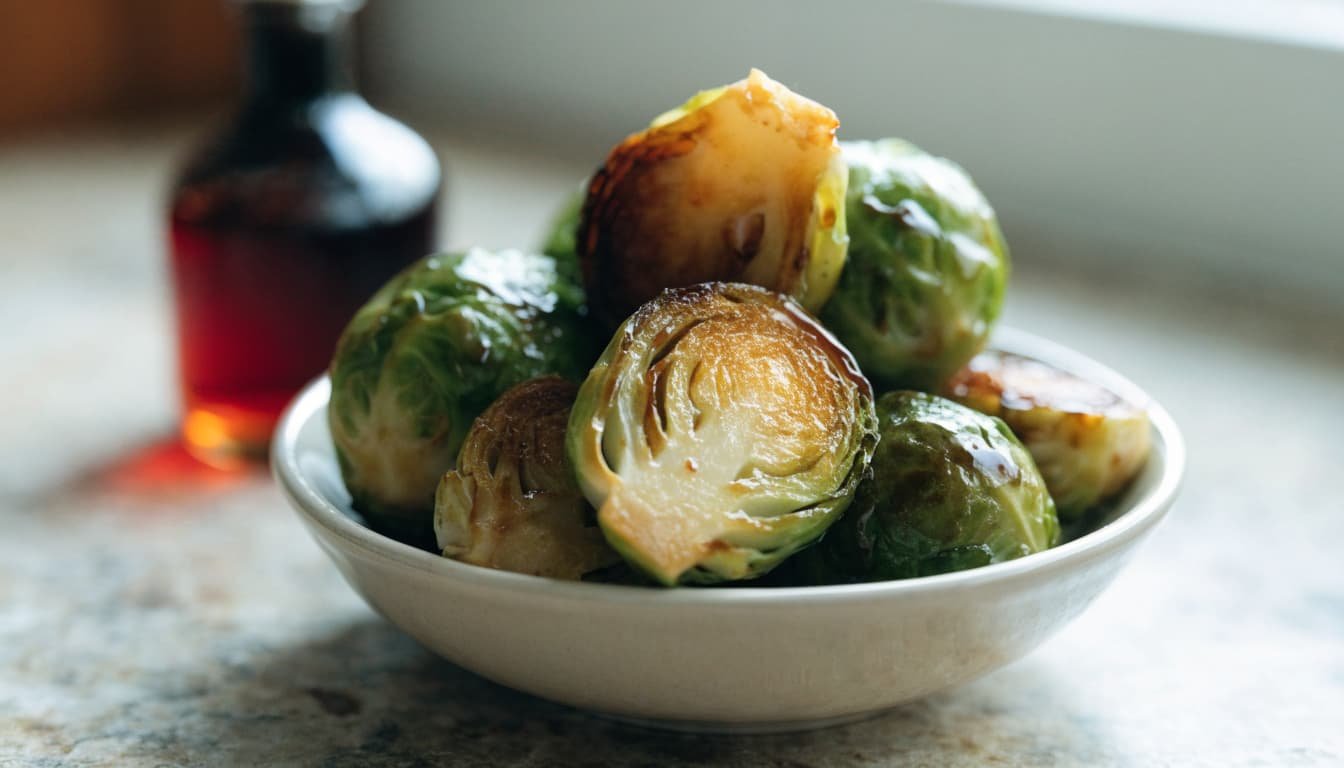
Roast for about 20 to 30 minutes, checking after 20 minutes. The exact time depends on sprout size and how your oven runs. Look for deeply browned cut sides and tender centers; a fork should pierce a larger piece with little resistance. For another reference point, Cookie and Kate’s roasted Brussels sprouts method also uses a hot oven and checks for browned, tender sprouts.
Add the balsamic at the right time
For a simple finish, transfer the hot sprouts to a serving dish and drizzle with balsamic glaze just before serving. If you’re using thin balsamic vinegar, toss it with the sprouts during the last 3 to 5 minutes of roasting, watching closely so it doesn’t darken too much. You can also add the vinegar after roasting for a brighter, tangier flavor.
Serve the sprouts warm while the edges are crisp. They pair easily with rice, roasted sweet potatoes, beans, grilled chicken, or fish.
How to Get Golden, Tender Sprouts Instead of Soft Ones
Golden edges and tender centers depend on a few small details. Dry the sprouts well, give them room on the pan, and check their size as they roast. These steps help them brown instead of steam.
Choose when to add the balsamic glaze
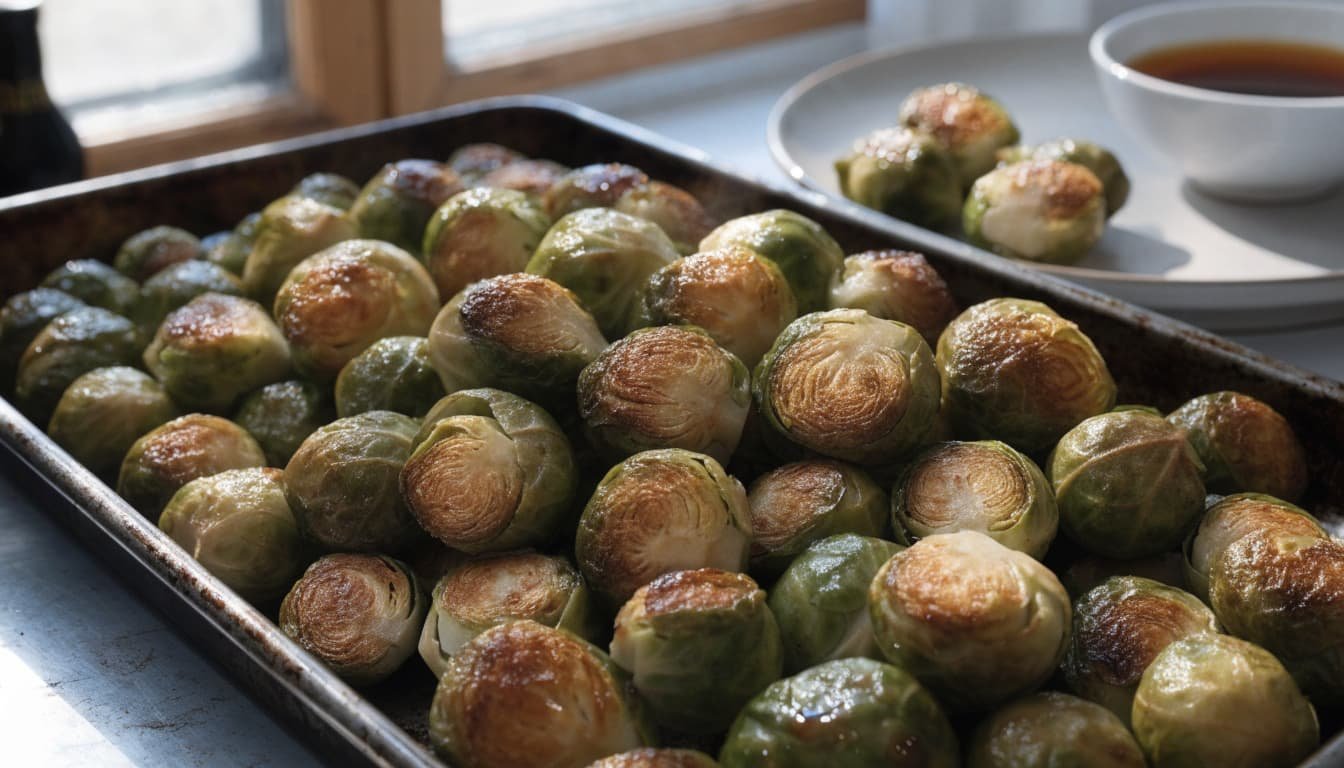
Before roasting, pat the sprouts thoroughly dry. Water left on the surface slows browning, especially when the pieces are crowded together. Spread them in one layer with small gaps between them. For a large batch, use two pans rather than packing one tightly.
Place the cut sides against the hot pan when you can. Direct contact helps those flat surfaces turn golden and brings out a nutty flavor. Serious Eats’ roasted Brussels sprouts method also puts the cut faces against the pan for browning.
For the glaze, choose your finish. Add it during the last few minutes of roasting for a thicker, more caramelized coating. The sugars can darken quickly, so watch the pan closely. If you want to keep the edges crisp, drizzle the glaze over the sprouts after they come out of the oven. Toss gently, then serve warm.
If you’re making glaze with balsamic vinegar, simmer it gently until it looks syrupy and coats a spoon. Take it off the heat while it still flows easily. It will thicken more as it cools, so don’t reduce it until it looks as thick as the finished glaze.
A few adjustments can help if the texture isn’t quite right:
- Pale or soft sprouts: Check that they’re dry and spaced apart. If the pan is crowded, move some pieces to a second pan.
- Uneven cooking: Cut large sprouts into quarters and smaller ones into halves, keeping the pieces close in size.
- Dark edges and firm centers: Lower the oven temperature slightly and roast in short intervals until a fork slides into a larger piece with little resistance.
Small pieces may finish early, so check them before the larger ones. Add more roasting time in short intervals when the centers need to soften.
Make the balsamic glaze sweet, savory, or gently tangy
Balsamic adds a sweet-tart flavor that balances the sprouts’ earthy taste and browned edges. Use a light hand. Too much glaze can make the sprouts taste overly sweet and soften their crisp surfaces.

Choose between bottled glaze and balsamic vinegar
Bottled balsamic glaze is usually thicker than plain balsamic vinegar, so it clings to the sprouts instead of running off. Some brands also contain added sweeteners or thickeners. Check the label before adding honey or maple syrup, since the glaze may already be sweet enough.
Plain balsamic vinegar is thinner and sharper. You can drizzle on a little for a more tangy finish, or simmer it with a small amount of sweetener to make a syrupy reduction. The Maryland Department of Agriculture’s balsamic reduction recipe is one example of cooking vinegar with sugar until it reduces.
Adjust the flavor a little at a time
For a sweeter, savory finish, stir a small drizzle of maple syrup or honey into the glaze, then taste. A little goes a long way, especially if you’re using a sweetened bottled glaze. Garlic or thyme brings a more savory note, while a touch of mustard adds gentle tang and depth.
Start with one addition so the sprouts’ roasted flavor still comes through. Once they’re coated, taste a piece before adding more glaze or salt. Balsamic can taste quite different after it meets the sprouts’ natural sweetness, and extra salt may be unnecessary.
If the finish tastes too sweet, add a few drops of balsamic vinegar or lemon juice. If it tastes too sharp, use a little more glaze or sweetener. Small adjustments keep the flavor balanced without weighing down the crisp edges.
Easy Variations and Meals to Serve With Balsamic Brussels Sprouts
Balsamic Brussels sprouts are easy to adjust with a simple topping, and they fit alongside plenty of weeknight meals. Add one finishing touch at a time so the sprouts’ browned edges and sweet-tart glaze still come through.
Change the finish with one simple topping
Try one of these small additions after roasting. Cheese and nuts are best added at the end, so they keep their flavor and texture:
- Parmesan adds a salty, savory finish. Sprinkle it over the hot sprouts, then taste before adding more salt.
- Toasted walnuts or almonds bring a crisp bite that works well with the sweet-tart glaze. Chop them roughly and scatter them over the sprouts just before serving.
- Lemon brightens the balsamic and roasted flavor. Add a small squeeze after cooking, then taste before using more.
- Red pepper flakes add gentle heat. Start with a pinch, especially if you’re serving the sprouts to a group.
Keep the additions modest. A small drizzle of maple syrup can soften a sharp, tangy finish, but too much may make the sprouts taste sweet rather than balanced.
Build a simple, filling plate
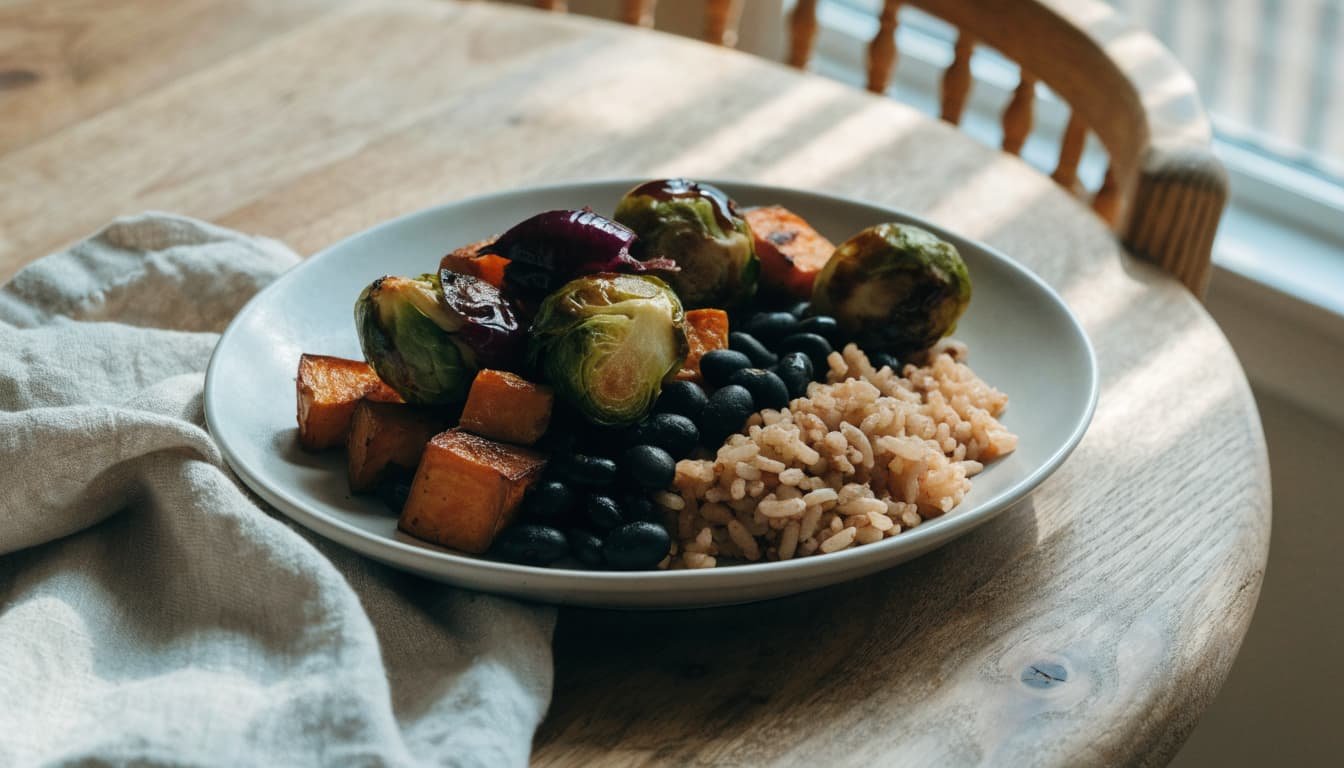
Pair the sprouts with roasted sweet potatoes and black beans for an easy plant-based meal. Rice or barley with chickpeas is another satisfying combination. If you want a lighter protein, serve them with grilled chicken or fish and a grain or potato.
You don’t need a separate menu around the side dish. A grain, a protein, and a vegetable make a simple plate, and you can swap ingredients based on what’s already in your kitchen. Brown rice can stand in for barley, while white beans or chickpeas can replace black beans. The Harvard Healthy Eating Plate guide offers a similar way to think about balancing vegetables, whole grains, and protein foods.
Serve the sprouts warm, soon after cooking, while their edges are crisp. If you’re setting out toppings, keep Parmesan, nuts, lemon, and red pepper flakes on the side so everyone can finish their portion as they like.
Store Leftovers and Reheat Them While Keeping Some Crispness
Roasted Brussels sprouts with balsamic glaze are best served warm, soon after cooking, while the edges are still crisp. Leftovers will soften in the refrigerator, but a little care with storage and reheating can bring back some of their browned texture.
Refrigerate the sprouts promptly
Transfer leftover sprouts to a covered, shallow airtight container and refrigerate within two hours of cooking. You don’t need to wait for them to reach room temperature first. Shallow portions cool faster, and a date on the container makes it easier to keep track.
If the temperature is above 90°F, refrigerate them within one hour. Keep your refrigerator at 40°F or below, and use the sprouts within 3 to 4 days, following the USDA’s leftovers and food safety guidance. Smell and appearance don’t confirm that food is safe, so follow the storage window.
If you have extra balsamic glaze, store it separately when possible. The sprouts will hold their texture better without sitting in extra moisture, and you can add a little glaze after reheating.
Use dry heat to refresh the edges
Reheat only the portion you plan to eat. Spread it in a single layer on a baking sheet and warm it in a 350°F oven for about 5 to 10 minutes. Check early, since smaller pieces and loose leaves heat faster. For food safety, reheat leftovers to 165°F throughout; a food thermometer is the most reliable check.
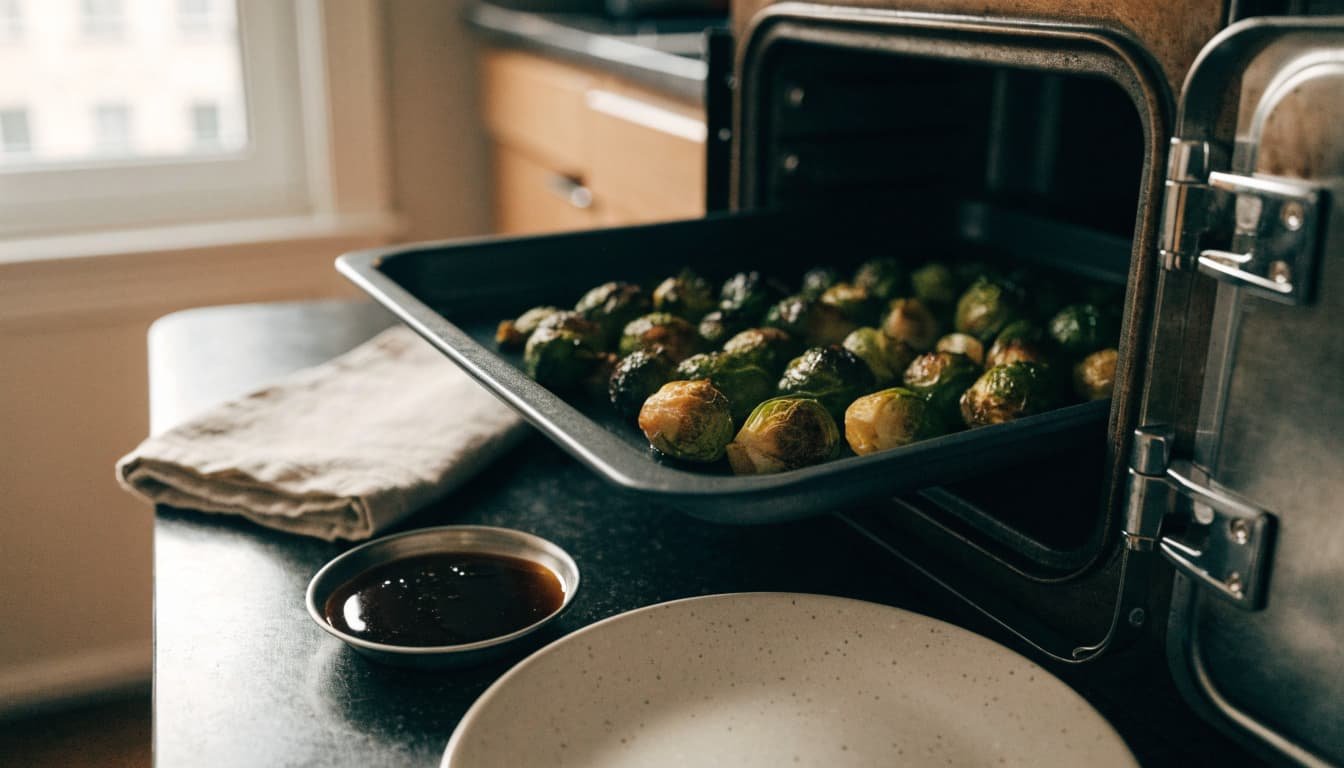
An air fryer also works well. Spread the sprouts in the basket without crowding and heat until hot, checking after a few minutes. Dry heat helps restore some browned edges, though the sprouts may not be as crisp as they were fresh.
Choose the microwave for speed
A microwave warms a serving quickly, but it softens the browned edges. Heat the sprouts in short bursts, checking between each one, and use this method when convenience matters more than crispness.
Freezing is an option if you won’t use the leftovers within a few days, but the sprouts may be softer after thawing and reheating. For the best texture, make a smaller batch or freeze portions without extra glaze.
Conclusion
Roasted Brussels sprouts with balsamic glaze are easy to get right when you dry and cut the sprouts evenly, then give them room on the pan. Roast until the edges are browned and the centers are tender. Add the balsamic near the end or after cooking to keep its sweet-tart flavor from overpowering the sprouts.
Finish with a simple topping if you like, then serve them warm with a favorite meal. A little glaze and a few browned edges are all this easy side needs.

- Christmas Cookie Ideas for Every Holiday Baker - November 9, 2026
- Christmas Cocktails: Party Drinks, Cozy Sips, and Mocktails - November 9, 2026
- 20 Christmas Appetizer Ideas for Every Holiday Spread - November 9, 2026