

Crisp apples, roasted squash, and hearty greens make fall salads fresh, satisfying, and full of cozy seasonal flavor. You can keep them light for lunch or add grains, nuts, or another hearty topping to make dinner.
A simple mix-and-match formula makes it easy to build a balanced salad, while the right dressing brings the flavors together. I’ll share easy combinations, dressing ideas, and make-ahead tips so your next salad is simple to prep and delicious to eat.
Fall Salads Are Easy to Build With a Simple Seasonal Formula
A good fall salad has a little of everything: fresh greens, seasonal produce, something filling, a crunchy topping, and a creamy or salty accent. Think of it as a flexible starting point, not a strict recipe. Add what you enjoy, then finish with a dressing that brings the flavors together.
Choose Greens and Fall Produce That Fit the Salad
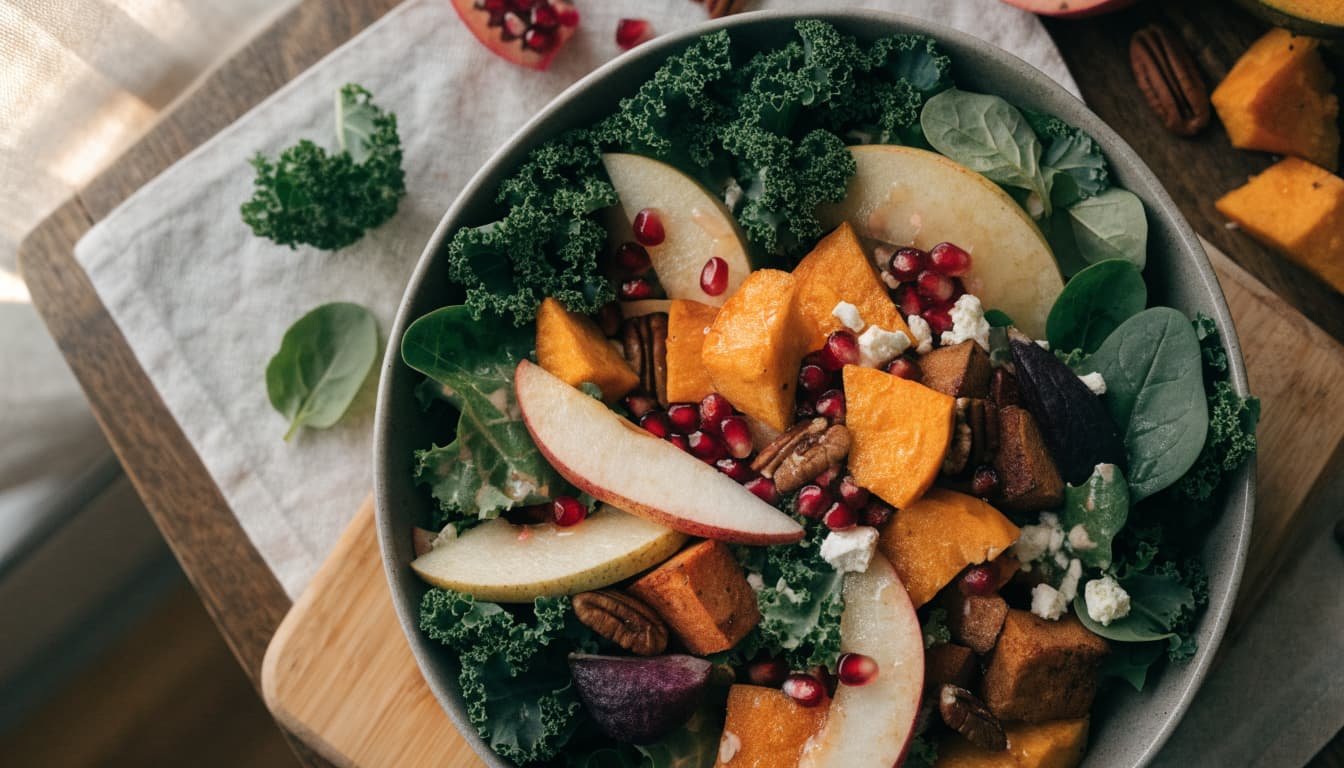
Start with greens that suit when you plan to serve the salad. Kale and shredded Brussels sprouts are sturdy, with a hearty bite that holds up well if you prep ahead. Spinach, arugula, and mixed greens are more tender, so they’re lovely for a salad you’ll toss and eat right away. You can also mix sturdy and tender greens for a balance of texture.
Next, add one or two fall favorites. Crisp apples or pears bring sweetness, while roasted squash and sweet potatoes make the salad more filling. Figs add a soft, jammy bite, and pomegranate seeds give a bright, juicy pop. Pick produce based on what you have and what sounds good together.
For a make-ahead salad, keep the greens and dressing separate until serving. Kale and shredded Brussels sprouts are more forgiving than tender leaves, which can wilt after sitting with dressing. For a helpful guide to building a varied plate, see USDA MyPlate’s healthy eating guidance.
Add Crunch, Creaminess, and a Filling Base
A crunchy topping keeps every forkful interesting. Toasted pecans, walnuts, pepitas, and croutons all work well with fall produce. Choose one, or use a small mix if you like a little more texture.
For a creamy, tangy note, add goat cheese, feta, or blue cheese. Their savory flavor balances sweet apples, pears, and roasted vegetables. A handful of cooked farro, lentils, or quinoa can make the salad substantial enough for lunch or dinner. You don’t need all three; choose the one that fits the meal and your taste.
Finish with a dressing that suits the ingredients. A simple vinaigrette adds brightness and helps offset creamy cheese or sweet fruit. Toss lightly, taste, then adjust with a little more dressing, salt, or pepper as needed. The best fall salads balance sweet, savory, crisp, creamy, and tangy flavors without letting any one ingredient take over.
Try These Fall Salad Combinations for Lunch or Dinner
These fall salads are easy to adjust with the greens, fruit, and toppings you have on hand. Each one balances fresh produce with something crunchy, creamy, or filling, so it can work as a light lunch or a satisfying dinner.
Make an Apple, Pear, and Pecan Salad
Start with spinach or mixed greens, then add thin slices of crisp apple and ripe pear. Toss in toasted pecans and finish with crumbled goat cheese for a creamy, tangy bite. Blue cheese works, too, if you like a stronger flavor.
An apple cider vinaigrette ties everything together. The sweet fruit softens the sharpness of the dressing, while the cheese and pecans add rich, savory notes. Use walnuts instead of pecans, or leave out the cheese for a lighter salad.
Pair Roasted Squash With Kale and Cranberries

For a heartier bowl, combine kale with cooled roasted butternut or acorn squash, dried cranberries, pepitas, and crumbled feta or goat cheese. The squash turns tender and sweet in the oven, while cranberries bring a chewy, tart contrast.
Kale can taste tough when served raw, so massage it briefly with a little dressing before adding the other ingredients. This softens the leaves and makes them easier to eat. If you’re prepping greens ahead, keep them refrigerated and follow the USDA’s guidance for keeping leafy greens safe.
Toss Together a Sweet Potato and Avocado Salad
Roasted sweet potato and creamy avocado make a filling base for arugula or baby kale. Add dried cranberries and pecans for a sweet-tart pop and plenty of crunch, then toss everything with lemon-Dijon dressing.
This combination makes a satisfying lunch on its own. To stretch it into dinner, add cooked quinoa or farro, or top the salad with chickpeas or sliced chicken. You can swap pepitas for pecans or use baby spinach if that’s what you have.
Use Brussels Sprouts for a Crisp, Hearty Slaw
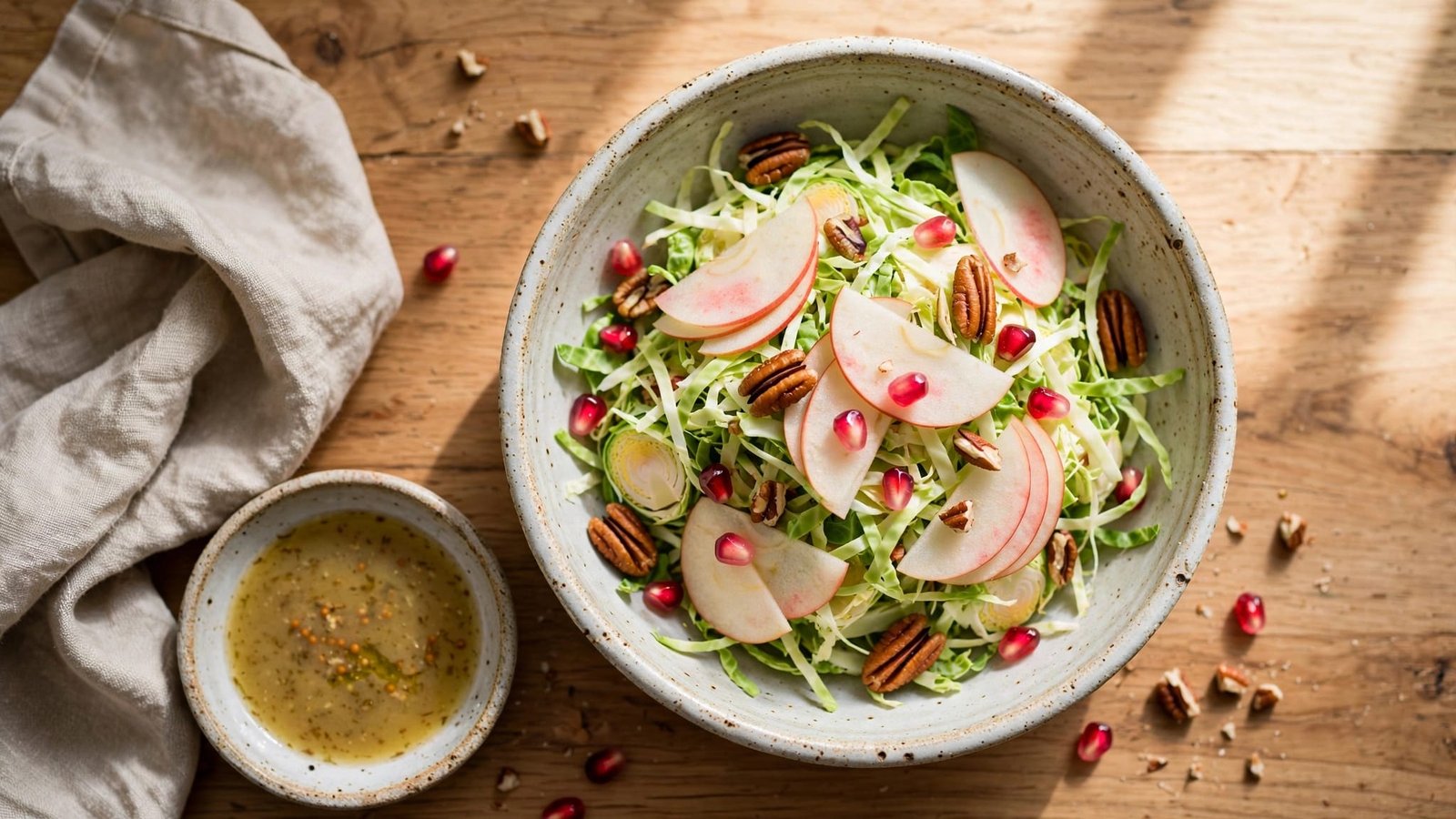
Thinly slice Brussels sprouts, or use shredded cabbage, as a sturdy base. Add crisp apple, pomegranate arils, and toasted walnuts or pecans, then toss with a bright vinaigrette made with lemon juice or apple cider vinegar.
This slaw stays crisp longer than a salad made with tender greens, so it’s a handy option to prep ahead. Keep the dressing separate until serving for the freshest texture. Swap in dried cranberries if pomegranate isn’t available, or add crumbled feta for a salty finish.
Choose a Fall Salad Dressing That Balances the Ingredients
A good dressing brings the sweet, savory, earthy, and crisp parts of a fall salad together. Keep it bright enough to balance rich cheese and roasted vegetables, but light-handed so the apples and greens still shine.

Shake Up an Apple Cider or Maple-Balsamic Vinaigrette
For an easy starting point, whisk together three parts olive oil and one part apple cider vinegar or balsamic vinegar. Add a small spoonful of maple syrup or honey, plus a little Dijon mustard. The mustard helps bring the oil and vinegar together, so the dressing coats the salad instead of separating right away. Bon Appétit’s vinaigrette tips offer a helpful look at whisking an emulsion.
Choose apple cider vinegar when you want a clean, fruity tang. Balsamic is a little sweeter and richer, which works nicely with squash, pecans, or blue cheese. Maple syrup pairs well with roasted vegetables, while honey gives the dressing a familiar floral sweetness.
Whisk the vinegar, sweetener, and mustard first, then slowly stream in the oil while whisking. You can also add everything to a small jar, seal it, and shake until blended. Taste before dressing the greens. Add more vinegar for a sharper bite, or a little more maple syrup or honey if the salad tastes too tart. A bright vinaigrette should balance sweet apples, creamy cheese, earthy greens, and warm squash without making the whole bowl taste sugary.
Use Lemon-Dijon or Tahini for a Brighter, Creamier Finish
Lemon-Dijon dressing is lighter and sharper than a maple vinaigrette. Whisk lemon juice with Dijon, olive oil, salt, and pepper for a fresh finish that pairs especially well with sweet potatoes or apples. It cuts through their sweetness and keeps each bite from feeling heavy.
Tahini-lemon dressing is thicker and creamier, with a nutty flavor that suits kale and roasted squash. Start with tahini, lemon juice, a pinch of salt, and enough water to make it pourable. Add the water a tablespoon at a time, whisking as you go. Tahini can thicken at first, so keep whisking before adding more.
Taste either dressing with a leaf or a piece of the salad, not by itself. Add lemon if the flavors need a lift, salt if they taste flat, or water if the tahini dressing clings too heavily to the greens. Dress fall salads a little at a time, then toss and taste again.
Make Fall Salads More Filling With Grains and Protein
A side salad can become a satisfying lunch or dinner with one hearty base and a protein-rich topping. Add what you have on hand, then balance the sweet apples or squash with savory ingredients and a bright dressing.

Add Farro, Lentils, or Quinoa for Hearty Texture
Cooked farro, lentils, or quinoa give greens and roasted vegetables a more substantial bite. Try farro with kale, roasted squash, and sliced apple, or toss quinoa with spinach, sweet potato, and dried cranberries. Lentils pair especially well with earthy greens, pears, and a tangy vinaigrette.
For a cold salad, cook the grains or legumes ahead and let them cool before tossing them with the greens. This keeps tender leaves from wilting and helps the dressing cling to the ingredients. If you prefer a warm salad, add slightly warm farro or lentils to sturdy kale or shredded Brussels sprouts. The leaves soften a little, and the bowl feels cozy without turning heavy.
You don’t need a large amount. A scoop of grains or lentils adds texture and helps stretch a few handfuls of greens into a filling meal. Choose whole-grain options when they fit your recipe. MyPlate recommends making at least half your grains whole grains, and its guidance explains how beans and lentils fit into MyPlate’s food groups.
Round Out the Bowl With Beans, Eggs, or Chicken
Protein makes a salad more satisfying, but it doesn’t need a separate recipe. Open a can of chickpeas or white beans, drain and rinse them, then add a handful to greens with apples, squash, or toasted nuts. Chickpeas are an easy plant-based choice; mild white beans work well when you want the fruit and dressing to stand out.
Hard-boiled eggs are another simple option. Slice one over a spinach and roasted sweet potato salad, or serve the eggs on the side for a family-style meal. Leftover cooked chicken works just as easily with kale, apple, and pecans. Use plain roasted or grilled chicken, then let the dressing bring the flavors together.
Mix and match based on what your family likes. A useful formula is greens, one grain or bean, a protein, and a seasonal topping. For a fully plant-based bowl, combine quinoa and chickpeas. For a quick family dinner, add chicken and farro, or serve eggs with roasted vegetables and greens. Each option builds on the salad you already planned, with little extra prep.
Prep and Store Fall Salads So They Stay Crisp
A little prep makes fall salads easier to serve, but storing each ingredient the right way keeps the greens crisp and the flavors fresh. Prepare the components ahead, then assemble the salad close to mealtime.

Prepare the Components Ahead, Then Assemble at Mealtime
Roast butternut squash or sweet potatoes a day or two ahead, and mix your vinaigrette in a jar. Let the vegetables cool before adding them to greens. Warm squash can wilt tender leaves and create extra moisture in the bowl.
Wash greens in cool water, then dry them well in a salad spinner or with a clean kitchen towel. Any leftover water can make leaves limp, so take a moment to get them as dry as you can. Store the greens in a covered container in the refrigerator. A clean paper towel inside can help absorb excess moisture.
Keep the dressing, roasted vegetables, greens, and toppings in separate covered containers. Add sliced apples, toasted nuts or pepitas, and dressing just before serving. Apples stay fresher when cut at the last minute, and crunchy toppings keep their texture when they don’t sit in dressing.
If you need a salad to hold for a few hours, choose kale or shredded Brussels sprouts instead of delicate spinach or mixed greens. Sturdier leaves are less likely to wilt, especially when you keep the dressing on the side.
Store Leftovers Safely and Keep Dressing on the Side
Dressed greens wilt quickly, so dress only the portions you plan to eat. Refrigerate leftover greens, squash, apples, and other perishable ingredients separately in covered containers. That way, you can build another fresh bowl without soggy leaves or softened toppings.
Roasted vegetables don’t need to reach room temperature before you refrigerate them. Transfer them to a shallow container so they cool faster, and refrigerate them within two hours of cooking. Keep your refrigerator at 40°F or below. The USDA’s leftovers and food safety guidance also advises refrigerating perishable food within two hours, or within one hour when temperatures are above 90°F.
Fresh appearance and smell can help you judge quality, but they don’t confirm that food is safe. Follow safe refrigeration times even if leftovers still look and smell fine. When in doubt, throw them out.
Conclusion
Fall salads are easy to build when you start with seasonal produce, then add a hearty green, something crunchy, and a creamy or savory accent. Choose a dressing that balances the bowl, whether that means a bright vinaigrette with sweet apples or a lemony finish for roasted squash.
Try one combination that sounds good, then adjust it with your favorite greens, grains, or toppings. A few simple swaps can turn the same fall salad idea into a fresh lunch or a satisfying dinner.

- Christmas Cookie Ideas for Every Holiday Baker - November 9, 2026
- Christmas Cocktails: Party Drinks, Cozy Sips, and Mocktails - November 9, 2026
- 20 Christmas Appetizer Ideas for Every Holiday Spread - November 9, 2026


1 Comment