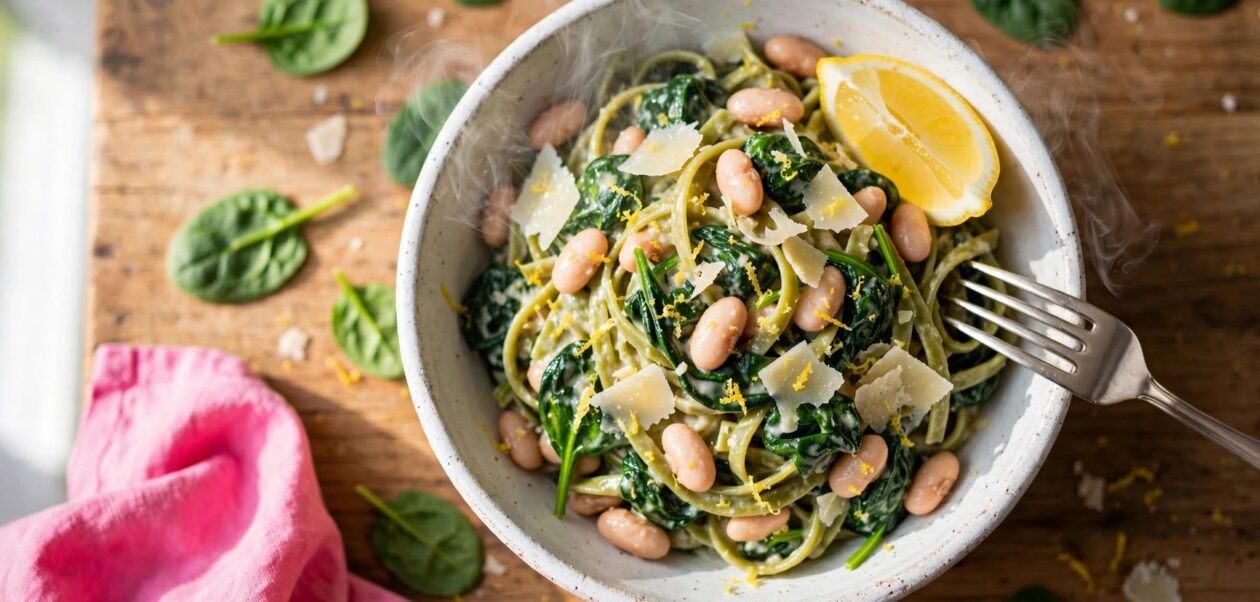
Tender pasta, creamy white beans, wilted spinach, garlic, lemon, and Parmesan make a satisfying meatless dinner with little fuss. We bring them together in about 25 to 30 minutes, using fresh or frozen spinach and a splash of reserved pasta water for a silky finish.
This flexible spinach pasta is easy to adjust to what you have on hand. Start by gathering the ingredients, then make the simple swaps that suit your table.
Healthy Spinach Pasta with White Beans and Parmesan: Ingredients to Gather
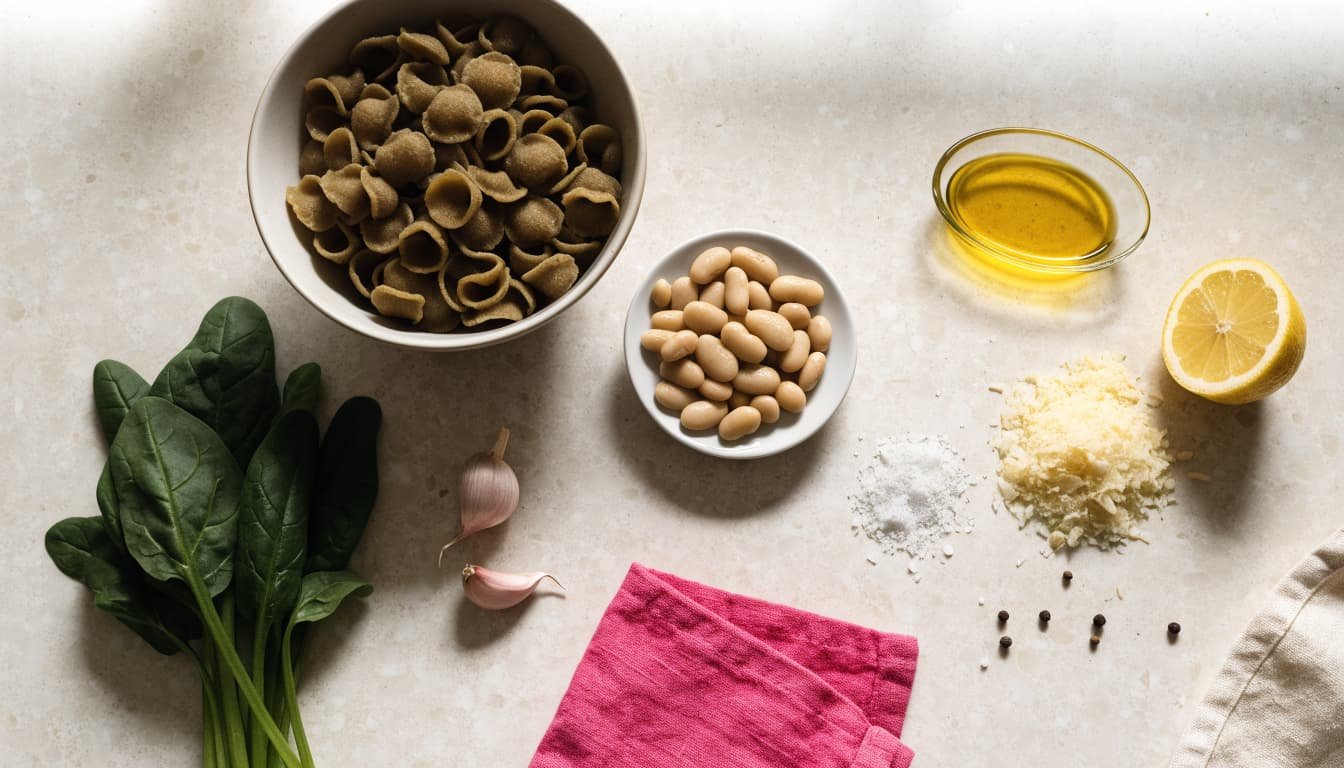
The ingredients for this spinach pasta are simple, flexible, and easy to adjust to your family’s appetite. I use pasta and white beans as the hearty base, then add spinach, garlic, lemon, and Parmesan for a savory, bright finish. Gather everything before you start so the pasta water is ready when you need it.
Choose pasta, beans, and spinach
For a flexible family-size batch, set out:
- 12 ounces dry pasta
- One 15-ounce can white beans
- 3 to 5 cups fresh spinach, or frozen spinach to taste
Short pasta shapes such as orecchiette, penne, and rotini catch the beans and greens in their curves, ridges, and hollows. Use whichever you enjoy or have in the pantry. Whole-wheat pasta is another option if you prefer its heartier texture.
Cannellini, Great Northern, and navy beans all work well here. Drain and rinse canned beans before adding them. This removes the packing liquid and can reduce some sodium; USDA food-service guidance also recommends rinsing canned beans before using them in recipes. You can find USDA guidance on rinsing canned beans.
Fresh spinach wilts quickly into the warm pasta, while frozen spinach is convenient when that’s what you have. If using frozen, let it heat through and break up any clumps as you stir. When it looks especially wet, give it a little time to cook off extra moisture so the finished dish doesn’t turn watery.
Bring the flavor together
Set aside 3 to 5 garlic cloves, minced, and 1 to 2 tablespoons of olive oil or butter. Garlic gives the dish a savory base, while olive oil or butter helps carry its flavor through the pasta. I suggest starting with the lower amount of garlic if you prefer a gentler flavor, then adjusting to taste another time.
You’ll also need 1/4 to 1/2 cup grated Parmesan, lemon juice, salt, and black pepper. Parmesan brings a salty, savory finish, while lemon brightens the creamy beans and cheese. Grated Parmesan melts into the hot pasta; you can also pass extra at the table for anyone who wants more.
Keep about 1/2 cup of pasta water before draining the noodles. You may not need all of it, but a splash can loosen the mixture and help the ingredients coat the pasta. Add it gradually rather than pouring it all in at once.
Season after tasting
Canned beans and Parmesan can both add salt, and their sodium levels vary by product. I recommend seasoning lightly at first, then tasting the finished pasta before adding more salt. Black pepper and lemon juice can also sharpen the flavor without piling on extra cheese.
If you’d like a little variation, keep additions modest so the spinach, beans, and lemon remain easy to taste. Dried oregano, chopped parsley, or a pinch of red pepper flakes can fit naturally. For another simple meal built around greens and beans, try our spinach and white bean orzo.
How to Make Spinach Pasta with White Beans
Once your ingredients are ready, cook the pasta and prepare the skillet at the same time. This keeps the spinach bright, the beans intact, and the lemon-Parmesan finish light instead of heavy.
Cook the pasta and save its starchy water
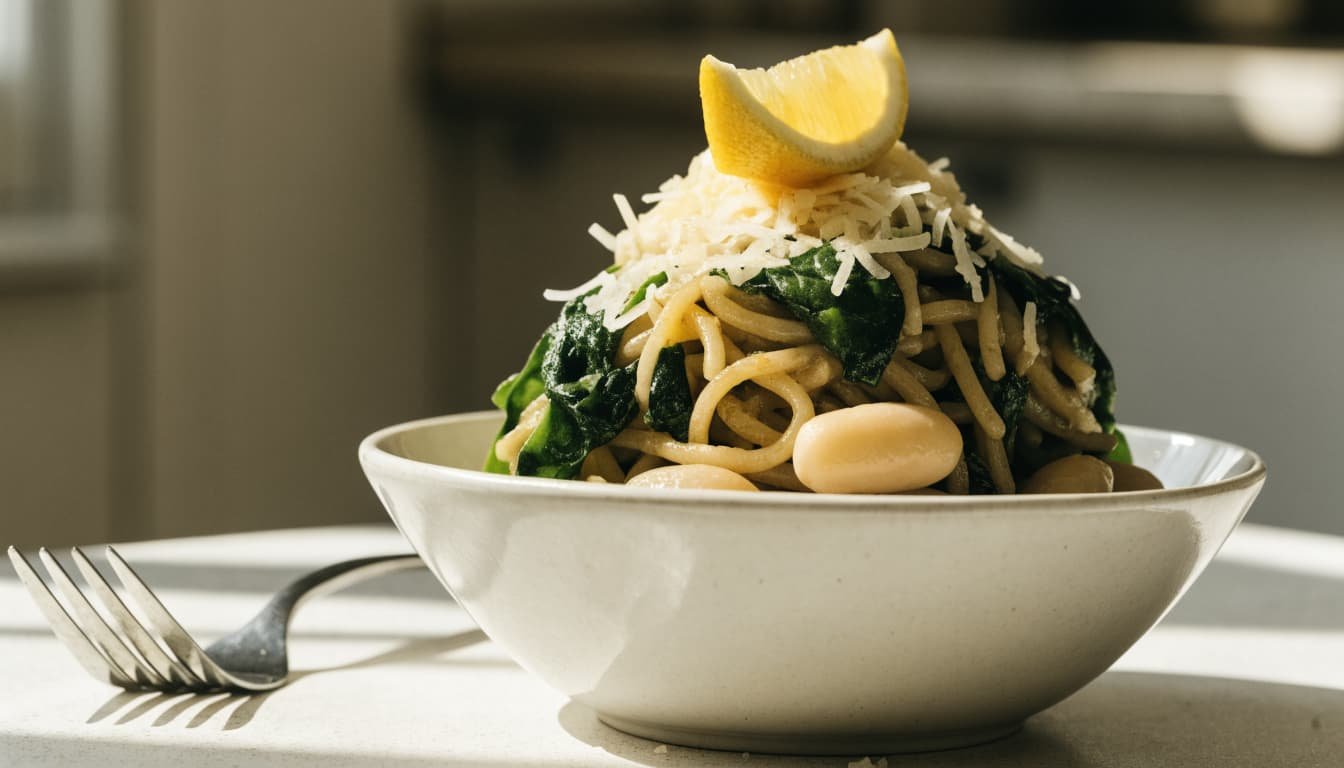
Bring a large pot of salted water to a boil, add the pasta, and cook it according to the package directions. Pasta cook times vary by shape and brand, so start checking near the early end of the suggested range. I take it off the heat when it’s tender but still has a little bite, since it will warm again in the skillet.
Before draining, scoop out about 1/2 cup of pasta water and keep it close to the stove. The cloudy water contains starch that helps loosen the mixture and bind the sauce to the noodles. You may need only a splash, but it’s easier to adjust the texture when the water is within reach. Drain the pasta without rinsing it; rinsing washes away surface starch that helps the sauce cling. For more on how starch helps coat noodles, see Serious Eats’ guide to cooking pasta.
Soften the garlic, spinach, and white beans
While the pasta cooks, warm the oil or butter in a large skillet over medium-low heat. Add the minced garlic and stir briefly, just until fragrant. Keep the heat gentle so the garlic softens without browning, which can give the dish a bitter edge.
Next, add fresh spinach and stir until the leaves wilt and turn bright green, then remove the pan from the heat briefly if they’re already tender. Frozen spinach needs more time: heat it through, break up any clumps, and let excess moisture cook away if the pan looks wet. This step helps keep the finished pasta from turning watery.
Fold in the drained white beans gently and warm them for a few minutes. They’re already cooked, so they only need to heat through. I stir carefully to keep them whole, then wait to add much salt because both canned beans and Parmesan can bring saltiness.
Toss until the lemon-Parmesan sauce turns glossy

Add the drained pasta to the skillet with a squeeze of lemon juice and a small splash of reserved pasta water. Toss until the spinach and beans are spread through the noodles. If the pasta looks dry or the ingredients don’t move easily, add another small splash and toss again.
Stop when the noodles look glossy and lightly coated, not soupy. The water should help the lemon and pan juices cling to the pasta, not collect at the bottom. Take the skillet off the heat before stirring in the Parmesan. The residual warmth helps it melt; adding it over direct heat can make the cheese clump.
Taste before adding salt. Then adjust with more lemon, black pepper, or a little salt as needed. I like to keep the finish bright and modest, so the lemon, greens, and creamy beans still come through. Serve warm, with extra Parmesan at the table if you like. For another simple meatless dinner with beans and greens, try our white bean and kale skillet.
Easy Swaps and Serving Ideas for a Flexible Meatless Dinner
I keep the pasta, white beans, spinach, and lemon at the center, then make small changes around them. That way, the bowl still tastes balanced, even when you use what’s already in your kitchen.
Adjust the pasta and spinach
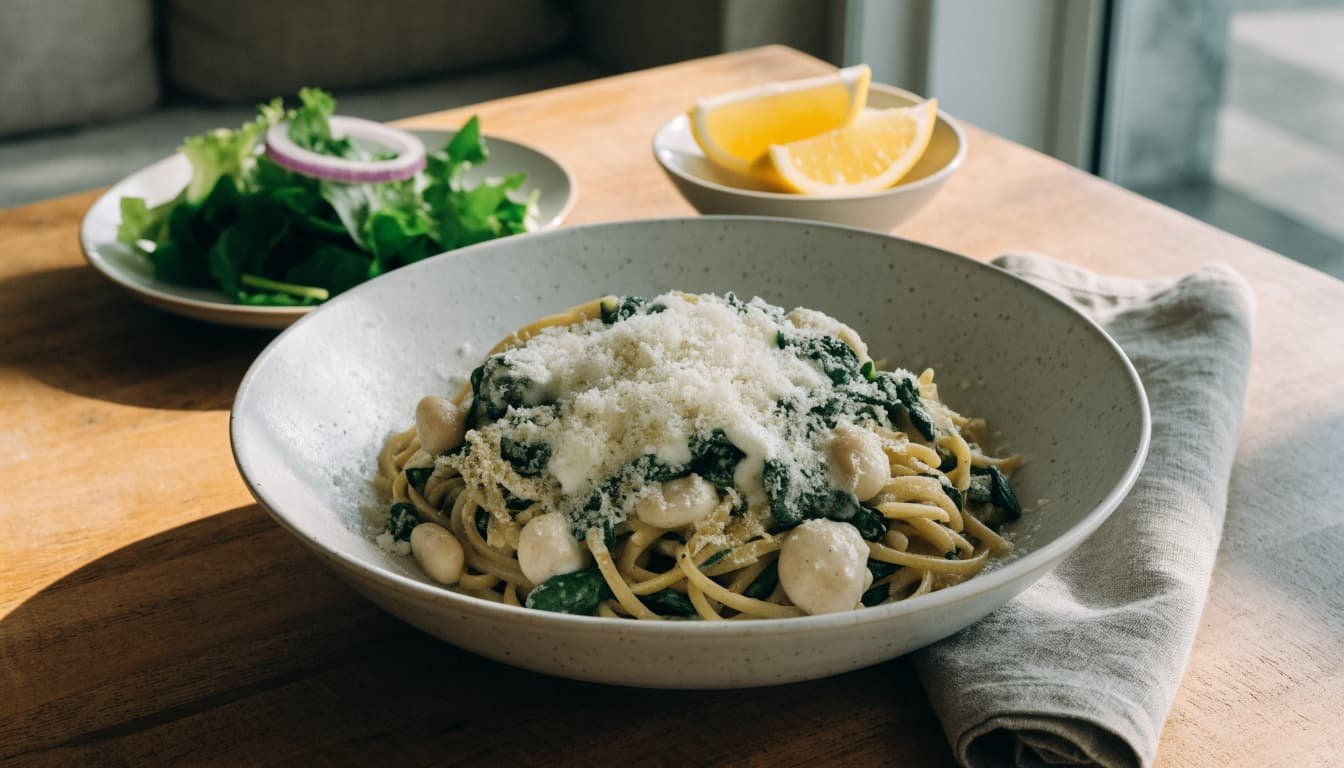
For a heartier texture, use whole-wheat pasta. Its flavor is a little more robust, so I pair it with the creamy beans and bright lemon rather than adding lots of extra seasonings. Short shapes like penne or rotini still make it easy to scoop up the spinach and beans. For another dinner idea with whole-wheat pasta, try these lentil meatballs with whole-wheat pasta.
Frozen spinach is a convenient stand-in for fresh. Thaw it and drain or squeeze out excess water before adding it, or let extra moisture cook off in the skillet. This keeps the pasta from turning watery. You can also add a little extra spinach if you want more greens in each serving, while keeping the beans and pasta in balance.
Make it dairy-free or add a little flavor
For a dairy-free serving, leave out the Parmesan or use a plant-based alternative. I’d finish the pasta with lemon juice and chopped parsley or basil, which add a fresh lift without the cheese. If you’re following a strict vegetarian diet, check the Parmesan’s product information: some varieties use animal rennet. The Vegetarian Society’s cheese guidance explains why some traditional Parmesan isn’t suitable for vegetarians, and a vegetarian-friendly alternative is another option.
A small amount of an extra seasoning or ingredient can change the flavor without taking over. Try dried oregano, a pinch of red pepper flakes, or chopped sun-dried tomato. Extra greens also fit easily; add them near the end and stir until just wilted. I’d choose one or two additions at most, so the garlic, lemon, beans, and spinach remain easy to taste.
Serve it with one simple side
The pasta and beans make a satisfying meatless dinner on their own, so you don’t need to build a crowded plate. I like serving it with a simple green salad for a crisp contrast. Whole-grain bread or one roasted vegetable also works if that better suits your meal. Choose just one side, then bring the pasta to the table warm with extra lemon or herbs for anyone who wants a brighter finish.
How to Store and Reheat Leftover Spinach Pasta
Leftover spinach pasta makes an easy lunch or dinner, though the noodles and beans absorb moisture as they sit. I store it promptly and reheat only what I plan to eat, adding a little liquid to bring back a softer texture.
Store leftovers promptly and keep them cold
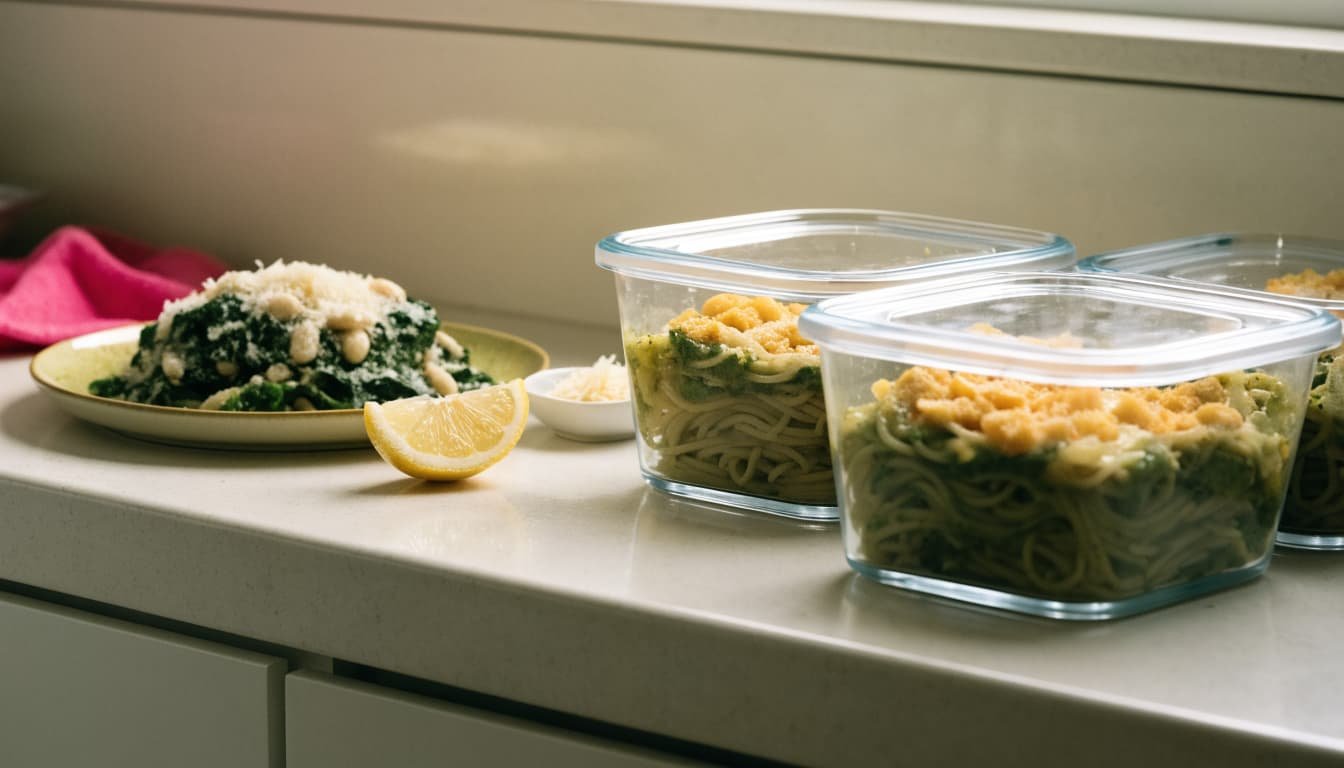
Transfer the pasta to shallow, covered containers and refrigerate it within two hours of cooking. If the temperature is above 90°F, refrigerate it within one hour. Shallow portions cool faster than a deep pot, and you don’t need to wait for the pasta to reach room temperature before putting it away.
Keep your refrigerator at 40°F or below, and use the leftovers within three to four days. I add a date to the container when I know I’ll have several meals to keep track of. For the full storage and handling guidance, see the USDA’s leftovers and food safety recommendations.
The pasta may look drier after chilling because it continues to soak up moisture. The spinach can soften, too, so expect a more tender texture than when the dish first came off the stove. If you’re setting some aside before serving, store it separately from fresh toppings when practical. These simple ways to reduce food waste at home can also help you plan portions and use refrigerated food in time.
Reheat a portion without drying it out
Warm only the amount you’ll eat. For the stovetop, place it in a covered skillet over low to medium-low heat with a splash of water or broth. Stir occasionally and add another small splash if the pasta still looks dry. Keep the heat gentle so the beans warm through without breaking apart and the spinach doesn’t cook down further.
For the microwave, transfer a portion to a microwave-safe dish, add a little water, and cover it. Stir partway through heating so the center warms evenly. Whichever method you use, check that the leftovers reach 165°F throughout. A food thermometer helps you check the middle, where the pasta may take longer to heat.
Once warm, taste before adding anything else. A squeeze of fresh lemon brightens the creamy beans and greens, while a little Parmesan restores the savory finish. Add them at the end rather than reheating the cheese with the pasta, and serve the portion while it’s warm.
Conclusion
Healthy spinach pasta with white beans and Parmesan brings pasta, beans, spinach, garlic, and lemon together for a satisfying, adaptable dinner. I like how simple swaps, such as whole-wheat pasta or frozen spinach, let you work with what you have, much like our garlic white bean and kale skillet.
For the best texture, add reserved pasta water a little at a time, stir in Parmesan off the heat, and taste before adding salt. Those small steps keep the sauce glossy and the flavors balanced.
Save pin for later


- Air Fryer Salmon Bites with Quick Lemon-Dill Yogurt Sauce - November 26, 2026
- Healthy Spinach Pasta with White Beans and Parmesan - November 26, 2026
- Easy Tofu Stir-Fry with Vegetables and Ginger Sauce - November 26, 2026