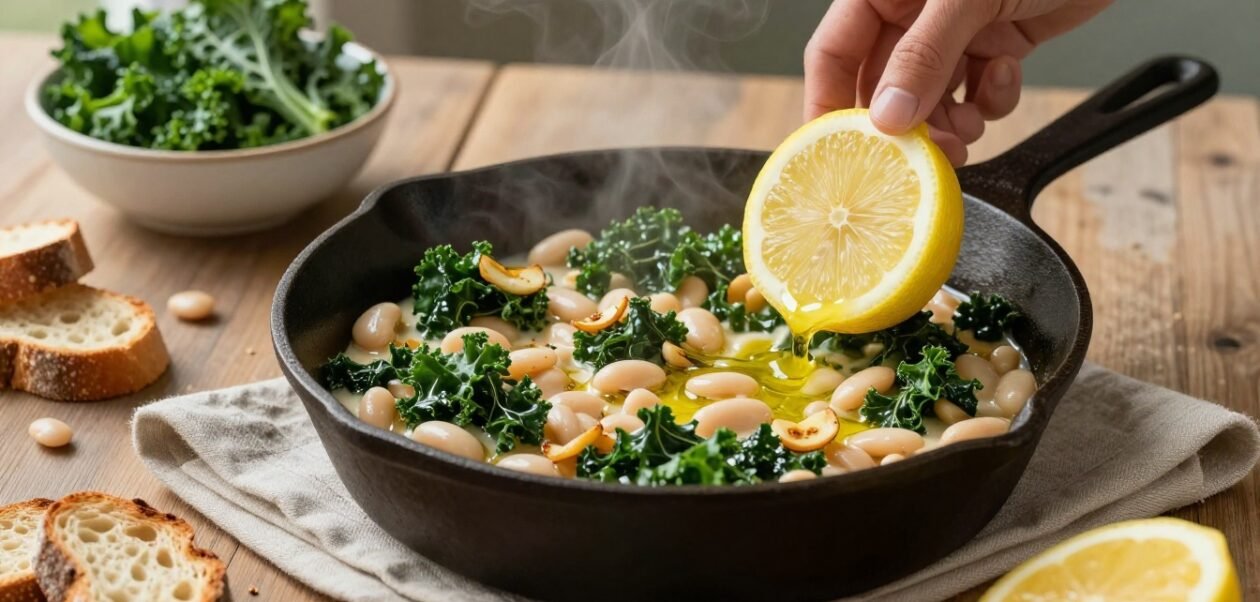
A warm, meatless dinner can come together with pantry staples and a few handfuls of fresh kale. Garlic, canned white beans, and olive oil make a simple skillet meal, with lemon to brighten the savory flavors.
It takes about 15 minutes from start to finish, and you can serve it with toast, rice, or quinoa. Heat the beans through, wilt the kale until tender, and adjust the seasoning to taste.
Garlic White Bean and Kale Skillet for Meatless Meals
This skillet pairs creamy white beans with tender kale, garlic, and lemon for a simple meatless dinner. Serve it with toast, rice, or quinoa, or enjoy it on its own.

Gather the beans, kale, garlic, and simple seasonings
Olive oil gives the ingredients a light coating and helps carry the garlic’s flavor. Garlic adds a savory base, while kale brings color and a hearty texture. Cannellini beans are mild and creamy; Great Northern, navy, or butter beans work well, too. Drain and rinse canned beans before adding them. This removes the packing liquid and can reduce some sodium, though the amount varies by product. For more on canned-food prep, see Penn State Extension’s tips for using canned foods.
Kale stems are firm, so remove them for a more tender skillet. If you’d like to use them, slice them thinly and cook them with onion until they begin to soften. Curly kale usually needs a little longer than tender varieties.
Yield: 2 generous servings, or 3 smaller servings Prep time: 7 minutes Cook time: 8 minutes Total time: 15 minutes
Ingredients
- 1 tablespoon olive oil
- 3 to 4 garlic cloves, minced
- 1 bunch kale, stems removed and leaves chopped
- 1 (15-ounce) can cannellini or Great Northern beans, drained and rinsed
- Salt and black pepper, to taste
- Lemon juice, to taste
- Red pepper flakes, optional
Cook the skillet in three quick stages
Keep the garlic moving and watch its color. It should smell fragrant, not browned; garlic can turn bitter if it cooks too long.
- Warm the olive oil in a large skillet over medium heat. Add the garlic and cook for 30 to 60 seconds, stirring, just until fragrant. If using thinly sliced kale stems and onion, cook them first until the onion softens, then add the garlic.
- Add the chopped kale and stir to coat it in the oil. Cook for 3 to 5 minutes, stirring now and then, until the leaves have wilted and look bright green. Curly kale may need another minute or two. For more bite, stop as soon as it softens; cook a little longer for tender leaves.
- Stir in the drained beans and cook for 2 to 4 minutes, until heated through. Season with salt, black pepper, and red pepper flakes, if using. Add a squeeze of lemon, taste, and adjust the seasoning before serving.
The beans are already cooked, so they only need to warm through. A little lemon at the end brightens the garlic and greens without covering their flavor.
Small ingredient choices make the skillet taste its best
A few simple swaps can change how this garlic white bean and kale skillet tastes and feels. Use the greens and beans you have, then adjust the seasonings in small amounts so the garlic, vegetables, and beans still come through.

Choose tender greens and beans with the texture you like
Curly kale has ruffled leaves and a sturdier bite. Lacinato kale, also called dinosaur kale, has flatter leaves that tend to soften into a more tender texture while keeping a little chew. Either works here. Remove the tough stems, and remember that a full bunch of raw kale takes up much more room than it will after wilting.
If the skillet looks crowded when you add the greens, add them in batches. Stir each handful until it starts to wilt, then make room for the next. Curly kale may need a little more time to soften, while lacinato often becomes tender sooner. Check the leaves as they cook and stop when they reach the texture you like.
Cannellini beans are large and creamy, so they give the skillet a soft, substantial bite. Great Northern beans are a little smaller, with a more delicate texture, and work just as well. Use either one, or combine them if you have a partial can to use up. Drain and rinse canned beans first, then handle them gently as you stir so they stay whole.
Build flavor with onion, lemon, or a little heat
If you have an onion on hand, dice a small amount and let it soften in the oil before adding the garlic. It gives the skillet a sweeter, more savory base. Add the garlic after the onion has begun to soften, since garlic cooks quickly and can turn bitter if it browns.
For gentle heat, add a pinch of red pepper flakes with the garlic. Start small, especially if you’re serving the skillet to people with different spice preferences. You can always add more at the table.
Lemon juice brightens the creamy beans and savory greens. Squeeze in a little just before serving, taste, and add more only if the flavor still feels heavy. Toasted pine nuts make a crisp, nutty topping; sprinkle them over each serving so they keep their crunch.
Canned beans and seasoning blends can already contain salt, so taste the skillet before adding extra. A little black pepper, lemon, or red pepper may be all it needs.
Turn this white bean and kale skillet into a filling dinner
The beans and greens make a satisfying base, and a simple side can stretch it into a more substantial meal. Keep the skillet as it is or add a grain or potato, then let everyone choose a topping they enjoy.
Pair it with rice, quinoa, toast, or potatoes
Serve the skillet on its own for a lighter meal, or spoon it over rice, quinoa, or barley when you want something heartier. A baked potato is another easy base. The grain or potato adds substance without changing the skillet itself.

Whole-grain bread or toast is useful for catching the garlicky juices at the bottom of the bowl. Brown rice, barley, quinoa, and whole-wheat bread are whole-grain choices; Harvard’s Healthy Eating Plate guide includes whole grains as one part of a balanced meal. Use a microwave grain pouch or leftover cooked grains if you want dinner on the table with little extra prep.
Offer toppings and simple swaps at the table
Set out a few optional finishes so each person can adjust their serving without changing the main dish. Lemon wedges brighten the beans and greens, while chopped herbs add a fresh note. Chili flakes bring heat, and toasted nuts add crunch. A fried egg makes a satisfying topping if you want to add one.
Keep stronger flavors and toppings on the side, especially when the skillet is for a household with different tastes. Someone can add chili flakes, while another person keeps their portion mild. The same approach works for lemon and nuts, so everyone can finish a plate without needing a separate dinner.
For a dairy-free meal, leave out cheese and cream. The skillet is flavorful without them, and lemon, herbs, or toasted nuts can add plenty of character. If you serve cheese or another topping, place it in a separate bowl so it stays optional. A few simple choices at the table make this white bean and kale skillet easy to share, while the main recipe stays just as it is.
Easy variations keep meatless skillet dinners interesting
The garlic, white beans, and kale make a good base for small changes. Add another vegetable, make the juices a little richer, or serve the skillet over a grain when you want a more filling dinner. These variations keep the main recipe familiar while giving it a different texture and flavor.
Add mushrooms, tomatoes, or a splash of broth
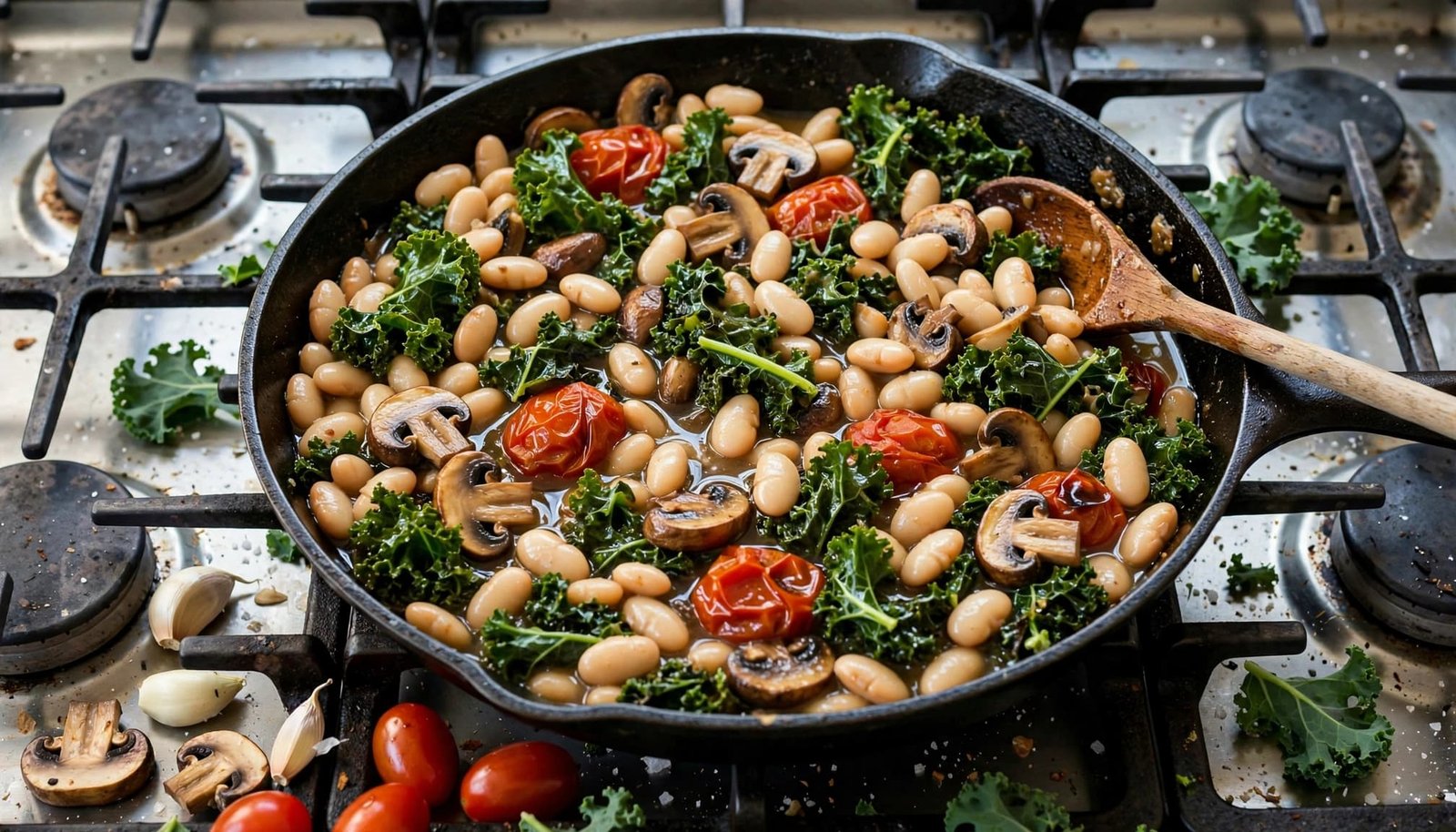
For a more savory skillet, slice mushrooms and sauté them in the oil before adding the kale. Give them room in the pan and let their moisture cook off; stirring now and then gives the slices a chance to brown. Add the garlic once the mushrooms are tender, then stir in the kale and beans. This version needs extra time for the mushrooms, so cook until they’re browned and tender before moving on.
Cherry tomatoes bring a softer, slightly sweet flavor. Add a handful after the garlic and cook until their skins begin to wrinkle and the tomatoes release some juice. If the kale needs help wilting, pour in a small splash of vegetable broth and stir. Add more only as needed. A little liquid coats the beans and greens, while too much can leave the skillet soupy.
If you’re comparing canned bean options, USDA FoodData Central’s food search includes nutrient information for canned cannellini beans.
Make it creamy, spicy, or extra hearty
For a cozy, thicker skillet, mash a few beans against the side of the pan and stir them back in. They help thicken the juices without adding another ingredient. For a creamier finish, stir in a modest spoonful of cream or a dairy-free alternative near the end, then taste before adding more. A pinch of red pepper flakes is an easy spicy finish; keep it light if you’re serving a range of tastes.
To add another plant-based protein, brown cubed firm tofu in a little oil before cooking the garlic. Set it aside while you prepare the mushrooms or kale, then return it to the pan with the beans so it warms through. The skillet will take longer than the basic version, but the tofu adds a firmer bite.
For a more filling meal, spoon the skillet over cooked brown rice, quinoa, or barley. You can also fold a little cooked grain into the pan, adding broth gradually so the beans and greens stay moist without becoming watery.
Store leftovers safely and reheat them without drying out
This garlic white bean and kale skillet keeps well for quick lunches or another easy dinner. Store it promptly, then warm only the portion you plan to eat.

Refrigerate the skillet promptly
Transfer leftovers to a covered, airtight container and refrigerate them within two hours of cooking or serving. If the temperature is above 90°F, put them away within one hour. Divide a larger amount into shallow containers so it cools faster, and keep your refrigerator at 40°F or below.
Use refrigerated leftovers within 3 to 4 days, following the USDA’s leftover food safety guidance. A date on the container can help you keep track when you have several meals in the fridge.
Reheat gently and add a little moisture
For the stovetop, place a serving in a skillet over low to medium-low heat. Stir in a small splash of water or broth, then warm it gently, stirring now and then. Add a little more liquid if the beans look dry, but avoid adding too much at once.
You can also microwave a serving in a covered, microwave-safe dish. Stir it partway through so it heats evenly, then continue heating until hot throughout. Reheat leftovers to 165°F; a food thermometer helps check the temperature.
Finish with fresh flavor
Kale softens more after it sits, so expect the reheated skillet to be more tender than it was on the first night. A squeeze of lemon or a sprinkle of fresh herbs after reheating brings back some brightness. Keep toppings such as toasted nuts separate until serving if you want them to stay crisp.
Nutrition varies with serving size, the amount of olive oil, the beans you use, and any toppings.
Conclusion
This garlic white bean and kale skillet makes meatless dinner practical with familiar ingredients and about 15 minutes of cooking. Start with beans, kale, garlic, and lemon, then choose a topping or side that suits your table.
Serve it on its own or with toast, rice, quinoa, or potatoes. A few simple choices make the skillet easy to adjust while keeping the meal warm, filling, and straightforward.

- Christmas Cookie Ideas for Every Holiday Baker - November 9, 2026
- Christmas Cocktails: Party Drinks, Cozy Sips, and Mocktails - November 9, 2026
- 20 Christmas Appetizer Ideas for Every Holiday Spread - November 9, 2026