Roasting brings out the pumpkin’s natural sweetness and gives this soup a cozy, rich flavor. A few everyday ingredients make it filling, and you can use fresh pumpkin or canned pumpkin if the recipe has been tested with it.
I’ll share clear cooking steps, easy swaps, and tips for storing and reheating leftovers, so you can make this simple pumpkin recipe your own.
Why this healthy pumpkin recipe is worth making
This roasted pumpkin soup is smooth, savory, and easy to fit into a weeknight dinner or family meal. The prep is simple, the ingredients are flexible, and roasting gives fresh pumpkin a warm, gently sweet flavor.
What the finished soup tastes and feels like
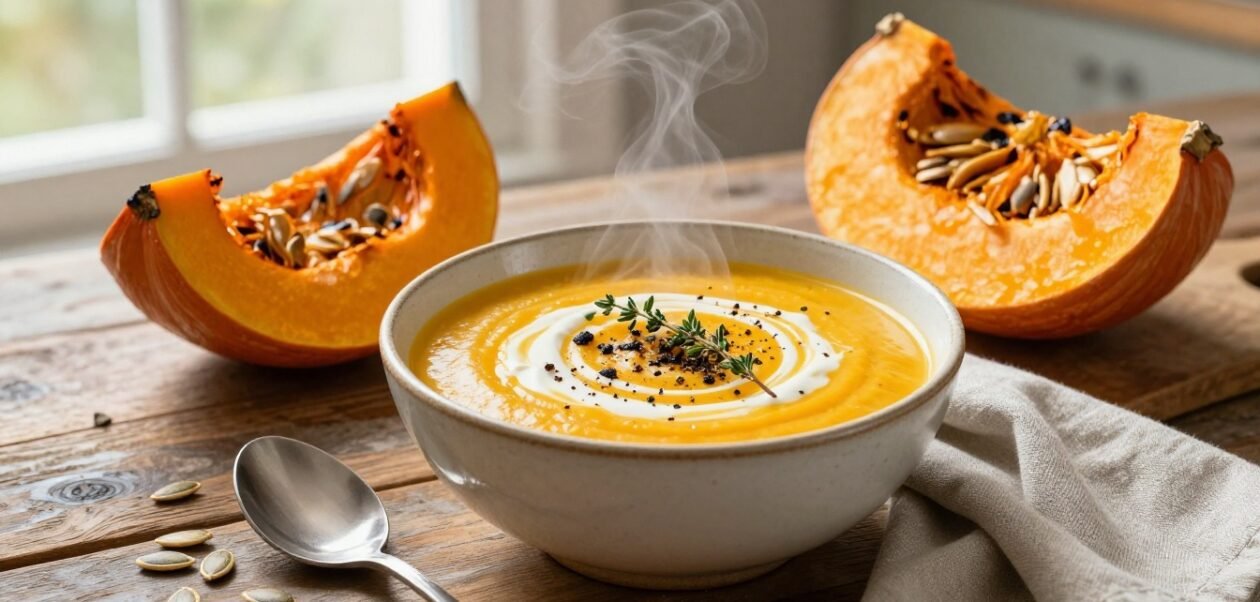
Each spoonful is creamy and smooth, with pumpkin’s mild sweetness balanced by savory onion and garlic. Add a pinch of warming spices if you like, or keep the flavor simple and let the roasted pumpkin shine.

You can adjust the texture as you blend. Add broth gradually for a thicker soup, or pour in more to make it lighter and easier to sip. A splash of cream or coconut milk makes the bowl richer, while toasted pumpkin seeds add a little crunch on top.
Fresh pumpkin is especially nice when you want that deeper roasted flavor. Canned pumpkin is a useful shortcut when you want less prep; choose plain pumpkin puree, not pumpkin pie filling. The final nutrition will depend on your ingredients and toppings. For ingredient-specific information, USDA FoodData Central’s pumpkin listings offer a helpful reference.
How long the recipe takes and what it serves
Plan on about 15 minutes of prep, then 40 to 60 minutes for the pumpkin to roast until tender. After that, the soup needs only a short simmer with the broth and seasonings. The hands-on work is manageable, and the roasting does most of the heavy lifting.
This pumpkin recipe makes about four to six bowls, depending on the size of your pumpkin and how generously you serve each portion. That’s enough for a family dinner, with the possibility of leftovers for lunch.
Choose the right pumpkin and gather simple ingredients
For this pumpkin recipe, choose a small sugar pumpkin, sometimes labeled a pie pumpkin. Its flesh is tender and flavorful, which makes it a good fit for roasting and soup. Large carving pumpkins are bred for display, and their flesh can be watery or less flavorful.
For four to six servings, gather:
- About 3 pounds of pumpkin
- 1 to 2 tablespoons olive oil
- 1 onion, chopped
- 2 garlic cloves, minced
- 3 to 4 cups vegetable or chicken broth
- Salt and black pepper
- Optional nutmeg or smoked paprika
- Optional cream or coconut milk for serving
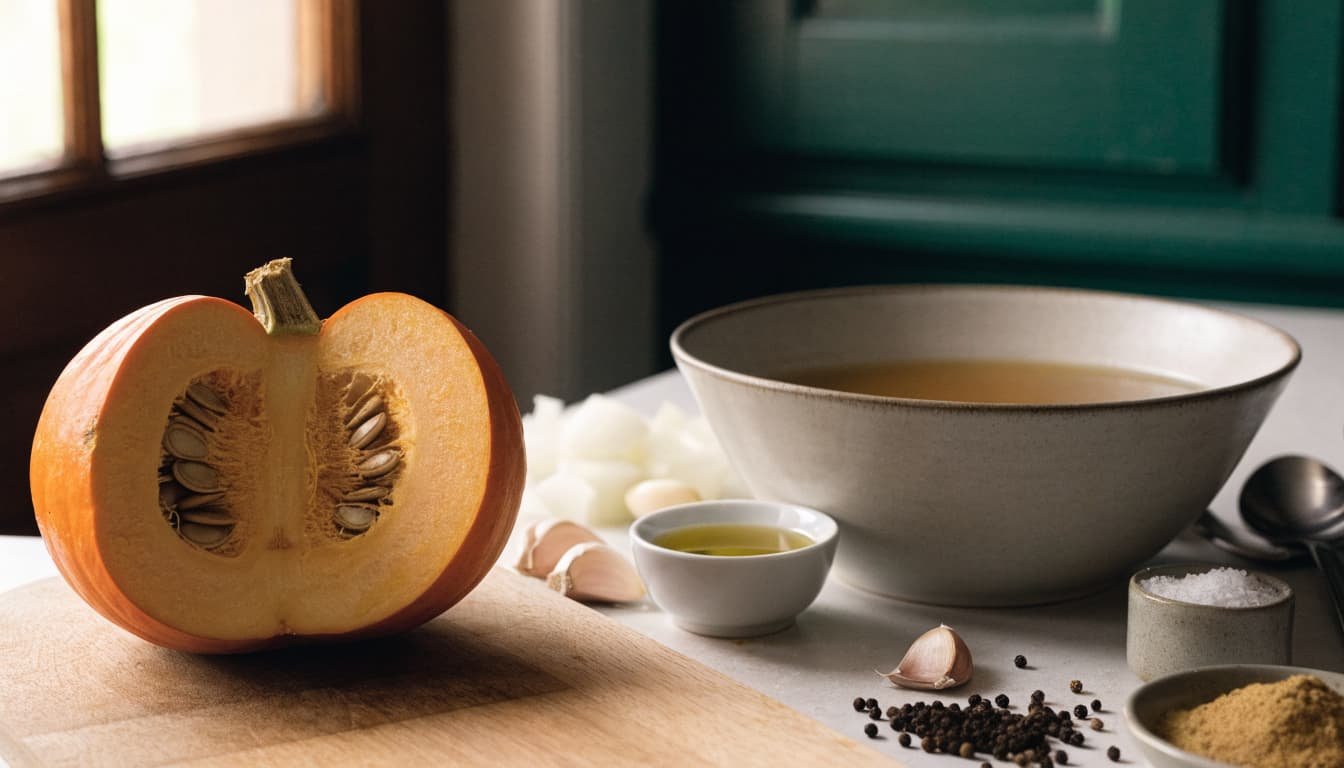
Fresh pumpkin or canned pumpkin: which should you use?
Fresh pumpkin takes more time to peel, cut, and roast, but it brings a warm roasted flavor to the soup. You can also control the texture as you blend it, adding broth a little at a time until the soup is as thick or silky as you like. For more detail on how the two options compare, see this fresh-versus-canned pumpkin taste test.
Canned pumpkin is a handy shortcut when you want to skip roasting. Choose plain pumpkin purée, not pumpkin pie filling, which is sweetened and spiced. Stir the purée into the pot after sautéing the onion and garlic, then add broth gradually and blend until smooth. Neither option is automatically more nutritious; the final recipe depends on the ingredients you add.
Easy ingredient swaps for different diets
Use vegetable broth for a vegetarian soup, or chicken broth for a savory, fuller flavor. Start with 3 cups, then add more if the soup feels too thick. Broth is the easiest way to adjust the consistency without changing the main ingredients.
For a dairy-free bowl, finish the soup with coconut milk or another dairy-free alternative instead of cream. Coconut milk gives it a mild sweetness and a creamy texture, while many other dairy-free options taste more neutral. Cream adds richness, but you can leave it out for a lighter soup.
Nutmeg and smoked paprika are optional. Nutmeg adds gentle warmth, while smoked paprika brings a savory, smoky note. Start with a small pinch, taste, then add more if you like.
How to make roasted pumpkin soup, step by step
Once your ingredients are ready, the method is simple: roast the pumpkin until soft, simmer it with aromatics and broth, then blend until smooth. The pumpkin’s size and thickness affect roasting time, so use the texture of the flesh as your guide.
Roast the pumpkin until tender and lightly browned
Wash the pumpkin, then place it on a stable cutting board. Use a sharp chef’s knife to cut it in half, keeping your hands clear of the blade. A damp towel under the board can help keep it from sliding. If the pumpkin is very firm, take your time and don’t force the knife.
Scoop out the seeds and stringy pulp with a sturdy spoon. Brush the cut surfaces lightly with olive oil, then place the halves cut-side down on a baking sheet. Roast at 400°F for about 40 to 60 minutes.

Start checking early if you’re using a small pumpkin. Larger halves may need more time. The pumpkin is ready when a fork slides easily into the thickest part of the flesh. Let it cool until you can handle it comfortably, then scoop out the flesh and discard the skin.
Build flavor with onion, garlic, broth, and pumpkin
Warm olive oil in a heavy pot over medium heat. Add the chopped onion and cook, stirring now and then, until it softens, about 5 to 7 minutes. Stir in the garlic and cook for about 30 seconds, just until fragrant. Garlic can turn bitter if it browns, so keep it moving.
Add the roasted pumpkin, 3 cups of broth, salt, and black pepper. For extra warmth, add a pinch of nutmeg or smoked paprika. Bring the mixture to a gentle simmer, then cook for 10 to 15 minutes, stirring occasionally so the flavors come together. If it looks very thick, add a little more broth.
Blend until smooth and adjust the consistency
Use an immersion blender right in the pot, moving it through the soup until smooth. Keep the blender head beneath the surface to limit splashing. If you’re using a countertop blender, let the soup cool slightly first, then blend in small batches. Follow the blender’s instructions for hot liquids, leave the lid vented to release steam, and cover the opening with a folded kitchen towel.
Add broth or water a little at a time if you want a thinner soup. Taste and adjust the salt and pepper, then stir in cream or coconut milk if you’d like a richer finish. Start with a small splash, taste, and add more as needed.
Make the pumpkin soup your own with easy variations
Once the soup is blended, a few small changes can shift the flavor or make it more filling without changing the basic method. Add extras gradually, and keep the roasted pumpkin at the center of the bowl.

Add gentle heat, herbs, or extra vegetables
For a little warmth, stir in a pinch of cayenne or chili flakes, or start with about 1/4 teaspoon of curry powder. Curry blends vary in strength, so taste before adding more. A curry-seasoned vegetable soup is a good reminder that the amount may depend on the blend you use.
Fresh sage or thyme adds a savory herbal note. If you want a sweeter, fuller flavor, roast a chopped carrot alongside the pumpkin and blend it into the soup. You can also stir in about 1 teaspoon of maple syrup for a gently sweet finish. Taste before serving, then adjust the seasoning a little at a time so the pumpkin still shines.
For a more filling pumpkin recipe, stir in about 1 cup of cooked lentils or drained canned white beans after blending. Warm the soup over low heat until the add-in is heated through. Both make the bowl heartier without changing the roasting and blending steps.
Finish each bowl with a simple topping
A topping adds contrast to smooth soup, whether you want crunch, freshness, or a creamy finish. Try toasted pumpkin seeds, a spoonful of plain yogurt, chopped sage or thyme, or a small swirl of coconut milk.
For family meals, set the toppings out in small bowls and let everyone finish their own serving. That way, you can keep the soup simple in the pot and offer a few easy choices at the table.
Serve, store, and reheat leftovers safely
A bowl of roasted pumpkin soup makes an easy lunch or dinner. Serve it with whole-grain bread, a simple salad, or a sandwich for a fuller meal.

Store leftover cooked soup separately from any whole pumpkin you plan to keep. The storage advice for prepared food doesn’t apply to an intact pumpkin.
Keep leftovers creamy when reheating
Let the soup cool slightly, then transfer it to a covered container and refrigerate it within two hours. If the room is hotter than 90°F, refrigerate it within one hour. For quicker cooling, divide a large batch among shallow containers instead of leaving it in the pot.
Use refrigerated soup within 3 to 4 days. When you’re ready to eat, reheat only the amount you need. Warm it gently on the stove over medium-low heat or in the microwave, stirring often so it heats evenly. The soup may thicken as it cools, so add a splash of broth or water if needed.
Reheat until the soup is steaming hot throughout, or check that it reaches 165°F with a food thermometer. The USDA’s leftover food safety guidance recommends bringing soups, sauces, and gravies to a boil when reheating. If you added cream or coconut milk, avoid a hard boil after reheating to help keep the texture smooth.
Freeze extra soup for a future meal
If you won’t finish the soup within a few days, freeze it in meal-sized, freezer-safe containers. Leave a little room at the top, since liquid expands as it freezes, and label each container with the date. Smaller portions thaw and reheat more easily than one large batch.
Thaw frozen soup in the refrigerator, or reheat it straight from frozen in a saucepan or microwave, stirring as it warms. The texture can shift after freezing, especially if you added cream. A slow reheat with frequent stirring usually helps; if it still looks uneven, blend it briefly until smooth.
These storage tips are for cooked pumpkin soup, not a whole pumpkin. Keep an intact pumpkin separate and follow guidance for storing fresh produce; once it’s cut or cooked, refrigerate or freeze it as a prepared food.
Conclusion
Roasting gives this pumpkin soup its warm, naturally sweet flavor, while familiar ingredients keep it simple to make. Adjust the seasoning and broth until the flavor and texture feel right for you.
Use fresh pumpkin when you have time to roast it, or choose plain canned pumpkin for a quicker version. Save any leftover soup for another easy meal.

- Christmas Cookie Ideas for Every Holiday Baker - November 9, 2026
- Christmas Cocktails: Party Drinks, Cozy Sips, and Mocktails - November 9, 2026
- 20 Christmas Appetizer Ideas for Every Holiday Spread - November 9, 2026