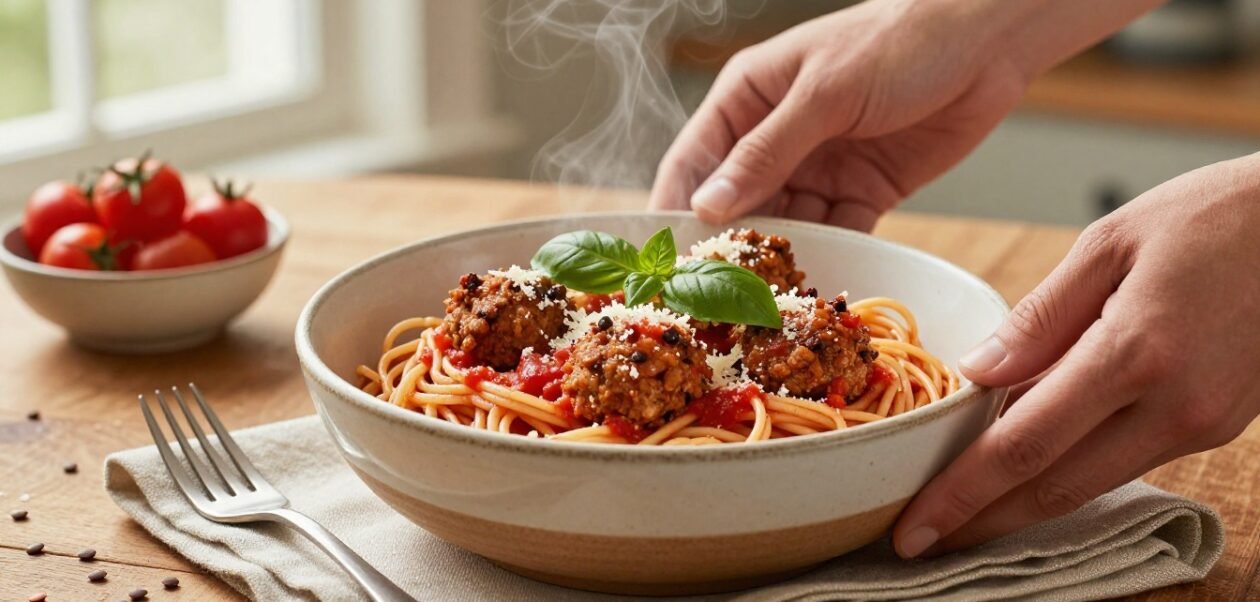
Lentil meatballs over whole-wheat pasta make a familiar, hearty dinner with plant-based ingredients. The key is keeping the mixture textured and firm enough to hold its shape.
Shape the meatballs, cook the pasta according to its package directions, and choose a tomato sauce or another favorite topping. A few simple checks along the way help bring the meal together.
Why Vegetarian Lentil Meatballs with Whole-Wheat Pasta Make a Filling Dinner
A satisfying meatless dinner needs more than a hearty-sounding name. Here, lentil meatballs provide a savory, substantial center, while whole-wheat pasta, vegetables, and tomato sauce round out the plate. Each part has a simple job, and familiar flavors help the meal fit easily into a weeknight routine.

What each part brings to the plate
Cooked lentils give the meatballs their soft, hearty base. Mash some of them, but leave a little texture in the mixture so the finished meatballs hold together without feeling dense. Onion or garlic adds a savory start, and herbs and seasonings give the lentils a familiar Italian-style flavor.
A binder helps the mixture keep its shape as it cooks. Breadcrumbs or oats absorb extra moisture, while egg helps hold the ingredients together. If you prefer an egg-free version, use a suitable alternative and adjust the dry ingredients as needed.
Whole-wheat pasta brings a chewy, hearty base to the plate. Tomato sauce coats the pasta and meatballs, tying their flavors together; vegetables such as mushrooms, spinach, or finely chopped carrots add color and texture. You can stir vegetables into the sauce or serve them on the side. Lentils and whole grains are useful pantry staples when you want to make a filling meatless dinner with ingredients you can keep on hand. The Oklahoma State University Extension guide to MyPlate food groups also includes beans, peas, and lentils among protein foods.
Ingredients to gather before you start
Before cooking, set out the lentils, onion or garlic, herbs, binder, pasta, and tomato sauce. Check the lentils for any debris and make sure they’re cooked and drained well. Excess moisture can make the meatball mixture too soft to shape.
The final recipe should give measured amounts for each ingredient, along with clear substitutions. For example, it can suggest oats in place of breadcrumbs or an egg alternative for a version made without egg. Those amounts matter: too much binder can make the meatballs dry, while too little may leave them fragile.
Use a sauce you enjoy, whether it’s a smooth marinara or one with vegetables already mixed in. If the sauce is thick, a little pasta cooking water can help it coat the noodles and meatballs. Keep the ingredient list practical, then adjust herbs and seasonings to suit your table.
How to Make Lentil Meatballs That Hold Their Shape
Lentil meatballs are easier to shape when the cooked lentils are tender, well drained, and mixed with just enough binder. Work in stages, checking the texture as you go; a few small adjustments can keep the mixture from turning wet or crumbly.
Cook and cool the lentils for the right texture
Cook the lentils until tender, but stop before they become mushy. Lentils that still hold their shape give the meatballs a sturdier texture. Once cooked, drain them thoroughly, then let them sit in the colander for a few minutes so excess steam can escape. Too much moisture can leave the mixture soft and difficult to roll.
Mash part of the lentils with a fork or potato masher, leaving some whole. The mashed lentils help bind the mixture, while the whole ones give each meatball a more substantial bite. If the lentils still feel wet, spread them on a plate or baking sheet to cool and dry a little before mixing.
Mix, bind, and shape the meatballs
Combine the lentils with finely chopped aromatics, herbs, and seasonings. Add the binder called for in your recipe, such as breadcrumbs, oats, or egg, then mix until the ingredients are evenly distributed. Stir in dry ingredients gradually so the mixture doesn’t become dense.
Before shaping the full batch, press a small portion between your fingers. It should hold together without sticking heavily to your hands or crumbling apart. If it feels too soft, add a little more binder and test again. If it seems dry, mix in a small amount of liquid or another spoonful of mashed lentils.
Shape the mixture into evenly sized balls so they cook at the same rate. Set them on a lined baking sheet as you work, leaving a little space between each one. A short rest before baking can also help dry ingredients absorb moisture and make the mixture easier to handle.
Bake until browned and firm
Use the oven temperature and baking time listed with your recipe, since meatball size and ingredients affect how quickly they cook. As a reference, Cinnamon Snail’s baked lentil meatballs bake at 375°F for 18 minutes, then are turned and baked for another 6 to 8 minutes. Treat that as a separate recipe’s timing, not a substitute for the directions for your batch.
The meatballs are ready when their outsides look browned and feel firm enough to lift without falling apart. Space them out on the pan so moisture can escape and the sides can brown. Turn them partway through if your recipe calls for it, using a thin spatula to help keep them intact. Let them rest briefly on the pan before moving them into the sauce.

Cook Whole-Wheat Pasta and Choose a Sauce That Fits
Whole-wheat pasta brings a pleasantly chewy texture to vegetarian lentil meatballs. Cook it just until tender, then pair it with a sauce that coats the pasta and complements the savory lentils.
Keep the pasta tender with a little bite
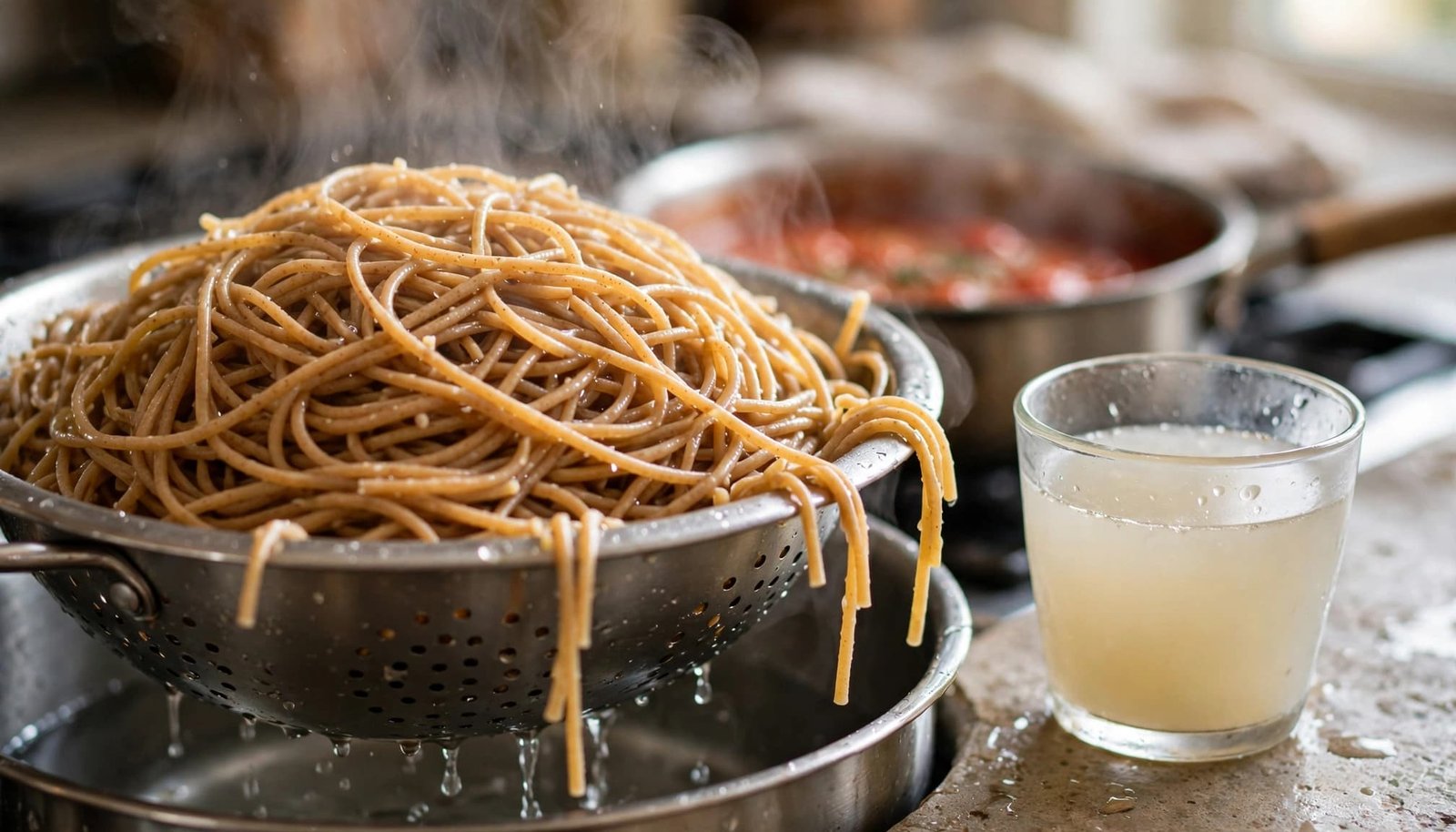
Bring a pot of water to a boil and salt it if you like. Follow the cooking-time range on the package, since whole-wheat pasta shapes and brands can vary. Begin tasting near the lower end of that range. The pasta should be tender, with a little firmness at the center, rather than soft all the way through.
If you’ll toss the pasta with hot sauce in a pan, drain it while it still has a slight bite. It will continue to cook as it warms with the sauce. Before draining, save a small amount of the cooking water. Stir in a splash if the sauce seems too thick; its starch helps the sauce cling to the pasta. See why starchy pasta water helps sauce coat noodles.
Pair the meatballs with tomato sauce, herbs, or vegetables
A simple tomato sauce or marinara is a familiar match for lentil meatballs and whole-wheat pasta. Warm the sauce separately, then toss it with the pasta or spoon it over each serving. Add a little reserved pasta water if needed to loosen the sauce and help it coat the noodles.
For extra color and texture, stir spinach into the warm sauce until wilted, or sauté mushrooms before adding the sauce. Use vegetables you enjoy, and keep the amount modest so they complement the meatballs rather than overwhelm the plate.
Finish with chopped parsley or basil, or add a squeeze of lemon to brighten the tomato flavor. A little grated cheese brings a savory finish, but it’s optional. For a dairy-free meal, leave it off or use a dairy-free alternative that suits your needs. Set toppings at the table so everyone can finish their own serving.
Make the Recipe Work for Different Tastes and Pantry Staples
You can adjust these lentil meatballs to suit your pantry and the flavors your family enjoys. Keep the basic mixture in place, then make one change at a time so you can check the texture as you go.
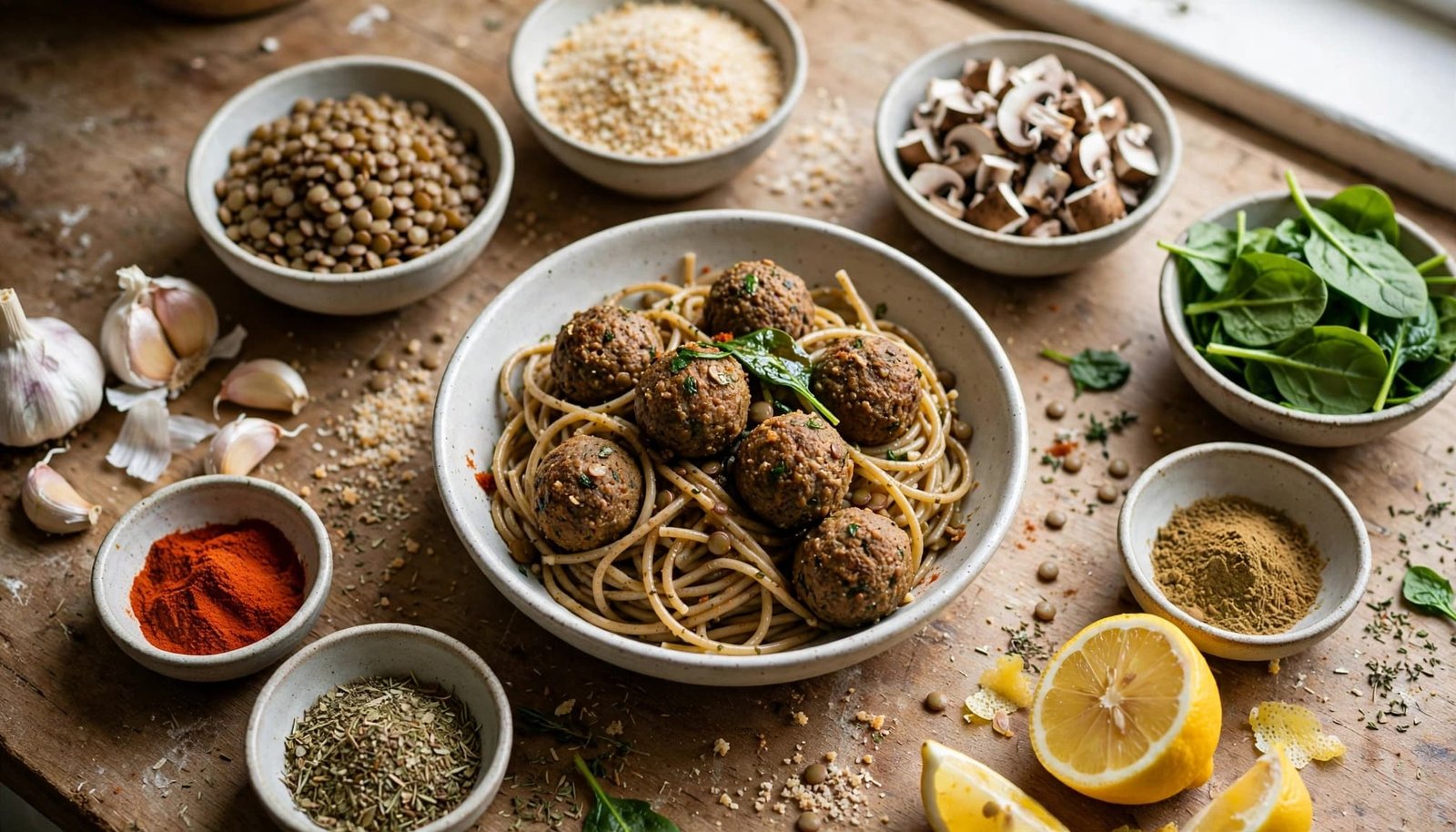
Swap the lentils, binder, or seasonings with care
Lentils vary in how much they soften as they cook. Brown, green, or black lentils usually hold their shape, while red lentils tend to break down into a softer mixture. Drain cooked lentils well, and adjust the binder a little at a time if the mixture feels too wet or crumbly.
Season the mixture to match the sauce and what you have on hand. Garlic and Italian herbs work well with marinara. For a warmer flavor, try cumin and paprika instead. If you change the herbs or spices, leave the binder as written at first; adjusting one part at a time makes it easier to keep the meatballs together.
Salt levels vary in sauces, broth, and cheese, so season lightly before baking and taste the finished pasta before adding more. A small adjustment at the end is easier than correcting an overly salty dish.
Add vegetables or make a dairy-free plate
Finely chopped mushrooms, spinach, or grated carrots can add color and texture to the meatballs or sauce. Cook watery vegetables first, or squeeze thawed spinach dry, so extra moisture doesn’t soften the mixture. Add a modest amount, then check that the meatballs still hold their shape.
Cheese is optional. For a dairy-free plate, skip it and finish the pasta with tomato sauce, fresh herbs, and a squeeze of lemon. Those simple toppings bring savory flavor and brightness without changing the recipe’s basic structure. When you use what’s already in the fridge or pantry, keep the main mixture steady and let the additions complement it.
Serve, Store, and Reheat Leftovers Safely
Serve the lentil meatballs over whole-wheat pasta, with vegetables stirred into the sauce or served on the side. Extra sauce, fresh herbs, or a simple salad can round out dinner without adding much work.
Build a complete, flexible dinner
Keep the meal simple: spoon the meatballs and sauce over pasta, then add spinach, mushrooms, or another vegetable you have on hand. Put extra sauce and chopped basil or parsley on the table so everyone can add a little more. A crisp salad is an easy side when you want another fresh element.

Cool and store leftovers for easy meals later
After dinner, divide cooked meatballs, pasta, and sauce into shallow, covered containers. Refrigerate perishable food within two hours, or within one hour if the temperature is above 90°F. Keep your refrigerator at 40°F or below, and use refrigerated leftovers within three to four days. Label containers with the date if that helps you keep track. The USDA’s leftover food safety guidance covers these storage limits.
Store the pasta separately from the meatballs and sauce when you can. This helps keep the noodles from soaking up sauce and becoming too soft. For longer storage, freeze portions in airtight, freezer-safe containers; use them within about three to four months for best quality. Thaw in the refrigerator before reheating.
Reheat only the portion you plan to eat, adding a splash of water or sauce if the pasta seems dry. Stir during microwave reheating so the food warms evenly, then check with a food thermometer. Leftovers should reach 165°F throughout.
Conclusion
Vegetarian lentil meatballs with whole-wheat pasta make a hearty dinner with a straightforward method. Drain the lentils well, check that the mixture holds together, and cook the pasta until tender with a little bite. Finish with tomato sauce your household enjoys.
Use pantry ingredients when you can, and adjust the herbs or vegetables to suit your taste. A few careful texture checks help bring the meal together without making dinner complicated.

- Christmas Cookie Ideas for Every Holiday Baker - November 9, 2026
- Christmas Cocktails: Party Drinks, Cozy Sips, and Mocktails - November 9, 2026
- 20 Christmas Appetizer Ideas for Every Holiday Spread - November 9, 2026