
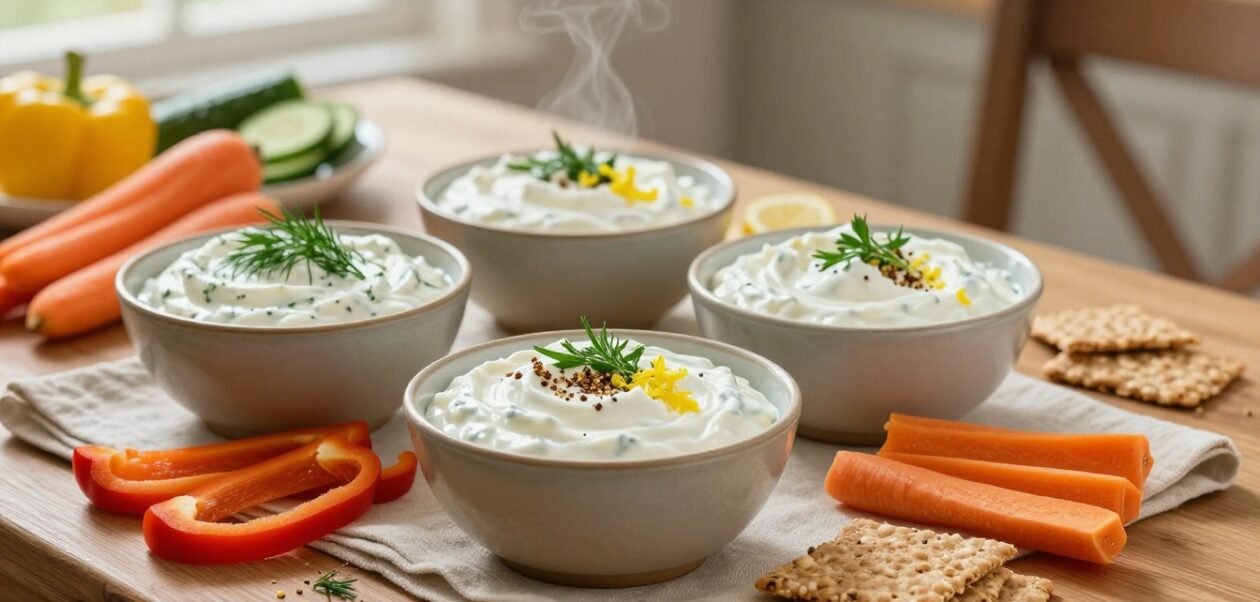
Crisp vegetables and whole-grain crackers pair well with a cool, savory Greek yogurt dip. A few herbs and seasonings can turn plain yogurt into dill, ranch-style, or lemon-garlic dips that are easy to make at home.
The right texture is simple to adjust: use thick Greek yogurt for a dip that clings to vegetables, or stir in a little lemon juice or water if it feels too dense. Keep the dips covered and chilled until serving, and refrigerate leftovers promptly. Here are four easy flavor ideas, along with practical tips for texture, serving, and storage.
Healthy Greek Yogurt Dips for Vegetables and Whole-Grain Crackers
Plain Greek yogurt makes a thick, tangy base for dips, and a few simple additions can take it in several directions. Use herbs and lemon for a fresh flavor, or add garlic and spices for a more savory dip. The finished dip’s nutrition depends on the yogurt and everything you stir in, so check the ingredients and labels instead of assuming every version is low in calories or fat.

Start with plain Greek yogurt and season it to taste
Plain yogurt leaves room for herbs, citrus, spices, and other ingredients to shape the flavor. Stir in chopped dill or parsley, a little lemon juice, black pepper, or finely grated garlic. Taste as you go. Start with small amounts, especially with salt, garlic, and hot spices, since they can quickly take over a mild dip.
Check the package for protein, fat, serving size, and added sugars. Brands and varieties differ, and flavored yogurt may contain added sweeteners that don’t suit a savory dip. As one reference, nonfat plain Greek yogurt may provide about 10 grams of protein per 100 grams. Your product may differ, so use its label as your guide. The USDA FoodData Central search can also help you compare general nutrition data. On the package, look for the separate “Includes Added Sugars” line; the FDA’s guide to added sugars explains how it relates to total sugars.
Add-ins matter, too. A spoonful of olive oil, crumbled cheese, or tahini changes the dip’s calories and fat, while fresh herbs and lemon add flavor in smaller amounts. Vegetables and whole-grain crackers contribute their own nutrients, calories, and sodium. Check cracker labels and serving sizes if you’re comparing options, and choose portions that fit your meal.
Choose a dip style for the vegetables and crackers you have
Crisp carrots, cucumbers, and bell peppers pair easily with a mild herb dip. Their fresh crunch lets delicate flavors like dill, parsley, chives, and lemon come through. If your vegetables are especially crisp, keep the dip thick enough to cling to each piece.
Sturdy whole-grain crackers can handle bolder flavors. Try garlic, smoked paprika, cumin, chili flakes, or a little mashed chickpea stirred into the yogurt. These are suggestions, not rules. A lemony dip can be just as good with crackers, and a garlicky one can work well with cucumber. Use what you have, taste the pairing, and adjust the seasoning if one part overpowers the other.
Four Easy Greek Yogurt Dip Flavors to Make at Home
Plain Greek yogurt can take on fresh, savory, or gently spicy flavors with ingredients you may already have. Start with a thick yogurt, mix in the seasonings, then taste with the vegetables or crackers you plan to serve. Adjust the lemon, salt, herbs, and spices a little at a time.
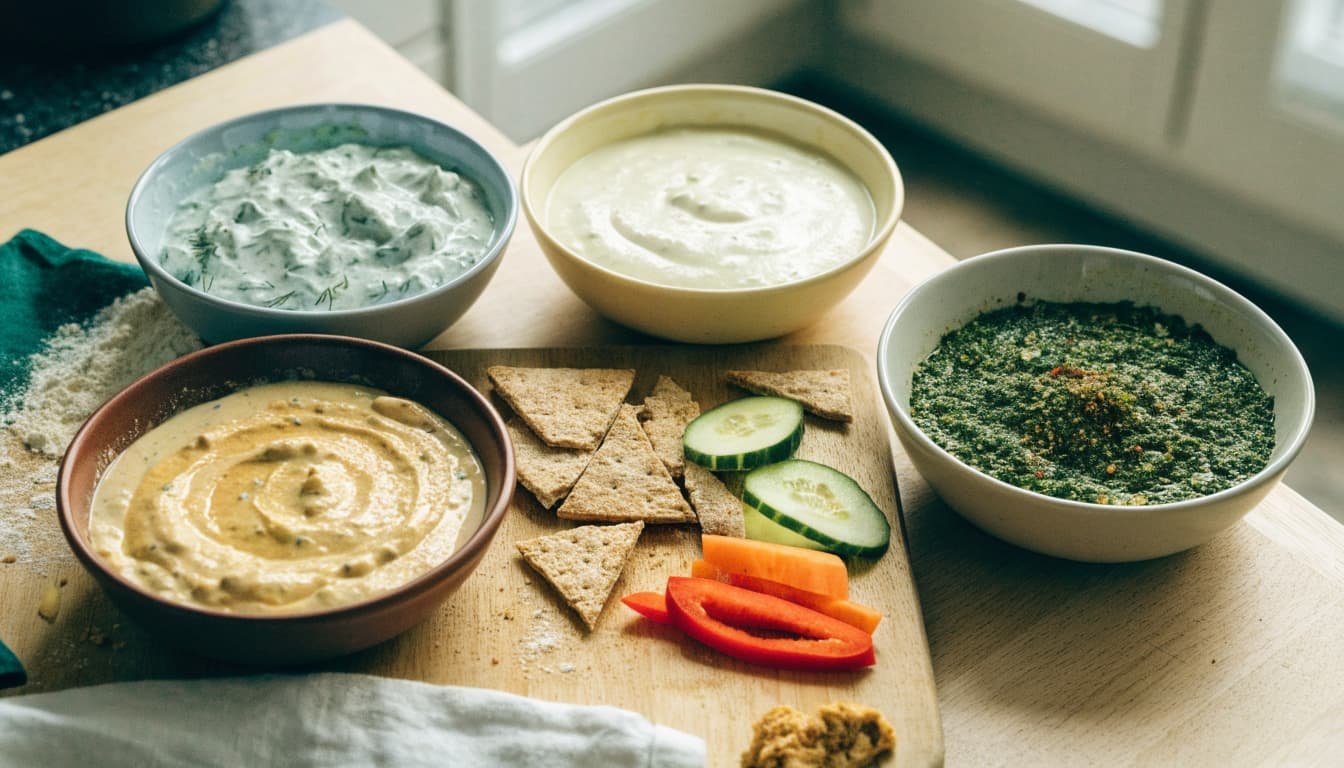
Make cucumber-dill tzatziki with a crisp, cool finish
Grate cucumber and mix it with Greek yogurt, finely grated garlic, lemon juice, and chopped dill. Mint works well too, either in place of the dill or mixed with it. A little olive oil can round out the tangy flavor, but the dip is also good without it.
Cucumber releases plenty of liquid. Salt the grated cucumber, let it sit in a strainer for about 15 minutes, then press or squeeze it firmly before adding it to the yogurt. This helps the dip stay thick instead of turning watery. Serve it with cucumber, carrot, and pepper strips, or scoop it up with whole-grain crackers.
Stir together a lighter ranch-style herb dip
For a familiar ranch flavor, stir dried dill, parsley, and chives into Greek yogurt with garlic powder, onion powder, and black pepper. Add a little lemon juice or vinegar for tang, then taste before adding more. The herbs soften as they sit, so a brief rest can help the flavors come together.
Keep the dip thick for carrots, celery, bell peppers, and other crunchy vegetables. If you want a thinner consistency, add a small splash of water or buttermilk and stir again. Go slowly, since too much liquid can make the dip runny. Whole-grain crackers also pair well with its mild, savory flavor.
Blend a creamy chickpea and tahini dip
Blend Greek yogurt with chickpeas, tahini, lemon juice, garlic, and cumin for a hearty, hummus-style dip. The chickpeas make it thicker and more filling, while lemon keeps the flavor bright. Tahini adds a rich, nutty taste, so start with a little and adjust to your preference. More tahini changes both the flavor and the dip’s nutrition. For general chickpea nutrition information, check USDA FoodData Central.
Serve this version with bell pepper and carrot strips or robust whole-grain crackers that can hold its thicker texture. If the dip feels too dense, stir in a little water until it’s easy to scoop.
Add fresh herbs or a little heat for a custom dip
Use parsley, dill, chives, mint, or coriander with lemon and garlic to make a simple herb variation. Each brings a slightly different flavor, so choose one or combine a few. For gentle heat, add minced fresh chili or a pinch of chili powder.
Start with small additions, then taste the dip with a vegetable or cracker. A flavor that seems strong on its own may feel milder with a crunchy bite. Add more lemon, salt, herbs, or spice only as needed, so the yogurt stays balanced.
Get a Thick, Flavorful Dip Without Extra Fuss
A dip should cling to a carrot or cracker, not run off the edge. Start with thick plain Greek yogurt, then manage moisture and seasoning in small steps. A short chill gives the ingredients time to settle into a dip that’s ready for serving.

Keep watery ingredients from thinning the yogurt
For cucumber dips, grate the cucumber and drain it well before adding it to the yogurt. Let it sit in a sieve with a pinch of salt for about 10 minutes, then squeeze out as much liquid as you can with clean hands or a clean kitchen towel. This step helps the dip stay creamy instead of loosening as it rests. Serious Eats’ tzatziki recipe also uses drained cucumber for a thicker result.
If your yogurt seems loose, strain it through clean cheesecloth or a fine sieve set over a bowl. Check it after a short rest and stop when it reaches the thickness you want. Add juicy ingredients, lemon juice, or any other liquid a little at a time, stirring between additions. You can always add more, but you can’t take it back out.
Once mixed, cover and chill the dip for at least 30 minutes. The yogurt will firm up slightly, and the flavors will have time to blend. Give it a stir before serving, then check the texture again. If it’s too thick, loosen it with a small splash of water or lemon juice.
Balance tang, salt, garlic, and herbs by tasting
Season gradually, and taste the dip with the food you plan to serve. A cracker may make the dip seem saltier, while a plain cucumber slice can soften its tang. Add lemon juice, salt, garlic, or chopped herbs in small amounts, then taste again before adding more.
Garlic can taste sharp right after you stir it in. Let the dip rest for a few minutes, then taste again before increasing the amount. The flavor may mellow as the dip chills, so avoid correcting it too quickly.
If the dip tastes flat, try a small pinch of salt or a little lemon. If it’s too sharp, stir in a spoonful of yogurt. Add dill, parsley, chives, or another herb a bit at a time, especially if the dip already has garlic or citrus. A final taste with a vegetable or cracker helps you catch imbalances before the bowl reaches the table.
Build a Snack Board with Vegetables and Whole-Grain Crackers
A few colorful vegetables, crisp crackers, and small bowls of Greek yogurt dip make an easy snack, lunch addition, or party platter. Choose two or three vegetables you enjoy rather than trying to include everything.

Choose a colorful mix of crunchy vegetables
Carrot sticks, cucumber rounds, bell pepper strips, celery, and radishes all work well with a thick yogurt dip. Pick a few for a mix of colors and textures. Cool cucumber is mild and crisp, while radishes add a sharper bite.
Wash the vegetables, trim them as needed, and cut them into pieces that are easy to dip. Keep them covered and chilled until serving. If you’re preparing ahead, sturdy vegetables can be washed and cut earlier, then arranged on the platter shortly before guests arrive.
For a light lunch, add the board alongside sandwiches, soup, or a simple salad. For a party, offer a larger mix and refill the platter as people snack.
Pick crackers that add whole grains and hold their crunch
Check the ingredient list for whole-grain ingredients, then compare the serving size and sodium on the Nutrition Facts label. Brands vary, so the package is the best guide when you’re choosing between options. The FDA’s guide to reading the Nutrition Facts label explains how to use serving size and sodium information when comparing foods.
Keep crackers separate from the dips until it’s time to eat. That way, they stay crisp instead of softening at the edges. Arrange them beside the vegetables so guests can choose a crunchy cracker, a fresh vegetable, or both with each dip.
Serve dips in small bowls and make the platter easy to share
Set each flavor in its own small bowl, then arrange the vegetables and crackers around them. This keeps the dips distinct and gives everyone room to reach. Add a small spoon to each bowl, especially if a dip is thick.
Chopped herbs, a pinch of paprika, or a small drizzle of olive oil can finish a dip or help guests tell the flavors apart. Keep extra dip covered in the refrigerator and bring out more as needed, rather than setting out the whole batch at once. If a dip contains common allergens, such as milk or sesame, note them beside the bowl so guests can choose comfortably.
For a short gathering before dinner, a modest spread may be enough. If snacks are the main food or the gathering lasts several hours, plan more and replenish the board as needed.
Make Ahead, Refrigerate, and Serve the Dip Safely
You can mix Greek yogurt dip ahead so the herbs and seasonings have time to blend. Keep it covered in the refrigerator, then stir it before serving. Since homemade dips vary in ingredients and handling, make a small batch you can use promptly rather than assuming every dip will keep for the same amount of time.

Keep the dip covered and chilled between servings
Transfer the dip to a clean, tightly covered container and refrigerate it promptly. Keep the refrigerator at 40°F or below; an appliance thermometer can help you check the temperature. For more on safe refrigerator storage, see food safety guidance for keeping food cold.
North Dakota State University Extension lists two days as a storage reference for homemade dips. Treat that as cautious guidance, not a guarantee for every recipe. Ingredients, preparation, and refrigerator temperature all affect how long a particular dip keeps. If you won’t use the batch within a couple of days, making less is a simple way to avoid storing more than you need.
Use clean utensils when mixing and serving, and don’t return a used spoon to the storage container. Keep cut vegetables and whole-grain crackers separate from the dip until serving. Vegetables can release moisture, and crackers soften when they sit against the dip.
Set out a small bowl and leave the rest refrigerated. Return the serving bowl to the refrigerator promptly after eating, or replenish it with a fresh portion if guests are still snacking. Perishable foods should not sit at room temperature for more than two hours, or more than one hour when the temperature is above 90°F. Discard dip that has been out longer than those limits.
Don’t rely on smell or appearance alone to decide whether dip is safe. Time and temperature are more useful guides. When you aren’t sure how long it has been out, it’s safer to discard it.
Conclusion
Plain Greek yogurt, a few seasonings, and well-chosen vegetables or whole-grain crackers make an easy snack with room to customize. Start with a thick dip, add watery ingredients gradually, and keep it covered and chilled until serving.
Try a flavor combination with the vegetables and crackers you already have. Small adjustments to herbs, lemon, or garlic can make the dip your own.

- Christmas Cookie Ideas for Every Holiday Baker - November 9, 2026
- Christmas Cocktails: Party Drinks, Cozy Sips, and Mocktails - November 9, 2026
- 20 Christmas Appetizer Ideas for Every Holiday Spread - November 9, 2026


2 Comments