
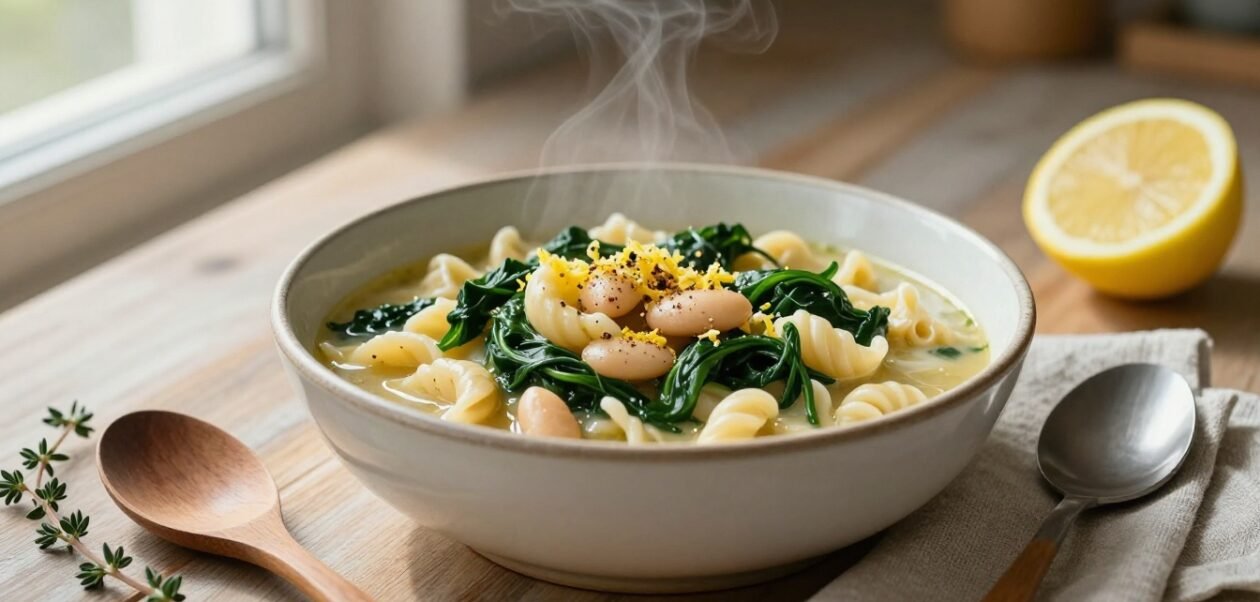
When you want a cozy dinner without a sink full of dishes, this one-pot orzo with spinach and white beans is a practical choice. Tender orzo, creamy beans, and wilted spinach make a filling meal, while garlic, herbs, and lemon bring a fresh, Mediterranean-inspired flavor.
The recipe uses simple pantry ingredients and takes about 30 minutes, so it fits a busy evening without much planning. You can also use what you have on hand, including frozen spinach, and adjust the seasoning to suit your table. Start with the ingredients and a few easy ways to make the dish your own.
One-Pot Orzo with Spinach and White Beans: What to Expect
This vegetarian dinner brings together tender pasta, creamy white beans, and soft spinach in a lightly savory broth. The beans add plant protein, while garlic, lemon, and simple seasonings keep the flavor fresh. It suits busy weeknights and anyone who wants a filling meal without cooking several sides.
Cooking the orzo in the same pot saves dishes and lets the pasta take on flavor from the broth and aromatics. The texture should be moist and creamy, not soupy. Check the pasta as it cooks, since timing can vary with the brand, pan, and how quickly the liquid absorbs.
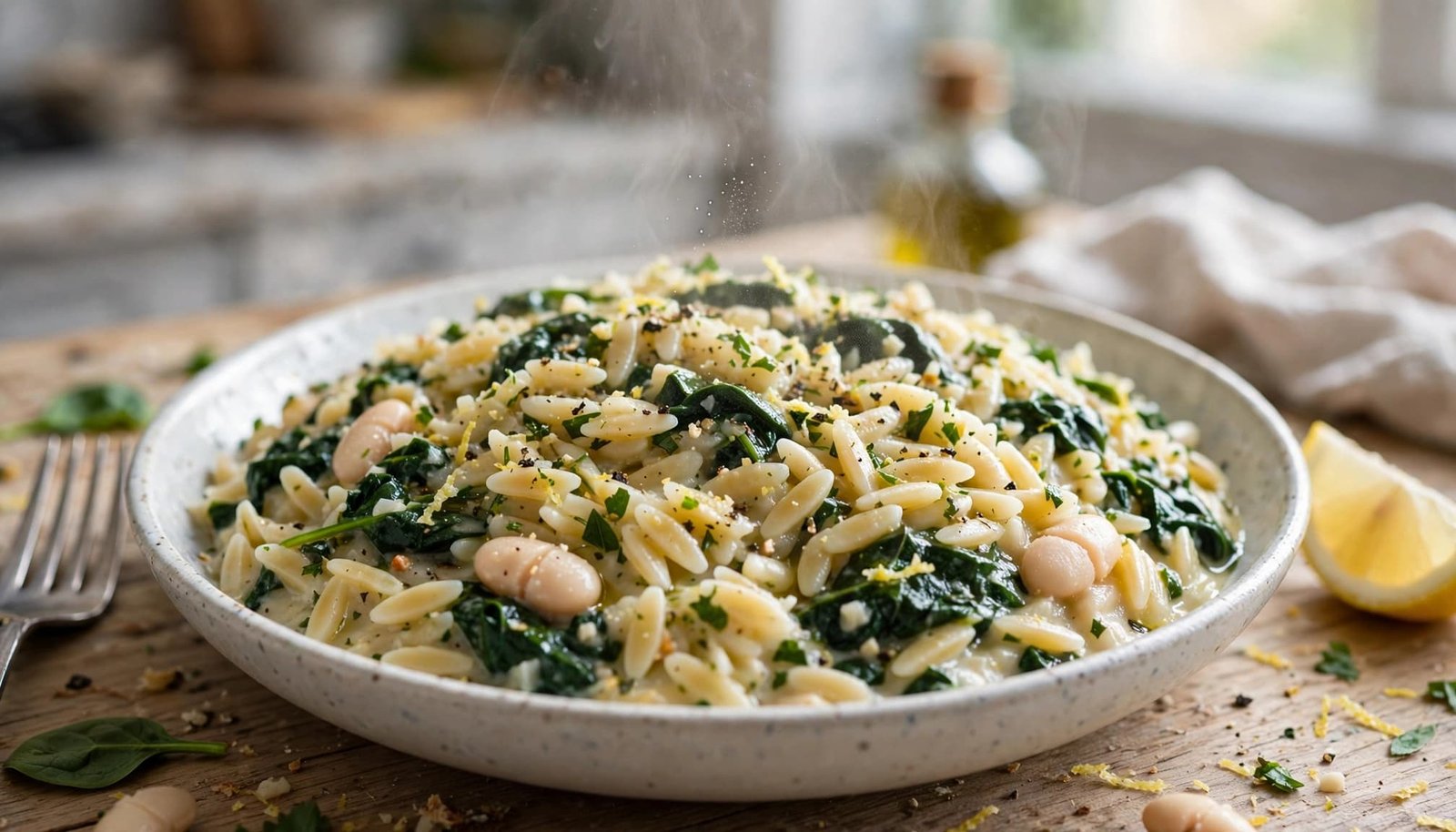
The simple ingredients that build a satisfying dinner
Orzo gives the dish its tender, pasta-like base, and canned cannellini beans add a mild, creamy bite. Great Northern or navy beans work too. Drain and rinse canned beans before adding them; USDA guidance on canned beans recommends this when low-sodium options aren’t available.
Olive oil, garlic, and a little onion or shallot build a savory start. Broth cooks the orzo, while lemon brightens the finished pot. Add salt, black pepper, and any basic seasonings you like. Fresh spinach wilts quickly near the end. Frozen spinach works as well, but give it a little extra time to heat through and stir it into the pot without leaving icy clumps.
Sun-dried tomatoes, dried oregano, or red pepper flakes are optional ways to change the flavor. Parmesan or feta adds a salty finish, but the dish is satisfying without cheese.
A practical orzo-to-broth ratio
Start with about 1 cup of orzo to 2 cups of broth. Some one-pot methods use less liquid, while others call for more, so treat this as a starting point rather than a fixed rule. A wide pan may lose liquid faster than a deeper pot, and different orzo brands can cook at different rates.
Keep a little warm broth or water nearby. If the pan looks dry while the orzo is still firm, add a small splash and continue simmering. Stir now and then, and taste for doneness instead of relying only on the clock.
How to Make White Bean and Spinach Orzo in One Pot
Once your ingredients are ready, build flavor in the pot before the broth goes in. Keep the heat moderate and stir regularly; orzo can stick as it absorbs liquid, so a few quick checks help it cook evenly.

Soften the aromatics and toast the orzo
Warm olive oil in a wide pot or deep skillet over medium heat. Add the chopped onion and cook for about 3 to 5 minutes, stirring now and then, until it softens and looks slightly translucent. Stir in the garlic and cook for about 30 seconds, just until fragrant. Garlic burns quickly, so keep it moving and don’t wait for it to brown.
Add the dry orzo and stir to coat it in the oil. Toast for about 1 minute, stirring often. It should smell lightly nutty, but the pieces shouldn’t turn dark. This brief step gives the pasta a little more flavor before it simmers in broth.
Simmer gently and stir until just tender
Pour in the broth, then add the seasonings called for in your recipe. Stir well, scraping the bottom of the pot to loosen any orzo that may be settling there. Bring the liquid to a gentle simmer, then lower the heat so it bubbles steadily without boiling hard.
Cook uncovered, stirring frequently, for about 8 to 12 minutes. The package timing can help you estimate when to check; Barilla’s pasta cooking tips also recommend timing pasta and checking for an al dente texture. Start tasting the orzo near the early end of the range, since pot size and heat can affect how quickly the broth absorbs.
Stop when the orzo is tender but still has a slight firmness in the center. It will soften a little more as it rests. If the liquid disappears while the pasta is still firm, stir in a small splash of warm broth or water and keep cooking.
Add the beans and spinach near the finish
Stir in the drained, rinsed white beans during the last few minutes, just long enough to heat them through. Fold in the spinach near the end and stir for 1 to 2 minutes, until the leaves wilt. If you’re using frozen spinach, let it heat through fully and break up any clumps as you stir.
Take the pot off the heat before adding lemon juice or zest. Start with a little, taste, and add more if you want a brighter finish. Stir in Parmesan or another cheese while the orzo is hot, or scatter fresh herbs over each serving. Taste before adding extra salt, since broth, canned beans, and cheese may already provide enough.
Keep the Orzo Creamy, Not Gummy or Mushy
Orzo absorbs broth as it cooks, and the starch it releases helps thicken the liquid into a lightly creamy sauce. That texture can change quickly near the end, though. Keep the pan moist but not soupy, stir periodically, and start checking the pasta early so it doesn’t cook past tender.

Adjust the liquid as the pasta cooks
A gentle simmer gives the orzo time to soften without boiling away the broth too quickly. Stir regularly, scraping the bottom of the pan, but avoid constant stirring. That helps prevent sticking while keeping the pasta from breaking down.
If the liquid disappears while the orzo is still firm, add warm broth or water a little at a time. A small splash, about 1 to 2 tablespoons, is enough to start. Stir and check again before adding more. The pan should look moist, with a little sauce around the orzo, rather than dry or flooded.
If the finished dish seems too loose, let it stand briefly and stir. The orzo will absorb some of the remaining liquid as it rests. Taste before adding extra salt, since broth and canned beans can already be well seasoned. For a thinner, more broth-like bowl, add a little extra broth after cooking and adjust it to your liking.
Use carryover cooking to your advantage
Take the pot off the heat when the orzo is tender with a slight bite. That al dente texture gives it room to soften during the short rest; this guide to al dente pasta describes the texture to look for. If you wait until every piece feels very soft in the pan, the finished dish may turn gummy.
Spinach needs very little time to wilt. Add it near the end, then remove the pot from the heat once the leaves have softened. Long cooking can make the spinach dull and overly soft, while the orzo continues to take up moisture in the hot pan.
The same change happens to leftovers as they sit, so the next serving may be thicker than the first. Stir in a splash of broth when reheating, then warm gently until the texture looks creamy again.
Easy Ways to Change the Flavor or Make It a Fuller Meal
A few well-chosen additions can give this one-pot orzo a different feel while keeping its spinach, white beans, lemon, and tender pasta at the center. Add extras in modest amounts, then taste before adding more seasoning.

Try Mediterranean add-ins and simple seasoning swaps
For a savory, tangy variation, stir in chopped sun-dried tomatoes or artichoke hearts near the end of cooking. A handful of peas adds a little sweetness; fresh parsley or dill brings a clean herbal finish. Dried oregano fits the same Mediterranean flavor, while a pinch of red pepper flakes adds gentle heat. Start with a small pinch, especially if you’re serving different spice preferences.
Finish each bowl with a squeeze of lemon and, if you like, a sprinkle of toasted pine nuts for crunch. Add feta or Parmesan at the end, after tasting, since both bring salt as well as richness. For a dairy-free bowl, leave out the cheese or use a plant-based option you enjoy. Keep the extras balanced so they complement the beans, spinach, lemon, and orzo instead of covering their flavor.
Serve it as a complete vegetarian dinner
The beans and pasta make a filling base, with spinach adding vegetables to the pot. White beans also count among the plant-based protein choices in USDA MyPlate’s protein foods guidance. You can serve the orzo on its own or add a simple side, depending on appetite and what’s already in your kitchen.
A side salad gives the meal a crisp contrast. Whole-grain bread is useful for catching the creamy sauce, while roasted vegetables add another warm, savory side. Choose one or two vegetables, such as squash, mushrooms, or Brussels sprouts, rather than trying to use every option at once.
For a heartier bowl, stir in cooked tofu near the end, just long enough to warm it through. You can also add extra vegetables, such as peas or chopped roasted vegetables, and keep the rest of the recipe as written. Serve any strong toppings, extra red pepper, or additional cheese on the side so everyone can adjust their own portion.
Store and Reheat Leftover Spinach and White Bean Orzo
Leftover One-Pot Orzo with Spinach and White Beans makes an easy lunch or dinner, but the pasta will thicken as it sits. Store it promptly, then add a little liquid when you reheat it to bring back a softer, creamier texture.

Refrigerate portions promptly and keep toppings separate
Divide a large batch into shallow portions and transfer them to covered containers within two hours of cooking. Shallow portions cool faster than a full pot, and you can refrigerate them while they’re still warm. If the room or outdoor temperature is above 90°F, refrigerate the food within one hour. Keep your refrigerator at 40°F or below, and use the leftovers within three to four days. The USDA’s guidance on leftover food safety covers these storage limits.
Keep fresh herbs, toasted nuts, and other crisp toppings in separate containers until serving. They’ll keep their flavor and texture better that way. The spinach may be softer after storage, and the orzo will absorb more moisture in the refrigerator. That’s normal for this dish.
Warm gently and check the temperature
Reheat only the portion you plan to eat. For the stovetop, warm it in a skillet over low to medium-low heat with a small splash of broth or water. Stir now and then, and add a little more liquid if the orzo still looks dry.
You can also use a covered, microwave-safe dish. Heat the serving, stir it partway through, then continue warming so it heats evenly. Check that leftovers reach 165°F throughout, using a food thermometer when possible. Add lemon juice or fresh herbs after reheating for a brighter finish.
Conclusion
One-Pot Orzo with Spinach and White Beans turns pasta, creamy beans, spinach, and a few seasonings into an easy dinner with minimal cleanup. Simmer the orzo gently, stir regularly, and stop cooking when it’s just tender. It will continue to soften as it rests, so keep a little broth or water nearby if the pot starts to look dry.
Use the suggested swaps to suit what you have on hand, then adjust the lemon, herbs, or cheese to fit your table. A few small choices are all it takes to make this practical one-pot meal feel just right.

- Christmas Cookie Ideas for Every Holiday Baker - November 9, 2026
- Christmas Cocktails: Party Drinks, Cozy Sips, and Mocktails - November 9, 2026
- 20 Christmas Appetizer Ideas for Every Holiday Spread - November 9, 2026


1 Comment