A homemade lunch can be filling, flexible, and ready to grab from the fridge when the day gets busy. These chicken and brown rice meal prep bowls bring together tender rice, warmly seasoned chicken, crisp vegetables, and a cool herbed yogurt sauce for four satisfying lunches.
Choose the vegetables and toppings you have on hand, then pack the sauce and fresh toppings separately. That small step helps the cucumber stay crisp and keeps the rice from soaking up the sauce before lunchtime. Start with the ingredients, and prepare the rice first while you get the chicken and vegetables ready.
Healthy Lunch Meal Prep Bowls with Chicken and Brown Rice
These bowls follow a simple formula: brown rice for a hearty base, seasoned chicken, a few vegetables, and a cool sauce. For four lunches, prepare the components together, then portion them to suit your appetite and the people you’re cooking for.
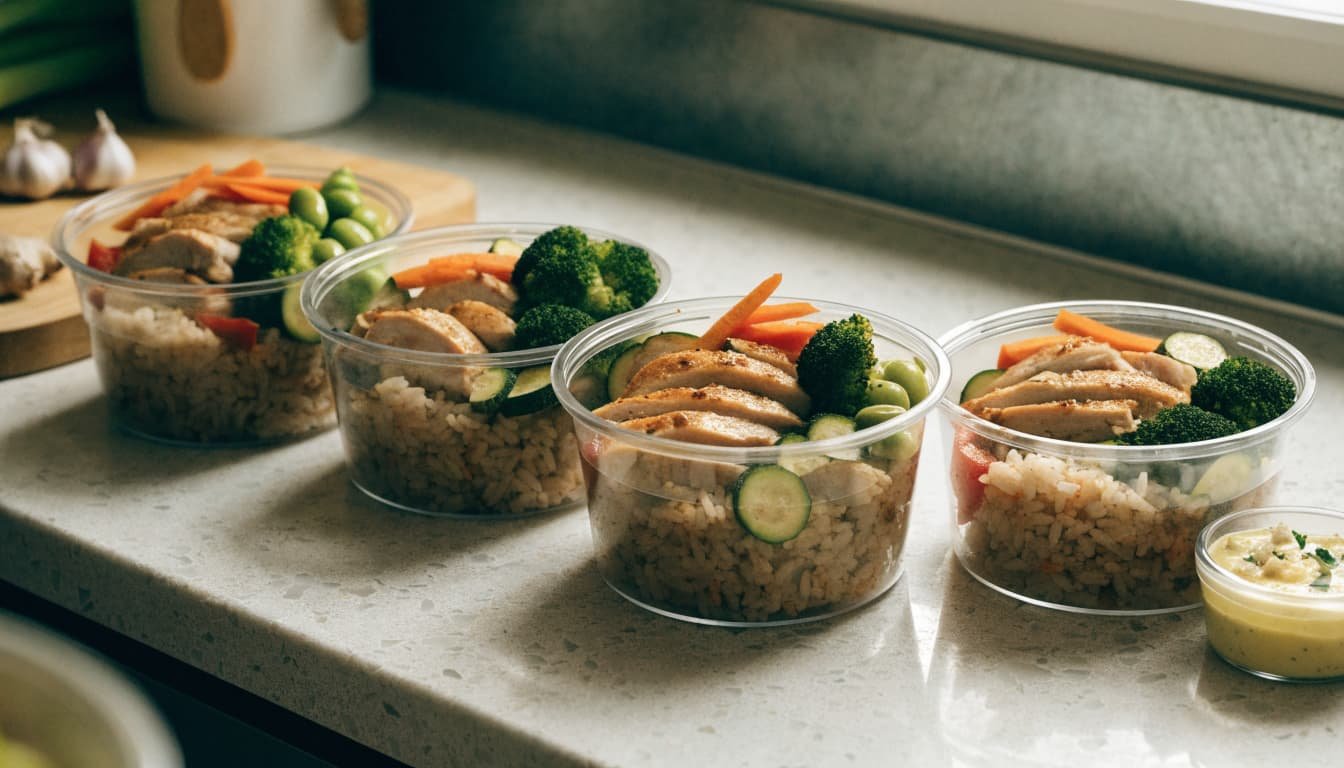
Gather chicken, brown rice, vegetables, and a simple sauce
Choose boneless chicken breast for a lean, mild option, or use thighs if you prefer richer flavor and tender meat. Brown rice adds a nutty taste and a pleasant chew. For vegetables, pick two or three, such as broccoli, carrots, zucchini, bell pepper, or edamame. You don’t need to use every option; a mix of colors and textures is enough.
For four bowls, use about 4 ounces of cooked chicken, 1 cup of cooked brown rice, and 1½ cups of vegetables per serving as a practical starting point. Adjust those amounts for appetite, dietary needs, or the size of your containers. These are serving examples, not fixed nutrition targets. Any nutrition estimate will vary with the ingredients, brands, and portions you use.
Season the chicken with garlic, lemon, dried herbs, and black pepper. A little paprika or cumin adds warm flavor, too. For a quick sauce, stir plain Greek yogurt with lemon juice, a small amount of finely grated garlic, chopped dill or parsley, and a pinch of salt. Start with a little lemon and taste before adding more. If the sauce feels too thick, thin it with water a teaspoon at a time.
Keep the sauce separate when packing the bowls. Spoon it over the chicken and rice just before eating, and add crisp vegetables then if you want them to stay fresh.
Cook the rice first, then season and cook the chicken
Brown rice takes longer than chicken and most vegetables, so start it first. Cook it according to the package directions, since the time and water amount can vary by type. While it simmers, season the chicken and prepare the vegetables.
Cook the chicken in a skillet or oven, then check the thickest part with a food thermometer. It should reach 165°F (74°C) for safety; see FoodSafety.gov’s safe temperature chart. Let it rest briefly before slicing so the juices can settle.
Cook the vegetables until tender but still colorful. A quick steam is an easy option, especially for broccoli, carrots, or edamame. Divide the rice, chicken, and vegetables among four containers, then chill the sauce separately. When you’re ready to eat, warm the rice and chicken as desired and finish with the cool sauce and any fresh toppings.
Build a Balanced Chicken and Brown Rice Lunch
A satisfying bowl has a hearty base, enough chicken to make lunch filling, and plenty of vegetables for freshness and crunch. Brown rice provides a whole-grain base with a mild, nutty flavor, while a flavorful sauce brings the ingredients together without making the meal feel heavy. The portions can change with your appetite, activity, and personal needs.

Use portions that leave room for plenty of vegetables
Think of the chicken, rice, and vegetables as parts of a flexible meal, not fixed amounts everyone needs to follow. Add more chicken if you want a heartier protein portion, or use a little less rice and make extra room for vegetables. If you have a more active day or a bigger appetite, adjust the portions to suit you.
Choose a mix of cooked and fresh vegetables for color and texture. Broccoli, bell pepper, carrots, cucumber, and shredded cabbage all work well. Cut them into bite-size pieces so they’re easy to scoop up with the rice and chicken. Edamame or beans can add another texture and a different source of protein, whether you use them alongside the chicken or in place of some of it.
A flexible balance of vegetables, grains, and protein is also reflected in the USDA MyPlate food groups. Use that as a broad guide, not a rule for how much belongs in every bowl. If you use packaged rice, frozen vegetables, canned beans, or pre-made chicken, check the ingredient list and label for details that matter to your needs, including sodium and allergens. The FDA explains how to read the Nutrition Facts label.
Keep the flavors fresh with sauces and finishing touches
The same chicken and rice can taste different with a simple sauce change. Use the herbed yogurt sauce already prepared for these bowls, or try lemon juice and chopped herbs stirred into plain yogurt. For a savory option, mix a little soy sauce with grated ginger and citrus. Peanut-lime sauce adds a richer, tangy flavor, so start with a modest amount and add more only if you want it.
Finish with sliced green onion, cilantro, sesame seeds, or a squeeze of lemon or lime. These small additions brighten the bowl and add a little crunch without requiring extra cooking. Keep sauce and delicate garnishes in separate containers when meal prepping. Add them just before eating, so the rice doesn’t soak up the sauce and fresh toppings stay crisp.
Prep and Pack the Bowls So They Stay Fresh
A little separation helps these chicken and brown rice bowls taste fresh at lunchtime. Cool the cooked ingredients promptly, then pack the sauce and crisp toppings apart so they keep their texture.
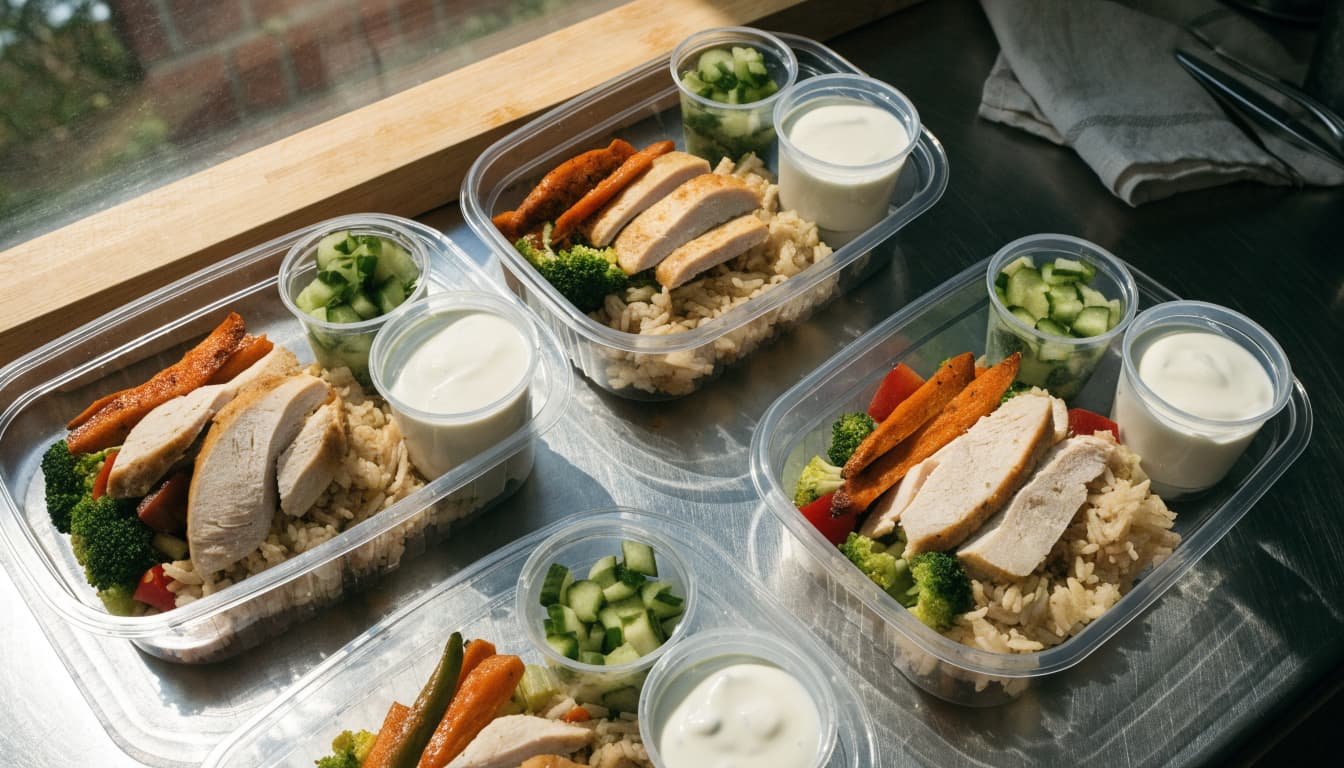
Cool cooked ingredients quickly and store them apart
Divide warm rice, chicken, and cooked vegetables among shallow containers. Smaller portions cool faster than a large batch, so don’t leave food on the counter until it reaches room temperature. Refrigerate cooked food within two hours, or within one hour if the temperature is above 90°F (32°C). Keep your refrigerator at 40°F (4°C) or below. The USDA’s guidance on leftovers and food safety covers these storage limits.
Use clean containers with secure lids. You can store the chicken, rice, and cooked vegetables in separate containers, or portion them together once they’ve cooled. Keep cucumber, fresh herbs, and yogurt sauce in small covered containers of their own. Warm ingredients can soften fresh vegetables, while sauce can make rice soggy before lunch.
Cooked vegetables will be tender after chilling, rather than crisp. Add them after reheating if you prefer, and keep crunchy toppings separate until serving.
Pack each lunch for easy assembly at work or school
Choose meal-prep containers that seal well and leave enough room to reheat a serving comfortably. Add a layer of brown rice, then chicken and cooked vegetables. Pack yogurt sauce and fresh toppings in small sealed containers, or place them in separate compartments if your lunch container has them.
Label each meal with the prep date, especially when you’re making all four lunches at once. Keep refrigerated portions for three to four days, so these bowls are suited to about four days of lunches, not a full week. Freeze any portions you plan to eat later rather than keeping them in the refrigerator past that window.
At lunchtime, reheat only the rice and chicken you plan to eat, until they reach 165°F (74°C). If using a microwave, cover the container and stir the rice partway through. A small splash of water can loosen chilled rice and help it stay moist. Add the cucumber, herbs, and sauce after reheating, just before eating.
Reheat Chicken and Rice Safely Without Drying Them Out
Warm only the amount you plan to eat, then finish the bowl with cool sauce and fresh toppings. A little moisture and gentle heat help the chicken stay tender and the brown rice loosen up.

Warm only the portion you plan to eat
For microwave reheating, transfer a serving to a microwave-safe container and cover it. Add a small splash of water to the rice if it feels firm or dry, then stir the rice partway through heating so warmth spreads more evenly. Let it stand briefly before checking, since microwaves can leave cold spots.
You can also warm the chicken and rice in a skillet over medium-low heat. Add a splash of water or broth, cover the pan, and stir occasionally until hot. Avoid high heat, which can dry the chicken before the rice warms through.
Check the thickest chicken pieces and the center of the rice with a food thermometer. The entire portion should reach 165°F (74°C). If any spot is cooler, keep heating and check again. The USDA’s guidance on reheating leftovers recommends using a thermometer to confirm the temperature.
Add crisp toppings and sauce after reheating
Keep cucumber, fresh herbs, and yogurt sauce chilled while the rice and chicken warm. Add them just before eating, so the cucumber stays crisp and the herbs keep their fresh flavor. Stir the yogurt sauce before serving. If it has thickened in the refrigerator, loosen it with a little water or lemon juice.
Cooked vegetables can warm with the main portion, though they’ll be softer after refrigeration. If you prefer a mix of textures, add the cooked vegetables after heating and save fresh toppings for the end. A squeeze of lemon or a spoonful of sauce can refresh the bowl if the rice tastes a little dry.
Change Up the Bowls with Easy Ingredient Swaps
A few well-chosen swaps can keep these chicken and brown rice bowls interesting without turning lunch into a new recipe. Use what’s in season, change the grain or protein, and keep a mix of textures in each serving.

Swap vegetables and grains to match the season
Choose two or three vegetables for each bowl rather than trying to use everything in the refrigerator. Shredded cabbage adds a crisp bite, while spinach softens quickly and has a mild flavor. Roasted squash makes the bowl hearty and slightly sweet; tomatoes and peppers bring a juicy, fresh contrast.
If you add spinach or other tender greens, wait until the warm grains cool slightly. Hot rice can wilt the leaves before lunch, especially if you pack everything together. You can also keep the greens separate and add them when you’re ready to eat.
Brown rice has a familiar, soft texture with a little chew. Farro is chewier, while quinoa is lighter and fluffier. Either can replace the brown rice, but each grain has its own cooking time and texture. Follow the package directions, then taste for doneness before portioning. If you use farro, its firmer bite pairs well with soft vegetables such as roasted squash or spinach.
Try a new protein or make the bowl meat-free
Cooked turkey works much like chicken in these bowls, especially with the same vegetables and herbed yogurt sauce. Use a food thermometer to check that turkey reaches 165°F (74°C), as listed in FoodSafety.gov’s safe temperature chart. Prepare other replacement proteins according to their own package or recipe directions, since cooking needs differ.
For a meat-free serving, add browned tofu, chickpeas, or white beans. Tofu takes on the flavor of its seasoning, so a little cumin, garlic, or lemon can help it fit the rest of the bowl. Canned chickpeas and white beans are convenient; drain and rinse them, then warm them with a pinch of seasoning or add them as they are.
Keep the bowl balanced with a modest scoop of protein, a grain or greens, and a few vegetables. The sauce can change, too. Herbed yogurt pairs well with turkey or chickpeas, while lemon and herbs brighten white beans or tofu. Add sauce and fresh vegetables to taste, so each serving suits the person eating it.
Conclusion
These healthy lunch meal prep bowls with chicken and brown rice are easy to adapt while keeping a satisfying mix of grain, safely cooked chicken, and colorful vegetables. Cook the rice first, season and cook the chicken to 165°F (74°C), then keep the sauce and fresh toppings separate until serving.
Divide the cooked ingredients into shallow containers and refrigerate them promptly. Keep the refrigerator at 40°F (4°C) or below, use the bowls within three to four days, and reheat each portion to 165°F (74°C). Adjust the vegetables and toppings to suit your taste and what you have on hand.

- Christmas Cookie Ideas for Every Holiday Baker - November 9, 2026
- Christmas Cocktails: Party Drinks, Cozy Sips, and Mocktails - November 9, 2026
- 20 Christmas Appetizer Ideas for Every Holiday Spread - November 9, 2026