
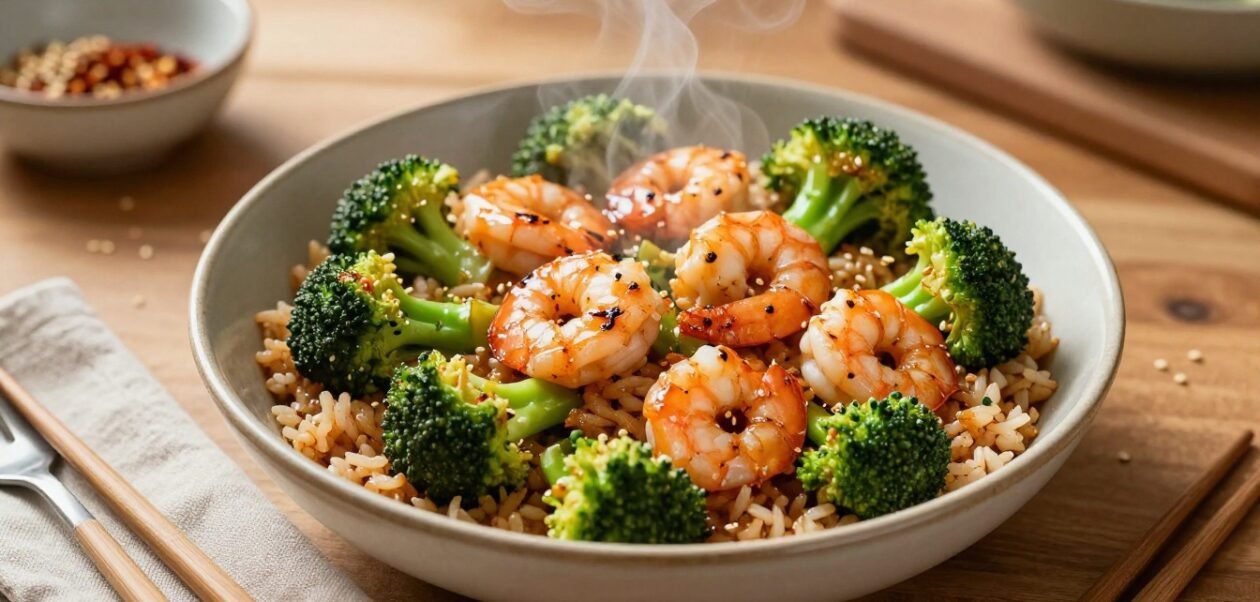
Tender shrimp, crisp-tender broccoli, and hearty brown rice make a satisfying homemade stir-fry for a busy weeknight. Get the ingredients ready before you heat the pan, and the quick cooking feels much easier to manage.
The sauce and toppings are easy to adjust, whether you prefer a little more tang, less salt, or some heat. Start with the rice and prep the remaining ingredients before bringing everything together in the pan.
Why Shrimp and Broccoli Stir-Fry with Brown Rice Makes a Satisfying Meal
This meal brings together a hearty grain, tender shrimp, and crisp-tender broccoli, with a savory sauce to tie them together. Each ingredient has a clear role, so the plate feels complete without needing a long list of extras.

A mix of textures in every bite
Brown rice gives the stir-fry a soft, slightly chewy base with a mild, nutty flavor. Shrimp stay tender when cooked just until opaque, while broccoli adds a firmer bite. Keep the florets crisp-tender, and they bring contrast without feeling raw or tough.
That combination helps the dish stay interesting as you eat. A forkful of rice and shrimp feels different from a bite with broccoli, and the sauce coats all three without hiding their textures.
Savory sauce with a bright finish
Soy sauce, garlic, and ginger bring savory depth, while a little vinegar or citrus can brighten the flavor. Add the tang gradually and taste as you go. It should balance the sauce, not cover up the shrimp or broccoli.
If you like heat, chili flakes or sriracha can add a gentle kick. Keep spicy toppings on the side when everyone at the table has a different preference. You can also serve extra sauce separately, so each person can adjust their own bowl.
A filling combination with room to adjust
Shrimp provide a protein-rich centerpiece, broccoli adds a vegetable, and brown rice makes the meal more substantial. That familiar balance lines up with the food groups discussed in the Academy of Nutrition and Dietetics overview of MyPlate. The ingredient portions and sauce are easy to adjust to suit your appetite.
Add more broccoli if you want extra vegetables, or spoon in a little more rice for a heartier serving. A squeeze of lemon or lime, sliced scallions, or sesame seeds can finish the dish, but the basic combination is satisfying on its own.
Prepare the Brown Rice, Shrimp, and Broccoli Before Cooking
Start with the brown rice, since it usually takes longer than the shrimp and vegetables. While it cooks, you can prep the rest of the ingredients and set them within reach. Stir-fries move quickly once the pan is hot.

Cook the brown rice according to its package
Measure the rice and liquid based on the package directions. Brown rice cooking time and liquid amounts vary by type and brand, so use the instructions for the rice you have rather than relying on one fixed ratio. Long-grain brown rice often simmers for about 40 to 45 minutes, but your package may give different directions.
If you’re using a wild rice blend or a boxed mix instead, check its instructions before cooking. Blends can contain grains that soften at different rates, and some include seasonings. Don’t assume they’ll cook like plain brown rice. When the rice is tender with a little chew, fluff it with a fork and keep it covered until serving.
You can cook the rice ahead if that makes dinner easier. Refrigerate cooked rice in a covered container within two hours, then reheat it before serving.
Thaw and dry the shrimp
If the shrimp are frozen, thaw them in the refrigerator overnight. For a quicker option, place them in a sealed bag and submerge the bag in cold water. Cook shrimp thawed in cold water right away, and don’t leave them out on the counter to thaw. The USDA’s fish and shellfish storage guidance recommends keeping raw seafood refrigerated for only one or two days before cooking or freezing.
Peel and devein the shrimp if needed, then pat them dry with paper towels. Removing surface moisture helps them sear in the pan instead of releasing extra liquid. Keep raw shrimp separate from the ready-to-eat rice, and wash your hands and utensils after handling them.
Wash and cut the broccoli
Rinse the broccoli under cool running water, then drain and dry it well. Cut the head into florets that are close in size so they cook evenly. If the stems are tender, peel away the tough outer layer and slice them thinly. They’ll soften in the pan and add another crisp-tender bite.
Dry broccoli cooks more evenly in a hot skillet. If it’s wet, it can release steam and keep the florets from browning.
Measure the sauce and aromatics
Mince the garlic and grate or mince the ginger before you start cooking. Measure the soy sauce, vinegar, citrus, or other sauce ingredients into a small bowl, and set out any optional chili flakes or toppings. Garlic and ginger can burn if they sit in a hot pan too long, so having them ready helps you add everything at the right moment.
Keep the rice warm, the shrimp dry, and the broccoli cut before heating the pan. Then each ingredient is ready to cook without interrupting the flow.
Stir-Fry the Shrimp and Broccoli Without Overcooking Either One
Cook the broccoli and shrimp in stages, then bring them together with the sauce at the end. This gives each ingredient the time it needs, and helps the shrimp stay tender while the broccoli keeps a little bite. Keep the brown rice warm and ready, since the stir-fry comes together quickly.

Heat the pan and cook the broccoli first
Set a large skillet or wok over medium-high heat and let it warm before adding a little oil. The pan should feel hot, but the oil shouldn’t smoke. Add the dry broccoli florets in a single layer when possible. If they’re piled on top of each other, cook them in batches so they sear rather than steam.
Stir or toss the florets as they cook. They’re ready for the next step when they turn bright green and have browned spots, with a little firmness left in the thickest parts. If they’re browning before they soften, add a small splash of water and cover the pan briefly. Transfer the broccoli to a plate once it’s crisp-tender. It will warm through again when you return it to the skillet.
Sear the shrimp in a single layer
Pat the shrimp dry just before cooking. Add a little more oil to the hot pan, then arrange the shrimp with space between them. If your pan is small, cook them in batches. Crowding releases moisture and lowers the pan’s heat, which can make the shrimp cook unevenly.
Let the first side cook until it turns pink around the edges, then flip each shrimp. The center should change from translucent to pearly and opaque, and the flesh should feel firm. Shrimp size affects cooking time, so use these visual cues instead of relying on the timer alone. FoodSafety.gov also advises cooking shrimp until the flesh is pearly or white and opaque. See its safe minimum temperature and doneness chart.
Move the shrimp to the plate with the broccoli as soon as they’re done. They’ll cook a little more when added back to the pan, so avoid leaving them over the heat while you prepare the sauce.
Finish the sauce, then return everything to the pan
Lower the heat slightly before adding garlic or ginger. Stir them just until fragrant, about 30 seconds, so they flavor the oil without burning. Pour in the measured sauce and stir, scraping up any browned bits. If it tastes too sweet, add a small splash of vinegar or lemon juice and taste again. For less salt, use low-sodium soy sauce or tamari, and add the sauce gradually. Chili flakes or a little sriracha can bring heat; start with a small amount.
Return the broccoli and shrimp to the skillet. Toss just long enough to coat everything and warm it through. If the sauce thickens too much, add a spoonful of water and stir. Turn off the heat when the shrimp are opaque throughout and the broccoli is hot but still slightly crisp.
Spoon the stir-fry over the warm brown rice and serve right away. Add citrus, scallions, or sesame seeds if you like, and keep extra spice on the side so everyone can adjust their bowl.
Make This Shrimp Stir-Fry Your Own and Store Leftovers Safely
Once the basic stir-fry is on the table, small changes can make it fit your household or use what’s already in the fridge. Keep additions simple, and store any extra portions promptly so they’re ready for another meal.

Adjust the vegetables, rice, and sauce
Broccoli pairs well with sliced bell pepper, snap peas, mushrooms, or shredded cabbage. Add a vegetable that cooks in about the same time, or cook it separately if the pan is crowded. A smaller change works, too: stir in a handful of spinach near the end, just until it wilts.
Brown rice is a hearty base, but you can use another cooked grain if that’s what you have ready. Quinoa or white rice both work; follow the package directions, since cooking times and liquid amounts differ. For a lighter serving, use a little less rice and add more broccoli.
Taste the sauce before adding extra seasoning. Soy sauce can make the dish salty, so choose a low-sodium version or add a splash of water if the flavor is too strong. A little lemon juice or rice vinegar brightens the sauce, while chili flakes or sriracha add heat. Set out spicy toppings separately when you’re serving people with different preferences.
Prep components ahead for an easier dinner
You can cook the brown rice, measure the sauce, and cut the broccoli ahead of time. Store each prepared ingredient covered in the refrigerator, then cook the shrimp closer to dinner so they stay tender. Keeping the components separate also gives you flexibility if plans change.
If you make extra rice for another meal, cool and refrigerate it promptly rather than leaving it on the counter. Pack any fresh toppings, such as scallions or sesame seeds, separately and add them just before serving. That small step helps preserve their texture.
Refrigerate and reheat leftovers safely
Transfer leftover shrimp stir-fry and rice to covered, shallow containers, then refrigerate within two hours. If the temperature is above 90°F, put them away within one hour. Keep the refrigerator at 40°F or below, and use refrigerated leftovers within three to four days. The USDA’s leftover food safety guidance covers storage times and safe handling.
Reheat only the portion you plan to eat, until it reaches 165°F throughout. Stir halfway through microwave reheating and check the center with a food thermometer. Chilled rice may feel firm, so add a small splash of water before warming to loosen the grains. Add fresh toppings after reheating to keep them crisp.
Conclusion
Shrimp and Broccoli Stir-Fry with Brown Rice brings together a hearty grain, quick-cooking shrimp, crisp-tender broccoli, and a balanced sauce for a practical weeknight meal. A little prep, especially cooking the rice and measuring the sauce before heating the pan, helps dinner come together smoothly.
Adjust the vegetables to use what you have, and keep chili or other spicy toppings on the side if you’re serving different preferences. With its simple ingredients and flexible seasonings, this stir-fry is easy to make your own.

- Christmas Cookie Ideas for Every Holiday Baker - November 9, 2026
- Christmas Cocktails: Party Drinks, Cozy Sips, and Mocktails - November 9, 2026
- 20 Christmas Appetizer Ideas for Every Holiday Spread - November 9, 2026


2 Comments