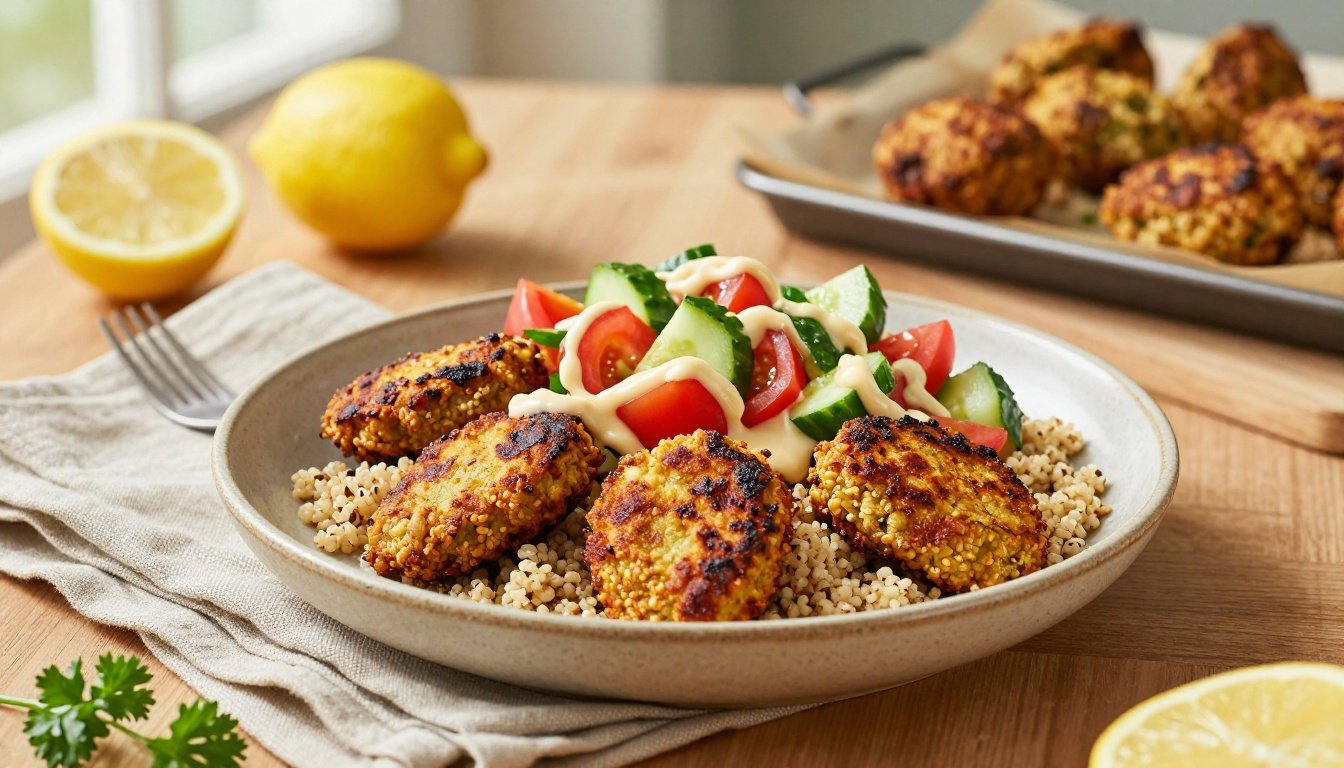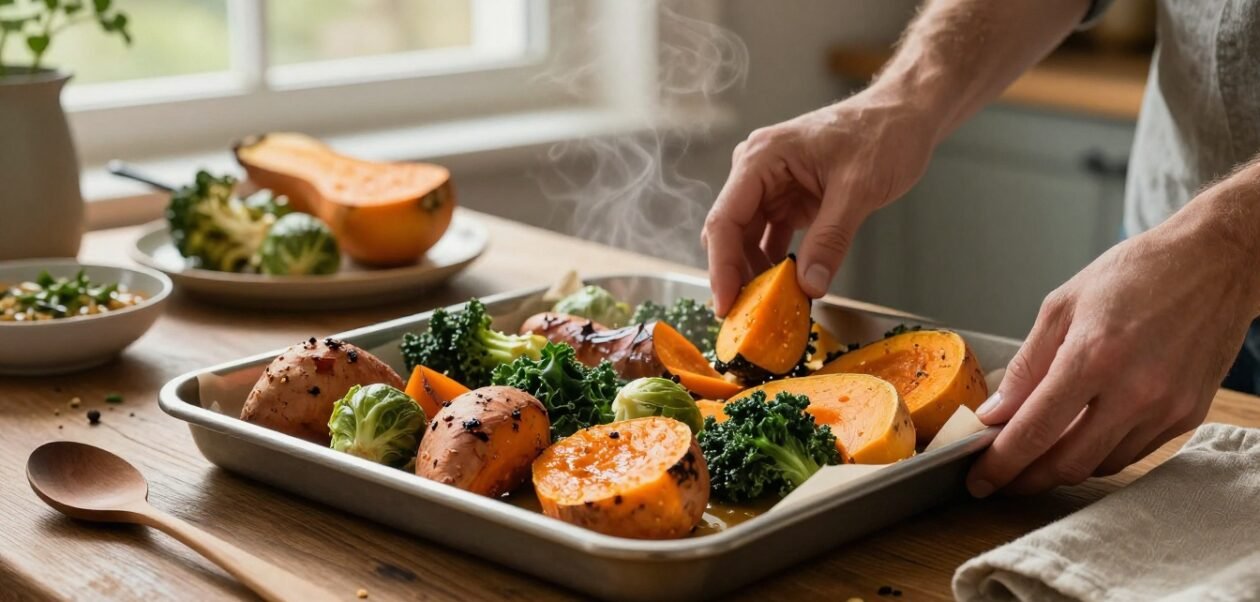
A warm, satisfying dinner can make a busy fall night feel a little easier. These easy fall dinners keep prep simple, use familiar ingredients and seasonal produce like squash, sweet potatoes, and Brussels sprouts, and leave you with fewer dishes to wash.
You’ll find cozy soups, one-pan meals, and sheet-pan dinners that are easy to adjust for your family’s tastes. Pick a format that fits your evening, then find a new favorite to make tonight.
Easy fall dinners for busy weeknights
When the evening is full, dinner needs to be cozy, flexible, and manageable from prep to table. These easy fall dinners take about 30 to 60 minutes, use seasonal vegetables, and keep the cleanup simple. Use what you have, and let a few convenient staples do some of the work.
One-pot soups, stews, and chili
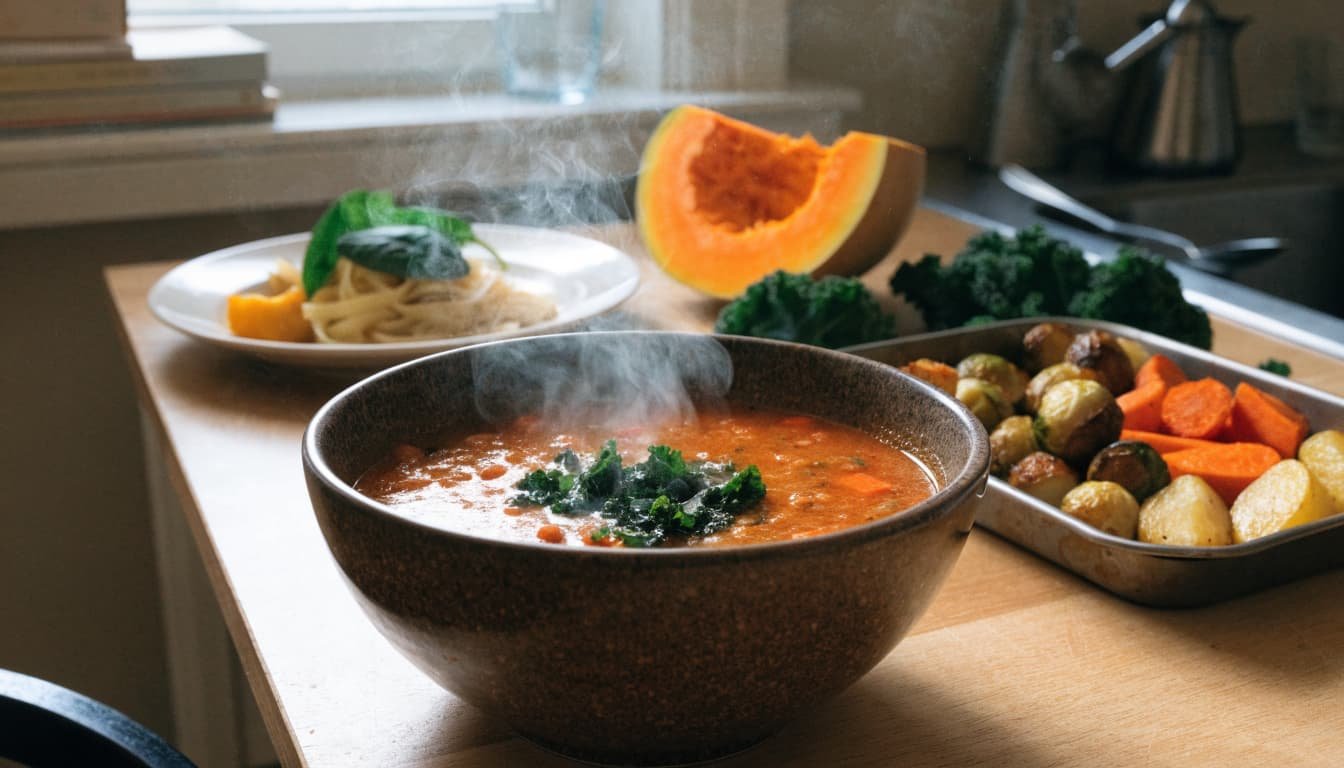
A pot of lentil soup with carrots and kale makes a filling dinner in about 40 minutes. Let the lentils simmer in broth until tender, then stir in chopped kale near the end so it stays bright. For another cozy option, simmer chicken with potatoes, carrots, and broth for a simple vegetable stew. Ground turkey, canned beans, and cubed sweet potatoes make a hearty chili with less chopping and a shorter cook time.
Canned beans, boxed broth, and pre-cut vegetables are useful shortcuts on busy nights. Add a piece of toast or a simple salad if you want something extra alongside the pot. Soups and stews also make handy leftovers for lunch. Refrigerate them in shallow containers within two hours, and use them within three to four days, following USDA guidance on storing leftovers.
Sheet-pan dinners with less cleanup
For a hands-off dinner, spread chicken thighs or sliced sausage on a sheet pan with Brussels sprouts, carrots, and potatoes. Toss everything with oil, salt, pepper, and garlic, then roast until the meat is cooked through and the vegetables are tender, usually about 35 to 45 minutes. Cut the vegetables into similar-sized pieces so they cook at roughly the same pace.
Salmon pairs well with cubed squash and a few sturdy greens for a lighter pan dinner. Since salmon cooks faster than squash, roast the squash first and add the fish later. That small timing adjustment helps everything finish together, without overcooking the fish. Line the pan with parchment for an even easier cleanup.
Quick skillet meals and cozy pasta
A sausage and cabbage skillet is a good fit when you want a warm dinner without waiting for the oven. Brown sliced sausage, add shredded cabbage and a splash of broth, then cook until the cabbage softens. White beans can make it more filling, and they warm through right in the pan.
Chicken with mushrooms is another easy skillet meal. Cook the chicken until golden, then add sliced mushrooms and a little broth or cream for a simple sauce. For pasta night, toss quick-cooking pasta with jarred tomato sauce, sautéed squash, spinach, and canned beans. The vegetables add color and fiber, while beans or chicken provide staying power. A sprinkle of Parmesan finishes the bowl.
Choose fall ingredients that make dinner feel cozy
Fall vegetables bring color, flavor, and plenty of comfort to weeknight meals. Roast a tray while you cook chicken or sausage, or stir a few handfuls into soup or pasta. You don’t need every seasonal vegetable in one recipe. Choose one or two, then pair them with a protein and a filling side, such as beans with brown rice or chicken with whole-wheat pasta.
Use squash, sweet potatoes, and potatoes
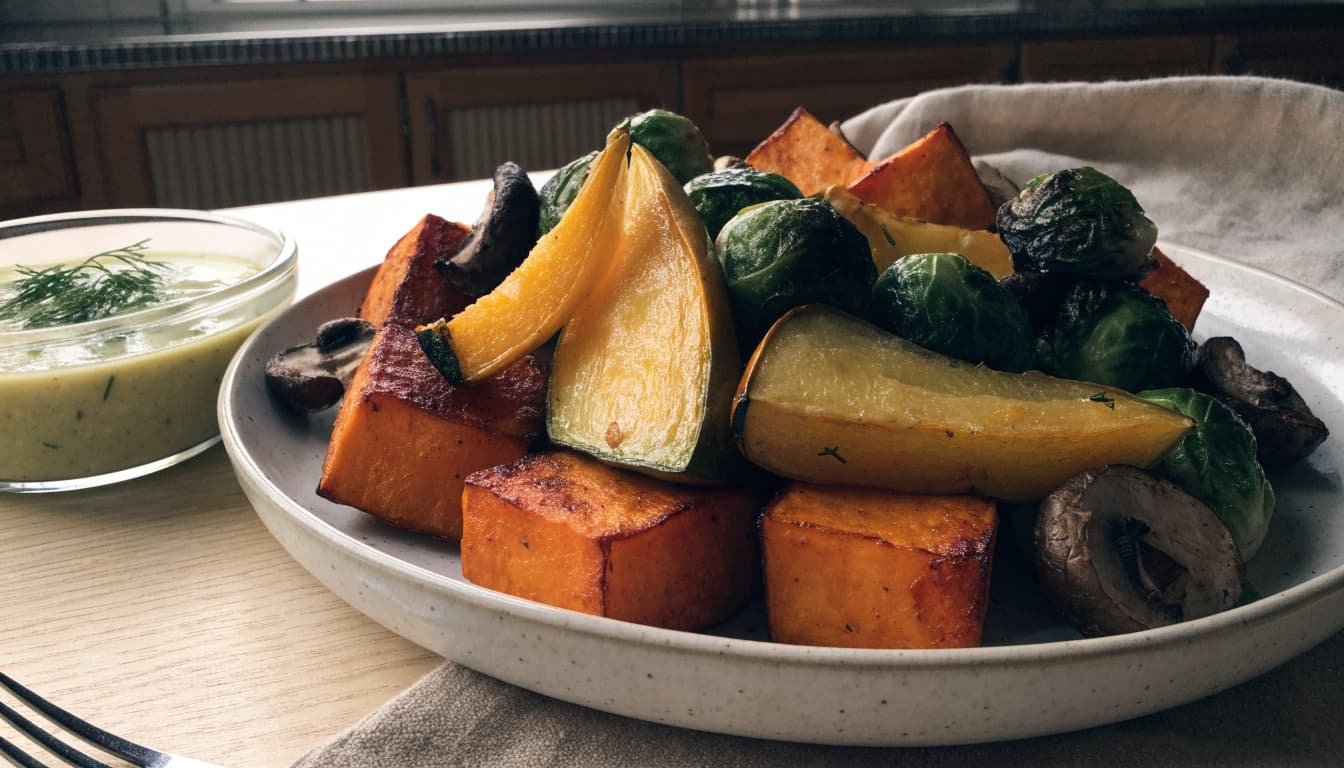
Squash, sweet potatoes, and potatoes are sturdy, versatile choices for easy fall dinners. Roast them until tender for a hands-off side, add them to a pot of soup, or spoon them over grains with beans or chicken. The soft, sweet edges pair well with simple seasonings, so dinner doesn’t need a complicated sauce.
For faster cooking, cut these vegetables into smaller, similarly sized pieces. Toss with a little oil, then season with garlic, rosemary, thyme, or another favorite herb. A squeeze of lemon or a tangy vinaigrette balances their sweetness and brightens the whole plate. Sweet potatoes and winter squash also add vitamin A, potassium, and fiber to the meal, as noted by Ohio State’s vegetable nutrition guide.
Try roasted sweet potatoes with black beans and rice, or serve a squash and mushroom skillet over barley. A baked potato topped with chili or white beans makes a filling dinner with very little extra prep.
Add Brussels sprouts, kale, cabbage, and mushrooms
These vegetables fit easily into the meals you already make. Roast Brussels sprouts on a sheet pan with sausage or chicken, stir shredded cabbage into a skillet with white beans, or sauté mushrooms before adding them to pasta. Kale holds up well in soups and one-pot meals, while mushrooms bring a savory flavor that works nicely with grains and chicken.
Keep the combinations flexible. Swap spinach for kale when you want a quick-cooking green, or use another tender green you have on hand. Add greens near the end of cooking so they soften without turning dull and overcooked. Brussels sprouts and cabbage are also good roasted or sautéed until tender with a little browning at the edges.
One vegetable can be enough to make dinner feel seasonal. Pair sautéed mushrooms with chicken and pasta, or serve roasted Brussels sprouts alongside salmon and potatoes. A simple protein, a filling side, and one well-seasoned vegetable make a cozy plate without adding much cleanup.
Build a healthy fall dinner without extra work
A balanced fall dinner doesn’t need a separate recipe or a sink full of dishes. Start with a protein, add plenty of vegetables, then round out the plate with a satisfying grain or starchy vegetable. You can use that simple formula with soup, a skillet meal, or whatever is already in your fridge.

Make simple swaps for more balanced meals
Choose a protein that fits the meal and your family’s preferences. Beans, lentils, and chickpeas are easy plant-based choices. Eggs work well in a quick skillet, while chicken or fish can pair with roasted vegetables or a warm grain bowl. USDA MyPlate also recommends varying your protein choices and making at least half your grains whole grains. Its healthy meal guidance offers more simple ways to plan a balanced plate.
For a filling side, serve brown rice, whole-grain pasta, or quinoa. Potatoes and sweet potatoes count as satisfying starchy options, too. Add whatever vegetables you have, such as roasted squash, sautéed cabbage, frozen green beans, or a handful of spinach stirred into soup. A modest amount of cheese or cream can add richness without needing a heavy sauce.
You can adjust most easy fall dinners for common dietary needs. For dairy-free meals, leave out cheese or cream, or use a suitable alternative. For gluten-free meals, choose grains and packaged ingredients labeled gluten-free. Check ingredient lists and allergen statements, since broth, sauces, and other convenience foods can contain ingredients you may need to avoid.
Use pantry shortcuts and smart substitutions
A few ready-to-use ingredients can make dinner feel doable when time is tight. Keep canned chickpeas, frozen vegetables, boxed broth, microwave grains, and pre-washed greens on hand. They can go straight into soups, skillet meals, and bowls, with little chopping or prep.
Swapping ingredients is easy when you consider how they cook. Use canned beans instead of lentils when you want a faster soup, but add them near the end so they don’t turn mushy. Frozen vegetables can replace fresh ones in stews and skillet meals; give them a little extra time to heat through, and expect them to release some moisture. Microwave grains make a quick side, though they won’t have the same chewy texture as grains simmered from scratch.
Use what you have, and keep the cooking time and texture in mind. Stir pre-washed greens in just before serving so they stay tender, and add boxed broth gradually if a soup gets thinner than you like. A few practical swaps can bring dinner together without an extra trip to the store.
Make fall weeknight cooking easier with a little planning
A little prep can make easy fall dinners feel manageable without turning Sunday into a full meal-prep day. Wash a few vegetables, cook one useful staple, and leave room to choose dinner based on your time and appetite.

Prep ingredients ahead and keep dinner flexible
Wash and chop sturdy vegetables like carrots, cabbage, and Brussels sprouts when you bring them home. Store them in airtight containers so they’re ready for a sheet-pan dinner, soup, or skillet. Cook a pot of brown rice or barley, too. You can serve it with dinner one night and use the rest in a grain bowl later in the week.
Keep a few mix-and-match components on hand instead of assigning every ingredient to a specific meal. Cooked grains, canned beans, prepped vegetables, and a simple sauce can come together in different ways, depending on what sounds good. If your evening is short, pair them for a quick bowl. If you have more time, add them to a soup or bake.
For meat or poultry, thaw only what you expect to use. Place it on a tray in the refrigerator, not on the counter, and allow enough time to defrost. A package may need an overnight thaw, while a larger cut can take longer. For more safe food-handling basics, follow USDA guidance on keeping food safe.
Turn leftovers into another easy meal
Leftovers can make tomorrow’s dinner easier when you store them promptly. Divide cooked food into shallow containers and refrigerate within two hours. Most cooked leftovers keep for three to four days in the refrigerator, so label the container with the date if you tend to lose track.
Give extra ingredients a new job instead of serving the same plate twice. Spoon roasted vegetables over rice or barley with beans for a quick grain bowl. Add leftover chicken to broth with carrots and greens for a simple soup. Chili is delicious over a baked potato, especially when you have a few toppings ready.
Reheat leftovers until steaming hot throughout. For meat and poultry dishes, use a food thermometer to check that they reach 165°F. A few cooked components in the fridge can save time, but choose the dinner that fits the night you actually have.
Find the right fall dinner for tonight
The best dinner for tonight is the one that fits the time, ingredients, and energy you have. A quick skillet may be the right call after a long day, while soup can simmer when you have a little more time. Let cleanup matter, too: one pan or pot usually means fewer dishes later.
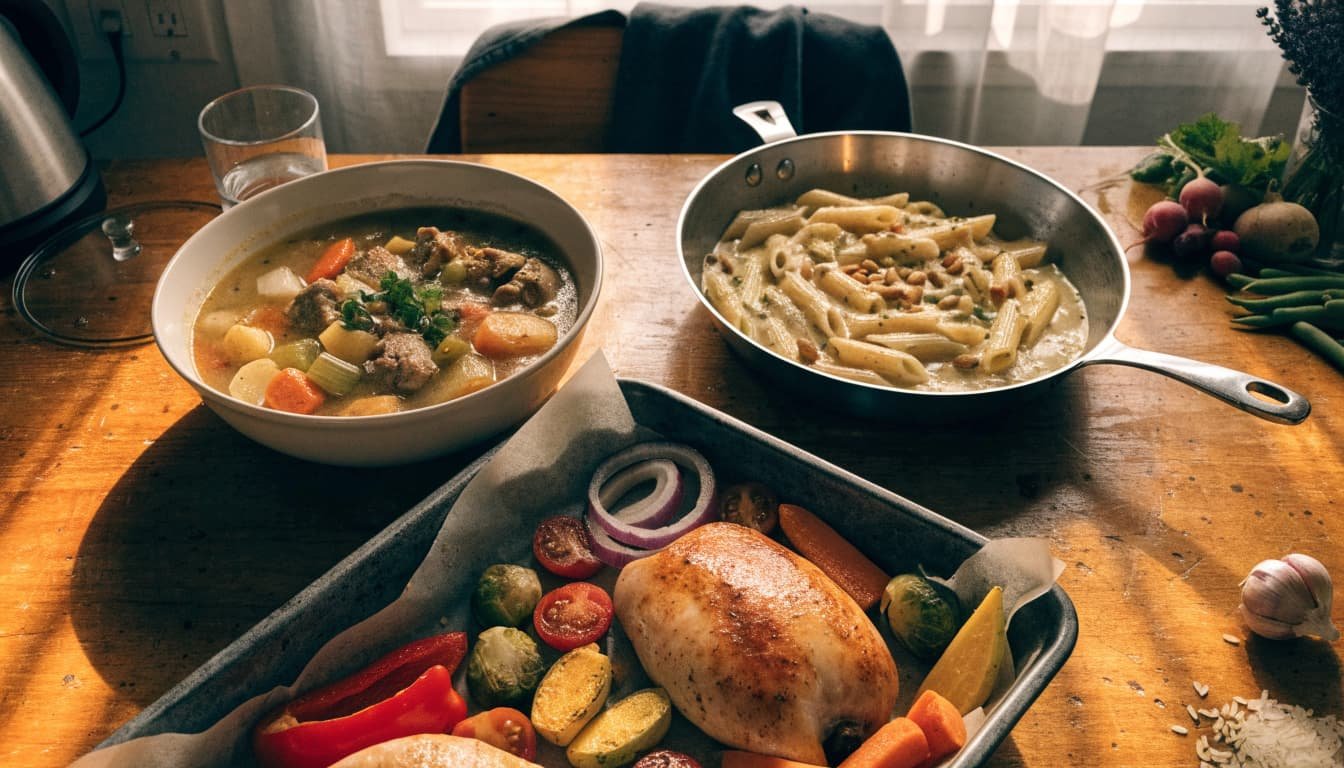
Match the meal to your schedule and kitchen
Check the total cook time, not just the prep time. A recipe may take only 10 minutes to prep but need 40 minutes in the oven. Look at when ingredients go in, too, since a sheet-pan meal may need extra time if dense vegetables are cut into large pieces.
Use this quick guide to narrow down your options:
- Choose a skillet when you want dinner on the table fast and have ingredients that cook quickly, such as sausage, cabbage, mushrooms, or canned beans.
- Pick a sheet pan when you want one-tray cooking and can spare time for the oven to roast chicken and vegetables.
- Make soup when a hands-off simmer suits your evening, or when you’d like leftovers for lunch.
- Go with pasta when you want something comforting and can build dinner around quick-cooking noodles, vegetables, and beans or another protein.
Before you start, check that you have the needed pan, pot, or baking sheet, along with the main ingredients. If you’re roasting chicken, use a food thermometer to check that it reaches 165°F, as recommended in FoodSafety.gov’s safe temperature chart. Choose a recipe that fits your kitchen and the time you have, then use easy swaps for anything missing.
Keep family dinners easy to customize
You don’t need to make separate meals to please different eaters. Keep the main dish simple, then put a few toppings and sides on the table so everyone can make their own plate.
Set out chopped herbs, grated cheese, crusty bread, or a simple salad. For soup, offer toppings on the side; for pasta, let everyone add cheese or greens to taste. A sheet-pan dinner can stay plain, with a favorite sauce served alongside it.
Small choices make one dinner work for the whole family. If someone avoids dairy, keep cheese separate. If a child prefers familiar flavors, serve a portion before adding stronger seasonings. You’ll still cook one easy fall dinner, with enough flexibility for everyone to enjoy it.
Conclusion
Easy fall dinners can be simple, nourishing, and flexible. Choose a cooking method that fits your evening, then pair a few seasonal ingredients with a protein and a satisfying side.
Start with what you have, whether that’s a sheet pan of vegetables, a pot of soup, or a quick skillet. Add the seasonings and toppings your family enjoys, and let dinner be practical, cozy, and your own.

- Christmas Cookie Ideas for Every Holiday Baker - November 9, 2026
- Christmas Cocktails: Party Drinks, Cozy Sips, and Mocktails - November 9, 2026
- 20 Christmas Appetizer Ideas for Every Holiday Spread - November 9, 2026