
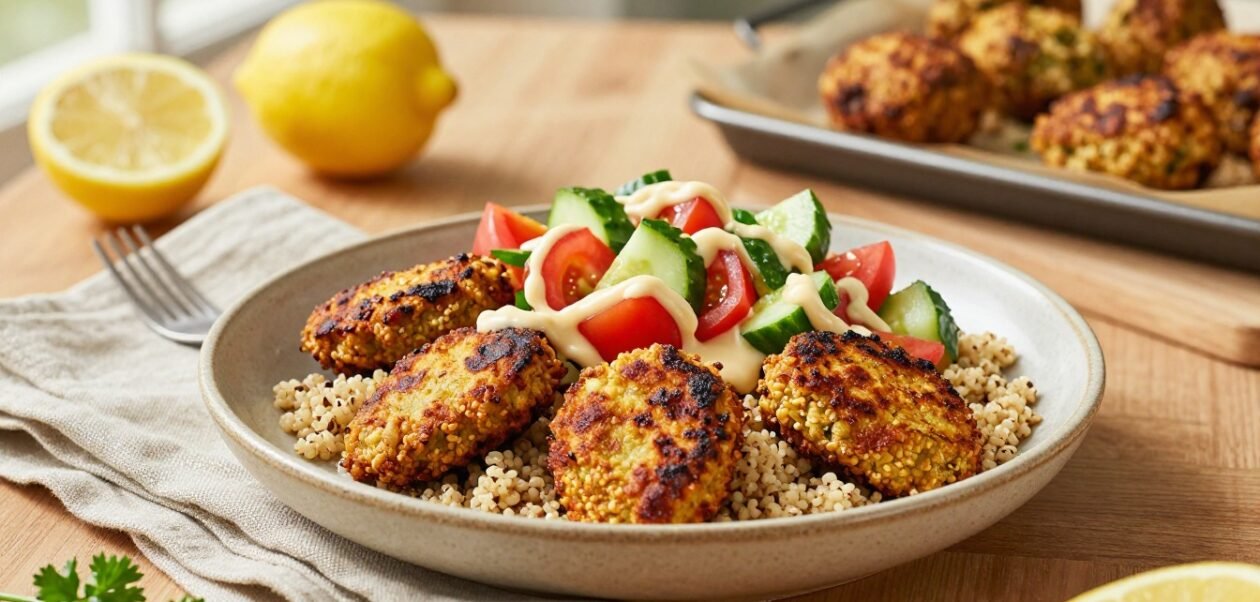
Warm falafel with crisp edges, cool cucumber tomato salad, and creamy tahini make these bowls satisfying over grains or greens. The recipe makes four bowls and takes about 30 minutes of active prep, plus an overnight soak for dried chickpeas.
Choose the base and toppings to suit what you have on hand, then assemble the bowls just before serving to keep the vegetables fresh and the falafel crisp. Start with the chickpeas, since they need time to soak.
What You Need for Crispy Baked Falafel Bowls with Cucumber Tomato Salad
These bowls serve four and bring together crisp-edged falafel, a fresh cucumber tomato salad, creamy tahini sauce, and a base of greens or grains. Keep the ingredients simple, then adjust the optional toppings to fit what you have.
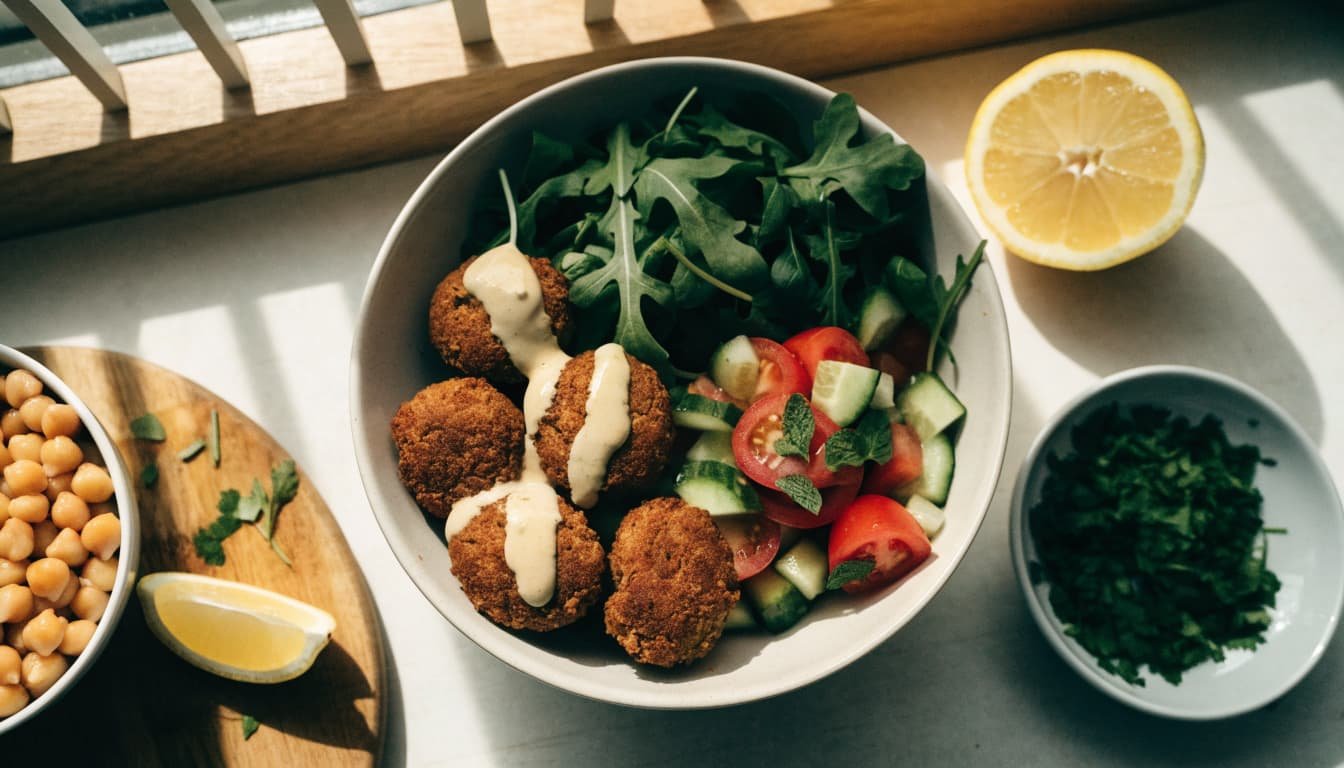
Dried chickpeas make falafel easier to shape
For a reliable texture, start with 1 cup dried chickpeas, soaked overnight, then drained well. Use them soaked but uncooked. They stay firmer than canned chickpeas, helping the falafel mixture hold together and bake with crisp edges. Serious Eats’ falafel recipe also starts with soaked dried chickpeas.
For four servings, gather:
- ½ cup chopped parsley and ½ cup chopped cilantro.
- ½ small onion and 2 garlic cloves.
- 1 teaspoon each ground cumin and coriander, plus ¾ teaspoon salt.
- 2 tablespoons flour and 1 tablespoon olive oil.
The herbs add freshness, while onion, garlic, and spices give the falafel its savory flavor. Flour helps bind the mixture without making it heavy.
Canned chickpeas are a shortcut, but they are softer and wetter after cooking. Drain and rinse them, then pat them very dry. The falafel may turn out denser and need extra flour or another binder, so don’t expect the same texture as falafel made with soaked dried chickpeas.
Build the salad, sauce, and bowl base
The salad brings a cool, juicy contrast to the warm falafel. For four servings, use:
- 1 cucumber, diced, and 2 ripe tomatoes, cut into bite-size pieces.
- Juice from ½ lemon.
- ¼ small red onion or a handful of fresh herbs, if you like.
For the tahini sauce, set out ⅓ cup tahini, 2 tablespoons lemon juice, 1 small grated garlic clove, and ¼ teaspoon salt. Add 3 to 5 tablespoons water gradually, whisking until the sauce pours easily. Use less water for a thicker sauce or add more if it clings too heavily. A teaspoon of maple syrup is optional if you’d like to soften the lemon’s tang. Taste the sauce with a bite of salad, then adjust the lemon or salt as needed.
Choose 4 handfuls of greens, or about 2 cups cooked quinoa or brown rice, for the bowl base. If using both warm grains and tender greens, let the grains cool first so the leaves stay fresh. Olives, crumbled feta, and toasted seeds are optional toppings; choose one or two for a little extra salt or crunch.
How to Bake Falafel So the Centers Stay Tender and the Edges Turn Crisp
Good baked falafel starts with a mixture that holds together without turning into a paste. From there, even shaping, a little oil, and room on the pan help the patties brown while staying tender inside.
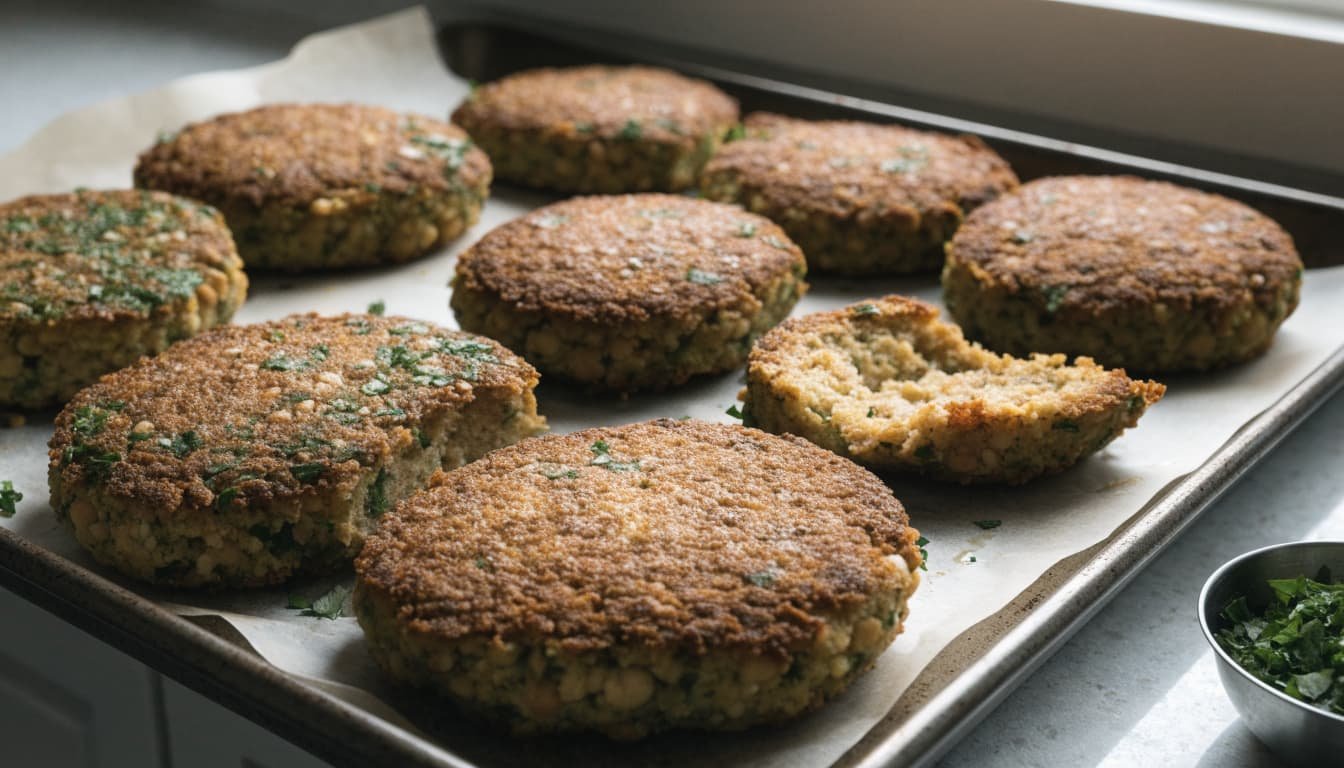
Pulse the mixture until it holds, not until it is smooth
Drain the soaked chickpeas well and pat them dry. Extra water can make the mixture too soft to shape, so take a moment to remove moisture from the chickpeas before they go into the food processor.
Add them with the parsley, cilantro, onion, garlic, cumin, coriander, and salt. Pulse in short bursts, stopping to scrape down the bowl as needed. The mixture should look finely chopped and cohesive, with small pieces of chickpea and herbs still visible. A smooth puree can bake up dense. Using soaked, uncooked chickpeas also helps the mixture bind, as shown in this Serious Eats falafel burger recipe.
Press a little mixture between your fingers. It should hold together when squeezed. If it crumbles, mix in flour a teaspoon at a time and test again. If it feels very soft, let it rest briefly or chill it before adding more binder. A large amount of flour can make the centers heavy.
Shape evenly, add a little oil, and leave room on the pan
Heat the oven to 375°F and line a baking sheet with parchment. Shape the mixture into patties of similar size and thickness so they cook at about the same rate. Set them apart on the pan, leaving enough space for hot air to reach the edges. When patties crowd one another, trapped moisture can leave them pale.
Brush or drizzle each patty with a little olive oil. A light coating helps the surfaces brown without drying out. Bake for about 25 minutes, turning the patties halfway through. Patty size and thickness affect the timing, and ovens can run differently, so use the clock as a guide. Look for browned edges and a firm surface before taking them out.
Use simple checks to avoid pale or fragile falafel
If the mixture is hard to shape, check for excess moisture before adding more flour. If the patties feel dense, the mixture may have been processed too long. On the baking sheet, crowding or too little oil can limit browning, so leave space and coat the surfaces lightly.
Let the falafel rest on the pan for a few minutes before lifting them. They firm up as they settle and are less likely to break. If they still look pale or feel soft, bake them a few minutes longer, then check again.
Make a Bright Cucumber Tomato Salad and Creamy Tahini Sauce
The cool, juicy salad and nutty tahini give warm falafel a fresh, creamy contrast. Keep both components separate until serving, then add just enough sauce to bring the bowl together without softening the crisp edges.
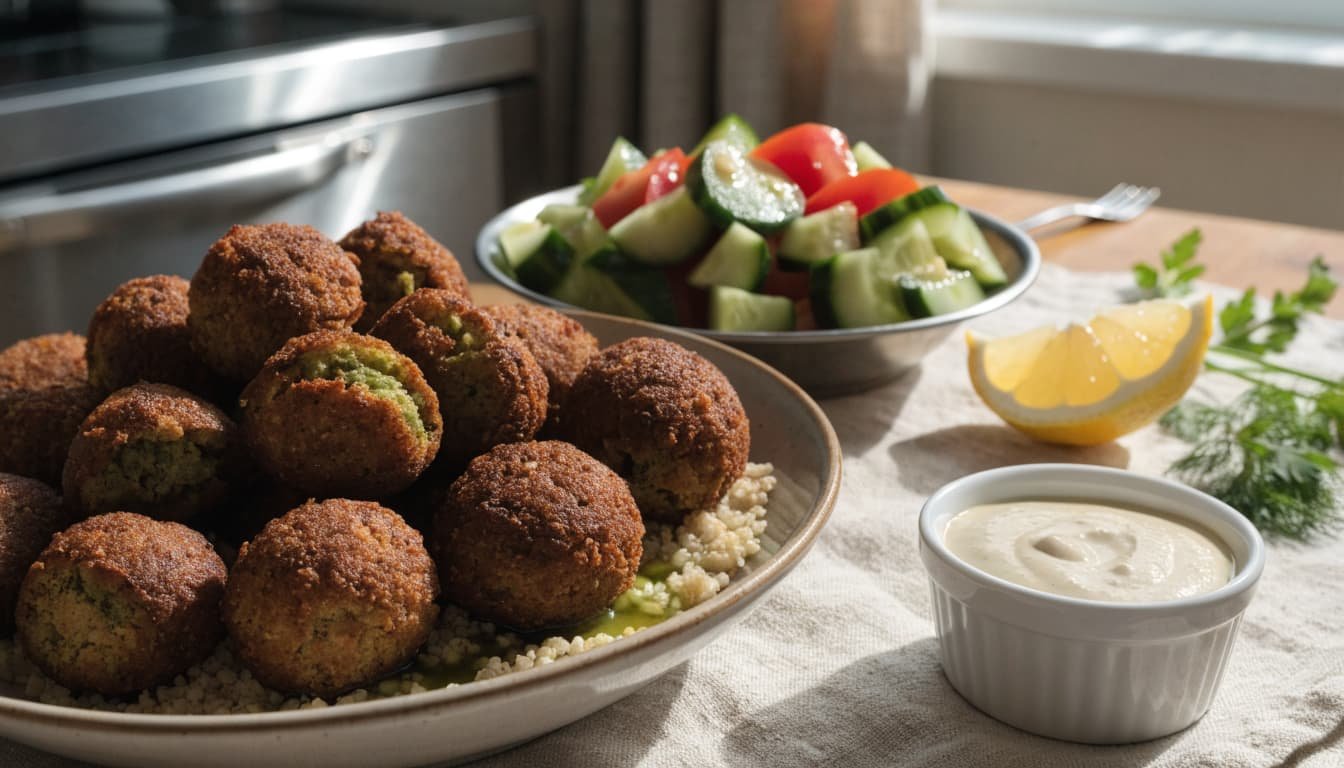
Cut the vegetables small and season them close to serving
Dice the cucumber and tomatoes into bite-size pieces. Even pieces are easier to scoop with grains and falafel, so each forkful gets a little of everything. Add lemon juice, salt, and black pepper. Finely chopped red onion adds a sharper bite, while parsley, cilantro, or mint brings a fresh herbal note.
Season the salad shortly before you assemble the bowls. Salt draws liquid from cut vegetables, and the lemon adds more moisture as the salad sits. A little juice is welcome, but too much can leave the vegetables less crisp and dilute the flavors. For another take on cucumber with tahini, Simply Recipes’ cucumber salad also uses salt to help manage excess moisture.
Keep the salad in its own bowl rather than mixing it into the tahini. The juicy vegetables taste bright beside the warm, savory falafel, and their texture stays distinct.
Whisk tahini with lemon and water until it drizzles easily
In a small bowl, whisk the tahini with lemon juice, grated garlic, and salt. The mixture may thicken into a stiff paste when the lemon first hits. Keep whisking, then add water gradually until the sauce turns smooth and pourable. Tahini varies by brand, so use only enough water for a steady drizzle.
If the sauce thickens after chilling, whisk in a little more water before serving. Taste it with a piece of cucumber or a bite of falafel, then adjust the lemon for more brightness or the salt if the flavor seems flat. A small touch of maple syrup can soften the tang, if you like.
Drizzle a little tahini over each bowl and serve the rest on the side. That keeps the sauce creamy and lets the falafel hold onto more of its crisp texture.
Assemble a Balanced Falafel Bowl with Grains, Greens, and Easy Swaps
A good falafel bowl has four simple parts: a filling base, warm falafel, crisp vegetables, and a bright sauce. Keep the portions flexible, then serve soon after assembly so the salad stays fresh and the falafel keeps more of its crisp edge.
Layer warm falafel over greens or a cooked grain
Start each bowl with about ½ to 1 cup cooked quinoa or brown rice, depending on how hearty you want it. Leafy greens make a lighter base, or use a smaller scoop of grains over a handful of greens. If the grains are warm, let them cool slightly first so tender leaves don’t wilt. USDA MyPlate suggests choosing whole grains for at least half of your grain choices; brown rice and quinoa are two options listed in its whole-grain guidance.

Add the warm falafel and cucumber tomato salad in separate sections over the base. A light drizzle of tahini is enough to start. Keep extra sauce at the table so everyone can add more to taste.
Leaving the ingredients in sections makes the bowl colorful and lets you see each texture. It’s also easier to scoop a little grain, falafel, and salad into the same bite. Serve the bowls soon after assembling, before the vegetables release too much juice or the sauce softens the falafel.
Swap toppings to fit your pantry and the season
Use what you have, and choose just one or two extras. Thinly sliced radishes or bell pepper add crunch; shredded cabbage gives the bowl a sturdier bite. A few olives, crumbled feta, fresh parsley or mint, or toasted seeds can bring a salty, herbal, or nutty finish. You don’t need every topping for a satisfying bowl.
For another plant-based addition, drain and rinse canned chickpeas or white beans, then spoon a little into each bowl. A hard-boiled egg is an optional variation if you’d like one. When serving family-style, set the extras out separately so everyone can build a bowl that suits them.
Prep, Store, and Reheat Falafel Bowls Without Losing Their Texture
A little advance prep makes these bowls easier to assemble on a busy day. Cook the grains and prepare sturdy ingredients ahead, then store each component separately so the salad stays fresh and the falafel can be reheated with dry heat.

Keep the falafel, salad, grains, and dressing in separate containers
Cook quinoa or brown rice ahead, and wash and dry any greens thoroughly. You can also chop sturdy vegetables, but for the freshest cucumber tomato salad, cut and season the vegetables closer to serving. Store the falafel, grains, vegetables, greens, and tahini dressing in separate covered containers. Keep the dressing away from the cucumber and tomatoes, since the vegetables release liquid and can lose their crunch once dressed.
Refrigerate cooked food within 2 hours, or within 1 hour if the temperature is above 90°F. Divide warm grains and falafel into shallow containers so they cool faster; you don’t need to wait for them to reach room temperature first. Keep the refrigerator at 40°F or below, and use refrigerated leftovers within 3 to 4 days, following the USDA’s leftover storage guidance.
Reheat falafel in the oven or air fryer for a firmer finish
For refrigerated falafel, place the patties on a baking sheet and warm them in a 350°F oven for about 8 to 10 minutes, turning once. An air fryer at 350°F for 4 to 6 minutes is another good option. Smaller patties may heat faster, so check them early. Dry heat helps firm the outside, though reheated falafel may not be quite as crisp as it was when freshly baked.
For food safety, heat leftovers to 165°F in the center and check with a food thermometer. A microwave is quicker, but it tends to soften the outside. Use it when convenience matters more than texture, and warm only the portion you plan to eat.
Cooked falafel also freezes well in an airtight container. For best quality, use it within 3 to 4 months. Thaw it in the refrigerator, then reheat in the oven or air fryer. Add the fresh salad, grains, and tahini after warming so the vegetables stay crisp and the sauce remains creamy.
Conclusion
Crispy Baked Falafel Bowls with Cucumber Tomato Salad bring warm, crisp-edged falafel together with juicy vegetables and creamy tahini. For the best texture, soak dried chickpeas overnight, pulse the mixture until it stays coarse, and leave space between the patties with a light coating of oil.
Add the salad and tahini just before serving. Choose greens, grains, and toppings based on what you have on hand, while keeping the fresh, crisp, creamy contrast that makes these bowls satisfying.

- Christmas Cookie Ideas for Every Holiday Baker - November 9, 2026
- Christmas Cocktails: Party Drinks, Cozy Sips, and Mocktails - November 9, 2026
- 20 Christmas Appetizer Ideas for Every Holiday Spread - November 9, 2026



1 Comment