

Sharing homemade cookies is one of the sweetest parts of the holidays, whether you’re filling a platter for a party or wrapping up treats as gifts. The best Christmas cookie ideas give you room to choose the flavors, textures, and baking effort that fit your plans.
You’ll find classic cutouts and gingerbread alongside easy no-bake treats, simple decorating ideas, and make-ahead tips. Start with the cookies that sound good to you, then build a mix that suits your holiday schedule.
Christmas Cookie Ideas for Every Kind of Holiday Baker
A balanced cookie tray offers more than a range of flavors. Pair crisp cookies with soft ones, buttery bites with fruit-filled treats, and decorated classics with easy options that don’t need the oven. These Christmas cookie ideas make it simple to build an assortment that feels festive without baking the same style all day.
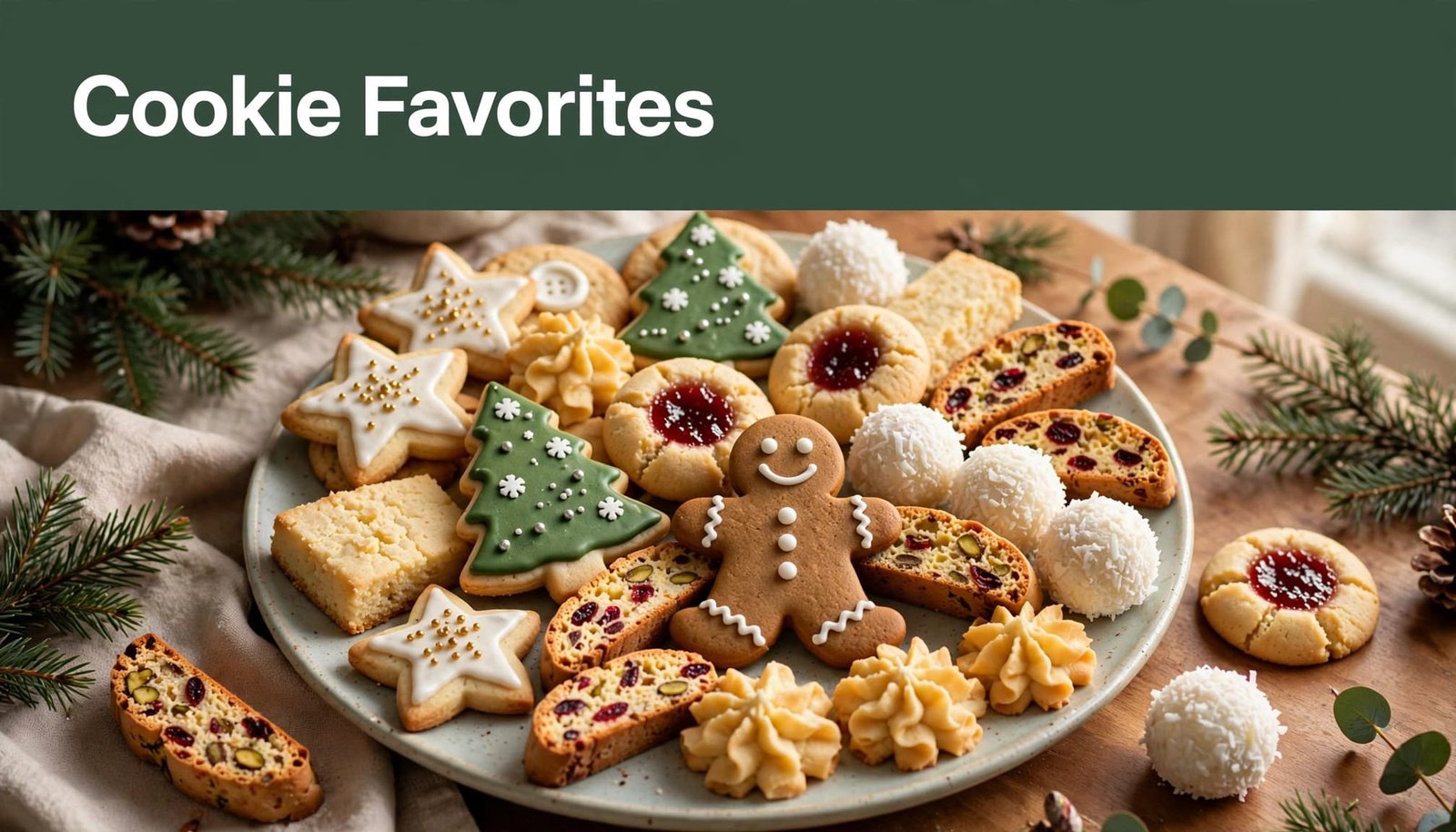
Classic cutout sugar cookies and spiced gingerbread
Sugar-cookie stars, trees, bells, and snowflakes bring color and familiar shapes to a holiday platter. Their mild, buttery flavor also makes them an easy choice for decorating with icing or sprinkles. For clean edges, chill the dough before rolling and cutting. Cold dough is easier to handle and less likely to spread or lose its shape in the oven. King Arthur Baking’s cutout-cookie tips offer another useful way to keep shapes defined.
Gingerbread adds a deeper, warmly spiced bite. Ginger leads, while cinnamon and cloves round out the flavor; the cookies can be crisp for snapping or softer and chewy. Decorate them simply with icing, or leave them plain for a more pronounced spice flavor. Either way, let baked cookies cool fully before adding icing or other decorations, so the finish stays neat.
Buttery shortbread, spritz, and crisp biscotti
Shortbread brings a tender, crumbly texture and rich butter flavor to a cookie assortment. Keep it simple, or add citrus zest, chopped nuts, dried fruit, or chocolate for a little contrast. A few shortbread fingers or rounds balance sweeter, iced cookies without competing for attention.
For decorative shapes without the work of rolling and cutting, press spritz dough into rosettes, trees, or other designs. These small cookies look detailed on a platter and offer a crisp, buttery bite. Biscotti bring a firmer crunch. Since they’re baked twice, they hold their shape for dunking and pair especially well with coffee, tea, or cocoa. Try cranberry-pistachio for tart fruit and nutty flavor, or chocolate-orange for a richer, fragrant combination.
Jam thumbprints, soft cookies, and no-bake treats
Jam thumbprints add bright color and a sweet-tart center to the mix. Press a small well into each dough ball, then fill it with raspberry, apricot, or another favorite jam. For a softer option, include iced cookies or fruit-forward choices such as lemon cookies. Their tender texture and lighter flavor give guests a break from crisp, buttery bakes.
No-bake treats also deserve a spot on the tray, especially when oven space is limited. Chocolate-peanut-butter cookies bring a chewy, rich bite, while coconut snowballs offer a softer, snowy-looking contrast. Because they differ from baked cookies in both texture and preparation, they’re an easy way to round out the assortment. Combine a few with crisp biscotti, spiced gingerbread, and jam-filled thumbprints for a tray with a pleasing mix of flavors and textures.
How to Choose a Cookie Mix That Feels Just Right
A holiday cookie platter feels more inviting when each choice adds something different. As you plan Christmas cookie ideas for a family gathering, party, or edible gift, balance texture and flavor rather than filling the tray with several versions of the same cookie. A simple mix of familiar favorites and one bright surprise gives guests plenty to enjoy.
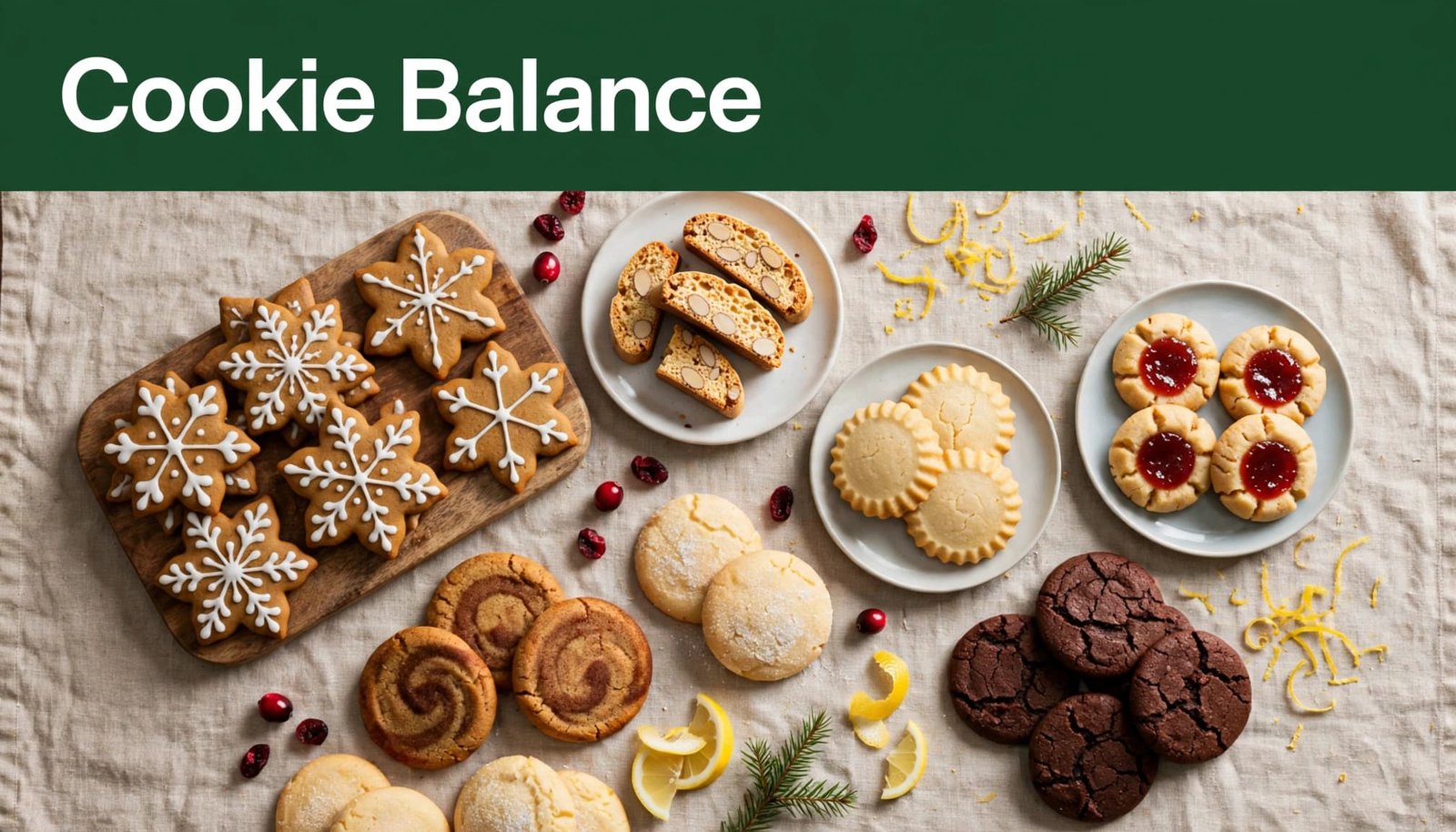
Balance soft, crisp, chewy, and crumbly textures
Start with cookies that feel different in the hand and on the first bite. Pair soft gingerbread or iced cookies with crisp biscotti, buttery shortbread, or chewy thumbprints. That contrast keeps the tray interesting, even when the cookies share classic holiday spices.
Shape matters, too. Cutout stars, round thumbprints, biscotti fingers, and shortbread wedges create variety across the platter without requiring elaborate decoration. If you’re making an edible gift, choose sturdy cookies that travel well, such as biscotti and shortbread, then add a few softer treats in a separate layer or container so they don’t get crushed.
For a family gathering, set out a small assortment rather than a mountain of one kind. One soft cookie, one crisp option, and one filled or crumbly choice can make a modest tray feel complete. If you’re baking several varieties, choose recipes with different preparation styles, too. A rolled cookie, a drop cookie, and a pressed or slice-and-bake option spread the work across the day.
Pair familiar flavors with one festive surprise
Build around flavors most guests recognize, such as vanilla, chocolate, or cinnamon. Then add one brighter or less common choice, perhaps lemon, cranberry, pistachio, or peppermint. The familiar cookies help anchor the assortment, while the surprise gives people a reason to try something new.
Keep the overall mix balanced. If you include rich chocolate shortbread, pair it with lemon or cranberry cookies rather than adding several other dense, sweet options. Cinnamon or vanilla can bridge the two, giving the platter a familiar flavor that doesn’t overpower the lighter bite. For a crowd, a practical combination might be vanilla cutouts, chocolate biscotti, and cranberry thumbprints.
Before baking for a group, ask about allergies and preferences. Nuts, dairy, eggs, wheat, and soy appear in many cookie recipes, so check ingredient labels and share clear ingredient information with guests. The FDA’s food allergy guidance explains which allergens require special attention in food labeling. If you can’t confidently prevent cross-contact, don’t describe a cookie as allergy-safe.
For gifts, include a small ingredient card and pack strongly flavored cookies separately from delicate vanilla or citrus varieties. That keeps peppermint from dominating the other flavors and helps recipients choose what suits them. A varied platter doesn’t need a dozen recipes; a few contrasting textures, mostly familiar flavors, and one festive accent can make the selection feel thoughtful and generous.
Easy Ways to Decorate Christmas Cookies
A few thoughtful finishes can make homemade cookies feel festive without turning decorating into an all-day project. Choose a method that suits the cookie and the time you have, whether you’re adding a quick dusting of sugar or piping details onto sturdy cutouts.
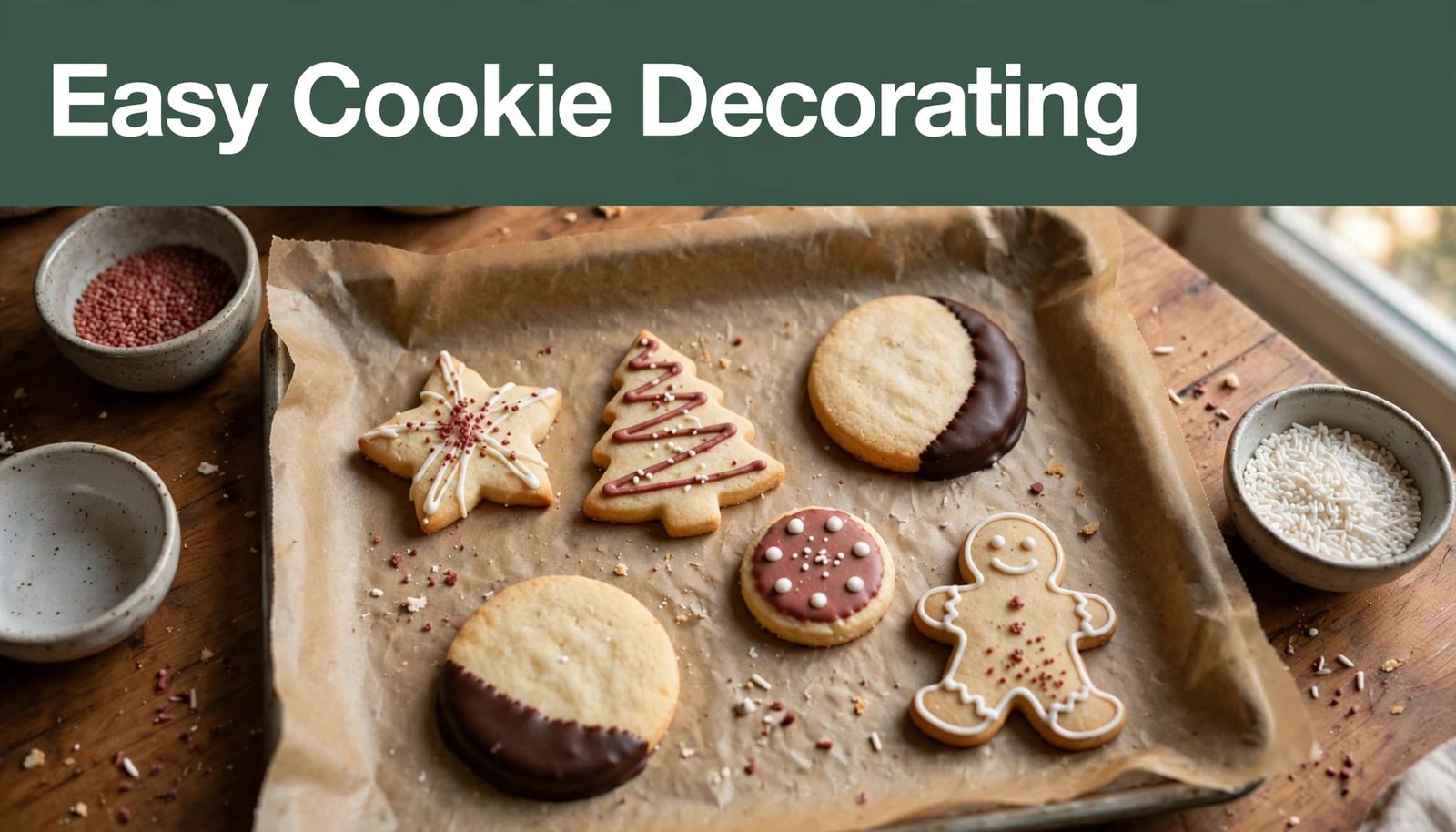
Use icing, sprinkles, and simple finishing touches
For cutout sugar cookies or gingerbread, spread a thin layer of icing across the top, or pipe outlines, dots, and simple lines. Let the base layer set before adding another color so the details stay defined. Royal icing works well for piping and glazing, and King Arthur Baking’s royal icing recipe gives you a reliable starting point.
Always let cookies cool completely before icing them. Warm cookies can soften the icing and cause colors to smudge, while a cool surface helps decorations hold their shape. If you’re short on time, dip a cookie halfway into icing or melted chocolate, then add sprinkles before the coating sets.
Match the finish to the cookie. Detailed icing suits firm, sturdy cutouts that can handle a little extra decorating. Shortbread and biscotti often look appealing with less effort: dip one edge in melted chocolate, scatter chopped nuts or sprinkles over the coating, or dust the tops with powdered sugar. A light shake of colored sugar can also add sparkle without covering up a cookie’s shape or texture.
Keep the palette small so the tray looks cohesive. Two or three colors, paired with one or two toppings, are usually enough to make a batch feel festive. For example, white icing and red sprinkles give tree-shaped cookies a classic look, while chocolate-dipped shortbread needs little else.
Make decorating fun for kids and cookie swaps
For a family decorating session, set out cooled cookies on a parchment-lined tray or table covering. Put a few icing colors and toppings in small bowls, and give each baker a spoon or small piping bag. Limiting the choices makes setup and cleanup easier, while still leaving room for each person to create a different design.
Choose shapes that are easy to pick up and decorate, such as circles, stars, or trees. Small details can be tricky for younger kids, so offer simple options like spreading icing with a butter knife, adding sprinkles, or making dots with a piping bag. Decorate a few cookies at a time, then move finished ones to a clean tray to dry.
For a cookie swap, keep designs easy to transport. A thin layer of icing or a chocolate-dipped edge is less likely to snag than tall, delicate decorations. Set aside a few undecorated cookies as well, then let each guest add a personal touch. With a small color palette and a handful of toppings, decorating stays relaxed and every baker can take home cookies that feel like their own.
Make-Ahead, Freeze, and Store Cookies With Less Holiday Stress
A little planning lets you spread holiday baking across several days instead of crowding everything into one afternoon. Store unbaked dough differently from finished cookies, and match each method to the recipe so your Christmas cookie ideas taste fresh when you serve them.
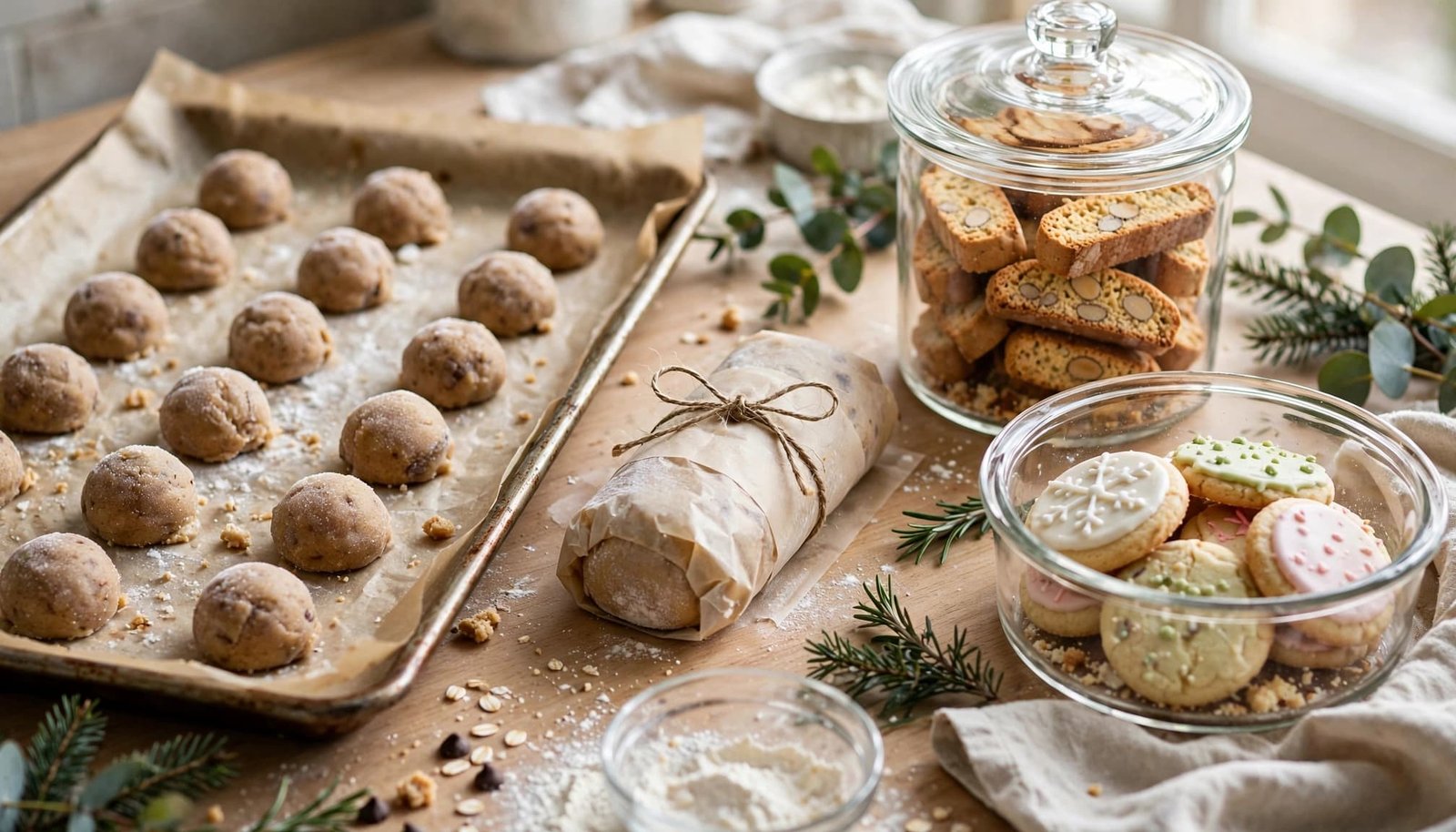
Prepare cookie dough in advance and freeze it well
Many basic drop-cookie and roll-out doughs can stay in the refrigerator for several days. That gives you time to mix dough early, then bake when your schedule allows. For longer storage, freeze the dough rather than leaving it in the refrigerator past the recipe’s recommended time.
Choose a freezing method that suits the dough:
- For drop cookies, scoop portions onto a parchment-lined tray and freeze until firm. Transfer them to a freezer bag or airtight container, pressing out excess air.
- For cutout cookies, arrange the shapes on a tray and freeze them until solid, then pack them in a sealed container with parchment between layers. You can also roll dough between parchment sheets before freezing; King Arthur Baking’s cutout-cookie tips explain how this helps keep the dough easy to handle.
- For slice-and-bake cookies, shape the dough into a log, wrap it tightly, and freeze it. Thaw it enough to slice, then bake as directed.
Label each package with the cookie name and the date before it goes into the freezer. This small step helps you tell similar-looking doughs apart and use older batches first. When you’re ready to bake, follow the recipe’s directions for frozen dough. Some cookies bake straight from frozen, while others need time to thaw; don’t assume every dough works the same way.
Keep baked cookies fresh and plan the baking order
Once cookies are baked, let them cool completely before packing. Even a little trapped warmth can create condensation inside a container and soften crisp cookies. Airtight containers help protect freshness, but different textures and strong flavors may need separate storage.
Crisp biscotti keep their texture differently from soft, iced, or filled cookies. Store crisp varieties in a dry, airtight container, while tender or decorated cookies may need a method suited to their recipe. Jam centers, icing, and other toppings can also affect how well cookies hold up. Since there isn’t one storage time that fits every kind, use the recipe’s guidance and plan to freeze cookies that need longer storage.
The baking order can make the days before a gathering much easier. Bake sturdy, crisp varieties such as biscotti ahead, then save delicate decorating and any final assembly for closer to serving. If you’re making iced cutouts, bake and cool them first, then decorate when you have a clear stretch of time. For a mixed platter, package strongly flavored cookies separately so peppermint or spice doesn’t take over milder flavors.
A simple schedule might look like this: mix and freeze dough in advance, bake sturdy cookies next, then decorate and assemble the most delicate varieties near serving time. That way, you can prepare in stages while keeping each cookie’s texture and finish in mind.
Conclusion
The best Christmas cookie ideas are the ones that fit your time and give your platter a mix of textures and flavors. Choose a few favorites instead of trying to bake every kind.
A combination of classic cookies, one festive variation, and a simple decorating touch can make holiday baking feel special. A small, thoughtfully chosen assortment is more than enough to share.
Save the pin for later


- Christmas Cookie Ideas for Every Holiday Baker - November 9, 2026
- Christmas Cocktails: Party Drinks, Cozy Sips, and Mocktails - November 9, 2026
- 20 Christmas Appetizer Ideas for Every Holiday Spread - November 9, 2026


This is an exceptionally well-articulated discussion on “christmas cookie ideas”. Looking forward to reading more of your insightful perspectives and follow-up work on this topic!