

Sharing holiday appetizers gives everyone something festive to enjoy while the gathering gets underway. A good spread feels generous without keeping you in the kitchen all evening, so choose a mix of fresh, warm, and savory bites that suits your guests and the occasion.
With a little advance prep, you can spend less time cooking at the last minute and more time celebrating. Keep hot foods hot and cold foods chilled, then set out smaller portions so the spread stays fresh.
Start with these easy ideas for a varied, welcoming holiday table.
Holiday Appetizers That Make Every Gathering Feel Special
A festive spread feels welcoming when it offers different flavors and textures without asking the host to cook all night. Mix fresh, chilled options with a few warm bites and more filling finger foods, then choose dishes guests can enjoy while mingling.
Fresh, no-cook bites for a colorful spread
A vegetable platter brings crisp, refreshing bites to a table of rich holiday foods. Add carrots, cucumbers, bell peppers, and other colorful produce with a couple of dips, such as hummus and a creamy herb dip. Marinated olives add a briny, savory option that can be prepared ahead and served chilled or at room temperature.
For a centerpiece, arrange cheeses, salami, grapes, and cherry tomatoes in the shape of a Christmas tree. The mix gives guests sweet, juicy, salty, and creamy bites, while the festive shape adds color without requiring a cooked dish. Keep ingredients in separate clusters so people can choose what suits them.

When guests have dietary needs, check packaged ingredient labels and label dishes clearly. Dips and cheeses can contain milk, while some prepared items may include other common allergens. The FDA’s food allergy and ingredient-label guidance can help explain what packaged food labels disclose.
Warm dips and baked bites guests can gather around
Warm spinach-artichoke dip has a creamy texture and savory flavor that pairs well with crackers, sliced bread, or crisp vegetables. Baked Brie topped with spiced pears or cherries offers a softer, sweet-tart contrast; serve it with sturdy crackers or toasted bread for easy scooping.
Pastry bites bring a flaky, buttery texture to the table, whether filled with cheese, mushrooms, or another savory filling. These warm choices are especially welcome alongside chilled vegetables and olives. For the best texture, assemble or fill crisp pastry close to serving time, since moisture can soften the layers.
Savory finger foods that make the menu more filling
Cranberry-glazed meatballs offer a sweet-tart finish and are easy to serve with toothpicks. Deviled eggs with a smoky tomato topping add a creamy bite with a little tang, while sausage rolls bring a crisp pastry shell and hearty filling. These options help guests feel satisfied, especially when appetizers stand in for an early dinner.
To keep the spread from feeling too heavy, balance meat-based bites with lighter choices. Add a seafood option, such as smoked salmon on cucumber rounds, and include a vegetarian bite alongside the dips and produce. A mix of textures and flavors gives guests variety without loading the table with several rich, similar dishes.
How to Build a Balanced Holiday Appetizer Menu
A well-planned appetizer menu feels generous without piling on similar dishes. Choose a few contrasting options, then adjust the amount and mix to fit the gathering. A short pre-dinner visit calls for a lighter spread than an evening party where appetizers take the place of dinner.

Mix flavors, textures, and temperatures
Balance fresh and rich flavors, crunchy and creamy textures, and hot and cold dishes. That contrast keeps the table interesting and helps guests find something that suits their appetite. For example, pair a vegetable platter with a warm dip, a savory bite such as a meatball or pastry, and a bowl of olives or spiced nuts.
Consider how the choices work together, too. If several dishes are cheesy or buttery, add crisp vegetables or fruit for a fresher note. Meanwhile, a mild dip can offset a bold, spicy bite. You don’t need every flavor or texture in equal measure; choose combinations that fit your guests and the time of day.
Choose portions based on the kind of party
The amount of food depends on how long guests will stay and whether they’ll eat a meal later. For a brief gathering before dinner, appetizers are a preview, so a smaller selection may be enough. If the party spans several hours or appetizers replace dinner, plan a more substantial spread with filling choices and enough variety for people to return to the table.
Before shopping, think through the guest count, event length, meal timing, and number of dishes. A larger menu gives guests more options, but each item doesn’t need the same quantity. For instance, a plentiful platter can anchor the table while smaller batches of richer or more involved bites add variety. Keep cold backups refrigerated and replenish the table as needed. The USDA recommends keeping cold foods at 40°F or below and hot foods at 140°F or above; its safe handling guidance for party foods explains the temperature range to watch.
Make room for different diets and preferences
A balanced menu should include options beyond meat and dairy. Add a plant-forward choice, such as vegetables with hummus, alongside dishes that contain meat, seafood, eggs, or cheese. That mix gives guests more ways to build a plate and keeps the menu from leaning too heavily on one type of food.
Label dishes with common allergens, and check every ingredient in packaged foods, dips, and toppings. Be clear about what a dish contains, especially when recipes use multiple components. Only describe a dish as allergen-free if its ingredients and preparation support that claim, including care to avoid cross-contact.
Make-Ahead Holiday Appetizers That Save Time
Holiday appetizers are easier to manage when you prepare components ahead and leave only a few finishing tasks for party day. Dips, sauces, and fillings often hold well in the refrigerator, while crisp pastry and assembled bites are best closer to serving.

Prep dips, fillings, and toppings ahead
Start with the parts that can chill while their flavors come together. When the recipe allows, mix spinach-artichoke dip a day ahead and refrigerate it unbaked. You can also prepare fillings for deviled eggs or pastry bites, and make a sauce for meatballs before the gathering.
Fruit toppings for baked Brie are useful make-ahead components, too. Cook spiced pears or cherries in advance, then store the topping separately from the cheese and pastry. On party day, assemble the Brie shortly before baking so the pastry stays cold and the topping doesn’t soften it.
Keep prepared ingredients covered and refrigerated until you need them. Cold foods should stay at 40°F or below, within the USDA’s food safety temperature guidance. Separate components also make it easier to assemble only what you’ll serve, while keeping extra portions chilled.
Use a simple two-day prep plan
A day or two before the party, prepare sauces, dips, and fillings that keep well. Check each recipe’s storage guidance, cover everything, and label containers if you have several components in the refrigerator. This early work frees up counter space and reduces the number of dishes competing for attention later.
The day before, shape a sausage-roll wreath and chill it covered, if your recipe allows. Keep pastry cold, and save baking for party day. Crisp pastry shells and other delicate bases should stay unfilled until close to serving, since moist fillings can soften them.
On the day of the gathering, assemble items that need a final bake, arrange chilled bites, and add toppings where they belong. Then bake only what tastes best warm and fresh. This split keeps the menu moving without turning the final hours into a cooking marathon.
Keep last-minute cooking under control
Choose just one or two dishes that need oven time right before guests arrive. That leaves room to heat them properly without juggling several trays at once. Meanwhile, a slow cooker can hold a warm option such as meatballs, with serving spoons and toothpicks set nearby.
Set out platters, small bowls, tongs, and serving spoons before cooking begins. If you plan to label dishes, write the labels in advance and place them beside each serving dish. A little setup makes it easier to put food out promptly, while you keep backup portions refrigerated until needed.
Close to serving, fill crisp pastry shells and arrange fresh garnishes. Those final touches protect texture and make the appetizers look their best without adding much work at the last minute.
Serve Holiday Appetizers Safely and Keep Them Fresh
A little planning helps holiday appetizers stay appealing throughout the party. Set out manageable portions, keep extra food at the right temperature, and refresh the buffet as guests serve themselves.
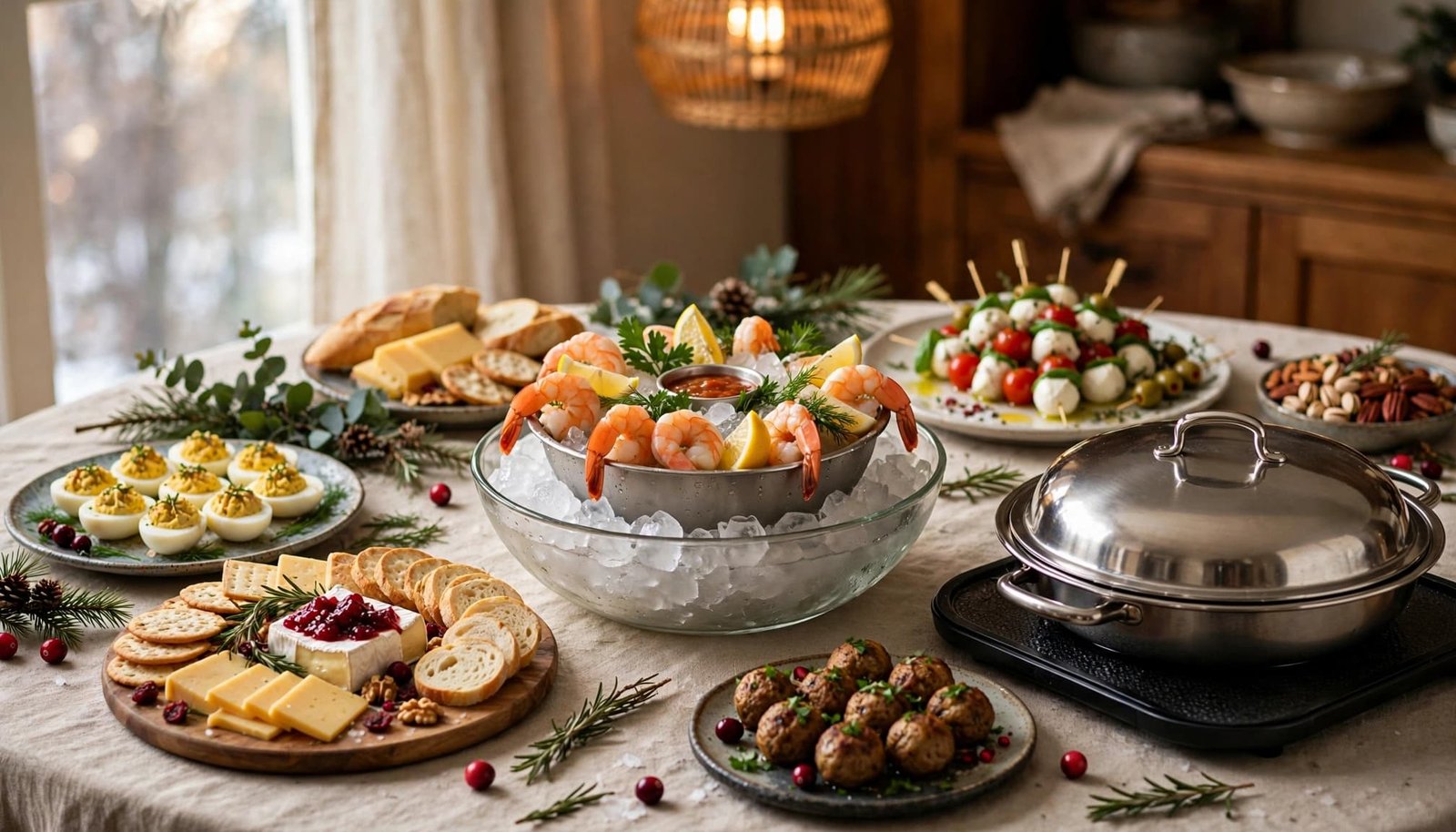
Keep hot foods hot and cold foods chilled
Keep hot buffet foods at 140°F or above and cold foods at 40°F or below. A food thermometer can help you check dishes, especially when they’ll sit out for a while. For more on the temperature range, see the USDA’s food safety temperature guidance.
Rather than filling one large serving dish, put out smaller platters and bowls. Keep backup portions refrigerated or hot-held, then bring them out as needed. For chilled appetizers, set the serving dish over ice; use a warming tray or slow cooker for hot options, and check that food stays at the recommended temperature.
When a platter runs low, replace it with a clean one instead of adding fresh food on top of what guests have already served. This keeps the buffet looking tidy and helps you manage how long food sits out.
Refresh the buffet and store leftovers promptly
Perishable appetizers shouldn’t sit at room temperature for more than two hours, or more than one hour when the temperature is above 90°F. Keep track of when food goes out, and refresh the spread in smaller batches so you don’t have to discard a large platter at once.
After guests finish eating, refrigerate leftovers promptly. Divide them into shallow containers so they cool more quickly, and avoid leaving serving dishes on the counter while you clean up. The USDA’s leftovers and food safety guidance covers safe storage after a meal.
Frequently Asked Questions
A few practical choices can make holiday appetizers easier to bring, serve, and enjoy. These tips help with party logistics, especially when the host’s setup or guest needs are still unknown.
What should I bring to a holiday potluck if I do not know the menu?
Choose a portable appetizer that’s easy to share, such as a vegetable platter with dip or a batch of savory pastry bites. Bring the serving spoon, tongs, or small plates it needs, and check with the host about table or refrigerator space, temperature requirements, and possible dietary restrictions. That quick check can prevent a last-minute scramble when you arrive.
How can I transport appetizers to a party?
Use a sturdy container with a secure lid, and place it on a flat surface in the car so it won’t tip. Keep perishable cold appetizers in an insulated cooler with ice packs, then refrigerate them when you arrive if they won’t be served right away. The USDA’s cooler-packing advice explains how to keep foods chilled during travel. For delicate garnishes or crisp components, pack them separately and assemble the dish at the party.
What serving dishes work best for a small holiday table?
Compact platters and shallow bowls leave room for guests to reach in, while a tiered stand adds serving space without taking up much table area. Keep each serving utensil close to its dish, and leave a little space between items so guests can serve themselves easily. A few well-spaced dishes are more practical than an overcrowded display.

How can I make a holiday appetizer spread look festive?
Use seasonal color through ingredients and serving pieces, such as red grapes or cranberries, green herbs, and a colorful platter. Arrange food in simple clusters, leaving enough room for guests to pick up each item without disturbing the rest. Fresh rosemary or citrus can add a holiday touch without elaborate decoration.
What can I do if a guest has an unexpected food restriction?
Ask what the guest needs to avoid, then check ingredient labels for packaged foods and every component in homemade dishes. Keep serving utensils separate so they don’t move between dishes, which can transfer ingredients. Offer an option only when you can confirm both its ingredients and handling suit the guest’s restriction.
Conclusion
A successful spread of holiday appetizers depends on a few well-chosen bites, thoughtful prep, and safe serving. Keep the menu varied, prepare what you can ahead, and serve smaller portions so the food stays fresh.
Choose foods your guests will enjoy, then leave yourself time to join the celebration. The best holiday table makes everyone feel welcome, including the person who planned it.
Save the pin for later


- Christmas Cookie Ideas for Every Holiday Baker - November 9, 2026
- Christmas Cocktails: Party Drinks, Cozy Sips, and Mocktails - November 9, 2026
- 20 Christmas Appetizer Ideas for Every Holiday Spread - November 9, 2026



1 Comment