

Oatmeal can be savory, hearty, and quick enough for a busy morning. A warm bowl of oats with eggs and vegetables makes a satisfying breakfast, and you can use whatever produce you have on hand.
Keep the base simple, then change the toppings to suit your taste. You can also cook the vegetables ahead and have them ready to add; start with the ingredients and choose how you’d like to build your bowl.
Savory Oatmeal with Eggs and Vegetables for a Filling Breakfast
This savory oatmeal makes a flexible, filling breakfast for two. The oats create a warm base, eggs add protein, and vegetables bring flavor, color, and texture. Use what you have, then set out toppings separately so everyone can finish their bowl to taste.

Ingredients for a simple, satisfying bowl
Gather these ingredients for two servings:
- 1 cup rolled oats
- 2 cups water or broth
- 2 eggs
- About 1 cup chopped vegetables
- A little oil for cooking
- Salt and pepper, to taste
Broth gives the oats a more savory flavor than water. If your broth is salted, start with less added salt and taste before seasoning more. Spinach, bell pepper, mushrooms, zucchini, and onion all work well. Frozen vegetables are handy, too; use a mix you like and cook off extra moisture before adding the oats.
Warm a little oil in a saucepan or skillet and cook the vegetables until tender. Meanwhile, prepare the oats with water or broth, then cook the eggs separately to your liking. Divide the oats and vegetables between two bowls, add an egg to each, and season with pepper. Keep optional toppings separate: try scallions, cheese, avocado, or hot sauce.
The amounts are easy to adjust. Use the vegetables you already have, or swap in leftover cooked vegetables and stir them into the oats near the end. For nutrition details on individual ingredients, Nutrition.gov’s food and nutrition resources can point you to USDA FoodData Central.
Choose rolled oats and adjust the liquid
Rolled oats are a convenient choice for a creamy bowl that still has some texture. For this recipe, use about 1 cup liquid for every 1/2 cup oats. Add a splash more if you prefer softer, looser oatmeal, or use a little less for a thicker bowl.
Check the package directions before cooking, especially if you use quick oats or steel-cut oats. They can need different amounts of liquid and different cooking times, so the rolled-oat ratio may not give the same result. Make a small adjustment as the oats cook; a little extra liquid can loosen a thick bowl without changing the rest of the recipe much.
How to Cook Savory Oatmeal and Eggs Without Overcomplicating Breakfast
Set aside about 20 minutes to cook the oats, vegetables, and eggs. Work on the vegetables and oats at the same time, then cook the eggs in the same skillet to keep cleanup simple.

Soften the vegetables while the oats cook
Warm a little oil in a skillet over medium heat. Add chopped onion, bell pepper, or mushrooms and sauté for a few minutes, stirring now and then, until they begin to soften. Cut the pieces into similar sizes so they cook at about the same rate. Add spinach near the end and stir just until it wilts.
Meanwhile, bring the oats and water or broth to a gentle simmer in a saucepan. Cook for about 5 to 7 minutes, stirring occasionally, until the oats are tender and creamy. Keep the heat moderate; a hard boil and constant stirring can make them overly thick. If they look too thick, stir in a splash of water or broth. Fold in the vegetables, or spoon them over the oats when you assemble the bowls.
Cook the eggs to the texture you like
Once the vegetables are ready, transfer them to a plate and use the same skillet for the eggs. Scramble them for soft curds, fry them for a more distinct topping, or poach them separately if you prefer a tender egg without crisp edges. Each option works with the same oat base.
For food safety, cook eggs until both the yolk and white are firm. Egg dishes should reach 160°F, measured with a food thermometer. See the USDA’s egg safety guidance for more details. If you’re scrambling eggs, cook them until they’re set rather than runny.
Assemble each bowl with a balance of toppings
Divide the oats between two bowls, add the vegetables, and top each serving with an egg. Finish with one or two extras, such as fresh herbs, black pepper, salsa, a squeeze of lemon, or a little cheese. A small amount is usually enough to add flavor without covering the oats and vegetables.
Keep wet toppings, such as salsa, and crisp toppings separate until serving. This helps the oats stay creamy and lets ingredients like fresh herbs keep their color and texture. If the bowls need more seasoning, taste first, then add a little salt or pepper.
Easy Ways to Change the Vegetables, Protein, and Flavor
The same savory oatmeal can suit different tastes, seasons, and pantry supplies. Keep the oats and eggs as your base, then choose a few vegetables, one extra protein if you like, and a simple finishing touch.

Use fresh, frozen, or leftover vegetables
Two or three vegetables are enough to add color and texture. Try mushrooms with spinach, or corn with bell pepper. Choose what’s in season, or use whatever is already in your refrigerator.
Frozen spinach or corn saves prep time. Add it to the skillet and cook until hot, letting extra moisture evaporate before serving so it doesn’t make the bowl watery. Leftover roasted vegetables work well, too. Warm them while the oats cook, then spoon them over the finished bowl. If your vegetables are soft, add a crisp topping such as shredded cabbage or scallions for contrast.
Add beans, tofu, or leftover meat for a heartier meal
For a larger serving, add black beans, another egg, tofu, cooked chicken, or turkey. Drain and rinse canned beans, then warm them with the vegetables. Heat cooked meat and tofu in the skillet, too, and season lightly with cumin, paprika, or black pepper.
A little shredded cheese or a spoonful of plain Greek yogurt can add a creamy, savory finish. Both change the bowl’s flavor and nutrition, so adjust the portion to your taste. If you’re comparing protein amounts, serving size and food type matter; this chart of protein in common foods offers a useful reference.
Try flavor combinations that keep the oats savory
A few ingredients can give the same base a different feel. Try spinach and mushrooms with black pepper, corn and salsa with cilantro, or roasted peppers with feta. Each combination works on its own, so use the one that fits your pantry or sounds good that morning.
For more heat, add a pinch of chili flakes or a little hot sauce. Fresh herbs and a squeeze of lemon bring a brighter finish, especially with beans or roasted vegetables. Add strong toppings gradually, then taste the bowl before adding more. A small amount is often enough to change the flavor without covering the oats, eggs, and vegetables.
Make-Ahead Savory Oatmeal for Easier Mornings
A little prep can make savory oatmeal with eggs and vegetables much quicker to serve. Cook the oats, vegetables, or both ahead, then add fresh toppings when you’re ready to eat.
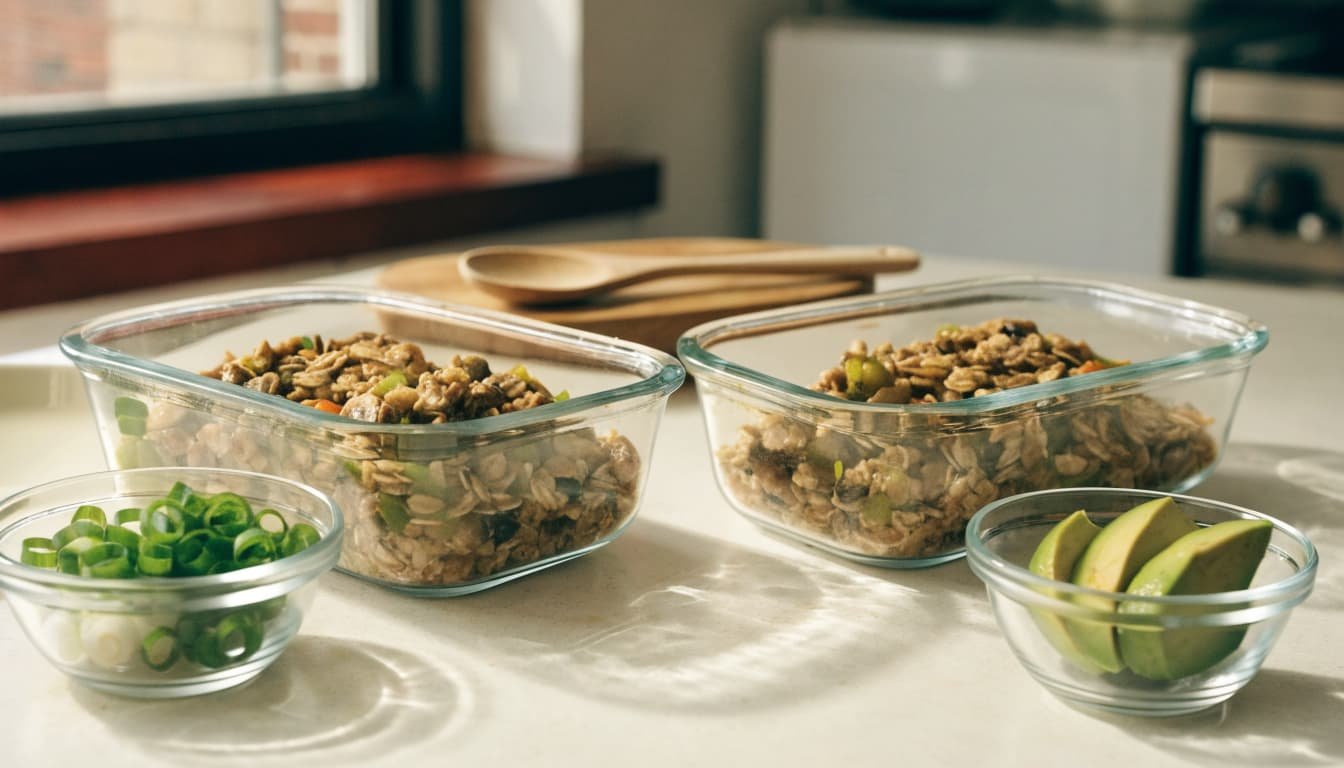
Prep the base and vegetables ahead of time
Cook a batch of oats and sauté the vegetables as you normally would, then portion them for the mornings you expect to use them. You can also prep just one component. Cooked oats are ready to warm, while pre-cooked vegetables can be added to freshly made oatmeal.
Let the food cool briefly, then transfer it to shallow, covered containers. Smaller portions cool more evenly and are easy to grab without warming the whole batch. Refrigerate promptly rather than leaving the pot or skillet on the counter until it reaches room temperature. Add a date label so you can use the older portions first.
For a quicker start, wash and chop sturdy vegetables such as bell pepper or mushrooms ahead of time. Keep them covered in the refrigerator, then cook them fresh while the oats warm. Store delicate toppings separately. Add scallions, avocado, herbs, salsa, or cheese just before serving so they keep their color and texture.
If you cook eggs ahead, store them with the same care as the other cooked components. For the freshest texture, you can also cook an egg while the oats reheat. Either way, portion only what you plan to eat.
Store and reheat portions safely
Refrigerate cooked egg dishes and other perishable leftovers within two hours. If the room temperature is above 90°F, put them away within one hour. Keep the refrigerator at 40°F or colder, and use cooked egg-and-oatmeal portions within three to four days. The USDA’s guidance on leftover storage and reheating covers these basic time and temperature limits.
Reheat only one serving at a time. In the microwave, cover it loosely and heat in short intervals, stirring midway so the center warms evenly. Check that leftovers reach 165°F throughout, ideally with a food thermometer. If the oats have thickened in the refrigerator, stir in a small splash of water or broth before warming. Add it gradually; a little is usually enough to bring back a creamy texture.
Build a Filling Breakfast That Fits Your Appetite
Savory oatmeal with eggs and vegetables is easy to adjust at the table. Change the portions, add a side, or save some oats for another meal. Small choices can make the bowl feel right for your morning.

Adjust the oats, eggs, and toppings to suit your needs
For a lighter bowl with more produce, use a smaller portion of oats and add extra vegetables. Spinach, mushrooms, peppers, and zucchini all fit well. If you want a more substantial serving, add another egg or a scoop of beans. Start with a modest amount, then adjust the next bowl to match your appetite.
Nutrition varies with the ingredients and amounts you use. Broth, cooking oil, eggs, cheese, and toppings all affect the total, as do brand and serving size. Check package labels for the products in your kitchen, or use USDA FoodData Central to estimate calories, protein, and sodium for your own recipe. The result is an estimate, especially when database entries don’t match the exact brand or amount you used.
Serve it with fresh sides or turn leftovers into another meal
Fresh fruit adds a cool, sweet contrast to the warm oats. Toast or a side of greens also pairs well, so choose what sounds good and fits your appetite. You don’t need a large spread; one simple side is often enough.
Leftover savory oats can become the base for another egg-and-vegetable bowl. Add warm vegetables and a freshly cooked egg, or stir in beans for a different combination. Oats thicken as they cool, so add a small splash of water or broth when reheating and stir until the texture loosens. Portion only what you plan to eat, and keep fresh toppings, such as herbs, scallions, or avocado, separate until serving.
Conclusion
Savory oatmeal with eggs and vegetables is a flexible breakfast built from a few simple parts: creamy oats, cooked vegetables, an egg, and toppings chosen to taste. Try the basic method first, then use the produce and seasonings you already have on hand.
For busy mornings, cook a few portions of the oats and vegetables ahead, then add fresh toppings when you serve them. Small changes in the ingredients or portions can make each bowl fit your appetite while keeping breakfast simple.

- Christmas Cookie Ideas for Every Holiday Baker - November 9, 2026
- Christmas Cocktails: Party Drinks, Cozy Sips, and Mocktails - November 9, 2026
- 20 Christmas Appetizer Ideas for Every Holiday Spread - November 9, 2026


1 Comment