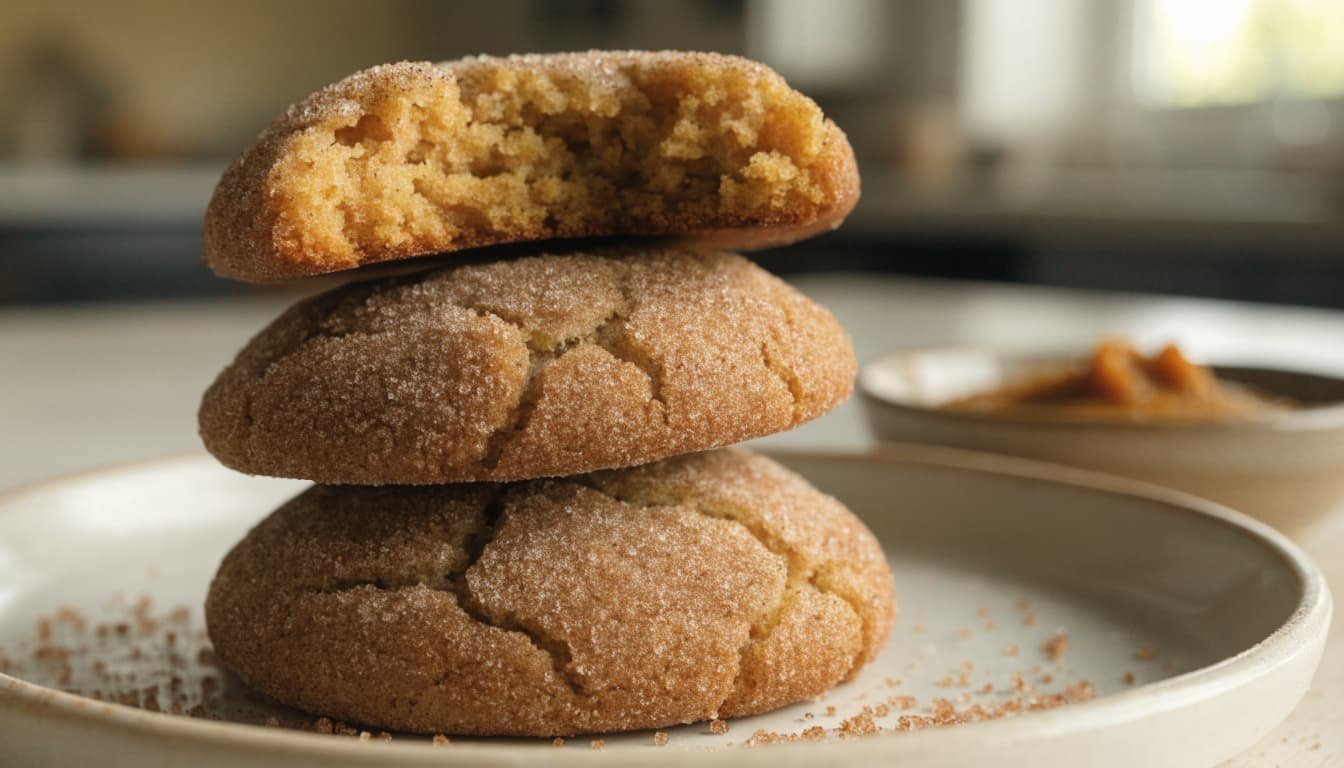
Pumpkin spice flavor and a classic cinnamon-sugar coating make these pumpkin snickerdoodle cookies an easy fall favorite. They bake up with soft centers and lightly crisp edges, just right with a cup of coffee or a glass of milk.
Pumpkin adds moisture to cookie dough, which can make the cookies cakey instead of chewy. I handle that moisture carefully for a tender, chewy bite, and you’ll see how as we get into the recipe.
What Makes Pumpkin Snickerdoodle Cookies Special
Pumpkin snickerdoodle cookies bring together the warm spice and cinnamon-sugar crust of a classic snickerdoodle with pumpkin’s mellow, earthy sweetness. The pumpkin changes more than the flavor, though. It adds moisture, so the dough feels softer and stickier, and the baked cookies have a tender bite.
Pumpkin adds moisture and mellow flavor
Pumpkin puree gives these cookies their autumn flavor and soft texture. It tastes mild and slightly sweet, so it won’t overpower the cinnamon or make the cookies taste like pumpkin pie. Instead, it rounds out the spices and gives each bite a cozy, familiar flavor.
That moisture also affects the dough. Expect it to feel softer and stickier than traditional snickerdoodle dough. Pumpkin can make cookies bake up cakey or puffy if there’s too much water in the mix, so I keep the balance in mind when developing the recipe. King Arthur Baking also notes that reducing pumpkin puree can concentrate its flavor while limiting extra moisture in baked goods.
The goal here is a cookie that stays tender and chewy, with enough structure to hold its shape. It shouldn’t taste dry, and it shouldn’t puff up like a little cake.
Cinnamon-sugar and pumpkin spice bring two kinds of warmth
The cinnamon-sugar coating gives each cookie its classic snickerdoodle finish. It adds a light crunch on the outside, plus that sweet cinnamon flavor you notice before you even reach the soft center.
Pumpkin spice works inside the dough, where it blends with the pumpkin instead of competing with the coating. Together, the two layers make the flavor feel warm and balanced. The exterior tastes sweet and cinnamon-forward, while the middle has a gentle mix of pumpkin and spice.
Cream of tartar keeps the snickerdoodle character
Cream of tartar is one of the small details that makes a snickerdoodle taste like a snickerdoodle. In a classic recipe, it adds a subtle tang and works with baking soda to help the cookies rise. That combination helps create a soft center and the familiar crackly surface.
Pumpkin changes the texture, but the classic snickerdoodle flavor still comes through. For a closer look at the traditional cookie’s texture and cinnamon-sugar coating, see King Arthur Baking’s snickerdoodle recipe.
The ingredients that give these cookies their flavor and texture
Each ingredient has a job in pumpkin snickerdoodle cookies. Plain pumpkin brings mellow fall flavor, while the butter, sugars, flour, and leaveners help keep the cookies soft and chewy instead of cakey.

Choose and prepare pumpkin puree
Use plain canned pumpkin puree, not pumpkin pie filling. Pie filling already contains sweetener and spices, which can throw off the recipe’s flavor balance. The cans can look similar, so check the label. King Arthur Baking explains the difference between pumpkin puree and pie filling.
Canned puree can vary in moisture. Too much liquid makes the dough wetter and can leave you with puffy, cakey cookies instead of a chewy bite. If your puree seems loose, reduce it gently in a saucepan over low heat, stirring often, or press it between paper towels until it feels thicker. Choose one method, then let the puree cool if needed and measure the amount called for in the recipe.
Know what each dough and coating ingredient does
Butter brings richness and helps the cookies spread. Granulated sugar supports the lightly crisp edges, while brown sugar adds moisture and a softer chew. Flour gives the dough structure, so measure it carefully; too much can make the cookies dry or dense.
Baking soda helps the dough rise and spread. When cream of tartar is included in the tested formula, it adds the gentle tang associated with snickerdoodles and helps keep the cookies tender. Follow the recipe’s amounts rather than adding extra, since changing the balance can affect both flavor and texture.
The cinnamon-sugar coating gives each cookie its familiar snickerdoodle flavor and a delicate, crisp outside. Pumpkin pie spice or a little extra cinnamon can season the dough, too. Keep those warm spices modest so they complement the pumpkin without taking over.
How to make pumpkin snickerdoodles from mixing bowl to oven
Pumpkin snickerdoodle dough needs a little more care than classic snickerdoodle dough because pumpkin adds moisture. Mix it gently, give it time to chill, then bake the cookies just until their edges look set.
Mix and chill the soft dough
Start by whisking the flour and other dry ingredients together in one bowl. In a separate bowl, mix the butter and sugars, then stir in the pumpkin and the remaining wet ingredients. Combining the two mixtures separately helps distribute the spices and leavening evenly through the dough.
Add the dry ingredients to the wet mixture and stir just until you no longer see dry flour. Keep mixing brief once the flour goes in. Overmixing can make cookies tough, and pumpkin dough may feel stickier and softer than the dough you’re used to.
Cover the bowl and chill the dough for the time listed in the recipe. Chilling firms it up, so it’s easier to portion and roll in cinnamon sugar. It also helps limit spreading in the oven. If the dough still feels very soft when you’re ready to scoop, chill it a little longer rather than adding extra flour, which can make the cookies dry.
Raw flour and eggs can carry harmful germs, so skip tasting the unbaked dough. The CDC’s food safety guidance for raw dough explains why it’s best to wait for the cookies to bake.
Scoop, coat, and bake until just set
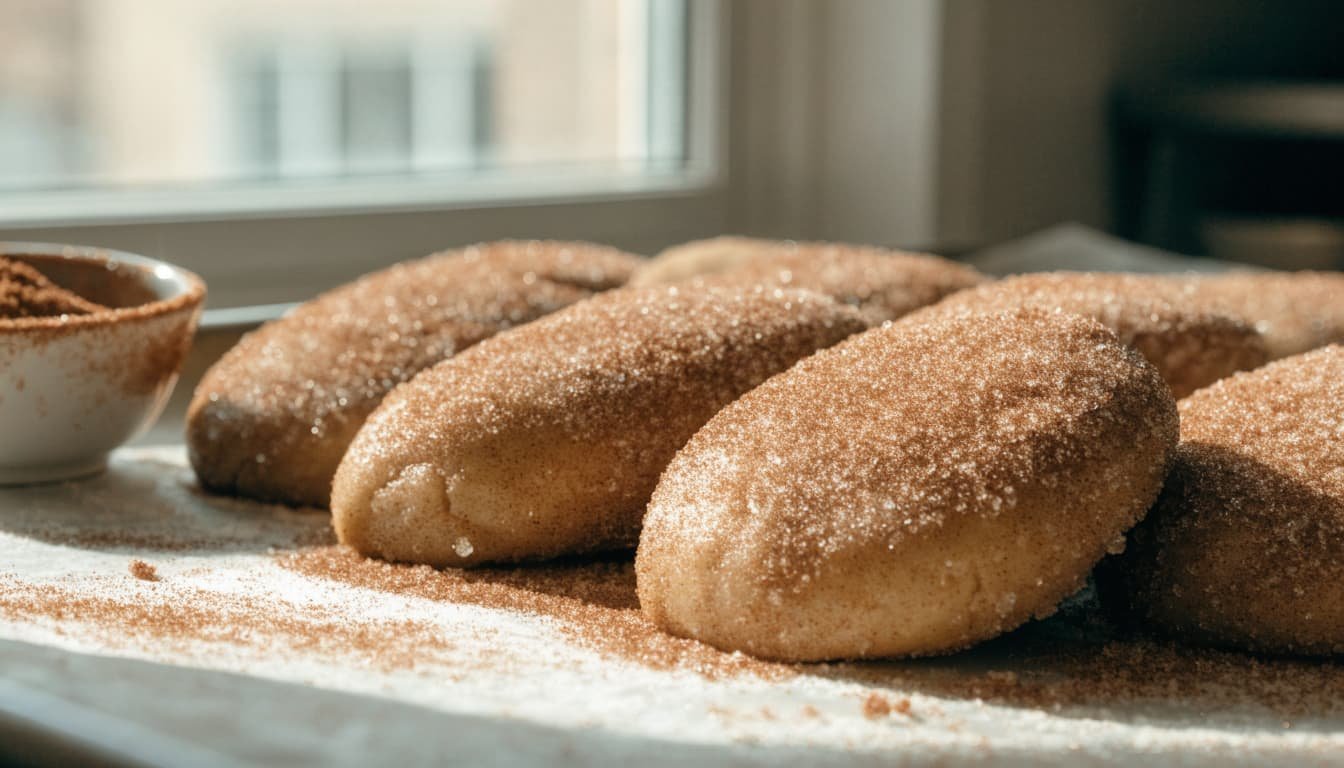
Line a baking sheet with parchment paper, then mix the cinnamon sugar in a small bowl. Use a cookie scoop to portion the chilled dough into even balls. Similar-sized cookies bake at the same rate, so you’re less likely to end up with a tray of mixed results.
Roll each portion generously in cinnamon sugar, coating the surface all over. Set the dough balls on the lined sheet with space between them, following the recipe’s spacing. If you’re baking in batches, keep the remaining dough chilled while the first tray is in the oven.
Bake at the temperature and for the time specified in the recipe. Start checking near the lower end of the baking time. The cookies are ready when the edges look set and the tops are lightly puffed or cracked, while the centers still look soft. They’ll continue cooking on the hot baking sheet, so waiting for the middles to look fully firm can leave you with drier cookies.
Let the cookies rest on the baking sheet briefly, then move them to a wire rack to cool. That short rest helps the soft centers settle without breaking when you lift them.
How to avoid cookies that turn cakey, wet, or flat
Pumpkin snickerdoodle cookies can be soft and chewy without feeling gummy or spreading into thin, crisp rounds. When a batch misses the mark, check the pumpkin, dough temperature, and flour measurement before changing the recipe.

Fix dough that feels too wet or sticky
If the dough clings to your fingers or seems too soft to scoop, it may simply be too warm. Chill it longer, then portion it with a cookie scoop. The cold firms the dough, and the scoop makes it easier to handle without adding flour.
Extra moisture in the pumpkin can also make cookies wet or cakey. Follow the recipe’s pumpkin-prep directions, since canned puree can vary in thickness. If you skipped that step, removing moisture from the puree is usually more reliable than adding flour. Too much flour can leave the cookies dense and dry.
Flour measurement matters, too. Scooping straight from the bag can pack more flour into the cup than the recipe calls for. Spoon it into the measuring cup and level the top, or weigh it if the recipe gives a weight. Once you add the flour, mix only until the last dry streak disappears. Overmixing can make the cookies tough.
Keep the cookies tender with the right bake time
Check the cookies near the recipe’s earliest bake time. Look for edges that appear set and tops that are lightly puffed or cracked. The centers should still look soft, even a little underdone. They continue to set on the hot pan after you take them out of the oven.
Cookies that bake too long can lose their tender center and turn dry or crisp. On the other hand, if they spread too much, check that the dough was properly chilled before baking. Let the cookies rest on the pan briefly before moving them, so the centers can finish setting without breaking.
Serve, store, and freeze the cookies with their soft texture intact
These pumpkin snickerdoodle cookies are lovely while they’re still a little warm, when the centers are soft and the cinnamon-sugar coating is fragrant. Let them cool completely before storing or freezing, though. Warm cookies release steam inside a container, and that condensation can make the coating damp.
Store baked cookies or freeze a batch for later
Once the cookies have cooled, place them in an airtight container at room temperature. Keep them away from heat and direct sunlight, and follow the USDA’s cookie storage guidance. If you want to freeze baked cookies, layer them with parchment in a freezer-safe container. Thaw them at room temperature while still wrapped, then open the container once they’re no longer cold. This helps limit condensation on the cookies.
You can also freeze portions of scooped dough for fresh-baked cookies later. Arrange the portions on a lined tray until firm, then transfer them to a freezer-safe bag or container. Bake the frozen dough according to the recipe’s temperature and doneness cues. It may need extra time, so watch for set edges and soft centers rather than relying only on the usual bake time.
Try simple flavor twists and serving ideas
The cinnamon-sugar coating is my favorite way to serve these cookies, and a warm cookie pairs especially well with coffee, tea, or a mug of warm cider. Let them cool just enough to hold their shape, then enjoy the soft center with your drink of choice.

For a small change, add a pinch of extra cinnamon to the coating or fold a modest handful of finely chopped nuts into the dough. Keep add-ins restrained so they don’t crowd the cookies or change the dough’s moisture balance. The classic cinnamon-sugar version is still the best place to start.
Conclusion
For soft, chewy pumpkin snickerdoodle cookies, start with pumpkin puree that isn’t too watery, chill the dough until it’s easy to handle, and take the cookies out while the centers still look soft. They’ll finish setting on the baking sheet and keep their tender texture.
Give this cinnamon-sugar-coated batch a try, then share how your cookies turned out.

- Christmas Cookie Ideas for Every Holiday Baker - November 9, 2026
- Christmas Cocktails: Party Drinks, Cozy Sips, and Mocktails - November 9, 2026
- 20 Christmas Appetizer Ideas for Every Holiday Spread - November 9, 2026