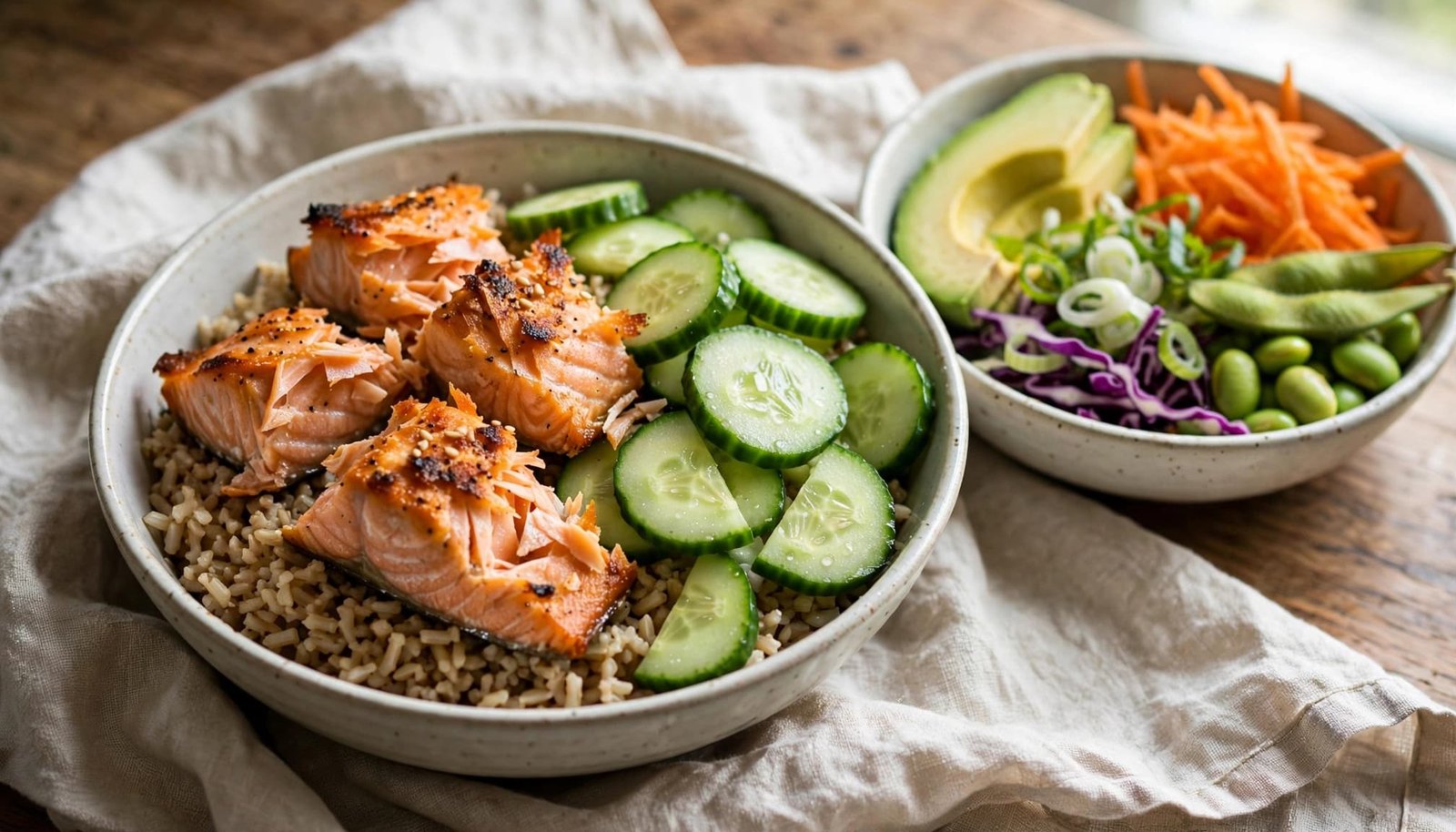
Warm brown rice, tender baked salmon, and cool cucumber make a satisfying bowl with a good mix of textures. These bowls are flexible, too: prep the rice, salmon, and cucumber in parts, then bring them together for a family dinner or easy make-ahead lunch.
Cook the rice while the salmon bakes, and prepare the cucumber with a bright, simple seasoning. Keep the components separate if you’re packing lunches, then assemble just before eating for the freshest texture. Start with the ingredients and a few easy ways to adjust the bowl to suit your table.
What Makes Baked Salmon Bowls with Brown Rice and Cucumber So Satisfying
Baked salmon bowls with brown rice and cucumber bring together familiar ingredients with different textures and temperatures. The rice and salmon make a hearty base, while cucumber keeps each bite cool and crisp. A few simple seasonings bring the parts together, and optional toppings let you use what you have.
The simple mix of warm, cool, savory, and crisp
Freshly baked salmon is tender and savory, with flakes that sit easily over warm brown rice. The rice has a mild, nutty flavor and a soft texture with a little chew. Chilled cucumber adds a clean, crisp contrast, so the bowl doesn’t feel too rich or too warm.
That balance is what makes the bowl work. You get a substantial base from the rice and salmon, then freshness from the cucumber. Add avocado for a creamy bite, shredded carrot or cabbage for extra crunch, edamame for a tender texture, or scallions for a sharper finish. Choose one or two that sound good. The bowl is satisfying without any of these extras, so there’s no need to buy a long list of toppings.
Ingredients to gather for the rice, salmon, and toppings
Keep the core ingredient list simple:
- Salmon fillets
- Brown rice
- Cucumber
- Oil, plus salt and pepper
For more flavor, season the salmon or rice with garlic, ginger, or a little soy sauce or tamari. Sesame oil adds a toasty note, while lemon or lime brings a brighter finish. Sesame seeds are an easy topping if you have them. Low-sodium soy sauce can help you control the saltiness, especially if you’re seasoning the salmon and adding sauce at the table.
You can keep the flavors light with citrus and pepper, or lean into a savory sesame and ginger combination. Taste as you season, since soy sauce and tamari already contain salt. For safe doneness, cook fish to 145°F, as listed in FoodSafety.gov’s safe temperature chart.
Choose optional toppings based on your pantry and preferences. A little avocado, edamame, shredded carrot, cabbage, or scallion adds variety, but the salmon, rice, and cucumber are enough to make a complete bowl.
Prepare Brown Rice and Cucumber While the Oven Heats
Start the rice as the oven preheats, then slice the cucumber while it cooks. The warm grain and cool vegetables can be ready around the same time as the salmon, with little extra work.
Cook fluffy brown rice, or use a shortcut
Brown rice cook times and water amounts vary by type and brand, so follow the package directions for the rice you have. Once it’s tender, fluff it with a fork and keep it covered while the salmon bakes. The lid helps hold in warmth and moisture.
If you’re already cooking rice, make extra for another meal. Refrigerate any rice you won’t serve within two hours, following the USDA’s guidance on storing leftovers. When the evening is short, precooked rice is a practical option. Warm it according to its package directions before assembling the bowls.
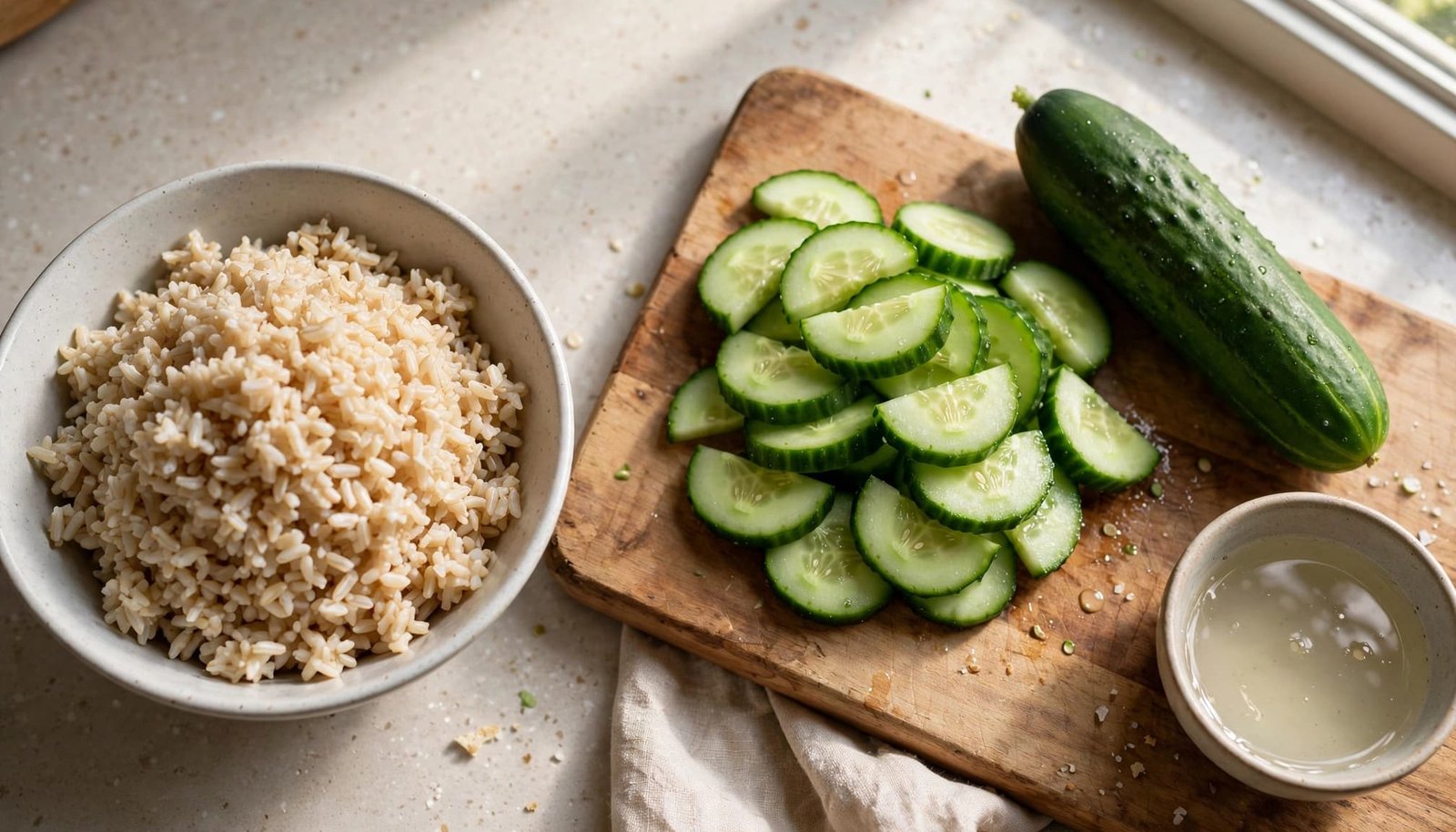
Slice cucumber and prep any extra vegetables
Cut the cucumber into thin slices, half-moons, or small dice, depending on how you want to build the bowls. Keep it raw for a cool, crisp bite. For a tangier topping, toss it with a little vinegar, sugar, and salt, then let it sit while the salmon bakes.
Carrots, cabbage, radishes, and edamame are easy additions, but they aren’t required. Choose one or two if you have them on hand. Shredded cabbage and carrots add crunch, while edamame brings a tender bite. Keep cut vegetables covered in the refrigerator if you prepare them ahead, and add them to the bowls just before serving so they stay fresh.
Bake the Salmon Until Tender, Moist, and Safely Cooked
Bake the salmon while the rice finishes cooking, then let the fillets rest briefly before adding them to the bowls. A hot oven and a quick temperature check make this step simple, but the thickness of each fillet matters more than the timer alone.
Season the fillets with a simple savory glaze
Pat the salmon dry, then brush it lightly with oil. Season with salt, pepper, and minced garlic. For a little more flavor, add a small amount of grated ginger, soy sauce or tamari, honey, or chili-garlic sauce. You can combine a teaspoon or two of soy sauce and honey, but keep the coating light so excess liquid doesn’t collect around the fish.
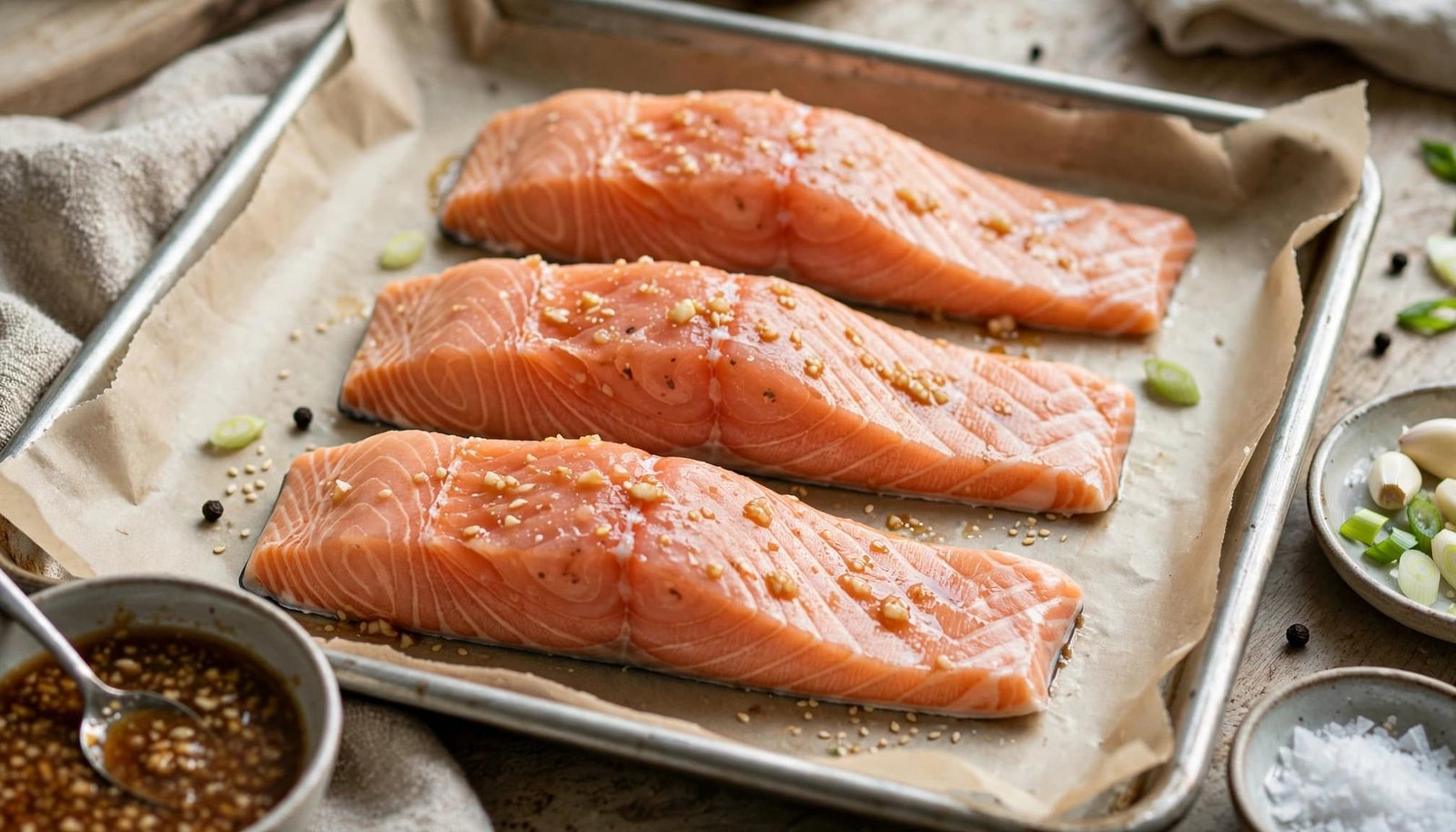
Arrange the fillets in a single layer on a lined baking sheet, leaving space between them. When the pan is crowded or the sauce pools around the fish, the salmon can steam instead of baking. Keep the seasoning simple if you plan to add soy sauce or another salty topping to the finished bowls.
Use oven temperature and salmon thickness to guide timing
Heat the oven to 400°F and bake typical fillets for about 10 to 16 minutes. Thinner pieces may finish sooner, while thicker fillets need more time. Oven differences matter, too, so treat the timer as a guide rather than a doneness test.
Check the thickest part with an instant-read thermometer. For a thin fillet, insert the probe from the side so its tip reaches the center. The USDA safe-temperature benchmark for fish is 145°F; see FoodSafety.gov’s minimum internal temperature chart. The flesh may look opaque and separate into flakes when cooked, but visual cues alone can’t confirm that it has reached a safe temperature.
Let the salmon rest for a few minutes after baking. This gives the fish time to settle before you flake it over the brown rice, and it helps keep the pieces intact as you assemble the bowls. If you’re preparing several servings, check each fillet, since pieces on the same pan may vary in thickness.
Build a Brown Rice Salmon Bowl with a Bright, Creamy Sauce
Once the rice and salmon are ready, assemble each bowl with a mix of warm, cool, crisp, and creamy ingredients. Keep the toppings flexible, and serve the sauce on the side so everyone can adjust their bowl.
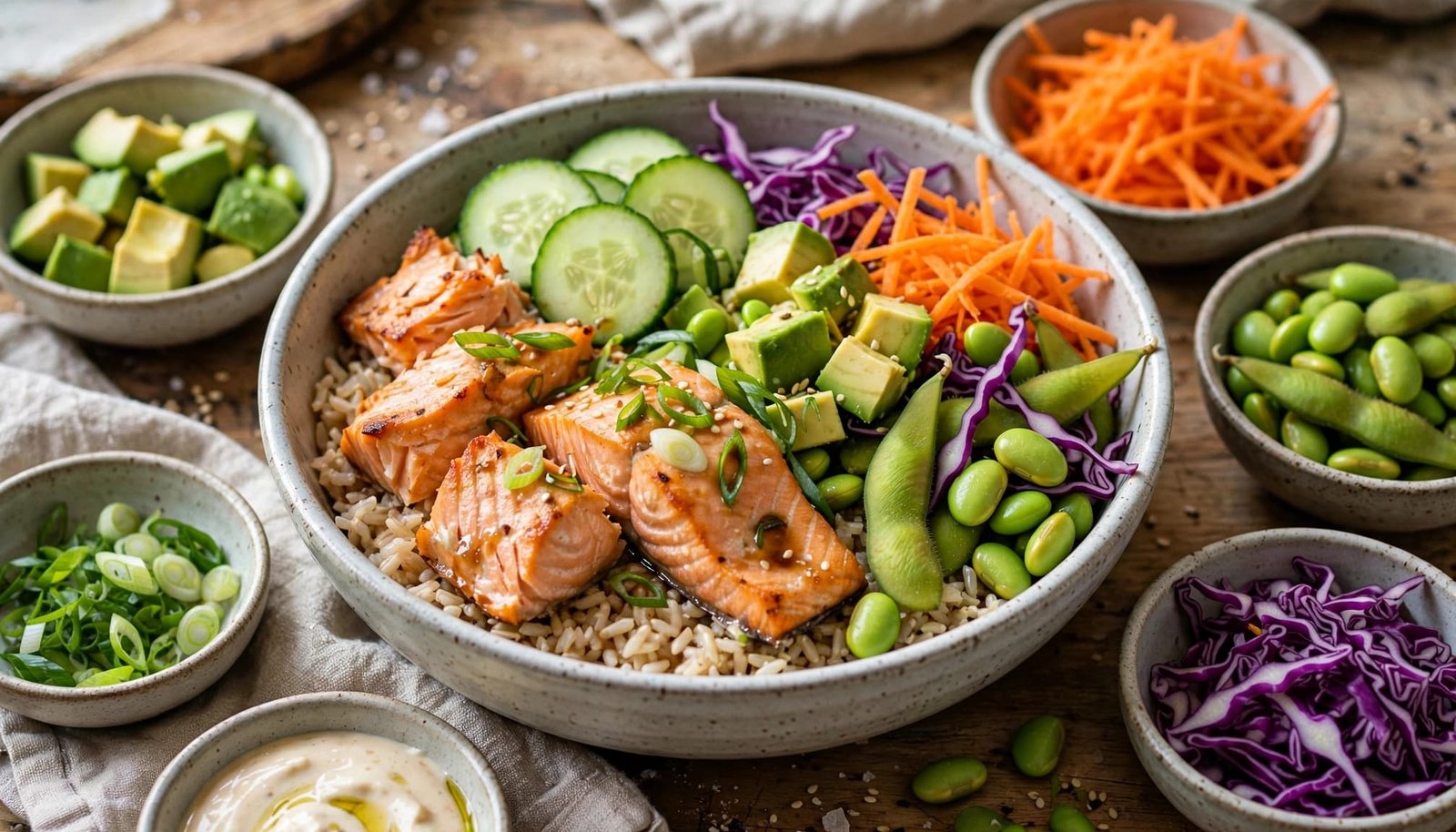
Layer rice, salmon, cucumber, and colorful toppings
Spoon warm brown rice into each bowl, then add the salmon in large flakes or pieces. Arrange cucumber alongside it so the cool crunch stays distinct from the warm fish. Add a few optional toppings, such as avocado, shredded carrot, edamame, cabbage, or sliced scallions.
Small amounts of several toppings give you more variety in each bite than a large portion of just one. Keep crisp ingredients away from the hot salmon until serving, especially if you want the cucumber and cabbage to stay firm. If you’re serving family-style, place the toppings in separate bowls and let everyone build a serving they like.
Choose a sauce that balances the rich salmon
A good sauce brings the bowl together without covering up the salmon or making the rice soggy. Choose one that suits the other seasonings, then drizzle on a little and taste before adding more.
- For a savory, tangy finish, stir together soy sauce, rice vinegar, and grated ginger. Start with a small amount of soy sauce, since it can quickly make the bowl salty. The FDA recommends checking serving sizes and sodium on the Nutrition Facts label; its sodium guidance also suggests using herbs and spices to add flavor.
- For a cool, creamy option, mix plain yogurt with lemon juice and a little minced or grated garlic. Add lemon gradually until the sauce tastes bright but still mild.
- For a spicy sauce, stir sriracha into mayonnaise a little at a time. This is a richer choice, so use a light drizzle and add more only if you want extra heat.
Finish with sesame seeds, chopped herbs, or a squeeze of lime. Keep extra sauce at the table so each person can add more to taste.
Make Salmon Rice Bowls Ahead and Adapt Them to Your Table
A little prep makes baked salmon bowls with brown rice and cucumber easier to serve on a busy night. Cook the grain, mix the sauce, and get a few vegetables ready ahead; bake the salmon closer to mealtime so it stays tender. Keep components flexible, and use them in another meal if plans change.
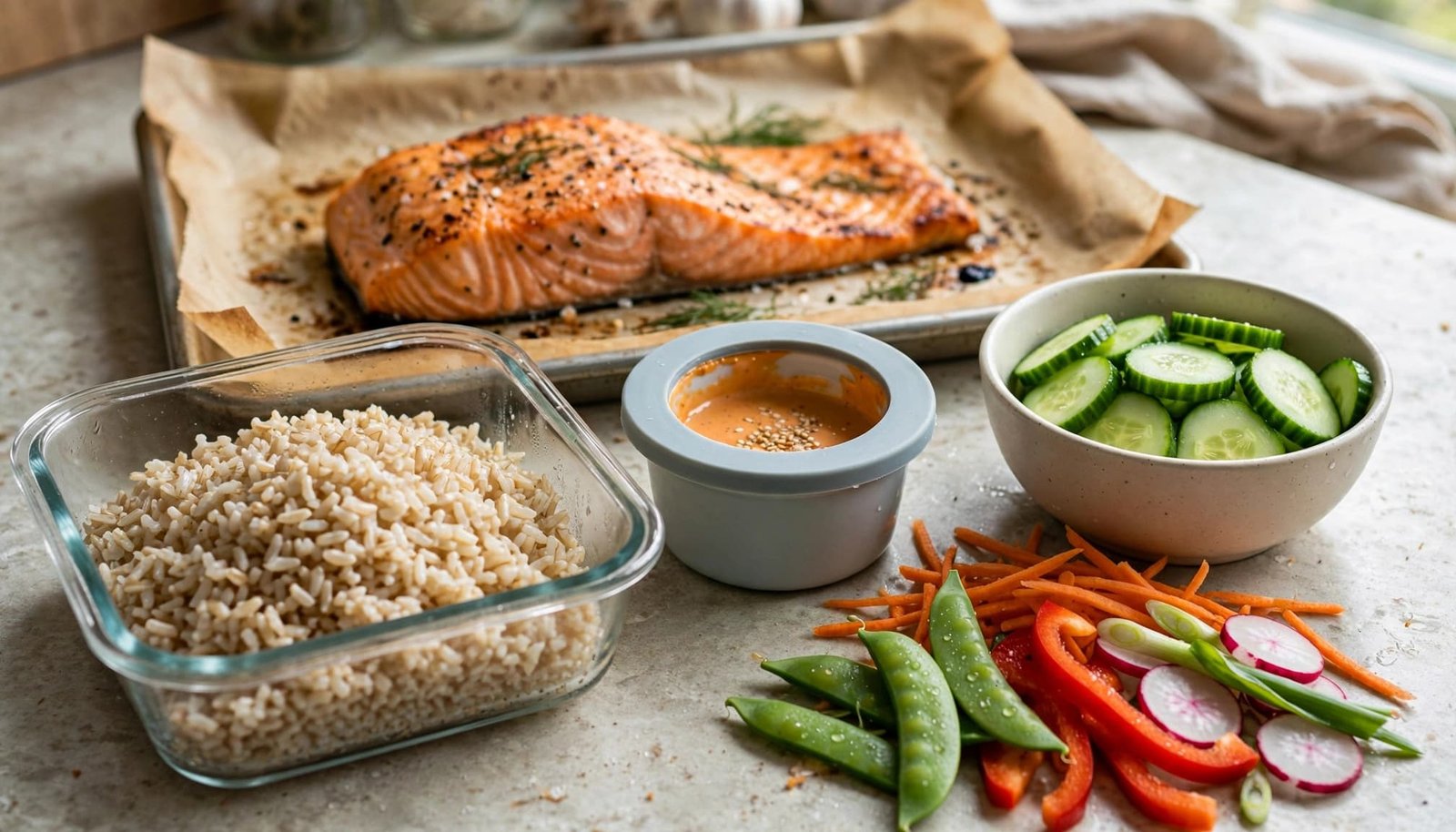
Prep components separately for faster dinners
Cook brown rice in advance and refrigerate it in a covered container. You can also mix the sauce and wash or slice sturdy vegetables, such as cabbage or carrots. Bake the salmon close to serving time for the best texture, then add it to warm rice with the cold toppings.
Keep cucumber and sauce separate until serving. Cucumber stays crisp, and the rice is less likely to turn soggy. Think of these ingredients as useful building blocks, not a meal plan with every component assigned to one dinner. Extra rice can go with beans and vegetables another night, while spare sauce can dress a simple salad.
Swap ingredients and adjust heat, salt, and texture
Use quinoa or barley in place of brown rice. Quinoa cooks differently, and barley may take longer, so follow the package directions and plan for the cooking time. For a lighter base, use leafy greens, or combine a small scoop of grain with greens. Let warm grains cool slightly before adding tender leaves so they don’t wilt.
Shredded cabbage or sliced radish can replace cucumber with a crisp bite. For a different protein, add drained chickpeas or cooked tofu; prepare each according to its package or recipe, since cooking times vary. Choose two or three vegetables rather than using everything in the fridge. Roasted squash, spinach, and cabbage all work, depending on the season and what you have.
Adjust the flavor a little at a time. Add chili crisp or sriracha for heat, and use extra lemon, lime, or vinegar to brighten the rich salmon. Taste before adding more salt, especially if the sauce contains soy sauce.
Store leftovers promptly and reheat only what you need
For food safety, transfer cooked salmon and rice to covered, shallow containers and refrigerate within two hours. If the room or outdoor temperature is above 90°F, refrigerate within one hour. Use refrigerated leftovers within three to four days, following the USDA’s food-safety guidance for leftovers.
Reheat only the portion you plan to eat, until it reaches 165°F. A splash of water can loosen chilled rice as it warms. Keep fresh cucumber and sauce separate when possible, then add them after reheating so their texture stays fresh.
Conclusion
Baked salmon, brown rice, and crisp cucumber make a satisfying bowl with a simple balance of warm, savory, and fresh. Finish it with a sauce and toppings you enjoy, adding a little at a time so the salmon and cucumber still stand out.
Try the bowls for dinner, or prepare the rice and vegetables ahead to make assembly easier when time is short. Keep the components separate until serving for the freshest texture.

- Christmas Cookie Ideas for Every Holiday Baker - November 9, 2026
- Christmas Cocktails: Party Drinks, Cozy Sips, and Mocktails - November 9, 2026
- 20 Christmas Appetizer Ideas for Every Holiday Spread - November 9, 2026