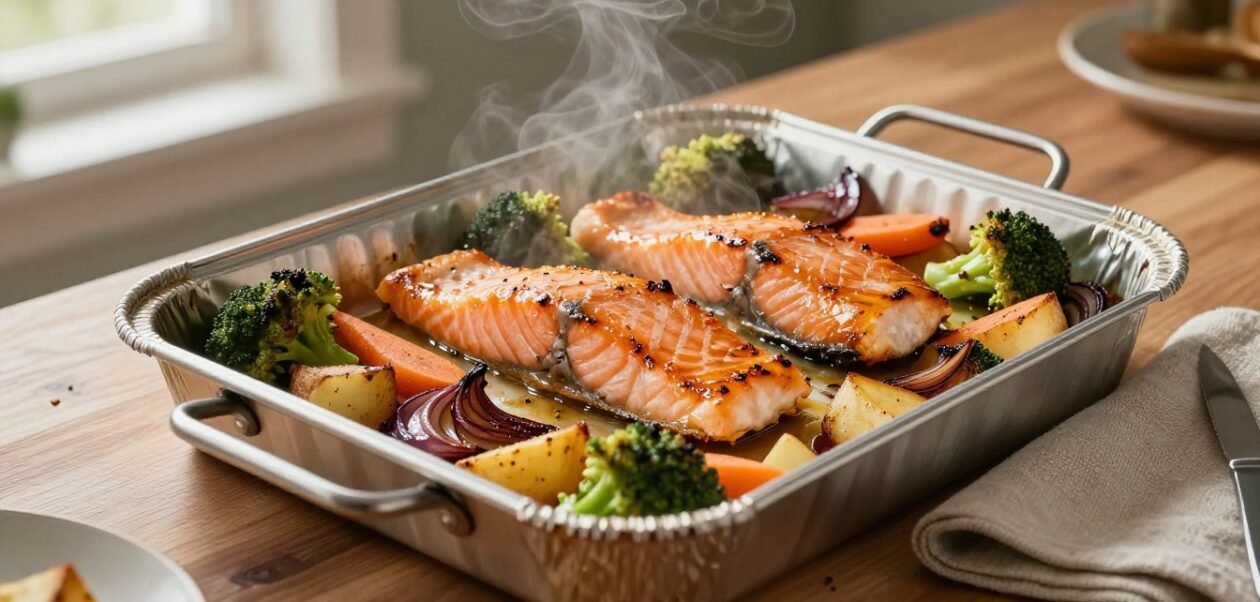
A healthy dinner that cooks on one pan keeps both the work and cleanup simple. For this sheet-pan salmon and vegetables, give firm vegetables a head start, then add the salmon and quicker-cooking vegetables so everything finishes without drying out the fish.
Use the timer as a guide, since vegetable size and salmon thickness can change the cooking time. Check the thickest part of each fillet with a thermometer, then serve dinner straight from the pan.
Why Sheet-Pan Salmon and Vegetables Make an Easy Healthy Dinner
Salmon, vegetables, and a sheet pan make a practical weeknight combination. The fish brings protein and omega-3 fats, while vegetables add color and a mix of tender and crisp textures. Since everything cooks on one pan, there are fewer dishes to wash after dinner.

A satisfying mix of protein, color, and texture
Salmon is a flavorful main that pairs well with vegetables without needing a complicated sauce. Broccoli, carrots, potatoes, and onions each bring a different color and texture, so the plate feels varied and satisfying. Salmon also provides EPA and DHA, two types of omega-3 fats described in the NIH guide to omega-3 fatty acids.
Use the vegetables you have
The vegetables can change with the season or with what’s already in your fridge. Try asparagus or zucchini when they’re in season, or use sturdy options like carrots, potatoes, and Brussels sprouts when you want a heartier dinner. A few well-matched vegetables are enough; you don’t need to use everything in the crisper drawer.
One pan keeps dinner manageable
Roasting the meal together keeps the cooking simple and cleanup short. The pan also gives vegetables room to brown while the salmon cooks, adding flavor and keeping the meal from feeling like a collection of separate sides. Serve it straight from the pan, or add rice or whole-grain bread if you’d like something more filling.
What to Gather for a Simple Salmon and Vegetable Dinner
For four servings, gather four salmon portions, a few vegetables, and simple seasonings you likely already have. Choose vegetables that fit in a single layer on your rimmed sheet pan, with enough room for them to roast rather than steam.
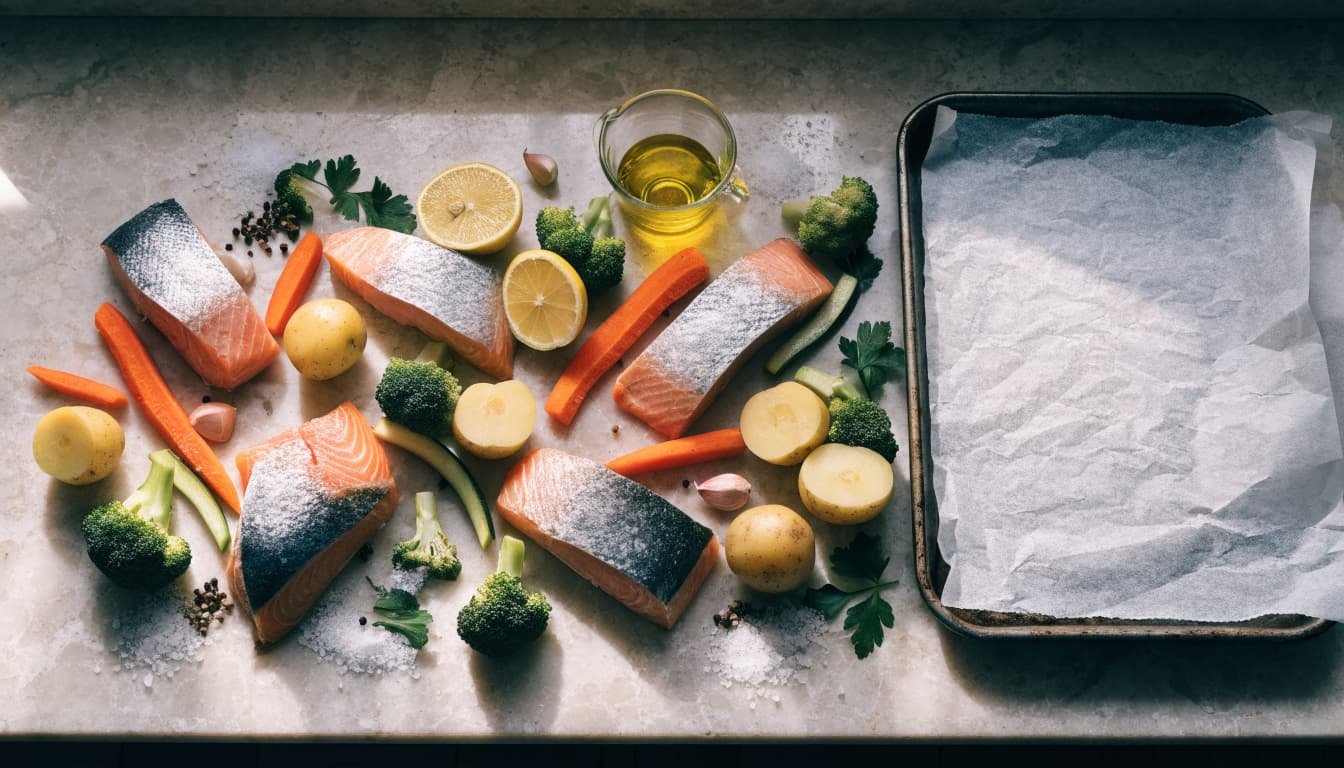
A flexible shopping and prep list:
- Four salmon portions, about 4 to 6 ounces each.
- About 4 to 6 cups of vegetables, such as broccoli, zucchini, green beans, bell peppers, potatoes, or carrots.
- One to two tablespoons of olive oil, plus salt and black pepper.
- One lemon and one or two garlic cloves, if you’d like a brighter, more savory flavor.
- Fresh dill or parsley, or pantry seasonings such as paprika and dried herbs.
You’ll also need a rimmed sheet pan, parchment paper if you want easier cleanup, a cutting board, a sharp knife, and a small bowl for mixing the oil and seasonings. When buying salmon, keep it chilled on the way home and refrigerate it promptly. The FDA’s safe seafood handling guidance covers storing and preparing fish.
Choose vegetables that can finish at the same time
Think about cooking time before you pick your vegetable mix. Potatoes and carrots are dense, so they need a head start in the oven. Cut them into similar, bite-size pieces so they soften at about the same rate. Larger pieces take longer, even when they’re on the same pan.
Zucchini, green beans, broccoli, and bell peppers cook faster. Add these later with the salmon, or choose mostly quick-cooking vegetables when you want dinner to move along. You can mix firm and tender options, but give each enough space. If the pan looks crowded, save some vegetables for another meal or use a second pan.
Season the salmon without overpowering it
A light coating of oil, minced garlic, lemon juice, salt, and pepper gives salmon a simple, fresh flavor. Add chopped dill or parsley for a mild herbal note, or use a little paprika for warmth. A small amount of Dijon mustard can add tang, too.
If you use Dijon or another salty condiment, start with less added salt. You can always adjust the vegetables at the table with lemon, herbs, or a pinch of salt. Keep the seasoning modest so it complements the salmon and vegetables rather than covering them up.
How to Make Sheet-Pan Salmon and Vegetables Step by Step
Heat the oven to 400°F and line a rimmed sheet pan with parchment for easier cleanup. Pat the vegetables dry after washing, then cut them into similar-size pieces so they cook at a steady pace. Keep the salmon chilled while you prepare the pan.

Give potatoes and other firm vegetables a head start
Toss potatoes, carrots, or other dense vegetables with a little olive oil, salt, and pepper. Spread them across the pan in a single layer, leaving room between pieces. Crowding traps moisture, so the vegetables can soften without browning.
Roast the firm vegetables for about 10 to 15 minutes before adding the salmon and quicker-cooking vegetables, such as broccoli, zucchini, or green beans. Cut dense vegetables evenly, especially if they’re larger than bite-size. Uneven pieces cook at different rates, and the smaller ones may be soft before the larger ones are ready.
After the first roast, check a few pieces with a fork. They don’t need to be fully tender yet, but the fork should begin to enter without much resistance. If they still feel very firm, give them a little more time before adding the rest of the ingredients.
Add salmon and check each fillet for doneness
While the firm vegetables roast, pat the salmon dry and season it with olive oil, salt, pepper, and any garlic, lemon, or herbs you’re using. Add the salmon and quicker-cooking vegetables to the pan, keeping the fillets in a single layer with space around them. A light coating of oil is enough; excess liquid can collect on the pan and slow browning.
Roast for about 10 to 15 minutes after adding the salmon. Treat the timer as a guide, since oven variation, vegetable size, pan crowding, and fillet thickness all affect cooking time. Thicker portions may need longer, while thin pieces can finish sooner.
Check each fillet in its thickest part with an instant-read thermometer. Fish should reach 145°F, according to FoodSafety.gov’s safe temperature chart. Opaque flesh that flakes with a fork can support the check, but visual cues don’t replace the thermometer.
If the salmon reaches temperature before the vegetables are tender, move it to a clean plate and return the pan to the oven. Let the vegetables continue roasting, then serve everything while warm.
Build Flavor with Easy Vegetable, Herb, and Sauce Swaps
Keep the basic method the same and change a few ingredients to suit what you have. Match vegetables by cooking time, then adjust the seasoning in small amounts so each flavor comes through.

Try lemon and herbs, garlic and paprika, or a light glaze
For a fresh, mild finish, season the salmon and vegetables with lemon, black pepper, and chopped parsley or dill. You can also add the herbs after roasting, which keeps their flavor bright. Garlic with a little paprika gives the pan a warmer, savory taste. If you use a salty seasoning or condiment, start with less salt and adjust after cooking.
For a sweeter, savory option, brush the salmon with a small amount of honey and soy sauce. Keep the coating thin, since sugar and salty sauces can brown quickly. Add the glaze near the end of roasting, and watch the surface as the salmon cooks. A squeeze of lemon or a sprinkle of fresh herbs at the table can brighten any of these combinations.
You can change the vegetables without turning the meal into a different recipe. Try potatoes with green beans and dill, or sweet potatoes with Brussels sprouts and bell pepper. Dense vegetables need a head start, while tender ones cook faster. Cut firm vegetables into similar-size pieces, then add the quicker-cooking vegetables with the salmon so everything finishes close together.
Serve it as a complete meal or add a grain
The salmon and vegetables can go straight from the pan to the plate. If you want a heartier dinner, serve them with brown rice, quinoa, or crusty bread. Rice and quinoa are easy to prepare while the vegetables roast, and bread is handy for catching any lemony juices.
For a simple bowl, spoon rice or quinoa into a dish and add salmon and roasted vegetables on top. Keep any extra lemon, herbs, or sauce on the table so everyone can adjust their serving. This makes the same sheet-pan salmon and vegetables easy to adapt without changing how you cook it.
Prep Ahead, Store Leftovers, and Reheat Without Drying the Salmon
A little prep can make this sheet-pan salmon and vegetables easier to serve on a busy night. Wash and cut sturdy vegetables ahead, but season the salmon close to cooking time for the best texture.

Keep the vegetables crisp and the fish tender
Carrots and potatoes can be washed, cut, and kept covered in the refrigerator until you’re ready to roast them. Store raw salmon separately from ready-to-eat foods, and use clean boards and utensils for vegetables. Wash knives, boards, and counters with hot, soapy water after they touch raw fish.
If you have leftovers, transfer the salmon and vegetables to separate covered, shallow containers when practical. Add lemon, herbs, and other fresh toppings just before serving so they keep their bright flavor and texture. Refrigerate cooked food within two hours, or within one hour if the temperature is above 90°F. Most cooked leftovers keep for three to four days in the refrigerator, according to the USDA’s leftover food safety guidance.
Reheat only the portion you plan to eat. Cover the salmon and add a small splash of water or broth to help hold in moisture, then warm it gently. Check the center with a food thermometer and heat leftovers to 165°F. Avoid reheating the same portion more than once, since repeated heating can dry out the fish.
Conclusion
For an easy healthy dinner, give potatoes, carrots, or other firm vegetables a head start. Add the salmon and quicker-cooking vegetables later, and check the thickest part of each fillet with a thermometer to confirm it reaches 145°F.
That simple timing keeps the fish tender while the vegetables roast on the same pan. Choose your favorite vegetables and seasonings for next week’s dinner, then let the pan do the rest.

- Christmas Cookie Ideas for Every Holiday Baker - November 9, 2026
- Christmas Cocktails: Party Drinks, Cozy Sips, and Mocktails - November 9, 2026
- 20 Christmas Appetizer Ideas for Every Holiday Spread - November 9, 2026