
A warm, filling dinner made with pantry staples can be on the table in about 35 to 40 minutes. Red lentils cook quickly and soften into a creamy curry, while spinach adds color and a serving of greens.
This recipe is easy to adjust with simple swaps, and you can serve it with rice, quinoa, or flatbread. You’ll also find ways to use leftovers for another meal and store them safely.
Red Lentil Curry with Spinach for Weeknight Dinner: The Easy Stovetop Recipe
This one-pot curry makes about four servings and takes roughly 10 minutes to prep and 30 minutes to cook. Red lentils, tomatoes, and coconut milk simmer into a creamy, filling dinner, with spinach stirred in just before serving.
Gather the lentils, aromatics, spices, and spinach
Set out the ingredients before you start. Rinse and sort the lentils, removing any small stones or debris. Soaking isn’t needed for this quick stovetop method.
- 1 cup dried red lentils
- 1 small onion, finely chopped
- 2 garlic cloves, minced
- 1 tablespoon freshly grated ginger
- 1 tablespoon neutral oil
- 1 teaspoon ground cumin
- 1 teaspoon ground coriander
- 1 teaspoon curry powder, or about 1 tablespoon curry paste
- 1 can (14.5 ounces) diced tomatoes
- 1 can (13.5 ounces) coconut milk
- 2 cups vegetable broth or water, plus a little more as needed
- 3 to 4 packed cups baby spinach
- Salt, to taste
- Lime wedges, for serving
Curry powders and pastes vary in salt and heat, so start with the listed amount and adjust near the end. For more background on lentil prep and cooking, see The Kitchn’s stovetop lentil guide.
Simmer until creamy, then fold in spinach

- Warm the oil in a medium pot over medium heat. Add the onion and cook for 4 to 5 minutes, stirring occasionally, until softened.
- Stir in the garlic, ginger, cumin, coriander, and curry powder or paste. Cook for about 30 seconds, just until fragrant.
- Add the tomatoes, rinsed lentils, coconut milk, and broth or water. Stir, then bring the mixture to a gentle simmer.
- Partially cover the pot and cook for about 20 to 25 minutes, stirring now and then so the lentils don’t stick. Check the texture as they cook. Red lentils may keep some shape or soften into a smoother dal, depending on the variety and simmer time.
- Stir in the spinach during the last 2 to 3 minutes, just until wilted. Finish with lime juice and salt, then adjust the thickness with a splash of broth or water. Add a little more curry paste or spice if you’d like extra heat.
The curry is ready when the lentils are tender and the sauce looks creamy. Serve it on its own or spoon it over rice.
Choose Simple Swaps for the Curry’s Flavor and Texture
The red lentils, tomatoes, coconut milk, and broth make up the base of this curry. Keep those ingredients and the simmering method as written, then adjust the heat, greens, or finishing touches to suit your table.
Make it milder, spicier, or dairy-free
Curry paste and chili vary in heat, so start with less than you think you need. You can always add more near the end. If you’re serving people with different spice preferences, keep the pot mild and offer hot sauce at the table.
Taste packaged curry paste and broth before adding extra salt or seasoning. Both can bring salt to the pot, and curry paste can add more heat than expected. Adjust gradually after the lentils have simmered, when the flavors have had time to come together.
Coconut milk makes the sauce creamy and keeps the curry naturally dairy-free. If the spices taste too strong, stir in a little extra coconut milk to soften them. For a lighter curry, use broth or water instead, adding a splash at a time until the texture feels right. Finish with a squeeze of lime to brighten the rich sauce. Start with a small amount, taste, and add more if needed.
Use kale or pantry ingredients when needed
Chopped kale works in place of spinach, though its sturdier leaves need a few more minutes to soften. Stir it in before the end of cooking and check the texture as you go. Baby spinach wilts quickly, so add it near the end, as the recipe directs.
Frozen spinach is handy when fresh greens aren’t available. Thaw it first, then drain it well so extra water doesn’t thin the curry. Stir it in near the end and warm it through.
Canned tomatoes and broth make this a practical pantry dinner. Use the tomatoes as listed, then choose vegetable broth or water for the cooking liquid. Since broths vary in salt, taste the curry before adding more. You may need to adjust the liquid as the lentils cook, too. If the curry thickens more than you like, add broth or water a little at a time. These swaps keep the same basic method, but the greens and final texture may take a little more checking.
Get the Lentils Tender and the Curry Just Thick Enough
Red lentil curry is easy to adjust as it cooks. Check the lentils and sauce near the end, then change the simmer or liquid a little at a time. The curry should be tender and creamy, but still easy to spoon over rice.

Adjust the simmer for your preferred lentil texture
For lentils that keep more of their shape, stop cooking as soon as they’re tender. Let them simmer longer and they’ll break down into a thicker, smoother curry. Red lentils soften quickly, so start checking before the full cooking time is up. A guide to cooking lentils also recommends simmering rather than keeping them at a hard boil.
Keep the heat gentle, with small bubbles at the surface. A rolling boil can break the lentils down faster and make the bottom of the pot more likely to stick. Stir occasionally, and check more often near the end, when the curry thickens.
A wide pan exposes more of the curry to air, so liquid may evaporate sooner than it would in a deeper pot. Older lentils can also take longer to soften. If they’re still firm, add a splash of water or broth and continue cooking, checking every few minutes until they reach the texture you like.
Fix a curry that is too thick, thin, or flat
If the lentils are tender but the curry feels too thick, stir in broth or water a little at a time. If it’s too thin, simmer it uncovered for a few minutes, stirring often so the lentils don’t stick. The curry will thicken as it rests, so make small adjustments and check the consistency again before serving.
When the flavor tastes flat, add salt gradually and taste after each addition. A squeeze of lime can brighten the curry, while a small pinch of curry powder or another warm spice adds more depth. Start with a little, then adjust to suit your taste.
Serve the Curry with Rice, Grains, or Easy Toppings
The creamy sauce makes this red lentil curry easy to pair with a simple base. Choose rice, quinoa, flatbread, or a potato, then let everyone finish their bowl to taste.

Pick a filling base for the sauce
Serve the curry over white rice for a soft, mild pairing that lets the spiced lentils stand out. Brown rice has a chewier texture and a heartier feel, while quinoa brings a light, slightly nutty flavor. Both are whole-grain options, and Mayo Clinic’s guide to whole grains explains how they differ from refined grains.
You don’t need a large serving to make the bowl satisfying. Start with a scoop of cooked rice or quinoa, then add more if you want a heartier meal. If you’re short on time, cook the grain while the curry simmers, or use a prepared option you already have.
Flatbread works well alongside the curry, especially if you like scooping up the sauce. Warm naan or whole-wheat flatbread briefly before serving so it stays soft. A baked potato or sweet potato can also make a filling base. Split it open and spoon the curry over the top, or serve the potato on the side.
Finish each bowl with something bright or crunchy
The lentils and coconut milk make the sauce creamy, so a fresh or crisp topping can balance each bite. Set out lime wedges, chopped herbs, plain yogurt, toasted seeds, or chili flakes. Lime juice and herbs add a bright finish; yogurt cools the spices, while seeds bring a little crunch.
Keep toppings optional. Some people may want just lime, while others prefer herbs or a spoonful of yogurt. If you’re serving a group, place stronger flavors and common allergens, such as seeds, in separate bowls. That makes it easier for everyone to choose what works for them.
Start with a small amount, taste, then add more if you like. The curry is flavorful on its own, so toppings are an easy way to personalize dinner, not a requirement.
Store and Reheat Leftovers for Another Easy Meal
A little planning makes leftover red lentil curry an easy lunch or dinner later in the week. Portion it soon after cooking, and keep rice separate when you can. That helps the rice hold its texture and gives you more flexibility when you reheat a serving.
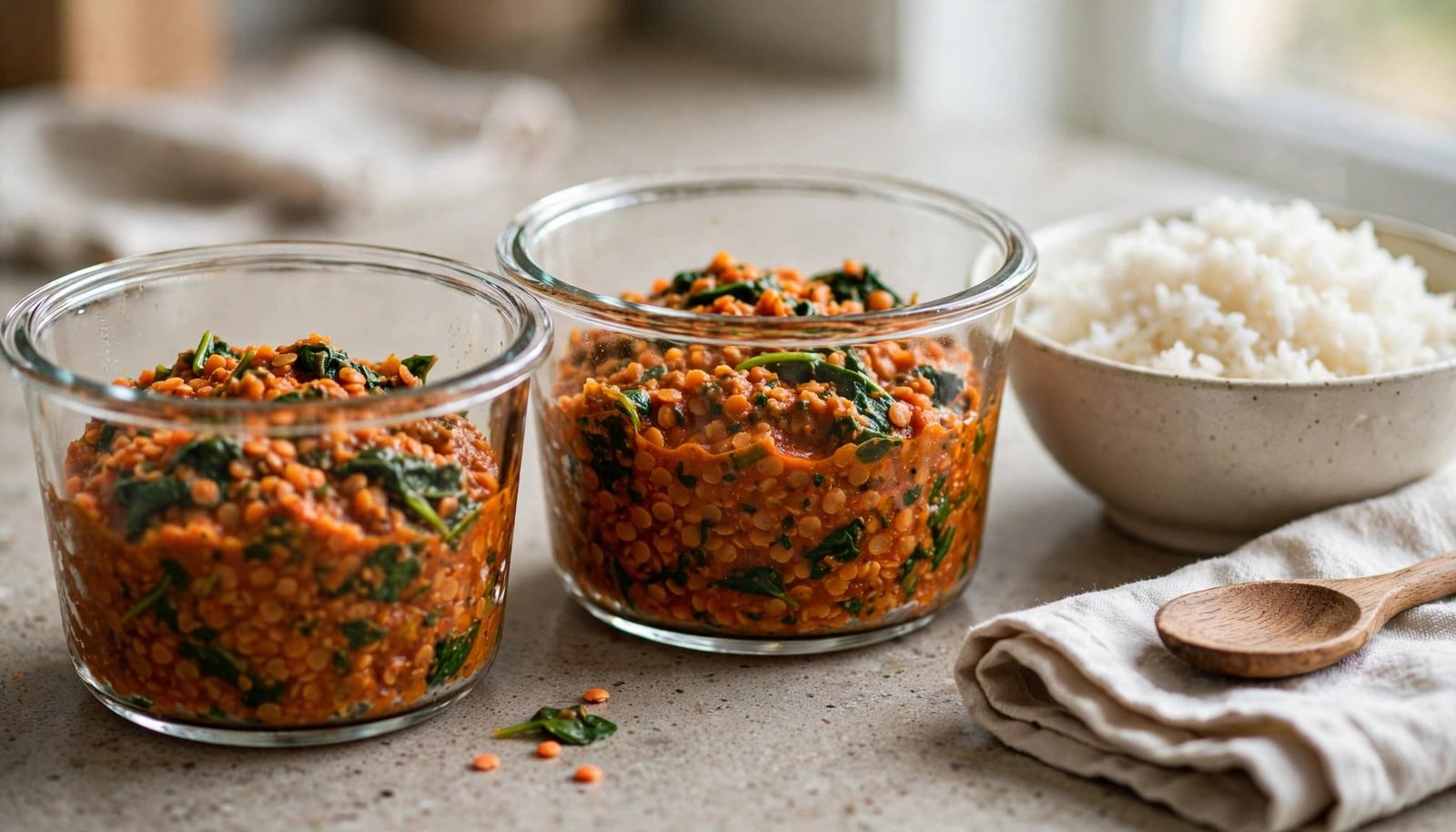
Refrigerate or freeze portions for later
Spoon the curry into shallow, airtight containers so it cools more quickly. Refrigerate it within two hours of cooking or serving, or within one hour if the temperature is above 90°F. Don’t leave it on the counter to cool completely. Prompt chilling is part of safe storage, not just a meal-prep convenience.
Keep the refrigerator at 40°F or below, and use refrigerated curry within 3 to 4 days. Label each container with the date if you tend to lose track of what’s in the fridge. For longer storage, freeze portions in freezer-safe containers for about 2 to 3 months for best quality. Leave a little room at the top for expansion. Thaw a portion in the refrigerator, ideally overnight, before reheating.
Cooked rice is handy to have ready, but store it in a separate container when convenient. This helps keep the grains from soaking up curry sauce and becoming too soft. For more detail on cooling and storing cooked food, follow the USDA’s leftover food safety guidance.
Reheat gently and refresh the texture
The curry thickens as it chills, so stir in a splash of water or broth as it warms. Reheat a serving on the stovetop over medium-low heat, stirring often. For the microwave, use a microwave-safe dish and heat in short intervals, stirring between each one so the center warms evenly.
Heat leftovers until steaming hot throughout. For the most reliable check, use a food thermometer and make sure the curry reaches 165°F. Reheat only the amount you plan to eat, rather than warming the whole batch each time.
Taste before serving. A squeeze of fresh lime or a little chopped herb can brighten the curry after storage. Add it just before eating, and serve with freshly reheated rice or another base.
Conclusion
Red lentils, spinach, and a few flavorful pantry ingredients make a satisfying weeknight dinner without a long prep session. Let the lentils simmer until tender, then stir in the spinach near the end so it just wilts.
Adjust the spice, texture, and serving base to suit your household. Whether you prefer a mild curry over rice or a thicker bowl with flatbread, this recipe gives you a flexible, comforting dinner with ingredients you can keep on hand.

- Christmas Cookie Ideas for Every Holiday Baker - November 9, 2026
- Christmas Cocktails: Party Drinks, Cozy Sips, and Mocktails - November 9, 2026
- 20 Christmas Appetizer Ideas for Every Holiday Spread - November 9, 2026