

Crisp, browned dough wrapped around tangy sauerkraut makes Krautkrapfen a comforting German meal with plenty of flavor in every bite. If you’re searching for German cabbage dumplings, you may be looking for this traditional Swabian dish: noodle dough rolled around a savory filling, sliced, then braised in a pan.
I’ll show you what goes into Krautkrapfen, how to make them at home, and what to serve alongside them. The covered-pan cooking gives the dough a tender center and a golden finish, so let’s start with what these dumplings are.
Cabbage dumplings German cooks make: meet Krautkrapfen
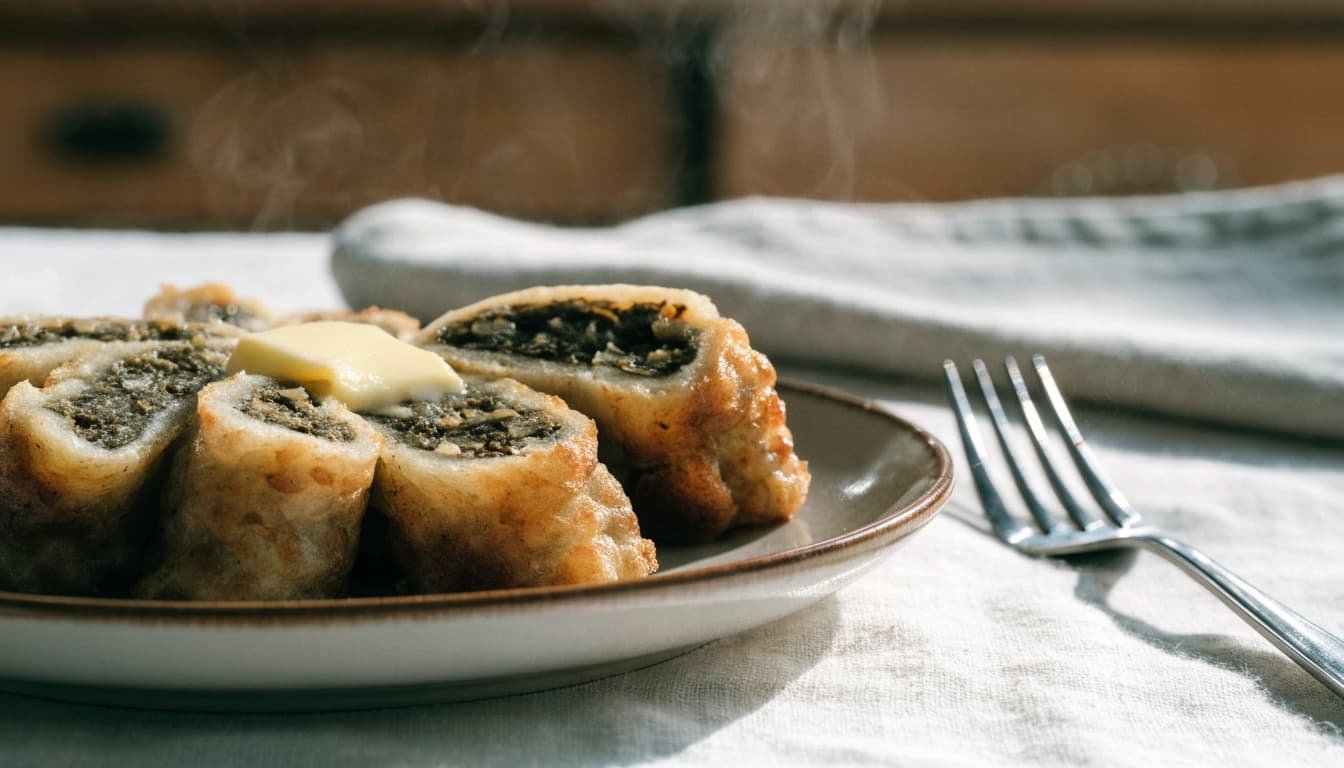
Krautkrapfen are a traditional South German dish made with sauerkraut and noodle dough. The name can be confusing if you picture cabbage leaves wrapped around a filling. These dumplings are rolled instead: a thin sheet of flour-and-egg dough gets covered with savory sauerkraut, rolled up, cut into pieces, and cooked in a pan.

What Krautkrapfen are
The dough is similar to fresh pasta dough, with flour, eggs, salt, and sometimes a little water. The filling starts with sauerkraut, often cooked with onion and seasoned with ingredients like caraway or pepper. Many traditional versions also include bacon or smoked pork, though you can leave out the meat.
Once the filling cools, spread it over the rolled dough and roll everything into a long log, much like a savory strudel. Cut the log into thick rounds, then brown the pieces in a pan. A splash of broth and a tightly fitted lid finish the cooking. The dough turns tender as it steams, while the cut sides pick up a golden crust.
That mix of textures is what makes the dish so satisfying: tangy, soft sauerkraut tucked into tender dough, with browned edges from the pan. Krautkrapfen are closer to filled pasta or a rolled noodle dish than to the bread dumplings many people associate with German cooking.
Why the name can mean different things
“Kraut” means cabbage, and “Krapfen” can refer to different kinds of filled or shaped foods in German-speaking regions. So the name alone doesn’t tell you exactly what to expect. In this dish, the cabbage is usually sauerkraut, and it’s wrapped inside rolled dough rather than enclosed in cabbage leaves.
Recipes and names vary by region, too. You may see the dish called Schwäbische Krautkrapfen, Allgäuer Krautkrapfen, or even Bayrische Krautkrapfen. It has a strong connection to the Allgäu and is also part of wider Swabian and Bavarian cooking traditions. Some cooks brown and braise the rolls in a pan; others finish them in the oven. The shared idea stays the same: sauerkraut rolled into dough, then cooked until the outside is browned and the inside is tender.
That’s why “German cabbage dumplings” can be a useful description, but Krautkrapfen have their own shape and method. Once you know to look for those rolled spirals, you’ll know what’s on the plate.
What goes into German cabbage dumplings?
German cabbage dumplings, or Krautkrapfen, need just two main parts: a simple noodle dough and a tangy cabbage filling. For four people, you can make the dough with pantry basics and build the filling around sauerkraut, onion, and a little fat for flavor.

The dough is simple and sturdy
The wrapper is closer to fresh pasta than bread dough. It needs to roll thinly without tearing, so knead it until smooth and give it time to rest before rolling.
For about four servings, gather:
- 2 cups (300 g) all-purpose flour, plus a little more for rolling.
- 2 large eggs.
- 1 tablespoon neutral oil or olive oil.
- 1/2 teaspoon salt.
- 2 to 4 tablespoons water, as needed.
The exact amount of water depends on your flour and egg size. Add it a little at a time until the dough comes together, then knead until it feels supple rather than sticky.
Sauerkraut makes the filling
Most Krautkrapfen use sauerkraut, which brings a pleasantly sharp flavor that balances the rich dough. Drain it well before cooking so the filling doesn’t make the dough soggy. If your sauerkraut tastes very sour, rinse it briefly and squeeze out the extra liquid.
For the filling, you’ll need:
- 1 pound (about 500 g) sauerkraut, drained.
- 1 medium onion, finely chopped.
- 1 tablespoon butter, oil, or bacon fat.
- Black pepper, to taste.
- 1/2 teaspoon caraway seeds, optional.
- 1 to 1 1/2 cups broth, for cooking the dumplings.
Cook the onion in the fat until soft, then stir in the sauerkraut and seasonings. Let the filling cool before spreading it over the dough. That small pause helps keep the dough easy to roll.
Add meat if you like
Bacon or smoked speck is common in many versions, but it’s optional. Add about 4 ounces (115 g) diced bacon to the onion as it cooks, and let it brown before stirring in the sauerkraut. The bacon adds salt and a smoky, savory note, so taste the filling before adding more seasoning.
For a meat-free batch, butter or oil gives the onion a rich base, and vegetable broth works well for cooking. Beef broth is another option if you want a deeper flavor. For another take on the ingredient mix, see this Swabian Krautkrapfen recipe.
How to make Krautkrapfen, from filling to golden crust
The key is to let the sauerkraut filling cool before it touches the dough, then brown the rolls before adding broth. That gives you a tender center and the golden crust that makes these cabbage dumplings so good.
Krautkrapfen recipe
Yield: 4 servings Prep time: 35 minutes, plus 30 minutes to rest the dough Cook time: 30 minutes
For the dough:
- 2 cups (300 g) all-purpose flour, plus more for rolling.
- 2 large eggs.
- 1 tablespoon oil.
- 1/2 teaspoon salt.
- 2 to 4 tablespoons water, as needed.
For the filling and pan:
- 1 pound (500 g) sauerkraut, drained and squeezed dry.
- 1 medium onion, finely chopped.
- 4 ounces (115 g) diced bacon, optional.
- 1 tablespoon butter or bacon fat.
- Black pepper, to taste.
- 1/2 teaspoon caraway seeds, optional.
- 1 to 1 1/2 cups broth, for braising.
Roll, fill, and cook
- Make the dough. Combine the flour and salt in a bowl. Add the eggs and oil, then mix until crumbly. Add water a tablespoon at a time until the dough comes together. Knead for about 8 minutes, until smooth and supple. Cover and let it rest for 30 minutes.
- Cook the sauerkraut. Melt the butter or bacon fat in a skillet over medium heat. If using bacon, cook it until lightly browned, then add the onion and cook until soft. Stir in the sauerkraut, pepper, and caraway. Cook for 5 to 10 minutes, then spread the filling on a plate to cool.
- Roll and fill the dough. Lightly flour your work surface and roll the dough into a thin rectangle, about 2 to 3 mm thick. Spread the cooled sauerkraut evenly over the dough, leaving a small border along one long edge.
- Shape the dumplings. Starting at the opposite long edge, roll the dough into a snug log. Pinch the seam closed, then cut the log into pieces about 2 inches (5 cm) thick. Keep the filling tucked inside as you slice.
- Brown the cut sides. Arrange the pieces cut-side down in a large skillet with a little butter or oil. Cook over medium heat until the bottoms are golden. Work in batches if the pan feels crowded.
- Braise until tender. Pour in enough hot broth to come partway up the dumplings, about 1 to 1 1/2 cups. Cover the skillet and cook over low heat for 20 to 25 minutes, until the dough is tender and most of the liquid has been absorbed. Remove the lid for the last few minutes if you want a firmer, more browned crust.
The method follows the same roll, slice, brown, and braise approach found in this Swabian Krautkrapfen recipe. Keep the heat gentle once you add broth. A hard boil can make the dough turn soft before the centers cook through.
How to serve cabbage dumplings for a satisfying meal
Krautkrapfen are filling on their own, so you don’t need a long list of sides to make dinner feel complete. Keep the browned bottoms and a little of the savory braising liquid on the plate, then add something fresh to balance the tangy sauerkraut and tender dough.

Keep the browned bottoms and broth
Serve the dumplings soon after cooking, while their cut sides are still golden. Spoon a little of the pan liquid over or around them, too. It carries the flavor from the sauerkraut, broth, and browned dough, and keeps each bite moist. You don’t need to drain the skillet completely or add a separate sauce.
If the pan has plenty of liquid, use just enough to lightly coat the plate. The crisp edges still matter, so avoid drowning the dumplings. A sprinkle of chopped chives or a few soft, browned onions makes a simple finishing touch.
Add a fresh, simple side
A green salad is an easy match for German cabbage dumplings. Its crisp leaves and light dressing cut through the rich dough and savory filling without adding much work. For a regional-style side, try a tangy German cabbage salad with broth, or toss leafy greens with a quick vinegar dressing.
If you want a little more on the table, serve steamed green beans or simply cooked carrots alongside the salad. Choose one side, not several; Krautkrapfen are hearty, and a fresh contrast is usually all the meal needs.
Fix common problems and save leftovers safely
The first batch of Krautkrapfen may not look perfectly neat, and that’s fine. A few small adjustments can help you avoid torn dough, loose spirals, or a filling that tastes sharper than you expected.
Troubleshoot dough and sauerkraut
If the dough keeps shrinking as you roll it, cover it and let it rest for another 10 minutes. The gluten needs time to relax. If the dough feels sticky, dust the counter lightly with flour, but don’t add too much or the finished rolls can turn dry.
A little sauerkraut can escape when you slice the log. Use a sharp knife and a gentle sawing motion, then set each piece cut-side up as you transfer it to the pan. If the seam loosens, tuck it underneath. Keep the filling in an even layer, too; thick clumps make the log harder to roll and the spirals less likely to hold together.
For a filling that tastes too sour, stir in a small pat of butter or a pinch of sugar. If it seems watery, drain and squeeze the sauerkraut more thoroughly next time. Excess liquid can soften the dough before it has a chance to cook through.
Store and reheat Krautkrapfen
Let leftovers cool briefly, then place them in a shallow, covered container and refrigerate within two hours. Keep your refrigerator at 40°F or below, and eat the dumplings within three to four days. The USDA’s leftover food safety guidance covers storage times and reheating temperatures.

The dough softens in the refrigerator, so the stovetop brings back a better texture than the microwave. Warm the dumplings in a covered skillet with a splash of broth or water over low heat. Uncover for the last few minutes to dry the bottoms and bring back some color. If you use a microwave, cover the dish to keep the dough from drying out, then check that the centers are steaming hot. Reheat leftovers to 165°F.
You can freeze cooked Krautkrapfen, too. Cool them, freeze in a single layer until firm, then move them to a sealed container. Thaw overnight in the refrigerator before reheating so the dough warms evenly.
Conclusion
Krautkrapfen are German cabbage dumplings with a different shape and texture than cabbage-leaf rolls: sauerkraut is tucked into noodle dough, browned, then gently braised until tender. Try the classic filling first, then adjust the optional bacon or seasonings to suit your table.
Serve them warm with a fresh side for a cozy family meal.

- Christmas Cookie Ideas for Every Holiday Baker - November 9, 2026
- Christmas Cocktails: Party Drinks, Cozy Sips, and Mocktails - November 9, 2026
- 20 Christmas Appetizer Ideas for Every Holiday Spread - November 9, 2026


