
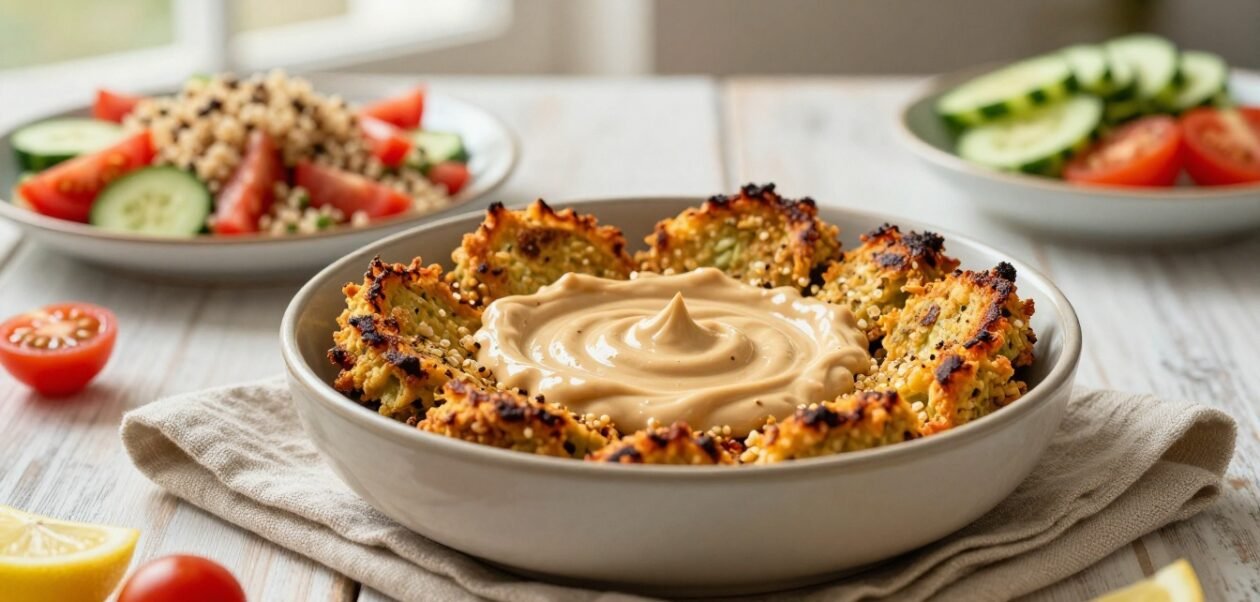
Crisp baked falafel, juicy cucumber and tomato, hearty grains or greens, and creamy tahini make a bowl that feels like a complete meal. These falafel bowls are a satisfying meat-free lunch or dinner, and you can adjust the base and toppings to fit the time and ingredients you have.
A little oil helps the falafel brown in the oven, while a brief rest can firm up the mixture if it feels too soft to shape. Next, put the bowl together with a fresh salad, your choice of grains or greens, and an easy tahini sauce.
Crispy Baked Falafel Bowls with Cucumber Tomato Salad
These bowls bring together crisp-edged falafel, cool, juicy salad, and creamy tahini over greens or grains. The recipe makes 4 bowls. Allow about 30 minutes of active prep and 12 hours 55 minutes total, including an overnight chickpea soak and about 25 minutes in the oven.
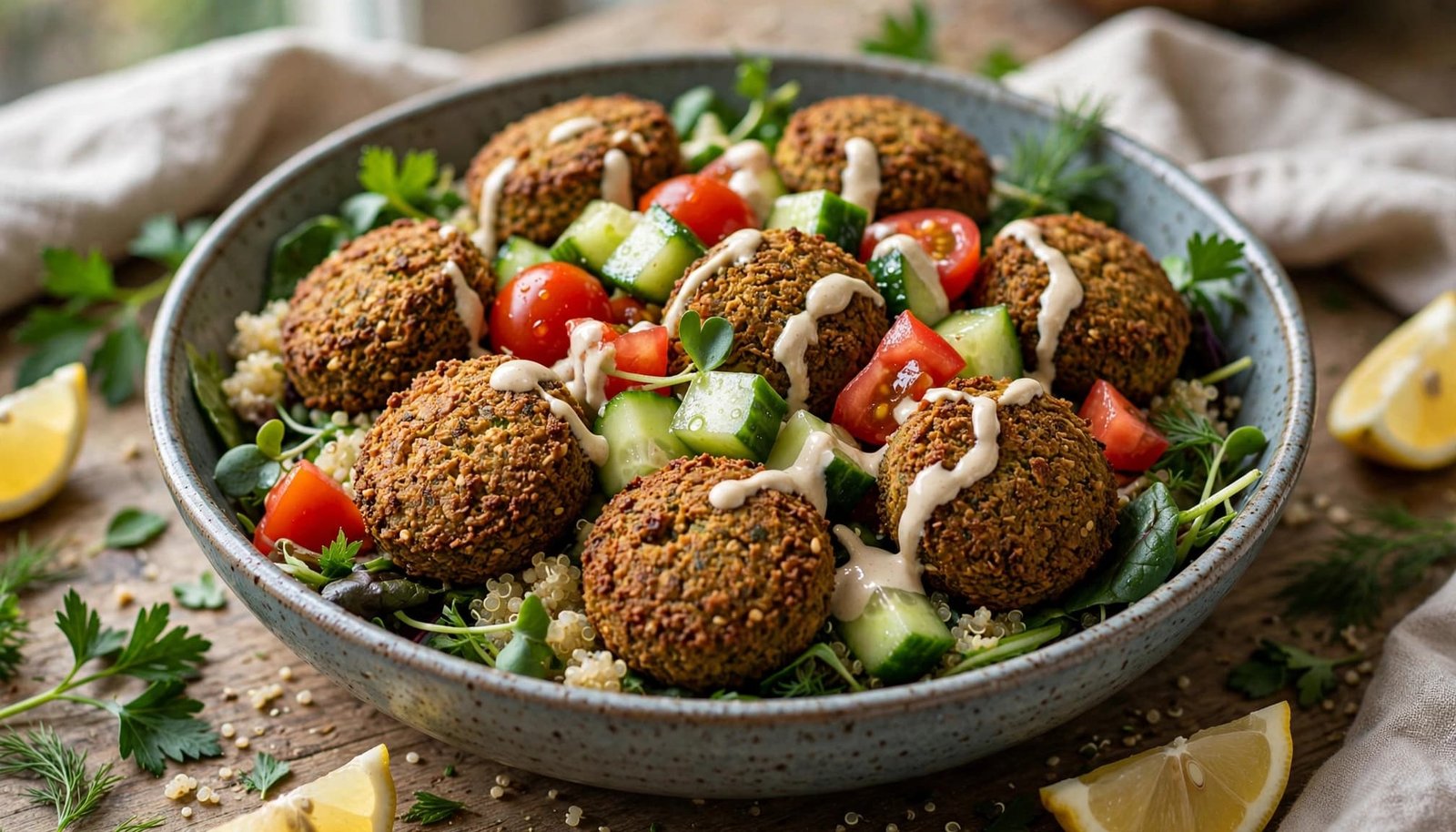
What goes into the falafel, salad, and tahini sauce
For a balanced bowl, keep the falafel mixture coarse enough to hold its texture, and make the dressing thin enough to drizzle. Here’s a practical starting point for four servings:
- Falafel: 1 cup dried chickpeas, soaked overnight and drained; ½ cup each chopped parsley and cilantro; ½ small onion; 2 garlic cloves; 1 teaspoon each ground cumin and coriander; ¾ teaspoon salt; 2 tablespoons flour; and 1 tablespoon olive oil. The chickpeas give the falafel its hearty base, herbs add freshness, and onion, garlic, and spices build flavor. A little flour helps bind the mixture without making it heavy.
- Salad: 1 cucumber, 2 ripe tomatoes, and the juice of ½ lemon. Add ¼ small red onion or a handful of fresh herbs if you like a sharper, more herb-forward salad.
- Tahini sauce: ⅓ cup tahini, 2 tablespoons lemon juice, 1 small grated garlic clove, ¼ teaspoon salt, and 3 to 5 tablespoons water. Whisk in the water gradually until the sauce is pourable. A teaspoon of maple syrup is optional if you want to soften the lemon’s tang.
- Bowl base: 4 handfuls of greens, or about 2 cups cooked quinoa, brown rice, or another grain. For a cold bowl, cool cooked grains before adding them to tender greens so the leaves stay fresh.
Use a little less water for a thicker sauce, or add more if it clings too heavily. Taste it with a bite of salad, then adjust the lemon or salt as needed.
Choose chickpeas that help falafel hold its shape
For the most reliable texture, use dried chickpeas soaked overnight but not cooked before grinding. They make a firmer, less wet mixture that’s easier to shape and bakes up with crisp edges. For more guidance on preparing dried chickpeas, see this soak-and-boil chickpea guide.
Canned chickpeas are a convenient shortcut, but they’re already cooked and softer, so the falafel can turn out denser or harder to shape. Drain and rinse them, then pat them very dry. You may also need extra flour or another binder, and the texture won’t match a batch made with soaked dried chickpeas. Don’t substitute them cup for cup and expect the same result.
How to bake falafel so the outside turns crisp
A crisp outside starts before the patties go into the oven. Drain the soaked chickpeas well, keep the mixture coarse, and give each patty enough space on the baking sheet for heat to reach its edges.
Pulse the mixture until it holds, not until it is smooth
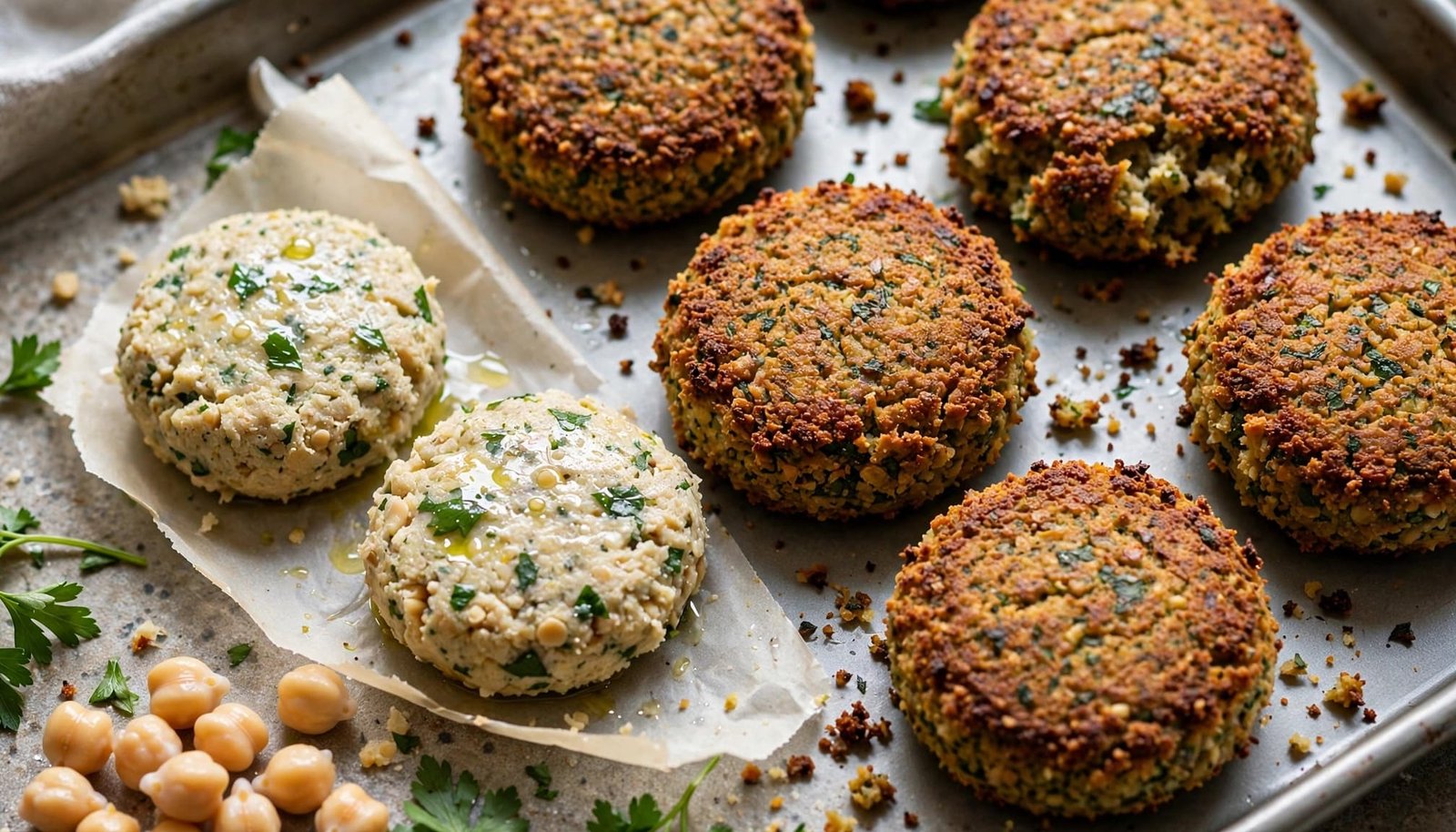
After soaking, drain the chickpeas thoroughly and pat them dry. Extra water can make the mixture difficult to shape and may soften the patties as they bake. Add the chickpeas, herbs, onion, garlic, and spices to a food processor, then pulse in short bursts.
Stop when the mixture looks finely chopped and cohesive, with small bits of chickpea and herbs still visible. It should not look like a smooth paste. Over-processing can make the falafel dense instead of tender inside.
To check the texture, press a little mixture in your hand. It should hold together when squeezed. If it crumbles apart, mix in a modest amount of flour, about a teaspoon at a time, then test again. The recipe already includes flour, so add only what the mixture needs. If it feels very soft, let it rest briefly before shaping rather than adding a large amount of binder.
Shape, oil, and bake the patties for better browning
Heat the oven to 375°F and line a baking sheet with parchment paper. Shape the mixture into evenly sized patties or discs, keeping them similar in thickness so they bake at the same rate. Set them on the pan with a little space between each one. Crowding can trap moisture and leave the edges pale.
Brush or drizzle a little olive oil over the patties. A light coating helps them brown and keeps the surfaces from drying out. Bake for 25 minutes, turning the patties halfway through so both sides get a chance to brown. This timing follows the USC WorkWell Center’s baked falafel method, which recommends flipping during baking. Patty size and thickness affect how quickly falafel cooks, so use the timer as a guide, not the only test.
Look for browned edges and a firm surface before taking the patties out. If they still feel soft on top or look pale, give them a few more minutes, then check again. Let them rest briefly on the pan before lifting; the centers will settle, and the patties will be easier to move without breaking.
Make a bright cucumber tomato salad and creamy tahini dressing
The salad adds a cool, juicy contrast to warm falafel, while tahini ties the bowl together with a creamy, nutty finish. Dress the vegetables and greens lightly, then serve extra sauce on the side so every bite stays fresh.
Keep the cucumber and tomatoes fresh and crisp
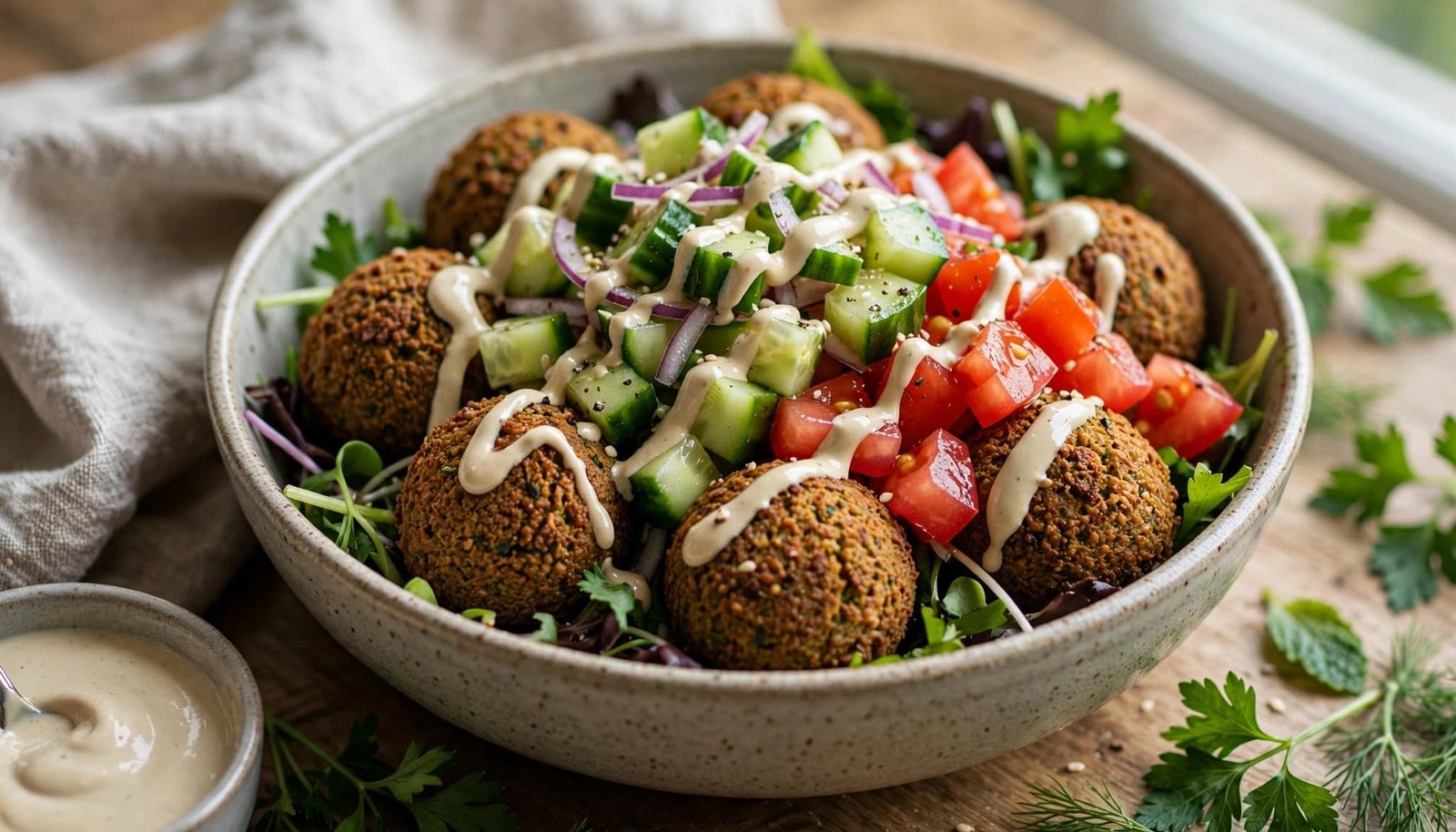
Cut the cucumber and ripe tomatoes into bite-size pieces so they’re easy to scoop with falafel and grains. Add a squeeze of lemon, a little salt, and black pepper. Finely chopped red onion gives the salad a sharper bite, while parsley, cilantro, or mint adds a fresh, herbal note.
For the best texture, season the vegetables close to serving time. Salt draws moisture from tomatoes and cucumbers, and the lemon adds more liquid as the salad sits. Toss everything just before assembling the bowls to limit pooling and keep the vegetables tasting crisp. If you’re adding greens, dry them well and keep them separate until you’re ready to serve.
Thin tahini with lemon and water until it pours easily
Whisk the tahini with lemon juice, grated garlic, and salt. It may turn thick or look slightly stiff after the lemon goes in. Keep whisking, then add water a tablespoon at a time until the sauce loosens and pours easily. This thickening before the sauce becomes smooth is normal, as shown in Serious Eats’ tahini and cucumber recipe.
Tahini brands vary, so use the texture as your guide. Add water gradually, whisking between additions, until the dressing coats a spoon but still drizzles over the bowl. Taste it with a piece of cucumber or a leaf of greens, since the sauce should work with the other ingredients. Add lemon if it needs more brightness, salt if the flavor seems flat, or a small touch of maple syrup if you want to soften the tang.
Pour a little dressing over the salad and greens, then toss and taste before adding more. The falafel and grains should still have their own texture, not sit under a heavy layer of sauce. Keep extra tahini on the side for anyone who wants more.
Build a balanced bowl with grains, greens, and easy swaps
A good falafel bowl has a few parts working together: a filling base, warm falafel, crisp vegetables, and a sauce that brings everything together. Keep the portions flexible, and use ingredients that fit your appetite and what you have on hand.
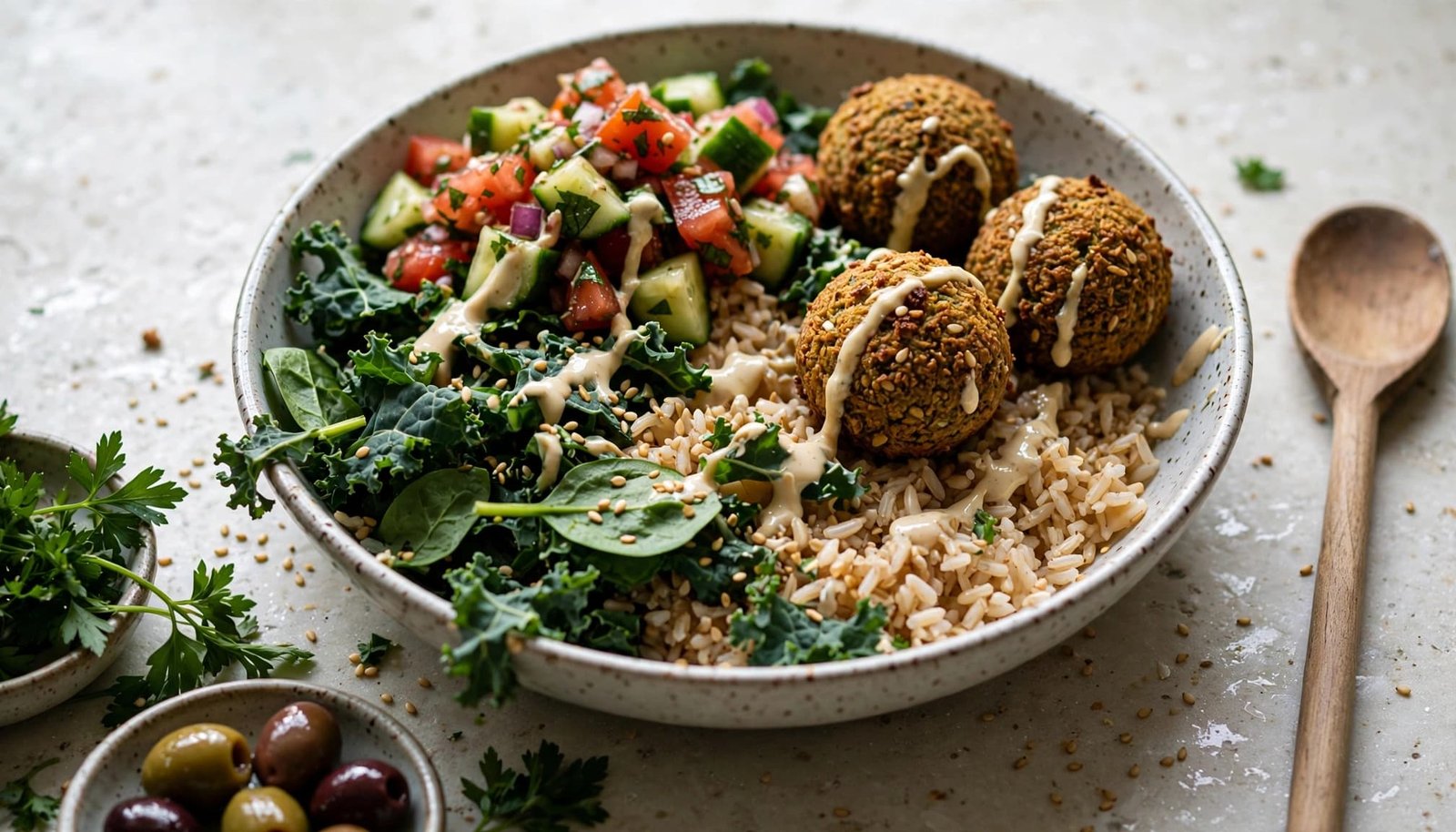
Start with quinoa, rice, or greens, then add warm falafel
For a heartier bowl, spoon in cooked quinoa or brown rice. Both add substance and pair well with the crisp falafel and juicy cucumber tomato salad. USDA MyPlate recommends making at least half your grains whole grains; its healthy eating guidance offers a simple reference when choosing a grain.
If you want a lighter meal, start with leafy greens instead. You can also use a smaller scoop of grains over greens for a mix of fresh and filling. Add the warm falafel and cucumber tomato salad, then drizzle with tahini just before serving. Keep the sauce light at first, so the falafel stays crisp and the salad remains fresh.
The bowl formula is easy to adjust: greens, a grain or bean, protein, and seasonal toppings. Chickpeas or white beans add another plant-based option, while a hard-boiled egg brings variety with very little extra prep. Fresh parsley or mint, a few olives, or toasted seeds can add flavor and texture. Choose one or two; every topping is optional.
Use pantry and seasonal ingredients to make it your own
A bowl can come together even when you don’t have every ingredient listed. Use pre-washed greens, cooked grains, or canned beans to save time. Drain and rinse canned beans before adding them, and warm them gently if you’d like them to match the falafel.
The salad can change with the season or what’s in your refrigerator. Bell pepper, shredded cabbage, radishes, or crisp lettuce can join or replace some of the cucumber and tomato. Keep the vegetables crisp and cut them into bite-size pieces, so they’re easy to scoop with the grains and falafel.
Let the falafel and tahini remain the main flavor anchors. Then add what suits the bowl: a handful of herbs, extra lemon, or a few toasted seeds. If you’re serving a family, set the toppings out separately so everyone can build a bowl they like.
Prep ahead, store leftovers, and bring back the crunch
A little prep makes these falafel bowls easier to put together without turning the recipe into a full meal-prep project. Cook the grains and chop sturdy vegetables ahead, then keep each component separate until you’re ready to eat.
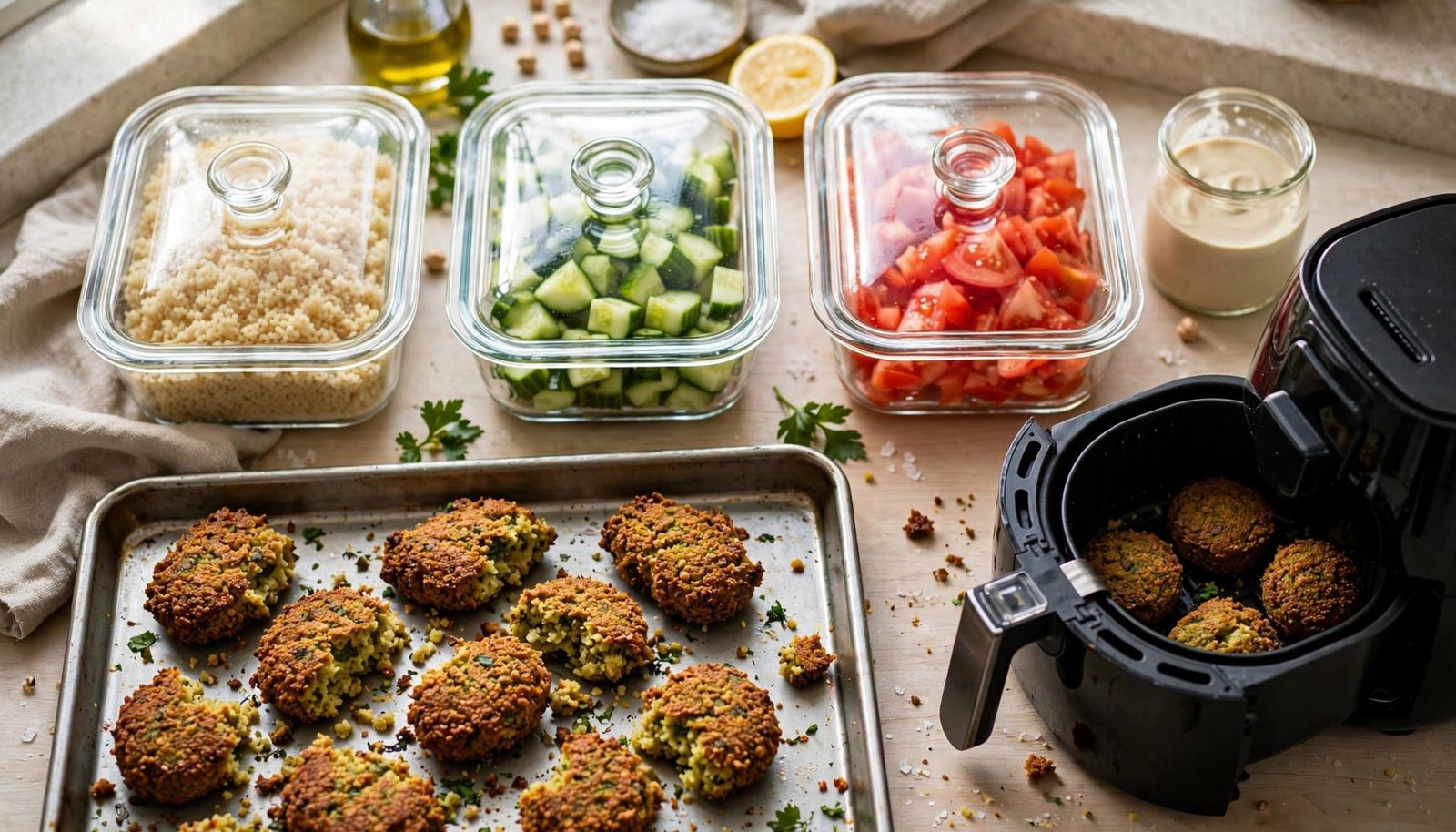
Store falafel, salad, and dressing in separate containers
Keep the tahini dressing away from the cucumber and tomato salad. Once dressed, the vegetables release liquid and lose some of their crunch. Store the falafel separately, too, so moisture from the salad or sauce doesn’t soften its crisp edges. Cooked grains, washed and dried greens, and chopped vegetables can be prepared ahead and assembled when needed.
Refrigerate perishable ingredients in covered containers at 40°F or below. Put cooked falafel and grains away within two hours, or within one hour if the temperature is above 90°F. Shallow containers help food cool quickly, and hot food can go directly into the refrigerator. Use refrigerated leftovers within 3 to 4 days, following the USDA’s leftover storage guidance.
For longer storage, freeze cooked falafel in an airtight container. It keeps best quality for about 3 to 4 months; thaw it in the refrigerator before reheating. The salad and dressing are better kept refrigerated and made fresh as needed, since freezing can change their texture.
Reheat falafel in the oven or air fryer for a crisp finish
Dry heat brings back some of the falafel’s crisp exterior. Set refrigerated patties on a baking sheet and warm them in a 350°F oven for about 8 to 10 minutes, turning once. In an air fryer, start at 350°F for 4 to 6 minutes. Smaller patties may warm faster, so check them early.
For food safety, reheat leftovers to 165°F in the center, using a food thermometer to check. A microwave warms falafel quickly, but it tends to soften the outside. Use it only if crispness isn’t a priority.
Warm only the portion you plan to eat. Add the fresh salad, grains, and tahini after reheating, so the vegetables stay crisp and the falafel keeps its texture.
Conclusion
These crispy baked falafel bowls bring warm, crisp chickpeas together with bright cucumber tomato salad and creamy tahini over greens or grains. Soak dried chickpeas overnight, keep the mixture coarse, and give the patties space to brown for a reliable result.
Choose quinoa, rice, or greens for the base, then add the toppings you have on hand. A little flexibility keeps the bowls easy to adapt while each bite stays fresh, crisp, and satisfying.

- Christmas Cookie Ideas for Every Holiday Baker - November 9, 2026
- Christmas Cocktails: Party Drinks, Cozy Sips, and Mocktails - November 9, 2026
- 20 Christmas Appetizer Ideas for Every Holiday Spread - November 9, 2026



2 Comments