A cozy, French-inspired dinner doesn’t have to be complicated. This chicken au poivre recipe pairs browned, tender chicken with a bold black pepper and cream pan sauce, all made in one skillet with simple ingredients.
I’ll share a few easy tips for keeping the chicken juicy and balancing the sauce so the pepper stays bold without overpowering the cream. Let’s get started with the ingredients you’ll need.
What Makes Chicken au Poivre So Flavorful
Chicken au poivre pairs golden, tender chicken with a creamy sauce made from cracked peppercorns and the savory drippings left in the pan. “Au poivre” means “with pepper” in French. This chicken version takes inspiration from steak au poivre, but uses chicken for an easy, approachable dinner.

Cracked pepper brings warmth and texture
Cracked black peppercorns give the sauce its bold, fragrant flavor. Their bite stands out against the chicken, while cream softens the sharper edges. You get a pleasant peppery warmth in each bite, rather than a sauce that tastes simply hot.
The texture matters, too. Cracked pepper has more presence than finely ground pepper, so you can taste little bursts of spice throughout the silky sauce. Classic steak au poivre uses the same pepper-forward idea, often with a creamy pan sauce.
Pan drippings add savory depth
After the chicken browns, those golden bits in the skillet hold a lot of flavor. Stirring them into the sauce gives it a rich, savory base that cream alone can’t provide. The result tastes full and rounded, with the pepper, browned chicken, and cream working together.
Serve the chicken with plenty of sauce so each piece stays moist and gets a little of that peppery, savory finish.
The Ingredients That Give This Chicken au Poivre Recipe Its Rich Flavor
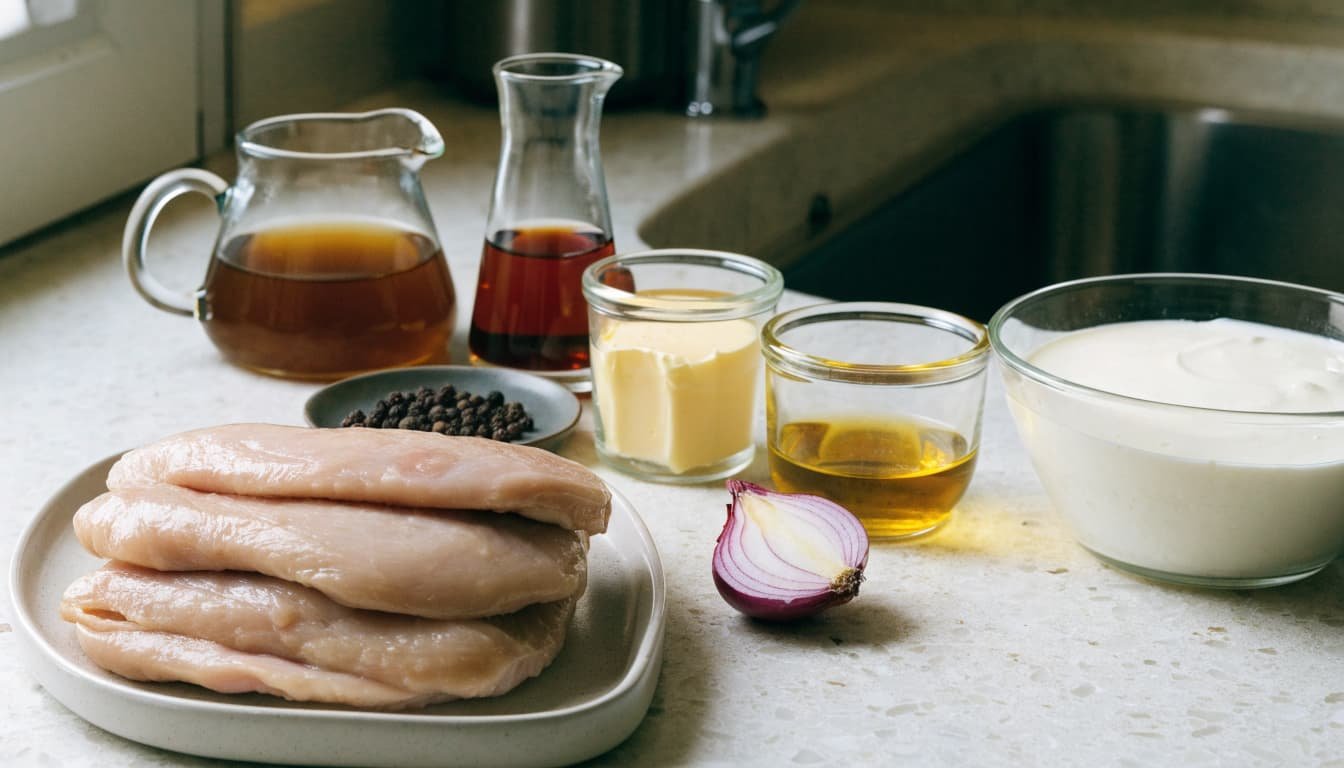
A few pantry staples build a creamy, peppery sauce with plenty of savory depth. For about four servings, gather these ingredients before you start:
Chicken and seasoning
- Four boneless, skinless chicken breasts or thighs
- 1 teaspoon kosher salt
- 1 to 1½ tablespoons whole black peppercorns
- 1 tablespoon neutral oil
Breasts are easy to portion and cook quickly. If you use them, choose pieces that are similar in thickness so they cook evenly. Thighs are a little more forgiving and stay juicy, making them a good choice if you prefer darker meat.
Use whole peppercorns and crack them coarsely with a mortar and pestle or the bottom of a heavy pan. Fine pepper powder can make the sauce taste dusty and sharp, while larger pieces give it the classic peppery bite.
The creamy pan sauce
- 2 tablespoons unsalted butter
- 1 small shallot, finely chopped
- ¼ cup cognac or brandy
- ½ cup chicken broth
- ¾ cup heavy cream
Cognac adds a warm, aromatic note and helps lift the browned bits from the skillet. Chicken broth provides savory body and a no-alcohol option, though the finished sauce will taste different without cognac. For more background on the classic combination of pepper, cream, and brandy, see this green peppercorn pan sauce.
Optional flavor adjustments
A little Dijon mustard, fresh thyme, or lemon juice can shift the sauce without changing its character. Stir in a teaspoon of Dijon for extra tang, add a few thyme leaves for an herbal note, or finish with a small squeeze of lemon to brighten the cream.
These are small adjustments, so start with less and taste before adding more. The chicken, cracked pepper, shallot, broth, and cream already provide everything you need for a rich chicken au poivre recipe.
How to Make Chicken au Poivre in One Skillet
This chicken au poivre recipe comes together in one skillet, so the browned chicken bits become part of the creamy pepper sauce. Prep the ingredients first, then cook the chicken in batches if needed.

Quick recipe card
- Serves: 4
- Active time: About 15 minutes
- Total time: About 30 minutes
- You’ll need: 4 chicken breasts or thighs, 1 teaspoon kosher salt, 1 to 1½ tablespoons whole black peppercorns, 1 tablespoon neutral oil, 2 tablespoons unsalted butter, 1 finely chopped shallot, ¼ cup cognac or brandy, ½ cup chicken broth, and ¾ cup heavy cream. Dijon, thyme, and lemon juice are optional.
Season and sear the chicken until golden
- Pat the chicken dry with paper towels and season both sides with salt. Crack the peppercorns coarsely with a mortar and pestle, or seal them in a sturdy bag and tap with a heavy pan.
- Heat the oil and 1 tablespoon butter in a large skillet over medium-high heat. Add the chicken in a single layer, working in batches if the pieces touch.
- Sear until the underside is deep golden and releases easily from the pan, then turn and brown the other side. Transfer the chicken to a plate. It will finish cooking in the sauce.
Dry chicken browns better, and space in the skillet helps it sear instead of steam. Leave the browned bits in the pan; they give the sauce its savory base.
Build the peppercorn cream sauce in the same pan
- Lower the heat to medium and add the shallot. Cook, stirring, until softened, then stir in some of the cracked pepper.
- Take the skillet off the heat before carefully pouring in the cognac or brandy. Return it to the burner and simmer, scraping up the browned bits.
- Add the broth and simmer until slightly reduced. Stir in the cream and cook gently until the sauce lightly coats a spoon.
Adding the cognac away from the burner helps reduce splashing and the chance of flare-ups. A teaspoon of Dijon can add tang, while a few thyme leaves bring a gentle herbal note. Both are optional.
Finish cooking the chicken and check for doneness
- Return the chicken and any juices on the plate to the skillet. Simmer gently, turning the pieces once, until cooked through.
- Check the thickest part with an instant-read thermometer. Chicken should reach 165°F (74°C); USDA food safety guidance recommends using temperature to confirm doneness.
Cooking time depends on the cut and thickness, so use the thermometer rather than timing alone. Stir in a small knob of butter or a little lemon juice if the sauce needs a richer or brighter finish.
What to Serve With Chicken au Poivre
The creamy black pepper sauce is rich and savory, so I like to serve chicken au poivre with something that can catch the sauce and something fresh on the side. A simple combination of potatoes, green vegetables, and crisp salad makes a complete meal without competing with the chicken.

Add potatoes or bread to catch the sauce
Mashed potatoes are a natural match for the silky pepper sauce. Spoon a little sauce over the potatoes, or leave them on the side so you can dip each bite. For a crispier option, serve roasted potatoes with tender centers and browned edges.
Crusty bread works, too, especially if you want an easy side with minimal prep. Set out a few slices for soaking up the sauce left on the plate.
Balance the richness with greens and salad
Green beans, steamed broccoli, or sautéed asparagus bring freshness and color to the plate. Keep the seasoning simple, with a little salt, butter, or olive oil. For a bright, herby option, try roasted green beans with dill vinaigrette.
A crisp salad is another good way to balance the cream. Toss mixed greens, cucumber, or thinly sliced radish with a sharp lemon or vinaigrette dressing. The cool crunch and gentle acidity cut through the sauce, keeping each bite from feeling too heavy.
Plate the chicken with extra sauce
Place the chicken beside the potatoes and greens, then spoon sauce around or over the chicken. Keep some of the golden edges visible, and serve extra sauce at the table so everyone can add more.
Easy Swaps, Storage, and Fixes for Common Problems
This chicken au poivre recipe is easy to adjust to what you have on hand. A few small changes can help you get the flavor and sauce consistency you like.

Make simple ingredient swaps
Chicken thighs work well in place of breasts and stay tender in the creamy sauce. They may need a little more time to cook, so check the thickest part with a thermometer and remove them from the heat when they reach 165°F.
If you don’t have cognac or brandy, use chicken broth to deglaze the pan. The sauce will lose some of the spirit’s warm, aromatic flavor, but the browned bits still add plenty of savory depth. For a milder sauce, start with less cracked pepper. You can always stir in more after tasting.
Fix a sauce that’s too thick, thin, or sharp
A cream sauce can change quickly as it simmers. Make small adjustments and taste as you go:
- If the sauce is too thick, stir in a splash of chicken broth or cream until it loosens.
- If it’s too thin, let it simmer gently for another minute or two, stirring often. Avoid a hard boil, which can make the cream sauce separate.
- If the pepper tastes too sharp, add a little more cream to soften the bite. A small squeeze of lemon can brighten a heavy sauce, but add it a few drops at a time so it doesn’t make the pepper taste harsher.
Store and reheat leftovers gently
Refrigerate leftover chicken promptly in a covered container, within two hours of cooking. Use it within three to four days, following USDA guidance for leftover food safety.
To reheat, warm the chicken and sauce over low heat, stirring gently. Add a splash of broth if the sauce has thickened in the refrigerator. Heat leftovers to 165°F, checking the chicken with a food thermometer, and avoid letting the cream sauce boil.
Conclusion
This chicken au poivre recipe brings French-inspired flavor to a practical home dinner. Coarsely cracked peppercorns, well-browned chicken, and a gently reduced cream sauce give it the bold, savory flavor that makes every spoonful count.
Choose breasts or thighs, and serve the chicken with mashed potatoes, roasted potatoes, or crusty bread to catch the sauce. Check the thickest part of the chicken with a thermometer and cook it to 165°F for a safe, juicy dinner.

- Christmas Cookie Ideas for Every Holiday Baker - November 9, 2026
- Christmas Cocktails: Party Drinks, Cozy Sips, and Mocktails - November 9, 2026
- 20 Christmas Appetizer Ideas for Every Holiday Spread - November 9, 2026