

A warm bowl of soup makes a cool fall day feel a little easier, especially when dinner can simmer while you get on with the evening. These fall soup ideas use seasonal favorites like butternut squash, carrots, sweet potatoes, and kale for cozy, filling meals.
You’ll find options for quick weeknight dinners, meat-free bowls, and soups you can make ahead. Let’s start with the ingredients that give fall soups their comforting flavor.
Fall Soup Ideas for Every Cozy Craving
A good fall soup can be creamy and smooth, chunky and hearty, or rich with savory flavor. The best part? A few seasonal ingredients can turn into a satisfying dinner without a complicated recipe.
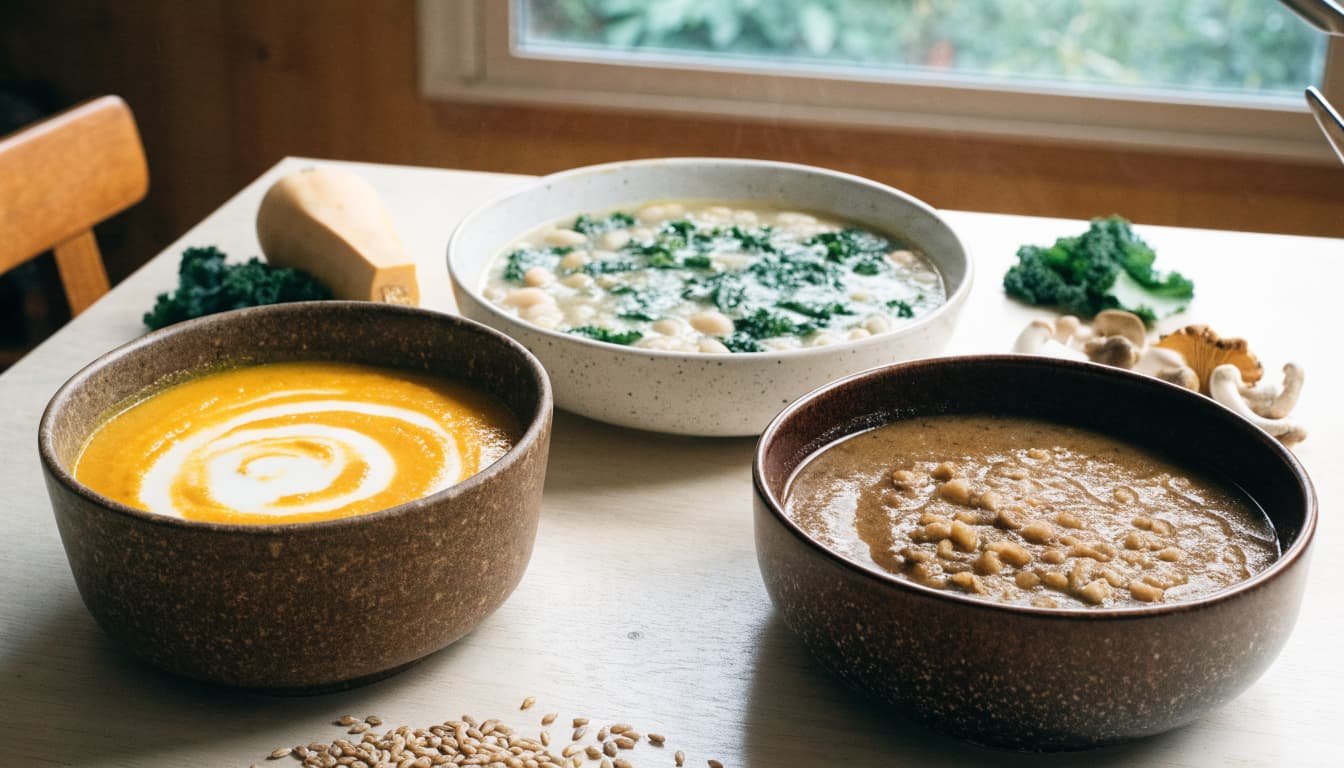
Try creamy pumpkin and butternut squash soups
Pumpkin and butternut squash make naturally velvety soups with a gentle sweetness. Add fresh ginger for a little warmth, curry powder for earthy spice, or chopped apple for a mellow, fruity note. Coconut milk brings a creamy finish without dairy, while a splash of cream works well if you want a richer bowl.
For a smooth texture, cook the vegetables until tender, then puree the soup with an immersion blender. Prefer a little more chew? Blend only part of it and leave some squash pieces in the pot. I like topping these soups with toasted pumpkin seeds or a spoonful of yogurt for a bit of crunch or tang.
Make a hearty harvest soup with beans, greens, or grains
Beans, greens, and grains give a light vegetable soup enough substance to feel like dinner. Try white beans with kale in a garlic-scented broth, or simmer sweet potatoes with lentils until the lentils turn tender and the broth thickens. Squash and wild rice make another cozy pairing, with chewy grains balancing the squash’s soft texture.
Add sturdy greens near the end of cooking so they turn tender but keep their color. If you’re using cooked beans or leftover grains, stir them in once the vegetables are nearly done. A pot of soup can also cover more than one meal. Refrigerate leftovers within two hours, then enjoy them within three to four days, following USDA guidance on storing leftovers.
Bring out deep, savory flavor with mushrooms
Mushrooms add a woodsy, savory taste that suits chilly evenings. For mushroom barley soup, brown sliced mushrooms first, then add onion, broth, and barley. The barley softens as it simmers and gives the soup a pleasantly chewy, filling texture.
A creamy mushroom soup starts the same way. Cook the mushrooms until their moisture evaporates and their edges turn golden before adding broth and milk or cream. That browning step builds a fuller flavor, so the soup tastes rich even with a short ingredient list. Keep some sliced mushrooms whole, or blend the finished soup for a smooth bowl.
Build a filling fall soup with seasonal produce and protein
A satisfying fall soup is easy to build: combine a few seasonal vegetables, a protein, broth, and seasonings that bring everything together. You can keep it meat-free or add chicken or sausage, depending on what sounds good for dinner.

Choose fall vegetables that add sweetness and body
Pumpkin, squash, and sweet potatoes turn tender and creamy when cooked, so they’re good choices if you want to blend part of the soup. Carrots add gentle sweetness and also soften nicely in the pot. For a simple combination, simmer diced squash, sweet potato, and carrots with onion, garlic, and broth, then puree some of the vegetables to thicken the soup.
Mushrooms bring a savory, earthy flavor. Brown them before adding broth for a richer taste, or leave them sliced for a little bite. Kale is best stirred in near the end. A few minutes in the hot broth softens the leaves without cooking away their color and texture.
Add beans or lentils for a satisfying meat-free meal
Beans and lentils make a vegetable soup more filling while adding protein and fiber. Try cannellini beans with kale and mushrooms, chickpeas with pumpkin and cumin, or black beans with sweet potato and a pinch of chili powder. These legumes pair well with vegetable broth and leafy greens. The University of Florida’s guide to beans, peas, and lentils also outlines their nutrition benefits.
Canned beans are already cooked, so rinse and stir them in toward the end, just long enough to heat through. Red lentils soften quickly and can thicken the broth as they cook; brown lentils hold their shape better. Season with salt and pepper, then taste before serving. A squeeze of lemon or a splash of vinegar can brighten a soup that tastes a little flat.
Use chicken or sausage when you want a meatier bowl
For an easy weeknight shortcut, stir cooked chicken into the pot during the last few minutes. Leftover roasted chicken works well with carrots, squash, kale, and thyme. Browned sausage adds a deeper, savory flavor, especially with mushrooms, white beans, and a little paprika.
Use chicken broth for either option, or choose vegetable broth for a meat-free soup. You don’t need meat to make a filling bowl; beans or lentils can do the job just as well. Keep the seasoning simple at first, then adjust with garlic, black pepper, sage, or rosemary once the vegetables and protein have simmered together.
Choose a cooking method that fits your week
The best cooking method depends on how much time you have and what kind of soup you want. Use the stovetop when you want to adjust the flavor as you go, roast vegetables for a deeper, sweeter taste, or let an appliance handle a hands-off batch.
Use the stovetop for flexible weeknight soup
For a quick pot, soften onion, garlic, or other aromatics in a little oil. Add chopped vegetables and broth, then simmer until the vegetables are tender. Stir in cooked beans, greens, or dairy near the end, depending on the soup.
Cooking time depends on the size and type of each ingredient. Small carrot pieces soften faster than larger chunks of squash, while hearty vegetables like potatoes need more time than leafy greens. Cut ingredients into similar sizes when you can, and taste as the soup cooks. That way, you can stop when the vegetables are tender without letting delicate ingredients turn mushy.
Roast squash first for a deeper flavor
Pumpkin, butternut squash, and sweet potatoes can go straight into a pot, but roasting them first brings out their sweetness and adds a fuller flavor. Cut them into similar-size pieces, toss with a little oil, and roast until tender and browned at the edges. Then add them to broth with sautéed aromatics and blend until smooth.
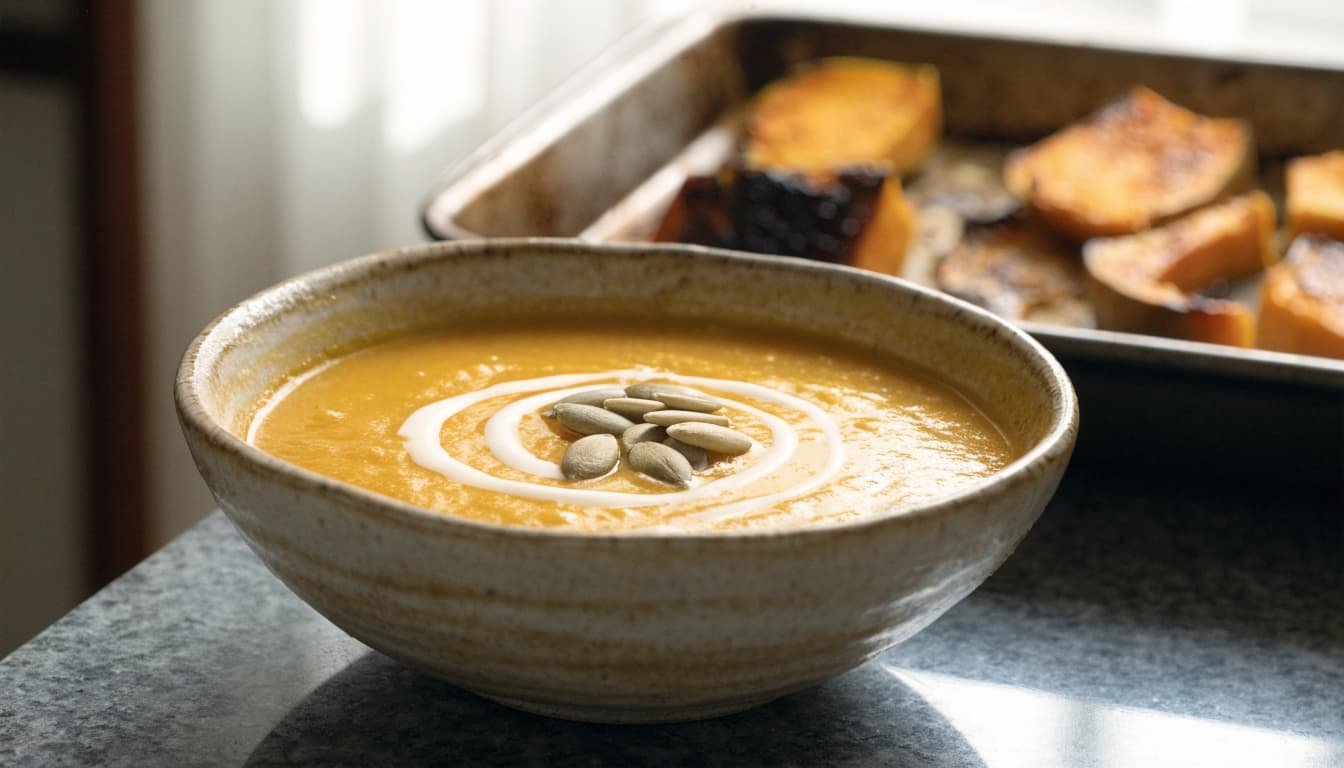
Roasting does add time, so it works best when you can spare a little extra prep or roast the vegetables ahead. If dinner needs to happen fast, simmer the squash directly in the broth instead. Both methods make a cozy soup; roasting simply gives it a more concentrated, caramelized flavor.
Use a slow cooker or pressure cooker for hands-off cooking
A slow cooker is handy when you want soup ready after a busy day. It works well for dried beans, lentils, and sturdy vegetables that can handle a longer cook. Put slower-cooking vegetables near the bottom, avoid filling the cooker to the top, and keep the lid on while the soup cooks. The USDA’s slow cooker food safety tips offer helpful guidance for using one safely.
A pressure cooker is a better fit when you want those beans, lentils, or vegetables tender sooner. Follow your appliance’s instructions, including its minimum liquid requirement, since models and recipes can vary. Add delicate greens and dairy after pressure cooking, then let them heat through gently. This keeps greens from overcooking and helps cream or milk stay smooth.
Finish each bowl with bright flavors and simple toppings
A finished bowl should taste balanced, not just warm and creamy. A few fresh toppings can bring crunch, color, and a little tang to earthy squash, sweet potatoes, mushrooms, or beans. Add them just before serving so every spoonful has a bit of contrast.
Add crunch, herbs, or a creamy swirl
Smooth soups can feel a little one-note on their own. Sprinkle toasted pumpkin seeds or croutons over the top for a crisp bite, or add chopped parsley, cilantro, or sage for a fresh, fragrant finish. Even a small handful can make a blended squash soup feel more inviting.

For a creamy touch, spoon on plain yogurt or swirl in coconut milk. Yogurt adds a cool, tangy contrast, while coconut milk keeps the bowl dairy-free and mellow. You can also set out a few toppings and let everyone finish their own bowl. That works well for family dinners, especially when some people want extra crunch and others prefer a simple, smooth soup.
Balance rich soup with citrus, spice, or a simple side
A rich or sweet soup often needs a bright finish. Squeeze lemon or lime over squash soup just before serving, then taste and add a little more if the flavor still feels heavy. Fresh citrus can sharpen creamy soups; lemon juice in vegetable soup is a simple way to add that lift.
For gentle heat, sprinkle chili flakes over the bowl, or pass them at the table so everyone can choose their own amount. A little black pepper or chopped fresh herbs works, too. Start small, then taste. You want the seasoning to bring out the vegetables, not cover them.
Add bread or a simple salad when you want a fuller meal. Crusty bread is handy for dipping, while a crisp green salad balances a creamy soup with fresh, cool bites. Use whole-grain bread or a dairy-free salad dressing if that suits your table. With a few easy choices, these fall soup ideas can fit different tastes without making dinner complicated.
Store and freeze fall soups without losing their texture
A little planning makes a pot of soup an easy dinner later in the week. Store leftovers promptly, and freeze the soups that hold up best so you can reheat a cozy meal without turning the pasta mushy or the cream grainy.

Refrigerate leftovers and reheat them gently
Let the soup stop steaming heavily, then divide it into shallow, sealed containers. Get it into the refrigerator within two hours of cooking, and keep it at 40°F or below. Shallow portions cool faster than a large pot, which makes them a safer choice for busy weeknight meal prep. Most cooked leftovers keep in the refrigerator for three to four days, according to USDA leftover food safety guidance.
When you’re ready to eat, reheat only what you need. Warm the soup on the stove, stirring now and then, until it’s steaming hot throughout. USDA recommends reheating leftovers to 165°F; soups should come to a rolling boil. If the broth has thickened in the fridge, stir in a splash of water or broth as it heats.
Freeze blended squash, bean, and lentil soups
Smooth squash soup and hearty bean or lentil soups generally freeze well. Cool them, then portion into freezer-safe containers, leaving a little room at the top for the liquid to expand. Label each container with the soup and date, so you can find the right dinner without playing freezer roulette.
For the best texture, freeze the soup before adding delicate pasta or dairy. Cream-based soups can separate or turn grainy after thawing, and potatoes may soften more than you’d like. They’re still usable, but a quick stir or blend can help smooth out some separation. Thaw frozen soup in the refrigerator overnight, or reheat it from frozen over low heat, stirring as it loosens.
Add pasta, greens, and cream after thawing when you can
For flexible make-ahead portions, freeze the soup base on its own. Add quick-cooking pasta while the soup reheats, and stir in tender greens during the last few minutes so they stay bright rather than limp. If you want a creamy finish, add cream near the end and warm it gently.
This small adjustment helps each bowl taste freshly made, even when the base came from the freezer. You can also keep pasta and greens separate, then add only what your family will eat that night. That way, the leftovers stay easy to portion, and tomorrow’s bowl won’t be overcooked.
Conclusion
Fall soup ideas are easy to make your own with seasonal vegetables, a filling protein, and flavors that suit your table. Start with a favorite fall vegetable, add beans, lentils, chicken, or sausage, then finish each bowl with simple toppings like herbs, seeds, or a squeeze of citrus.
A pot of soup can be cozy, satisfying, and simple enough for a weeknight. Pick what you have and let the season guide dinner.

- Christmas Cookie Ideas for Every Holiday Baker - November 9, 2026
- Christmas Cocktails: Party Drinks, Cozy Sips, and Mocktails - November 9, 2026
- 20 Christmas Appetizer Ideas for Every Holiday Spread - November 9, 2026



1 Comment