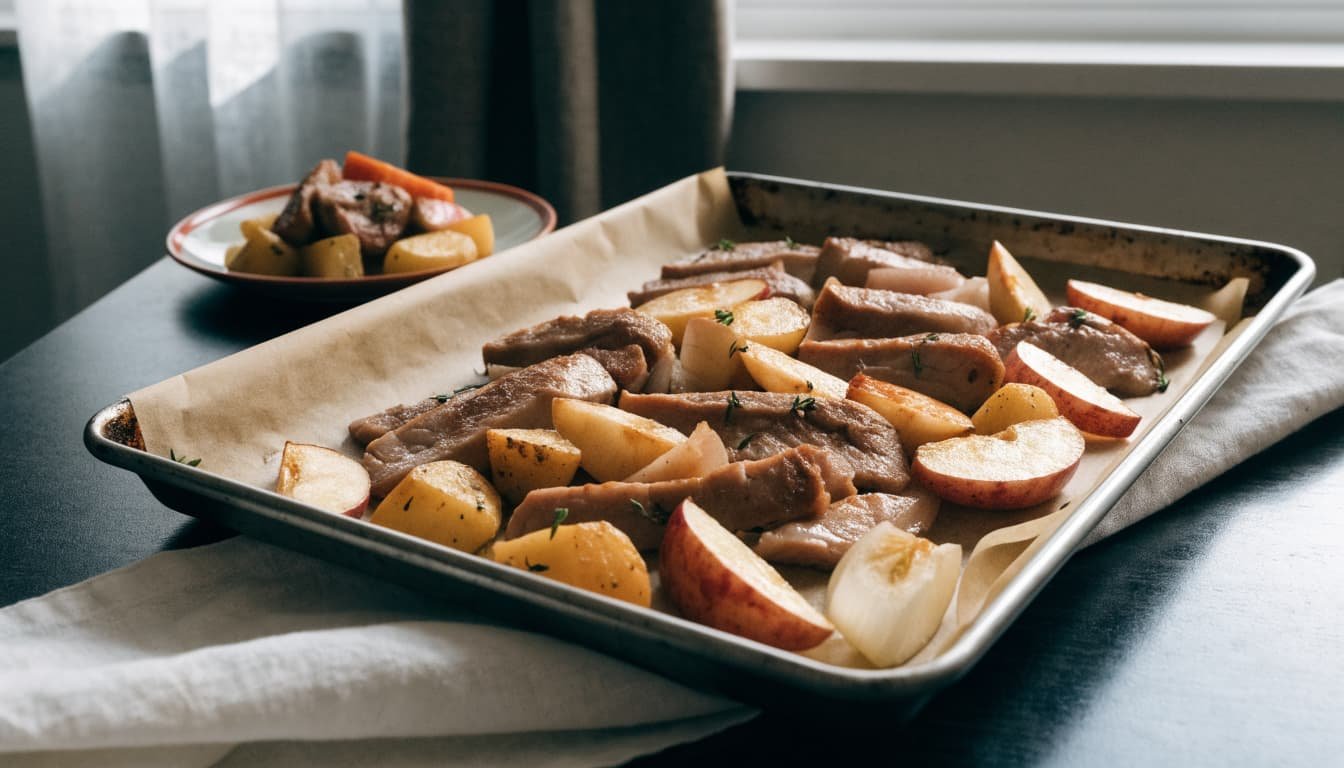
Tender pork, sweet apples, and vegetables with golden-brown edges make this an inviting family dinner, with most of the cooking happening on one pan. I find the key to getting everything ready together is to give the denser vegetables a head start, then add the pork and quicker-cooking apples and onions.
A thermometer takes the guesswork out of doneness: cook whole-cut pork to 145°F, then let it rest for at least 3 minutes. I’ll share a straightforward recipe, easy ingredient swaps, and practical storage tips, along with how to prep vegetables for sheet-pan dinners to help dinner come together smoothly.
Pork Tenderloin With Apples and Roasted Vegetables: The Complete Recipe
This one-pan dinner pairs juicy pork with sweet-tart apples and vegetables with browned edges. I give potatoes or carrots a head start, then add the tenderloin, apple, and onion so the quicker-cooking ingredients stay tender. Plan for about 15 minutes of prep and 35 to 45 minutes of cooking, plus a short rest. Timing varies with the pork’s thickness and the size of the vegetable pieces.
What to Gather for the Pork, Apples, and Vegetables
This recipe makes about 4 servings. Use a rimmed sheet pan, and choose either potatoes or carrots for the dense vegetable. Firm apples, such as Honeycrisp or Granny Smith, hold their shape better as they roast.
- 1 to 1½ pounds pork tenderloin, trimmed of excess silver skin
- 1 pound Yukon Gold potatoes, cut into ¾-inch pieces, or 1 pound carrots, cut into similar-size pieces
- 2 firm apples, cored and cut into wedges
- 1 medium yellow onion, cut into wedges
- 2 tablespoons olive oil, divided
- ¾ teaspoon kosher salt, divided, or to taste
- ½ teaspoon black pepper, divided
- ½ teaspoon dried thyme or rosemary
I keep the seasoning simple so the pork, apples, and vegetables stay at the center of the plate. Toss the vegetables with 1 tablespoon oil and about half the salt and pepper. Use the remaining oil and seasoning on the pork, apple, and onion. Add a little extra oil only if the vegetables still look dry after tossing. For more vegetable ideas to serve alongside dinner, browse these Thanksgiving sides with roasted vegetables.
How to Roast Everything Without Overcooking the Pork
- Heat the oven to 425°F. Line a rimmed sheet pan with parchment for easier cleanup, if you like.
- Prepare the dense vegetables. Wash and dry the potatoes or carrots, then cut them into pieces of similar size. Patting them dry helps them roast rather than release extra moisture on the pan. Toss with 1 tablespoon olive oil, half the salt, and half the pepper.
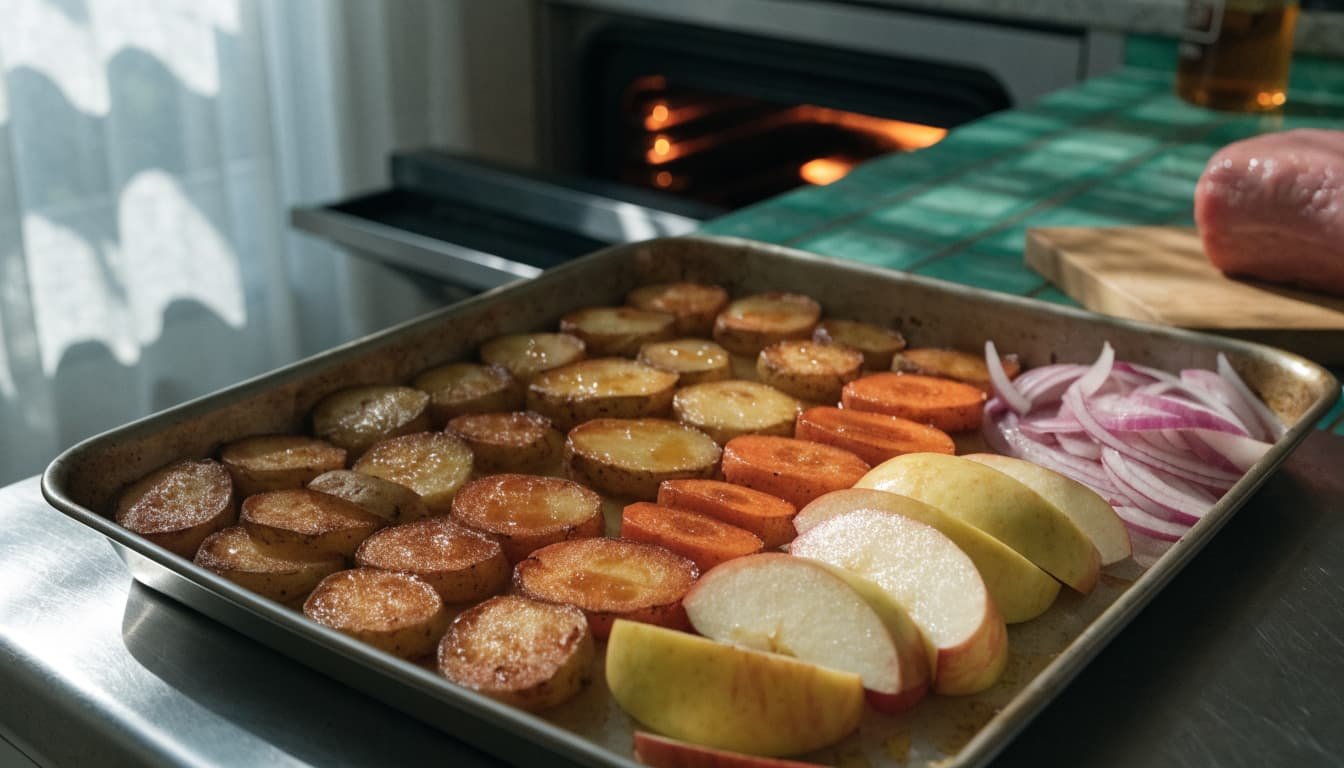
- Give the vegetables a head start. Spread them across the pan in a single layer, leaving space between pieces. Roast for about 15 minutes, then turn them once. A crowded pan traps moisture, so the vegetables can steam and soften instead of developing browned edges. If the pan feels packed, use a second one.
- Season and add the remaining ingredients. Pat the pork dry, then rub it with the remaining olive oil, salt, pepper, and thyme or rosemary. Add the tenderloin, apple wedges, and onion to the pan, keeping everything in a single layer. Roast for about 20 to 27 minutes, but start checking the pork before the expected finish. The actual time depends on the tenderloin’s thickness and how large you cut the vegetables.
- Check the pork with a thermometer. Insert an instant-read thermometer into the thickest part, without touching the pan. The pork is ready at 145°F, followed by at least a 3-minute rest before slicing. This matches the USDA safe temperature guidance for whole cuts of pork. If the vegetables need more time, move the pork to a plate to rest and return the pan to the oven until they’re tender.
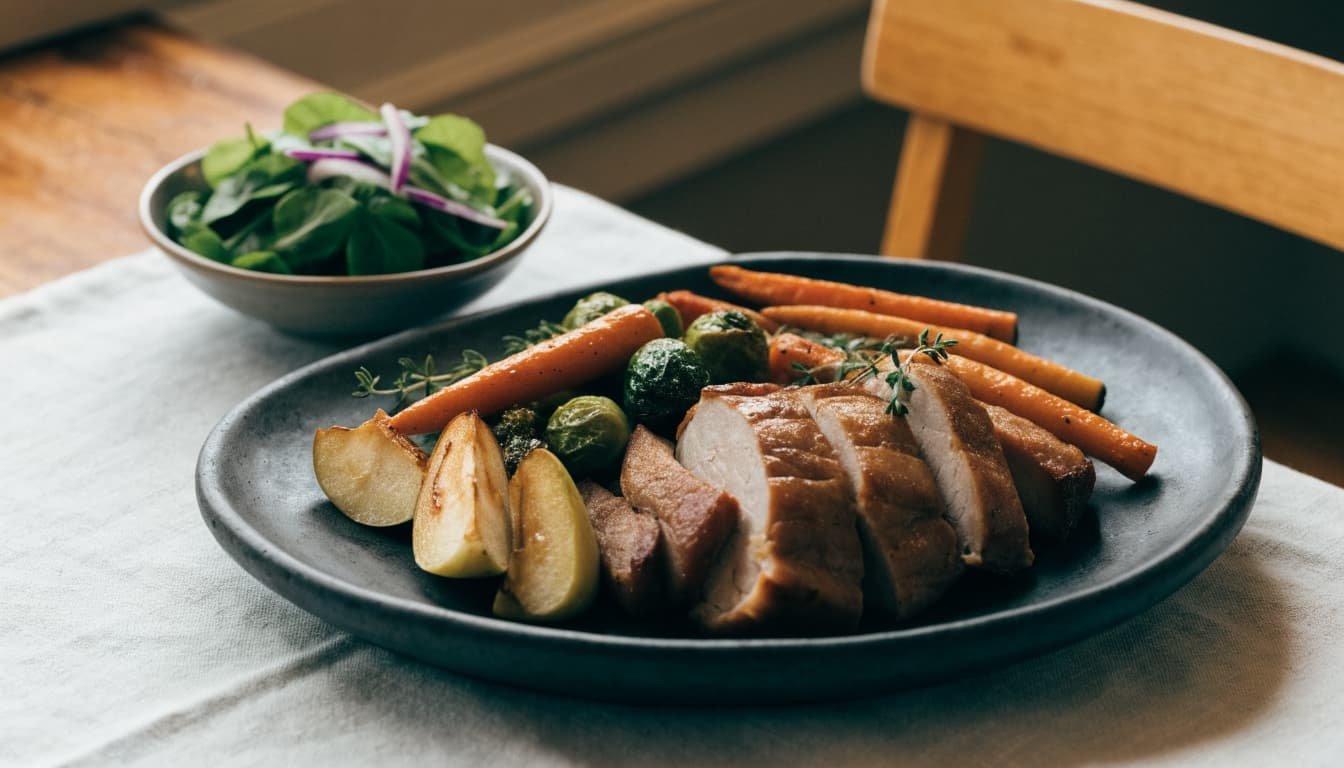
Slice the rested tenderloin across the grain and serve it with the roasted apples, onion, and vegetables.
How to Get Juicy Pork and Golden, Tender Vegetables
Pork tenderloin cooks faster than potatoes, carrots, and other dense vegetables, so the order you add ingredients matters. I use even cuts, a little extra roasting time for firm vegetables, and a thermometer for the pork. That way, the vegetables can brown without leaving the tenderloin dry.
Choose Vegetable Cuts That Finish at the Same Time
Cut potatoes, carrots, or squash into pieces of similar size so they soften at roughly the same pace. Smaller pieces cook faster, but very small pieces can brown before their centers turn tender. I aim for a consistent, bite-size cut, then give these firm vegetables a head start before adding the pork.
Add apples, onions, or other softer produce later. They need less time in the oven, and a later start helps them turn tender while keeping their shape. Leave small gaps between ingredients so hot air can circulate and the vegetables can brown instead of steam. If everything feels crowded, use two pans rather than piling the food together.
This staged approach works well with other sheet-pan dinners, too. For another example of timing vegetables around a quicker-cooking main, see our sheet-pan sausage and vegetables.
Use a Thermometer and Let the Pork Rest
Tenderloin thickness and oven differences affect cooking time, so treat the clock as a guide. USDA estimates that a ½- to 1½-pound tenderloin may take about 20 to 27 minutes at 425°F to 450°F. Pan crowding can change the pace as well, which is why I check the meat rather than relying on the timer alone.
Insert an instant-read thermometer into the thickest part of the tenderloin, taking care not to touch the pan. Pull the pork from the oven when it reaches 145°F, then let it rest for at least three minutes before slicing. That rest is part of USDA’s guidance for whole cuts of pork. The 160°F target applies to ground pork, not an intact tenderloin. For more detail, consult the USDA’s thermometer placement guidance.
While the pork rests, check the vegetables with a fork. If firm pieces still need time or lack browned edges, leave them in the oven briefly. Then slice the tenderloin across the grain for tender pieces, and spoon any pan juices over the pork and vegetables before serving.
Easy Flavor Swaps and Sides for Pork with Apples

The apples bring sweetness, and the pork adds a savory richness, so I keep swaps simple and finish the pan with something bright. Choose produce that looks good at your local market, then adjust the herbs and sides without changing the easy one-pan approach.
Swap in Seasonal Vegetables and Simple Herbs
Carrots, Brussels sprouts, squash, and sweet potatoes all pair well with pork and apples. I choose one or two based on what’s available, rather than crowding the pan with every vegetable in the crisper. The USDA’s fall produce guide can help you find ideas, though what’s in season varies by location.
Keep the cooking order in mind: dense vegetables need more time than apples or onions. Give carrots, squash, or sweet potatoes a head start, then add apples and onions later so they soften without turning mushy. Cut the vegetables into similar-size pieces to help them cook evenly.
For a savory profile, season with thyme or rosemary. After roasting, a small squeeze of lemon or a splash of balsamic vinegar sharpens the flavors and balances the sweet apples. If you like a sweet-savory finish, add just a modest maple drizzle. I keep the amount small so the meal still tastes savory. For another quick vegetable option, try these crispy garlic Brussels sprouts.
Add a Fresh Side or Keep Dinner on One Pan
The roasted vegetables already make this pork dinner filling, so an extra side is optional. When I want a fresh contrast, I serve a crisp green salad or a tangy slaw. A vinegar-based slaw with cabbage and carrots cuts through the pork’s richness and complements the apples without adding another heavy dish. These easy cabbage side dishes offer more options, including fresh slaw ideas.
For a heartier plate, add rice or potatoes, but choose one accompaniment rather than making a full spread. Rice gives you a simple base for the pan juices, while potatoes make dinner feel more substantial. If your roasted vegetables include potatoes, keep the rest of the plate light with salad or slaw. Otherwise, serve the pork and apples straight from the pan and let the vegetables complete the meal.
Make-Ahead, Leftover, and Reheating Tips
A little advance prep can make this pork tenderloin with apples and roasted vegetables easier to pull together without committing every ingredient to dinner. I prep sturdy vegetables ahead, keep the pork safely chilled, and store leftovers in portions that are easy to reheat.
Prep the Vegetables Ahead and Store Components Safely
Carrots and potatoes can be washed, dried, and cut ahead, then kept covered in the refrigerator. Dry them well before storing, since extra moisture can make it harder for them to brown later. I leave tender greens and fresh herbs until closer to serving, and cut the apples just before cooking so they stay fresh-looking.
Keep raw pork sealed and separate from prepared produce. Use clean boards and utensils for vegetables, and wash counters and tools after handling raw meat. Refrigerate the pork while you prepare other ingredients; don’t leave it on the counter.
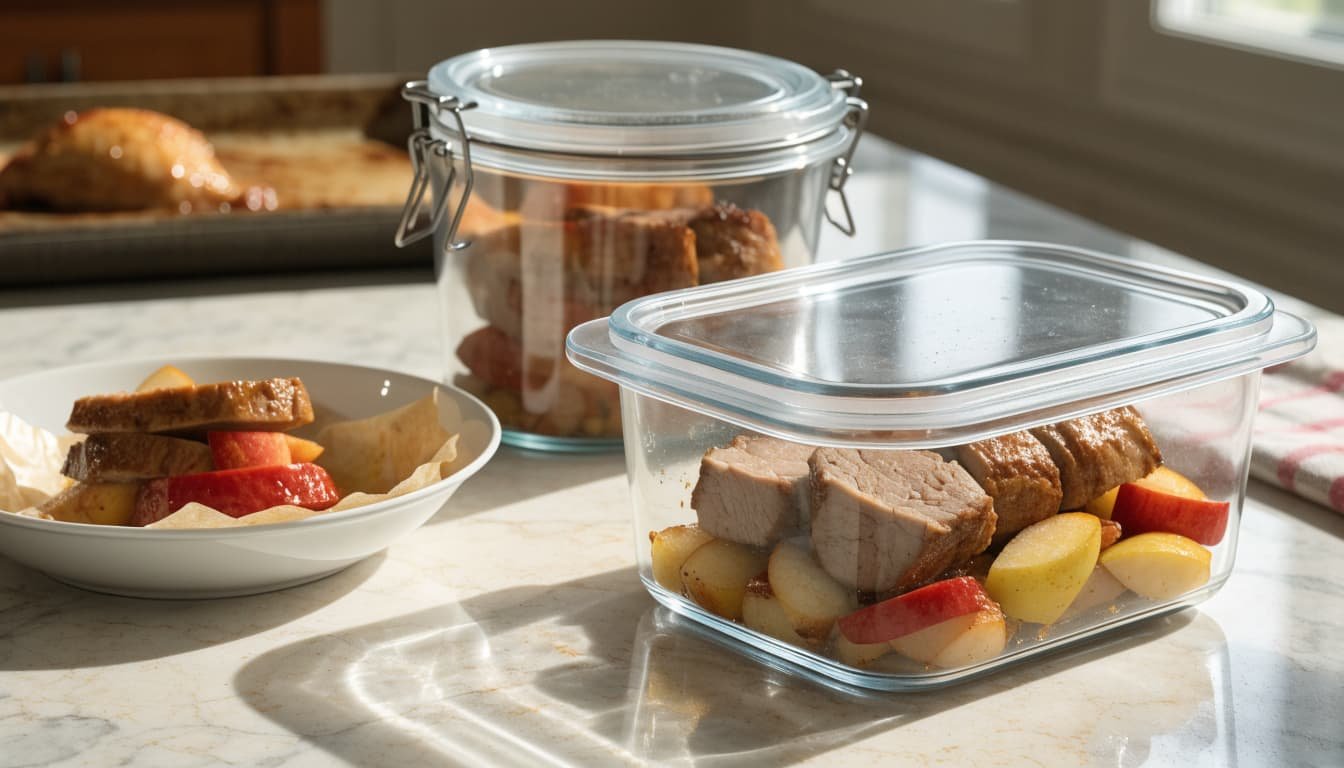
After dinner, divide leftovers into shallow, sealed containers and refrigerate them promptly. Perishable food should go into the refrigerator within two hours, or within one hour when the temperature is above 90°F. Keep the refrigerator at 40°F or below, and plan to use most cooked leftovers within three to four days. The USDA’s leftover storage guidance covers these limits. For more practical advice, see our tips on storing cooked leftovers safely.
Reheat Gently to Protect the Pork and Produce
Warm only the portion you plan to eat. In the oven, place the pork and vegetables in an oven-safe dish, cover loosely to help keep the pork from drying, and heat until hot throughout. You can also use a skillet over low to medium-low heat, turning the pieces as they warm. If you use a microwave, cover the dish and pause to stir or turn the food so it heats evenly. Reheat leftovers to 165°F.
Roasted vegetables will be softer after refrigeration, so expect a more tender texture than when they first came from the oven. A brief uncovered spell in a hot oven or skillet can bring back some surface color, though chilled vegetables won’t have quite the same crisp edges. Once the food is warm, add a squeeze of lemon or a few fresh herbs to brighten the savory pork and sweet apples.
Keep any fresh salad or slaw separate until serving. That way, the warm leftovers won’t wilt the greens or soften the crunch. For another practical example of reheating a one-pan meal, see our baked chicken thighs with roasted vegetables.
Conclusion
This pork tenderloin with apples and roasted vegetables brings savory pork, soft apples, and browned vegetables together in a warm, satisfying meal, with little cleanup afterward. I get the best results by giving dense vegetables a head start, leaving space on the pan so they brown, and checking the pork with a thermometer before letting it rest.
The recipe is easy to adapt, too. Choose vegetables and herbs that look good at your market, and let the seasonings suit what you have on hand.
Save pin for later


- Lentil Shepherd’s Pie with Creamy Mashed Potatoes: A Cozy Meatless Dinner - November 26, 2026
- Crispy Air Fryer Tofu with Vegetables and Brown Rice - November 26, 2026
- Baked Chicken Thighs with Garlic and Roasted Vegetables - November 26, 2026