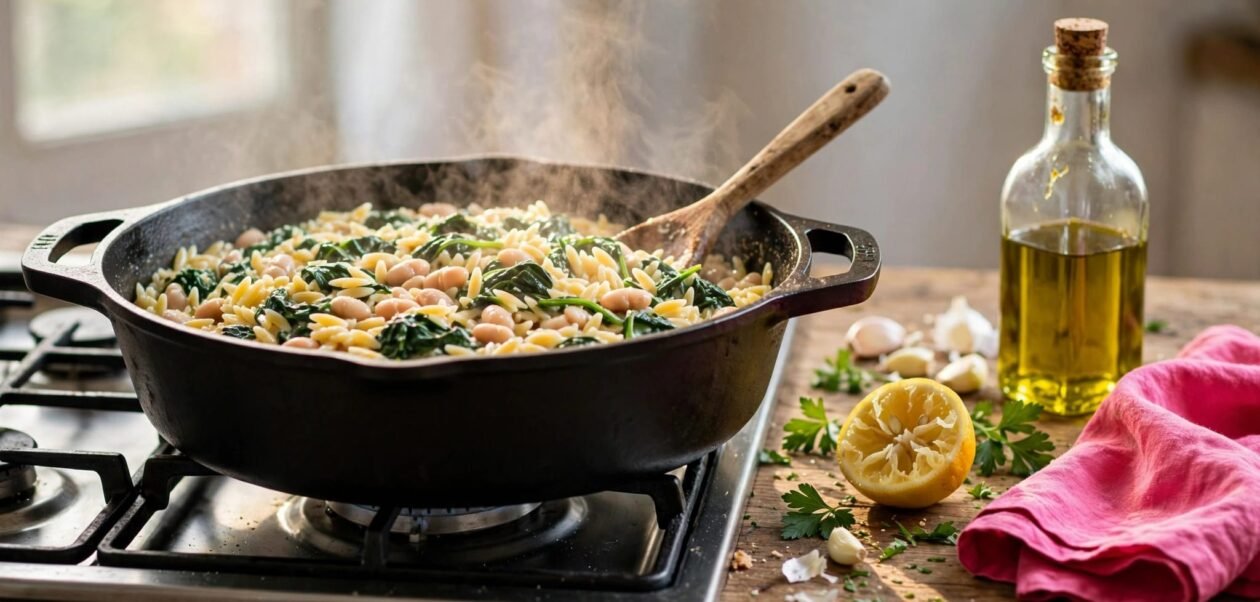
Picture a wide pot on the stove, garlic softening in olive oil, and a wooden spoon doing most of the work.
One-Pot Orzo with Spinach and White Beans is the kind of dinner I come back to when I want something cozy without a sink full of dishes. Tender orzo, creamy beans, and soft spinach simmer together, then a squeeze of lemon, plenty of garlic, and fresh herbs keep the pot bright and savory. It’s a vegetarian meal that fills a plate, and it comes together in about 30 minutes from a short pantry list.
You don’t need to plan ahead for it. If you have orzo, a can of beans, and spinach on hand, you’re already close. The pot stays forgiving, so taste as you go and adjust the lemon, cheese, and seasoning to suit your table.
Here’s what to expect, how the cooking works, and where you can make it your own.
One-Pot Orzo with Spinach and White Beans: A Cozy Dinner in About 30 Minutes
A cozy dinner shouldn’t require three pans and a sink full of scrubbing. One-Pot Orzo with Spinach and White Beans keeps everything in a single vessel: the pasta simmers in broth, the beans warm through, and the spinach wilts at the end. What you get is a moist, creamy pot of food that tastes bright rather than heavy, and cleanup is one quick wash.
The simple ingredients that build a satisfying dinner
Treat this list as a starting point, not a fixed formula. I adjust amounts based on what’s in the fridge and how many people are at the table.
- 1 cup dry orzo
- 2 to 3 cups broth, starting with 2 and adding more for a looser finish
- One 15-ounce can cannellini, Great Northern, or navy beans, drained and rinsed
- 3 to 5 cups fresh spinach, or frozen spinach to taste
- 3 to 5 garlic cloves, minced
- 1 small onion or shallot, chopped
- Olive oil
- 1 lemon
- Parmesan or feta, optional
- Salt, black pepper, dried oregano, and red pepper flakes
Orzo is the tender base, small enough to cook quickly and spoon up like rice. The beans add a creamy bite and plant protein without making the dish feel heavy. Spinach brings color and softens into the warm pasta. Garlic, onion, and olive oil build the savory start, while lemon cuts through the richness at the end.
Cheese is optional. A little Parmesan or feta adds salt and richness, but the pot is satisfying without it. Oregano and a pinch of red pepper flakes are easy ways to shift the flavor. If you use frozen spinach, give it extra time to heat through and break up any clumps as you stir. Drain and rinse the canned beans before they go in, since that washes away the packing liquid and helps control sodium.
Why the one-pot method saves time and dishes
Cooking orzo in the same pot as the aromatics and broth means the pasta absorbs flavor as it softens. There’s no separate pot of water to boil and drain, and no colander to scrub. The starch that would normally go down the drain stays in the pan and thickens the broth into a light sauce that clings to the orzo.
Timing stays short. Most of the work happens in an 8 to 12 minute simmer, with a stir now and then to keep the pasta from sticking. The beans go in near the end, just long enough to heat through, and the spinach needs only a minute or two to wilt.
The texture you’re after is moist and creamy, not soupy. If the pan looks dry while the orzo is still firm, add a splash of warm broth and keep going. Take the pot off the heat once the orzo is tender with a slight bite, because it will soften a little more as it rests.
How to Cook Creamy Orzo and White Bean Dinner in One Pot
This one-pot orzo with spinach and white beans follows a simple rhythm. You build a savory base first, simmer the orzo until it’s almost done, then add the beans and spinach so they keep their texture. These cues help you judge each stage without staring at the clock.
Soften the aromatics and toast the orzo
Warm a generous glug of olive oil in a wide pot or deep skillet over medium heat. Add the chopped onion or shallot and cook for 3 to 5 minutes, stirring now and then, until it softens and turns slightly translucent. Stir in the garlic and keep it moving for about 30 seconds, just until fragrant. I keep the heat moderate here, because garlic turns bitter fast.
Add the dry orzo and stir to coat every piece in oil. Toast for about 1 minute, until the pasta smells lightly nutty. The grains should stay pale gold, not dark. This short toast gives the orzo a deeper flavor before the broth goes in.
Simmer the orzo in broth until just tender
Pour in the broth and seasonings, then scrape the bottom of the pot with your spoon to loosen any orzo that settled. Bring the liquid to a gentle simmer, then lower the heat so it bubbles steadily without boiling hard.
Liquid amounts vary by method. When the beans cook in the same pot, some recipes use about 2 3/4 to 3 cups of broth per cup of orzo. A lower-liquid approach starts closer to 2 cups and adds splashes as needed. Cook uncovered for 8 to 12 minutes with frequent stirring, or cover and simmer for about 15 minutes. Start tasting near the early end of the range. Stop when the orzo is tender but still has a slight bite in the center.
If the pan looks dry before the pasta is ready, add a small splash of warm broth or water. The pan should look moist, with a little sauce around the orzo, not flooded or bone dry.
Fold in the beans and spinach near the end
Cooks handle the beans two ways. Some add rinsed beans with the broth so they cook alongside the orzo and thicken the liquid. Others stir them in during the last few minutes just to heat through, which keeps them whole and creamy. Choose the texture you like best.
Add the spinach about 1 to 2 minutes before the orzo finishes. Fresh leaves wilt quickly. Frozen spinach needs a little more time to heat through, so break up any clumps as you stir. If the pan looks watery, let the excess moisture cook off. Take the pot off the heat once the spinach is tender and still bright green.
Finish with lemon, herbs, and cheese
Pull the pot off the heat before you add lemon juice or zest. Start with a small squeeze, taste, then add more if the pot needs a brighter edge. Stir in Parmesan or feta while the orzo is hot so it melts into the sauce. Fresh parsley, dill, or basil can go over each serving instead.
Taste before adding extra salt. Broth, canned beans, and cheese all carry sodium, and the final pot can be saltier than you expect. For a dairy-free bowl, leave out the cheese or use a plant-based option. The finished dish should look glossy and creamy, with whole beans and soft spinach folded through.
Keep the Orzo Creamy, Not Gummy: Texture and Liquid Tips
Texture in this pot comes down to two things: how much liquid the orzo absorbs and how long it stays on the heat. Get those right and you end up with a glossy, spoonable dinner. Miss them and the orzo turns thick or sticky. I use these fixes to correct the pot while it cooks.
Find the right orzo-to-broth ratio for your pan
Orzo drinks up broth as it simmers, and pan size changes how fast that happens. A wide skillet exposes more surface area, so liquid evaporates quicker than in a deep pot. I start with 2 cups of broth for every 1 cup of dry orzo, then adjust as I watch the pan. Some one-pot recipes with beans use closer to 2 3/4 to 3 cups, which gives a looser finish.
I keep a small cup of warm broth or water within reach. If the pan looks dry while the orzo still has a firm center, add a splash and stir. The finished dish should look moist, with a little sauce around the pasta, not flooded. A dry pan is easier to fix than a soupy one, so add liquid in small amounts.
Prevent sticking without constant stirring

A hard boil pushes orzo around and breaks down the grains. Lower the heat to a steady simmer instead. I stir every minute or two, scraping the bottom of the pan where the pasta settles. Constant stirring makes the orzo release more starch and can turn the sauce gluey.
Once the orzo is tender, I don’t leave the pot sitting hot on the burner. The pasta keeps absorbing liquid and softens past the point you want. Move it off the heat or serve it right away. If you need to hold it, add a splash of broth and stir before serving.
Use carryover cooking and last-minute spinach
I take the pot off the heat when the orzo is tender but still has a slight bite. That firmness gives it room to soften during a short rest. Waiting until every piece feels very soft in the pan often leads to a gummy bowl.
Spinach needs very little time. Add it near the end and pull the pot from the heat once the leaves wilt. Long cooking makes spinach dull and soft. Leftovers thicken in the refrigerator because the orzo keeps taking up moisture. Plan to loosen them with a splash of broth when you reheat.
Save pin for later


- Air Fryer Salmon Bites with Quick Lemon-Dill Yogurt Sauce - November 26, 2026
- Healthy Spinach Pasta with White Beans and Parmesan - November 26, 2026
- Easy Tofu Stir-Fry with Vegetables and Ginger Sauce - November 26, 2026