Easy tailgate food should be simple to prep, easy to carry, and fun to share before kickoff. You can pack no-cook snacks, make-ahead mains like chili or pulled pork, grill-friendly wings, and lighter options that keep game day feeling balanced.
A little planning makes serving easier, too. Keep perishable food cold in a cooler, and follow the USDA’s guidance: don’t leave it out for more than two hours, or one hour when it’s above 90°F. Here are easy ideas to get your tailgate ready.
Easy tailgate food ideas for every kind of fan
The best tailgate food fits your time, cooler space, and cooking setup. Choose snacks you can serve straight from a container, make-ahead meals that are easy to carry, or grill favorites if you have time and a safe place to cook.
No-cook snacks that travel well
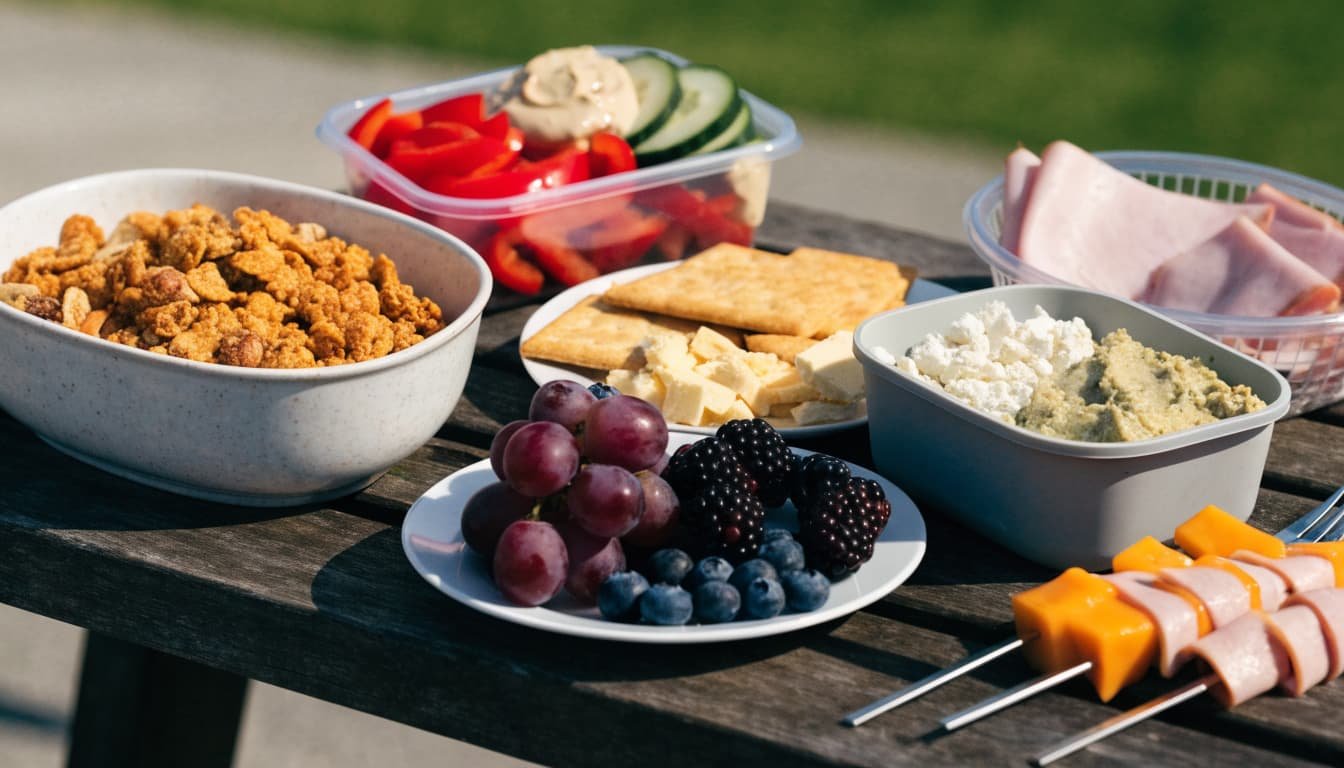
For quick bites before kickoff, pack snack mix, cut vegetables with hummus, fresh fruit, or cheese and crackers. Portion them into small containers at home, then set them out when everyone is ready to eat. No plates or utensils needed.
Deli meat, cheese, and vegetable skewers are another easy pick. Use sturdy ingredients such as salami, cheddar, cherry tomatoes, and cucumber, and keep the skewers chilled until serving. They’re simple to grab between plays, and individual portions help keep the spread tidy.
Make-ahead sandwiches, wraps, and breakfast burritos
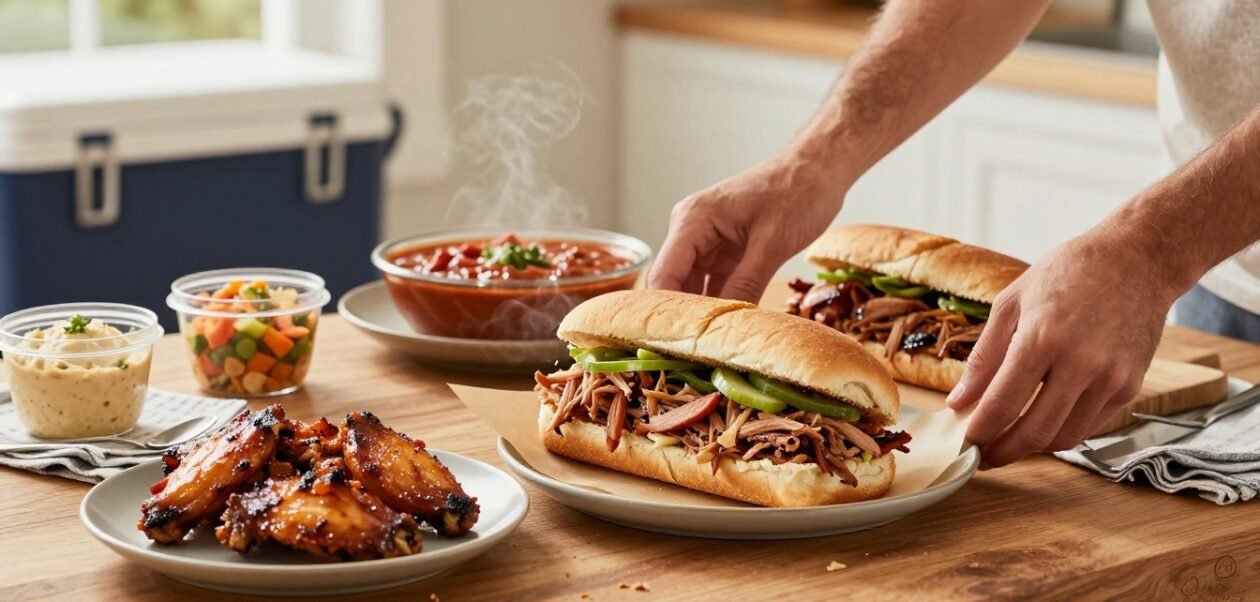
Sturdy sandwiches, subs, and wraps make filling tailgate food when you don’t want to cook on-site. Assemble them the night before, wrap each one, and pack them in a cooler. Turkey and cheese, roast beef, or hummus with crunchy vegetables all hold up well for the trip.
To avoid soggy bread, keep juicy toppings and wet spreads separate until serving. Add tomato, pickles, or dressing just before eating, or tuck them into a small container. For an early game, individually wrap breakfast burritos with eggs, beans, potatoes, and cheese. They’re hearty, easy to carry, and can be warmed on a grill if your setup allows.
Grill-friendly favorites and foil-packet meals
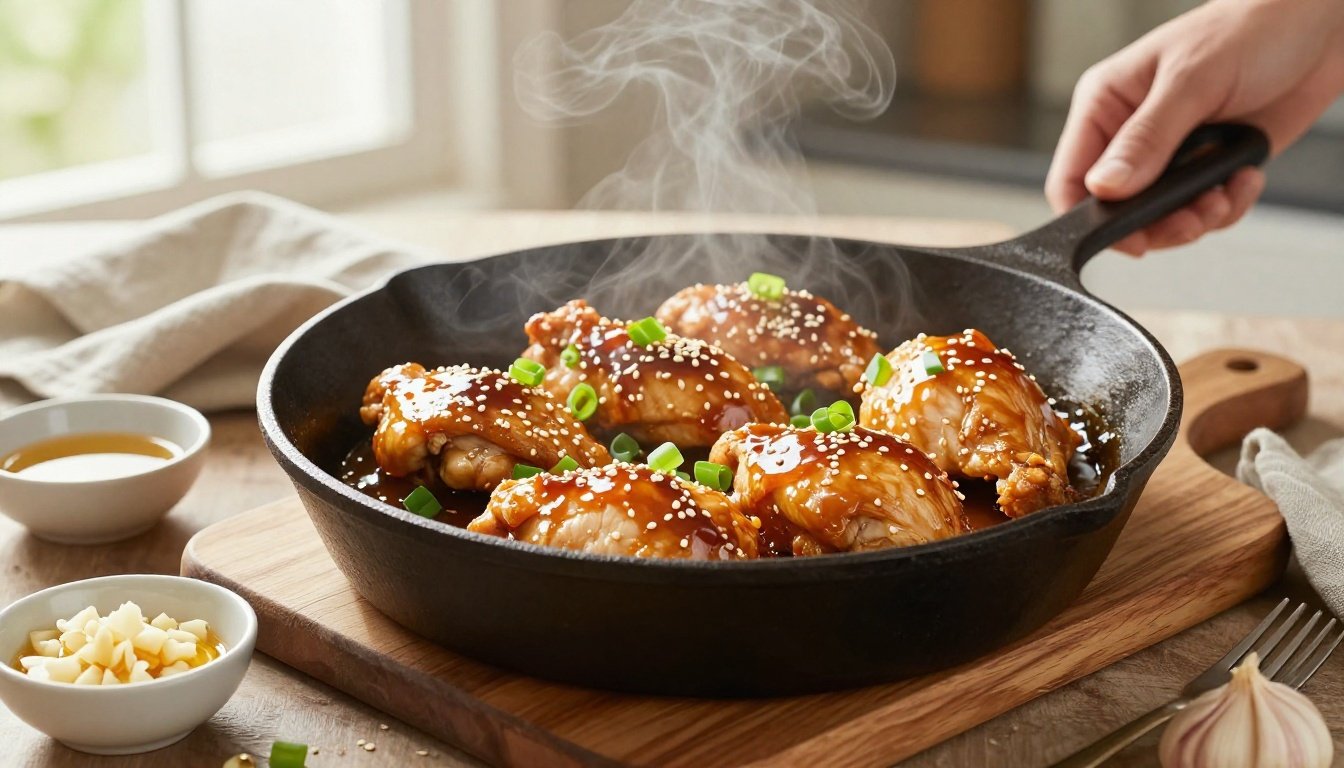
If you have a grill, burgers, sausages, and chicken are classic choices. Make patties and portion toppings at home, or cook pulled pork ahead and reheat it safely for sandwiches. Foil packets with potatoes, vegetables, and cheese offer a filling option with little cleanup. Cut ingredients into similar sizes so they cook at a similar pace.
Pack raw meat in a sealed container at the bottom of the cooler, away from ready-to-eat foods. Bring separate plates and utensils for raw and cooked items, plus tongs and a food thermometer. The USDA recommends keeping cold food at 40°F or below and following its tailgating food safety guidance. With the right gear, grilling can be part of the fun without making serving complicated.
Easy tailgate food you can prep the day before
A little work the night before means less chopping, wrapping, and juggling once you get to the parking lot. Prep each part of the meal in advance, then pack it so it stays fresh and is easy to serve.
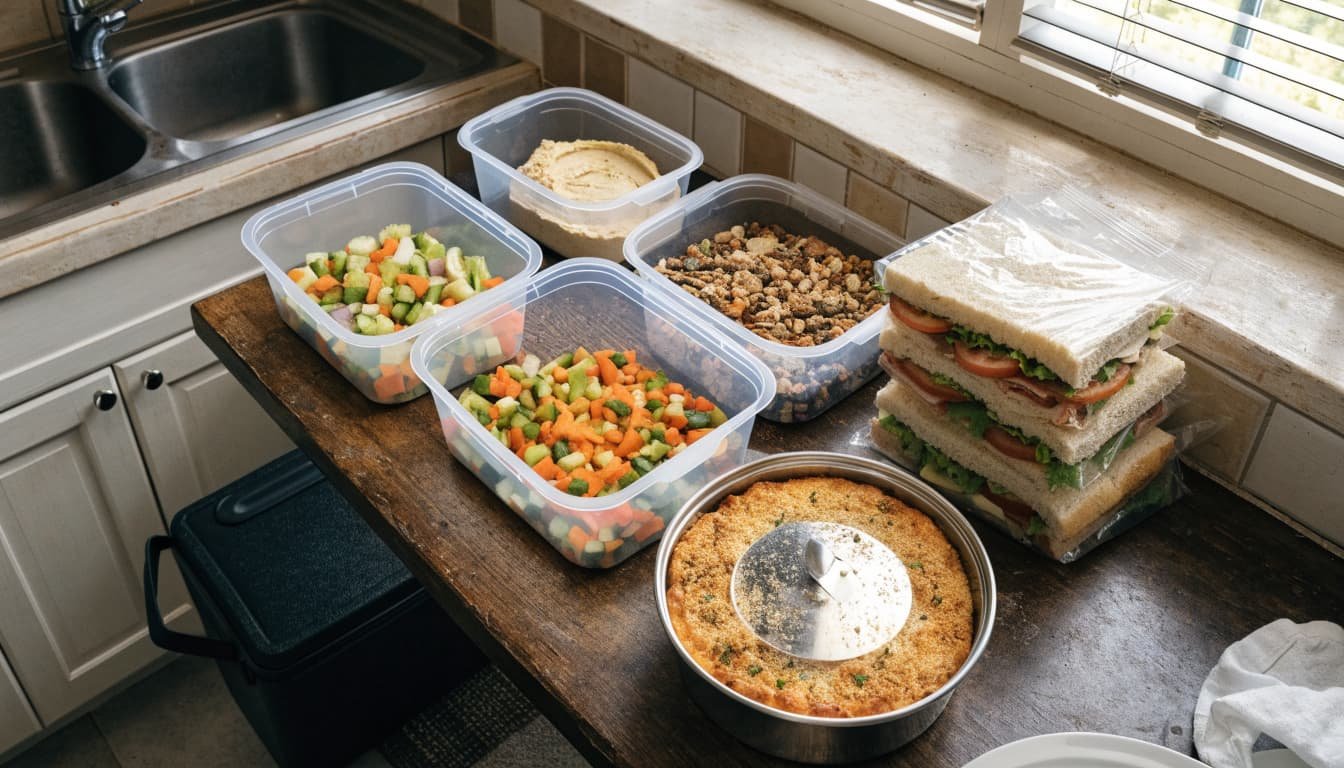
Prep ingredients and portions in advance
Wash and cut sturdy vegetables, such as carrots, celery, and bell peppers, the day before. Store them in airtight containers, and portion hummus, salsa, dips, and snack mix into small cups or containers. You can also wrap sandwiches individually, which makes them easy to grab and keeps the cooler organized.
Foods with less moisture tend to hold their texture well overnight. Snack mix, cut vegetables, cheese, and sturdy sandwiches are good make-ahead choices. For sandwiches, keep juicy toppings like tomatoes and pickles separate, and add them just before serving so the bread stays firm.
Some items are better assembled at the tailgate. Pack dressing separately for salads, and bring crackers or chips in their own bag to keep them crisp. Keep perishable food in a cooler with ice packs at 40°F or below until it’s time to serve.
Keep hot dishes warm and easy to serve
Chili, baked dips, and casseroles can be cooked the day before, so you only need to heat and serve them on game day. If you can keep a dish at 140°F or hotter during transport, pack it in a secure insulated carrier. For soup or chili, pre-warm the carrier with boiling water for a few minutes, empty it, then add the piping-hot food.
If you can’t keep a dish hot on the way, chill it promptly and carry it cold in the cooler. Reheat it at the tailgate to 165°F, checking the center with a food thermometer. USDA guidance explains why hot food should stay at or above 140°F and cold food at or below 40°F in its food safety temperature guide.
Use a lidded, oven-safe dish for casseroles, and pack serving spoons separately. A slow cooker or warming tray can help hold food hot once you arrive, but don’t leave perishable dishes lukewarm while setting up. Keep the food chilled or hot until it’s ready to serve.
Build a balanced tailgate menu without extra work
A good tailgate menu doesn’t need a long ingredient list or a second cooler. Pair one filling main with fresh produce and a few easy snacks, then make simple swaps to suit the group. You can keep the prep light and still offer more than one kind of bite.
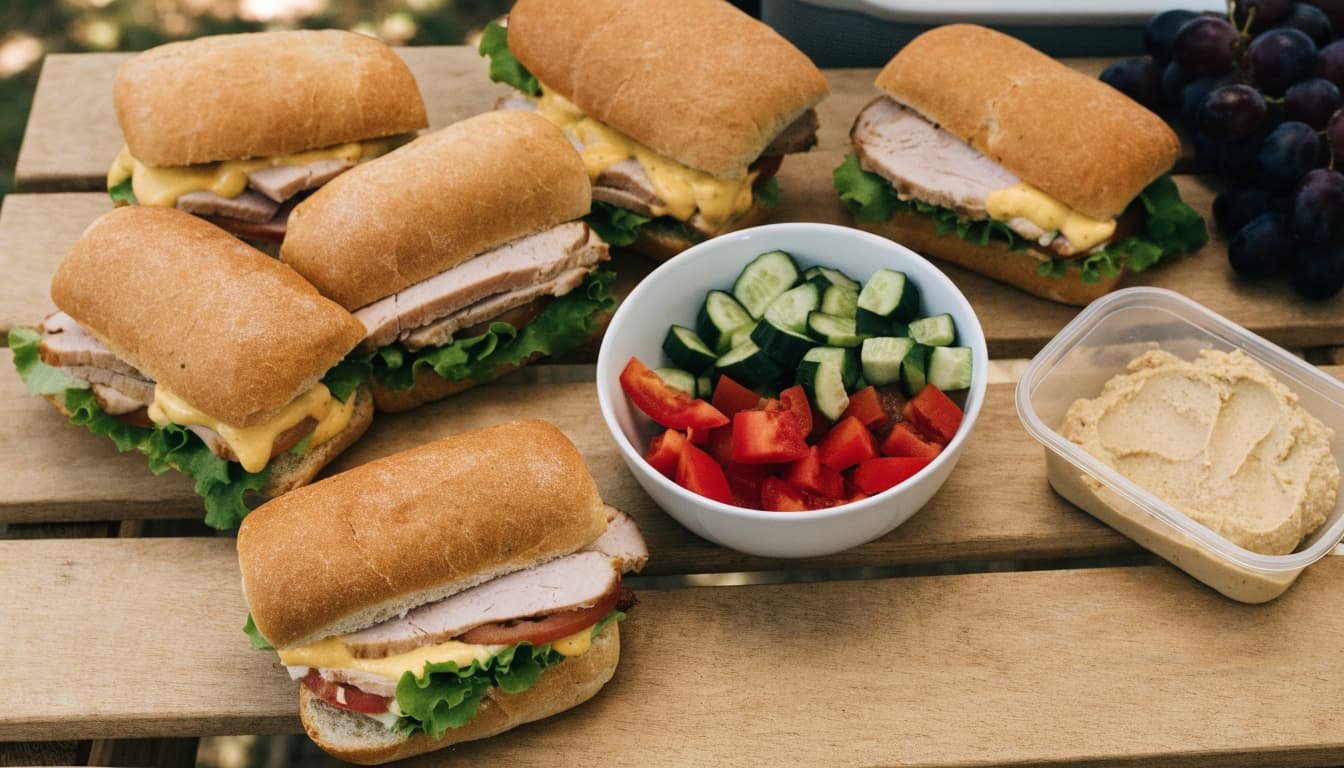
Pair a hearty main with fresh sides
Think in easy combinations rather than planning every dish separately. Sandwiches or wraps pair well with grapes and crunchy vegetables, while grilled chicken goes nicely with a simple salad. For burritos, set out salsa and cut produce so everyone can add a fresh, crisp side.
A sample menu for a group might be whole-grain turkey wraps, cucumber and pepper strips, fruit, and a bowl of pretzels. For a grill-friendly spread, serve chicken with a bagged salad and rolls. Choose sides that hold up in transit, and pack dressing or salsa separately so greens and bread stay fresh.
Offer options for different appetites and diets
One vegetarian choice makes the spread more welcoming without adding much work. Use beans in place of meat in burritos, or offer hummus and vegetables alongside the main. Whole-grain wraps are an easy swap, too, and familiar favorites help satisfy guests who prefer a simple meal.
Try a menu with chicken sandwiches, bean-and-cheese wraps, fruit, and a crunchy snack. Guests can choose a lighter portion or a more filling one, and you don’t need to prepare a separate meal for each person. Check labels on packaged foods and toppings if someone has an allergy or needs to avoid a specific ingredient.
Plan the right amount of food for your group
Start with the size of the group, then consider how long you’ll be there. For a short pregame stop, plan smaller portions and a few snacks. If the tailgate replaces lunch or dinner, provide a filling main for each person, plus shared sides. For a mixed crowd, having a little extra fruit or vegetables is an easy way to round out the spread.
Set out a small amount at a time and replenish it as people eat. This helps limit waste and keeps perishable food chilled until serving. Pack cold dishes in a cooler at 40°F or below, and follow the USDA’s safe handling guidance for take-out food. If it’s a full meal, bring enough food for the group; if it’s a snack stop, you can keep the menu lighter.
Pack tailgate food so it stays fresh and safe
Good cooler habits keep easy tailgate food safe until it’s time to eat. Keep cold foods cold, hot foods hot, and raw ingredients away from ready-to-eat items. A cooler thermometer and a little planning make it easier to manage temperatures on game day.
Use a cooler to keep cold food at 40°F or below
Pack refrigerated foods straight from the fridge into an insulated cooler with plenty of ice or frozen packs. Keep a cooler thermometer inside so you can check that the temperature stays at 40°F or below. Don’t rely on touch alone; food can feel cold while the cooler is too warm.

Keep the cooler closed as much as possible and out of direct sun. In the car, put it in the air-conditioned passenger area rather than a hot trunk. If you have room, use a separate cooler for drinks. That way, people can grab a beverage without warming the food cooler every few minutes.
Keep hot food hot and prevent cross-contamination
Hot foods should stay at 140°F or above during transport and serving. Use an insulated carrier or a warming appliance, then check the food with a food thermometer. If you can’t keep a dish safely hot on the way, chill it for transport and reheat it at the tailgate.
Raw meat, poultry, and seafood need their own sealed container, ideally in a separate cooler. If you’re using one cooler, keep raw items below ready-to-eat foods, and double-wrap them to prevent juices from leaking. Bring separate plates and utensils for raw and cooked food. A clean plate matters, too: don’t put cooked food on one that held raw meat.
Follow the two-hour rule when serving outdoors
Perishable food shouldn’t sit out for more than two hours. When the outdoor temperature is above 90°F, that limit drops to one hour. These limits include the time food spends outside the cooler or a safe hot-holding setup.
Set out smaller portions and leave the rest chilled or hot until needed. Return cold dishes to the cooler as soon as serving is done, rather than leaving them on the table between bites. Discard food that has been out past the safe time limit. For more details, see the FDA’s food safety guidance for outdoor meals.
Make your tailgate setup simple from the first bite to cleanup
Easy tailgate food is even easier when everything has a place. A few minutes spent packing serving gear and choosing dishes that suit your setup can save you from hunting for a spoon or juggling too many containers at kickoff.

Bring the containers and serving gear each dish needs
Pack food in leak-proof containers that fit your cooler and are easy to open. Bring serving spoons for dips and salads, plus plates, napkins, and utensils for foods that need them. Hand wipes are useful when there’s no sink nearby, and trash bags make cleanup much less of a chore.
If you’re grilling, add a cutting board and tongs. Pack separate utensils for raw and cooked food, and check the USDA’s grilling food safety guidance before you head out.
Label containers with the dish name if you’re bringing several, especially when a dip or topping could be hard to identify at a glance. Then pack supplies in the order you’ll use them: serving tools and hand wipes near the top, with cleanup bags easy to reach at the end. A small bin for plates, napkins, and utensils keeps those essentials together.
Choose recipes that fit your time and tailgate space
Think about how much prep time you have, how much cooler space is available, and whether you’ll have cooking gear. No-cook snacks are a good fit for a short stop or a crowded setup. Make-ahead sandwiches, wraps, and sides work well when you want a filling meal without cooking on-site. Grilling can be fun, but it takes room for the grill, tools, ingredients, and serving space.
Group size matters, too. A few portable dishes are easier to serve than a long menu with extra containers and leftovers. Pick one main and a couple of simple snacks or sides, then adjust the portions to match the group.
Before you pack, run through this quick checklist:
- Bring serving spoons, plates, napkins, utensils, hand wipes, and trash bags.
- Match your menu to your cooler space, cooking gear, prep time, and group size.
- Add a cutting board and tongs if you plan to grill.
- Pack food and supplies in the order you’ll need them, and label dishes if it helps everyone serve themselves.
With the right food and gear, you can spend less time setting up and more time enjoying the tailgate.
Conclusion
An enjoyable tailgate menu can be simple. Choose a few portable favorites, prep what you can ahead, and add fresh sides to round out the spread. Keep perishable food at a safe temperature until it’s ready to serve.
Pick easy tailgate food that fits your group, cooler space, and game-day setup. With a little planning, you can spend less time managing the menu and more time enjoying the game.

- Christmas Cookie Ideas for Every Holiday Baker - November 9, 2026
- Christmas Cocktails: Party Drinks, Cozy Sips, and Mocktails - November 9, 2026
- 20 Christmas Appetizer Ideas for Every Holiday Spread - November 9, 2026