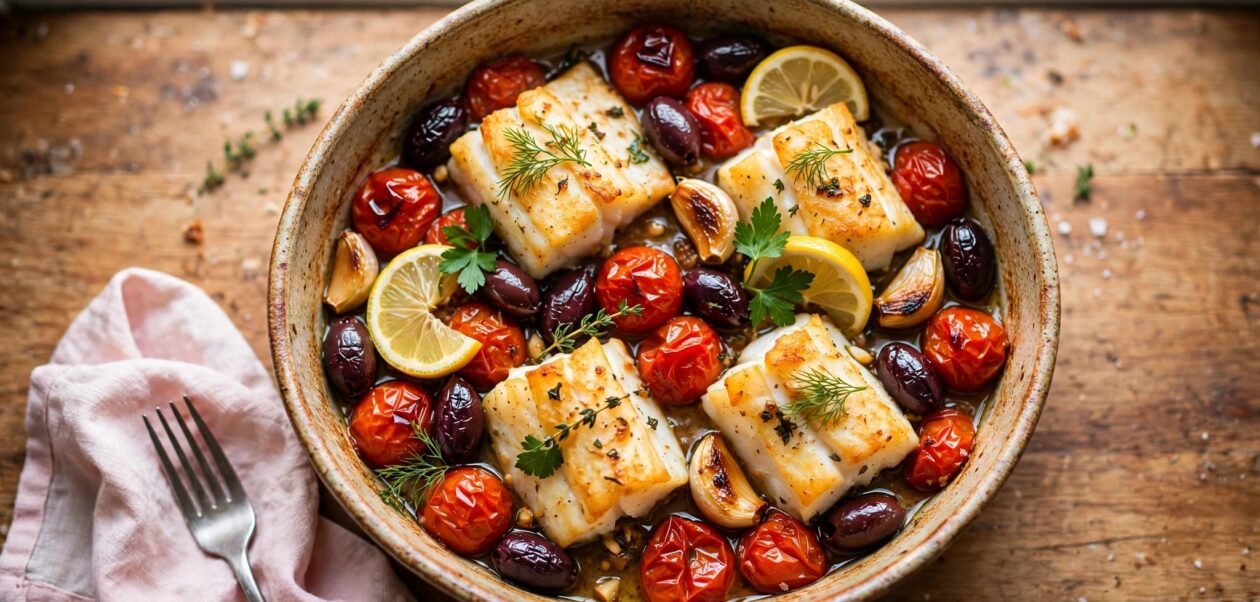
Tender cod, juicy tomatoes, briny olives, garlic, and herbs make a comforting dinner with bright, savory flavor. For this one-pan baked cod, I recommend roasting the tomato mixture first, then adding the fish so both finish at the right time.
The method keeps prep simple and cleanup light, while a thermometer helps you check that each fillet is cooked through. If you enjoy an easy fish dinner, try our one-pan lemon herb cod with roasted vegetables too.
How to Make One-Pan Baked Cod With Tomatoes and Olives
I roast the tomatoes and olives before adding the cod, giving the vegetables time to soften without leaving the fish in the oven too long. The result is tender cod in a garlicky pan sauce with bright tomato juices and briny bites of olive.
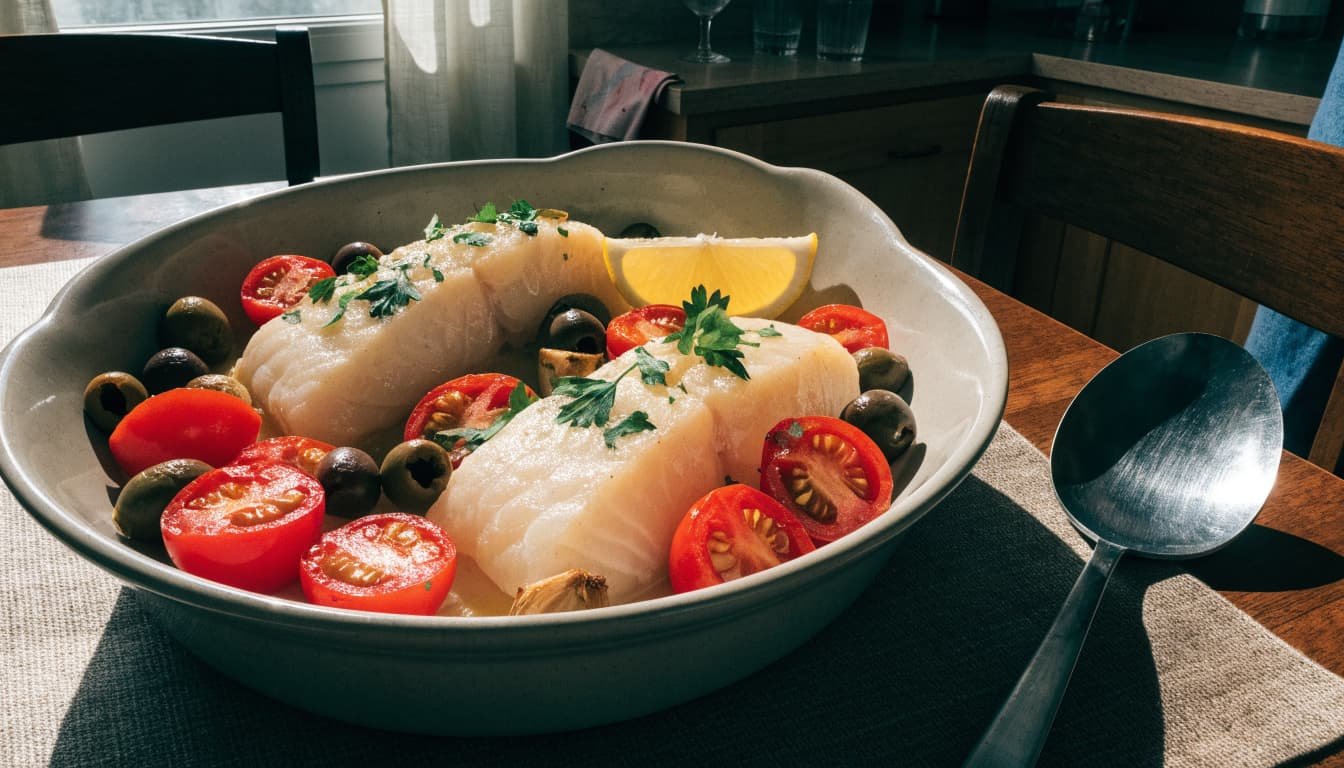
Recipe snapshot: Serves 4 | Prep: 15 minutes | Cook: 25 to 35 minutes | Oven: 425°F
Gather the cod, tomatoes, olives, and simple seasonings
For the best timing, choose four cod fillets that are close in thickness. Look for firm fish with a fresh, mild smell, and keep it properly chilled until you’re ready to cook. If the fillets vary in size, check each one separately near the end, since thinner pieces may finish first.
Here’s what you’ll need:
- 4 cod fillets, about 1½ pounds total
- 1½ pounds cherry tomatoes, or ripe larger tomatoes cut into bite-size pieces
- ½ cup pitted Kalamata or green olives
- 2 garlic cloves, minced or thinly sliced
- 2 tablespoons olive oil
- ½ teaspoon kosher salt, plus more to taste
- ¼ teaspoon black pepper
- 1 teaspoon dried oregano, or 1 tablespoon chopped fresh oregano
- 1 lemon, cut in half for juice and wedges
- 2 tablespoons chopped fresh parsley, for serving
Cherry tomatoes can go into the pan whole. Cut larger tomatoes into similar bite-size pieces so they soften at roughly the same pace. Kalamata olives bring a rich, savory taste, while green olives have a sharper brininess; either works well. I prefer pitted olives because they’re easier to serve and eat.
Since olives can be quite salty, start with the measured salt and adjust after roasting. A rimmed baking dish or oven-safe pan gives the tomato juices room to collect without spilling.
Roast the tomato mixture, then add the cod
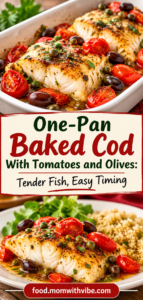
- Heat the oven to 425°F. Add the tomatoes, olives, garlic, olive oil, oregano, salt, and pepper to the baking dish. Toss to coat, then spread everything in an even layer.
- Roast the tomato mixture for 15 to 20 minutes, until the tomatoes soften and release their juices. Smaller tomatoes may soften sooner, so check the pan near the end of this range.
- Meanwhile, pat the cod dry with paper towels. Season the fillets with a little salt and pepper, keeping the salt modest because the olives already add briny flavor.
- Nestle the cod into the softened tomato mixture, leaving space around each fillet. Bake for about 10 to 15 minutes. Treat the timing as an estimate: oven performance and fillet thickness affect how quickly the fish cooks.
Check the thickest part of each fillet with a food thermometer. Cod is ready at 145°F, the safe temperature listed in the USDA’s fish and shellfish temperature chart. The flesh should also look opaque and separate easily with a fork, but the thermometer gives you a clear check.
Squeeze lemon over the pan and scatter parsley on top just before serving. Taste the tomato juices, then add more salt or pepper only if needed.
Keep the Cod Tender With Smart Timing and a Temperature Check
Tomatoes can spend more time in the oven than cod, so I roast the tomato mixture first and add the fish later. That simple shift lets the tomatoes soften and release their juices while the cod cooks only until it reaches a safe temperature.
Give the Tomatoes a Head Start and Leave Room in the Pan
The first roast gives the tomatoes time to soften and mingle with the garlic, olives, herbs, and oil. As they release their juices, they create a flavorful base for the cod. Since fish cooks much faster than tomatoes, adding it only after this head start helps keep the fillets from drying out while the vegetables finish.
Spread the tomato mixture in a shallow layer in a pan large enough to hold the cod portions without crowding. Then set the fillets on top with a little space around each one. Keep them in a single layer and avoid piling tomatoes over the fish, which can block heat from reaching the fillets evenly.
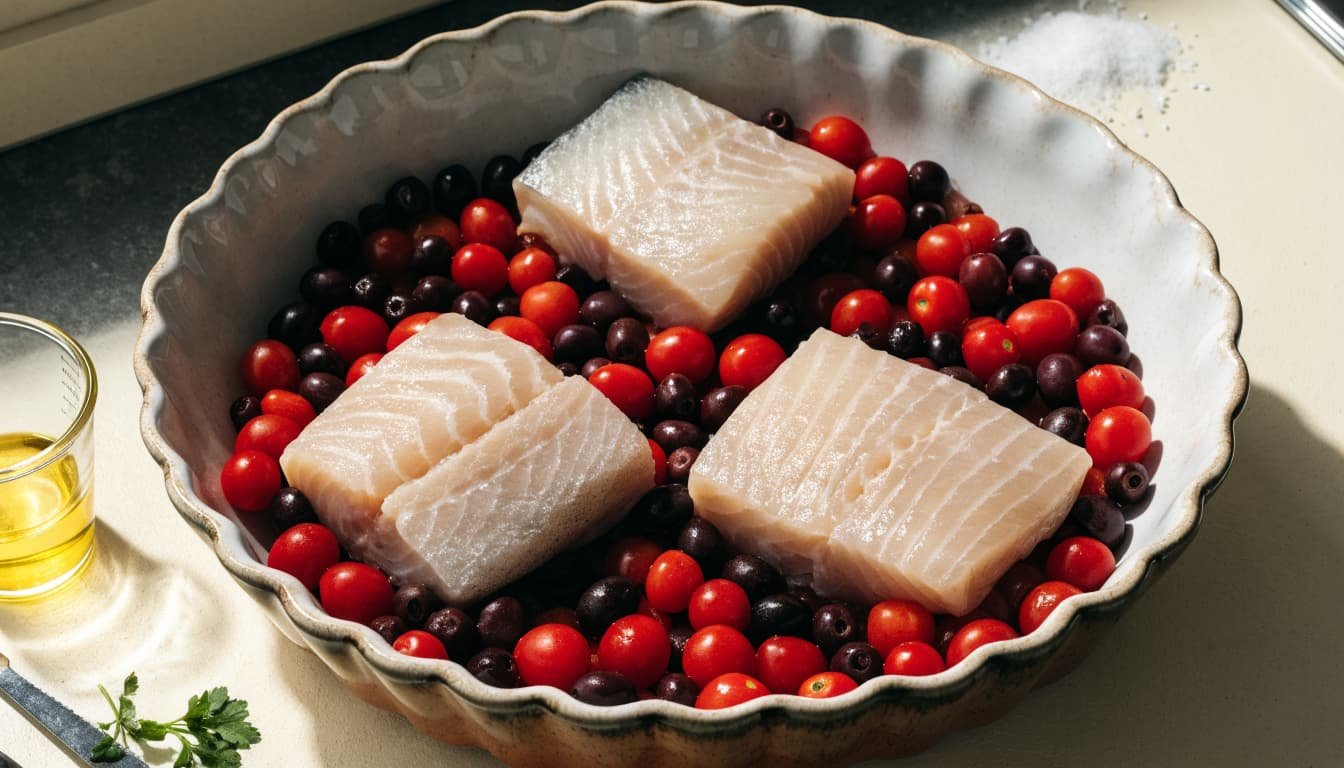
Crowding can trap moisture, leaving the tomatoes and fish to steam rather than roast. A roomy pan gives moisture a chance to evaporate, so the tomatoes soften without turning watery and the cod cooks more evenly. If the dish looks packed, use a larger pan or divide the ingredients between two. I use the same timing principle in our one-pan salmon and vegetables, where slower-cooking ingredients get time in the oven before the fish goes in.
Check Each Fillet at Its Thickest Point
Oven timing is a useful guide, but it can’t account for every fillet. Thin pieces may finish before thicker ones, even when they go into the pan together. For that reason, check each portion rather than assuming the whole dish is ready at once.
Insert an instant-read thermometer into the thickest part of each fillet, keeping the tip away from the pan. Fish is cooked safely when it reaches 145°F, the temperature listed by the USDA’s food thermometer guidance. If a fillet is thin, slide the probe in from the side so its tip reaches the center.
Properly cooked cod looks opaque and flakes easily with a fork. Those signs help you judge its texture, but the temperature gives you the clearest safety check. If a few portions reach 145°F before the others, lift the ready pieces onto a clean plate and return the pan to the oven briefly. Check the remaining fish again, then serve everything while the cod is tender.
Choose Easy Swaps and Sides for a Tomato-Olive Cod Dinner
The basic method stays the same, but a few small choices can shift the flavor or make the meal more filling. I keep the additions simple so the cod, tomatoes, and olives remain the focus.
Adjust the olives, herbs, and heat to suit your taste
Use Kalamata olives for a deeper, fruitier taste, or choose green olives for a sharper briny bite. Fresh parsley adds a clean finish, while oregano brings a more savory note. If you enjoy a little extra flavor, add capers, thinly sliced onion, or a pinch of red pepper flakes to the tomato mixture before roasting.
Because olives and capers both add salt, taste the tomatoes before adding more seasoning. A small splash of white wine can loosen the pan juices and add a bright, savory note; keep it modest so it doesn’t overwhelm the mild fish. Rosemary is another option, but I use only a little because its strong flavor can take over the cod. For another tomato, olive, and caper combination, see Real Simple’s baked cod recipe.
Serve it with bread, rice, or a simple grain
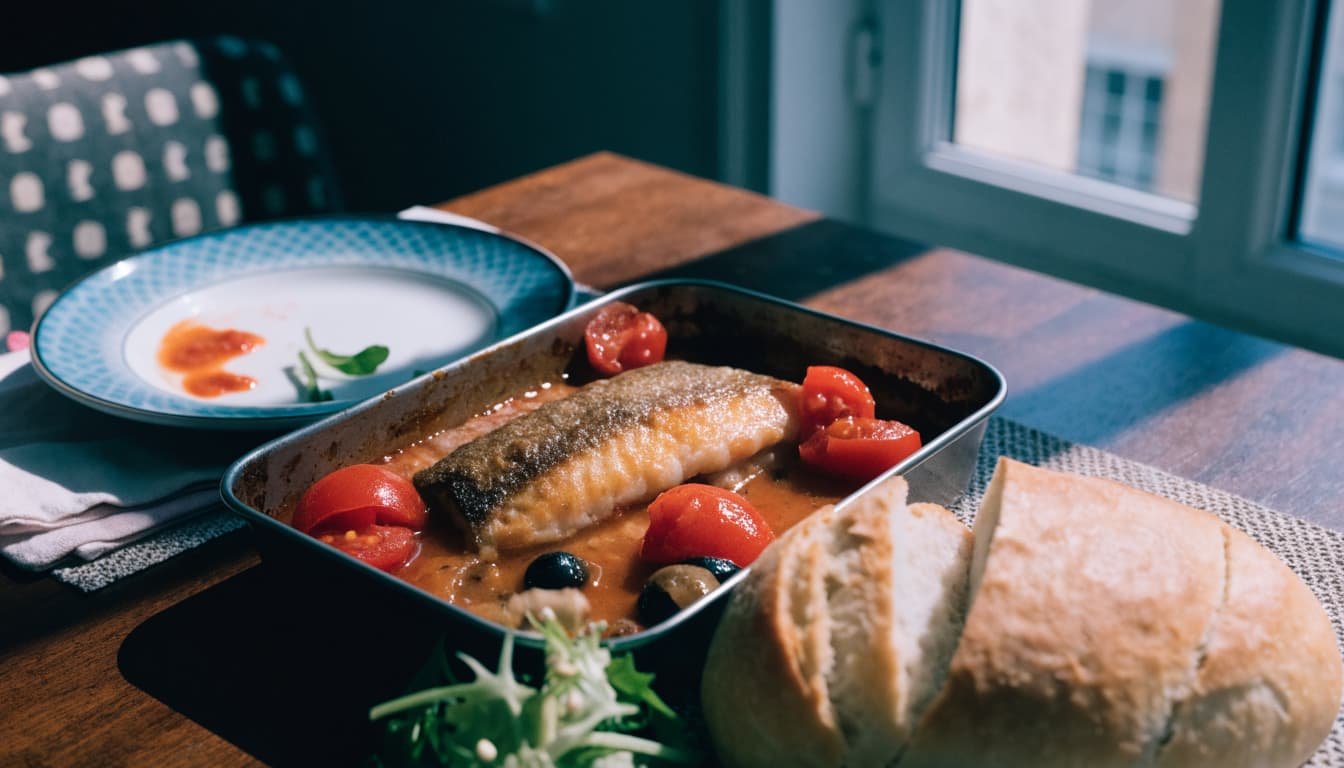
Crusty bread is an easy match for this dish because it catches the tomato and olive juices without adding another cooking step. For a heartier plate, serve the cod with rice, quinoa, or another cooked grain. Keep the side lightly seasoned so it complements the briny sauce rather than competing with it.
A fresh green salad adds a crisp contrast to the warm fish and soft tomatoes. If you want a more filling salad alongside the cod, our Mediterranean chickpea salad makes a flavorful option. Choose one side, or pair bread with a small salad, and let the pan juices bring the meal together.
Prep Ahead and Store Leftovers Without Losing Flavor
A little advance prep makes this one-pan cod dinner easier without compromising the fish’s tender texture. I prepare the tomato mixture ahead, then bake the cod just before serving; cooked cod can dry out if it spends too long in the oven or gets reheated repeatedly.
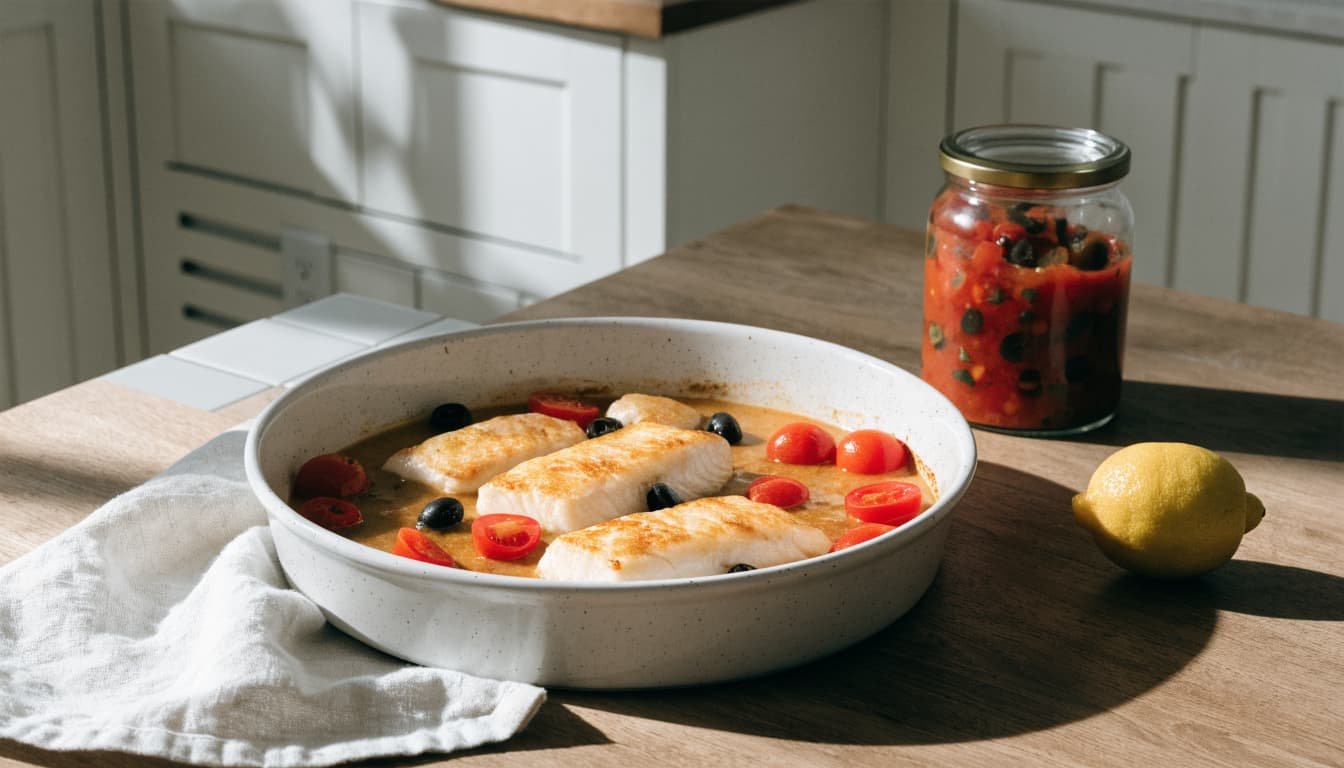
Prepare the tomato base before dinner
Combine the tomatoes, olives, garlic, olive oil, and seasonings in a clean, covered container, then refrigerate it until you’re ready to cook. You can make this mixture ahead, but add the cod only when it’s time to bake. Keeping the fish chilled and out of the acidic tomato mixture helps preserve its texture before cooking.
Handle the cod with clean hands and utensils, and keep it separate from ready-to-eat foods and their preparation surfaces. After touching raw fish, wash your hands, cutting board, and knife before using them for anything else. For another dinner that keeps advance prep focused on separate components, see our make-ahead salmon and grain bowls.
Refrigerate promptly and reheat only what you need
After dinner, transfer leftover cod and tomato mixture to a shallow, covered container and refrigerate within two hours. If the room temperature is above 90°F, refrigerate it within one hour. Cooked fish keeps for three to four days in the refrigerator; the USDA’s leftover food safety guidance covers storage and reheating.
When you’re ready for another serving, warm only what you plan to eat. Cover the fish and reheat it gently in the microwave or oven until it reaches 165°F. Avoid heating the same portion again and again, since repeated warming can leave cod dry and firm. Finish with fresh lemon juice or chopped herbs to bring back a bright note.
Conclusion
This One-Pan Baked Cod With Tomatoes and Olives keeps dinner simple: roast the tomatoes and olives first, then add the cod near the end so it stays tender. Check the thickest part of each fillet with a thermometer and cook it to 145°F.
I like this method because it leaves room to make the meal your own. Adjust the herbs to suit your taste, and choose bread, rice, or a salad for the side.
Save pin for later


- Air Fryer Salmon Bites with Quick Lemon-Dill Yogurt Sauce - November 26, 2026
- Healthy Spinach Pasta with White Beans and Parmesan - November 26, 2026
- Easy Tofu Stir-Fry with Vegetables and Ginger Sauce - November 26, 2026