Lemon herb cod with roasted vegetables on one pan is a one-pan dinner that works because of a single timing trick: the firm vegetables start roasting first, and the fish and tender vegetables go in later. That one change lets the potatoes soften while the cod stays moist.
Some evenings leave no room for a pile of pots. You want something warm and fresh, then you see the sink. A sheet pan fixes most of that. Line it with parchment, spread dinner across it, and cleanup is nearly done before you sit down. The flavors do the rest, with bright lemon, olive oil, and garlic meeting fresh herbs like parsley, dill, or thyme.
My goal here is a dinner you can make without a complicated method. You don’t need a rack of skillets to get a real meal with a little flavor.
The rhythm starts with what you bring home, so let’s look at the ingredients first.
What to Gather for This One-Pan Cod Dinner
A lemon herb cod with roasted vegetables on one pan starts with a short list. I keep the amounts flexible for four servings, so you can shop once and adjust as you cook. Set the fish, vegetables, and seasonings on the counter before you turn on the oven. That small pause makes dinner feel calm instead of rushed.
Choose Cod Fillets and Simple Lemon Herb Seasonings
For four servings, start with 4 cod fillets. Choose pieces that are similar in thickness so they cook at about the same rate. Fresh cod should smell mild and clean, with firm flesh. Pass on any fillet that smells sour or looks dry at the edges. Keep the fish cold in the refrigerator until you’re ready to season it.
The rest of the list stays simple: 1 to 2 tablespoons olive oil, 1 lemon for juice and wedges, and 1 to 2 garlic cloves, minced or thinly sliced. Add salt and black pepper, plus about 1 tablespoon fresh herbs or 1 teaspoon dried herbs. Parsley and dill taste light and fresh, while thyme and oregano bring a more savory note. Use one herb or combine two.
I keep the pan seasoning modest and put extra lemon wedges and chopped herbs on the table. That way, everyone can brighten their own plate without the fish losing its mild flavor.
Pick Vegetables by How Long They Need to Roast
Plan on 1 to 1 1/2 pounds of potatoes and 3 to 4 cups of other vegetables. Potatoes and carrots are sturdy, so they need a head start in the oven. Cut them into similar, bite-size pieces so they soften at roughly the same rate.
Quicker options include zucchini, asparagus, bell pepper, red onion, broccoli, and cherry tomatoes. Add these later with the cod, or choose mostly quick-cooking vegetables when you want dinner to move faster. Spread everything in a single layer on the pan. Crowded pieces release moisture and steam instead of browning, which changes the texture of the whole meal. If the pan looks full, use a second pan or save some vegetables for another day.
Set Up a Rimmed Sheet Pan for Easy Cleanup
A rimmed sheet pan keeps oil and cooking juices from spilling into the oven. Line it with parchment paper if you want cleanup to take less effort, especially when you plan to serve straight from the pan. Arrange the ingredients in one layer with a little space around each piece, so they roast and brown.
The rest of the equipment is basic: a cutting board, a sharp knife, a small bowl for mixing the oil and seasonings, and a spatula. I set these out before I start chopping. Then the pan is ready, the oven is heating, and the timing trick can do its work.
How to Make Lemon Herb Cod with Roasted Vegetables on One Pan
This lemon herb cod with roasted vegetables on one pan comes together in a calm order: firm vegetables first, then the fish, then a quick check at the end. Heat the oven to 400°F and line a rimmed sheet pan with parchment paper. For four servings, plan about 15 minutes of prep and 25 to 30 minutes of cooking. Treat those timings as guides, because vegetable size, fillet thickness, and oven differences change the pace. A single pan keeps cleanup simple, and the order does most of the work.
Give Potatoes and Carrots a Head Start
Toss the potatoes and thick carrot pieces with some olive oil, salt, and pepper. Spread them in one layer, leaving a little space between pieces. Roast for about 15 minutes before adding the fish. Dense vegetables need extra time to soften, while cod and tender vegetables cook faster. That small pause gives the fish a better chance to stay moist.
After the first roast, check a few pieces with a fork. They do not need to be fully tender yet, but the fork should begin to slide in without much resistance. If the pieces still feel very firm, give them a few more minutes. I use this first roast to get the potatoes close to done, so the fish doesn’t sit in the oven waiting.
Add the Cod and Tender Vegetables Later
Pat the cod dry, then season it with olive oil, lemon juice, garlic, salt, pepper, and herbs. Place the fillets on the pan with space around each one. Add quicker-cooking vegetables at this point, such as zucchini, asparagus, bell pepper, or cherry tomatoes. A light coating of oil is enough; excess liquid can collect on the pan and slow browning.
Roast for about 10 to 15 minutes after adding the cod, using the timer as a guide. I like to check each fillet rather than trusting one timer for the whole pan. If a fillet is ready before the vegetables are tender, lift the fish onto a clean plate and return the pan to the oven. That keeps the cod moist while the vegetables finish.
Check Doneness and Serve Straight From the Pan
The FDA recommends cooking fish to 145°F in the thickest part. Insert an instant-read thermometer into each fillet, since thick and thin pieces can finish at different times. Properly cooked cod looks opaque and flakes easily with a fork, but a thermometer gives the clearest check.
Serve the pan warm with lemon wedges and a little fresh parsley or dill. For a heartier meal, add brown rice, quinoa, or crusty bread to catch the lemony juices. Keep extra lemon and herbs on the table so everyone can brighten their own portion.
Keep the Fish Tender with Smart Timing and a Thermometer

The difference between moist cod and dry cod usually comes down to a few small choices, not a secret ingredient. For lemon herb cod with roasted vegetables on one pan, I watch three things: how evenly the vegetables are cut, how much space the food has, and the actual temperature of the fish. Get those right, and the fish stays tender while the vegetables finish around it.
The timer tells you when to start checking, not when dinner is done.
Match Vegetable Pieces to the Cooking Time
Cut firm vegetables into similar-sized pieces so they roast at a steady pace. Smaller pieces soften sooner, while larger pieces take longer even on the same pan. I check a few pieces with a fork before adding the cod. If they still feel very firm, I give them a little more time. That extra pause costs nothing and helps the potatoes and carrots finish close to the fish.
Use 145°F as Your Clear Doneness Check
Fillet thickness varies, so thin pieces may finish before thick ones. I use an instant-read thermometer in the thickest part of each fillet and look for 145°F, the FDA safe minimum for fish. Opaque flesh and easy flaking are helpful cues, but the thermometer gives the clearest answer. I treat the timer as a helpful guide, not a rule I have to follow blindly.
Avoid Crowding So Everything Roasts
Crowded food releases moisture and can steam instead of roast. Keep the cod and vegetables in a single layer with a little space between pieces. If the pan looks full, use a second pan or save some vegetables for another meal. That small bit of breathing room gives you better browning and a more pleasant texture, and the lemon herb cod with roasted vegetables on one pan works better when nothing is packed tight.
Swap Vegetables and Herbs to Fit the Season
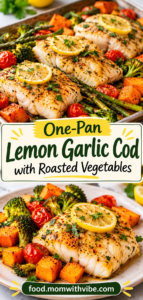
The basic method for this lemon herb cod with roasted vegetables on one pan stays the same no matter what you bring home. I treat the vegetable list as a starting point, then cook from what looks good at the market. A few swaps keep dinner feeling new while the order stays put: firm vegetables first, then the cod and tender pieces. You don’t need a new recipe to change the meal.
Try Spring, Summer, and Cool-Weather Vegetable Mixes
In spring, I reach for asparagus and add it with the cod during the last 10 to 15 minutes. Summer brings zucchini and cherry tomatoes, which soften fast and need only that final stretch in the oven. When the weather turns cool, broccoli, Brussels sprouts, and carrots fit the pan well; cut them into similar-sized pieces and give the dense ones a head start with the potatoes. Sturdy vegetables need more time, while tender ones go in later so they keep their shape. Keeping pieces about the same size helps everything finish together, and you can mix seasons if that’s what your market has. I often shop the produce aisle first and build the pan from there.
Change the Flavor with Paprika, Dijon, or Lemon Zest
Small seasoning changes shift the flavor without extra work. A pinch of smoked paprika adds warmth, and chili flakes bring gentle heat if you want it. Stir a small amount of Dijon mustard into the oil and lemon for a tangy note, or add lemon zest for a brighter finish. If you use Dijon or another salty condiment, start with less salt and taste the vegetables before serving. I keep the seasoning modest so the cod and vegetables still lead the plate. A little goes a long way, and you can always pass extra lemon at the table. These small additions work with the same timing and pan.
Save pin for later


- Air Fryer Salmon Bites with Quick Lemon-Dill Yogurt Sauce - November 26, 2026
- Healthy Spinach Pasta with White Beans and Parmesan - November 26, 2026
- Easy Tofu Stir-Fry with Vegetables and Ginger Sauce - November 26, 2026