
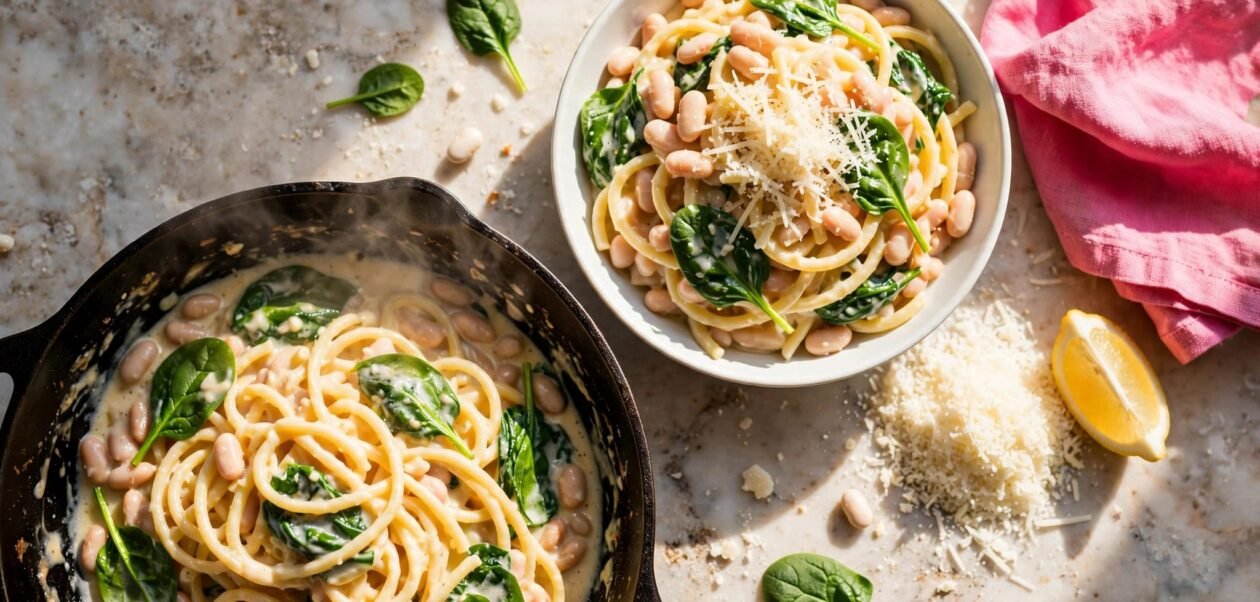
A simple, filling meatless dinner can come together with pasta, white beans, spinach, garlic, lemon, and Parmesan. I like this combination because it feels comforting without demanding much from a busy evening.
Use fresh or frozen spinach and the pantry seasonings you have on hand. With a little care, the noodles turn glossy, the greens stay tender, and the beans keep their shape. For another weeknight idea, try this one-pot orzo with spinach and white beans.
Next, I’ll show you how to bring this flexible pasta dinner together.
Healthy Spinach Pasta with White Beans and Parmesan
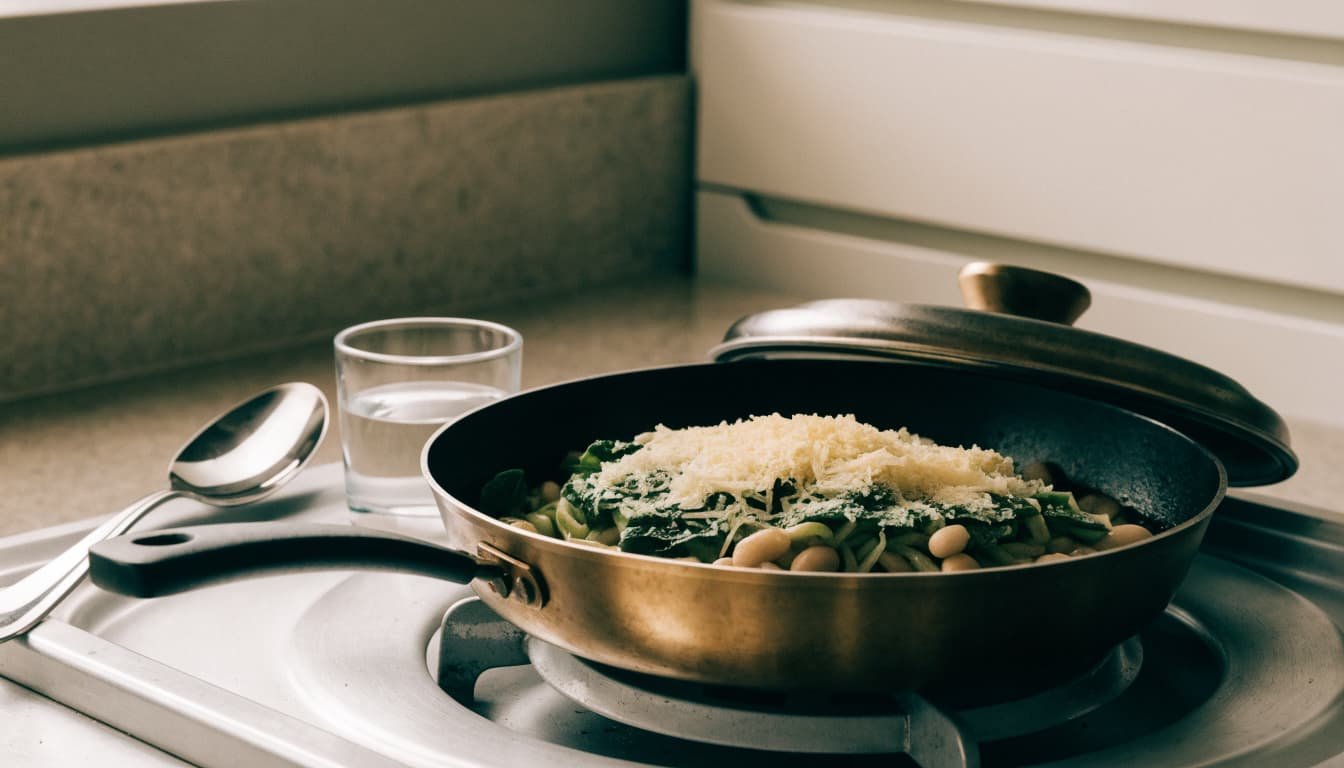
This healthy spinach pasta with white beans and Parmesan brings tender noodles, creamy beans, greens, and lemon together in one skillet. I plan on about 25 to 30 minutes from prep to serving, though the pasta’s package directions determine the exact cooking time.

Gather the pasta, beans, greens, and simple seasonings
Short pasta shapes such as penne, rotini, or orecchiette are easy to scoop up with the beans. Cannellini, Great Northern, or navy beans all work; drain and rinse canned beans before adding them. Freshly grated Parmesan melts smoothly, while pre-grated Parmesan is convenient and works well, too.
For a flexible family-size batch, gather:
- 12 ounces dry pasta
- 1 (15-ounce) can white beans, drained and rinsed
- 3 to 5 cups fresh spinach, or frozen spinach to taste
- 3 to 5 garlic cloves, minced
- 1 to 2 tablespoons olive oil or butter
- 1/4 to 1/2 cup grated Parmesan
- Lemon juice, salt, and black pepper
- About 1/2 cup reserved pasta water
I keep optional seasonings modest so they complement the lemon and Parmesan. A little dried oregano or a pinch of red pepper flakes is plenty. Since both canned beans and Parmesan can add salt, I wait until the end to adjust the seasoning.
Cook the pasta and save some starchy water
Bring a large pot of salted water to a boil, add the pasta, and cook according to the package directions. Stir now and then, and start checking near the early end of the suggested time. Stop when the noodles are tender with a slight bite, since they’ll warm briefly in the skillet.
Before draining, reserve about 1/2 cup of pasta water. Drain the noodles without rinsing them, because their surface starch helps the sauce cling. I add the reserved water a splash at a time if the pasta looks dry. For more on how pasta water helps sauce coat noodles, see Serious Eats’ explanation of pasta water.
Wilt the spinach, warm the beans, and toss everything together
While the pasta cooks, warm the oil or butter in a large skillet over medium-low heat. Stir in the garlic just until fragrant, then add fresh spinach and cook until tender and bright green. Keep the garlic from browning, which can give it a bitter taste.
For frozen spinach, allow extra time to heat it through, breaking up clumps as you stir. If it leaves excess moisture in the skillet, cook it off before continuing. Gently fold in the drained beans and warm them for a few minutes.
Add the pasta and lemon juice, then toss with a small splash of pasta water. Add more gradually until the noodles look glossy, not soupy. Remove the skillet from the heat before stirring in Parmesan. Taste, then adjust with more lemon, black pepper, or salt as needed. Serve warm, with extra Parmesan at the table if you like.
How to Keep White Bean Spinach Pasta Glossy and Full of Flavor
The final toss brings the pasta, greens, and beans together, but too much heat or liquid can quickly change the texture. I keep the skillet at a gentle heat and make small adjustments, so the spinach stays tender, the beans hold their shape, and the sauce clings to the noodles.
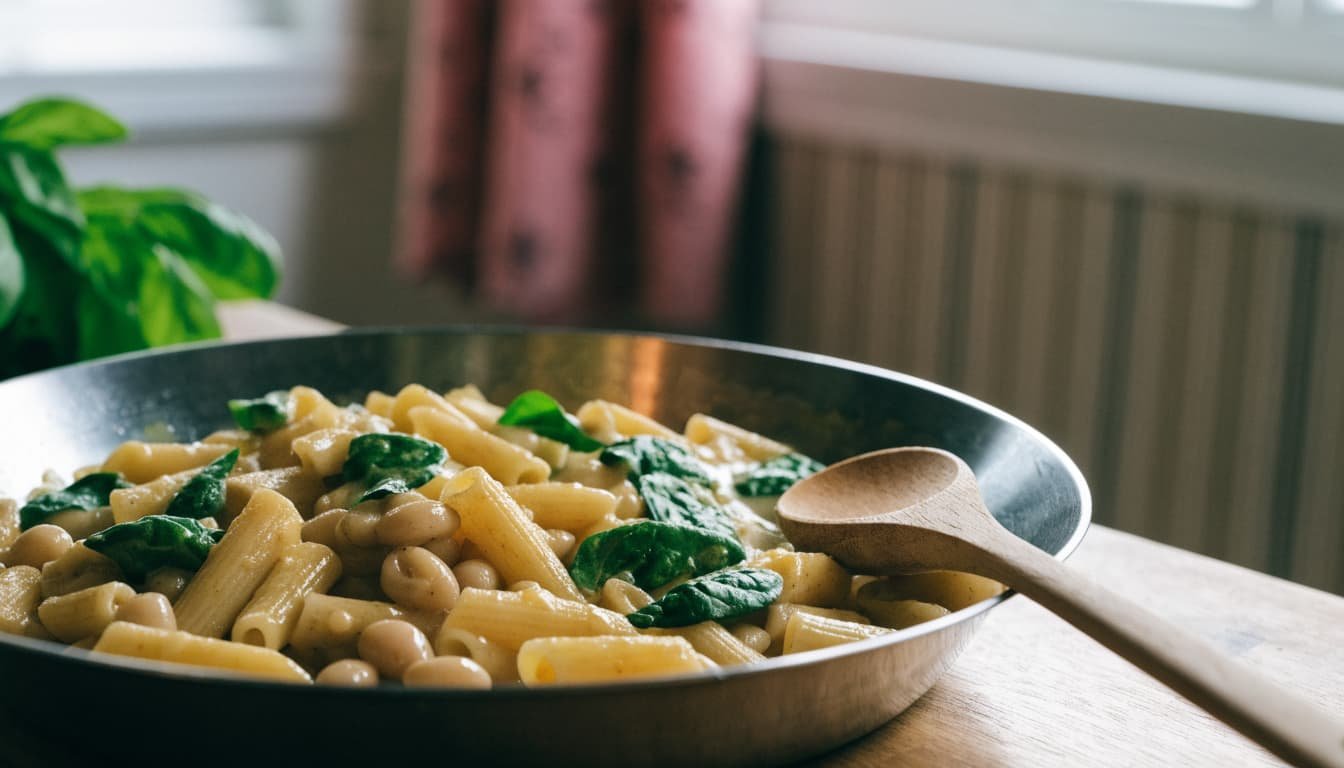
Add pasta water a little at a time for a silky finish
Start with a small splash of reserved pasta water, then toss the noodles and check how they move. If they still look dry or stick together, add another splash. The starchy water helps the sauce cling to the pasta, as explained in Serious Eats’ guide to silkier pasta.
I look for noodles with a light sheen and a thin coating of sauce, not a pool of liquid at the bottom of the skillet. Keep the heat low while tossing; a hard boil can make the moisture disappear before it coats the pasta evenly. If the skillet looks a little loose, give it a gentle toss before adding more water.
The pasta will absorb moisture as it rests, so stop while the noodles still look slightly saucier than you want on the plate. That small cushion helps keep the dish from turning dry. If you’re using frozen spinach, cook off any excess water before adding pasta, or it can thin the sauce.
Season after tasting, especially when using Parmesan or canned beans
Before reaching for the salt, taste a bite with pasta, spinach, beans, and cheese together. Parmesan and canned beans can each bring salt, and their levels vary by product. I add salt only if the finished dish needs it.
For balance, stir in lemon juice or a little zest when the flavors seem too rich or muted. Black pepper adds warmth, while a small pinch of red pepper flakes brings gentle heat without taking over. Add these in modest amounts, taste again, and adjust only if needed.
Keep the last toss gentle, too. The beans are already cooked, so they need only enough heat to warm through. Fold them through rather than stirring vigorously, especially if they’re soft. That same careful approach works in a white bean and kale skillet. Remove the pan from the heat before adding Parmesan; residual warmth helps it melt without making the sauce clumpy.
Easy Swaps That Keep This Spinach Pasta Balanced
I keep changes to this pasta simple so the beans, spinach, and lemon stay at the heart of the bowl. A different pasta, a handy frozen green, or a small seasoning adjustment can suit what you have without turning dinner into a different recipe.
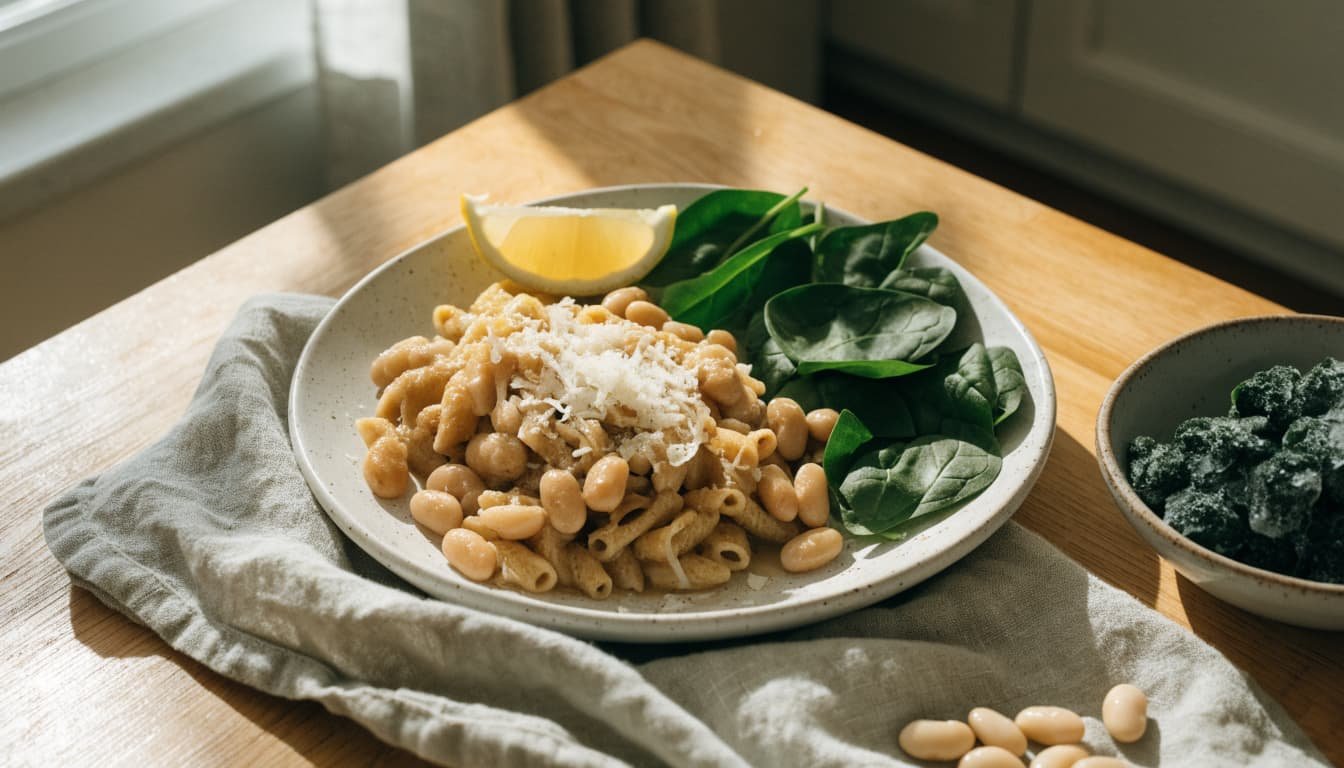
Use whole-wheat pasta, frozen spinach, or another white bean
Whole-wheat pasta brings a heartier, chewier texture and may suit you if you want more fiber. Regular pasta works just as well, so choose the shape and type you enjoy. If you like whole-wheat pasta in a meatless dinner, try our lentil meatballs with whole-wheat pasta.
Frozen spinach is a convenient stand-in for fresh. Heat it through, break up any clumps, and drain or cook off excess liquid before tossing it with the pasta. Otherwise, its moisture can thin the glossy sauce. Our creamy spinach lentil curry is another easy option when frozen spinach is what you have.
Cannellini, Great Northern, and navy beans are interchangeable here. Use the one in your pantry, then drain and rinse canned beans before adding them. Rinsing can reduce some sodium; Penn State Extension’s canned-food guidance recommends rinsing canned vegetables and choosing lower-sodium options when available.
Make it dairy-free, lower in sodium, or more herby
For a dairy-free bowl, leave out the Parmesan or use a plant-based substitute you enjoy. Since the cheese adds savory richness, finish with extra lemon juice and chopped parsley or basil for a bright, fresh note. If you eat strictly vegetarian, check the Parmesan label or choose a vegetarian-friendly alternative, since rennet sources vary.
To keep sodium in check, choose lower-sodium beans when available, rinse canned beans, and taste the finished pasta before adding salt. Parmesan can add salt, too, so a little may be enough. Lemon, garlic, and black pepper can round out the flavor without needing a heavier hand with salt.
For an easy flavor change, add a small pinch of oregano or red pepper flakes, a little parsley, or a modest amount of chopped sun-dried tomato. I’d choose just one or two additions at a time. That way, they season the pasta without burying the spinach, beans, and lemon.
What to Serve with This Easy Vegetarian Pasta
The pasta and white beans already make a substantial meal, with spinach tucked into every serving. I’d keep the sides simple and choose just one, so dinner feels complete without adding much prep or crowding the table.

Pair it with a crisp salad, bread, or one warm vegetable
For fresh contrast, serve a small green salad with tender lettuce or peppery greens and a light lemon vinaigrette. The crisp leaves balance the soft pasta and creamy beans, while a bright dressing echoes the lemon in the sauce. Keep toppings simple, since the pasta already brings plenty of savory flavor.
If you want something to catch the glossy sauce, set out slices of whole-grain bread. It makes the meal feel cozy without requiring another recipe, and whole-grain bread is an easy option when you want to include a whole grain. Warm the bread briefly if you like, then serve it alongside the pasta rather than adding more dishes to the menu.
A warm vegetable works well, too. Choose one that fits your kitchen and the time you have: roasted squash adds a soft, lightly sweet contrast, mushrooms bring a savory note, and roasted Brussels sprouts with balsamic glaze offer browned edges and a sweet-tart finish. Keep the seasoning light so the vegetable complements the pasta instead of competing with its garlic, Parmesan, and lemon.
There’s no need to prepare a salad, bread, and a hot side all at once. I’d pick the easiest option for the evening, or skip an extra side if the pasta is enough for your table. Set extra Parmesan and lemon wedges out so everyone can brighten or enrich their serving to taste.
Store and Reheat Leftovers Without Drying Out the Pasta
The spinach, beans, and Parmesan make a satisfying lunch the next day, though the pasta will soften as it sits. The noodles absorb some of the sauce in the refrigerator, so leftovers may seem thicker or less glossy. That change is normal. A little added liquid and gentle heat can loosen the pasta without making it watery.
Refrigerate portions promptly in covered containers
Divide leftovers among shallow, covered containers and refrigerate them within two hours of cooking or serving. If the temperature is above 90°F, shorten that window to one hour. You can refrigerate the pasta while it’s still warm; there’s no need to leave it out until it reaches room temperature. Shallow portions cool faster than a full skillet.
Keep your refrigerator at 40°F or below, and use the pasta within three to four days. I like to label containers with the date, especially when I’m storing several meals at once. Follow the USDA’s leftover food storage guidance for these time limits. For another example of safe storage for leftover pasta and meatballs, see our related pasta dinner.
Reheat gently with a splash of water or broth
Warm only the portion you plan to eat. For the stovetop, place it in a covered skillet over low to medium-low heat, then add a small splash of water or broth. Stir as needed, adding a little more liquid if the pasta still looks dry. The goal is to loosen the sauce as the noodles warm, not to simmer away their moisture.
For microwave reheating, transfer a serving to a covered, microwave-safe dish. Stir partway through so the pasta heats more evenly, then continue warming as needed. Either way, check that the leftovers reach 165°F throughout, using a food thermometer if you have one.
Finish with fresh lemon juice or a little Parmesan after reheating. The lemon brightens the flavors, while fresh cheese brings back some of the savory finish. Because the pasta may be softer than it was when freshly cooked, warm it only until hot and avoid repeated reheating.
Conclusion
Healthy Spinach Pasta with White Beans and Parmesan brings together creamy beans, tender pasta, and soft spinach with a bright lemon-Parmesan finish. I find that saving pasta water and adding it gradually is the key to keeping the noodles glossy without making the sauce soupy.
Fresh or frozen spinach both fit, and you can use the beans and pasta you have on hand. Taste as you go, adjust the lemon, pepper, and salt to suit your table, then settle in and enjoy a warm, satisfying bowl.
Save pin for later


- Lentil Shepherd’s Pie with Creamy Mashed Potatoes: A Cozy Meatless Dinner - November 26, 2026
- Crispy Air Fryer Tofu with Vegetables and Brown Rice - November 26, 2026
- Baked Chicken Thighs with Garlic and Roasted Vegetables - November 26, 2026


