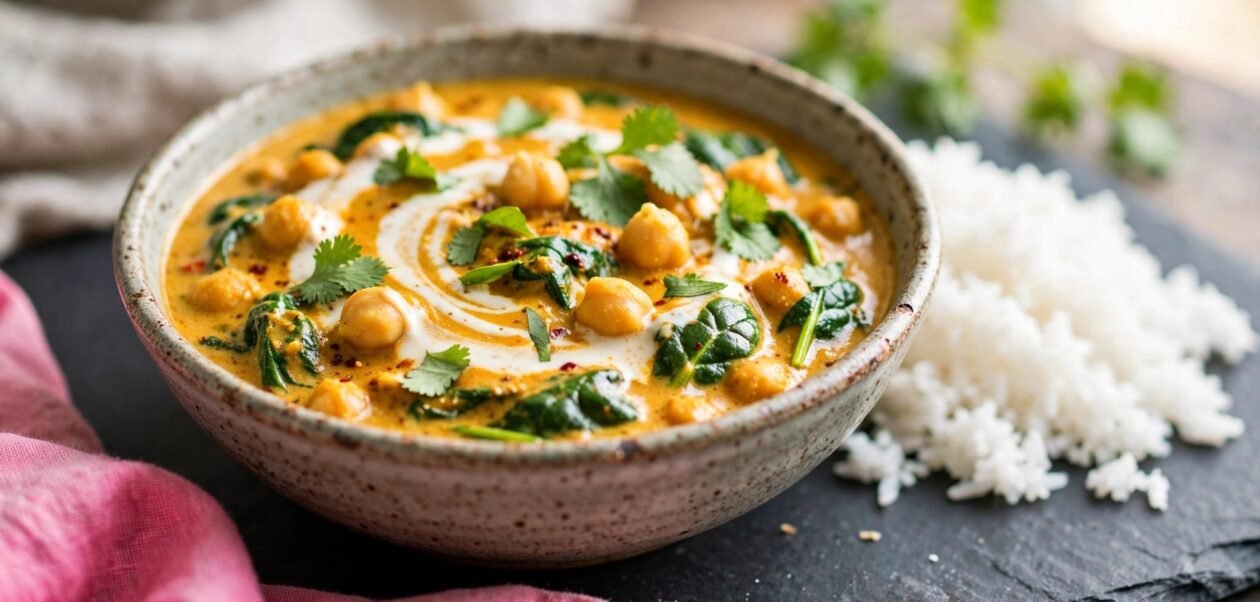
A warm curry made from pantry staples can make dinner feel easy and satisfying. This one-pot chickpea curry combines tender canned chickpeas with a creamy coconut sauce, fragrant spices, and fresh spinach stirred in near the end. The method is straightforward, and you can adjust the heat and sauce thickness as you cook.
Serve it over rice or quinoa, or pair it with warm flatbread to catch every spoonful of sauce. A squeeze of lime and a few optional toppings let everyone finish their bowl to taste. The recipe also keeps well for another meal when you chill portions promptly and reheat them gently.
Healthy Chickpea Curry With Spinach and Coconut Milk
This stovetop curry brings together chickpeas, spinach, coconut milk, and aromatics in one pot. The word “healthy” means different things to different people, and the ingredients and portion size shape what suits your meal. For a less-rich sauce, use light coconut milk or reduce the amount and add broth or water.
Prep time: 10 minutes
Cook time: 25 minutes
Total time: 35 minutes
Yield: 4 servings
Gather chickpeas, spinach, coconut milk, and the aromatics
- 2 tablespoons neutral cooking oil
- 1 medium yellow onion, finely chopped
- 3 garlic cloves, minced
- 1 tablespoon grated fresh ginger
- 1 teaspoon ground cumin
- 1 teaspoon ground coriander
- 1 teaspoon curry powder, or 1 tablespoon curry paste
- 2 cans (15 ounces each) chickpeas, drained and rinsed
- 1 can (13.5 ounces) coconut milk
- ½ cup vegetable broth or water, plus more as needed
- 5 ounces fresh baby spinach, about 200 grams or several packed handfuls
- 1 tablespoon lime or lemon juice, plus wedges for serving
- Salt, to taste
Curry powder and curry paste vary in heat and salt, and broth can also be salty. Start with the listed seasoning, then taste before adding more salt or spice. Light coconut milk or a smaller amount of regular coconut milk makes the sauce less rich. Add broth or water to make up the liquid as needed.
Build the sauce, simmer the chickpeas, and wilt the spinach
- Soften the onion. Warm the oil in a large pot or deep skillet over medium heat. Add the onion and cook for 4 to 5 minutes, stirring now and then, until softened.
- Wake up the aromatics. Stir in the garlic, ginger, cumin, coriander, and curry powder or paste. Cook for about 30 seconds, just until fragrant. If the spices begin to stick, lower the heat and add a small splash of water.
- Add the chickpeas and sauce ingredients. Stir in the drained chickpeas, coconut milk, and broth or water. Scrape the bottom of the pot as you mix, then bring the sauce to a gentle simmer.
- Let the flavors come together. Simmer uncovered for 12 to 15 minutes, stirring occasionally, until the sauce tastes blended and reaches the thickness you like. If it gets too thick, add broth or water a splash at a time. If it looks thin, let it simmer uncovered a little longer.
- Wilt the spinach. Add the fresh spinach in handfuls, stirring until the leaves just wilt. If using frozen spinach, thaw it first, drain it thoroughly, and stir it in near the end to warm through. Draining helps keep extra water from thinning the sauce.
- Finish and season. Stir in the lime or lemon juice. Taste the curry, then add salt or more spice gradually. Serve hot with lime wedges.
Canned chickpeas are already cooked, so they only need time in the sauce to heat through and take on the seasoning. If you’re starting with dried chickpeas, cook them until tender before adding them to the curry. For more ideas, browse these chickpea curry recipes.
Adjust the curry’s richness, heat, and texture to taste
This recipe has room for small changes without changing the basic method. Make one adjustment at a time, then taste again. That way, you can tell what the curry needs instead of adding several seasonings at once.
Choose a mild or bold spice profile
Curry powder, curry paste, cumin, and other spice blends vary in salt and heat. Begin with the recipe amount, then taste after the chickpeas have simmered and the flavors have had time to mingle. Add more curry powder or paste in small amounts if you want a bolder flavor.
For a group with different spice preferences, keep the pot mild and offer chili flakes or hot sauce at the table. That lets each person control the heat in their own bowl. If the sauce tastes too rich or the spices feel strong, a squeeze of lime or lemon can brighten the flavor.
Make the sauce thicker, looser, or less rich
If the sauce is thin, simmer it uncovered for a few more minutes, stirring occasionally. For a looser sauce, add water or broth a splash at a time. The sauce thickens as it rests, so check the consistency again just before serving.
To make the curry less rich, use light coconut milk or start with less coconut milk and add broth or water to reach the texture you prefer. Curry paste and broth can both contribute salt, so taste the sauce before seasoning it further.
Swap greens and add filling extras
Fresh baby spinach wilts quickly, so stir it in near the end. Frozen spinach works too: thaw and drain it before adding it, then warm it through. Chopped kale can replace spinach, but its sturdier leaves need a few extra minutes to soften. See another easy curry with spinach for more ideas on using greens in a one-pot curry.
For an optional extra, add small, evenly cut sweet potato pieces early enough to cook through. Check packaged curry paste and broth labels, since their salt and heat levels vary. Keep add-ins separate from the core recipe so you can adjust the pot to suit your table.
Serve chickpea spinach curry with rice, grains, or flatbread
A simple base catches the creamy sauce and makes each serving easy to customize. Choose what fits your meal and the time you have. If you’re cooking grains, start them while the curry simmers, or use a prepared option already on hand.
Pick a base that catches the creamy sauce
White rice has a mild flavor and soft texture, while brown rice is chewier. Quinoa offers a light, nutty taste. Warm naan or whole-wheat flatbread is handy for scooping up the sauce.
For a different pairing, spoon the curry over a baked potato or sweet potato. You can also serve a potato alongside the curry. Start with a modest scoop of rice or quinoa, then add more if you want a heartier bowl. For another meal built around chickpeas and grains, try these Mediterranean chickpea bowls.
Finish each bowl with a fresh or crunchy topping
Set out lime wedges, chopped herbs, plain yogurt, toasted seeds, or chili flakes so everyone can choose. Lime and herbs brighten the creamy sauce, yogurt cools the spice, and seeds add crunch. Keep toppings on the side, especially if diners have different preferences or need to avoid common allergens.
Store and reheat curry safely for another meal

Chickpea curry makes a useful leftover when you portion and chill it promptly. The sauce thickens in the refrigerator, but a little water or broth helps bring it back to a spoonable texture when reheated.
Chill portions promptly and keep rice separate
Spoon the curry into shallow, airtight containers so it cools more quickly. Refrigerate it within two hours of cooking or serving, or within one hour if the room temperature is above 90°F. It doesn’t need to cool completely on the counter first.
Keep the refrigerator at 40°F or below and use refrigerated curry within 3 to 4 days. Label containers with the date so you can keep track. When convenient, store cooked rice in a separate covered container. This helps prevent the grains from absorbing sauce and turning too soft.
For longer storage, freeze the curry in freezer-safe containers for about 2 to 3 months for best quality. Leave a little space at the top for expansion. Thaw a portion in the refrigerator, ideally overnight, before reheating. The freezer timeframe is for best quality, not a guarantee that texture will remain unchanged.
Reheat gently and loosen the sauce as needed
Reheat only the amount you plan to eat. Add a splash of water or broth and stir as the curry warms, since the sauce thickens as it chills.
On the stovetop, use medium-low heat and stir often. In the microwave, transfer the curry to a microwave-safe dish, heat it in short intervals, and stir between intervals so it warms evenly. Heat until steaming hot throughout. If using a food thermometer, check that it reaches 165°F.
Warm rice separately, then serve the curry over it. A squeeze of fresh citrus or a little chopped herb just before serving brightens the flavor.
A flexible curry for an easy dinner
This chickpea curry brings pantry-friendly beans together with a creamy coconut sauce and spinach added just before serving. The method is simple, and you can adjust the spice and thickness as the sauce simmers. Pair it with rice, quinoa, flatbread, or a baked potato, then let everyone choose their own toppings. Store extra portions promptly, and you’ll have another easy meal ready to reheat. A satisfying dinner can start with chickpeas from the pantry, a can of coconut milk, and a few handfuls of spinach. This one-pot curry keeps the method simple, with room to adjust the spice and sauce as it simmers.
Serve it over rice, quinoa, or with warm flatbread, then refrigerate leftovers promptly for another meal. If you enjoy cozy, flexible curries, our creamy red lentil curry with spinach is another easy dinner to try. Let’s start with the chickpea curry.
Healthy Chickpea Curry With Spinach and Coconut Milk
This stovetop chickpea curry combines pantry staples in a creamy, gently spiced sauce, with spinach stirred in just before serving. I keep the seasoning adjustable because curry pastes and broths differ in salt and heat. “Healthy” depends on the ingredients you choose and the portions you serve, so I avoid treating the recipe as a specific nutrition promise.
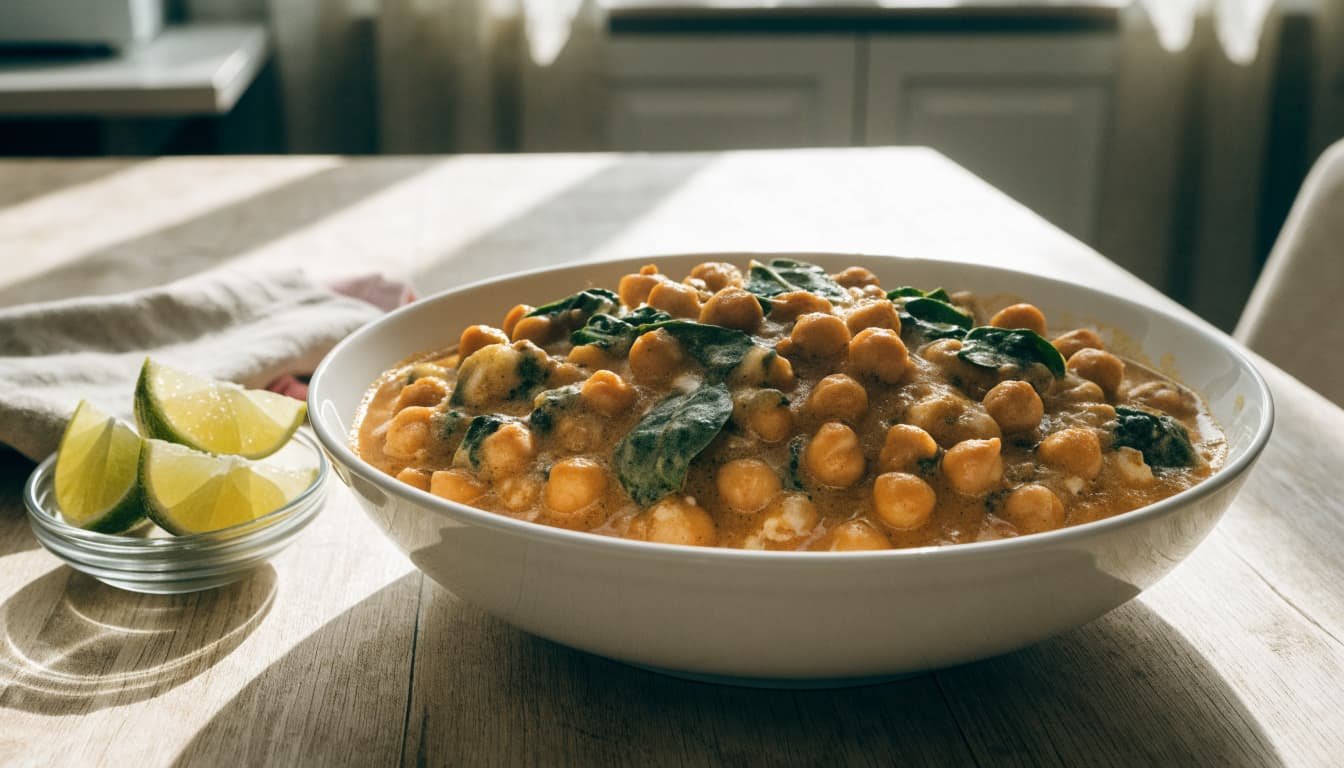
Gather chickpeas, spinach, coconut milk, and the aromatics
Prep time: 10 minutes
Cook time: 25 minutes
Total time: 35 minutes
Yield: 4 servings
- 2 tablespoons neutral cooking oil
- 1 medium yellow onion, finely chopped
- 3 garlic cloves, minced
- 1 tablespoon freshly grated ginger
- 1 teaspoon ground cumin
- 1 teaspoon ground coriander
- 1 teaspoon curry powder or 1 tablespoon curry paste
- 2 cans (15 ounces each) chickpeas, drained and rinsed
- 1 can (13.5 ounces) coconut milk
- ½ cup vegetable broth or water, plus more as needed
- 200 grams fresh baby spinach, about several packed handfuls
- 1 tablespoon lime or lemon juice, plus wedges for serving
- Salt, to taste
For a less-rich curry, choose light coconut milk or start with less regular coconut milk, then add broth or water until the sauce reaches the consistency you like. Since coconut milk, curry paste, and broth vary by brand, taste before adding extra salt. If you want to compare packaged ingredients, USDA FoodData Central provides nutrition information for many foods.
Build the sauce, simmer the chickpeas, and wilt the spinach
- Soften the onion. Heat the oil in a large pot or deep skillet over medium heat. Add the onion and cook for 4 to 5 minutes, stirring occasionally, until soft and translucent.
- Cook the aromatics and spices. Stir in the garlic, ginger, cumin, coriander, and curry powder or paste. Cook for about 30 seconds, just until fragrant. If the mixture starts sticking, lower the heat and add a small splash of water.
- Add the chickpeas and liquids. Stir in the drained chickpeas, coconut milk, and broth or water. Scrape the bottom of the pot to loosen any spices, then bring the sauce to a gentle simmer.
- Simmer until the sauce comes together. Cook uncovered for 12 to 15 minutes, stirring now and then. The sauce should taste blended and thicken to your liking. If it gets too thick, stir in broth or water a little at a time. If it stays thin, simmer it uncovered for a few more minutes.
- Wilt the spinach. Add fresh spinach in handfuls and stir until the leaves just wilt. For frozen spinach, thaw it first and squeeze or drain away excess liquid, then stir it into the curry near the end and warm it through.
- Finish and taste. Stir in the lime or lemon juice, then taste the sauce. Add salt or more curry seasoning gradually, especially if your paste or broth is already salty. Serve with lime wedges; I like the citrus because it brightens the coconut-rich sauce.
Canned chickpeas are already cooked, so they only need to heat through and absorb the curry flavor. If you use dried chickpeas, cook them until tender before adding them to the pot. Spoon the curry over rice or quinoa, or serve it with warm flatbread. For another easy chickpea meal with grains, try these Mediterranean chickpea bowls.
Adjust the curry’s richness, heat, and texture to taste
Small changes can make this chickpea curry suit your table without changing the one-pot method. I recommend adjusting one thing at a time and tasting as the sauce simmers, so you can tell whether it needs more spice, liquid, or brightness.

Choose a mild or bold spice profile
Curry powder, curry paste, cumin, and spice blends vary in both heat and salt. Start with the recipe amount, then taste after the chickpeas have simmered and the flavors have melded. If you want a bolder curry, add a little more seasoning, let it simmer briefly, and taste again. Packaged curry paste can bring more heat than expected, so increase it in small steps.
For a group with mixed spice preferences, keep the pot mild and set out chili flakes or hot sauce. That way, each person can season their own bowl. If the coconut flavor feels especially rich, or the spices need a lift, squeeze in lime or lemon a little at a time. Citrus brightens the sauce without adding more heat. BBC Good Food also finishes its chickpea and spinach curry with lime or tamarind.
Make the sauce thicker, looser, or less rich
If the sauce looks thin, simmer it uncovered for a few more minutes, stirring occasionally so it doesn’t stick. For a looser consistency, add water or broth a splash at a time. Check again before serving because the sauce will thicken as it rests.
To make the curry less rich, use light coconut milk or begin with less coconut milk and add broth or water until the sauce suits you. For a creamier result, stir in a little more coconut milk. Since broth and curry paste can both add salt, taste before seasoning further.
Swap greens and add filling extras
Fresh baby spinach wilts quickly, so stir it in near the end. Frozen spinach works too; thaw and drain it well before adding it, then warm it through. Draining helps keep excess water from thinning the sauce. Chopped kale can replace spinach, but its sturdier leaves need a few extra minutes to soften, so add them earlier and check the texture as they cook.
For an optional, heartier variation, add small, evenly cut sweet potato pieces early enough to cook through. Keep the cubes similar in size so they soften at about the same pace, and add a splash of liquid if the pot begins to stick. Check the labels on packaged curry paste and broth, since their salt and heat levels vary. These extras let you personalize the curry while keeping the chickpeas, coconut milk, and spinach at its core.
Serve chickpea spinach curry with rice, grains, or flatbread
The creamy coconut sauce pairs well with a simple base that catches every spoonful. I’d choose based on the texture and flavor you want, then set out a few toppings so each bowl can be finished to taste.
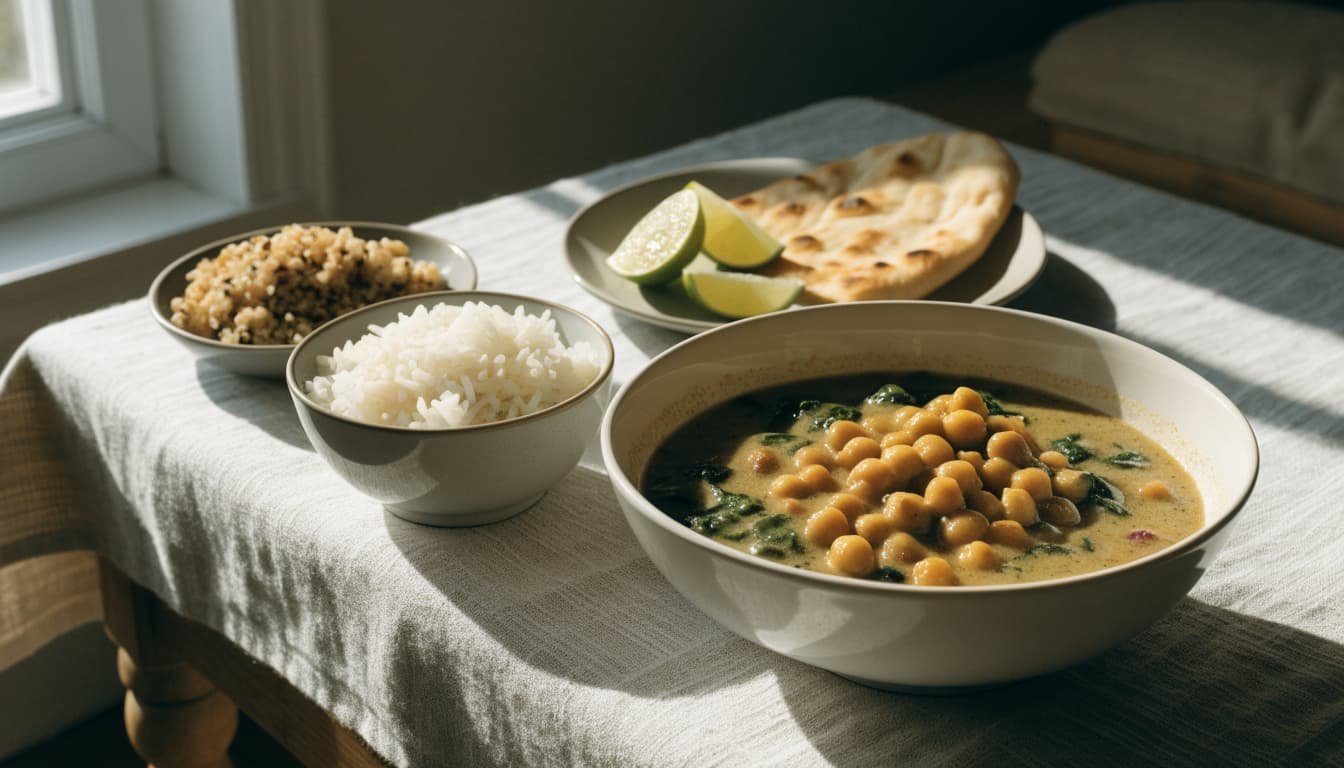
Pick a base that catches the creamy sauce
White rice has a mild flavor and soft texture, so the spices and creamy sauce stay in focus. Brown rice gives each bite more chew and a heartier feel, while quinoa is light with a gently nutty flavor. Brown rice and quinoa are whole-grain options, as USDA MyPlate’s grains guide explains.
Warm naan or whole-wheat flatbread is easy to tear and use for scooping up sauce. For another simple option, serve the curry over a baked potato or sweet potato, or split one open and spoon the curry on top. If you’re deciding between grains for a bowl, these Mediterranean chickpea bowls with lemon tahini offer another pairing idea.
Cook rice or quinoa while the curry simmers, following the package directions, or use a prepared grain you already have. Start with a modest scoop and add more if you want a fuller bowl.
Finish each bowl with a fresh or crunchy topping
Set lime wedges, chopped herbs, plain yogurt, toasted seeds, or chili flakes on the table. Lime and herbs bring a fresh, bright note to the coconut sauce, while yogurt cools the spices. Toasted seeds add a crisp contrast to the tender chickpeas and spinach.
Keep toppings separate so everyone can customize a serving. This also makes it easier to avoid common allergens, such as seeds, or leave out ingredients that don’t suit a diner. I recommend starting with a little, tasting the curry with the topping, then adding more as needed.
Store and reheat curry safely for another meal
This chickpea curry is easy to save for another meal if you portion it promptly and reheat only what you need. I recommend storing rice separately when practical, so it keeps its texture and the curry stays easy to serve.
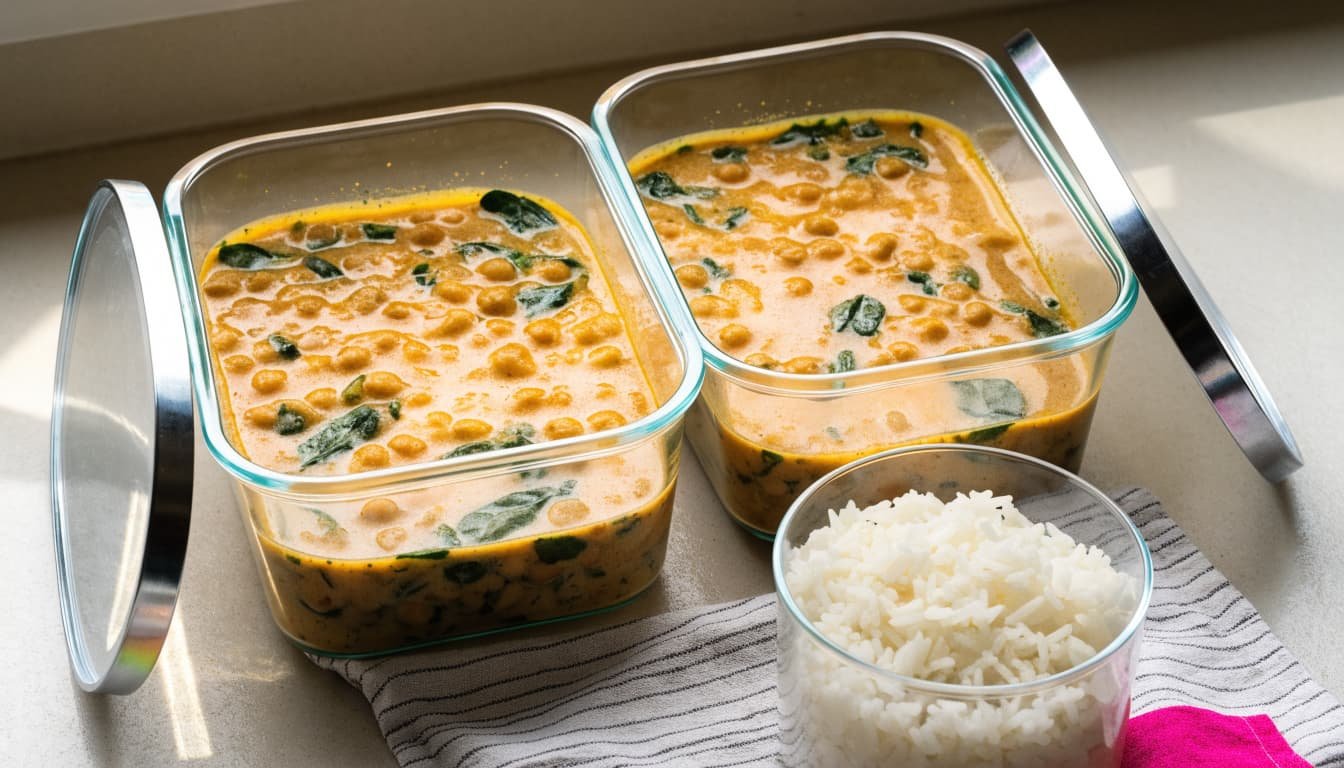
Chill portions promptly and keep rice separate
Spoon the curry into shallow, airtight containers, then refrigerate within two hours of cooking or serving. If the room temperature is above 90°F, put it away within one hour. You don’t need to wait for the curry to cool completely on the counter first. The USDA’s leftover food safety guidance recommends prompt refrigeration and shallow containers.
Keep your refrigerator at 40°F or below, and use refrigerated curry within 3 to 4 days. Label each container with the date if you tend to lose track of leftovers. When convenient, refrigerate cooked rice in its own covered container, too. The grains are less likely to soak up the sauce and turn overly soft. For another make-ahead meal with separately stored components, see these chicken and brown rice meal prep bowls.
If you won’t eat the curry within a few days, freeze portions in freezer-safe containers. Leave a little space at the top for expansion, and aim to use them within about 2 to 3 months for best quality. That timeframe is about flavor and texture, not a safety guarantee. Thaw a portion in the refrigerator, ideally overnight, before reheating.
Reheat gently and loosen the sauce as needed
The curry thickens as it chills, so add a splash of water or broth and stir as it warms. Reheat only the portion you plan to eat, rather than warming the full batch repeatedly.
On the stovetop, warm the curry over medium-low heat and stir often. For the microwave, transfer it to a microwave-safe dish and heat in short intervals, stirring between each one to help it warm evenly. Either way, heat until steaming hot throughout. A food thermometer should read 165°F.
Warm rice separately, then spoon the curry over it. Just before serving, add fresh lime or lemon juice, or a little chopped herb, to brighten the creamy sauce.
Conclusion
This healthy chickpea curry with spinach and coconut milk keeps dinner practical with pantry-friendly chickpeas and a creamy, dairy-free sauce. I like adding the spinach near the end, so it wilts into the curry without losing its fresh color.
Adjust the spice and sauce thickness to suit your taste, then serve the curry over rice or quinoa, or with warm flatbread. Refrigerate leftover portions promptly for another meal, or explore more healthy freezer meals for easy dinners.
Save pin for later


- Lentil Shepherd’s Pie with Creamy Mashed Potatoes: A Cozy Meatless Dinner - November 26, 2026
- Crispy Air Fryer Tofu with Vegetables and Brown Rice - November 26, 2026
- Baked Chicken Thighs with Garlic and Roasted Vegetables - November 26, 2026