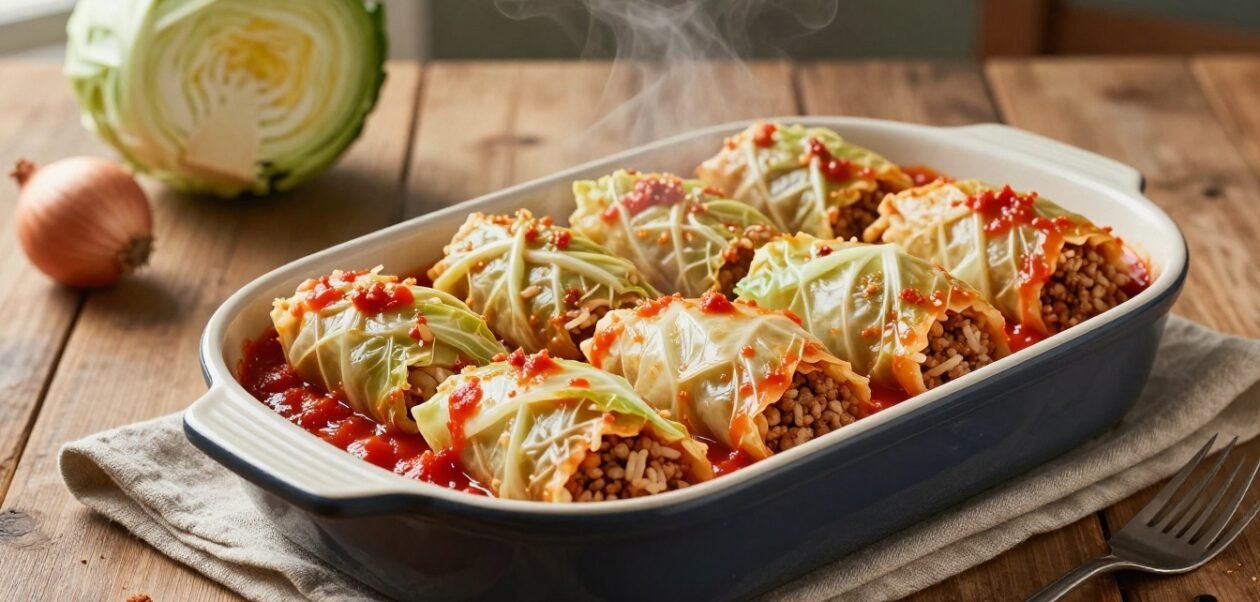
Tender cabbage leaves wrap around a savory rice and meat filling, then bake in rich tomato sauce until soft and comforting. This golumpki recipe makes a family-friendly meal, with clear steps for preparing the cabbage, shaping the rolls, and baking them until tender.
It’s a cozy dish worth sharing around the table, and the process is easier when you take it one step at a time. Start by preparing the cabbage leaves.
Golumpki Recipe: What to Expect from This Classic Polish Dish
Golumpki are Polish cabbage rolls made with tender leaves wrapped around a savory filling of ground meat, rice, and onion. The rolls bake in tomato sauce until the cabbage softens and the filling is warm and hearty.
Why these stuffed cabbage rolls are worth making
The ingredients are familiar and easy to find, but the finished dish feels special enough for a Sunday dinner. Each roll gives you meat, rice, and vegetables in one serving, with tomato sauce to spoon over the top. Add a simple salad or another vegetable on the side, and dinner is ready.
You can assemble the rolls ahead, cover the baking dish, and refrigerate it until you’re ready to cook. That makes golumpki handy when you want to get some of the work done before a busy evening. The baked rolls also reheat well, so leftovers make an easy lunch or another dinner.
The name is often written gołąbki in Polish, while golumpki is a familiar English spelling. A simple guide to saying it is “goh-WOOMP-kee.” If you’d like to hear another common pronunciation, Caroline’s Cooking shares a guide to gołąbki.
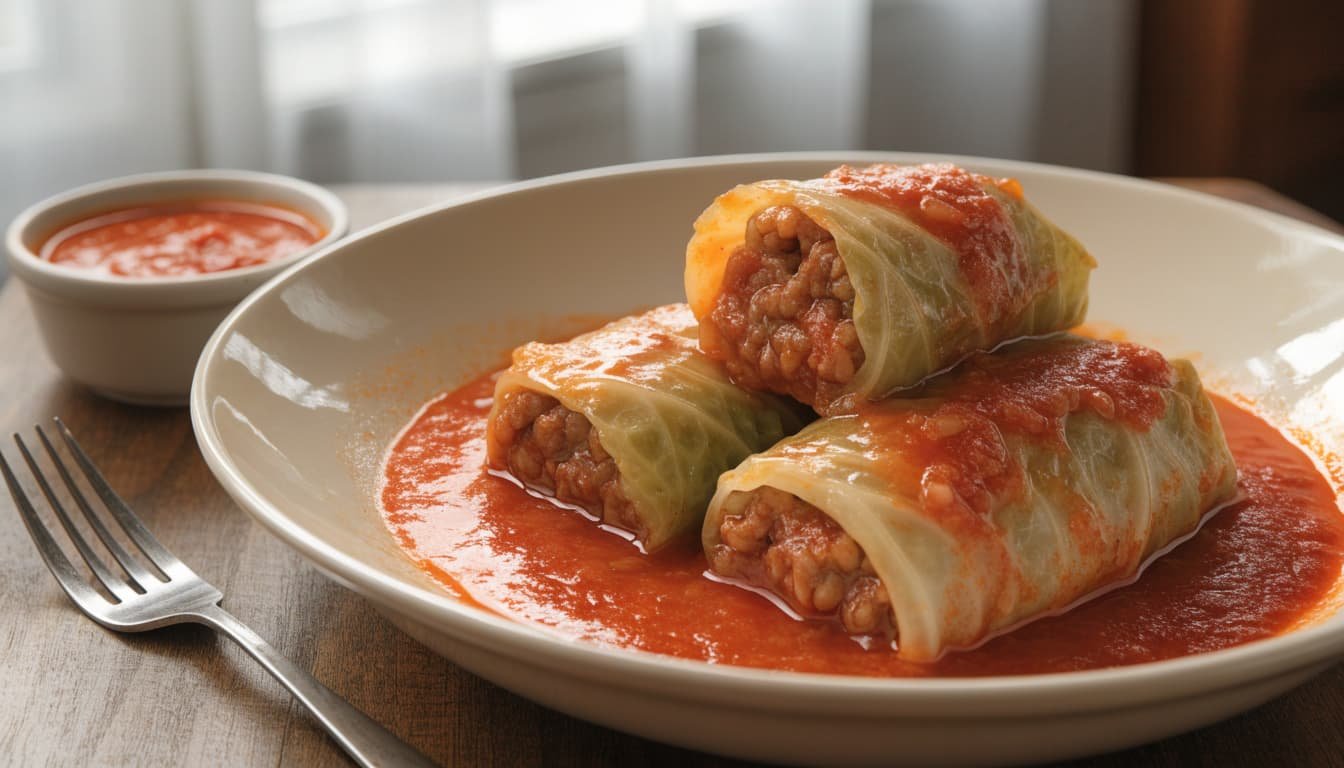
Expect tender, flexible cabbage leaves around a savory filling, with tomato sauce bubbling around the rolls as they bake. The leaves should be soft enough to cut easily, while the rice and meat stay moist inside. You can serve the rolls straight from the baking dish, with extra sauce spooned over each portion.
For an easier start, soften the cabbage leaves until they bend without tearing. Then fill and roll them snugly, and place them seam-side down in the dish. The rolls hold their shape as they bake, and the sauce keeps the edges from drying out.
Recipe snapshot:
- Yield: About 12 rolls
- Prep time: About 40 minutes
- Cook time: 1 hour 30 minutes to 2 hours
- Serving size: 2 rolls per person, serves 6
The prep time includes softening the cabbage, mixing the filling, and rolling the leaves. Give yourself closer to two hours if this is your first time making them or if your cabbage leaves need extra time to soften.
The Ingredients That Make Tender, Flavorful Golumpki
A good golumpki recipe starts with leaves that bend easily, a moist meat-and-rice filling, and tomato sauce with enough seasoning to keep each bite lively. Here are the ingredients I use for about 12 rolls.

Choose cabbage leaves that roll without tearing
Look for one large head of green cabbage, about 3 to 4 pounds, with broad, intact leaves. The outer leaves become the wrappers, while the smaller inner leaves can line the baking dish or be saved for another meal.
Boiling or blanching softens the leaves so they fold around the filling without cracking. If you want a shortcut, freeze the whole cabbage, then thaw it in the refrigerator. The leaves loosen as the cabbage thaws, so you can peel them away without boiling the head.
For the cabbage:
- 1 large head green cabbage, about 3 to 4 pounds
- Water for boiling or blanching
Build a juicy meat-and-rice filling and bright tomato sauce
Cook the rice before mixing it into the filling. It absorbs flavor from the meat and sauce as the rolls bake, while helping the filling hold together. Ground beef gives the rolls a hearty flavor; ground pork makes them a little richer. A beef-and-pork blend is a good middle ground.
For the filling:
- 1 pound ground beef, ground pork, or a blend
- 1 cup cooked white rice
- 1 small yellow onion, finely diced, about 1/2 cup
- 1 teaspoon kosher salt
- 1/2 teaspoon black pepper
- 1 clove garlic, minced, optional
- 1 tablespoon chopped parsley, optional
The onion adds moisture and sweetness. Garlic and parsley are easy flavor additions, but the filling is satisfying with just meat, rice, onion, salt, and pepper. If you use ground beef or pork, cook the filling through and check that it reaches 160°F with a food thermometer, as recommended in the USDA safe temperature chart.
For the sauce:
- 15 ounces tomato sauce
- 14.5 ounces crushed tomatoes
- 1/2 teaspoon kosher salt, plus more to taste
- 1/4 teaspoon black pepper
- 1 tablespoon brown sugar, optional
The tomato sauce gives the rolls moisture as they bake, while crushed tomatoes add body and a fresh tomato flavor. Taste the sauce before pouring it over the rolls. Add a little salt if it tastes flat, or stir in the optional brown sugar if the tomatoes are too tart.
How to Prepare the Cabbage and Roll Golumpki
Take your time with the cabbage leaves. They need to be soft enough to fold without cracking, but still sturdy enough to hold the meat and rice filling as the rolls bake.

Soften the leaves and trim the thick ribs
Use a small knife to cut around the cabbage core and remove it. Bring a large pot of water to a gentle simmer, then lower in the cabbage with the cored side facing down. As the outer leaves soften, lift them away carefully with tongs and set them on a clean towel to cool. A Polish cabbage roll recipe uses this same core-first method.
Keep simmering the cabbage and removing leaves until you have enough large, flexible wrappers. If a leaf resists, return the head to the pot for another minute or two. The leaves are ready when they bend easily without feeling mushy.
Once the leaves are cool enough to handle, shave down the thick center rib with a paring knife. For a very thick rib, cut a shallow V-shaped notch around it and remove that firm section. This helps the leaf fold neatly without tearing. Save any small or torn leaves to line the bottom of your baking dish, and set aside the larger leaves for rolling.
Fill and fold each cabbage roll neatly
Mix the ground meat, cooked rice, onion, and seasonings in a bowl until evenly combined. Set a cabbage leaf flat with the rib end nearest you. Add a modest spoonful of filling near the base, using less than you think you need if the leaf is small. You should be able to cover the filling without stretching the cabbage.
Fold the sides over the filling, then roll the leaf away from you toward its tip. Keep the roll snug so the filling stays tucked inside, but don’t squeeze it tight. The meat and rice need a little room as they cook, and overfilling can make the leaf split.
Place each roll seam-side down in the baking dish. If a leaf is too small to wrap the filling completely, overlap it with another leaf or use it to cover the bottom of the dish. Once all the rolls are arranged, they’re ready for tomato sauce and the oven.
Bake the Golumpki in Tomato Sauce Until Tender
Once the rolls are filled, arrange them seam-side down in a baking dish. Pour tomato sauce over and around them so the cabbage stays moist as it bakes. A snug layer of sauce also helps keep the rolls from drying out around the edges.

Keep the rolls moist while they bake
Cover the dish tightly with foil or a lid for most of the baking time. Bake at 350°F for about 60 to 90 minutes. Smaller rolls may be ready sooner, while larger rolls or a crowded dish can take longer.
Check the cabbage and filling instead of relying on the clock alone. The leaves should be tender enough to cut easily, and the meat filling should be fully cooked. Insert a food thermometer into the center of a roll, aiming for the meat filling. Ground beef and pork should reach 160°F, according to FoodSafety.gov’s safe temperature chart.
If you like a little color on top, remove the cover near the end and bake until the exposed edges brown lightly. Keep the sauce around the rolls, and spoon some over the top before serving.
Fix common problems with cabbage rolls
Cabbage leaves can crack if they’re too firm or if the thick rib resists folding. If a leaf tears while you’re rolling, overlap it with a second leaf or use it to patch the gap. Next time, soften the leaves a little longer and trim down the thick center rib.
If a roll opens in the oven, it may have been overfilled or placed seam-side up. Turn it seam-side down before baking, and leave a little room inside for the filling to cook without stretching the cabbage.
A sauce that looks too thick can dry around the edges during a long bake. Stir in a small splash of water or broth, then make sure the rolls are covered with sauce before returning the dish to the oven. If the cabbage is still firm when the filling is cooked, cover the dish again and bake for another 10 to 15 minutes. Check the leaves and sauce, then repeat if needed.
Serve, Make Ahead, and Store Leftover Golumpki
Serve the golumpki hot, with extra tomato sauce spooned over each roll. A simple side is all you need to round out the meal, since the cabbage rolls already bring plenty of flavor and a filling mix of meat and rice.
Make a meal with simple sides and extra sauce
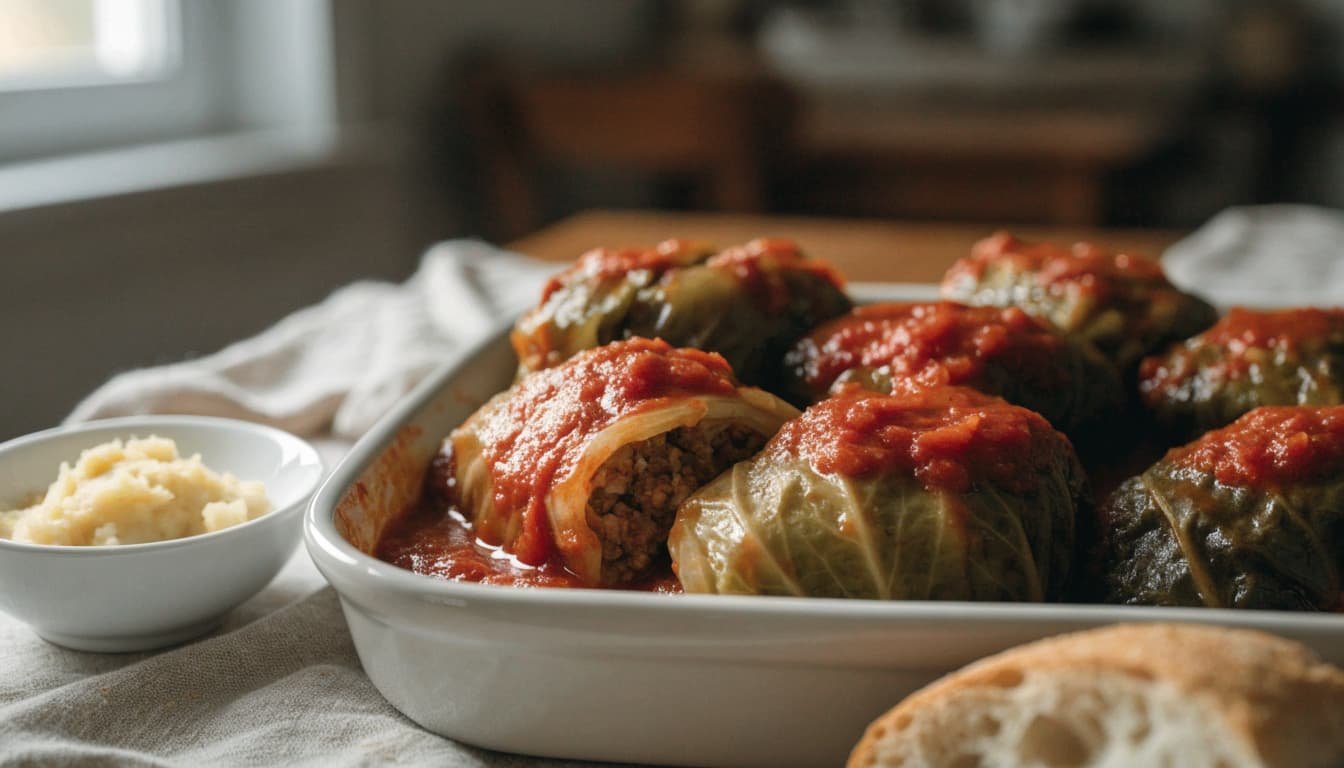
Mashed or boiled potatoes soak up the tomato sauce, while crusty bread is handy for catching every last spoonful. You can also serve the rolls with a simple green vegetable, such as steamed green beans or broccoli. Keep the sides easy, and let the tender cabbage and savory filling stay at the center of the plate.
To get ahead, assemble the rolls in the baking dish, cover it, and refrigerate for up to 24 hours before baking. If the dish goes into the oven cold, allow extra baking time and check that the cabbage is tender and the filling is hot all the way through before serving.
Refrigerate or freeze cooked cabbage rolls safely
Cool cooked leftovers promptly, then transfer them to a covered, shallow container and refrigerate within two hours. Use refrigerated rolls within 3 to 4 days. The USDA guide to leftover food safety recommends refrigerating leftovers promptly and reheating them to 165°F.
For longer storage, freeze the rolls with their sauce in airtight portions for about three months. The sauce helps keep the cabbage and filling moist, and freezing individual portions makes it easier to reheat only what you need. Label the container with the date so you can keep track of how long it has been stored.
Thaw frozen golumpki in the refrigerator, preferably overnight. Reheat them covered in an oven-safe dish until they’re hot throughout, adding a splash of water or extra tomato sauce if the dish looks dry. You can also warm individual portions in the microwave, stirring or turning them as needed for even heating. Check the center of a roll with a food thermometer; the filling should reach 165°F.
Conclusion
Careful cabbage prep and a covered bake help make this golumpki recipe tender, moist, and satisfying. The soft leaves hold the savory filling together, while the tomato sauce brings everything to the table in one cozy dish.
Make these cabbage rolls for a family meal, or assemble them ahead to make dinner easier. Take your time with the leaves, then let the oven do the rest.

- Christmas Cookie Ideas for Every Holiday Baker - November 9, 2026
- Christmas Cocktails: Party Drinks, Cozy Sips, and Mocktails - November 9, 2026
- 20 Christmas Appetizer Ideas for Every Holiday Spread - November 9, 2026