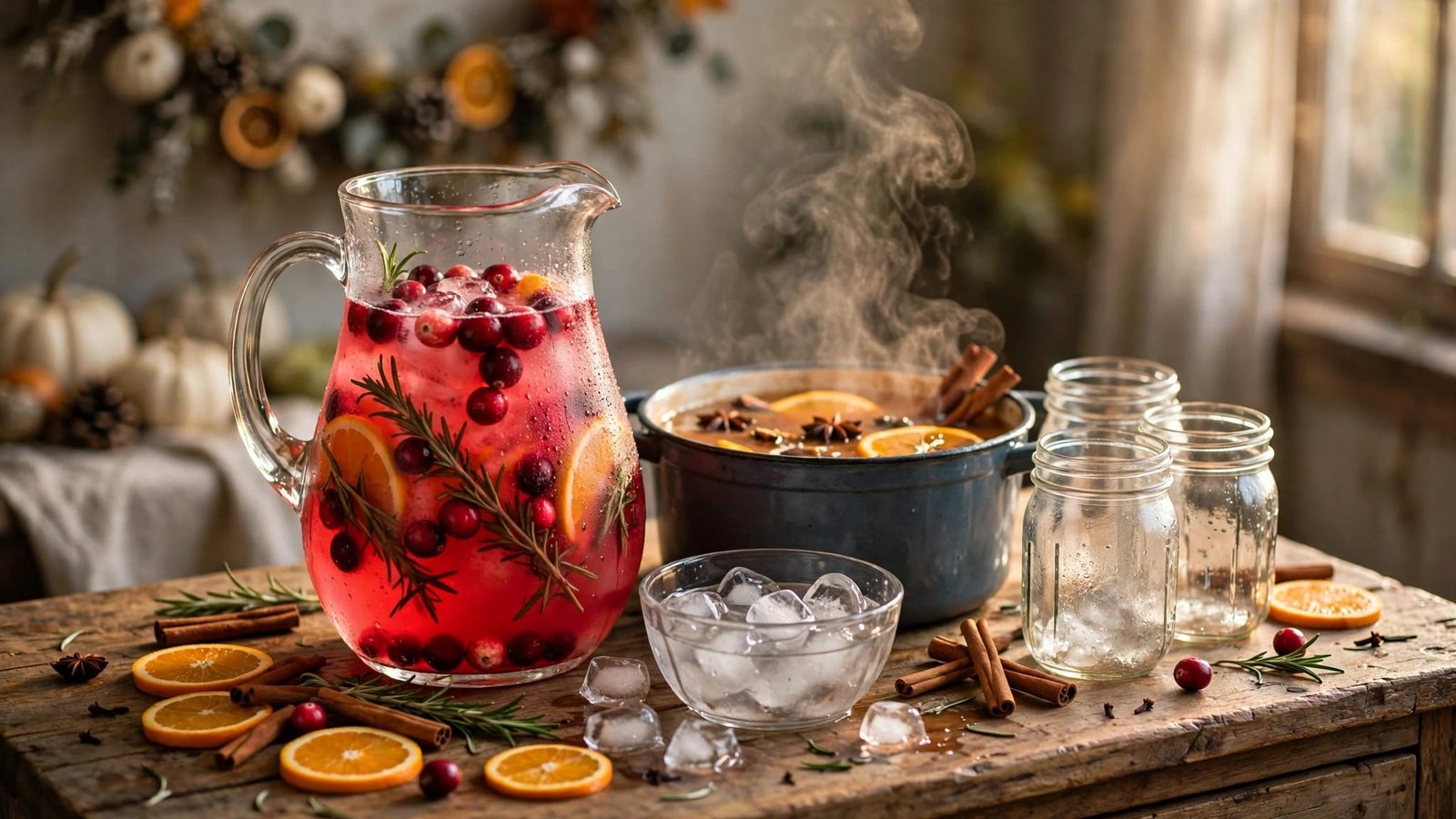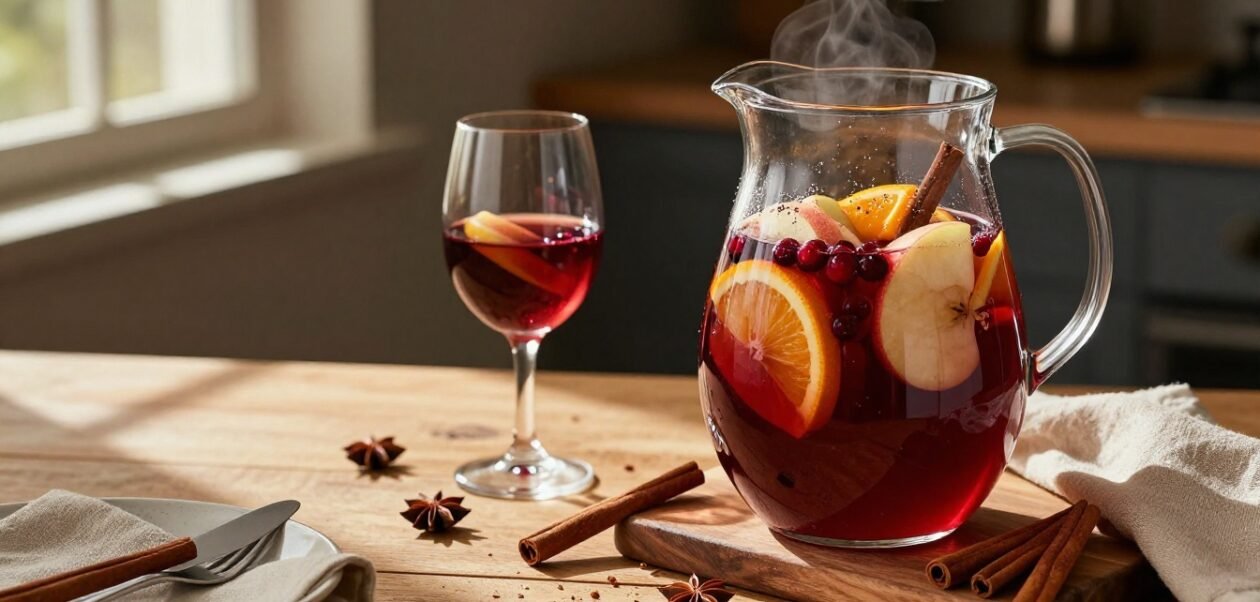
A chilled, fruit-filled pitcher is an easy fit for an autumn gathering, especially when the table is full and you’d rather not mix drinks one glass at a time. Fall sangria can go bright and crisp with white wine, apple, and pear, or warm and spiced with red wine, cranberries, and cinnamon.
The best mix depends on what you’re serving and how much time you have to let the fruit steep. Here are a few easy options, plus simple make-ahead and serving tips to help you choose the right pitcher.
Fall sangria ideas for every kind of autumn gathering
A good fall sangria starts with a dry wine, then cider, seasonal fruit, spices, and a splash of something sparkling shape the pitcher. Choose a deeper red for a cozy dinner, a crisp white for a lighter brunch, or add tart cranberries or bubbles when the occasion calls for something different.
Make a cozy red sangria with apple cider and warm spice
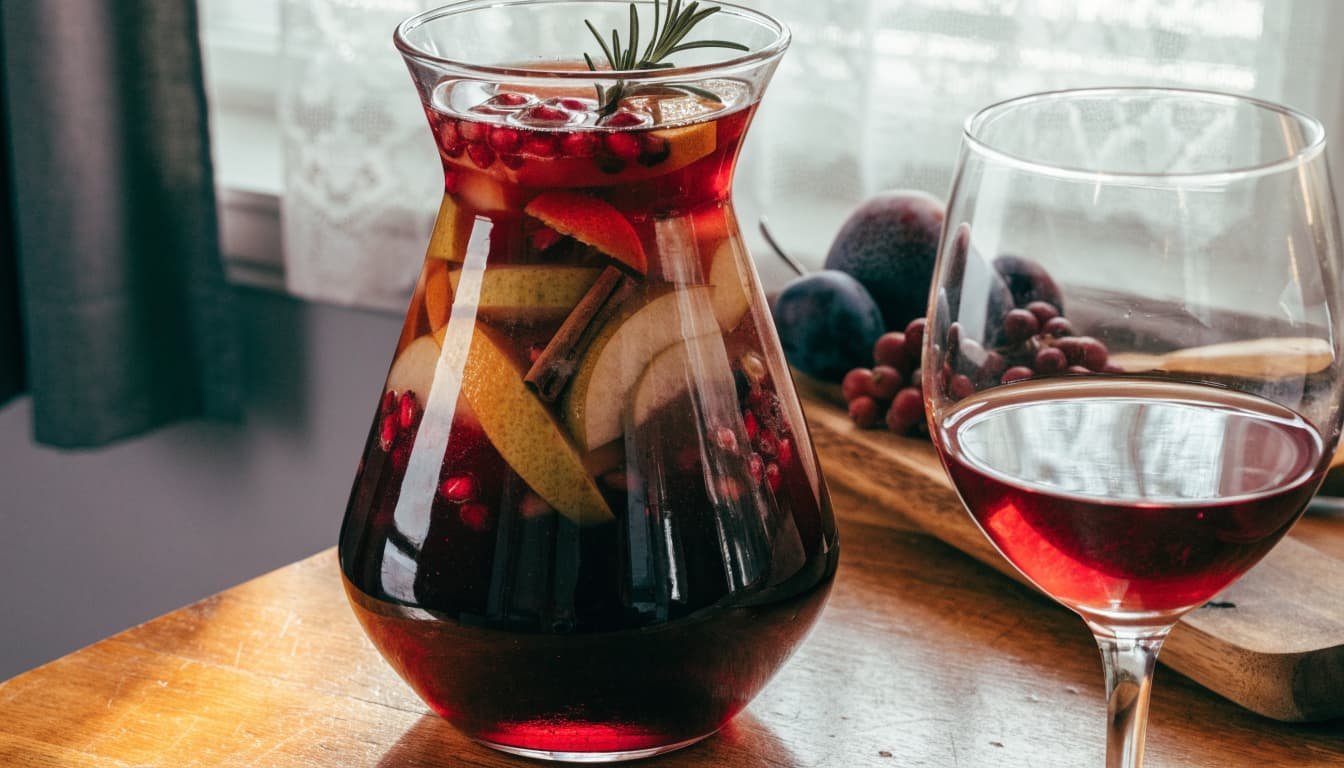
For a cool evening, combine dry red wine with apple cider, sliced apples and pears, orange rounds, and a cinnamon stick. A splash of brandy adds a classic, rounded flavor, while bourbon brings a gentle oak note. Start with a small pour, taste, then adjust so the spirit supports the fruit instead of taking over.
Let the mixture chill for a few hours so the fruit has time to flavor the wine. Apples and oranges are reliable sangria choices, and this red sangria recipe offers another take on that combination. Just before serving, add pomegranate arils for jewel-like color or a small rosemary sprig for a fresh, woodsy note. This fuller-bodied fall sangria pairs nicely with roast vegetables, baked pasta, and other hearty dishes.
Keep it bright with white wine, pears, and ginger
For a lighter pitcher, use dry Sauvignon Blanc or Pinot Grigio with sliced pears, apples, and orange. Add a cinnamon stick or a few whole cloves for a gentle autumn aroma. White wine keeps the fruit and spice in the foreground, while red wine gives sangria a deeper, more robust flavor.
Chill the base with the fruit, then pour in ginger ale, sparkling cider, or soda water just before serving. Ginger ale adds sweetness and a little bite; soda water keeps the flavor crisp. If you use sparkling cider, taste before adding any extra sweetener.
Try cranberry, fig, or sparkling fruit variations
You can change the flavor without starting over with a completely different recipe. Add cranberries, apple slices, and white wine for a tart, bright pitcher. For a richer fruit note, stir chopped figs and orange into red or white wine with a little fresh ginger.
For a festive gathering, use sparkling wine as the base or add a splash to the finished pitcher. Keep the other ingredients simple so the bubbles and fruit can shine. Whichever direction you choose, add carbonated mixers just before serving to keep them fizzy.
Pair fall fruit and spices without making the pitcher too busy
Fall fruit and warm spices are an easy match, but a sangria pitcher can get crowded fast. Start with a few fruits that bring different flavors and textures, then add one or two spices. A little contrast gives the wine room to shine.

Choose fruit that holds its shape and adds contrast
Apples and pears are reliable fall sangria choices because they stay firm in the pitcher and are easy to serve. Oranges add a bright, citrusy note, while pomegranate seeds bring tartness and a pop of color. Pick a few, rather than adding every fruit you have.
For a balanced mix, combine a crisp or tart fruit with something sweeter. Apple with pear works well, as does tart cranberry with sweet orange. Citrus can brighten richer or sweeter ingredients, so a few orange slices may be all the pitcher needs. Orange and cinnamon are also a familiar pairing in this cranberry sauce recipe.
Cranberries, plums, blackberries, and figs make nice seasonal additions when you want to change the flavor. Choose one extra fruit at a time. Slice apples, pears, and oranges thinly so they fit neatly in glasses and are easy to scoop out when you serve.
Use cinnamon, ginger, or herbs with a light hand
Cinnamon brings a gentle warmth that suits apple and pear. Fresh ginger adds a little bite, especially in a white-wine pitcher, while rosemary gives fruit a fresh, herbal note. Choose one main flavor, then add a second only if it complements the fruit.
Whole spices like cloves, allspice, cardamom, and star anise can quickly take over. Use just a small amount, and taste the sangria before adding more. You don’t need to heat or steep the spices unless your recipe calls for it. For a chilled pitcher, a cinnamon stick can add flavor as the sangria rests, and you can remove it if the spice gets strong.
A simple rule helps keep the pitcher balanced: a few fruits and one or two spices are usually enough. If the wine tastes sweet, add tart fruit or citrus. If the fruit is sharp, choose a sweeter pear or orange to round it out.
Build a balanced fall sangria pitcher from a simple formula
Think of fall sangria as a flexible pitcher, not a recipe that needs exact measurements. Start with dry wine, add seasonal fruit and a modest pour of cider, then taste before reaching for sweetener or spirits. You can always add more, but it’s harder to fix a pitcher that’s too sweet or strong.
Balance dry wine with cider, sweetener, and spirits
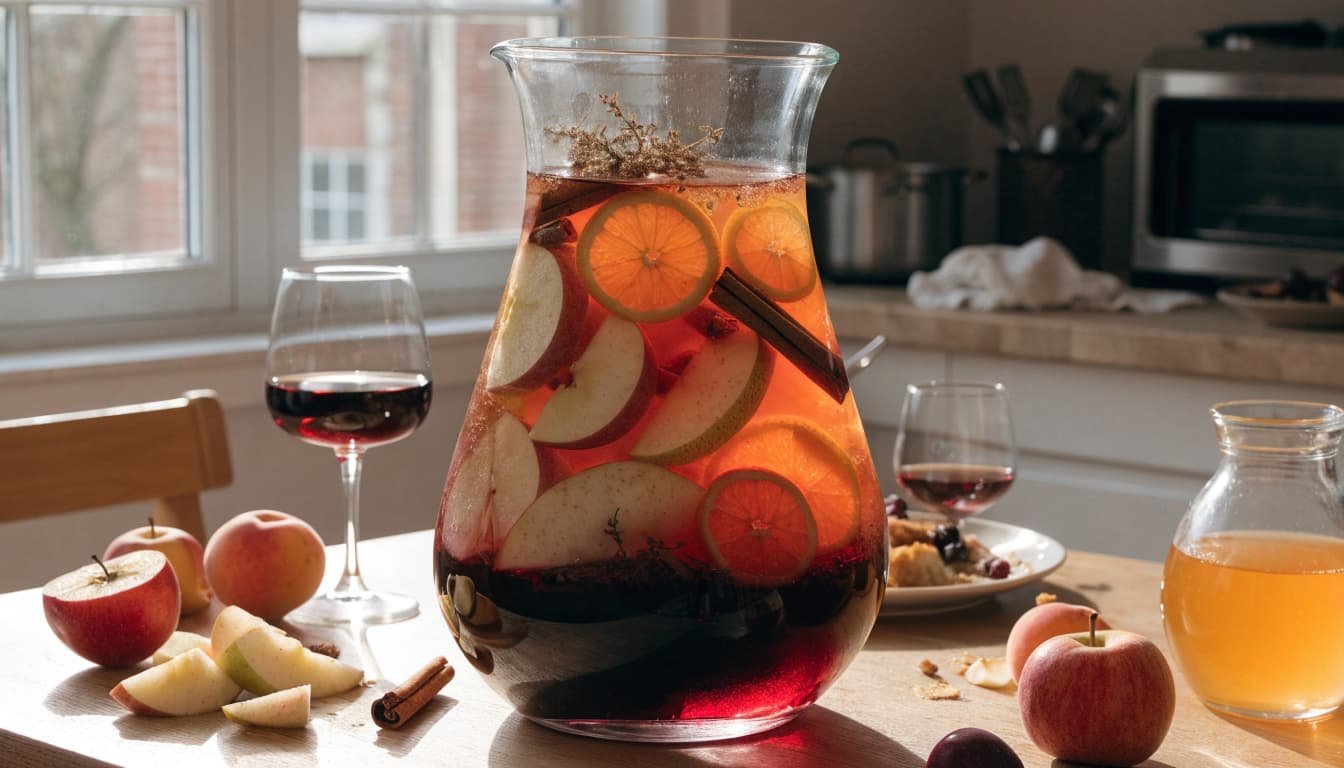
Pour one bottle of dry red or white wine into a pitcher, then add sliced apples, pears, or oranges. Stir in about a cup of apple cider as a starting point. It brings mellow sweetness and apple flavor, while sparkling cider adds both sweetness and bubbles. If you plan to use a fizzy mixer, save it for serving so it stays lively.
Let the fruit sit in the chilled wine mixture for a few hours, then taste it. If the wine and fruit still seem tart, add a little maple syrup, honey, or simple syrup, stir well, and taste again. Cider and fruit vary in sweetness, so adjust in small amounts instead of sweetening the whole pitcher at once.
Apple or pear brandy and orange liqueur are optional. A small splash can add warmth and a fuller fruit flavor, but the pitcher doesn’t need them to taste complete. Both also raise the alcohol strength, so pour conservatively and keep the wine base in mind when serving.
Adjust the pitcher for a lighter or less sweet drink
For a lighter-tasting fall sangria, use less brandy or liqueur, or skip them altogether. Add more cider for a softer apple flavor, or top each glass with sparkling cider or soda water. Add sparkling mixers just before serving to preserve their bubbles.
Sparkling water is useful when the pitcher tastes too sweet. It adds lift while diluting the rich fruit and cider flavors. Extra syrup does the opposite, and can make a sweet pitcher feel cloying, so taste before adding any. If the sangria needs a little brightness, a squeeze of orange may help more than another pour of sweetener.
Using less added spirit or adding more mixer does not make wine-based sangria alcohol-free. The wine still contains alcohol, even when cider or soda water lightens the flavor. For a nonalcoholic pitcher, choose nonalcoholic wine or make a separate mix with cider, fruit, and sparkling water. The NIAAA guide to standard drinks can help you understand how wine and spirits contribute to a serving.
Make fall sangria ahead while keeping it fresh and fizzy
A little make-ahead time gives fall sangria a fuller fruit flavor and makes hosting easier. Chill the wine, fruit, and other still ingredients together, then save anything bubbly for the moment you serve.

Give the fruit time to flavor the wine
Let the mixture chill for at least 30 minutes before serving. Several hours or overnight gives the fruit and spices more time to mingle with the wine, cider, or juice. Cover the pitcher or transfer the base to a lidded container, then keep it refrigerated while the flavors develop.
If you’re making a warm or mulled base, let it cool completely before adding fresh fruit. Adding fruit while the liquid is hot can soften it too quickly, so the slices may lose their shape before you pour.
For the freshest texture, prep the fruit close to serving time when you can. Apples and pears hold up well, but thin slices can soften as they sit in liquid. If you’re prepping the day before, keep an eye on the fruit and remove any spice that starts to overpower the wine.
Keep the pitcher cold until it’s time to serve. The USDA recommends keeping refrigerators at 40°F or below, and says perishable foods shouldn’t sit out for more than two hours. See the USDA’s food safety guidance for leftovers for the same basic chilling rule.
Add bubbles at the last minute and serve over ice
Ginger ale, soda water, tonic, sparkling cider, and sparkling wine all work as a final splash. Add your choice just before pouring so the bubbles stay lively. If you’re not sure how sweet the finished pitcher will be, add sparkling mixer a little at a time and taste as you go.
For easier hosting, chill the still sangria base in a covered container, then transfer it to a serving pitcher before guests arrive. Keep the bubbly mixer chilled separately until serving. That way, you won’t have to fuss with a sealed bottle or crowded fridge once everyone is ready for a glass.
Pour the sangria over ice in wine glasses. Whenever possible, add ice to each glass rather than the pitcher, so melting ice doesn’t water down the whole batch. A slice of apple, pear, or orange in each glass makes the drink feel special without adding extra prep.
Serve seasonal sangria with easy garnishes and party food
A few simple touches make a pitcher of fall sangria feel right at home on a family-style dinner table. Set out garnishes and savory snacks, then offer a festive nonalcoholic drink alongside it.

Dress up each glass with fruit, herbs, or cinnamon
Add a fresh orange or apple slice to each glass, or scatter in a few pomegranate arils for color. A cinnamon stick brings a subtle autumn aroma, while a small rosemary sprig adds a fresh, herbal note. Choose one or two garnishes that suit the pitcher, rather than crowding the glass.
Fresh garnishes add visual appeal and aroma, especially when the sangria has been chilling for a few hours. You can also spoon some of the fruit that steeped in the pitcher into each glass. It’s soft and full of flavor, and makes the drink feel generous without extra prep.
Pair the pitcher with savory snacks and a nonalcoholic option
Fall sangria pairs well with roasted vegetables, cheese and crackers, or a bowl of spiced nuts. For dinner, pour it alongside roast chicken, baked pasta, or another hearty fall meal. These simple options work for a casual gathering, and guests can help themselves while you enjoy the evening.
Set out sparkling cider or make a fruit-and-spice punch without wine, using apple cider, orange slices, cinnamon, and sparkling water. That gives guests who don’t drink alcohol a festive choice, too. Keep it in a separate, clearly identified pitcher, and use separate serving utensils if fruit is shared between drinks.
Wine-based sangria is an alcoholic drink, even when it tastes light or includes cider and sparkling water. The NIAAA guide to alcohol drinking patterns explains that a standard drink contains 0.6 fluid ounces of pure alcohol. Offer water and food alongside the sangria, and let guests choose whether they want an alcoholic or alcohol-free pour.
Conclusion
A good fall sangria starts with a wine you enjoy, a few seasonal fruits, and just enough spice to bring out their flavor. Taste the pitcher before adding sweetener, then pour in any sparkling mixer right before serving so it stays fizzy.
Try a red wine with apple and cinnamon or a white wine with pear and citrus. Adjust the fruit and sweetness to your taste, and keep the mix simple enough for each flavor to shine.

- Christmas Cookie Ideas for Every Holiday Baker - November 9, 2026
- Christmas Cocktails: Party Drinks, Cozy Sips, and Mocktails - November 9, 2026
- 20 Christmas Appetizer Ideas for Every Holiday Spread - November 9, 2026