A fall potluck is a lovely way to share cozy seasonal food without asking one person to make the whole meal. You can bring a nourishing dish that feels right for the season, whether that’s a comforting casserole, a hearty salad, or a simple dessert.
Here, you’ll find crowd-friendly fall potluck ideas, along with menu-planning advice, make-ahead tips, and clear food-safety guidance. Let’s start with dishes that are easy to share and bring a little autumn comfort to the table.
Fall Potluck Ideas for a Crowd, From Cozy Mains to Sweet Treats
For an easy fall potluck menu, bring a dish that’s comforting, simple to serve, and sturdy enough to travel. These ideas pair seasonal produce with beans, whole grains, and other filling ingredients, so everyone can find something they enjoy.

Bring a hearty soup, chili, or casserole
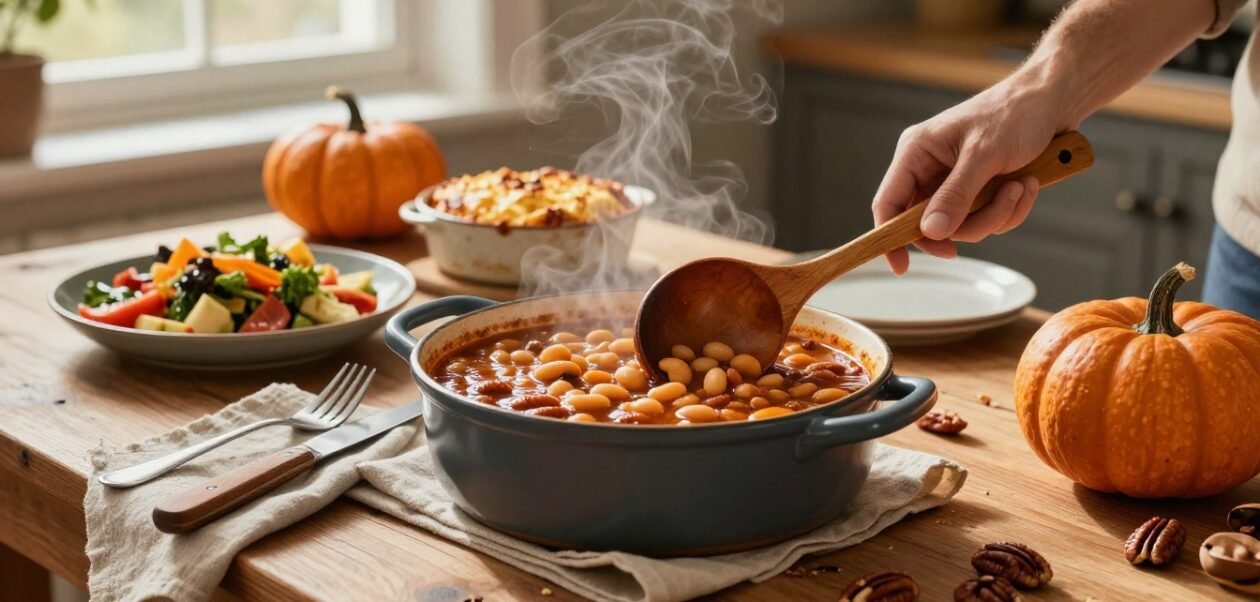
A pot of bean chili, lentil soup, or turkey chili makes a satisfying main dish for a crowd. They’re easy to prepare a day ahead, and their flavors often taste even better after resting overnight. Pack the pot in an insulated carrier, then keep it hot in a slow cooker or warming dish once you arrive.
For something you can slice and serve, try a squash and grain casserole with quinoa or brown rice. A vegetable stew is another cozy choice, especially when you add beans for extra staying power. These dishes travel well when kept hot, and a sturdy serving spoon is all you need.
Make seasonal vegetables the star of the side dish
Roasted Brussels sprouts, sweet potatoes, squash, and root vegetables bring color and a little sweetness to the table. Toss them with olive oil, salt, pepper, and herbs like rosemary or thyme. A modest drizzle of maple syrup works nicely on squash or sweet potatoes, but the vegetables should still taste savory.
For easier serving, roast the vegetables until tender with browned edges, then pack them in a wide, shallow dish. You can make them ahead and reheat them before leaving, or serve them warm or at room temperature if the gathering allows.
Choose a grain salad, slaw, or bean-based dish
A farro or quinoa salad with roasted squash, chopped herbs, and a bright vinaigrette adds a hearty but fresh option. Crunchy autumn slaw with cabbage, apples, and carrots brings a crisp contrast to warm casseroles. For a quick, protein-rich side, toss white beans with olive oil, lemon, and parsley.
Chilled dishes add variety to a table full of warm foods, but they need to stay cold during transport and serving. USDA recommends keeping cold foods at or below 40°F and hot foods at or above 140°F. See the USDA’s potluck food safety recommendations for practical tips on packing and holding dishes.
Finish with a lighter dessert or snack to share
A seasonal fruit crisp, baked apples, or pumpkin oat bars are easy to portion and pass around. Cut bars into squares before you leave, or bring a serving spoon for crisp and baked fruit. If the dessert table already has rich pies and cakes, a platter of hummus and fresh vegetables gives guests a less-sweet option.
Build a Balanced Potluck Menu Everyone Can Enjoy
The best fall potluck ideas bring variety to the table without asking you to plan the whole meal. Before you choose a dish, check what the host needs, consider what guests can eat, and ask how many people you’re feeding.

Match your dish to the host’s menu and serving setup
A quick message to the host can save you from bringing a third casserole when the table already has two. Ask whether a main, side, salad, or dessert would be most helpful, then choose something that complements the dishes others plan to bring. If the menu is rich and hearty, a crisp salad or roasted vegetables add a fresh contrast.
Check what equipment will be available, too. A hot dish may need oven space or an outlet for a slow cooker, while a chilled salad needs room on the table and serving utensils. Choose a recipe you can serve with the setup, whether that means bringing your own spoon or picking a dish that tastes good at room temperature.
Include options for common food needs
A potluck feels more welcoming when guests can find something they can eat. If you know a dish contains common allergens, write the ingredients on a small card and name the specific source, such as milk, wheat, soy, or almonds. The FDA lists the nine major food allergens, which can help you double-check your ingredient note.
When relevant, mention whether a dish is vegetarian, vegan, or gluten-free, and be clear about ingredients like broth, cheese, or sauces. A naturally plant-based option, such as bean chili or roasted vegetables, gives guests a satisfying choice without requiring a separate special dish. If you’re unsure whether a recipe meets someone’s needs, let them check the ingredient list rather than guessing.
Estimate portions without bringing too much
The right amount depends on the guest count and how many dishes will be served. When the host expects a full spread, plan for a modest serving per guest instead of making enough for everyone to eat only your dish. A casserole can be cut into smaller portions, while a salad or vegetable side can be scooped onto plates alongside the main dishes.
If the host asks you to bring a main course, check whether it should feed the entire group or simply add another option. That small detail helps you plan portions and avoid a mountain of leftovers. For a shared potluck menu, a well-sized dish that guests can easily serve themselves is usually just right.
Prep Fall Potluck Dishes Ahead Without Losing Flavor
A little planning makes fall potluck cooking easier and keeps each dish tasting fresh. Cook the sturdy parts ahead, then finish the crisp, fresh, or delicate elements close to serving time.

Make soups, casseroles, and sturdy sides the day before
Many soups, chilis, casseroles, and roasted vegetable sides can be cooked a day ahead. Let hot food cool briefly, then transfer it to shallow containers and refrigerate promptly. Shallow portions cool faster than a deep pot, and they’re easier to reheat evenly.
Before leaving, reheat the dish until it’s steaming hot. Bring soups and sauces to a boil, and use a food thermometer for casseroles or other leftovers. The USDA’s leftover food safety guidance recommends refrigerating cooked food within two hours and reheating leftovers to 165°F.
Keep crunchy toppings and fresh herbs separate. Add toasted pepitas, croutons, chopped parsley, or a sprinkle of cheese just before serving, so they stay crisp and bright instead of softening in the dish.
Pack dressings and delicate toppings separately
For salads and slaws, pack the dressing in a small, sealed container and toss it with the vegetables shortly before serving. This keeps leafy greens from wilting and cabbage from losing its crunch. If you’re bringing a grain salad, you can dress sturdy grains ahead, then add tender herbs or greens later.
Nuts, seeds, croutons, and delicate fruit are best packed separately, too. A few small containers take up little space, and they let you finish the dish right before it hits the table. Keep chilled ingredients in a cooler with ice packs during the trip.
Make serving easy with labels and the right tools
Add a simple label with the dish name and key ingredients, especially if it contains common allergens. Pack a serving spoon, tongs, or a knife if your dish needs one. It’s easy to forget these when you’re focused on the food.
Choose containers that are easy to open and close, and bring one that can go straight from the refrigerator to the table. If your dish needs reheating or chilling, plan for that before you leave. A few small steps make your fall potluck ideas easier to serve, and help each dish arrive with its best texture intact.
Transport and Serve Potluck Food at Safe Temperatures
Safe handling matters as much as choosing a good recipe. Keep perishable dishes out of the 40°F to 140°F danger zone, where bacteria can grow quickly. Pack food to stay cold or hot during the trip, then keep it at a safe temperature while everyone serves themselves.

Keep cold salads and dips at 40°F or below
Pack cold dishes in a cooler with plenty of ice or frozen gel packs. Keep the cooler closed during the drive, and place it in the passenger area rather than a warm trunk when possible. A refrigerator thermometer can help you check that the food stays at 40°F or below.
This matters for leafy salads, creamy dips, egg salad, and dishes made with dairy or eggs. Instead of setting out the whole batch, serve a smaller portion and keep the rest chilled. Refill the serving bowl with a fresh batch as needed, using clean utensils each time.
Hold hot dishes at 140°F or above
An insulated carrier helps a hot casserole or soup stay warm on the way to the gathering. Once you arrive, transfer it to a slow cooker set to keep food hot or a chafing dish with a heat source. Check the food with a thermometer if you’re unsure it’s holding at 140°F or above.
If you cooked the dish ahead and refrigerated it, reheat it to 165°F before serving. A slow cooker is meant for holding hot food, not reheating a cold casserole quickly, so warm the dish in the oven or on the stove first. The USDA’s potluck food safety recommendations cover safe temperatures and ways to keep dishes hot or cold.
Follow the two-hour rule and shorten it in hot weather
Perishable food shouldn’t sit at room temperature for more than two hours. If the air temperature is above 90°F, shorten that limit to one hour. Keep track of how long a dish has been out, especially during a long meal or outdoor gathering.
When a serving dish runs low, replace it with a fresh batch rather than topping up food that’s been sitting out. If a perishable dish has passed the time limit, throw it away instead of saving it for later. The USDA’s guidance on the 40°F to 140°F danger zone explains why time and temperature both matter.
Set Up a Welcoming Table and Handle Leftovers Well
A little thought in the serving area helps guests find what they need and keeps food safer during a busy potluck. Keep the flow simple, label dishes clearly, and plan for leftovers before the first plate is filled.
Arrange dishes so guests can serve themselves easily
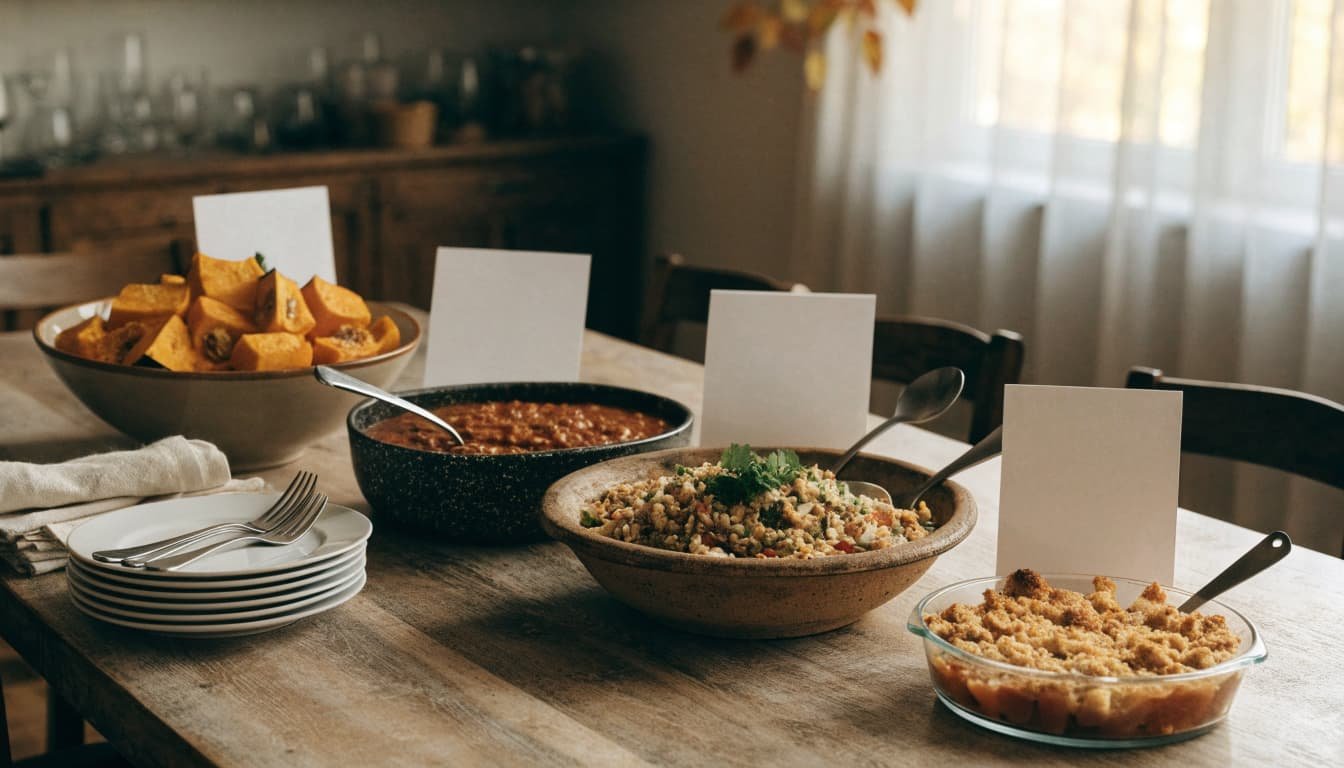
Set the buffet up in a natural order. Put plates at the beginning, followed by the dishes, then utensils and napkins at the end. If space is tight, place forks and napkins beside the plates so guests aren’t reaching across the food.
Give each dish a small label with its name and any key ingredients guests may want to check. Keep labels easy to read, and put the right serving spoon, tongs, or pie server beside each dish. That way, guests won’t need to hunt for tools or use the same utensil for different foods.
For easier temperature control, set out small portions and refill them from food kept safely hot or cold. Keep chilled dishes on ice and hot dishes on a warming tray or in a slow cooker. This works especially well when a dish may sit out for a while, since a smaller serving can be replaced without leaving the whole batch on the table.
Refrigerate leftovers promptly and share them safely
Perishable leftovers need to be chilled within the same two-hour limit as food on the buffet. If the room or outdoor temperature is above 90°F, refrigerate them within one hour. Divide large amounts into shallow containers so they cool faster, and place them in the refrigerator promptly. The NDSU Extension potluck food-safety guide also recommends shallow containers for cooling leftovers.
If guests want to take some home, offer clean containers and remind them to refrigerate the food as soon as they arrive. A container that has been sitting out on the table isn’t a safe way to pack food for later. Keep any untouched backup portions chilled or hot until they’re ready to be served.
When a perishable dish has been left at room temperature beyond the safe time limit, discard it. It can be tempting to save a favorite casserole or salad, but a quick look or smell won’t tell you whether it is safe to eat. Planning a few clean containers ahead makes it easier to share what stayed safe and avoid carrying home food that sat out too long.
Conclusion
A memorable fall potluck doesn’t need a complicated recipe. Choose one seasonal dish you enjoy making, and plan how you’ll keep it hot or cold during the trip.
Check in with the host about what the menu needs and what serving space is available. With a little planning, your fall potluck dish can arrive ready to share and bring a cozy touch to the table.

- Christmas Cookie Ideas for Every Holiday Baker - November 9, 2026
- Christmas Cocktails: Party Drinks, Cozy Sips, and Mocktails - November 9, 2026
- 20 Christmas Appetizer Ideas for Every Holiday Spread - November 9, 2026