

A cool, crunchy bowl of cucumber and tomato salad with feta and fresh herbs earns its place on the table when the weather turns warm and dinner gets simple. Cucumbers snap, tomatoes spill their juice, and the feta brings a salty creaminess that ties everything together. I’d put this salad beside grilled chicken, a plate of bread and cheese, or whatever comes off the grill, because the fresh flavors make the meal feel lighter.
You’ll need ingredients most people already have: cucumbers, cherry tomatoes, a little red onion, feta, parsley, and a quick vinaigrette you can whisk in a jar. It comes together in about 20 minutes, and you can adjust the quantities to taste.
The part I like most is how flexible it is. Trade the parsley for dill, switch the vinegar for lemon, or add chickpeas or olives, and it still tastes bright. Serve it with warm baked falafel bowls with cucumber tomato salad and dinner feels fresh. Start with the ingredients.
What Goes Into a Cucumber Tomato Salad With Feta
A cucumber tomato salad with feta and fresh herbs works because each ingredient has a clear job. You want crunch from the cucumber, juice from the tomatoes, bite from the onion, and a salty, creamy finish from the feta. I set up a four-serving batch with exact amounts so the balance stays consistent every time.
The Core Ingredients for a Balanced Bowl
Start with the vegetables and build outward. The base for four servings looks like this:
- Use 2 cups of chopped cucumber for the snap.
- Add 2 cups of halved cherry tomatoes for the juice.
- Thinly slice 1/4 cup of red onion for the bite.
- Crumble 4 ounces of feta over the top for salty creaminess.
- Finish with 2 tablespoons of chopped parsley for freshness.
The feta does plenty of seasoning on its own. Taste a bite before you add extra salt, because 4 ounces of feta brings a salty edge that spreads through the whole bowl.
For the dressing, whisk 2 tablespoons olive oil, 1 tablespoon red-wine vinegar, 1/2 teaspoon dried oregano, 1/4 teaspoon salt, and a pinch of black pepper. That small amount of salt is enough once the feta is in.
Feta is salty, so taste the salad before you reach for the salt shaker. That one step keeps the bowl bright instead of briny.
Olives and extra herbs are optional. Add a handful of Kalamata olives if you want a sharper, savory note, or stir dill or mint in with the parsley. The recipe stays flexible, so use what you have and keep the proportions loose.
How to Choose Cucumbers and Tomatoes That Taste Best
Cucumbers vary in water content. English cucumbers and Persian cucumbers have fewer seeds and less water. As a result, the salad stays crisp instead of pooling at the bottom. If you use a standard garden cucumber and the seeds taste bitter, scoop them out with a spoon before chopping.
Cherry or grape tomatoes are convenient because they hold their shape and bring steady sweetness. For a platter, ripe heirloom tomatoes work well. Cut them into bite-size pieces so they mix evenly with the cucumber. Keep every piece a similar size, which makes each forkful balanced.
How to Make Cucumber Tomato Salad With Feta and Fresh Herbs
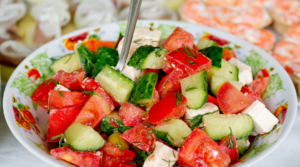
You can build this cucumber tomato salad with feta and fresh herbs in about 20 minutes, and most of that time goes to chopping. I work in three passes: dressing, vegetables, then the delicate additions. That order keeps the herbs lively and the feta from turning soft. Set a cutting board, a wide serving bowl, and a small jar on the counter. Then start with the vinaigrette so the flavors settle while you cut. The recipe moves fast once the knife starts, so you can pause after any step if you need to.
Whisk the Dressing First
In a small bowl or a lidded jar, combine 2 tablespoons olive oil, 1 tablespoon red-wine vinegar, 1/2 teaspoon dried oregano, 1/4 teaspoon salt, and a pinch of black pepper. Whisk or shake until the mixture looks uniform. Oil and vinegar separate as the dressing sits, so give the jar another shake right before you serve. I taste the dressing on a piece of cucumber, then adjust the acid or salt if needed. A little extra vinegar sharpens the salad; more oil softens the edge. Use a fork if you don’t have a whisk. Let the dressing wait while you prep the vegetables, and stir it again before you toss.
Prep the Vegetables and Herbs
Cut the cucumber and tomatoes into bite-size pieces, keeping them roughly the same size so each forkful tastes balanced. Thinly slice the red onion, then chop the parsley or a mix of parsley and dill. Crumble the feta into small chunks rather than fine dust, because larger pieces distribute better. If you plan to eat the salad over a few days, keep the juicy vegetables in one container and the dressing in another. Add the feta and herbs close to serving time so they stay fresh. This small bit of separation helps the cucumber keep its snap and stops the herbs from wilting. Set the components side by side and you can assemble bowls as you need them.
Toss, Taste, and Finish With Feta and Herbs
Combine the cucumber, tomatoes, and onion in a wide bowl. Spoon in about half the dressing, then fold everything gently with a rubber spatula or your hands. Add more dressing only if the salad looks dry; a light coat keeps the vegetables crisp. Scatter the feta and herbs over the top, then fold them in with a few turns. Taste a bite before adding salt, since the feta brings plenty. If the salad tastes flat, add a small squeeze of lemon or a splash of vinegar. A final grind of pepper is a nice touch. Serve it soon, while the cucumbers still crunch and the herbs smell fresh. Leftovers keep in the refrigerator for three or four days, but the texture is best right after tossing.
Dressing Ideas and Herb Combinations That Change the Flavor

The vegetables stay the same; the dressing and the herbs decide how the bowl tastes. I keep three directions in rotation, and each one shifts the salad in a noticeably different way. Lemon and olive oil makes it taste like summer, honey mustard makes it sturdy enough for a platter, and balsamic takes it somewhere sweeter and deeper. Pick one, then match the herbs to it.
A Bright Lemon and Olive Oil Vinaigrette
Lemon juice in place of vinegar gives the salad a fresher, cleaner edge. For a small batch, whisk 1 tablespoon lemon juice with 2 teaspoons extra-virgin olive oil, then scale up for a family bowl. A pinch of dried oregano and a little grated garlic add backbone if you want it.
Dress the cucumbers and tomatoes lightly about 10 minutes before serving. That short rest lets the lemon wake up the flavors without softening the vegetables. Grated zest deepens the citrus note without adding more juice, which matters when the tomatoes are already juicy.
This is the version I reach for when the salad sits beside grilled fish or chicken. The dressing stays loose and bright, so the feta still tastes salty and the cucumber still crunches.
A Honey Mustard Dill Version for a Heartier Side
When the salad has to hold its own on a buffet table, honey mustard gives it weight. Shake white-wine vinegar, a spoonful of honey, Dijon mustard, grated garlic, chopped dill and chives, and olive oil in a jar until the mixture looks creamy. The mustard holds the oil and vinegar together, so the dressing coats every piece instead of sliding to the bottom.
Serve this one over a platter of sliced tomatoes and cucumbers with a block of feta set on top, then spoon the dressing over the cheese. Swap the white-wine vinegar for balsamic and the salad turns sweeter and darker, which works well with roasted vegetables or a steak off the grill. The dill ties straight to the cucumber, so keep it in.
Which Herbs Pair Best With Feta and Tomatoes
Parsley is the safest choice. It tastes clean, holds up to dressing, and never fights the feta. Dill brings a brighter note that flatters cucumber, mint adds a cool finish, basil feels summery, and chives give a mild onion flavor that echoes the red onion in the bowl.
Use one herb or a mix of two. I like parsley with a little mint for a salad served alongside grilled meat, and dill alone when the dressing has mustard in it. Add delicate herbs like basil and dill close to serving time, since they darken and wilt once the acid hits them. Stirring them in at the last minute keeps the color bright and the flavor sharp.
Make-Ahead Tips, Storage, and Common Mistakes to Avoid
A little planning keeps this cucumber tomato salad with feta and fresh herbs crisp from the first bite to the last. I prep the components ahead and assemble close to mealtime, because the dressing softens the vegetables and the feta and herbs lose their fresh edge after a day in the fridge. These habits help you avoid the usual pitfalls: watery salad, soggy vegetables, overdressing, bitter cucumber seeds, and cold muted flavor. Keep the dressing, juicy vegetables, feta, and herbs separate when you can, and refrigerate everything at 40°F or below.
How to Prep the Salad for a Potluck or Weekday Lunch
Pack the sturdy vegetables in one container and keep the feta and herbs in another. Cucumber and red onion hold up well together, while tomatoes stay firmer when they sit apart from the rest. Carry the dressing in a small sealed jar and combine everything at serving time. If the salad will sit out, tuck a cold pack into the bag and return leftovers to the fridge promptly. For a weekday lunch, portion the vegetables into small containers and add the feta, herbs, and dressing when you’re ready to eat. This separation keeps the cucumber crunchy and stops the bowl from turning watery before the meal starts.
How Long Does Cucumber Tomato Salad Last in the Fridge?

Store a dressed salad in an airtight container and plan to eat it within 2 to 3 days. Cucumbers and tomatoes release liquid as they sit, so the salad gets softer each day. For peak crunch, combine only the portion you plan to eat and keep the rest undressed. Refrigerate at 40°F or below, and expect the texture to be best on the first day. If you dress the whole batch, the cucumbers will soften first and the tomatoes will follow. A clear container helps you spot when the salad starts to pool liquid, which is your cue to serve it soon.
Keep the dressing on the side until you’re ready to eat; that single step does more for crunch than any other prep trick.
Five Easy Fixes for Watery or Bland Salad
I run through these five checks whenever the salad tastes off.
- Drain the vegetables well after washing and use a slotted spoon to serve, so extra liquid stays behind.
- Add dressing at the last minute and start with less than you think you need, because overdressing softens the vegetables fast.
- Scoop out bitter cucumber seeds before chopping, especially with garden cucumbers.
- Brighten a flat-tasting salad with a squeeze of lemon or a splash of red-wine vinegar.
- Let a chilled salad sit at room temperature for about 30 minutes before serving, since cold mutes the flavor.
When feta or olives are already in the bowl, taste before adding salt. A little patience and a light hand with dressing keep the salad crisp and bright.
Easy Swaps and Add-Ins for a Family-Friendly Cucumber Tomato Salad
The cucumber tomato salad with feta and fresh herbs already balances crunch, juice, and salt. You can keep that balance while changing the ingredients to match what your family likes or what’s already in the refrigerator. I treat the recipe as a starting point, then adjust the vegetables, cheese, and add-ins based on what looks fresh at the store.
Simple Ingredient Swaps That Still Taste Fresh
Cucumber and tomato anchor the bowl, but other crisp vegetables can share the space. Sliced radishes bring a peppery bite, and diced bell pepper adds sweetness and snap. Shredded cabbage gives the salad a sturdier crunch that holds up well at a potluck. If you have ripe avocado, cube it and fold it in gently at the end, since it turns creamy against the juicy tomatoes.
Cheese is just as flexible. Crumbled goat cheese brings a tangier finish than feta, and skipping the cheese altogether makes the salad dairy-free. Kalamata olives add a salty, savory note, but taste the salad before you add more salt because the olives and feta both season the bowl. A handful of chopped parsley, dill, or mint keeps the flavors fresh no matter which swaps you choose.
How to Turn It Into a Heartier Main Dish
For a main-dish version, add a protein or a starch that can carry the vegetables. Grilled chicken turns the salad into a full dinner, while chickpeas or white beans keep it plant-based and filling. Cooked pasta or grains like farro or quinoa work well, too, especially when you fold them in while they’re still slightly warm. Serve the bowl with warm pita or crusty bread for scooping.
Keep the dressing light when you add heavy ingredients. A few spoonfuls of vinaigrette should coat the salad without pooling at the bottom. If you plan to serve a crowd, set the extra add-ins on the side so everyone can build a bowl they like.
Conclusion
A cucumber tomato salad with feta and fresh herbs stays flexible enough for a weeknight dinner and a potluck table. I treat the recipe as a starting point: swap parsley for dill, use lemon instead of vinegar, or add chickpeas, olives, or grilled chicken when you want more heft.
The best version is the one you assemble close to serving, when the cucumber still snaps and the dressing has not had time to soften it. Stir the dressing just before you toss, taste, and adjust the herbs and acid to your liking.
If you have leftovers, keep them covered in the refrigerator at 40°F or below and plan to eat them within 2 to 3 days. That small habit keeps the next serving fresher, and it makes the salad easier to enjoy twice.
Save pin for later


- Lentil Shepherd’s Pie with Creamy Mashed Potatoes: A Cozy Meatless Dinner - November 26, 2026
- Crispy Air Fryer Tofu with Vegetables and Brown Rice - November 26, 2026
- Baked Chicken Thighs with Garlic and Roasted Vegetables - November 26, 2026


