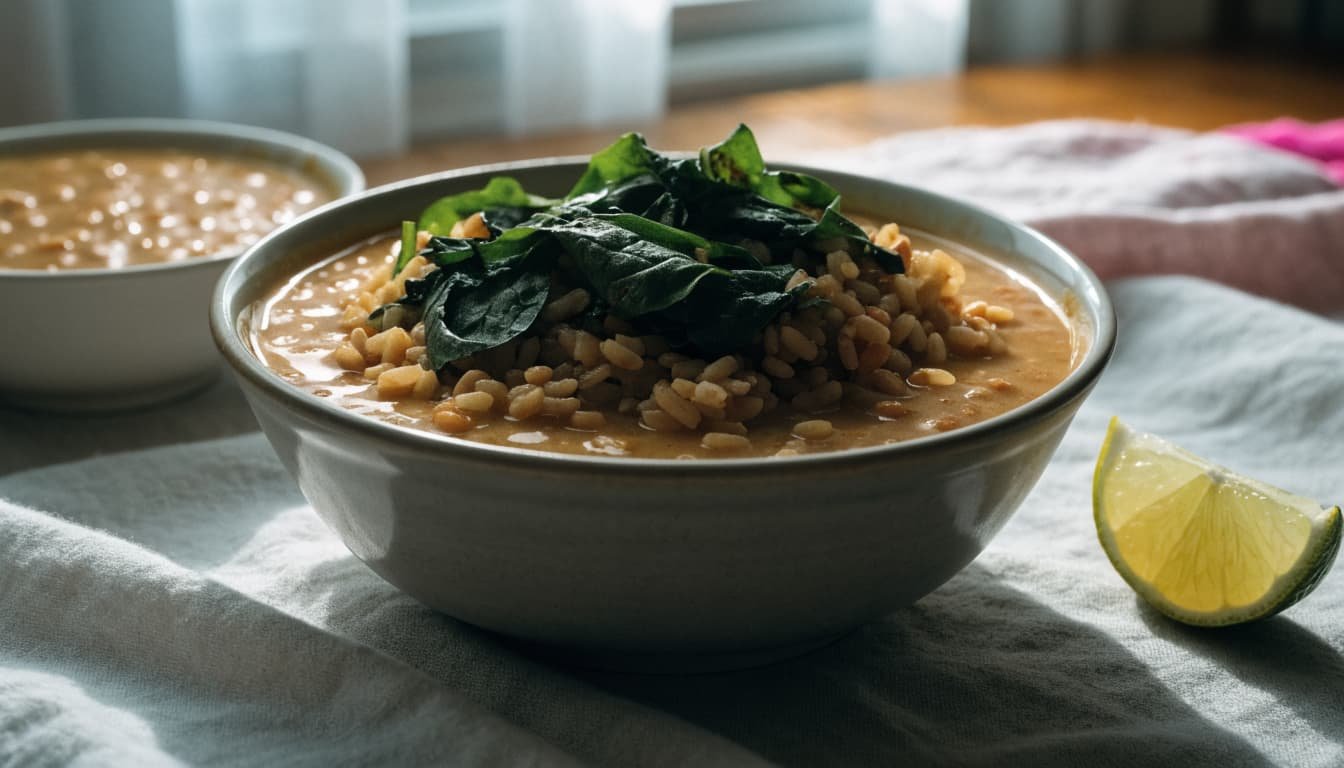
A warm bowl of creamy red lentil dal with hearty brown rice makes a filling weeknight dinner from simple pantry staples. The lentils soften as they simmer with spinach, tomatoes, coconut milk, and warm spices, while the rice adds a satisfying, chewy base.
We start the rice first because many varieties take about 30 to 45 minutes; follow the package directions for your rice. Then the dal comes together in one pot, with easy ways to adjust its texture and seasoning, plus practical tips for storing leftovers. Read on for the recipe and a few simple ways to make it your own.
Red Lentil Dal With Brown Rice for a Filling Dinner
This creamy spinach dal pairs tender red lentils with chewy brown rice for a satisfying, meat-free meal. We make the dal in one pot, then serve it over or alongside rice cooked according to its package directions.
Ingredients for Creamy Spinach Red Lentil Dal
This recipe makes about 4 servings. Plan on about 10 minutes of prep and 20 to 25 minutes for the dal. Brown rice often needs 30 to 45 minutes, so start it first and follow the timing on the package.
- 1 cup dried red lentils
- 1 small onion, chopped
- 2 garlic cloves, minced
- 1 tablespoon grated ginger
- 1 tablespoon neutral oil
- 1 teaspoon ground cumin
- 1 teaspoon ground coriander
- 1 teaspoon curry powder or about 1 tablespoon curry paste
- 1 can (14.5 ounces) diced tomatoes
- 1 can (13.5 ounces) coconut milk
- 2 cups vegetable broth or water, plus extra as needed
- 3 to 4 packed cups baby spinach
- Salt, to taste
- Lime wedges, for serving
- Brown rice, prepared according to its package directions
Curry powders, pastes, and broth vary in heat and salt. I start with the listed amount, then taste the dal before adding more seasoning. For basic lentil prep, the USDA’s lentil guide recommends rinsing and removing any debris. Lentils don’t need soaking for this recipe.
Cook the Rice First, Then Simmer the Dal

- Rinse and sort the lentils. Pick out any small debris, rinse them in a fine-mesh strainer, and drain. Meanwhile, rinse the brown rice if its package recommends it, then cook it covered according to the package directions. Let it rest as directed before fluffing.
- Soften the onion. While the rice cooks, warm the oil in a medium pot over medium heat. Add the onion and cook for 4 to 5 minutes, stirring now and then, until softened.
- Bloom the aromatics and spices. Stir in the garlic, ginger, cumin, coriander, and curry powder or paste. Cook for about 30 seconds, just until fragrant.
- Simmer the dal. Add the lentils, tomatoes, coconut milk, and broth or water. Stir, bring the mixture to a gentle simmer, then partially cover the pot. Cook for about 20 to 25 minutes, stirring occasionally. Keep the heat low, with a few small bubbles at the surface, and check the lentils for tenderness rather than relying only on the timer.
Red lentils may hold some shape or soften into a smoother dal, depending on the variety and cooking time. If they’re still firm or the sauce gets too thick, add a splash of broth or water and continue simmering. If the lentils are tender but the dal seems thin, simmer uncovered for a few minutes, stirring often. It will thicken slightly as it rests, so adjust gradually.
- Finish and serve. Fold in the spinach for the final 2 to 3 minutes, just until wilted. Season with salt, squeeze lime over the dal, and taste. Serve it over or beside the brown rice. For another easy dinner with similar flavors, try our creamy spinach and lentil curry.
Get the Dal Creamy Without Letting It Stick
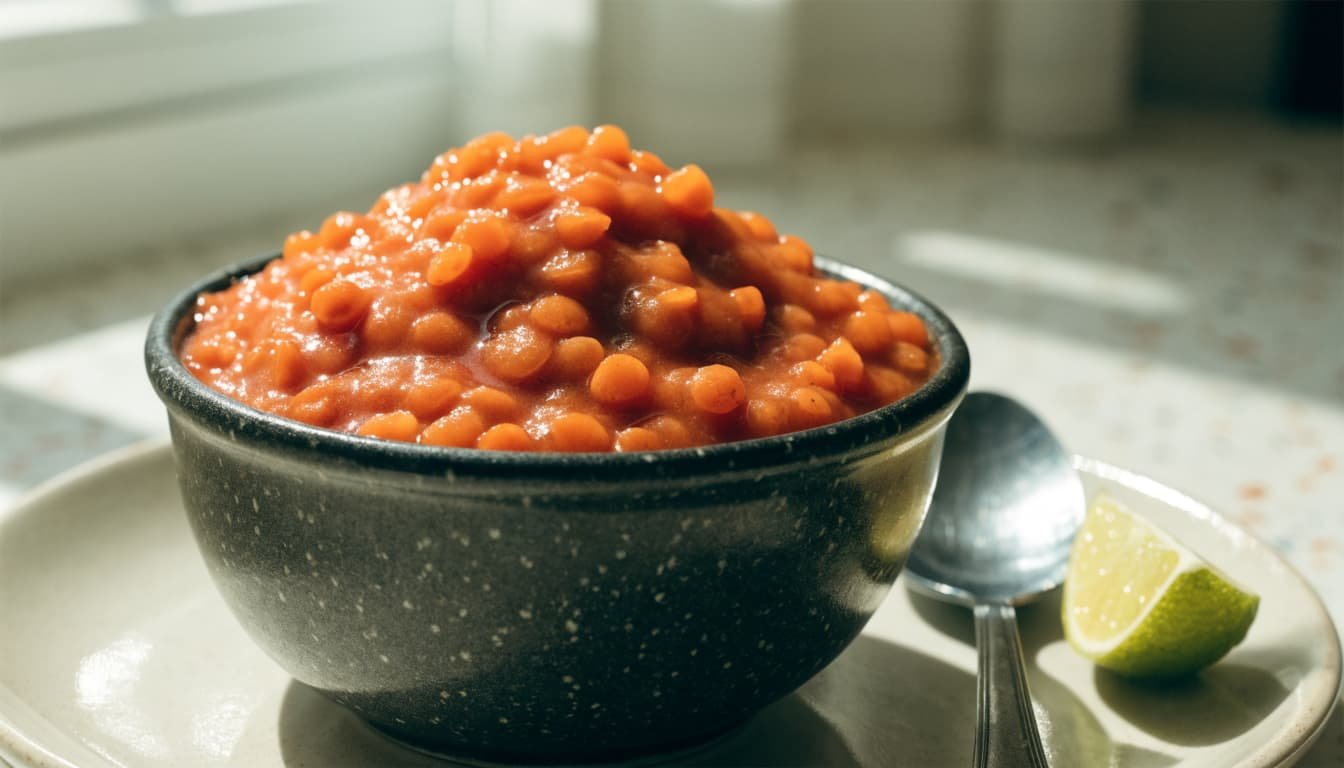
The best guide is the pot itself: tender lentils surrounded by a creamy sauce that still moves easily when stirred. I check the texture as the dal cooks, since lentil variety, age, and pan shape can all affect how quickly it softens or loses liquid. A gentle simmer and small adjustments help keep the bottom from catching while the lentils finish.
Check Lentil Tenderness and Adjust the Sauce
Keep the heat low enough for just a few small bubbles to rise at the surface. A hard boil can break the lentils down quickly, while the sauce thickens and becomes more likely to stick. Stir occasionally at first, then check and stir more often as the lentils soften and the mixture gets thicker.
Red lentils may keep some shape or dissolve into a smoother dal. The variety and cooking time affect the result, so I use tenderness and sauce texture instead of relying on the timer alone. Serious Eats explains why lentil varieties affect cooking, which is useful context when a batch cooks differently than expected.
If the lentils are still firm after the expected cooking time, add a splash of water or broth, stir well, and continue simmering. Older lentils may need extra time, and a wide pan can lose liquid faster. Check again after a few minutes, adding more liquid if needed so the lentils can finish without the sauce drying out.
When the lentils are tender, adjust the consistency gradually. If the dal is too thick, stir in water or broth a little at a time. If it is too thin, simmer it uncovered for a few minutes and stir often. The dal thickens as it rests, so stop when the sauce looks creamy and spoonable rather than waiting for it to become very thick in the pot.
For another version with similar ingredients and texture cues, see our creamy red lentil curry.
Balance Heat, Salt, and Brightness at the End
Start with the curry powder or paste listed in the recipe, then taste once the lentils have softened and the flavors have come together. Curry paste and chili can vary in strength, so add extra seasoning only if you want a hotter or more pronounced curry flavor. A small amount at a time gives you more control than trying to correct an overly spicy pot.
Salt needs the same gradual approach, especially if you cooked with salted broth or used a salty curry paste. Stir in a little, taste, and repeat only if the dal still needs it. That keeps the seasoning balanced without masking the lentils, tomatoes, or coconut milk.
Finally, squeeze in lime to brighten the rich sauce. Add a little, taste, then decide whether it needs more. I treat extra curry seasoning, chili, and lime as options rather than requirements; the dal is ready when its flavor suits you and the lentils are tender.
Make Red Lentil Dal Work for Your Table
The lentils, tomatoes, coconut milk, and simmering method give this dal its dependable base. From there, I keep changes simple: adjust the greens or heat, then let everyone finish their own bowl at the table.
Swap the Greens or Choose a Milder Spice Level
Fresh baby spinach wilts quickly, so stir it in at the end and cook just until the leaves soften. If fresh greens aren’t on hand, frozen spinach works too. Thaw it first and drain it well before adding it, so excess water doesn’t thin the dal. Serious Eats’ spinach and artichoke dip recipe also calls for draining excess liquid from spinach before using it.
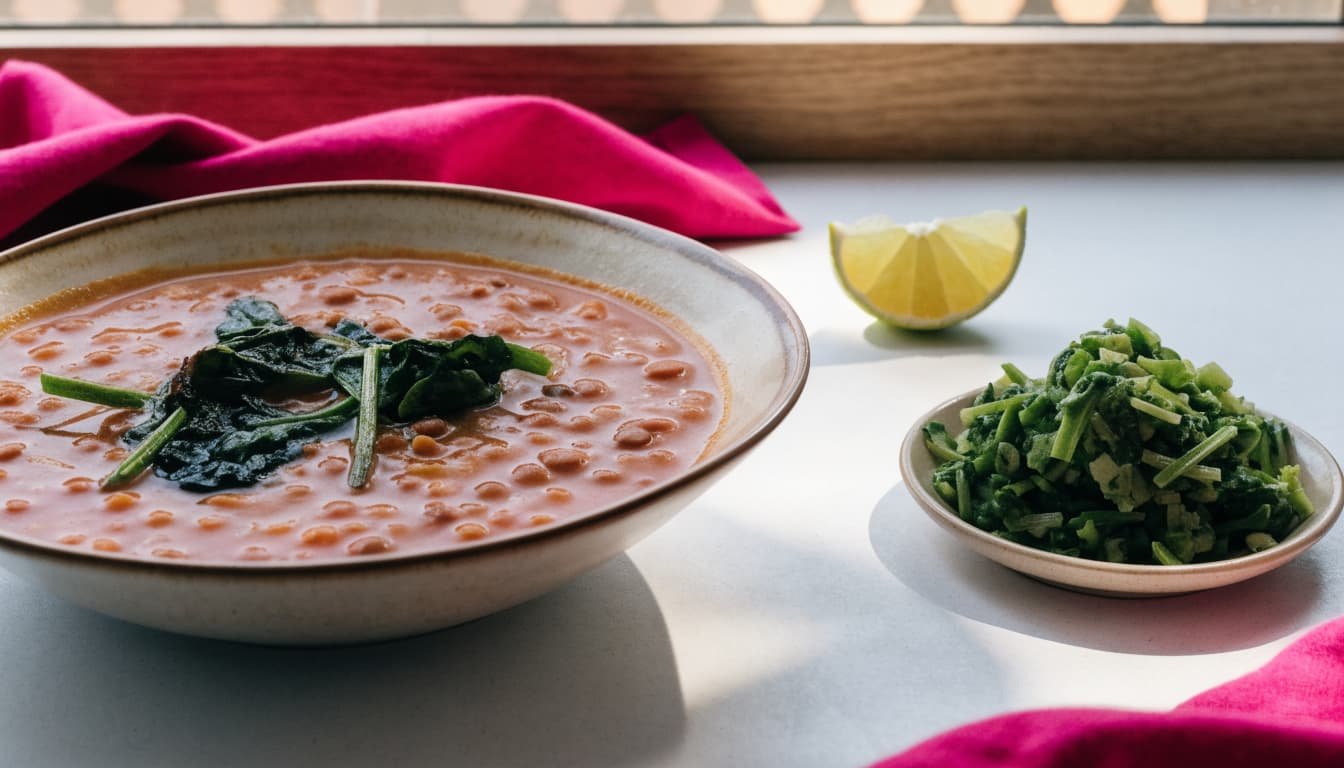
Chopped kale is another option if you want a sturdier green. It needs a little longer to soften than baby spinach, so add it earlier and check the texture as the dal simmers. These are optional swaps; keep the rest of the recipe as written.
For a milder pot, begin with less curry paste or chili than you think you’ll want. Heat varies between products, so taste once the lentils have softened, then add more if you prefer. When you’re serving people with different spice preferences, keep the dal gently seasoned and offer chili flakes or hot sauce on the side. A little extra coconut milk can soften spices that taste too strong, while a splash of broth or water can loosen a thick sauce. Make one adjustment at a time, then taste again.
Serve with Rice and Simple Finishing Touches
Spoon the dal over brown rice for a hearty bowl, or serve the rice alongside so you can choose how much to add. The rice’s chewy texture pairs well with the creamy lentils, and following its package directions keeps the timing suited to the variety you have. If you’re looking for another comforting way to serve lentils, our lentil shepherd’s pie makes a different kind of meatless dinner.
Set out lime wedges for a fresh, bright finish. Chopped herbs, plain yogurt, or toasted seeds also make easy optional toppings. Yogurt can cool a spicy serving, while seeds add a little crunch. I like to keep these additions separate rather than stirring them into the whole pot, so each person can finish their bowl to taste.
The toppings aren’t part of the fixed recipe, and you don’t need all of them. Brown rice and dal make a satisfying meal on their own; add one or two extras if they suit your table.
Store Leftover Dal and Brown Rice with Care
This red lentil dal with brown rice makes an easy next-day meal, but I store the two components separately when possible. They cool and reheat differently, and keeping rice out of the dal helps it retain its texture.
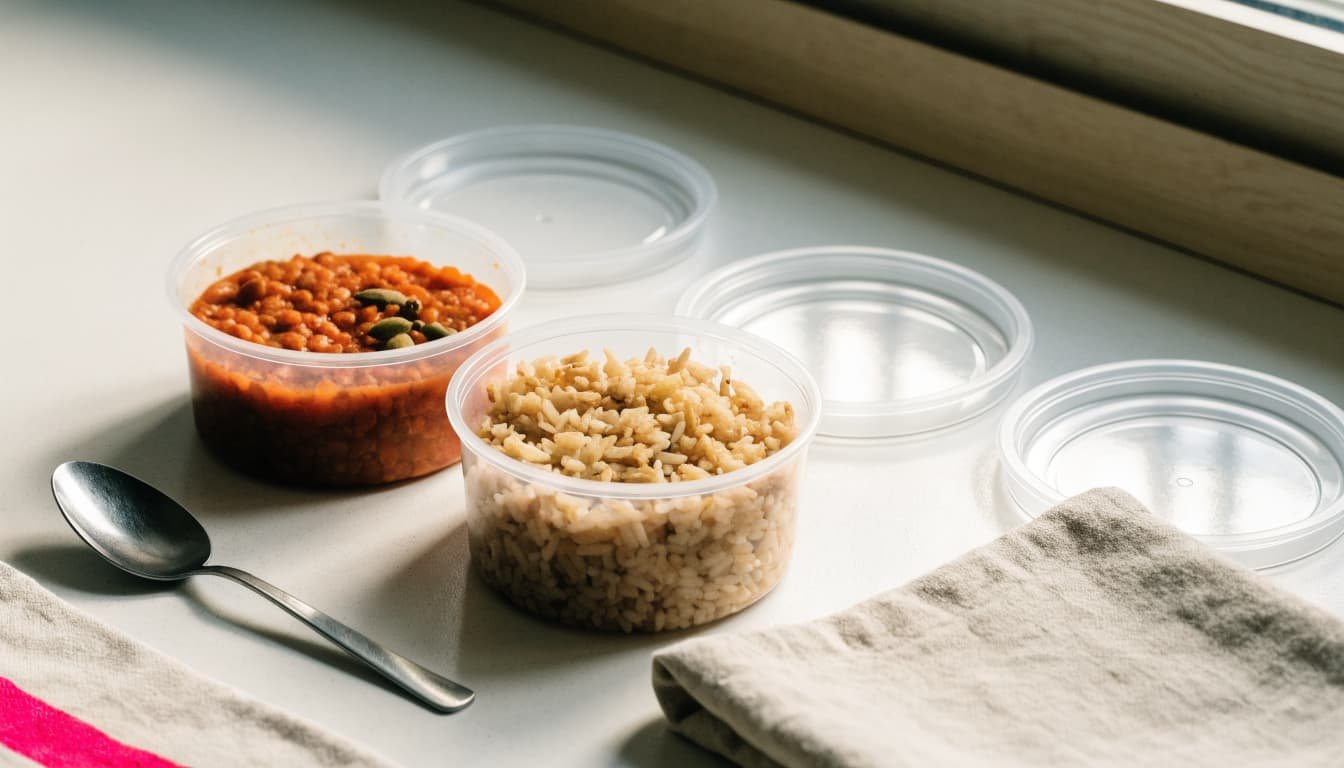
Refrigerate or Freeze Dal and Rice Separately
Divide leftover dal into shallow, covered containers so it cools promptly. Refrigerate it within two hours of cooking, or within one hour if the room is above 90°F. You don’t need to wait for the pot to reach room temperature before putting the portions away. Keep the refrigerator at 40°F or below, and use refrigerated dal within 3 to 4 days. The USDA’s leftover food safety guidance covers prompt chilling and refrigerated storage.
For longer storage, freeze the dal in freezer-safe containers, leaving a little space at the top for expansion. It keeps best quality for about 2 to 3 months. Thaw a portion in the refrigerator, ideally overnight, before reheating. If you regularly lose track of stored portions, add the date to each lid.
Brown rice needs its own, more cautious timeline. Cool cooked rice quickly, ideally within one hour, then refrigerate it in a covered container or freeze it promptly. Use refrigerated rice within 24 hours, or freeze it if you won’t eat it in that time. That rice-specific window is shorter than the dal’s 3-to-4-day refrigerator window, so don’t treat them as one combined leftover. For another example of separate storage and rice handling, see our guide to cooling and storing brown rice dishes.
Reheat Gently and Restore the Creamy Texture
Reheat only the portion you plan to eat. Chilled dal thickens as the lentils absorb liquid, so stir in a splash of water or broth as it warms. On the stovetop, heat it over medium-low, stirring often. In the microwave, cover a microwave-safe dish and warm the dal in short intervals, stirring between them.
Whichever method you use, heat leftovers until steaming hot throughout. For a reliable check, use a food thermometer and make sure the center reaches 165°F. Reheat the rice separately, and follow its shorter storage window and careful handling. Add a small splash of water if the grains feel firm or dry, cover them while heating, and stir partway through so they warm evenly.
Finally, squeeze fresh lime over the dal just before serving. That bright finish lifts the creamy sauce, while reheating only what you need helps keep the remaining portions ready for another meal.
Conclusion
Creamy red lentil dal, tender spinach, and chewy brown rice make a comforting dinner from simple staples. We get the best texture by starting the rice first, simmering the lentils gently until tender, then adjusting the liquid and seasoning near the end.
That simple rhythm keeps this red lentil dal with brown rice easy to bring together and satisfying to serve.
Save pin for later

- Air Fryer Salmon Bites with Quick Lemon-Dill Yogurt Sauce - November 26, 2026
- Healthy Spinach Pasta with White Beans and Parmesan - November 26, 2026
- Easy Tofu Stir-Fry with Vegetables and Ginger Sauce - November 26, 2026