Sweet butternut squash and nutty brown rice make a cozy, spoonable dinner with a pleasantly chewy bite. Brown rice takes longer to cook than Arborio and needs extra stock, so give the pot time and add liquid as the grains soften.
This recipe makes about four servings, with roughly 15 minutes of prep and 50 to 60 minutes of cooking, depending on your rice. For more on the brown rice squash risotto, start with the ingredients and recipe details below.
Healthy Butternut Squash Risotto with Brown Rice: Ingredients and Recipe at a Glance
This cozy brown rice risotto makes about four servings, with roughly 15 minutes of prep and 50 to 60 minutes of cooking. I treat that timing as a guide, since rice type, brand, and heat can change how quickly the grains soften. Brown rice keeps a chewy bite and takes longer than Arborio, so keep extra warm stock or water nearby.
What each ingredient brings to the pot
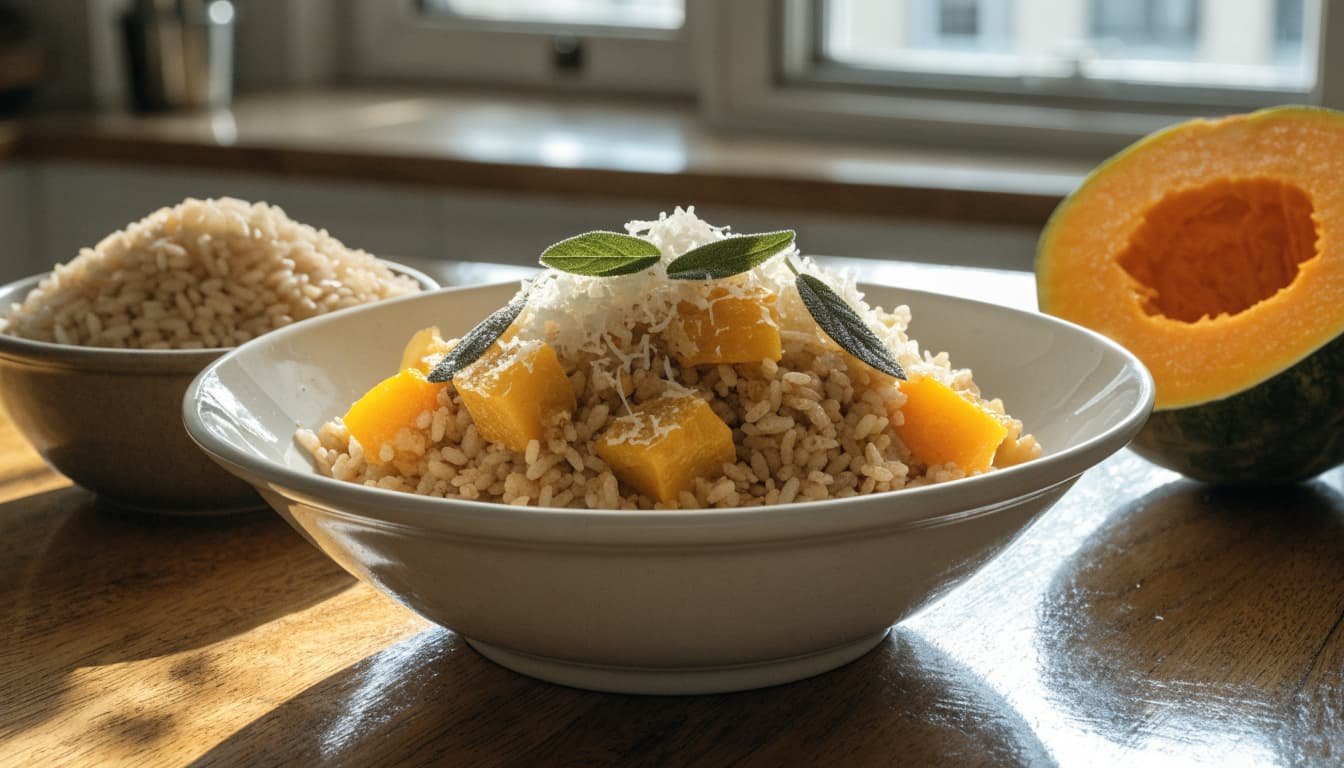
Gather brown rice, butternut squash, onion, garlic, olive oil, and warm vegetable or chicken stock. The rice brings a nutty flavor and hearty chew, while sweet squash softens into tender bites. Onion and garlic build a savory base, and warm stock helps the grains cook steadily as you add it.
I prefer low-sodium stock when I want more control over the seasoning, especially if Parmesan is going into the pot. Sage adds an earthy note, while a splash of white wine can bring a little brightness. Both are optional, so the squash and aromatics can still carry the flavor.
For a vegetarian version, choose vegetable stock and check that the Parmesan is made with vegetarian-friendly enzymes, since some Parmesan uses animal-derived rennet. To keep the dish dairy-free, finish it with olive oil and leave out the cheese. Brown rice needs its own timing and liquid, so follow the package directions as a starting point. The USDA’s brown rice recipe gives a useful reference for cooking plain rice, though this risotto-style method may take longer. Our air fryer tofu with vegetables and brown rice also covers following the rice package directions.
Prep the squash and warm the stock
Peel the squash, scoop out the seeds, and cut the flesh into evenly sized cubes. Similar-size pieces soften at about the same rate, so you’re less likely to end up with a mix of firm and mushy bites. If cutting the squash feels awkward, trim a thin slice from one side first to make a stable base.
Roast the cubes with a little olive oil, or sauté them separately until fork-tender but still holding their shape. Then set them aside while the rice cooks. Cooking the squash apart from the rice helps it keep its shape when you fold it in near the end.
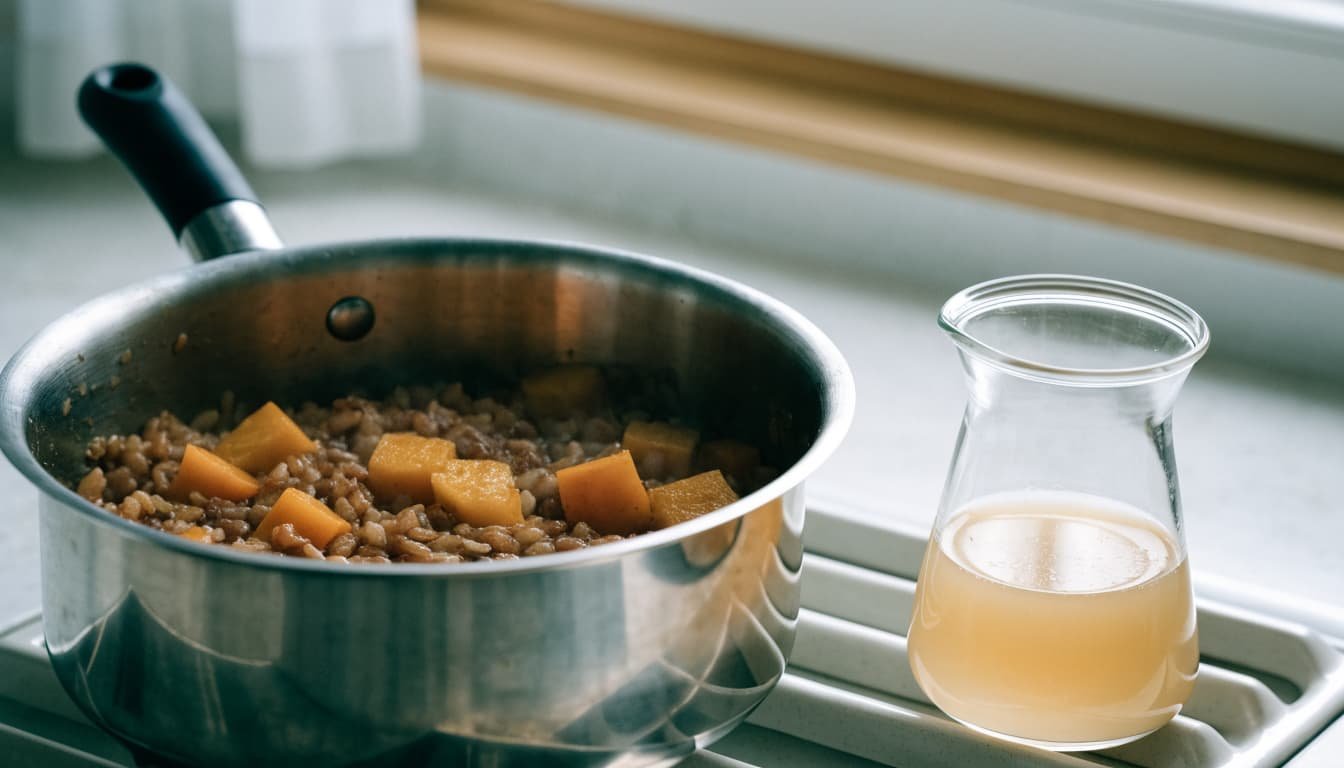
Meanwhile, warm the stock in a nearby pot and keep it at a gentle simmer. Add it gradually to the rice so the pot stays hot and the grains continue cooking. Keep extra stock or water close; if the rice is still firm or the risotto turns thick, add another splash and keep cooking.
How to Make Brown Rice Butternut Squash Risotto
Brown rice risotto takes more time and liquid than an Arborio version, so I keep the heat steady and judge doneness by tasting. The method below builds flavor first, then lets the grains soften gradually before the squash goes back into the pot.
Build flavor before the first ladle of stock
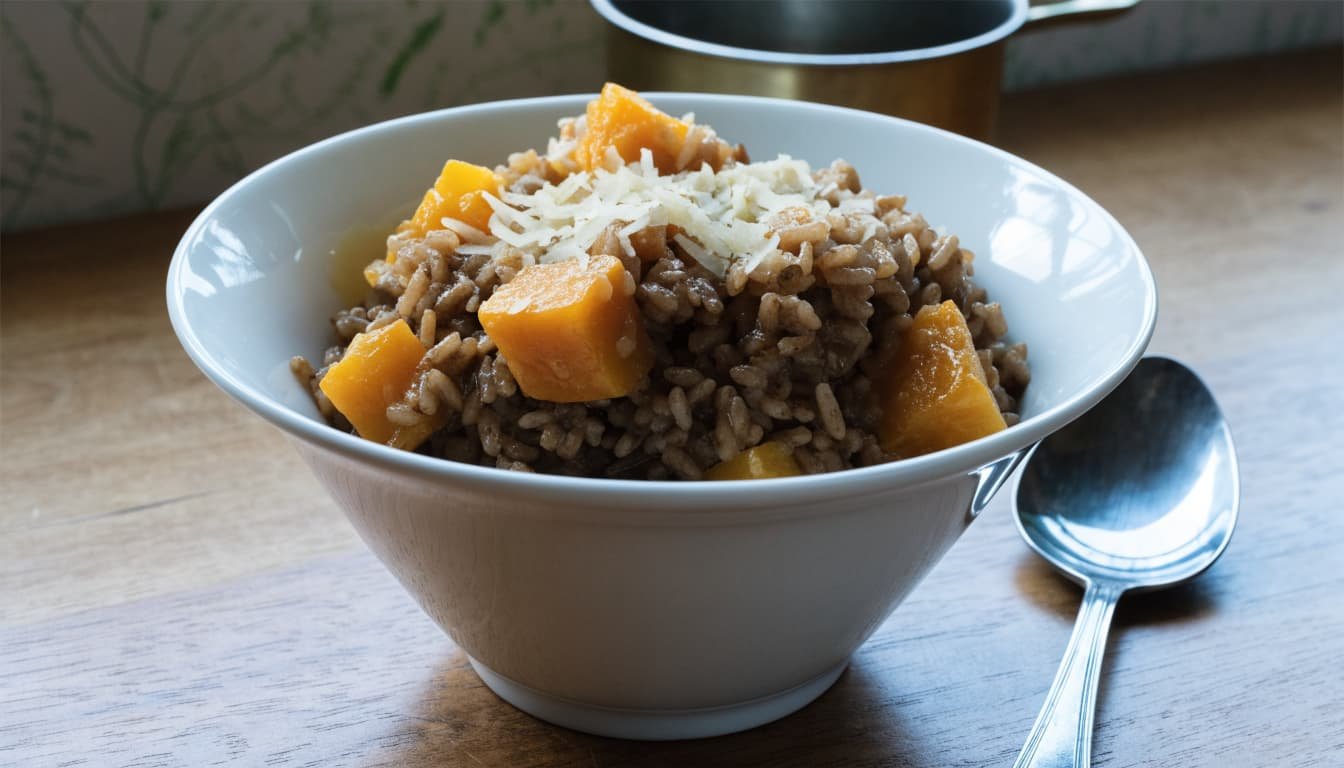
Warm olive oil in a wide, heavy pan over medium heat. Add the chopped onion and cook until soft and translucent, stirring now and then. Gentle heat gives the onion time to sweeten without browning before the rice is ready.
Stir in the garlic and optional sage, and cook just until fragrant. Garlic can turn bitter if it browns, so lower the heat if it starts coloring too quickly. Add the rinsed, well-drained brown rice and stir until the grains are coated in oil and lightly toasted.
If you’re using white wine, pour in a small splash and scrape the bottom of the pan to loosen any browned bits. Let most of the wine evaporate before adding stock. Wine adds brightness, but the risotto works without it.
Add warm stock gradually and check the grains
Add a ladleful of warm stock and stir often, scraping the bottom and sides of the pan. When most of the liquid has absorbed and the pan is becoming dry, add another ladleful. Keep the rice moist as it cooks, but allow each addition to absorb before adding more.
Brown rice needs more time and liquid than Arborio, and it releases less starch, so the finished texture won’t be quite as thick or glossy as classic risotto. A brown rice butternut squash risotto recipe also highlights the patience this grain needs. Start tasting around 40 to 45 minutes, while treating that timing as a guide rather than a deadline.
Taste a few grains. They should be tender with a slight bite, not hard or crunchy in the center. If they’re still firm, continue cooking and add more hot stock or water as needed. Keep the heat steady instead of turning it up, since a faster simmer can dry the pan before the rice softens.
Fold in squash and finish while the risotto is loose

Once the rice is tender, gently fold in the cooked squash. Add Parmesan, a little olive oil or butter, and fresh herbs if you like. I stir carefully at this stage so the soft squash cubes stay intact.
Keep a little liquid in the pot, since the risotto thickens as it stands. For a loose, creamy, spoonable finish, stir in a splash of warm stock or water if it looks stiff. Taste before adding salt because both the stock and Parmesan may already season the dish.
Get the Texture Right and Adjust the Flavor
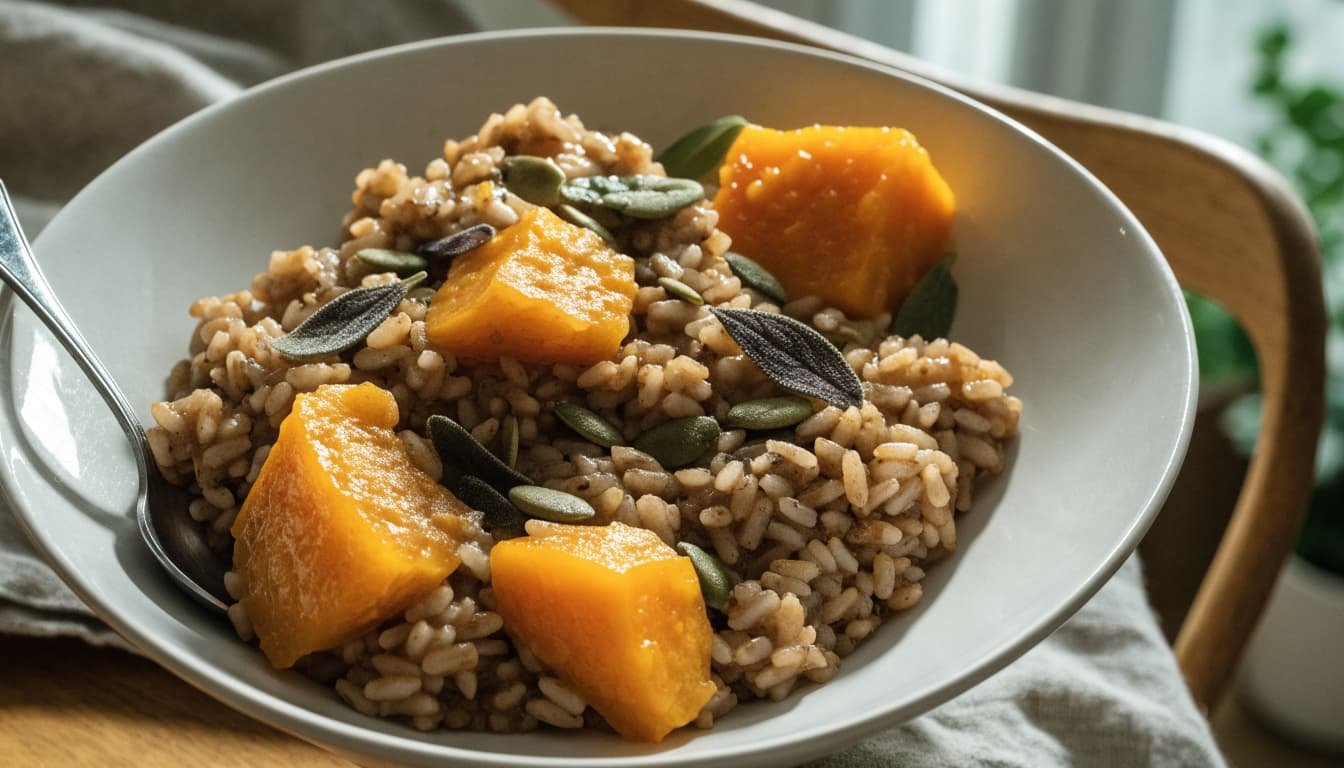
Brown rice risotto has a heartier chew and a looser, less glossy finish than classic Arborio risotto. I look for tender grains with a little bite, plus enough liquid for each spoonful to feel creamy rather than stiff. Rice varieties cook at different rates, so the package directions and a taste test are more useful than the clock alone. The Whole Grains Council’s brown rice cooking guide offers another timing reference.
Fix firm rice, a dry pan, or risotto that turns stiff
If a grain is hard in the center, keep cooking and add hot stock or water a little at a time. Let most of each addition absorb, then taste again. Keep the heat steady; a stronger simmer can evaporate liquid before the brown rice has time to soften. Since brown rice can vary by type and brand, use tenderness as your cue rather than expecting every batch to finish at the same moment.
A dry-looking pan doesn’t always mean the rice is ready. Add a splash of hot liquid and continue simmering if the grains still feel firm. Once the rice is tender, finish with a little liquid still in the pot, since the mixture thickens as it stands.
If the finished risotto turns stiff, stir in warm stock or water a splash at a time until it loosens. I keep the stirring gentle after folding in the squash. Vigorous mixing can break up the soft cubes and make the risotto more uneven.
Choose herbs, greens, and toppings that suit the squash
Sage or thyme brings an earthy note that suits the squash’s sweetness. For a fresher finish, add chopped parsley or a little lemon zest. I suggest starting with just one or two accents, then tasting before adding more, so the herbs and citrus don’t crowd the nutty rice.
A small handful of spinach can go in near the end. Stir it through while the risotto is hot, just until the leaves wilt. If the greens are wet, pat them dry first so they don’t add unwanted moisture.
For crunch, sprinkle toasted pumpkin seeds over each serving at the table. They stay crisp longer on top than they would mixed into the warm pot. If you enjoy this combination of squash, herbs, and seeds, try our stuffed acorn squash with quinoa and cranberries, which uses similar finishing touches.
Make the Risotto Fit Your Table
A few thoughtful adjustments can make this butternut squash risotto suit different diets and appetites without losing its cozy texture. I keep the changes simple: preserve enough warm liquid for a spoonable finish, then let diners add their favorite accents at the table.
Keep it vegetarian, dairy-free, or lighter
For a vegetarian pot, use vegetable stock. If you include Parmesan and vegetarian rennet matters to you, check the label or choose a cheese made with vegetarian-friendly enzymes.
To make the dish dairy-free, leave out the Parmesan and finish with olive oil, chopped herbs, or black pepper. The squash and aromatics still bring plenty of flavor, while a splash of warm stock helps keep the rice loose and creamy.
You can also use less butter or cheese for a lighter finish. Add a modest amount, taste, and adjust rather than removing all the richness at once. Keep extra warm stock or water nearby, since reducing the fat does not change the rice’s need for enough liquid as it cooks.
If you prefer a creamier, faster-cooking risotto, Arborio is an option, but it needs its own timing and package guidance. It releases more starch than brown rice, so don’t use the brown rice cooking time for it. Follow a recipe written for Arborio or use Arborio rice cooking guidance and begin checking the grains earlier.
Serve it with simple sides and finishing touches
This risotto can stand on its own, especially for a cozy dinner. If you want something alongside it, choose a small green salad, sautéed greens, or roasted seasonal vegetables. A crisp, savory side balances the soft squash and chewy rice without making the meal feel heavy. For another easy vegetable option, try crispy garlic Brussels sprouts.
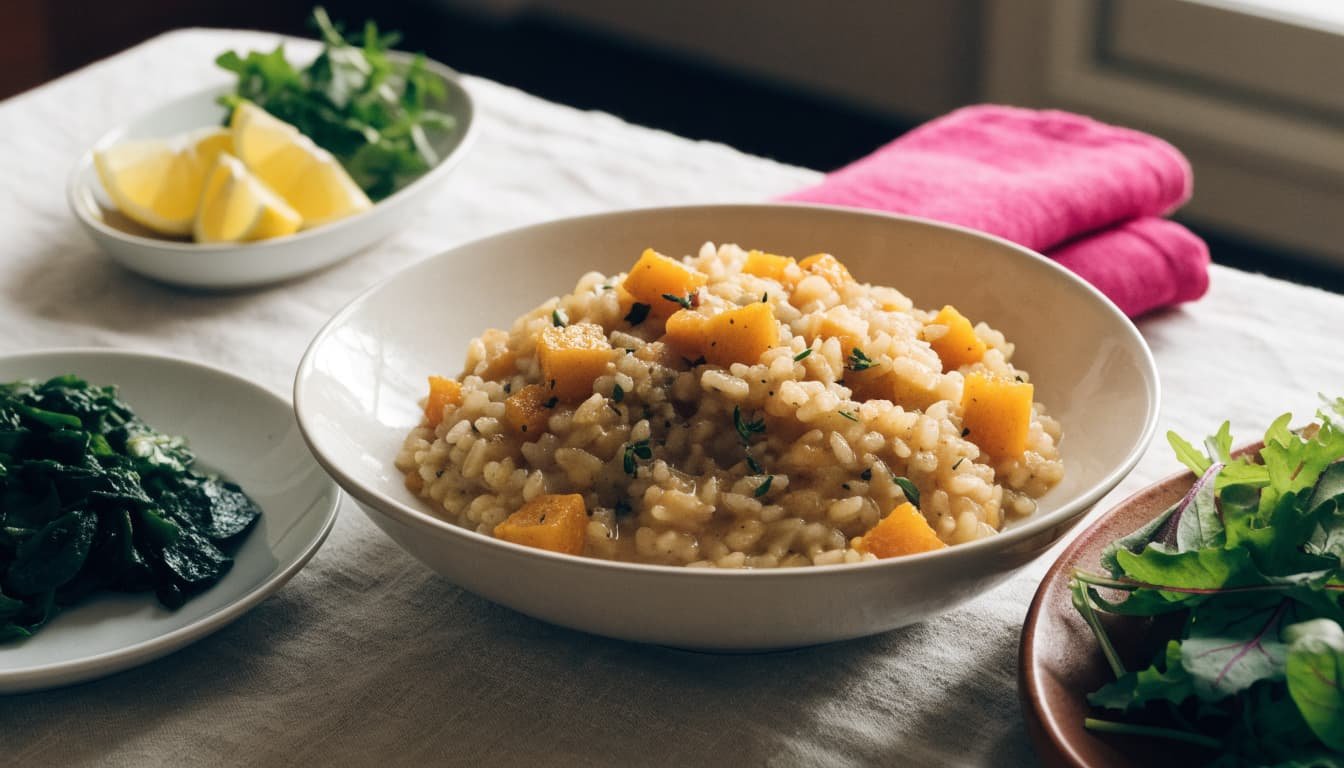
At the table, set out chopped fresh herbs, lemon wedges, and black pepper. A little parsley or sage adds freshness, while a squeeze of lemon brightens the squash’s sweetness. I like offering these separately so each person can adjust their bowl without changing the seasoning or texture of the main pot.
Store and Reheat Leftovers Without Drying Them Out
Brown rice risotto firms up as it chills, but a little stock or water brings back its loose, spoonable texture. I also keep rice safety in mind: cool leftovers promptly, store them at the right temperature, and reheat only what you plan to eat.
Cool and store leftovers promptly
Divide the risotto into shallow, covered containers so it cools quickly, rather than leaving a large batch in the pot. Refrigerate it within two hours of cooking, or within one hour if the room temperature is above 90°F. Keep your refrigerator at 40°F or below.
USDA guidance says refrigerated leftovers keep for three to four days, while frozen leftovers keep for three to four months. For extra caution with this rice dish, I recommend using refrigerated portions within one day, or freezing them if you plan to save them longer. See the USDA’s leftover storage guidance for more details.
Rice left at room temperature beyond the safe window should go in the trash. Reheating doesn’t reliably make mishandled food safe, so don’t try to salvage a serving that sat out too long.
Reheat gently with a splash of liquid
Warm only the portion you need. On the stovetop, put it in a pan over low to medium-low heat and stir in a little stock or water. Add more a splash at a time until the rice loosens and the risotto turns creamy again. Too much liquid at once can make it soupy.
For one serving, use a microwave-safe dish and cover it loosely. Stir partway through heating so the portion warms more evenly, then check the center with a food thermometer. Reheat leftovers to 165°F before serving. If the center hasn’t reached that temperature, continue heating and check again.
Conclusion
This healthy butternut squash risotto with brown rice rewards a little patience. Keep the stock warm, add it gradually, and stir gently as the rice cooks; then fold in the squash near the end so its tender pieces hold their shape.
Finish with herbs, cheese, or toppings to suit your taste. The result is a cozy, spoonable dinner with chewy rice and sweet, soft squash.
Save pin for law


- Air Fryer Salmon Bites with Quick Lemon-Dill Yogurt Sauce - November 26, 2026
- Healthy Spinach Pasta with White Beans and Parmesan - November 26, 2026
- Easy Tofu Stir-Fry with Vegetables and Ginger Sauce - November 26, 2026