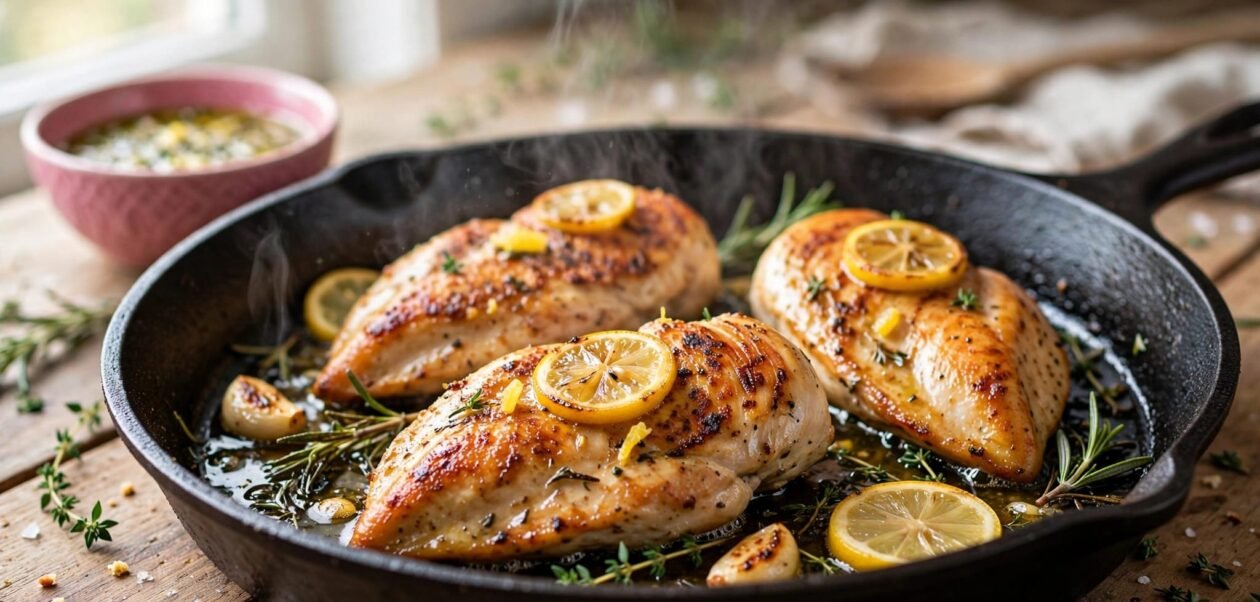
Lemon, garlic, and herbs give chicken breast a fresh, savory flavor that makes a simple dinner feel special. I like that you can cook it in a skillet for golden edges or bake it in the oven for a more hands-off meal.
With four chicken breasts and a bright lemon-herb marinade, this recipe keeps the steps straightforward. I’ll also share how to check for doneness, pair the chicken with vegetables or grains, and store leftovers safely. Let’s start with the recipe for lemon herb chicken breast.
Lemon Herb Chicken Breast for a Simple Healthy Dinner
This lemon herb chicken breast recipe starts with four boneless, skinless breasts and a quick, bright marinade. I like the choice of a skillet for browned edges or the oven for a hands-off dinner. Either way, even thickness and a thermometer help the chicken cook evenly and stay juicy.
Gather the Lemon, Garlic, Herbs, and Chicken
These amounts season four chicken breasts. The olive oil carries the garlic and herbs across the meat, while lemon juice and zest bring a fresh, bright flavor.
- 4 boneless, skinless chicken breasts
- ¼ cup lemon juice
- ¼ cup olive oil
- Zest of 1 lemon
- 2 to 3 garlic cloves, minced
- 1 teaspoon dried oregano
- 1 teaspoon dried mixed herbs
- Salt and black pepper, to taste
Dried herbs make the marinade easy to mix, but chopped parsley, thyme, or basil can replace some or all of them. You can also scatter fresh herbs over the cooked chicken. If you add fresh herbs to the marinade, chop them finely so they spread through the oil and lemon. I add salt gradually, especially when serving the chicken with seasoned rice or vegetables.
Flatten, Coat, and Briefly Marinate the Chicken
Pat the chicken dry, then place each breast between sheets of parchment or plastic wrap. Gently pound thicker areas until the pieces have a similar thickness. This helps them cook at a more even pace.
Whisk the lemon juice, zest, olive oil, garlic, oregano, mixed herbs, salt, and pepper in a bowl. Before the marinade touches raw chicken, set aside any clean portion you plan to serve with dinner. Coat the breasts with the remaining marinade, cover, and refrigerate for about 20 to 30 minutes.
That short rest gives the chicken time to take on flavor without leaving lean meat in an acidic mixture for too long. Keep raw chicken cold, and don’t rinse it. Wash your hands and clean any board, counter, or utensil that touches the raw chicken or its juices.
Choose the Skillet or Oven Method
Before cooking, remove the chicken from the marinade and pat the surface dry. This helps it brown instead of steam. Cooking times are estimates because breast thickness and kitchen equipment vary, so check the thickest part with a thermometer.
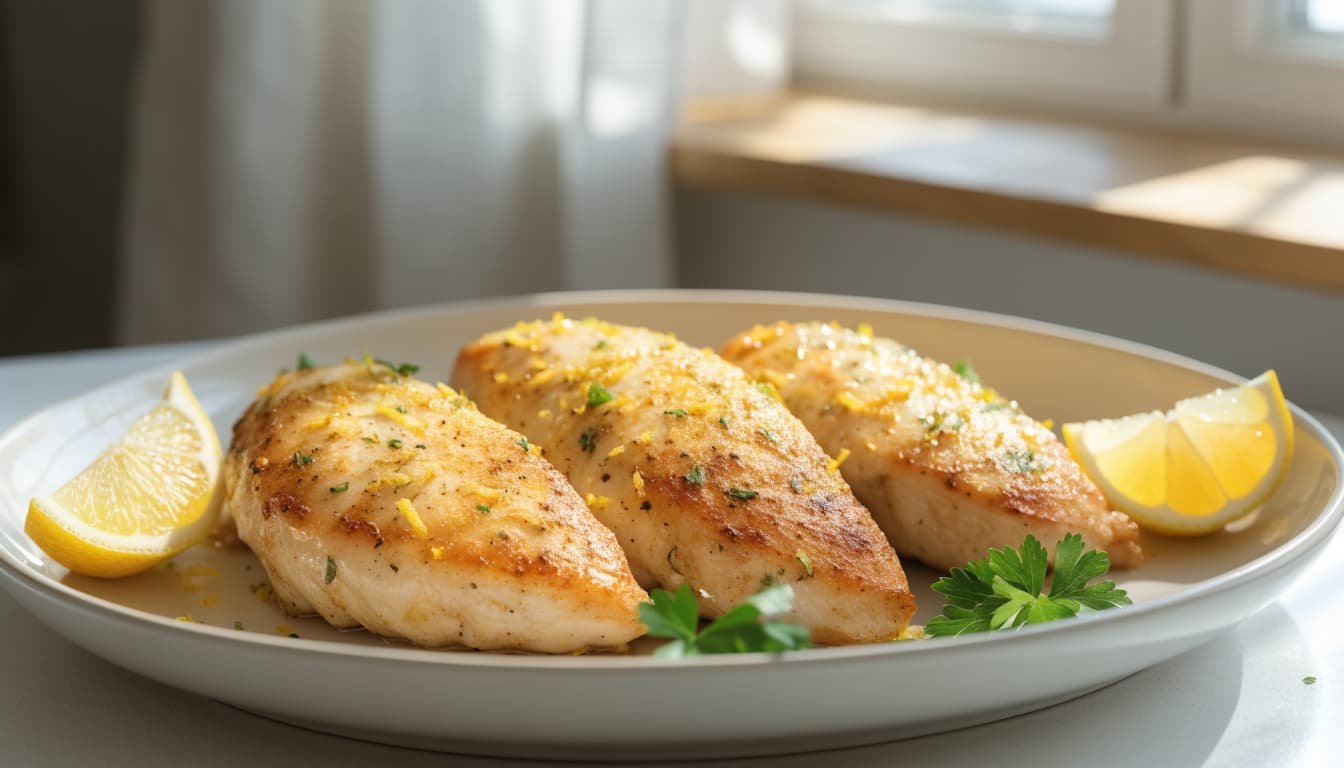
For the skillet:
- Heat a lightly oiled skillet over medium to medium-high heat.
- Add the evenly flattened breasts, leaving space between them. Cook in batches if the pan feels crowded.
- Cook for about 5 to 6 minutes per side as a starting point, adjusting the heat if the garlic or herbs begin to darken too quickly.
For the oven:
- Heat the oven to 400°F.
- Arrange the chicken in a lightly oiled baking dish, with space between the breasts.
- Bake average-sized pieces for about 22 to 25 minutes as a starting estimate.
Cooking time alone can’t confirm doneness. Check the thickest part of each breast with a food thermometer; chicken is ready at 165°F. The USDA’s poultry temperature guidance explains why a thermometer is the reliable way to check. Let the chicken rest briefly before slicing, then serve it with your favorite sides.
Keep Lemon Herb Chicken Breast Tender and Safely Cooked
Chicken breast is lean, so a few minutes too long on the heat can leave it dry. I focus on even thickness and a thermometer rather than relying on the clock or appearance.
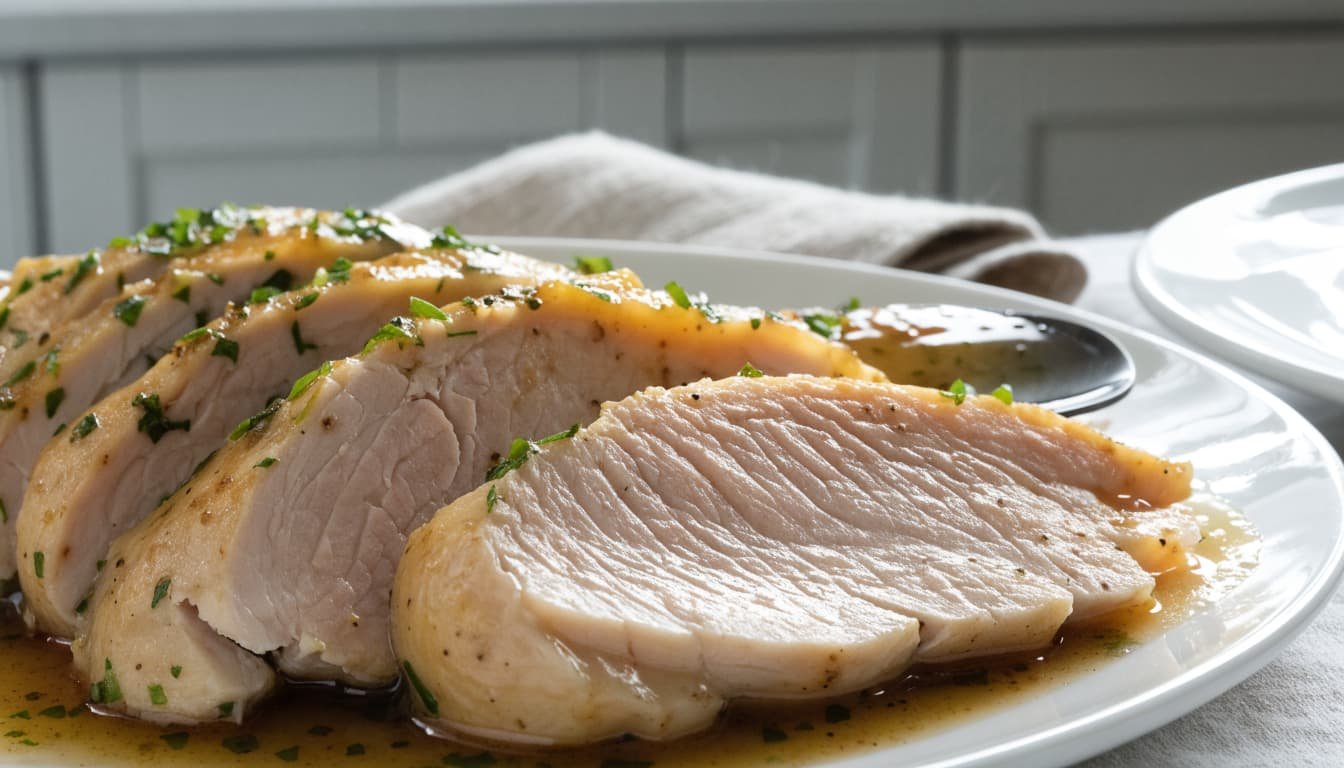
Even Thickness Helps Prevent Dry Spots
Before cooking, gently pound the thicker ends until each breast has a similar thickness. This helps the pieces cook at a similar pace, so thinner sections are less likely to dry out while the centers finish. If the breasts vary in size, keep an eye on each one separately.
Cooking times are useful starting points, but they can’t account for every breast, pan, or oven. Larger pieces may need more time, while smaller ones can finish sooner. I avoid leaving chicken on the heat after it reaches its safe temperature, since prolonged cooking can dry out the meat.
If you’re baking the chicken, don’t pour excess marinade into the dish. Too much liquid can leave the surface watery instead of lightly browned. For a little extra flavor, spoon some pan juices over the chicken near the end of cooking.
Check the Thickest Part, Then Let It Rest
Use an instant-read thermometer to check the thickest part of each breast. Insert the probe into the center of the meat, keeping its tip away from the skillet or baking dish. If a breast is uneven, check its thickest area and another nearby spot. The center needs to reach 165°F (74°C) for safe eating, according to the USDA guidance on chicken doneness and safety.
Color and clear juices can show how the chicken is cooking, but neither confirms that the center has reached a safe temperature. I rely on the thermometer instead, and return any piece below 165°F to the heat before checking it again.
Once each breast reaches 165°F, transfer it to a plate and let it rest briefly before slicing. This gives the juices time to settle, which helps the lean meat stay moist. I use the same thermometer-first approach for other chicken dinners, including our honey garlic chicken recipes.
Build a Simple Dinner Around the Chicken
Lemon herb chicken breast has a mild, savory flavor, so it pairs easily with vegetables, grains, or a crisp salad. I like to choose one filling side and one or two vegetables, then let the lemon and herbs tie the plate together. You can use what you have on hand instead of preparing a long list of accompaniments.
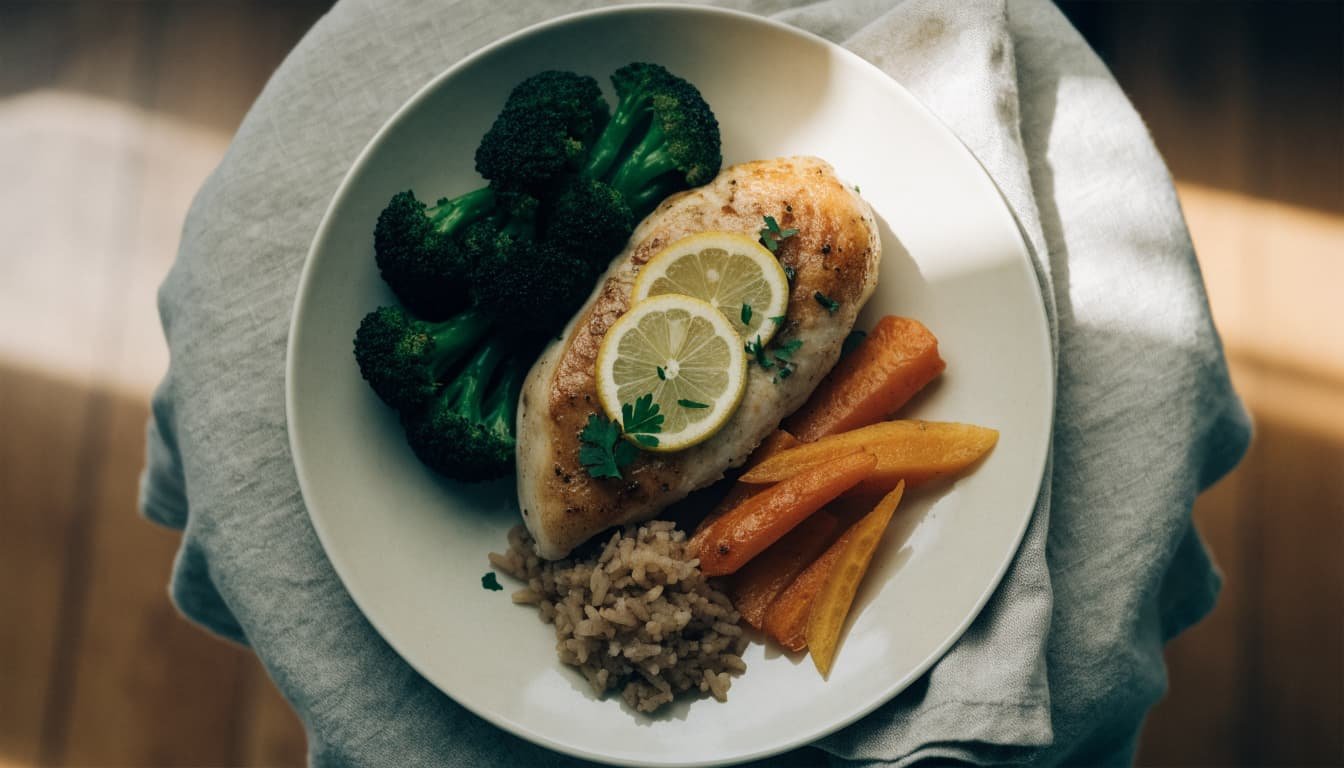
Pair the Chicken With Vegetables and a Filling Side
Roasted broccoli, green beans, or zucchini bring a warm, savory edge to the meal. Meanwhile, a simple green salad adds a cool, fresh contrast to chicken straight from the skillet or oven. For a heartier plate, add brown rice, quinoa, sweet potatoes, or another potato you enjoy.
You don’t need to cook everything at once. Choose a grain and one or two vegetables, then prepare them while the chicken rests. Cut vegetables into similar-sized pieces so they cook at about the same pace. A little oil, salt, pepper, and dried herbs are often enough; season gradually if your grain or other sides already contain salt.
The USDA MyPlate food groups offer a flexible way to think about pairing vegetables, grains, and protein foods. I use that as a broad guide, not a fixed rule, since portions and appetites vary. For a crisp side, a light dressing can complement the chicken; our ideas for easy homemade salad dressings include simple options for greens and vegetables.
Turn the Skillet Bits Into a Quick Sauce

If you cooked the chicken in a skillet, flavorful browned bits may remain on the bottom. Add a small splash of water or broth and scrape the pan gently as the liquid warms. Spoon the quick sauce over the chicken and rice, or drizzle a little over the vegetables.
For an easy finish, add lemon slices or chopped parsley, thyme, or basil just before serving. Fresh herbs brighten the garlic and dried herbs in the marinade without requiring a separate sauce. You can also stir lemon juice and chopped herbs into plain yogurt for a cool topping, seasoning it lightly to taste.
The chicken can anchor a simple dinner, but the finished meal depends on more than the meat. Portion sizes, added oil, salt, grains, vegetables, and sauces all affect what ends up on the plate. I keep the sides flexible and adjust them to suit the meal and the people gathered around the table.
Make Easy Flavor Swaps and Store Leftovers Well
A few small changes can shift the lemon-herb flavor without adding much work. I also like to plan for leftovers while serving dinner, so the extra chicken stays safe and is ready for another easy meal.
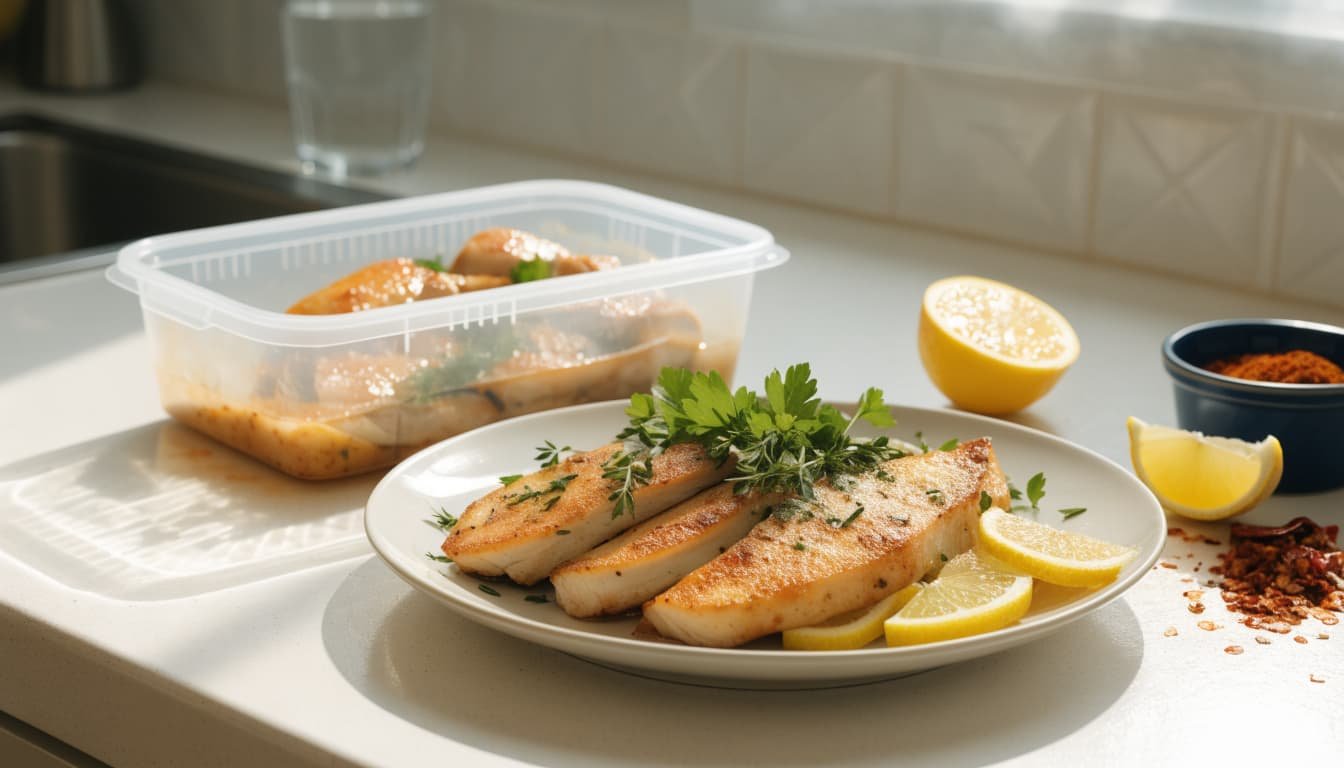
Adjust the Herbs, Lemon, and Heat
Use chopped fresh parsley, thyme, or basil in place of some or all of the dried herbs. You can also scatter fresh herbs over the cooked chicken just before serving, when their flavor is bright and clear. Since the recipe already includes lemon juice and zest, small adjustments are enough to tailor its flavor.
For a milder lemon taste, reduce the juice slightly. If you want more citrus aroma without making the chicken more tart, add extra zest instead. A pinch of paprika brings gentle warmth, while red pepper flakes add a little heat. I’d start with a small amount, then taste the clean marinade before it touches the chicken.
Boneless, skinless thighs can replace the breasts if you prefer their richer flavor. However, the pieces may cook at a different pace, so don’t rely on the breast timing. Check the thickest part of each piece with a food thermometer and cook chicken to 165°F (74°C).
Refrigerate and Reheat Chicken Safely
After dinner, transfer cooked chicken to a shallow, covered container and refrigerate it within two hours. If the temperature is above 90°F, put it away within one hour. Keep your refrigerator at 40°F or below, and use refrigerated chicken within three to four days. The USDA’s food safety guidance covers these time and temperature limits.
For longer storage, freeze covered portions. For the best flavor and texture, use them within about two to six months. Labeling the container with the date makes it easier to keep track, especially when you’ve tucked several meals into the freezer.
Reheat only the amount you plan to eat, and bring it to 165°F throughout. A covered skillet, oven-safe dish, or microwave-safe container helps hold in moisture. Add a small splash of broth or water before heating, then check the thickest pieces for cold spots. In the microwave, rotate the dish partway through and let it stand briefly before checking. Avoid reheating chicken in a slow cooker, which warms food too gradually.
Leftover chicken can top a grain bowl, fill a wrap, or go into soup. For more simple ways to use it, try our easy leftover chicken recipes.
Conclusion
Lemon herb chicken breast is a simple, satisfying dinner, with olive oil, lemon, garlic, and herbs bringing bright flavor to lean chicken. I like having the choice to sear it in a skillet for golden edges or bake it when I want a more hands-off meal. Either way, check the thickest part with a food thermometer and cook the chicken to 165°F before letting it rest.
Serve it with whatever vegetables or grains you have on hand. A flexible side and a fresh, lemony chicken breast make an easy dinner feel complete. For another simple pairing, try our chicken and brown rice meal prep bowls.
Save pin for later


- Air Fryer Salmon Bites with Quick Lemon-Dill Yogurt Sauce - November 26, 2026
- Healthy Spinach Pasta with White Beans and Parmesan - November 26, 2026
- Easy Tofu Stir-Fry with Vegetables and Ginger Sauce - November 26, 2026