
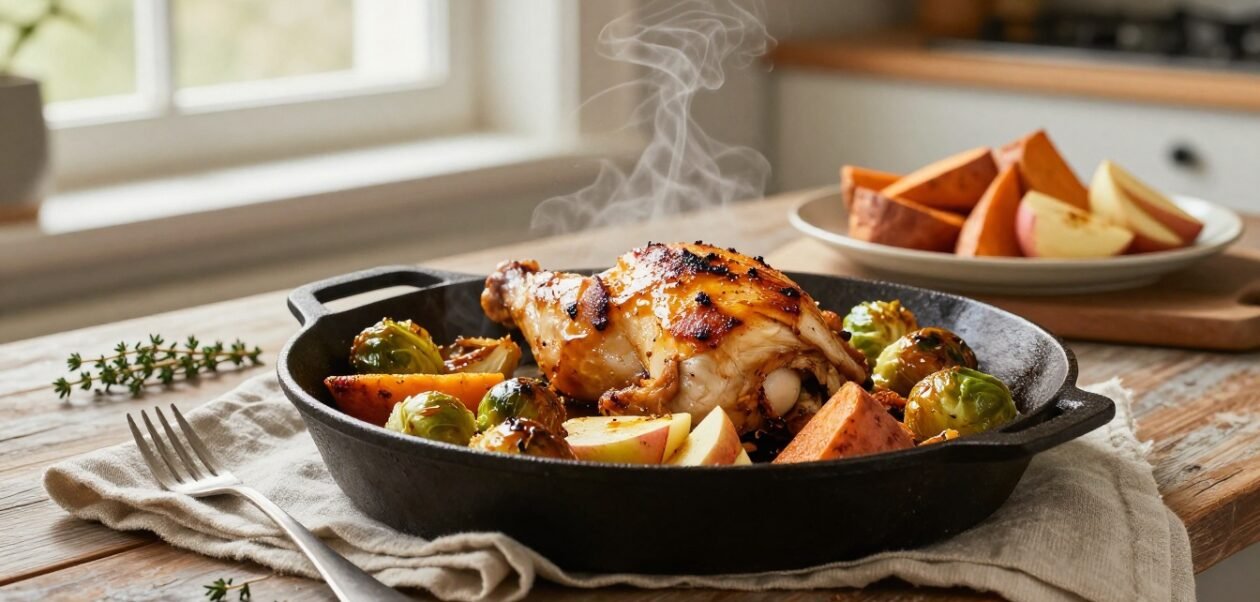
A warm chicken dinner feels especially welcome on a cool fall evening. These fall chicken recipes pair familiar cooking methods with seasonal vegetables like squash, sweet potatoes, carrots, and Brussels sprouts.
Choose a sheet-pan meal when you want less cleanup, a soup or stovetop dish when you need flexibility, or a casserole for a filling dinner that can stretch across busy schedules. Use what you have, then start with the cooking method that fits your evening.
Fall Chicken Recipes for Easy, Flavorful Weeknight Dinners
Fall chicken recipes are easy to adapt around the vegetables you have and the time you can give dinner. A sheet pan keeps prep and cleanup manageable, while a simple roast pairs well with grains, beans, or greens. Choose one or two seasonal vegetables, add chicken and a few familiar seasonings, and adjust the portions to suit your household.
Make a sheet-pan dinner with chicken, apples, and Brussels sprouts
Arrange chicken thighs, sliced apples, halved Brussels sprouts, and wedges of red onion on a rimmed baking sheet. Toss the produce with a little oil, thyme or rosemary, salt, and pepper. Season the chicken, too, then spread everything out so the pieces have room.

Cut the vegetables into similar-sized pieces so they cook at about the same pace. Leave space between them, since a crowded pan traps moisture and makes vegetables steam instead of brown. If your pan is full, use two pans rather than piling everything together.
Chicken and vegetables may not finish at the same time. Check the sprouts and onions for tenderness and browned edges, and use a food thermometer to confirm the chicken reaches 165°F in its thickest part. See the USDA safe temperature chart for poultry. If the vegetables need longer, transfer the chicken to a plate and return the pan to the oven.
Pair roasted chicken with squash, carrots, or sweet potatoes
For another easy dinner, roast chicken with chunks of squash, carrots, or sweet potatoes. Toss the vegetables with oil, salt, pepper, and thyme or rosemary, then spread them around the chicken in a single layer. Smaller, evenly cut pieces cook faster and more evenly, which helps when you want dinner on the table without watching the oven closely.
Add a grain, beans, or greens to make the meal more filling. Brown rice, quinoa, or canned beans can round out the plate, while sautéed kale adds a quick green side. A squeeze of lemon just before serving balances the vegetables’ natural sweetness. If squash or sweet potatoes aren’t available, use carrots or potatoes instead, and season with what’s already in your pantry.
Choose Cozy Chicken Soups and Stovetop Suppers
A pot of soup or a covered skillet keeps dinner warm and the cleanup simple. These fall chicken recipes are flexible, too: use raw chicken when you have time to simmer, or start with cooked chicken and pantry staples for a quicker meal.
Simmer chicken soup with squash, potatoes, and hardy greens
Start with onion and carrots softened in a little oil, then add chicken, broth, and diced potatoes or squash. Season with thyme, rosemary, black pepper, or a little garlic. Add enough broth to cover the ingredients, and simmer until the vegetables are tender.
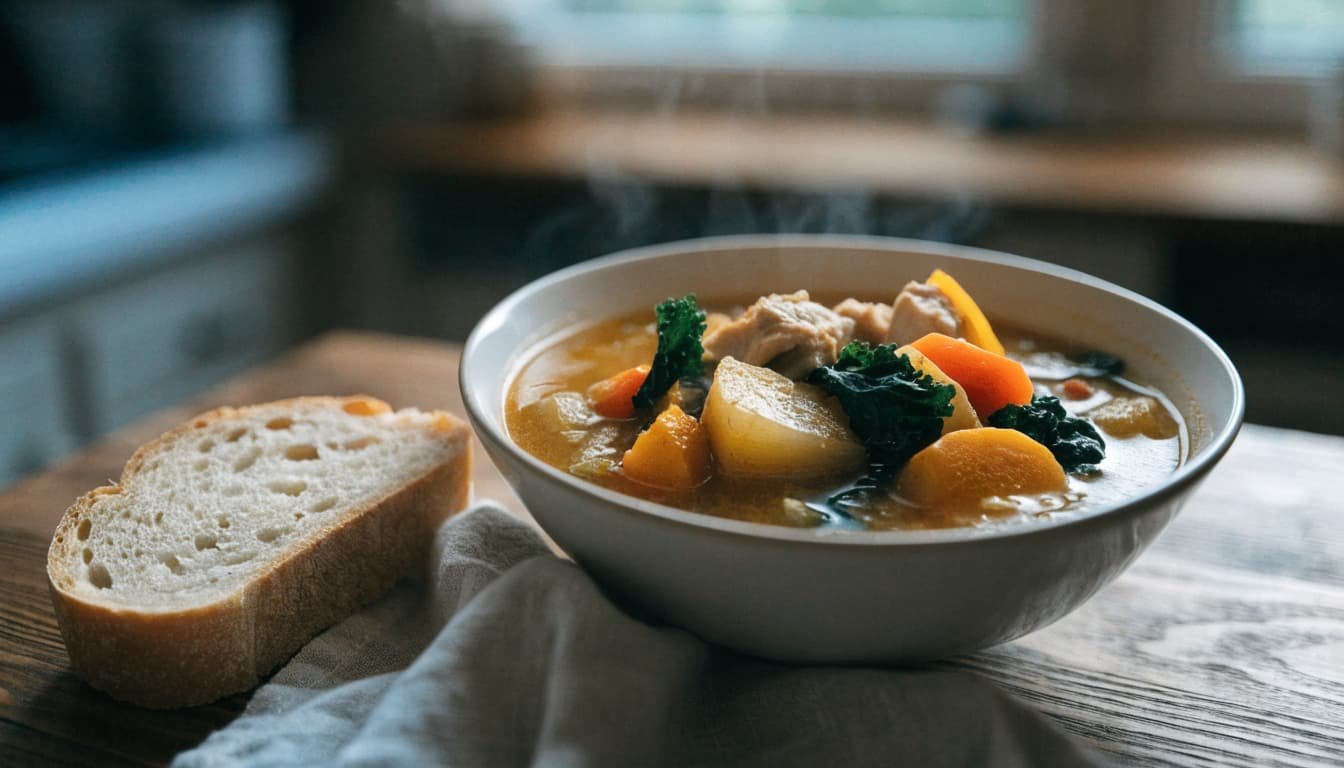
If you’re using raw chicken, give it enough time to cook through before serving. Check that it reaches 165°F with a food thermometer, following the USDA’s chicken cooking guidance. With leftover cooked chicken, wait until the vegetables are tender, then stir in shredded chicken near the end so it warms without becoming dry.
Add kale or another sturdy green during the last few minutes. It will soften while keeping more of its color. Canned beans can make the soup more filling with little extra work; drain and rinse them, then add them near the end to heat through. Serve with crusty bread or rice. If you’re reheating leftover soup, bring it to a rolling boil and check that it reaches 165°F, as advised in the USDA’s leftover food guidance.
Make a cider-braised chicken skillet with mushrooms and onions
For a richer stovetop supper, brown chicken pieces in a skillet, then set them aside while sliced mushrooms and onions soften in the same pan. Pour in a modest amount of apple cider or broth, scrape up the browned bits, and add thyme or rosemary. Return the chicken to the skillet, cover, and simmer until it’s cooked through.
Cider gives the sauce a mild sweetness, while broth keeps the flavor more savory. For a creamy finish, stir in a small splash of cream just before serving. Keep it light by leaving the sauce as it is, or add more broth if it reduces too much.
Serve the skillet with rice, potatoes, or whole-grain bread to catch the sauce. Boxed broth and pre-sliced mushrooms can shorten prep, and the whole meal cooks in one pan.
Bake a Comforting Chicken Casserole or Roast Dinner
Oven-baked fall chicken recipes suit a family meal, a relaxed weekend dinner, or a little meal prep for the week. A casserole brings chicken, grains, and vegetables together in one dish, while roasted chicken and root vegetables give you browned edges and simple pan juices.
Prepare chicken, mushrooms, and wild rice in one casserole
Chicken, mushrooms, wild rice, carrots, and celery make a hearty casserole with earthy flavor, tender vegetables, and pleasantly chewy grains. Brown the mushrooms first if you have a few extra minutes; cooking off some of their moisture helps deepen their flavor. Add thyme or rosemary, then use enough broth to cook the rice without leaving the dish soupy.

Rice type matters here. Pure wild rice and wild rice blends can cook differently, and rice that goes into the dish uncooked needs different liquid and baking time than rice cooked first. Follow the recipe’s method rather than assuming every rice cooks at the same pace. Keep the sauce moderate, cover the casserole for most of the bake, and uncover it briefly if you want a lightly browned top. Stir in spinach or kale near the end for extra color.
Chicken can dry out if the casserole stays in the oven too long. Check the center with a food thermometer, and make sure the chicken reaches 165°F, the safe minimum temperature for poultry in a casserole. USDA guidance on cooking poultry provides the temperature details.
Roast chicken with root vegetables for a hands-off meal
For a simpler oven dinner, arrange chicken with carrots, potatoes, onions, or squash. Season everything with garlic, thyme or rosemary, salt, pepper, and a little oil. Cut the vegetables into similar-sized pieces so they cook at about the same rate, then spread them around the chicken without crowding the pan. Space gives the vegetables room to brown instead of steam.
Chicken thighs are a practical choice for roasting with vegetables, since they tend to stay moist as the vegetables soften. Keep the skin exposed if using skin-on pieces, and start checking the chicken near the end of the expected cooking time. If the vegetables need longer, move the cooked chicken to a plate and return the pan to the oven.
Use a food thermometer to check the thickest part of each piece, away from the bone; the chicken should reach 165°F. Let it rest briefly before serving so the juices settle, then spoon the pan juices over the vegetables. For a family-style meal, set out chopped herbs or lemon wedges so everyone can finish their plate to taste.
Build a Balanced Fall Chicken Dinner with Seasonal Ingredients
A satisfying chicken dinner can be simple: pair the chicken with one or two seasonal vegetables and a filling side. Use what your family likes and what’s available, rather than adding every fall ingredient to the same pan.

Match chicken with apples, squash, mushrooms, and greens
Apples and squash bring natural sweetness that pairs well with savory herbs such as thyme, rosemary, or sage. Mushrooms and onions add a deeper, savory flavor, especially in a skillet or casserole. Kale and cabbage offer a hearty, fresh contrast; stir them into soup or cook them until tender with a little oil and garlic.
Choose one or two vegetables to keep prep manageable. For example, roast chicken with squash, or serve a mushroom-and-onion skillet with a side of sautéed cabbage. Add thin apple slices to a pan with squash, or use them in a crisp salad beside a warm chicken dinner. A squeeze of lemon can brighten sweeter vegetables, while black pepper and herbs keep their flavor savory.
Fall produce varies by location, growing conditions, and weather. Check what’s available at your market, and use the USDA’s fall produce guide as a starting point. If a particular vegetable isn’t easy to find, choose another one you enjoy.
Choose simple sides and lighter swaps that suit your table
Rice, potatoes, beans, whole-grain pasta, salad, and roasted vegetables all work alongside chicken. Pick one filling side and one vegetable, then cook them while the chicken rests. Brown rice or quinoa pairs well with roasted squash, while a crisp salad adds a cool contrast to a warm skillet. Follow the package directions for grains, since cooking times and liquid amounts vary.
You can adjust the recipe to suit your table, too. Skinless chicken is an option when you prefer it, and reduced-sodium broth can work in soups or sauces. Add extra vegetables to a skillet or casserole, or replace part of a creamy sauce with plain yogurt for a tangier finish. These are choices, not rules.
Swaps can change a dish’s seasoning and texture. Taste before serving, then adjust the salt, herbs, or acidity as needed. If yogurt makes a sauce too thick or tangy, thin it with a little broth or water. Keep the meal familiar, and make only the changes that fit the recipe and your family.
Prep, Store, and Reheat Chicken Meals Safely
Safe handling matters for raw chicken and cooked leftovers alike. A few simple steps help keep fall chicken recipes ready to enjoy without drying out the chicken or leaving food at an unsafe temperature.
Use a thermometer and keep raw chicken separate
Chicken is safe to eat when its thickest part reaches 165°F (74°C). Check each piece with a food thermometer, keeping the tip away from bone. Color alone can’t confirm that chicken is fully cooked.
Skip rinsing raw chicken. Water splashes can spread bacteria to the sink, counters, and nearby dishes. Keep raw poultry and its juices away from ready-to-eat foods, and wash your hands, utensils, and cutting board after handling it.
Cool leftovers promptly and reheat them gently
Refrigerate cooked chicken, soup, and casserole within two hours, or within one hour when the temperature is above 90°F. Divide food into shallow, covered containers so it cools faster; you don’t need to wait for it to reach room temperature. Keep the refrigerator at 40°F or below, and use refrigerated chicken leftovers within three to four days, following the USDA’s leftover food safety guidance.

Reheat only the portion you plan to eat. Warm chicken and casseroles until they reach 165°F throughout, checking the center with a thermometer. Bring soup to a boil, stirring as it heats. On the stove, use low to medium-low heat and add a splash of broth or water if the chicken seems dry. For the microwave, cover the dish, stir or rotate it partway through, then check for cool spots.
Freeze portions you won’t eat within a few days, and thaw them in the refrigerator. For better texture, freeze meal-sized servings and label them with the date.
Conclusion
Fall chicken recipes are easy to adapt to the time you have and the ingredients on hand. Start with one chicken cut, a seasonal vegetable, and a simple cooking method. Choose a sheet pan for a hands-off dinner, or use a pot, skillet, or casserole when that better suits your evening.
Add a grain or potato if you want a more filling plate, then adjust the herbs, seasonings, and sides to your household. One well-seasoned vegetable is enough to make dinner feel seasonal.

- Christmas Cookie Ideas for Every Holiday Baker - November 9, 2026
- Christmas Cocktails: Party Drinks, Cozy Sips, and Mocktails - November 9, 2026
- 20 Christmas Appetizer Ideas for Every Holiday Spread - November 9, 2026


