Packing a lunch your child will eat can be tricky when time is short and the fridge is nearly empty. A few familiar ingredients, such as whole-wheat bread, eggs, beans, fruit, and crunchy vegetables, can make a healthy lunchbox easier to put together.
Keep the combinations flexible and use what you have. Here are simple ideas, along with easy prep and packing tips to help make school lunches manageable.
Build a Balanced Lunchbox from Simple Foods
A useful lunchbox formula is simple: choose a filling grain or other starch, add a protein food, then include fruit and vegetables. Yogurt or cheese can be an optional dairy food. The mix can change with what you have and what your child enjoys. The USDA MyPlate food groups offer a helpful guide, but they don’t set one lunch portion for every child.
Pair a filling base with protein
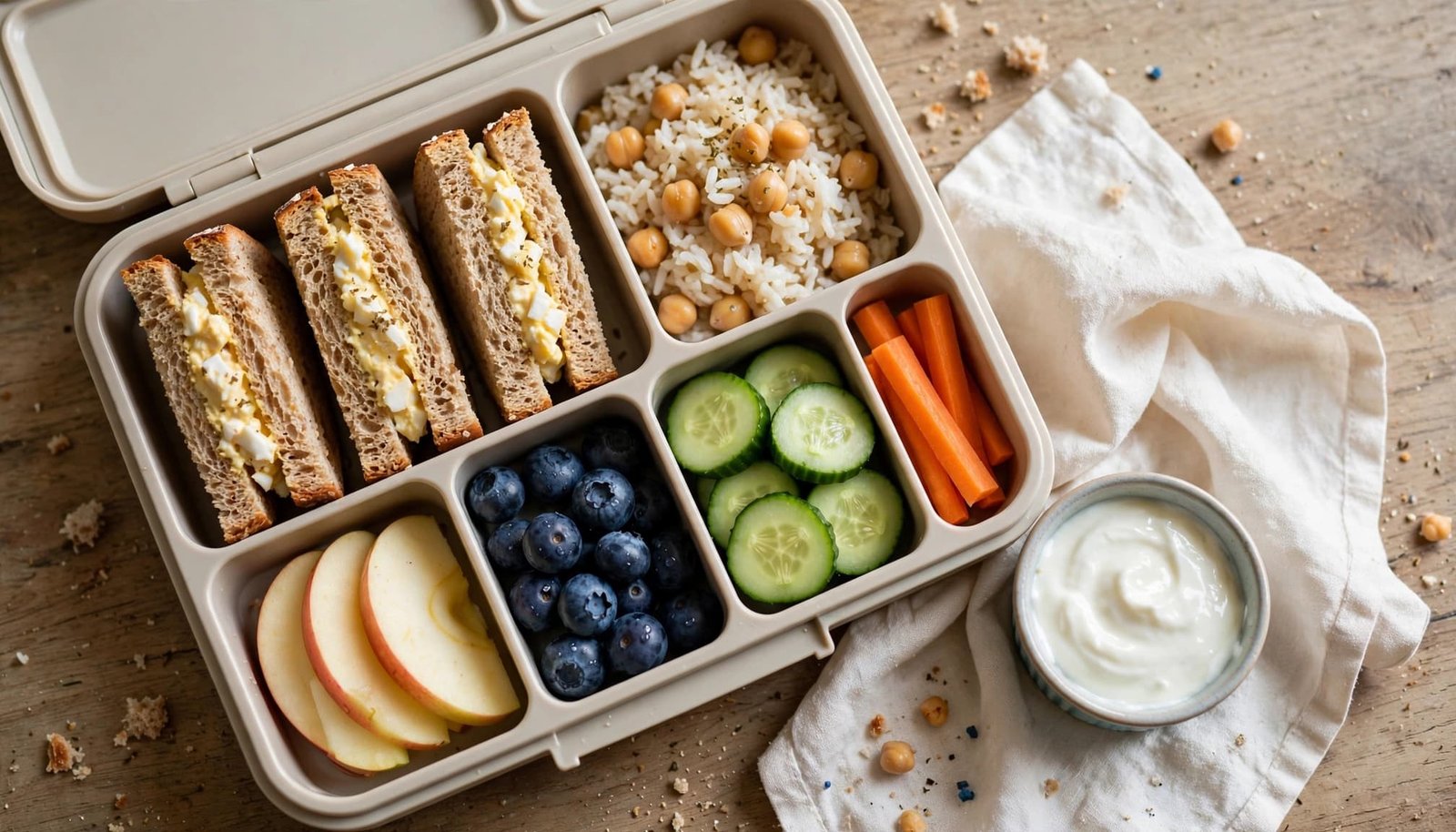
Start with a base your child can eat easily, such as whole-wheat bread, rice, pasta, crackers, or a tortilla. Add a protein food to make the lunch more satisfying. For example, fill whole-wheat bread with egg or mashed beans, pair rice with chicken or chickpeas, or toss pasta with tuna or white beans.
For a vegetarian lunch, swap chicken or tuna for chickpeas, mashed beans, lentils, or a hard-boiled egg. Canned beans and leftover rice or pasta make these combinations easier to assemble on busy mornings. If you’re packing a sandwich or wrap, keep juicy fillings separate until serving when you can, so the bread stays firm.
Add fruit, vegetables, and a familiar extra
Round out the lunch with fruit and a vegetable or two. Apple slices, berries, and grapes pair well with carrot sticks, cucumber, or bell pepper. Cut grapes lengthwise into small pieces for young children, based on their age and eating ability. A small amount of yogurt or cheese can add a familiar extra, but it doesn’t need to be in every lunch.
A little color and variety can make a lunch feel inviting without adding much prep. Choose one or two produce options your child already likes, then change them when you have something different on hand. Portions can stay flexible, too. Appetite, age, activity, and the length of the school day all affect how much a child may want to eat, so pack amounts that suit your child rather than following one fixed serving size.
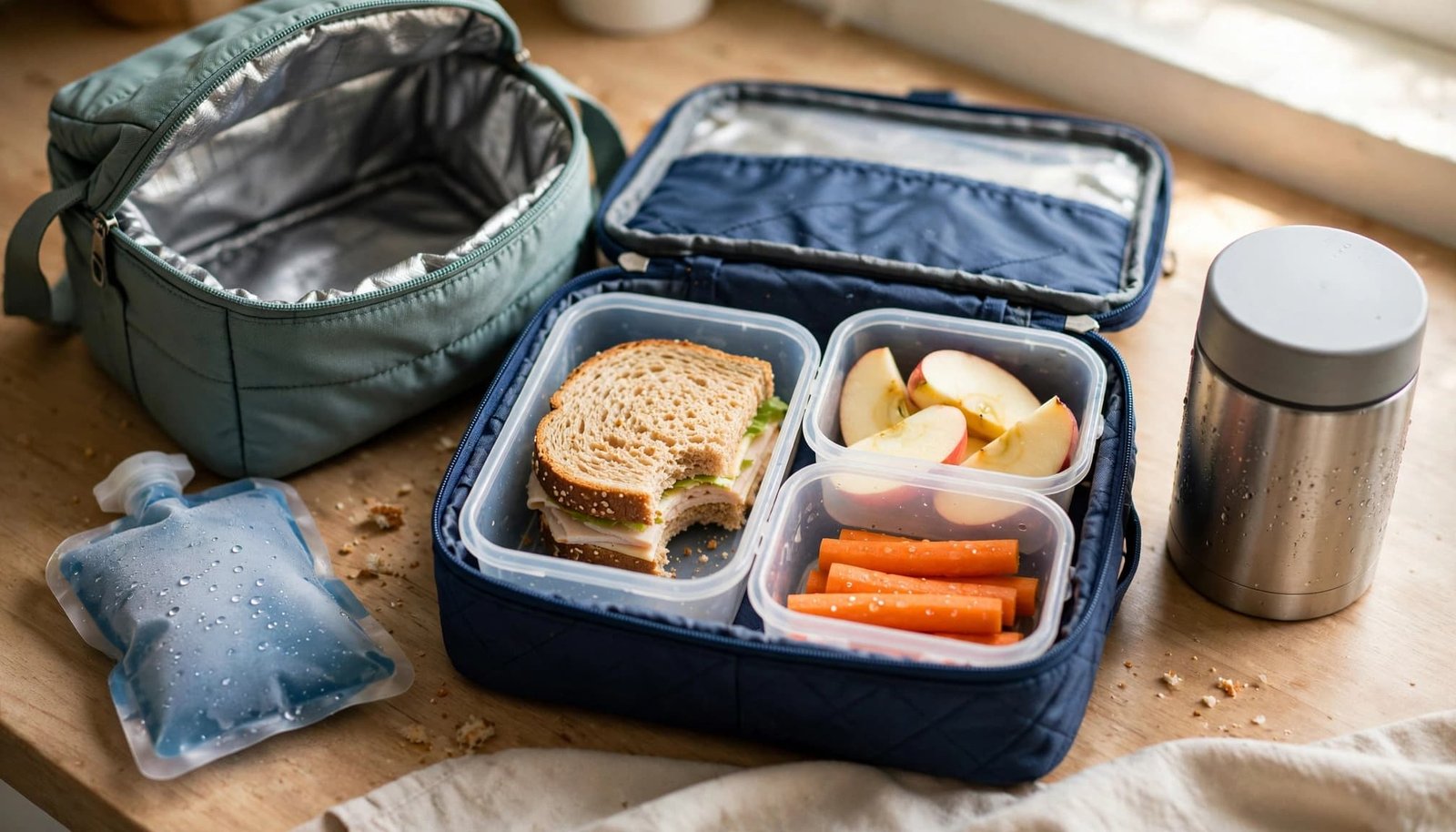
If you pack perishable foods such as egg, chicken, yogurt, or cheese, use an insulated lunch bag with cold packs to keep them chilled.
Healthy Lunchbox Ideas for Kids with Simple Ingredients
Simple lunchbox combinations can start with bread, pasta, rice, beans, eggs, cheese, and produce you already have. Mix and match the ingredients your child enjoys, and keep portions flexible. Check school rules and food labels before packing, especially when lunches are shared.

Easy sandwiches, rolls, and pitta pockets
For a simple chicken roll, layer cooked chicken with avocado and grated carrot in a whole-wheat roll. Mash chickpeas with a little plain yogurt or olive oil, then spread them on sandwich bread for a meat-free option. Or fill a pitta with hummus and bell pepper strips. Add cucumber or shredded lettuce if your child likes extra crunch.
Keep juicy fillings, such as tomato, and wet spreads modest. You can also pack hummus or dressing in a small container and add it at lunchtime. This helps bread and pitta stay firm instead of turning soggy.
Simple pasta, rice, and grain lunches
Toss leftover pasta with vegetables and beans, or use cooked chicken for a meat-based version. A little olive oil or a small spoonful of sauce can hold everything together. For rice, stir in cooked egg and peas, or add chickpeas and diced vegetables. Use brown rice, quinoa, or another grain your family already keeps on hand.
Batch-cook one grain and use it in more than one lunch. Rice can go with chickpeas one day and egg and peas the next, so a little preparation gives you options. Pack dressings separately, and add tender greens just before eating to keep them from wilting.
No-fuss snack boxes and savory bites
A mix-and-match box works well when your child prefers small bites. Pair cheese with crackers or pita, then add fruit, vegetable sticks, and a small portion of hummus. Use familiar choices, such as apple slices, berries, cucumber, or carrots, and swap items based on what’s in the fridge.
Egg muffins or pieces of mini frittata can add a savory choice when you have them ready. Since eggs and cheese are perishable, pack them cold. The USDA recommends an insulated lunch bag with at least two cold sources for perishable foods. See its guidance for keeping bag lunches safe.
Before packing, confirm which ingredients are allowed at school and read labels on packaged foods, including crackers, hummus, and bread. The FDA explains how to check packaged foods for allergens. Ingredients and manufacturing practices can change, so check the label each time.
Make Lunchbox Prep Easier Without Planning Every Meal
A little prep can make school mornings easier without turning the weekend into a full meal-prep day. Wash a few vegetables, cook one useful grain, and portion a couple of snacks or dips. Then combine those pieces in different ways as the week unfolds.
Prep a few useful ingredients ahead
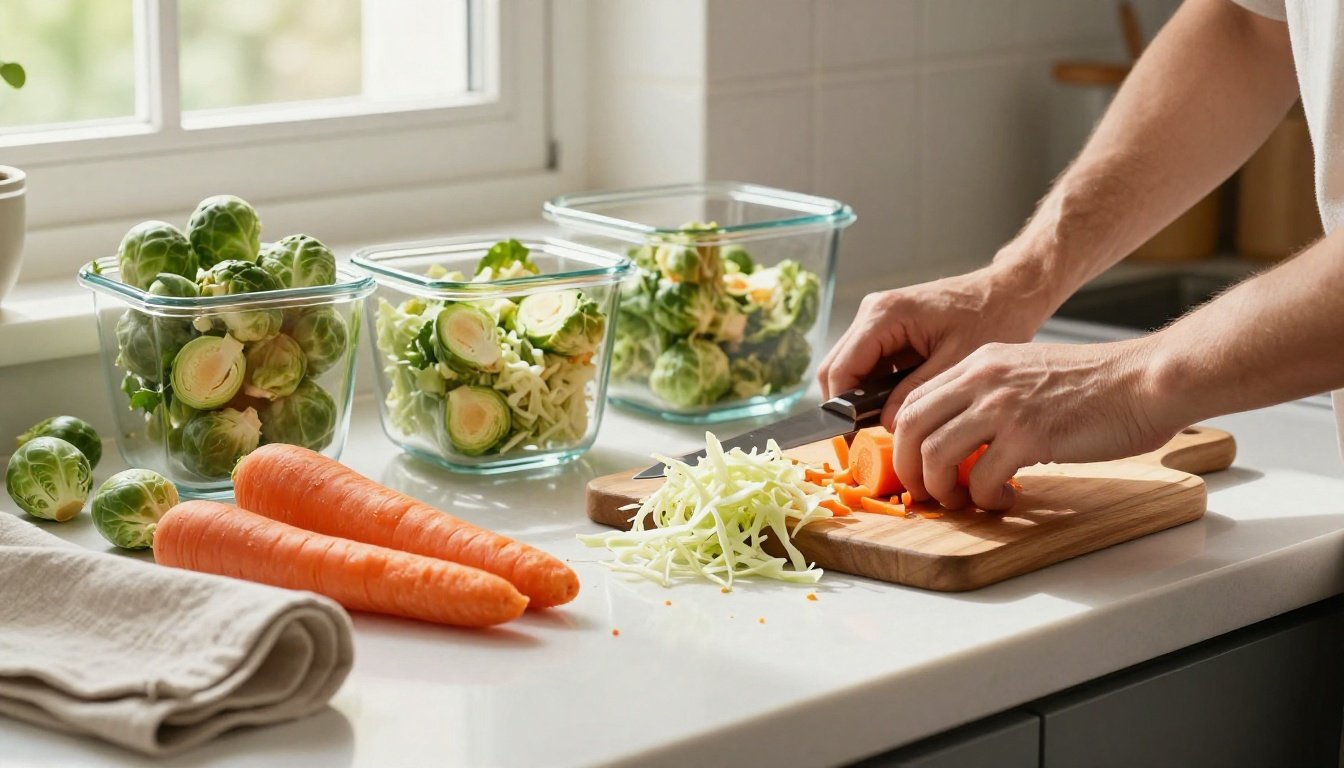
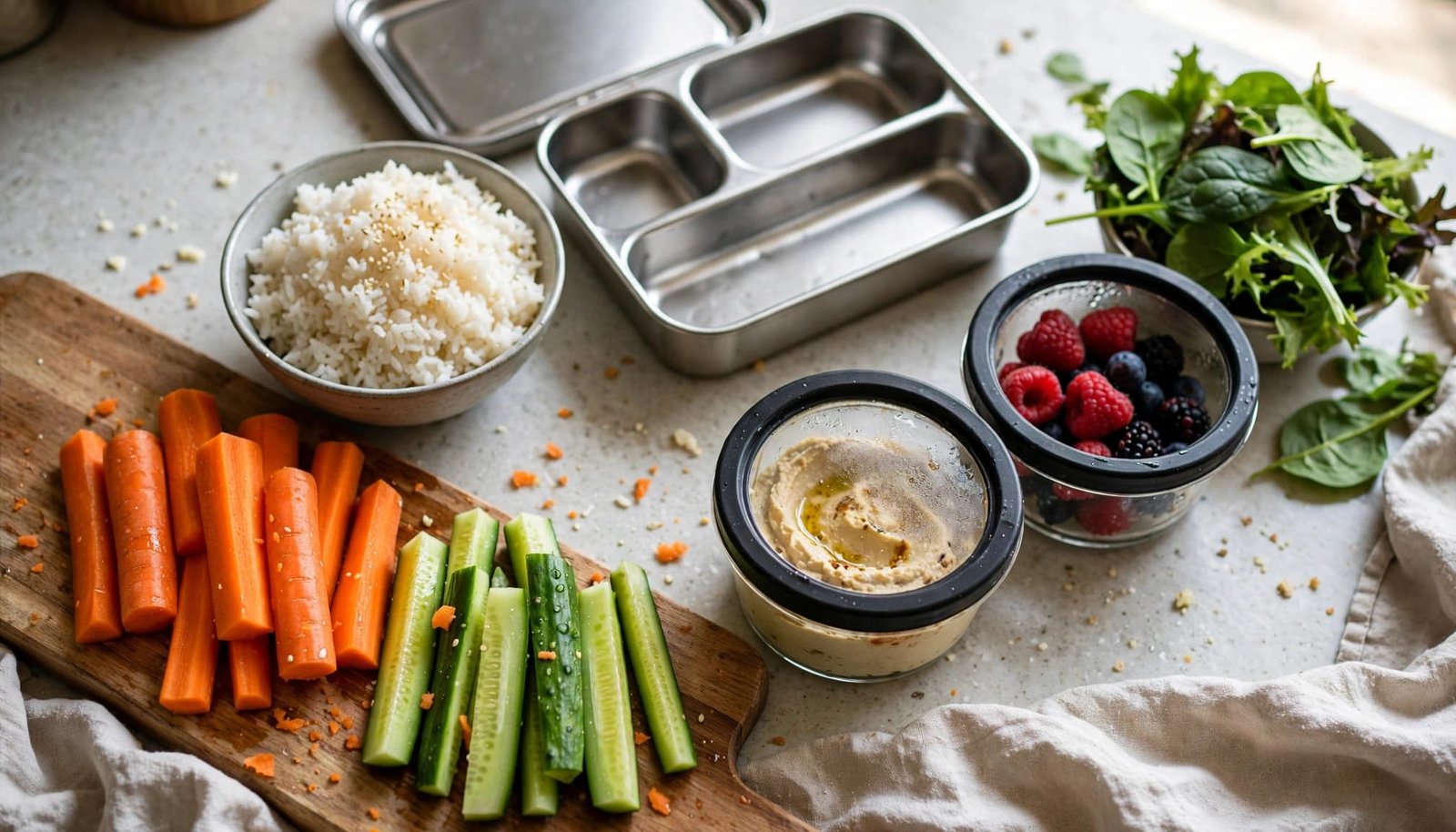
Wash sturdy vegetables such as carrots, cucumbers, or bell peppers, then cut them into pieces your child can manage. Cook rice or another grain while you have time, and portion hummus, yogurt dip, or snack items into small containers. These simple components can fill out a snack box, accompany a sandwich, or become part of a grain bowl.
Store prepared foods covered in the refrigerator. Keep wet dips separate from crunchy vegetables, and leave delicate toppings, such as leafy greens or sliced fruit, for packing time. This helps preserve their texture and gives you more flexibility when your child changes their mind about lunch.
Cooked grains and other perishable leftovers should be chilled promptly. The USDA advises refrigerating leftovers within two hours, keeping the refrigerator at 40°F or below, and using most cooked leftovers within three to four days. See the USDA’s leftover storage guidance for more detail.
Use leftovers and quick pantry shortcuts
Leftovers can become lunch components without needing a separate recipe. Add cooked chicken to a wrap, toss pasta with beans, or pair rice with frozen vegetables. Canned tuna, canned beans, and pre-washed greens can also help fill a lunchbox when chopping or cooking isn’t practical.
Keep a few combinations in mind, rather than assigning each ingredient to a specific day. Rice, beans, and vegetables might make a grain bowl one day, while pasta and greens can make a quick salad the next. If your child prefers familiar foods, serve a new ingredient alongside something they already enjoy.
Check package labels for allergens, added ingredients, and school restrictions, especially when choosing canned foods, dips, or prepared grains. You can swap ingredients to suit your child’s tastes or dietary needs. A small set of flexible ingredients is often enough to create several of the healthy lunchbox ideas for kids with simple ingredients already in your rotation.
Pack Lunches to Stay Fresh, Safe, and Easy to Eat
A little planning helps lunch arrive at school in good shape and stay easy for your child to eat. Choose a container that fits the food, keeps its temperature, and is simple for your child to open.
Keep cold foods chilled and hot foods insulated
Pack perishable foods such as yogurt, cheese, eggs, and cooked chicken in an insulated lunch bag with cold packs. USDA guidance recommends using two cold sources to help keep a packed lunch cold. If the school has a refrigerator, ask whether students can store lunches there. For a practical overview, see the USDA’s lunchbox food-safety guidance.
For soup, rice, or another hot meal, use a clean insulated food jar. Preheat the jar with boiling water for a few minutes, empty it, then add the hot food and close the lid. Keep the jar sealed until lunchtime. In warm weather or when the trip to school takes longer, follow current local food-safety advice and the school’s storage rules.
Texture matters, too. Pack wet dips, juicy tomato, and dressing in small containers so crackers stay crisp and bread doesn’t get soggy. Choose containers your child can open independently, and keep utensils with foods that need them.
Check allergies, school rules, and safe food shapes
Read the ingredient list on every package, even when you buy a familiar brand. Ingredients and manufacturing practices can change, and a nut-free choice may still contain another allergen. Ask the school about food restrictions, then keep foods a child must avoid separate. Clean hands, containers, and utensils help reduce accidental contact, but for a serious allergy, check with the child’s caregiver or medical team about which products are safe.
Make lunch fit your child’s age and eating skills. Cut round foods such as grapes lengthwise for younger children, and prepare firm or crunchy foods in manageable pieces. The American Academy of Pediatrics offers guidance on choking prevention. When you’re unsure about a food’s shape or texture, follow trusted pediatric advice and consider what your child can comfortably chew and manage at school.
Help Kids Enjoy More Variety in Their Lunchbox
A little variety can come from changing one familiar part of lunch, not packing a completely different meal each day. Keep foods your child already enjoys in the rotation, then offer small choices and simple swaps.
Let kids choose between simple options
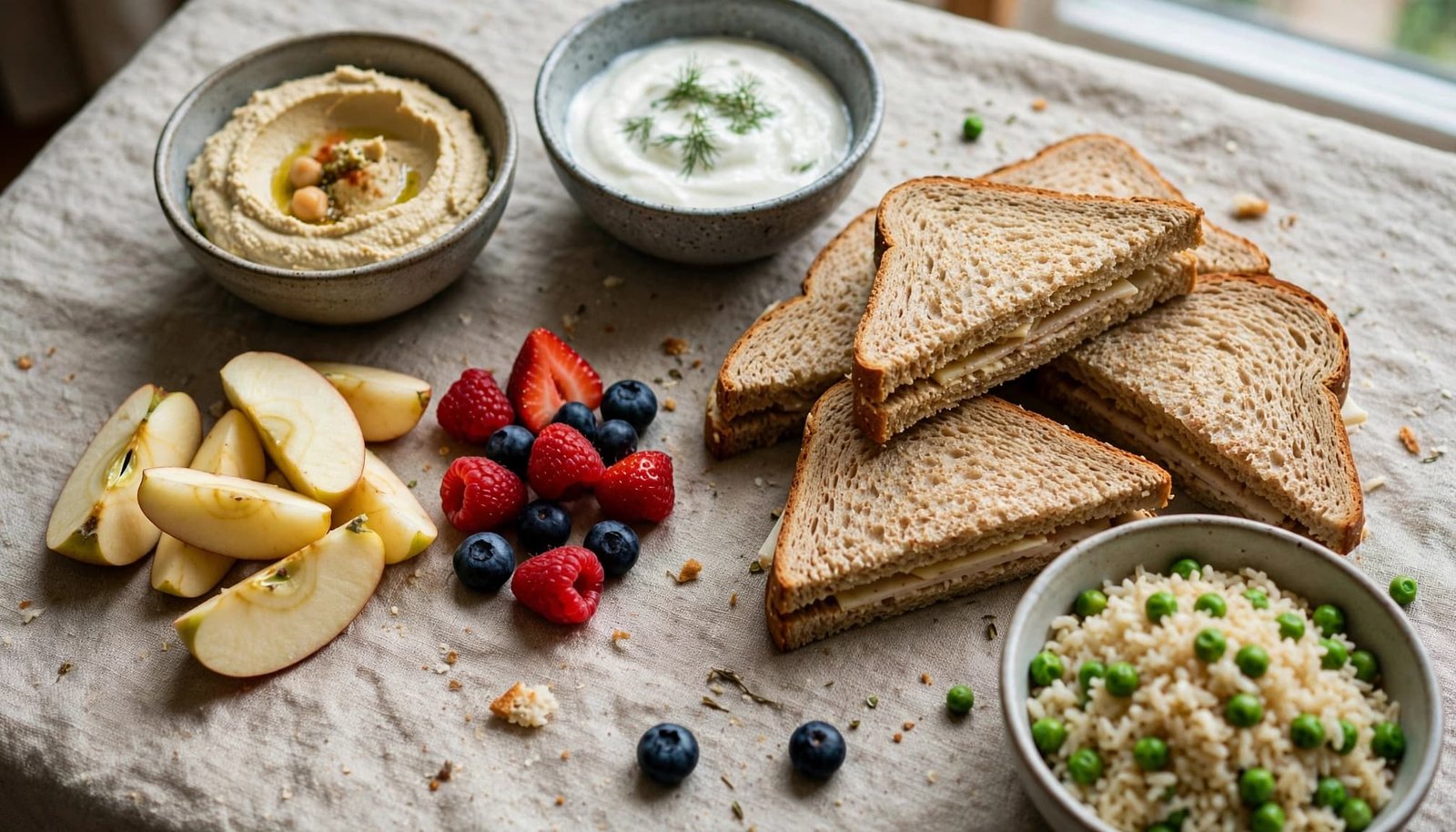
Offer two choices you’re happy to pack: an apple or berries, hummus or yogurt dip, a sandwich or a rice bowl. Your child gets a say, while you keep the ingredients familiar and the lunch balanced. A few options also make packing easier, especially when you’re using foods already in the fridge.
You can set out toppings or sides separately, too. Let your child choose cucumber or bell pepper, or decide whether to add a little cheese to a bowl. Keep the choices small so lunch doesn’t turn into a long negotiation. If a food is new, place a small amount beside a familiar favorite without asking your child to finish it. The American Academy of Pediatrics’ advice for helping picky eaters try more foods supports offering new foods more than once.
Change one ingredient at a time
Start with a lunch your child usually eats, then switch just one ingredient. Serve the same sandwich with berries instead of an apple, use a different spread, or swap white rice for brown rice if your child is comfortable with it. Small changes help add variety without making lunch feel unfamiliar.
Notice what comes home uneaten, but treat it as useful information, not a failed lunch. Maybe the vegetables were too hard to manage, the portion was more than your child wanted, or a dip would make them easier to eat. Adjust the next lunch and keep offering foods over time. You don’t need every lunch to be a hit; familiar choices and gradual changes can make a varied lunchbox easier to build.
Conclusion
Healthy lunchbox ideas for kids with simple ingredients can follow one flexible formula: a filling base, a protein, fruit, and vegetables. Use familiar foods your child enjoys, and swap ingredients as needed to fit what you have on hand.
Start with one or two easy lunches, then build on the combinations your child likes. A few simple ingredients are enough to make lunch easier to pack and more likely to be eaten.

- Christmas Cookie Ideas for Every Holiday Baker - November 9, 2026
- Christmas Cocktails: Party Drinks, Cozy Sips, and Mocktails - November 9, 2026
- 20 Christmas Appetizer Ideas for Every Holiday Spread - November 9, 2026