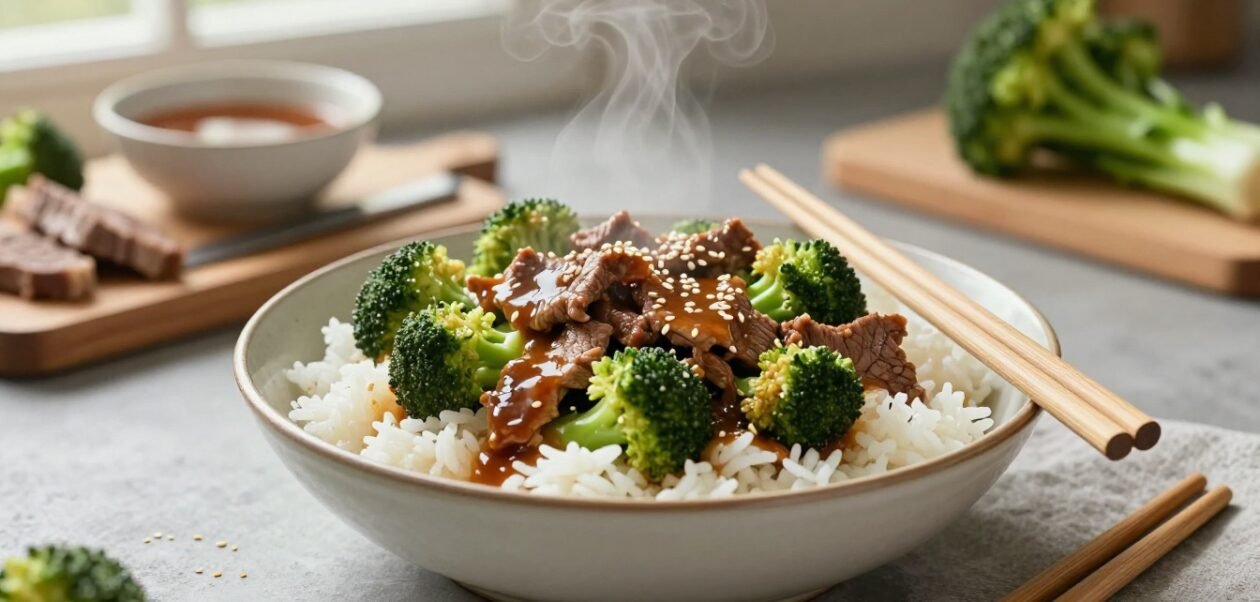
Tender beef, crisp-tender broccoli, and a savory homemade sauce make an easy dinner served over rice. This lighter, home-cooked take is simple to adjust, whether you prefer less salt, a little tang, or some heat.
Get everything ready before the pan gets hot, and cook the beef in batches if needed so it browns instead of steams. A few small steps help keep the beef tender and the broccoli bright, even on a busy evening.
Healthy Beef and Broccoli with Homemade Sauce: What You’ll Need
This healthy beef and broccoli with homemade sauce uses familiar ingredients and keeps the flavors easy to adjust. The sauce is savory with a little sweetness, and you can add more vinegar or chili if you like a brighter or spicier finish.
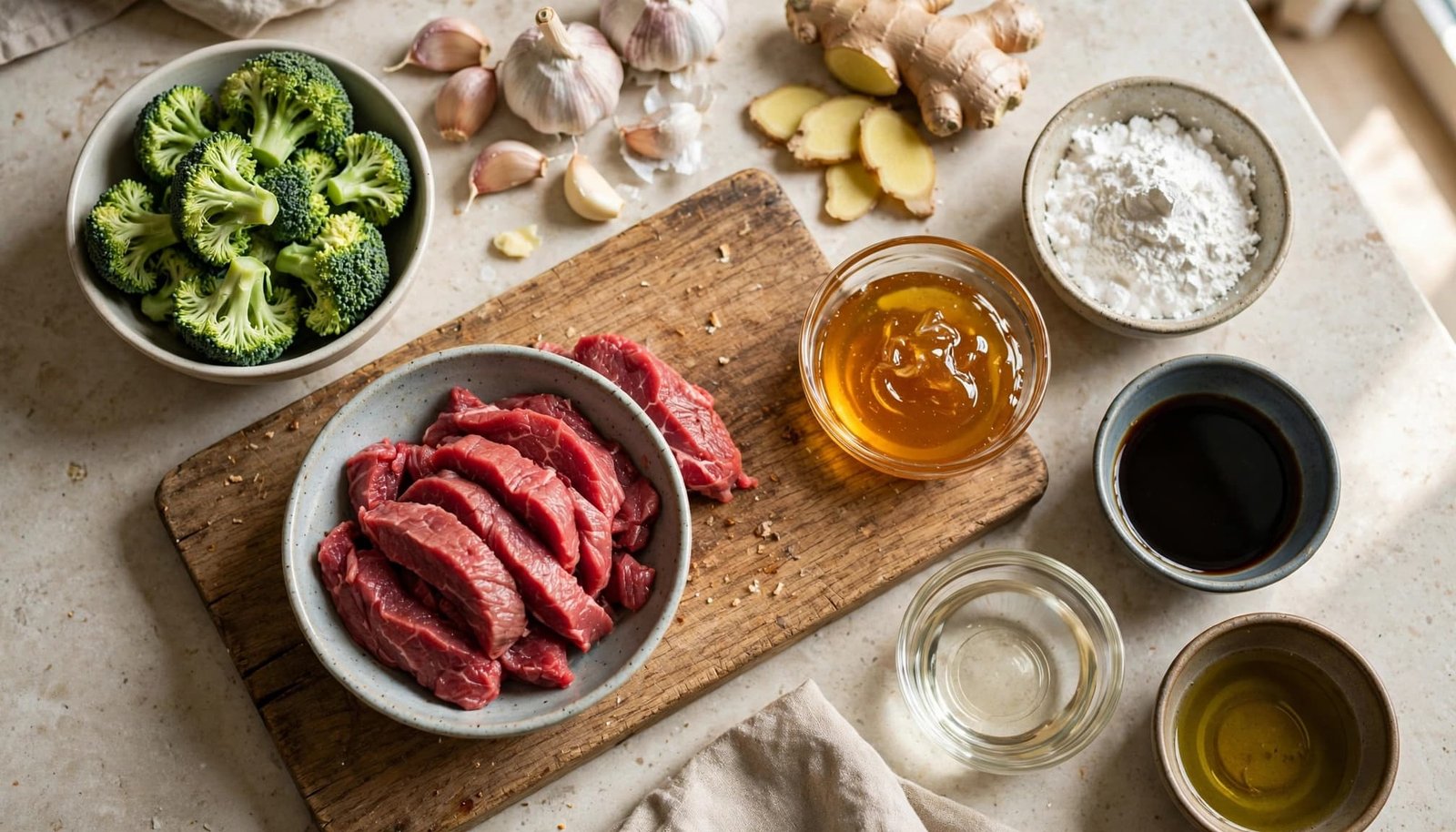
Yield: 4 servings Prep time: 15 minutes Cook time: 15 minutes
Ingredients
- 1 pound boneless sirloin or flank steak, thinly sliced across the grain
- 1 large head broccoli, about 1 pound, cut into bite-size florets
- 1 tablespoon neutral oil, such as avocado or canola oil
- 2 tablespoons water, for steaming the broccoli
- 2 cloves garlic, minced
- 1 teaspoon freshly grated ginger
- 1/2 cup low-sodium beef broth
- 3 tablespoons reduced-sodium soy sauce
- 1 tablespoon rice vinegar
- 1 tablespoon honey
- 1 tablespoon cornstarch
- 1 teaspoon toasted sesame oil, optional
- Cooked rice, for serving
- Sliced scallions or sesame seeds, optional
Choose a beef cut that cooks quickly
Sirloin and flank steak both work well in a quick skillet dinner. Slice the meat thinly across the grain, which shortens the muscle fibers and helps each piece feel tender. Try to keep the strips close in size so they cook at about the same pace. If you want to compare cuts, USDA FoodData Central’s food search provides nutrition information for beef and other ingredients.
Keep the homemade sauce balanced
Whisk the broth, soy sauce, rice vinegar, honey, and cornstarch together before cooking. The cornstarch thickens the sauce so it clings to the beef and broccoli, while the vinegar keeps the sweet and savory flavors from tasting too heavy. Use reduced-sodium soy sauce, then taste before adding any extra seasoning.
Garlic and ginger bring warmth without requiring a long list of spices. Add sesame oil if you enjoy its toasted flavor, or leave it out for a milder sauce. A pinch of red pepper flakes is an easy way to add heat at the table.
Prep the broccoli and serving ingredients
Choose broccoli with firm stems and tightly packed green florets. Cut the florets into similar sizes so they cook evenly, and peel and slice any tender stem rather than tossing it. Dry the broccoli after washing; excess water can keep it from browning in the skillet.
Cook rice while you prep the beef and sauce, following the package directions for the type you have. Keep optional scallions or sesame seeds ready for serving. They add a fresh finish, but the dish is complete without them.
How to Cook Beef and Broccoli So Both Stay Tender
Cook the broccoli and beef in stages, then bring them together with the sauce at the end. This gives the broccoli time to soften without going limp and helps the thin beef slices brown instead of steaming.

Cook the broccoli until bright green and crisp-tender
Set a large skillet or wok over medium-high heat. When it feels hot, add about half the oil, then add the dry broccoli in a single layer. Cook for 3 to 4 minutes, stirring or tossing now and then. The florets should turn bright green and pick up a few browned spots.
If the stems are still firm, add 1 to 2 tablespoons of water and cover the pan for about a minute. They should be tender when pierced but still have a little bite. Transfer the broccoli to a plate so it doesn’t overcook while you sear the beef.
Sear the beef in batches
Add the remaining oil to the hot pan. Arrange the beef in a single layer, leaving space between the pieces. If the strips overlap, cook them in batches. Crowding the pan releases moisture and makes the beef steam instead of brown.
Cook the beef for about 1 to 2 minutes per side, turning once. Thin strips cook quickly, so watch for browned edges and a change in color through the center. For whole-cut beef, USDA guidance recommends a minimum internal temperature of 145°F followed by a 3-minute rest. Check the USDA safe temperature chart for the recommended temperature. Transfer cooked beef to the plate with the broccoli.
Add the sauce and finish the stir-fry
Lower the heat slightly. Add the garlic and ginger, and stir for about 30 seconds, just until fragrant. Pour in the sauce mixture and stir, scraping up any browned bits from the pan. Let it bubble for 1 to 2 minutes, until it thickens enough to coat a spoon.
Return the beef and broccoli to the pan. Toss for about a minute, just long enough to coat everything and warm it through. The broccoli should stay green with a little firmness, and the sauce should cling to the beef and florets. If the sauce gets too thick, stir in a spoonful of water. Serve right away over warm rice.
What Makes This Homemade Beef and Broccoli a Lighter Choice
This homemade beef and broccoli keeps the rich, savory flavor of a takeout-style stir-fry while giving you control over the sauce, oil, and serving size. You can adjust each part to suit your table without changing the basic recipe.

Adjust the sauce to suit your taste
The homemade sauce uses measured amounts of reduced-sodium soy sauce and honey, so you can taste it before adding more seasoning. Reduced-sodium soy sauce can still contain sodium. The FDA defines “reduced sodium” as at least 25% less sodium than the regular version, so check the label and use the amount that fits your preference.
If the sauce tastes sweeter than you like, stir in a small splash of rice vinegar or lemon juice. For more heat, add a pinch of chili flakes or a little sriracha. Start with a small amount, taste, then adjust. You can also serve extra spice on the side so everyone can season their own bowl.
Garlic and ginger add savory flavor without relying on a heavier sauce. The cornstarch helps a modest amount coat the beef and broccoli, so the ingredients stay flavorful in each bite.
Make the portions work for your meal
The recipe pairs thinly sliced sirloin or flank steak with a generous amount of broccoli. For a vegetable-forward plate, add more broccoli and serve a smaller scoop of rice. If you want a heartier dinner, add more rice or serve another side. A flexible plate balance can also follow the Harvard Healthy Eating Plate guide, which suggests giving vegetables and fruit a large share of the meal.
A measured tablespoon of oil helps brown the ingredients without pouring freely into the pan. You can also leave off optional sesame oil, scallions, or sesame seeds, or add just a little for flavor and texture. The basic beef, broccoli, and sauce are satisfying on their own.
These small choices make the recipe easy to tailor. Keep the sauce tangy, mild, or spicy, then adjust the rice and broccoli portions to match your appetite.
Easy Ways to Adjust the Sauce, Vegetables, and Serving
Keep the beef, broccoli, and homemade sauce as the base, then make a few small changes to suit your table. A different vegetable, fresh finishing touch, or grain can change the feel of dinner without changing how you cook the stir-fry.

Add vegetables while keeping the skillet method
Bell pepper, snap peas, mushrooms, or shredded cabbage all pair well with the savory sauce. Add a modest amount alongside the broccoli, or replace some of it if you want to use what’s in the fridge. Keep the pieces close in size so they cook at a similar pace.
If you add several vegetables, the pan can get crowded and release extra moisture. Cook them in batches if needed, or add a handful of spinach near the end and stir just until it wilts. The vegetables should be hot and tender with a little bite.
Give the sauce a different finish
For a fresher flavor, finish the cooked stir-fry with a squeeze of lemon or lime and sliced scallions. Add the citrus a little at a time, then taste. It should brighten the savory sauce without making it sharply sour.
You can also add chili flakes or sriracha at the table, so each person can choose their preferred heat. A small drizzle of toasted sesame oil adds a deeper sesame flavor; start with a few drops since its taste is strong. These additions keep the familiar garlic-ginger flavor while giving the dish a slightly different finish.
Choose a base that fits your meal
Warm brown rice makes a hearty base, while white rice keeps the serving familiar and mild. Quinoa is another option if you have it ready. Follow the package directions for any grain you cook, since the timing and amount of liquid vary. The USDA’s MyPlate grain guidance recommends choosing whole grains, and brown rice is one option.
For a lighter bowl, use a smaller scoop of rice and add more broccoli or another vegetable. You can also serve the stir-fry over leafy greens, adding the warm beef and broccoli just before eating so the leaves don’t wilt too much. Set extra scallions, sesame seeds, citrus wedges, or chili on the table for a simple family-style meal.
Store Leftovers Safely and Reheat Without Drying Them Out
Healthy Beef and Broccoli with Homemade Sauce is easy to portion for lunch the next day. The beef will stay tenderest when you reheat only what you plan to eat and add a little moisture as it warms.

Refrigerate leftovers promptly
Let the food cool briefly, then divide it into shallow, covered containers and refrigerate within 2 hours. If the temperature is above 90°F, put it away within 1 hour. You don’t need to wait for the food to reach room temperature first; smaller portions cool faster.
Keep your refrigerator at 40°F or below, and use the leftovers within 3 to 4 days. If you won’t eat them in that time, freeze them in airtight portions. Label the containers with the date if that helps you keep track. The USDA’s leftover food safety guidance covers storage times and safe handling.
Reheat gently with a little moisture
For the stovetop, place a serving in a skillet over low to medium-low heat. Add a splash of water, broth, or extra sauce, then stir occasionally until hot throughout. Add liquid a little at a time so the sauce loosens without becoming watery.
To use the microwave, put a serving in a covered, microwave-safe dish. Stir halfway through heating to reduce cold spots, then check the center with a food thermometer. Reheat leftovers to 165°F. The broccoli will be softer than when freshly cooked, but gentle heat helps keep the beef from drying out.
Make a few parts ahead
You can whisk the sauce and cut the broccoli ahead, then store them separately in covered containers in the refrigerator. Slice the beef shortly before cooking, or keep it covered and separate from the ready-to-eat ingredients. Cook the stir-fry just before serving for the best texture.
If you’re saving cooked portions for later, portion them soon after dinner rather than leaving the skillet out. Reheat only what you need, and add a little fresh sauce or water if the chilled sauce has thickened.
Conclusion
Dry broccoli, a hot pan, and enough space in the skillet help the florets stay bright and crisp-tender. Cook the beef in batches so it browns well, then bring everything together with the homemade sauce.
Adjust the sauce with a little vinegar for tang or chili for heat, and serve the stir-fry over white rice, brown rice, or another grain you have ready. Try this Healthy Beef and Broccoli with Homemade Sauce, then make small changes to suit your taste.

- Christmas Cookie Ideas for Every Holiday Baker - November 9, 2026
- Christmas Cocktails: Party Drinks, Cozy Sips, and Mocktails - November 9, 2026
- 20 Christmas Appetizer Ideas for Every Holiday Spread - November 9, 2026