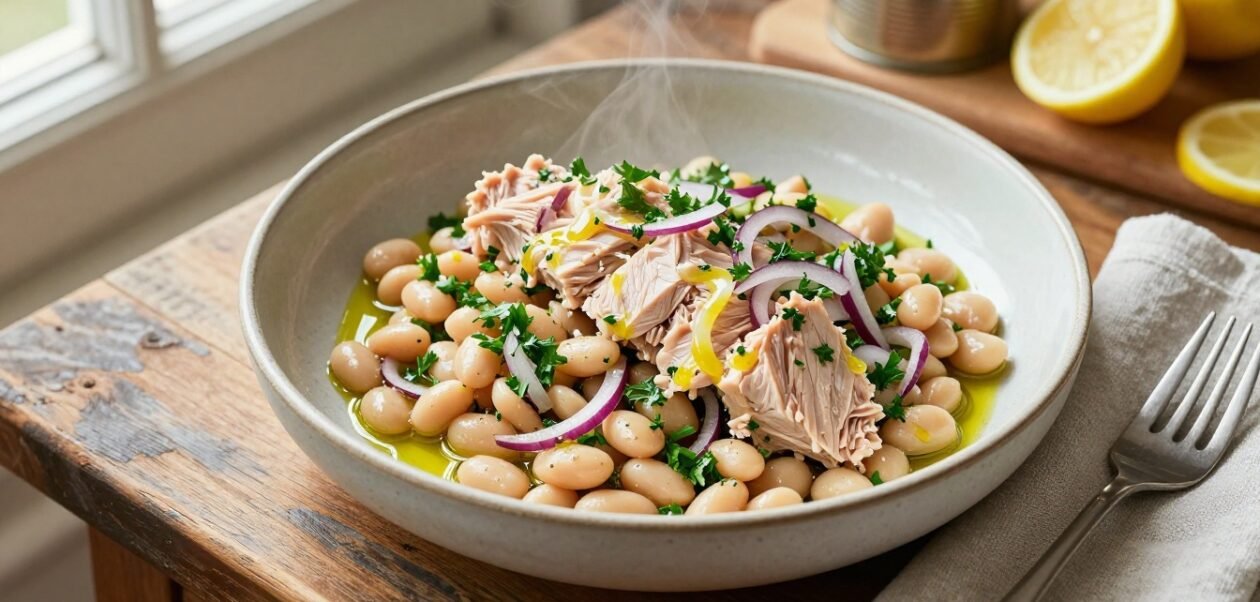
A can of tuna and white beans makes a simple lunch feel more complete. Toss them with lemon, fresh herbs, and crisp vegetables for a salad that takes little hands-on time and is easy to adjust with what you have.
Make it ahead for an easy meal-prep option, or serve it over greens, tucked into a wrap, or alongside toast. Here’s how to bring the ingredients together.
Make Tuna and White Bean Salad for a Quick Healthy Lunch
This tuna and white bean salad makes about four servings and takes roughly 10 minutes to prepare. The ingredients are simple, and you can keep the salad basic or add a little crunch with what’s already in your kitchen.
Gather the beans, tuna, herbs, and dressing ingredients
For the core recipe, gather:
- Two 15-ounce cans cannellini or Great Northern beans
- Two 5-ounce cans tuna, packed in water or oil
- ½ cup finely chopped red onion
- ½ cup chopped fresh parsley
- Zest and juice of one lemon
- 3 tablespoons olive oil
- Salt and black pepper, to taste
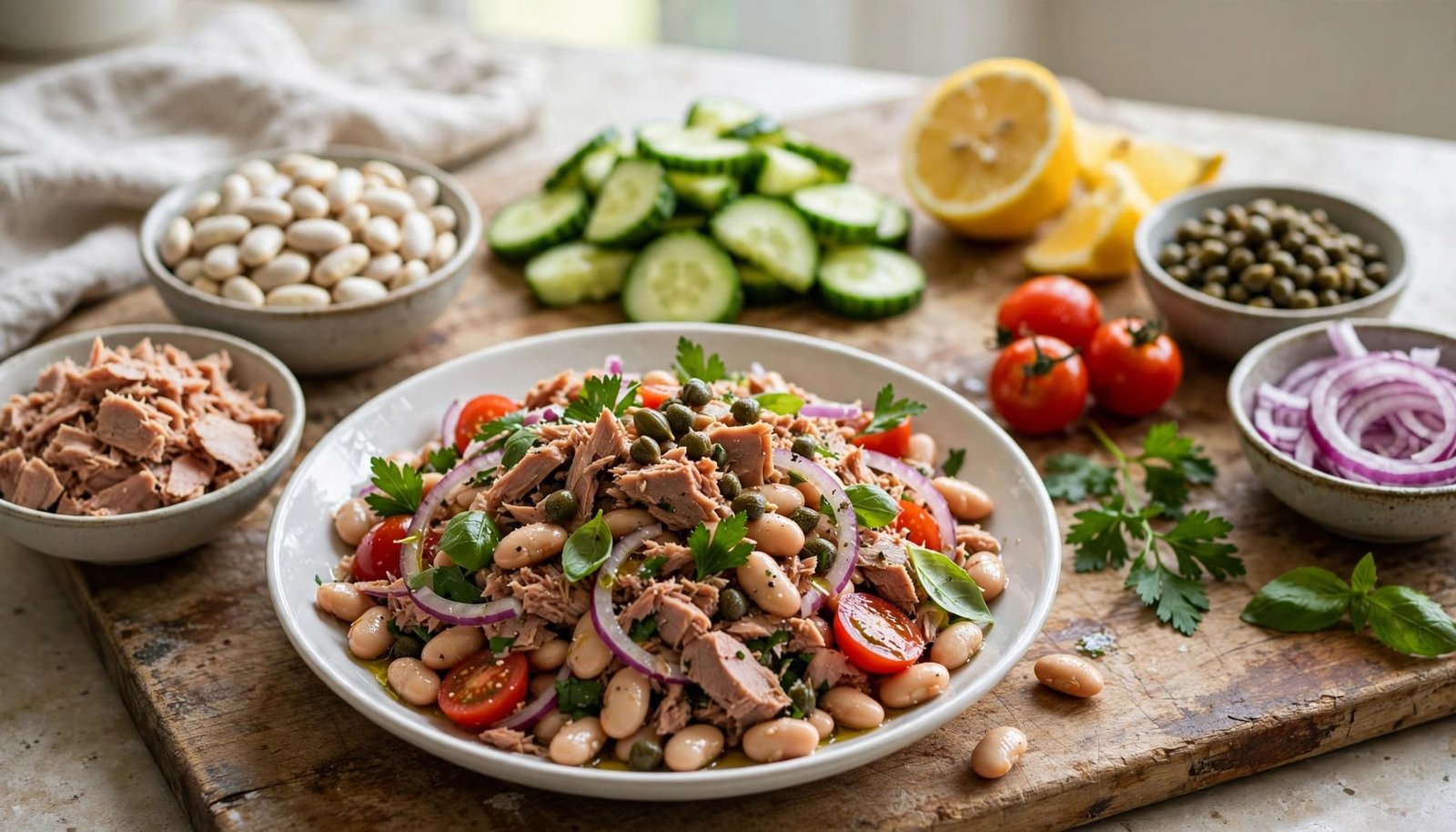
For a smaller batch, use one can of beans and one can of tuna, then scale the other ingredients to taste. If you like, add capers, chopped cucumber, tomatoes, olives, or a little Dijon mustard. These extras bring more tang, crunch, or savory flavor, but the salad doesn’t need them.
Mix the salad gently and adjust the flavor
Drain and rinse the beans in a colander, then drain the tuna. Rinsing canned beans can remove some sodium, as the FDA notes for canned foods. Finely chop the onion and parsley. Zest the lemon before juicing it, since it’s easier to handle whole.
Whisk the lemon juice and zest with the olive oil, a few grinds of black pepper, and a small pinch of salt in a serving bowl. Add the beans, onion, and parsley, then toss gently to coat. Fold in the tuna last, using a large spoon so it breaks into visible flakes instead of turning into a paste.
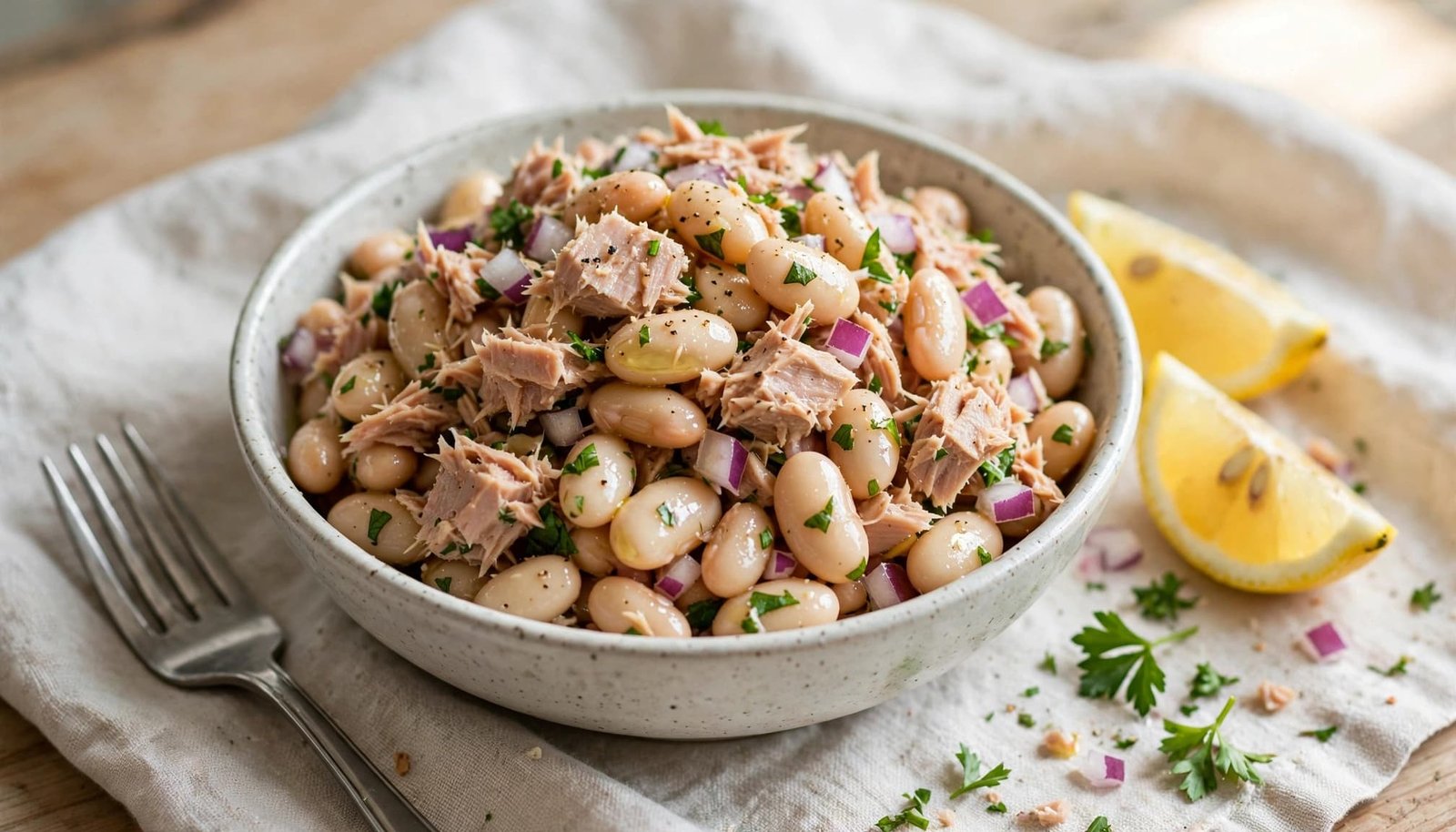
Taste a spoonful with beans before adding more salt or lemon. Canned tuna and beans can already be salty, and the lemon should brighten the salad without overpowering it. Add a little more olive oil if the mixture seems dry, then adjust the pepper and serve.
Choose the Best Tuna, White Beans, and Fresh Add-Ins
The main ingredients are easy to adjust to suit your taste and the kind of lunch you want. Cannellini and Great Northern beans both work well; each has a mild flavor and creamy texture that pairs naturally with tuna. Drain and rinse canned beans for a cleaner taste, then handle them gently so they keep their shape.
Pick water-packed or oil-packed tuna
Water-packed tuna keeps the salad lighter and lets the lemon and herbs stand out. Oil-packed tuna tastes richer, and you can use a small spoonful of its oil in the dressing in place of some olive oil. Drain either type well so the salad doesn’t turn watery or greasy.
Check the label for added salt, especially if you’re also using capers or olives. Taste the salad before adding more salt, since the tuna and other ingredients may already bring enough.
Tuna varieties also differ in mercury levels. The FDA says albacore, or white tuna, typically contains about three times as much mercury as canned light tuna. In the FDA and EPA chart, canned light tuna is a “Best Choice,” while albacore is a “Good Choice.” If you eat tuna often, see the FDA’s fish-eating advice for serving guidance.
Add crunchy vegetables and herbs that suit your taste
Choose one or two add-ins for a fresh contrast, rather than crowding the beans and tuna. A few combinations to try:
- Cucumber and parsley add a cool, fresh bite.
- Tomato and basil make the salad juicy and summery.
- Capers and red onion bring a briny, savory flavor.
Chopped bell pepper or shredded cabbage can add crunch, too. Use what’s fresh or already in your refrigerator; the salad doesn’t need every extra listed.
Red onion has a sharp bite, but a little lemon juice can soften it. Toss the chopped onion with a squeeze of lemon and let it sit for a few minutes while you prepare the other ingredients. Then stir it into the salad and taste before adding more lemon. A small amount adds brightness without covering the mild beans and tuna.
Turn the Tuna and White Bean Salad into a Meal You’ll Want to Eat
The same tuna and white bean salad can fit a lighter lunch or a more filling one without changing the recipe. Choose a base that suits your appetite, then add the salad just before serving so each option keeps its texture.
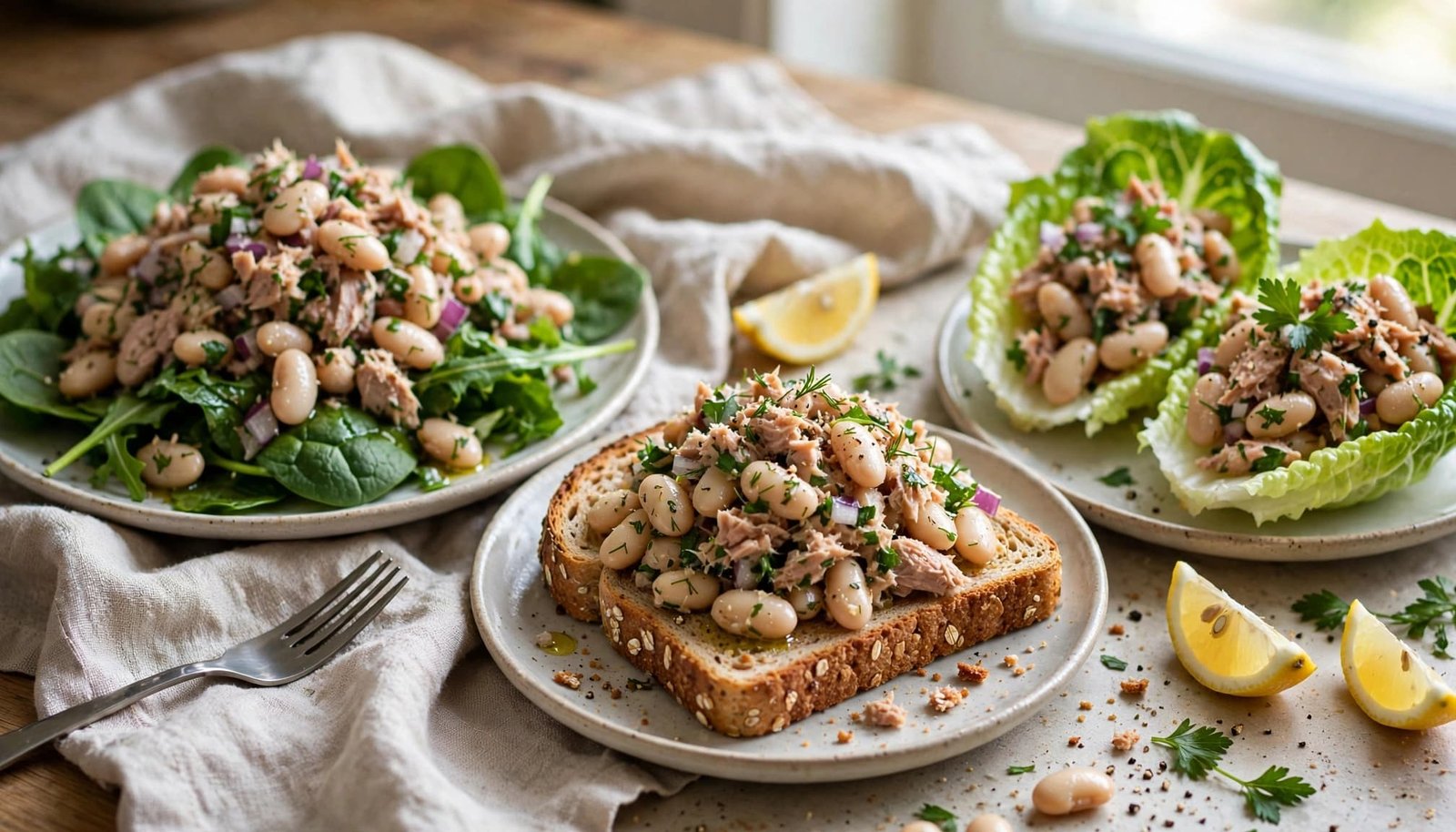
Serve it over greens, toast, or crisp lettuce
For a lighter plate, spoon the salad over spinach, romaine, or mixed greens. The leaves add freshness and make the beans and tuna feel less dense. If you’re using tender greens, wait until just before eating to add the salad so they stay crisp.
Whole-grain toast makes a heartier lunch, with a warm, sturdy base for the creamy beans and flaky tuna. Whole-grain bread is an easy way to include whole grains, which USDA MyPlate recommends choosing for at least half of your grains. You can also serve the salad with crackers, or tuck it into a sandwich for a familiar, easy-to-pack meal.
For a crisp handheld option, spoon a small amount into lettuce leaves and fold them like cups. Add the filling right before serving, whether you’re using lettuce, toast, crackers, or bread. That small timing change helps prevent sogginess.
Try simple swaps for a different flavor
A few small changes can shift the flavor without turning lunch into a new recipe. Use chopped dill for a bright, savory note, or swap in basil for a softer, fresh flavor. A splash of red-wine vinegar makes the dressing sharper; start with a little, then taste before adding more.
Chopped olives or capers bring a salty, savory bite. Since both can add salt, taste the salad before seasoning it further. You can also set stronger toppings on the side so everyone can adjust their own serving.
To stretch the batch, fold in extra spinach, chopped cucumber, tomatoes, or another crisp vegetable. Add more white beans when you want a more substantial serving. Stir gently so the beans hold their shape, and keep the tuna in visible flakes. A small change in the base or add-ins is often enough to make this quick lunch feel different next time.
Prep and Store Tuna and White Bean Salad Safely
A little advance prep makes this salad easy to pack for lunch. Mix the beans, tuna, and dressing ahead, then add delicate ingredients closer to serving so they keep their texture.
Make it ahead without losing freshness
For the best texture, combine the beans, tuna, and dressing in advance, then refrigerate them in a covered, airtight container. Add tender herbs and crunchy vegetables, such as parsley, cucumber, or bell pepper, closer to serving time. They stay fresher when they don’t sit in the dressing.
If you make the full salad ahead, refrigerate it promptly and use it within two days for the best texture and quality. This is a recipe-specific quality window, not the general storage limit for every tuna salad. Stir gently before serving, since the dressing may settle and the beans can shift as they chill.
Pack a chilled lunch and follow tuna safety guidance
Pack the salad in an insulated lunch bag with a cold pack if you won’t have access to a refrigerator. Keep it cold until lunchtime, and return leftovers to the refrigerator promptly. Opened tuna and prepared salad are perishable foods, so don’t leave them at room temperature for more than two hours, or one hour when temperatures are above 90°F.
Opened tuna’s storage guidance doesn’t automatically set the storage limit for a mixed salad. For this recipe, keep the finished salad refrigerated and follow the shorter two-day window for its best texture.
Tuna choices also differ in mercury content. U.S. FDA and EPA advice generally places canned light tuna at two to three servings per week, while canned white or albacore tuna is generally limited to one serving per week. These recommendations depend on age and life stage, so check the FDA’s advice about eating fish, and follow local guidance, especially when serving children or anyone who is pregnant.

Why Beans and Tuna Make a Satisfying Lunch
Beans and tuna give this salad a hearty base, while fresh vegetables and herbs keep each bite crisp and bright. The mix feels substantial without needing a long list of ingredients, and it’s easy to adjust with produce you already have.
Balance protein, fiber, and fresh produce
White beans add substance and dietary fiber, while tuna contributes protein. Together, they make a simple salad feel more like a complete lunch. The beans are creamy and mild, and the tuna flakes bring a savory flavor that pairs well with lemon and herbs.

The vegetables bring a useful contrast. Cucumber adds a cool crunch, red onion gives a sharper bite, and parsley or basil adds a fresh herbal note. Add a handful of spinach or mixed greens for extra color, or fold in chopped tomatoes, bell pepper, or shredded cabbage. Pick one or two, so the fresh ingredients complement the beans and tuna instead of crowding them out.
Nutrition depends on the tuna type, the amount of beans and dressing, and how large each serving is. For details on a particular product or ingredient, check its label or search the USDA FoodData Central database. If sodium is a concern, compare labels for both tuna and canned beans, then taste the salad before adding salt.
Conclusion
Canned beans, tuna, and a bright lemon dressing make a quick, adaptable lunch. Adjust the herbs and vegetables to suit your taste, then serve the salad over greens, on toast, or in a wrap.
If you make it ahead, chill leftovers promptly. Keep the salad simple or change it up with what you have on hand.

- Christmas Cookie Ideas for Every Holiday Baker - November 9, 2026
- Christmas Cocktails: Party Drinks, Cozy Sips, and Mocktails - November 9, 2026
- 20 Christmas Appetizer Ideas for Every Holiday Spread - November 9, 2026