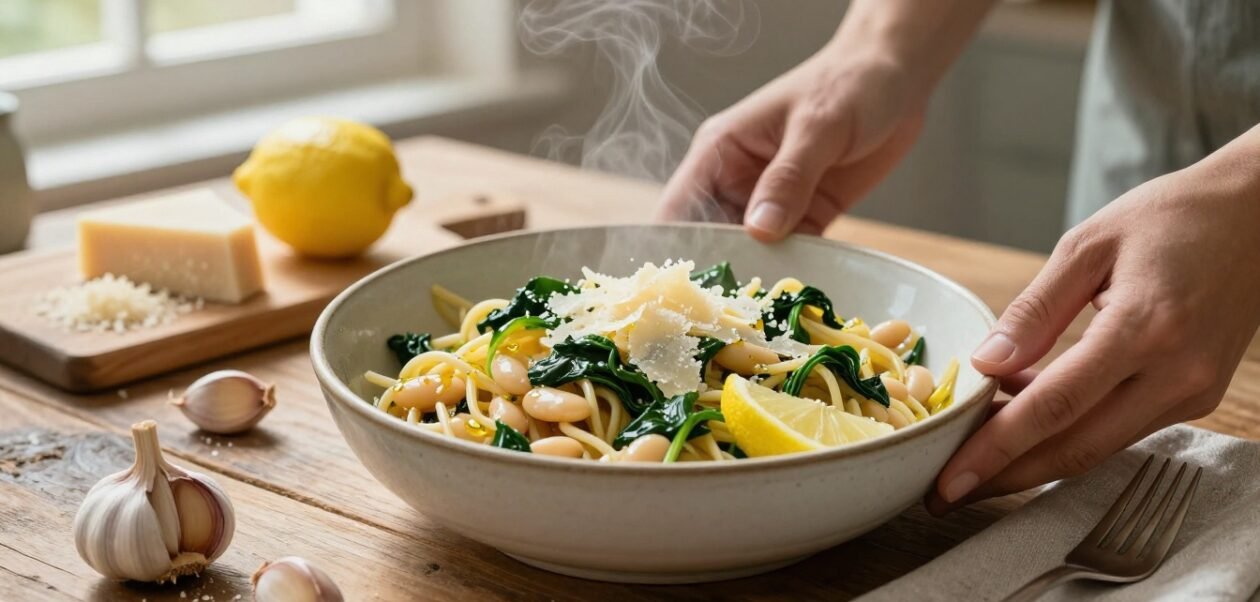
A quick, satisfying meatless dinner can start with ingredients you may already have: pasta, white beans, spinach, garlic, lemon, and Parmesan. Tender pasta and creamy beans make a filling base, while lemon brightens the savory garlic and cheese.
Use whole-wheat pasta, frozen spinach, or pantry seasonings to suit what you have. Cook the pasta until tender with a little bite, then bring the simple ingredients together for an easy weeknight meal.
Healthy Spinach Pasta with White Beans and Parmesan: What Makes It Satisfying
This meal feels complete because each ingredient brings something different to the bowl. Pasta makes a hearty base, beans add plant-based protein and fiber, spinach brings vegetables, and Parmesan gives the flavors a savory finish. How healthy it is depends on your portions and ingredient choices, not on one label.

A hearty mix of pasta, plant protein, and greens
Pasta supplies carbohydrates, which your body uses for energy, and gives the meal a satisfying, tender base. White beans make it more filling with plant-based protein and fiber. Their creamy texture also pairs well with pasta without making the dish feel heavy.
Spinach adds vegetables and softens into the warm pasta. Fresh or frozen spinach both work, so you can use what you have. If you prefer more fiber, whole-wheat pasta is one option; it generally provides more fiber than refined pasta. The best choice depends on your preferences, dietary needs, and what your household enjoys. You can check specific products in USDA FoodData Central.
Together, pasta, beans, and greens make a substantial vegetarian meal. Adjust the portions to suit your appetite, and add extra spinach if you want more vegetables in the bowl.
Garlic, lemon, and Parmesan keep each bite bright
Garlic gives the pasta a savory starting point, while lemon keeps the beans and cheese from tasting too rich. Parmesan adds salty flavor and a little richness, so a modest amount can go a long way. Each part has a clear role: savory, bright, and creamy.
Cheese and broth can both add sodium, and the amount varies by product. Taste the finished dish before adding more salt. If you want a stronger lemon flavor, add a little more juice or zest; it brightens the bowl without needing extra cheese.
What to Gather for White Bean Spinach Pasta
For a family-size batch, set out about 12 ounces of dry pasta, one 15-ounce can of white beans, and a few simple seasonings. This is a flexible starting point, not a tested nutrition formula. Adjust the amounts to fit your family and what you have on hand.

Choose pasta, beans, and spinach that fit your kitchen
Short pasta shapes such as orecchiette, penne, or rotini are easy to scoop with the beans and spinach. Other shapes work, too, so use a pasta you already enjoy. Whole-wheat pasta is an option if you prefer its heartier texture.
Cannellini, Great Northern, and navy beans all suit this dish. Drain and rinse canned beans before adding them. This clears away the packing liquid and can lower sodium, though the amount varies by product and rinsing method.
Fresh spinach wilts into the warm pasta, but frozen spinach works when that is what you have. Give it extra time to heat through, break up any clumps, and squeeze out excess water if it seems wet. That helps keep the finished pasta from turning watery.
For a flexible family-size starting point, gather:
- 12 ounces dry pasta and one 15-ounce can white beans.
- 3 to 5 cups fresh spinach, or frozen spinach to taste.
- 3 to 5 garlic cloves, minced, with 1 to 2 tablespoons olive oil or butter.
- 1/4 to 1/2 cup grated Parmesan, plus lemon juice, salt, and black pepper.
- A small cup for reserved pasta water, which can loosen the sauce as needed.
Use Parmesan and pantry seasonings with care
Freshly grated Parmesan melts smoothly into hot pasta. Pre-grated cheese works, too; add it gradually and stir well. Since Parmesan and canned beans can both add salt, taste the dish before seasoning further.
Keep the flavor additions modest so they support the beans, spinach, lemon, and pasta rather than covering them. Dried oregano, a pinch of red pepper flakes, or chopped parsley are easy options. A small amount of chopped sun-dried tomato adds a tangy, savory note.
If strict vegetarian eating matters, check the Parmesan label or the manufacturer’s information for vegetarian-friendly rennet. Some cheeses use animal rennet, and a label that lists only “enzymes” may not identify its source. A vegetarian-friendly Parmesan alternative can be a useful option if you want to avoid animal rennet.
How to Make Spinach Pasta with White Beans and Parmesan
Plan on about 25 to 30 minutes, including prep and cooking. Cook the pasta while you prepare the garlic, spinach, and beans, then toss everything together in one pan. Exact pasta timing varies by shape and brand, so use the package directions as a guide and check the texture as it cooks.

Cook the pasta and save starchy water
Bring a large pot of salted water to a boil. Add the pasta and cook according to the package directions, stirring now and then so the noodles cook evenly. Start tasting near the early end of the time range. The pasta should be tender but still have a slight firmness in the center, since it will warm briefly with the spinach and beans.
Before draining, scoop out about 1/2 cup of pasta water. The cloudy water contains starch that helps loosen the sauce and cling to the noodles. You may not need all of it, but it’s helpful to have nearby. For more on how it helps sauce coat pasta, see Barilla’s pasta water tips.
Drain the pasta without rinsing it. Rinsing washes away surface starch that helps the sauce come together.
Soften garlic, wilt spinach, and warm the beans
While the pasta cooks, heat olive oil or butter in a large skillet over medium-low heat. Add the minced garlic and cook briefly, stirring, just until fragrant. Keep the heat moderate; browned garlic can taste bitter.
Add the spinach and stir until the leaves wilt. Fresh spinach softens quickly, so take the pan off the heat once it’s tender and bright green. If you’re using frozen spinach, let it heat through and break up any clumps as you stir. If it looks especially wet, give it a moment to cook off excess moisture.
Fold in the drained white beans gently. They’re already cooked, so they only need a few minutes to warm through. Stir carefully to keep them whole, then season with black pepper and a little salt if needed. Parmesan and canned beans can both add salt, so wait to taste before adding much.
Toss everything together and adjust the texture
Add the drained pasta, a squeeze of lemon juice, and a small splash of reserved pasta water to the skillet. Toss until the spinach and beans are spread through the noodles. Add more pasta water a little at a time if the pasta looks dry. Stop when the noodles are lightly coated and glossy, not soupy or dry.
Take the pan off the heat before stirring in the Parmesan. The residual warmth helps the cheese melt without turning it clumpy. Taste, then adjust with more lemon, black pepper, or salt as needed. Serve while warm, with extra Parmesan at the table if you like.
Easy Ways to Adapt and Serve This Vegetarian Pasta
A few small changes can make this spinach pasta with white beans fit what you have on hand or suit different preferences. Keep the pasta, beans, spinach, and lemon at the center, then add or swap ingredients in modest amounts.

Swap ingredients without losing the balance
Whole-wheat pasta gives the bowl a heartier texture. Cannellini beans, Great Northern beans, and navy beans are all good choices, so use the variety you have. Frozen spinach works, too. Let it heat through, break up any clumps, and cook off extra moisture if the pan looks watery.
For a dairy-free bowl, leave out the Parmesan or use a plant-based alternative you enjoy. Add a little lemon juice and chopped parsley or basil before serving. The lemon and herbs bring brightness without the cheese.
To reduce sodium, drain and rinse canned beans, use lower-sodium broth if the recipe calls for it, and add Parmesan sparingly. Sodium amounts vary by brand, so compare labels when you shop. The FDA’s sodium guidance explains how to use the Nutrition Facts label to check sodium in packaged foods.
Add vegetables or protein in modest amounts
A handful of peas adds sweetness, while chopped roasted vegetables bring a tender, savory bite. Sauté mushrooms before adding the spinach, or stir in a small amount of chopped sun-dried tomatoes for a tangy note. Add one or two extras rather than a little of everything, so the beans, spinach, lemon, and pasta still come through.
For a heartier serving, warm cooked tofu with the beans near the end. You can also serve the pasta with another protein you enjoy. Keep additions moderate, and taste before adding more salt or cheese.
Choose a simple side that completes the meal
The pasta and beans already make a substantial bowl, so one simple side is often enough. A crisp green salad adds fresh contrast, while whole-grain bread is handy for catching any lemony, creamy sauce.
If you’d rather serve a warm vegetable, choose one, such as roasted squash, mushrooms, or Brussels sprouts. There’s no need to prepare several sides. A salad, bread, or one roasted vegetable lets the pasta stay the main part of dinner.
Nutrition, Leftovers, and Reheating Without Dry Pasta
The nutrition in Healthy Spinach Pasta with White Beans and Parmesan depends on the amounts and products you use. A few careful storage and reheating steps also help leftover pasta stay moist and enjoyable.
Keep nutrition estimates tied to your ingredients
Calories, protein, fiber, and sodium can change with the pasta type, serving size, amount of cheese and oil or butter, and any added salt. Whole-wheat pasta may provide more fiber than refined pasta, while product labels and portions affect the actual totals. For an accurate estimate, calculate it from the final ingredient quantities and the labels for the specific products you used.
Pasta and white beans both contribute protein and fiber. Parmesan adds protein and calcium, along with sodium and saturated fat. Since the cheese and canned beans can both affect sodium, taste the finished dish before adding extra salt.
Cool, store, and reheat portions gently
Refrigerate leftovers within two hours of cooking or serving, or within one hour when the temperature is above 90°F. Divide the pasta into shallow, airtight containers so it cools faster, and keep your refrigerator at 40°F or below. Use refrigerated leftovers within three to four days, following the USDA’s leftovers and food safety guidance. Labeling containers with the date can make them easier to track.
If you’re setting some pasta aside before serving, store the pasta and any sauce separately when practical. Noodles absorb moisture as they sit, which can make them softer and leave the dish drier after reheating. Spinach may soften, too, so expect leftovers to have a more tender texture than freshly cooked pasta.
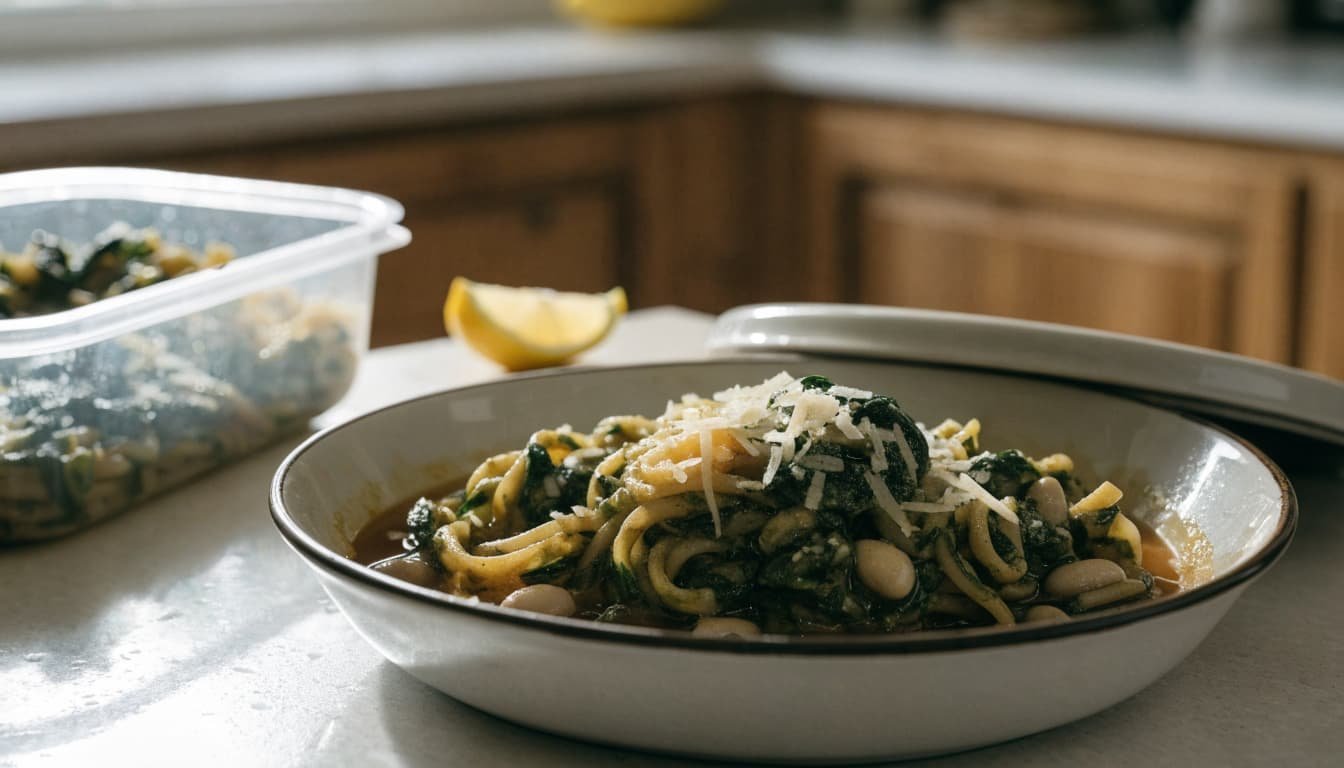
Reheat only the portion you plan to eat. Warm it in a covered skillet over low to medium-low heat with a splash of water or broth, stirring as needed. For the microwave, use a covered microwave-safe dish and stir partway through so the pasta heats evenly. Check that it reaches 165°F throughout. Add fresh lemon juice or Parmesan after reheating for a brighter finish.
Conclusion
Healthy Spinach Pasta with White Beans and Parmesan brings pantry-friendly beans and pasta together with greens and bright lemon for a filling dinner, with minimal cleanup. Taste as you go, and add reserved pasta water a little at a time to keep the noodles silky.
Use fresh or frozen spinach and make small swaps with what you have on hand. The simple balance of creamy beans, tender pasta, and a bright finish is what makes this meal easy to return to.

- Christmas Cookie Ideas for Every Holiday Baker - November 9, 2026
- Christmas Cocktails: Party Drinks, Cozy Sips, and Mocktails - November 9, 2026
- 20 Christmas Appetizer Ideas for Every Holiday Spread - November 9, 2026