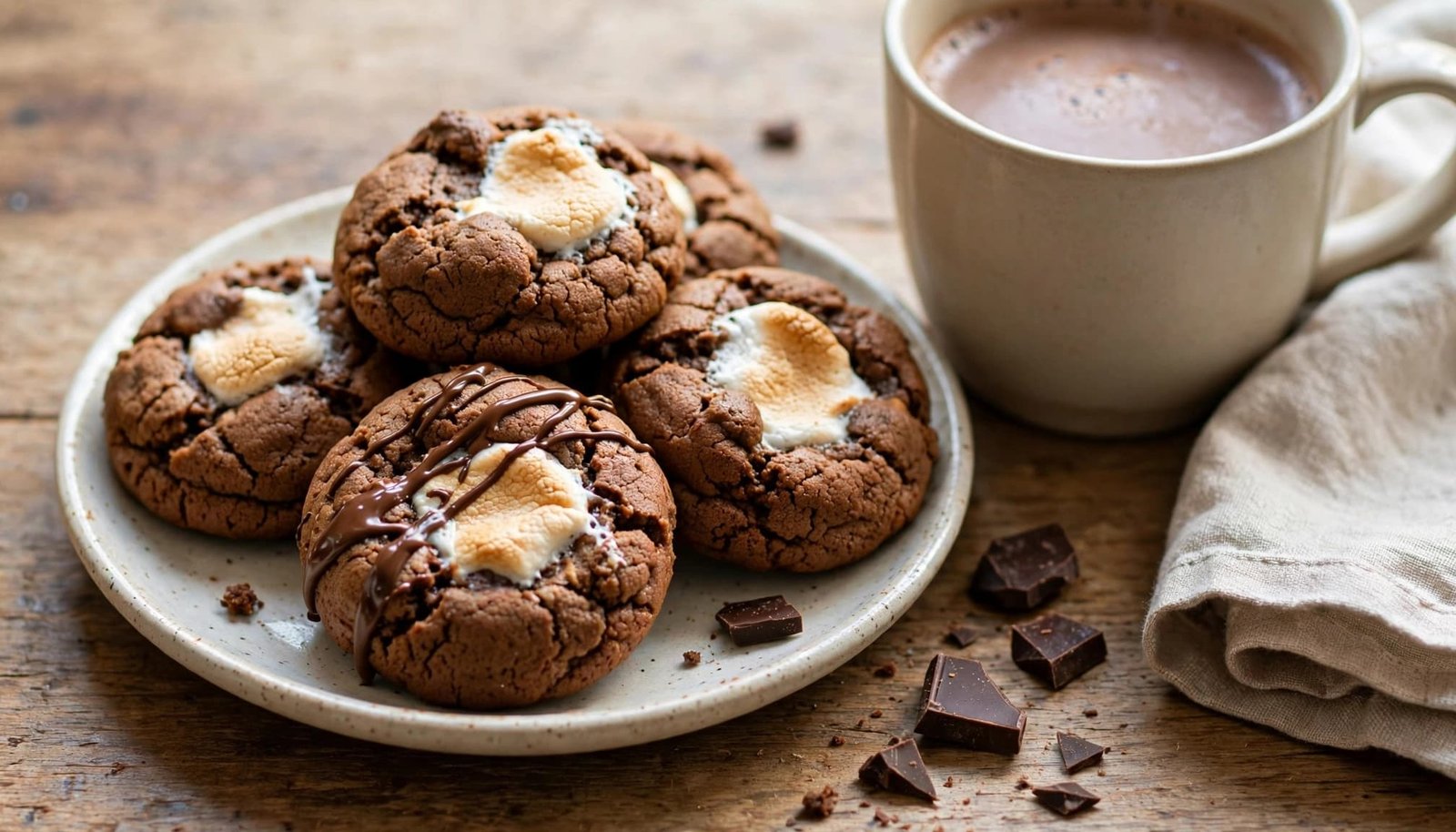
Rich chocolate flavor, a soft center, and a marshmallow topping give hot cocoa cookies the feel of a mug of cocoa in every bite. Chilling the dough helps make it easier to handle and can limit spreading, while adding the marshmallows partway through baking helps keep them soft and gooey.
Give the dough time to chill, then watch for the right moment to add the marshmallows. Those small steps help you get cookies with tender centers and a warm, familiar finish.
What Makes Hot Cocoa Cookies So Soft and Chocolatey
Hot cocoa cookies get their flavor from two chocolate ingredients: cocoa powder gives the dough a deeper chocolate base, while dry hot cocoa mix adds sweetness and a familiar cocoa flavor. Brown sugar helps keep the centers soft and chewy. Recipes vary, too. Some include melted chocolate, and marshmallows may go into the dough or sit on top. This recipe focuses on a soft chocolate cookie with a gooey marshmallow finish.

The key ingredients and what each one does
Butter brings richness and helps the cookies bake up tender. Brown sugar adds moisture and chew, while granulated sugar sweetens the dough and supports browning. Eggs bind the ingredients and give the cookies structure; vanilla rounds out the chocolate flavor.
Flour gives the dough enough structure to hold its shape. Cocoa powder adds concentrated chocolate flavor, and hot cocoa mix adds sweetness along with its own cocoa taste. They aren’t interchangeable: hot cocoa mix is sweetened and may contain other dry ingredients, while plain cocoa powder is unsweetened. Swapping one for the other can change both the sweetness and the dough’s balance. For a closer look at cocoa types, see King Arthur Baking’s guide to cocoa powder.
Leavening gives the cookies a little lift, and salt keeps the sweetness from tasting flat. Marshmallows bring the finishing touch, with soft, stretchy pockets against the chocolate cookie.
Choosing marshmallows and hot cocoa mix
Use a familiar sweetened hot cocoa mix, and follow the recipe’s amount. Since the mix already contains sugar, adding extra or replacing all the cocoa powder with mix can make the cookies sweeter and change their texture.
Mini marshmallow bits can be folded into the dough for small pockets throughout. For a clear, gooey topping, cut standard marshmallows in half and place them on the cookies near the end of baking. That keeps the marshmallow visible instead of letting it disappear into the dough.
Marshmallows can melt or spread if they sit in warm dough, so chill the dough before baking and keep any dough with marshmallows folded in cold until it goes into the oven. Adding the topping partway through baking also helps it stay soft and neat. Judge doneness by the cookie edges and centers: the edges should look set while the middle still appears soft.
How to Make Hot Cocoa Cookies Step by Step
Start by preheating the oven to the temperature listed in your recipe. Line a baking sheet with parchment paper, and set out another cool sheet if you’ll bake in batches. A cool pan helps keep the next round of dough from softening before it reaches the oven.
Mix the dough without making the cookies tough
Beat the softened butter with both sugars until creamy and fluffy, about 2 to 3 minutes. Add the eggs and vanilla, then mix until smooth. Scrape down the bowl so the ingredients combine evenly.
In a separate bowl, whisk the flour, cocoa powder, hot cocoa mix, salt, and leavening. This helps distribute the dry ingredients throughout the dough, so one cookie doesn’t get an extra bite of baking soda or salt.
Add the dry mixture to the butter mixture in a few additions, mixing on low speed. Stop as soon as the flour disappears. Once flour is mixed with liquid, extra mixing can make cookies firm rather than tender. Fold in chocolate chips or marshmallow bits, if using, with a spatula and a light hand.
Chill, scoop, and bake for chewy centers
Cocoa cookie dough can feel sticky, especially while the butter is soft. Cover and chill it for about 1 to 2 hours, until it feels firmer and easier to scoop. If the dough is still very soft, give it more time in the refrigerator instead of adding flour. Chilling also helps the cookies spread less; King Arthur Baking’s guide to chilling cookie dough explains how resting can affect cookie texture.
Scoop the dough into even portions so the cookies bake at about the same rate. Leave space between them on the lined sheet, following the spacing in your recipe. Bake according to the recipe time, but start checking near the early end. The edges should look set while the centers remain soft. They’ll continue to firm up on the hot pan.

Add marshmallows near the end of baking
When the cookies are puffed and nearly set, carefully press half a marshmallow, cut-side down, into each one. Return the pan to the oven briefly, just until the marshmallows look soft and puffy. Small marshmallow bits can go into the dough instead, though they won’t create the same gooey topping.
You can use the broiler for a little browning, but watch closely. Marshmallows can darken in seconds. Let the cookies rest on the baking sheet for about 5 minutes before moving them to a cooling rack. Their centers are fragile when hot, and that short rest helps them hold together.
How to Get the Texture Right and Fix Common Cookie Problems
Hot cocoa cookies can spread too much, bake up dry, or lose their soft centers when small details change. Flour measurement, dough temperature, and oven performance all affect the result, so start with what you see before changing the recipe.

Stop cookies from spreading too thin
If the cookies spread more than expected, chill the dough longer before baking. Soft, warm dough can begin spreading before the edges have time to set. If it still feels sticky, give it another short rest in the refrigerator instead of adding flour.
Measure flour by fluffing it in the container, spooning it into the measuring cup, and leveling the top. Scooping directly from the bag can pack in too much flour, while measuring too lightly can leave the dough without enough structure. For more on how pan temperature affects spreading, see King Arthur Baking’s cookie-spreading guidance.
Start each batch on a cool baking sheet. A warm pan softens the dough before it reaches the oven, which can lead to thinner cookies. Let the pan cool between batches, and avoid correcting excess spread with a large amount of flour. Too much can make the cookies dense or dry.
Keep the centers soft instead of dry
Check the cookies near the earliest bake time listed in your recipe. The edges should look set, while the centers remain soft and may look slightly underdone. Oven performance can vary, so use those visual cues along with the timer.
Cookies keep cooking on the hot baking sheet after you take them out. Let them rest there briefly before moving them to a rack. If you wait for the centers to look fully firm in the oven, they may bake past their soft stage as they cool.
If the dough feels too sticky to portion, chill it rather than reaching for extra flour. A little more time in the refrigerator can make it easier to handle without changing the dough’s balance.
Keep marshmallows soft without scorching them
Add marshmallows near the end of baking so they have time to soften and puff without staying in the oven for the full bake. Gently press them into the warm cookies, then return the pan for a short second bake, just until the marshmallows look soft.
Watch the tops closely, especially if you use the broiler for color. Marshmallows can brown quickly, so skip the broiler if they’re already darkening or the cookie tops are browning too fast.
Easy Ways to Customize and Serve These Chocolate Cookies
A small change can make these hot cocoa cookies feel a little more personal while keeping their chocolate and marshmallow flavor in front. Keep the dough’s main ingredients as written, then choose one simple addition or finish.
Add chocolate, spice, or a simple topping
For extra chocolate in each bite, fold in about 1/4 cup of chocolate chips or chopped chocolate after mixing the dough. This is a modest amount that adds little pockets of chocolate without crowding the cookies. Fold gently, just until the pieces are spread through the dough, then chill and scoop as directed.
A pinch of cinnamon is another easy option. It adds warmth without taking over the cocoa flavor. Start with a small pinch, especially if your hot cocoa mix is already flavored.
For a neat finish, let the baked cookies cool, then drizzle a little melted chocolate over the tops. The marshmallow stays the main topping, and the drizzle adds a thin chocolate accent.
Keep extra cocoa powder out of the dough unless the recipe calls for it. Cocoa absorbs moisture, so adding more can make the dough dry and the baked cookies crumbly. Too many chips or other mix-ins can also make dough harder to portion and may affect how the cookies hold together. For more on how ingredient balance affects cookie texture, see King Arthur Baking’s cookie chemistry guide.
Serve them warm with a cozy drink
Serve the cookies slightly warm, when the centers are soft and the marshmallows are tender. Milk, coffee, or hot cocoa all pair well with the rich chocolate flavor. If the cookies have cooled, warm one briefly until the center softens, then let it rest for a moment before serving.
For a party or cookie tray, give the cookies time to cool until the marshmallow topping is no longer sticky. This helps keep them from sticking together when you arrange them. Add any melted chocolate drizzle after cooling, then let it set before placing the cookies on a platter.
Make Ahead, Store, and Freeze Hot Cocoa Cookies
You can prepare hot cocoa cookies ahead as dough or freeze them after baking. Keep those options separate, since dough needs to stay cold before baking, while finished cookies need to cool completely before storage.

Refrigerate or freeze cookie dough for later
If you want to bake the cookies soon, cover the mixed dough and refrigerate it. Once it feels firm, scoop it into portions and bake according to the recipe. Chilling makes sticky dough easier to handle, and you can prepare it ahead so there’s less to do on baking day.
For longer storage, scoop the dough first. Arrange the portions on a parchment-lined tray with a little space between them, then freeze until solid. Transfer the firm portions to a freezer-safe container or bag, and seal it well to protect the dough from freezer odors. Label the container with the date if you’re keeping several batches on hand.
Bake the portions according to the recipe’s temperature and doneness cues. Frozen dough may need extra time, so check the cookies near the usual earliest bake time and continue baking as needed. Look for set edges and soft centers rather than relying on the timer alone. The centers will continue to firm up on the warm baking sheet.
Store baked cookies while protecting the topping
Let the cookies cool completely before packing them away. Warm cookies release steam inside a container, and that trapped moisture can soften the cookie or make the marshmallow topping tacky. Once cool, store them in an airtight container at room temperature, away from direct sunlight and heat.
If the marshmallows are sticky, arrange the cookies in a single layer or place parchment between layers. Avoid pressing the lid against the tops, since the topping can cling to it. For general guidance on homemade cookie storage, see the USDA’s cookie storage recommendations.
To freeze baked cookies, cool them fully first, then place them in a sealed freezer-safe container with parchment between layers. They keep their quality best when used within about three months. Thaw them covered at room temperature, still in the container, to limit condensation on the cookies. The marshmallow topping may be softer or stickier after thawing, but the chocolate cookies will still be ready to enjoy.
Conclusion
Careful measuring, chilled dough, and an early doneness check help hot cocoa cookies keep their soft centers. Add the marshmallows near the end of baking so they turn tender and puffy without spending too long in the oven.
Let the cookies rest briefly on the pan, then share them while the chocolate centers are still tender.

- Christmas Cookie Ideas for Every Holiday Baker - November 9, 2026
- Christmas Cocktails: Party Drinks, Cozy Sips, and Mocktails - November 9, 2026
- 20 Christmas Appetizer Ideas for Every Holiday Spread - November 9, 2026