The kitchen clock says 2 p.m., the oven is already booked, and the turkey is still taking up the counter. Somewhere between the third casserole dish and the last-minute run for butter, Thanksgiving cooking turns into a juggling act. I’ve been there, and the fix is smaller than you’d think.
The relief comes from the sides. A tray of roasted Brussels sprouts and carrots, a bowl of garlicky greens, or a lemony kale salad can carry the whole table without a heavy sauce or a complicated recipe. Because these easy Thanksgiving side dishes rely on seasonal produce and a few good seasonings, they leave you with time to sit down and eat.
You don’t need to master an elaborate menu to make vegetables feel like the star. The focus here is seasonal produce, smart prep, and simple flavors that taste like they took more effort than they did.
I’ll walk you through the sides I turn to when the kitchen gets crowded, starting with the vegetables that do the most work on their own.

Easy Thanksgiving Side Dishes That Start with Seasonal Vegetables
I build my holiday vegetable sides around what looks best at the market, not a long ingredient list. In November, that often means squash, sweet potatoes, Brussels sprouts, carrots, and sturdy greens. These vegetables bring color to the table and enough flavor to stand beside the turkey without a cream sauce or a lot of butter.
The approach keeps the meal manageable. You can roast one tray, sauté a skillet of greens, and set out a fresh salad without fighting for oven space. Seasonal produce also gives you room to adjust. If the carrots look tired, use parsnips. If the sprouts are small, roast them whole. A little advance prep helps, but the recipes below stay simple on purpose.
Why Seasonal Vegetables Make Side Dishes Simpler
Vegetables at their peak need less help. Brussels sprouts turn nutty and crisp at the edges in a hot oven, carrots sweeten as they roast, and winter squash brings a soft, sweet contrast to salty mains. A slick of oil, a pinch of salt and pepper, and a handful of thyme or rosemary can carry the whole dish.
That simplicity is what makes these easy Thanksgiving side dishes work when the kitchen gets busy. You aren’t building a sauce or monitoring a casserole. Instead, you spread vegetables on a pan, season them, and let the oven do most of the work while you tend to the bird.
Shopping locally helps, too. Choose the squash that feels heavy for its size, firm sprouts with tight leaves, and carrots that snap rather than bend. The best side dish starts with produce you want to eat plain.
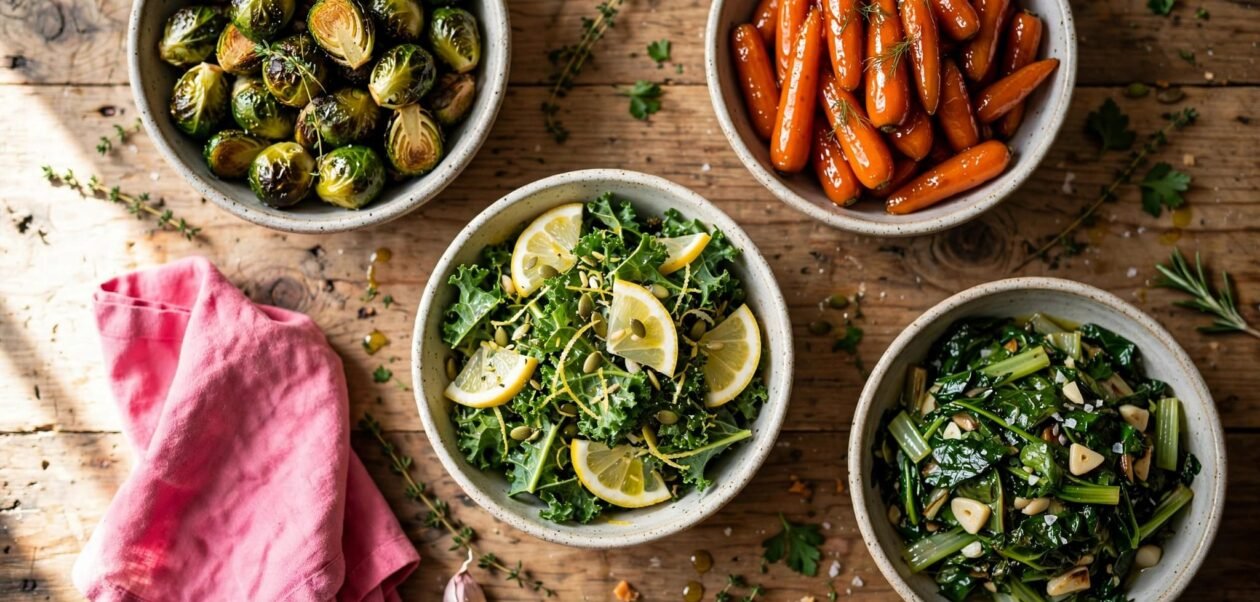
Roasted Brussels Sprouts and Carrots with Herbs
This is my go-to tray when I want a side that looks generous but takes little effort. Halve the Brussels sprouts through the stem and cut the carrots into pieces about the same size. Even pieces cook at the same pace, so nothing turns to mush before the sprouts brown.
For about 1 1/2 pounds of vegetables, toss them with 1 tablespoon of olive oil, 1/2 teaspoon of salt, 1/4 teaspoon of black pepper, and 1/2 teaspoon of dried thyme or rosemary. Add a little more oil only if the vegetables still look dry.
Spread everything in a single layer on a baking sheet, leaving small gaps between the pieces. Crowding traps moisture and makes the vegetables steam instead of brown. Roast at 425°F, turning once, until the carrots are tender and the sprouts have browned edges.
Finish with a squeeze of lemon juice or a small splash of balsamic vinegar. Both add brightness without hiding the roasted flavor. Serve the tray hot, while the edges are still crisp.
Sweet Potatoes and Winter Squash with Savory Seasoning
Roasted cubes of sweet potato and winter squash make a simple alternative to a sweet casserole. Toss them with olive oil, salt, pepper, minced garlic, and rosemary or thyme. The garlic and herbs keep the natural sweetness in check, so the vegetables taste savory rather than candied.
A small drizzle of maple syrup is optional. If you use it, add just enough to coat the pieces lightly and taste before adding more. The squash should still taste like squash.
Cutting firm winter squash takes care. Use a stable cutting board and a sharp knife. Trim a thin slice from one side to create a flat base, then cut the squash into even cubes. Spread the pieces on a sheet pan in one layer and roast at 425°F until tender and browned at the edges.
Quick Stovetop and No-Oven Sides for a Crowded Kitchen
The oven becomes the bottleneck around mid-afternoon. A turkey needs hours, the casseroles want their turn, and every tray of vegetables has to fight for shelf space. I stopped trying to fit everything in there. Instead, I claim one oven dish and send the rest to the stove or the fridge. That trade gives me a menu with real variety, and it keeps me away from the math of oven temperature and timing. The sides below earn their place because they need no oven at all.
Sautéed Greens with Garlic and Lemon
Greens cooked on the stovetop take minutes, and they bring the fresh, slightly bitter contrast that rich holiday food needs. Warm a wide skillet over medium heat, add a little olive oil, then toss in sliced garlic and let it soften for a minute without browning. Pile in chopped kale, spinach, or shredded cabbage and stir so every leaf picks up some oil.
Kale and cabbage need three to five minutes to wilt; spinach collapses in under two. Stop cooking while the leaves still look bright, because they keep softening off the heat. Finish with a squeeze of lemon and a pinch of red pepper flakes, then taste and add salt.
This is one of those easy Thanksgiving side dishes that tastes like more work than it was. The acidity cuts through gravy and butter, so a modest scoop does plenty.
Make-Ahead Kale Salad or Cabbage Slaw
Cold sides free up more than oven space, because you can build them hours before guests arrive. I lean on sturdy greens here. Kale and shredded cabbage hold their structure far better than tender lettuce, which wilts the moment dressing touches it.
Shredded Brussels sprouts work just as well as a base. Toss them with thinly sliced apple, pomegranate arils, and toasted walnuts, then dress the bowl with a lemon or cider vinaigrette right before serving. For a kale salad, a little olive oil massaged into the leaves softens them without turning them limp.
A few habits keep everything crisp:
- Whisk the vinaigrette in a jar and refrigerate it separately.
- Dry washed greens well, since trapped water makes leaves soggy.
- Slice apples at the last minute so they don’t brown.
- Hold the nuts and pepitas until serving so they stay crunchy.
Keep each component in its own container and assemble at mealtime. That single step protects texture, and it takes the pressure off the final hour.
Grains and Beans for a Heartier Meat-Free Option
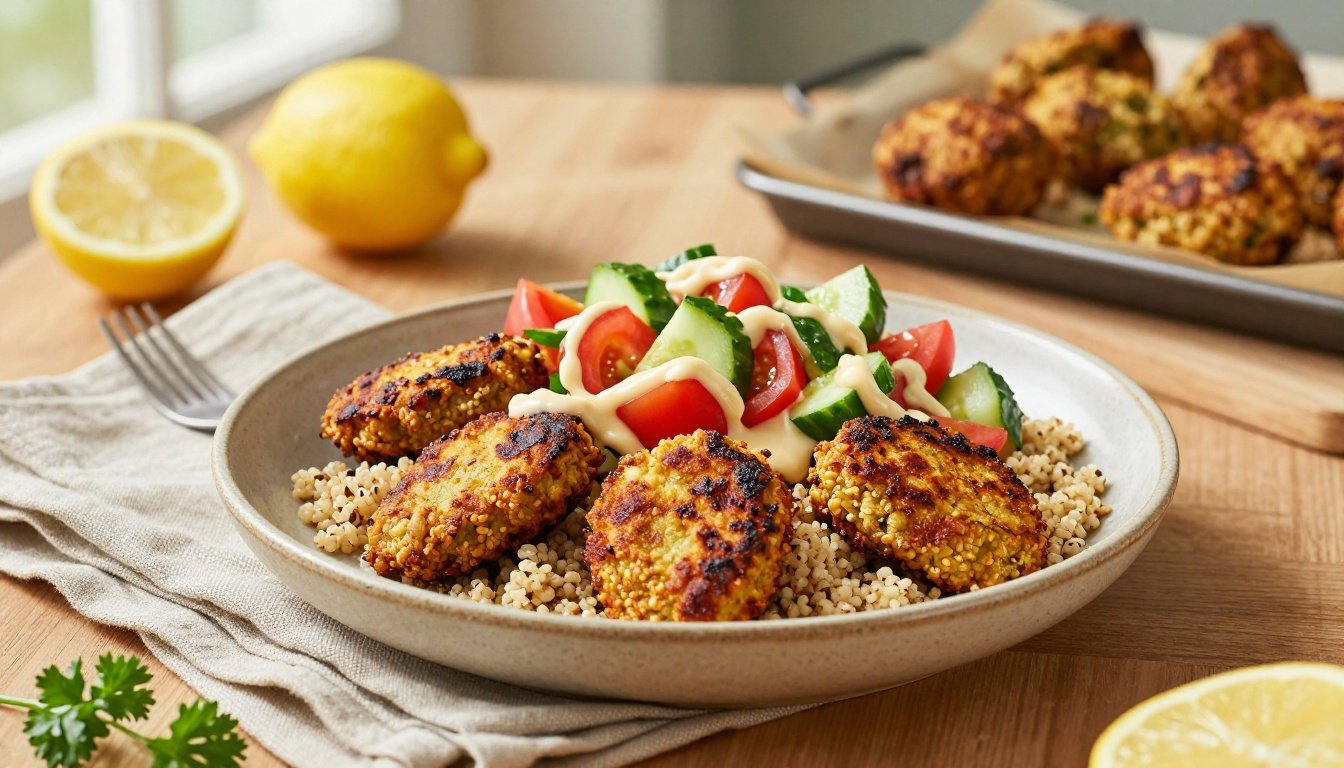
Some guests at your table may skip the turkey entirely, and a vegetable side alone won’t fill them up. Grains and beans solve that without touching the oven. Quinoa, farro, and brown rice all cook on the stovetop, and canned white beans only need warming through.
I like to toss warm grains with roasted squash or sweet potatoes, chopped herbs, and a light vinaigrette. Let the grains cool slightly before adding tender greens so the leaves don’t wilt. A skillet of white beans with garlic, kale, and lemon works as a second option, and it can sit covered on low heat while you carve.
Portions still matter. Serve a moderate scoop so the plate stays balanced and nobody fills up before dessert. A little bread on the side helps, too.
How to Plan and Prep Easy Thanksgiving Side Dishes Ahead
A little planning turns easy Thanksgiving side dishes into a calm project instead of a last-minute scramble. I start with a short list, then decide what can be washed, chopped, cooked, or mixed before the holiday. I use that time to move the messy jobs off the final hour so the table still feels fresh. Once the prep list is set, the rest comes down to oven space, timing, and safe storage.
Wash, Chop, and Cook Sturdy Vegetables in Advance
Sturdy vegetables handle advance prep well. Carrots, squash, cabbage, and Brussels sprouts can be washed, dried, and cut a day ahead. I cut them to the size the recipe calls for, since even pieces cook at the same pace. Dry them thoroughly before storing, because extra moisture works against browning in the oven. Keep the pieces in covered containers in the refrigerator, and leave tender herbs or delicate toppings for later.
Cooking some components ahead also helps. Roast a tray of carrots or Brussels sprouts, or cook a pot of grains, then cool and refrigerate them in shallow containers. Reheat close to serving time and finish with a squeeze of lemon or a handful of fresh herbs. That small step brings back brightness, even if the vegetables soften a little after chilling. Keep the dressing, crunchy nuts, and fresh greens separate until you assemble the dish.
Match Each Dish to Your Oven Space and Serving Time
The oven is usually the tightest spot, so I plan around it instead of hoping everything fits. Choose one roasted vegetable dish, one stovetop vegetable, and one fresh salad or slaw. Then you have a hot tray, a quick skillet, and a cold dish that needs no oven space.
For example, roast carrots or Brussels sprouts, sauté greens with garlic on the stove, and make a cabbage slaw ahead. The slaw can wait in the refrigerator while the oven works. If two dishes need different temperatures, cook one earlier and reheat it according to the recipe. Write down when the main course goes in, how long it rests, and which side can cook during that rest. Check refrigerator space while you plan, too, since a crowded fridge makes chilling harder. Flexibility matters more than a perfect schedule. A simple plan with room to move keeps the final hour calmer.
Keep Hot and Cold Foods Safe and Leftovers Fresh
Food safety is part of prep, not an afterthought. Refrigerate perishable sides within two hours of serving, or within one hour if the room is above 90°F. Divide large portions into shallow, covered containers so they cool faster. Use refrigerated leftovers within three to four days, or freeze them within that window. Label containers with the date if you tend to lose track of what is inside.
Reheat only the amount you plan to serve. Warm leftovers until they reach 165°F, checking the center with a food thermometer. Add crunchy toppings and fresh herbs at the table, not before storage, so they keep their texture. A squeeze of lemon or a spoonful of vinaigrette can wake up a chilled side, too. During the meal, keep hot dishes hot and cold dishes cold, and don’t leave cooked sides out while you work through the rest of the meal. That habit keeps leftovers tasting fresher and makes the next meal easier.
Balancing Flavors, Textures, and Dietary Needs on the Holiday Table
A holiday plate works best when the sides contrast each other. You don’t need twelve dishes to get there. Two or three well-chosen easy Thanksgiving side dishes can do more for the meal than a crowded table of similar casseroles. Think about how each bite will feel and taste: something soft, something crisp, something bright. That balance keeps the meal from tasting heavy, and it leaves room for guests to build a plate that fits their appetite.
Pair Rich, Fresh, and Crisp Dishes for a Balanced Menu
I start with one roasted or creamy vegetable and one fresh, tangy side. Roasted Brussels sprouts, squash, or sweet potatoes bring depth and color. A kale salad or shredded Brussels sprout slaw with thin apple slices adds the crunch and acid that richer foods need. A light lemon or cider vinaigrette does more than dress the greens. It cuts through gravy, butter, and roasted flavors, so each bite tastes cleaner.
This pairing also solves a practical problem. You get a hot dish and a cold dish without needing a separate vegetable for every guest or every recipe. Choose sides that complement the main meal, then serve moderate scoops. Guests can always take more. A balanced menu feels generous because the textures and flavors shift, not because every dish is different.
Use Herbs, Citrus, and Crunchy Toppings for Big Flavor
Garlic, black pepper, and woody herbs like rosemary and thyme give vegetables a savory base without a heavy sauce. I also keep parsley and sage nearby. Stir fresh herbs in near the end of cooking, since heat dulls their flavor when they sit too long. A squeeze of lemon juice or a splash of vinegar balances the natural sweetness of squash, sweet potatoes, and carrots. Taste before adding salt, especially if you plan to serve salty cheese or seasoned nuts.
Texture matters just as much. Toasted pumpkin seeds, walnuts, or pecans turn tender roasted vegetables into something festive. Add that topping just before serving so it stays crunchy. A small handful is enough, and guests can add more at the table. Keep sweet glazes optional, too. A modest drizzle of maple syrup can suit squash, but the vegetables should still taste savory. That contrast between crisp, bright, and savory keeps the side from feeling flat.
Simple Swaps for Vegan, Gluten-Free, and Dairy-Free Guests
A few flexible choices make the menu easier to share. Use vegetable broth in place of chicken broth for soups and grains, and choose gluten-free grains such as rice or quinoa when you need them. Keep cheese, butter, and creamy toppings on the side so guests can add what they like. For vegan dishes, check every ingredient, including dressings, sauces, and packaged seasonings.
Label common allergens clearly, and keep ingredient packages nearby for anyone who wants to check. Separate bowls help guests customize a plate, but shared serving utensils can transfer ingredients. If a guest has a serious allergy, ask what they can safely eat and keep their food apart from shared serving areas. Don’t call a dish allergy-free unless you can confirm both its ingredients and its preparation. These small steps make the holiday table more welcoming without turning the menu into a project.
Conclusion
Easy Thanksgiving side dishes come down to a few decisions made before the oven gets busy. Choose seasonal vegetables that already taste good, season them with herbs, citrus, and a little crunch, and prep the sturdy ones a day ahead. Then build a table with one roasted tray, one stovetop green, and something fresh and cool.
None of this asks for a perfect menu or a spotless kitchen. Work with what you have, swap in parsnips when the carrots look tired, and let the vegetables taste like themselves. A generous scoop of something bright and savory does more for the meal than a crowded plate of similar casseroles.
Pick one tray this year, roast it well, and let that small win set the tone for the rest of the holiday. Simple food, shared at a table full of people you love, is the whole point.
Save the pin for later


- Lentil Shepherd’s Pie with Creamy Mashed Potatoes: A Cozy Meatless Dinner - November 26, 2026
- Crispy Air Fryer Tofu with Vegetables and Brown Rice - November 26, 2026
- Baked Chicken Thighs with Garlic and Roasted Vegetables - November 26, 2026