Choose a make-ahead fruitcake if you enjoy planning early, or bake a quicker cake closer to Christmas when your holiday schedule is clearer. These Christmas cake recipes include traditional fruitcake alongside chocolate, gingerbread, and bright cranberry-orange options.
Each recipe card gives its own ingredient amounts, pan size, oven setting, bake time, and doneness check, so you can follow the method that suits that cake. Start by finding the style that fits your holiday table and baking plans.
Christmas Cake Recipes for Every Holiday Table
These Christmas cake recipes offer distinct choices for holiday baking: a traditional fruitcake to prepare ahead, chocolate cakes for a centerpiece, and quicker spiced or citrus cakes. Follow each cake’s own pan size and baking schedule, since their textures and methods differ.

Classic Christmas Fruitcake with Dried Fruit and Warm Spices
Mary Berry’s classic fruitcake pairs currants, sultanas, raisins, cherries, and almonds with orange zest and mixed spice. Soak the fruit for three days, then give the baked cake time to mature before serving. The classic Christmas cake recipe also includes instructions for marzipan and royal icing.
Ingredients: 175g raisins; 350g natural glacé cherries, halved, rinsed, and dried; 500g currants; 350g sultanas; 150ml brandy or sherry, plus extra for feeding; zest of 2 oranges; 250g softened butter; 250g light or dark muscovado sugar; 4 large eggs; 1 tbsp black treacle; 75g chopped blanched almonds; 275g plain flour; 1½ tsp mixed spice.
Method: Cover the fruit and orange zest with brandy or sherry, then soak for three days, stirring daily. Beat the butter, sugar, eggs, treacle, and almonds. Fold in the flour, spice, and soaked fruit. Spoon into a lined, greased 9-inch deep round pan and level the top. Bake at 275°F for 4 to 4½ hours, checking after two hours and covering with foil if browned. It’s ready when a skewer comes out clean. Cool in the pan, then pierce and feed with brandy. Wrap and store for up to three months, feeding at intervals.
Chocolate Cake and Bûche de Noël for a Festive Centerpiece
For a dense, chocolate-forward fruitcake, Nigella Lawson’s recipe combines prunes, raisins, and currants with cocoa, coffee liqueur, and orange. The chocolate fruitcake recipe makes a separate style from a rolled Bûche de Noël.
Ingredients: 350g chopped soft prunes; 250g raisins; 125g currants; 175g butter; 175g dark muscovado sugar; 175ml honey; 125ml coffee liqueur; juice and zest of 2 oranges; 1 tsp mixed spice; 2 tbsp cocoa; 3 beaten eggs; 150g plain flour; 75g ground almonds; ½ tsp baking powder; ½ tsp baking soda.
Method: Simmer the fruit, butter, sugar, honey, liqueur, orange, spice, and cocoa in a saucepan for 10 minutes. Cool for 30 minutes, then stir in the eggs and dry ingredients. Pour into a lined 8-inch round, deep pan. Bake at 300°F for 1¾ to 2 hours. The top should remain firm, shiny, and sticky; a tester may show a slightly undercooked center.
A Bûche de Noël uses a chocolate sponge instead. The chocolate Yule log recipe bakes its sponge at 350°F for 10 to 12 minutes, then fills, rolls, chills, and decorates it with whipped ganache.
Gingerbread Cake with Deep Molasses Flavor
King Arthur’s glazed chocolate gingerbread brings cocoa and molasses together, with gingerbread spice in both cake and glaze. For the glazed chocolate gingerbread cake, whisk the dry ingredients separately from the water, oil, molasses, eggs, and vanilla. Combine until smooth, then stir in chopped chocolate.
Ingredients: 1¼ cups flour; ½ cup granulated sugar; ⅓ cup cocoa; 2½ tsp gingerbread spice; ½ tsp salt; ½ tsp baking powder; ¼ tsp baking soda; ½ cup water; ⅓ cup vegetable oil; ¼ cup molasses; 2 eggs; 1 tsp vanilla; ½ cup chopped bittersweet or semisweet chocolate.
Pour into a greased 8-inch round pan. Bake 40 to 45 minutes, or 45 to 50 minutes with gluten-free flour, until the center feels firm and a toothpick comes out clean. For the glaze, mix 1½ cups confectioners’ sugar, ⅛ to ¼ tsp gingerbread spice, a pinch of salt, and water added gradually to a thick, pourable consistency.
Cranberry-Orange Cake for a Bright, Lighter Dessert
This hand-mixed olive-oil cake offers a fresh contrast to dense fruitcake. The cranberry-orange cake recipe uses an 8-inch square pan and finishes with a tart cranberry glaze.
Ingredients: 2 cups flour; 1½ cups sugar; ¾ tsp each baking powder, baking soda, and salt; 3 eggs; ¾ cup olive oil; 1¼ cups milk; zest of 1 orange; ⅓ cup orange juice; 1½ tsp vanilla. For the glaze: ½ cup cranberries; 3 tbsp orange juice; ½ tsp vanilla; ⅛ tsp salt; 1 to 1½ cups confectioners’ sugar.
Whisk the dry ingredients. In another bowl, whisk eggs and oil until creamy, then add milk, zest, juice, and vanilla. Gradually whisk in the dry mixture. Bake at 350°F for 45 to 50 minutes, until golden and springy. Cool 30 minutes in the pan, then cool completely. Cook cranberries and juice for 4 to 5 minutes, mash as they burst, and strain. Mix the strained fruit with vanilla, salt, and sugar; glaze the cake and let set for 15 to 20 minutes.
How to Choose the Right Christmas Cake for Your Plans
The best Christmas cake for your table depends on when you can bake, what your guests enjoy, and how much decorating you want to do. A traditional fruitcake rewards advance planning, while many sponge, loaf, and single-layer cakes are easier to prepare closer to serving day. For any style, follow the individual recipe’s pan size, mixing method, and baking schedule.

Pick a Cake That Fits Your Baking Time
If you like to plan ahead, a traditional fruitcake is a natural choice. Its dried fruit, warm spices, and rich texture suit a cake made in advance, and some recipes include instructions for maturing or feeding it before serving. Use the timing and storage directions for the specific recipe rather than assuming every fruitcake follows the same schedule.
For a closer-to-Christmas bake, consider a sponge, Bundt, loaf, or single-layer cake. These formats can be convenient when you want a fresh dessert without planning a long maturation period. A chocolate Bûche de Noël also works well as a special-occasion bake, but rolling, filling, chilling, and decorating add steps beyond mixing and baking.
Shape affects more than presentation. A Bundt pan, loaf pan, sheet pan, and round cake pan hold batter differently, so their baking times and doneness checks aren’t interchangeable. Mixing methods matter, too: a hand-mixed oil cake won’t necessarily use the same process as a creamed-butter cake. Check the recipe’s instructions before choosing a pan or adjusting its schedule.
Match the Flavor and Format to Your Guests
For guests who look forward to classic holiday flavors, choose fruitcake with dried fruit, nuts, and spice. Chocolate cakes offer a richer, more dessert-like option, while gingerbread brings molasses and warming spices to the table. Cranberry-orange cake has a brighter, tangier flavor that can balance heavier holiday meals.
The format can set the mood as much as the flavor. A decorated Bûche de Noël or iced fruitcake makes a striking centerpiece, while a glazed Bundt or single-layer cake looks festive with less assembly. Loaf and sheet cakes are practical for casual gatherings because they’re easy to slice and serve.
Consider the full recipe when dietary needs come into play. For example, King Arthur Baking identifies its glazed chocolate gingerbread cake as dairy-free, but that detail doesn’t apply to every gingerbread recipe. Also account for toppings and fillings: cakes with perishable frosting or layers may need different storage than plain fruitcake. The USDA’s cake storage guidance distinguishes fruit cakes from frosted and layered cakes, so follow the recipe’s storage instructions for the finished dessert.
Tips for Baking Christmas Cakes That Turn Out Well
Christmas cake recipes use different batters, pans, and baking methods, so the recipe itself should guide each step. A dense fruitcake needs different handling from a Bundt cake or a rolled sponge. Follow the stated details rather than applying one set of rules to every holiday cake.

Measure Carefully and Follow the Recipe’s Pan and Oven Details
Use the pan size and material listed in the recipe. A pan that’s too small can leave batter without enough room to rise, while a larger pan may change the cake’s depth and baking time. Material matters, too: dark pans can heat differently from light-colored ones. King Arthur Baking explains how baking in a dark cake pan can affect results, so don’t swap pans casually.
Follow the specified oven setting and mixing method as well. For example, the cranberry-orange olive-oil cake in this roundup uses a hand-mixed batter, while a creamed-butter cake depends on a different process. With a rolled sponge, follow the recipe’s directions for preparing the pan and handling the cake after baking. Those steps help it stay flexible enough to roll.
Start checking for doneness when the recipe says to, then use its stated test. A clean skewer suits many cakes, but it doesn’t fit every texture. The chocolate fruitcake recipe, for instance, describes a firm, shiny, sticky top and allows for a slightly undercooked center. A guessed time or general rule for all cakes could lead to overbaking or a misleading result. If your oven tends to run hot or cool, note how the cake behaves, but keep the recipe’s doneness cues as your guide.
Use Tested Ingredient Swaps and Decoration Ideas
Make substitutions only when the recipe explicitly supports them. Flour, eggs, and dairy can affect structure and moisture, while changing dried fruit or soaking liquid can alter a fruitcake’s texture and flavor. Don’t assume one kind of flour, egg replacement, dairy alternative, or alcohol-free liquid can replace another without adjustment. If a recipe offers a tested variation, follow its amounts and method; otherwise, choose a recipe that already fits your needs.
For decoration, match the finish to the cake and the time you have. A simple glaze works well on a gingerbread or cranberry-orange cake, and the recipes in this roundup provide their own glaze instructions. For a more detailed finish, a chocolate Bûche de Noël can feature chocolate bark and meringue mushrooms. Meringue kisses add a festive touch to a cranberry-orange cake, while traditional fruitcake can be covered with marzipan and icing when its recipe includes those steps.
Keep the finished cake’s ingredients in mind when deciding how to store it. A plain fruitcake and a cake topped with perishable frosting may need different storage, so follow the recipe’s directions for the complete cake, including its filling or decoration.
Make Ahead, Decorate, and Store Each Cake Safely
Christmas cake recipes vary in how far ahead you can bake them, how they should be finished, and where leftovers belong. Use the individual recipe’s instructions for preparation and decoration, then choose storage based on the cake’s ingredients and toppings.
Plan Fruitcake Aging and Decoration Around Its Recipe
A traditional fruitcake may need time for its flavors to mature, but the schedule depends on the recipe. The classic fruitcake above calls for soaking the fruit before baking, then feeding the cooled cake with brandy and storing it wrapped. Follow those directions for that recipe rather than applying its soaking or feeding routine to every fruitcake.
Maturation is about flavor and texture, not proof that a cake is safe to keep at room temperature. Keep the cake protected as its recipe directs, and reassess storage if you add a topping or filling that needs refrigeration.
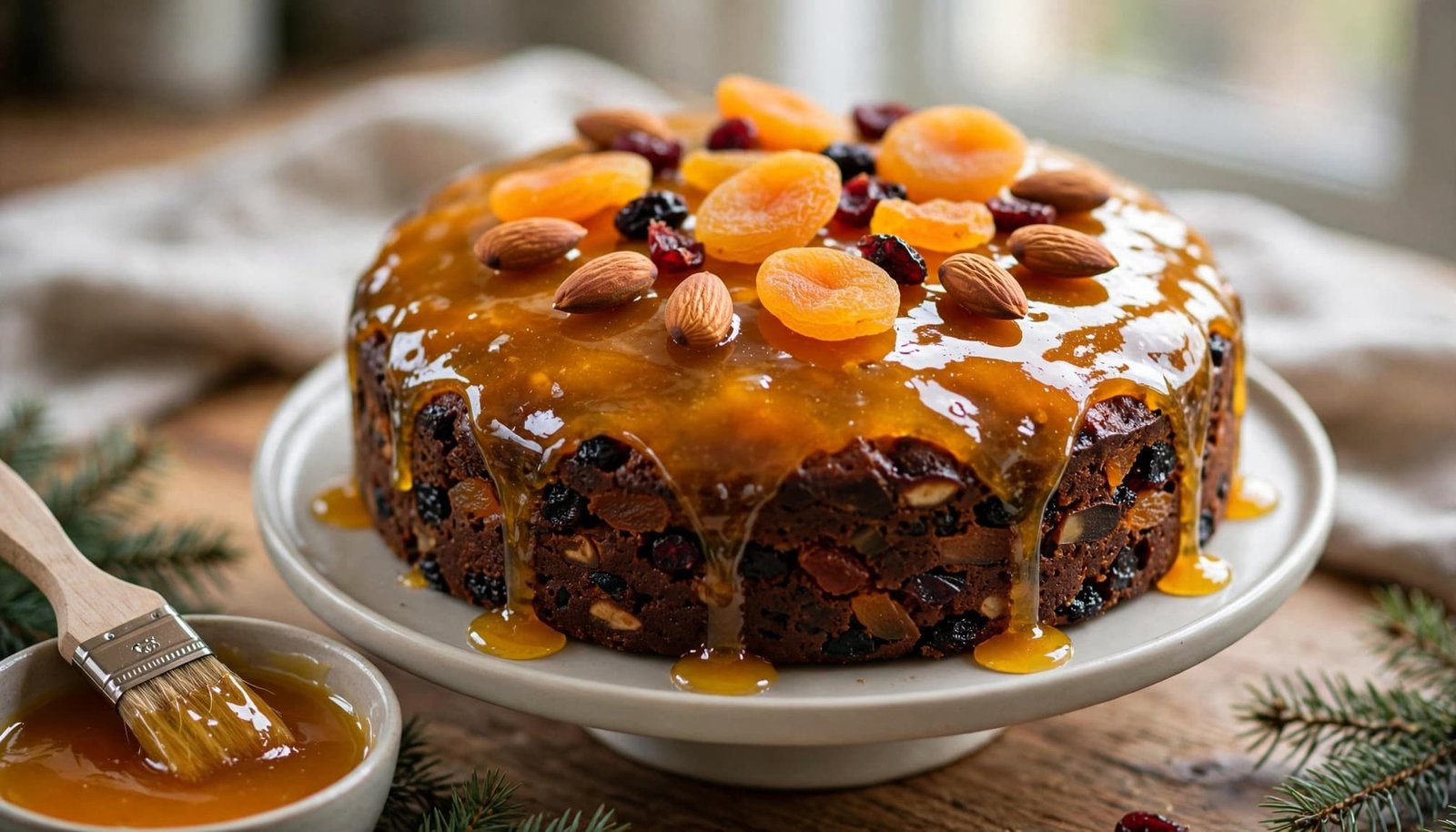
For decoration, the recipe can guide the finish as well as the timing. The classic fruitcake recipe includes marzipan and royal icing, while the gingerbread and cranberry-orange cakes above use simpler glazes. A glaze is often an easier finish than building an elaborate centerpiece, and it lets the cake’s flavor stay in focus. If you choose detailed decorations, such as meringue kisses or a chocolate log design, allow time for each component to set before serving.
Store Leftovers Based on the Cake and Its Toppings
Storage advice for plain fruitcake does not automatically apply to cakes with cream, custard, or other perishable fillings and frostings. The USDA’s mail-order food storage guidance lists fruit cake and plum pudding separately from frosted cakes and layered tortes. Its table gives fruit cake longer storage periods than frosted or layered cakes, but those figures are not a blanket guarantee for every homemade recipe or topping.
For a cake with perishable frosting or filling, follow the recipe’s refrigeration instructions and don’t leave it at room temperature for more than two hours. USDA food-safety guidance also advises keeping perishable foods out of the 40°F to 140°F danger zone. When freezing is supported by the recipe, wrap portions airtight to help protect quality, then thaw as directed.
Once you’ve cut a cake, cover it well and follow the storage directions for the complete dessert. If its topping changes the ingredients, use the more cautious storage guidance that applies to that topping rather than relying on fruitcake’s longer keeping time.
Conclusion
These Christmas cake recipes give you options for different holiday schedules and tastes, from classic make-ahead fruitcake to chocolate, gingerbread, and cranberry-orange cakes. Choose the recipe that fits your plans, then follow its own baking directions for the best result.
Whether you prepare a fruitcake well ahead or bake a quicker cake closer to Christmas, the best choice is one you’ll enjoy sharing around the holiday table.
Save the pin for later

- Christmas Cookie Ideas for Every Holiday Baker - November 9, 2026
- Christmas Cocktails: Party Drinks, Cozy Sips, and Mocktails - November 9, 2026
- 20 Christmas Appetizer Ideas for Every Holiday Spread - November 9, 2026