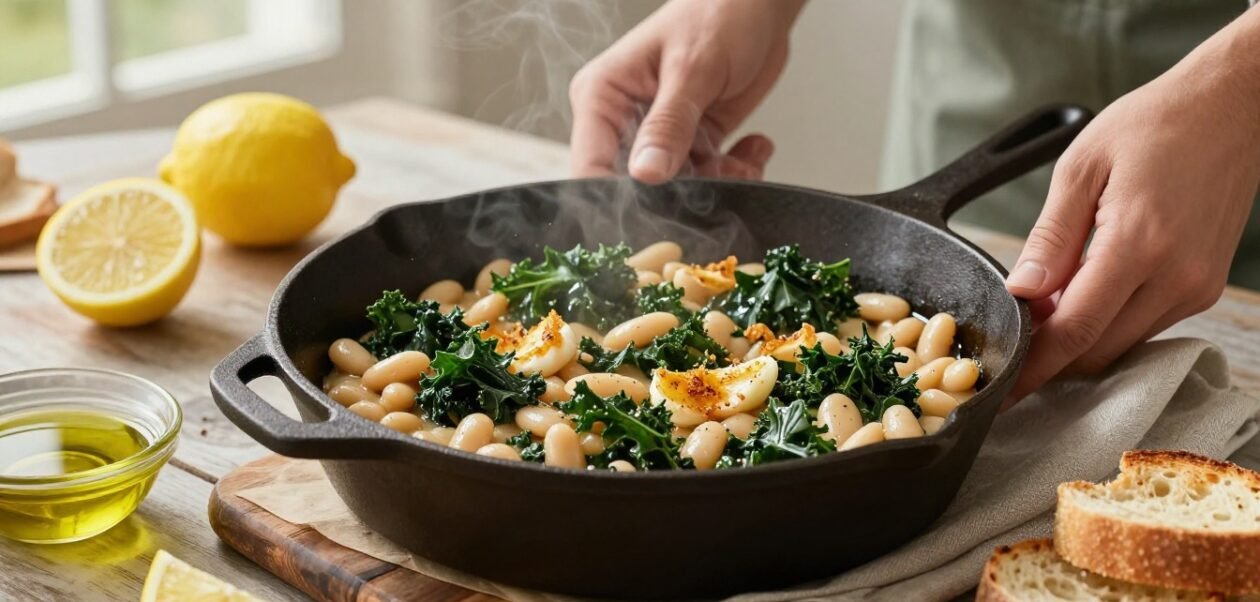
A warm meatless dinner can start with a few pantry staples and fresh kale. Creamy white beans, savory garlic, and a squeeze of bright lemon come together in about 15 minutes.
Serve this skillet on its own or with toast, rice, or quinoa for a heartier meal. Start by softening the kale, then warm the beans through and finish with lemon and seasoning to taste.
Garlic White Bean and Kale Skillet for Meatless Meals
This simple skillet pairs creamy white beans with tender kale, garlic, and lemon for a satisfying meatless dinner. It makes 2 generous servings or 3 smaller ones, with about 7 minutes of prep and 8 minutes of cooking.
Ingredients that make the skillet satisfying
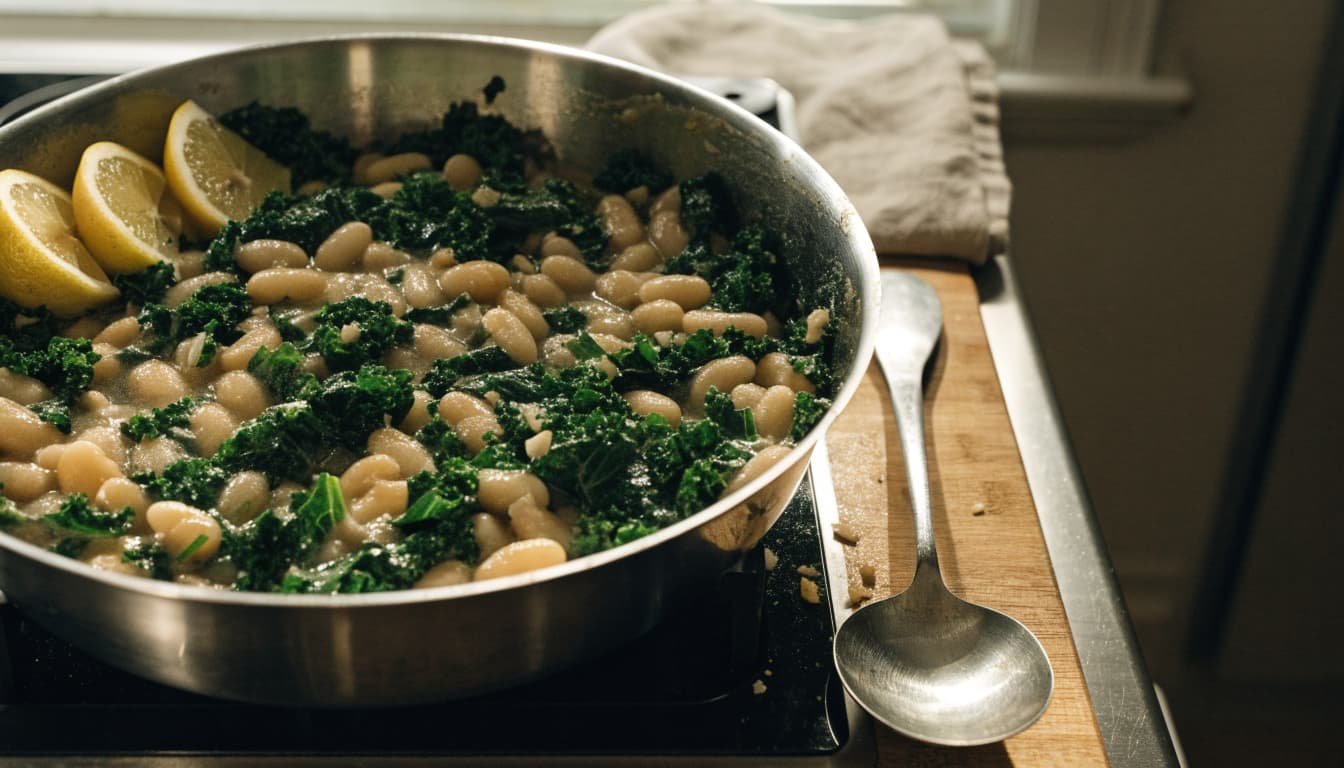
Each ingredient has a clear role. Olive oil coats the vegetables and carries the garlic flavor through the skillet. Garlic adds a savory base, while kale brings color and a hearty texture. Cannellini beans are mild and creamy; Great Northern beans work just as well.
Gather these ingredients before you start:
- 1 tablespoon olive oil
- 3 to 4 garlic cloves, minced
- 1 bunch kale, stems removed and leaves chopped
- 1 (15-ounce) can cannellini or Great Northern beans, drained and rinsed
- Salt and black pepper, to taste
- Lemon juice, to taste
- Red pepper flakes, optional
Drain and rinse the beans before adding them. This removes the packing liquid, and rinsing can lower sodium. America’s Test Kitchen explains how rinsing affects canned beans. Canned products vary in sodium, so taste the finished skillet before adding much salt.
Cook the garlic, kale, and beans in the right order
Warm the olive oil in a large skillet over medium heat. Add the garlic and cook for 30 to 60 seconds, stirring, just until fragrant. Keep it moving and watch its color; browned garlic can taste bitter.
Add the chopped kale and stir to coat the leaves in oil. Cook for 3 to 5 minutes, stirring now and then, until the kale wilts and turns bright green. If the pan feels crowded, add the kale in batches, letting each handful soften before adding more. Pour in a small splash of vegetable broth or water if the leaves need help wilting. Stop when the kale is tender to your liking. Curly kale may need another minute or two.
Stir in the drained beans and cook for 2 to 4 minutes, just until heated through. They’re already cooked, so stir gently to keep them whole. Season with black pepper, salt as needed, and red pepper flakes if you like a little heat. Finish with a squeeze of lemon, taste, and adjust the seasoning. The lemon brightens the savory garlic and greens without covering their flavor.
Choose the beans and kale for the texture you like
The beans and greens shape every bite of this skillet. Choose a combination that suits the texture you enjoy, and use what you have on hand.
Cannellini, Great Northern, navy, or butter beans
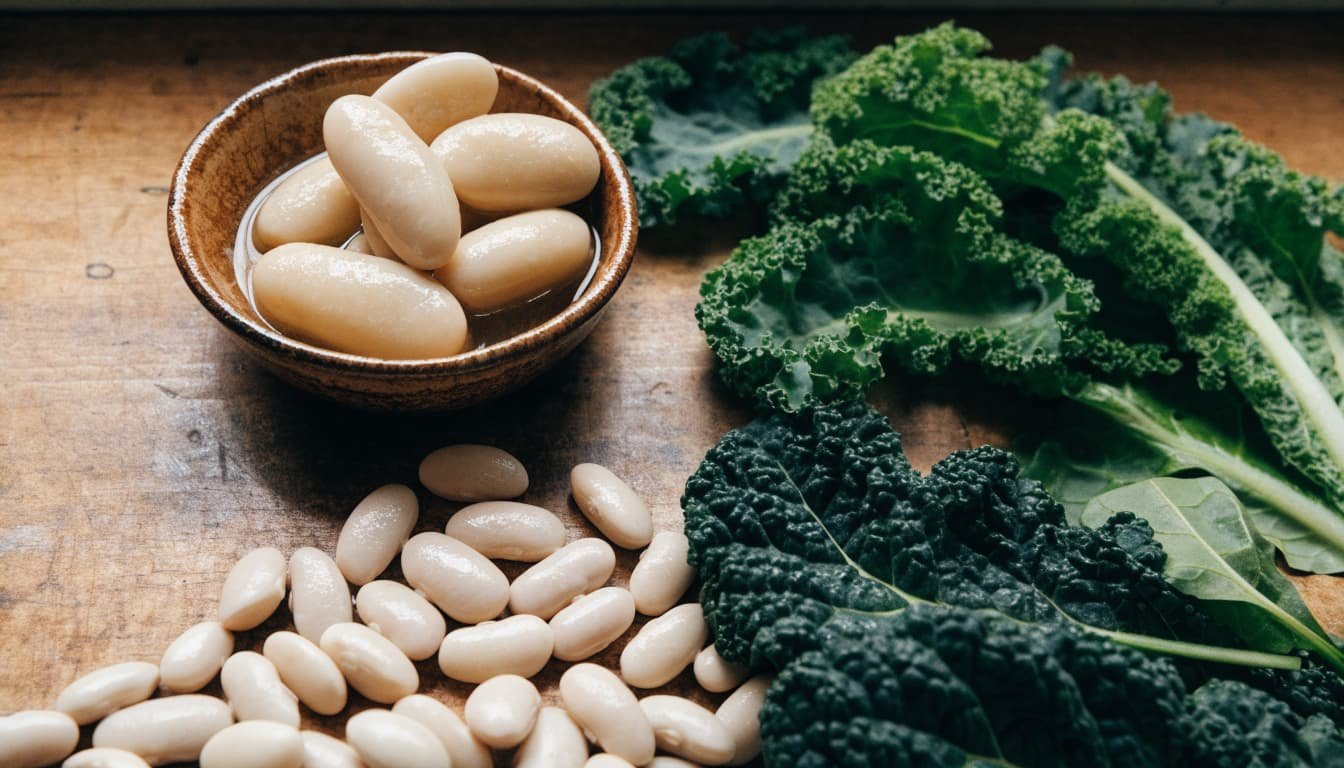
Cannellini beans are large and creamy, giving the skillet a soft, substantial bite. Great Northern beans are smaller and more delicate, with a mild flavor that pairs well with garlic and greens. Either works nicely in this quick meal.
Navy beans and butter beans are good alternatives if that is what you have. Navy beans are smaller and tend to feel soft and creamy, while butter beans bring a smooth, starchier texture. You can also combine different kinds, especially if you have part of a can left to use.
Drain and rinse canned beans before adding them. They’re already cooked, so they only need a few minutes in the pan. Fold them in gently to help keep them whole. If you’re comparing nutrition information on canned beans, USDA FoodData Central’s cannellini bean listings are a useful place to look.
Curly kale, lacinato kale, and tender greens
Curly kale has ruffled leaves and a sturdier bite. It may need an extra minute or two to soften, depending on how finely you chop it. Lacinato kale, also called dinosaur kale, has flatter leaves that tend to soften sooner while keeping a little chew. Check either kind as it cooks, then stop when the leaves reach the texture you like.
For a more tender result, remove the tough stems before chopping the leaves. If you want to use the stems, slice them thinly and cook them with onion until they begin to soften. Add the garlic after the onion, since garlic cooks quickly and can turn bitter if it browns.
Spinach is a quicker-cooking alternative. Add it near the end and stir just until the leaves wilt. It softens faster than kale, so adding it with the heartier greens can leave it limp before the kale is ready.
Easy ways to change the flavor without losing the simple feel
The garlic, white beans, and kale make a flexible base for small changes. These additions are optional, so you can keep the skillet simple or use what you have on hand.
Add onion, mushrooms, tomatoes, or broth
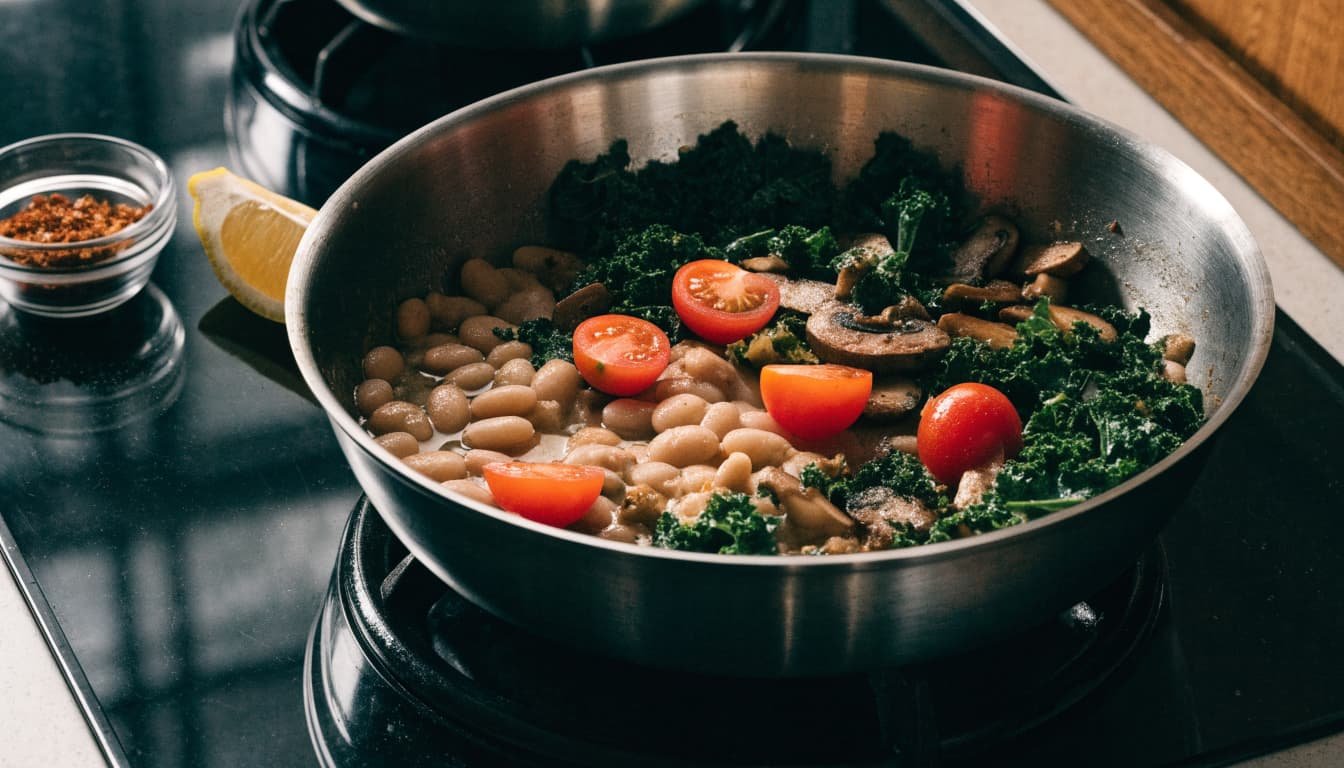
For a sweeter, more savory base, dice a little onion and soften it in the oil before adding the garlic. If you want to use thinly sliced kale stems, cook them with the onion until they begin to soften. Add the garlic afterward, since it cooks quickly and can turn bitter if it browns.
Mushrooms bring a deeper savory flavor. Slice them and cook them in the pan before adding the garlic. Give them a little room, and let their moisture cook off so the slices can brown. They take longer than the basic recipe, so wait until they’re tender before moving on.
For a softer, slightly sweet addition, stir in a handful of cherry tomatoes after the garlic. Cook until they soften and release some juice. A small splash of broth also helps the kale wilt and creates light pan juices. Tomatoes or extra broth make the skillet saucier, so add broth gradually and stop when the pan looks moist, not watery.
Make it creamy, spicy, or more substantial
For a thicker texture, press a few cooked beans against the side of the pan with a spoon, then stir them back in. They add body to the juices without another ingredient, while the whole beans keep their shape and texture.
A modest spoonful of cream or a dairy-free alternative makes the skillet creamier. Stir it in near the end, then taste before adding more. Red pepper flakes bring gentle heat; start with a pinch and let anyone who wants more spice add it at the table.
To make the meal more substantial, brown cubed firm tofu in a little oil in a separate pan. Set it aside while you cook the kale, then return it to the skillet with the beans so it warms through. Tofu is a flexible plant-based protein; WebMD’s overview of tofu covers its nutrition and common uses.
Cheese is optional. For a dairy-free finish, add lemon, chopped herbs, or toasted nuts instead. Choose one or two additions at a time, then taste the skillet so the beans, garlic, and greens still come through.
Serve this meatless skillet as a complete dinner
The white beans and kale make a satisfying base, and a simple side can adjust the meal to fit different appetites. Serve the skillet as it is for a lighter dinner, or add a grain or potato when you want a more substantial plate.
Pair it with toast, rice, quinoa, or potatoes
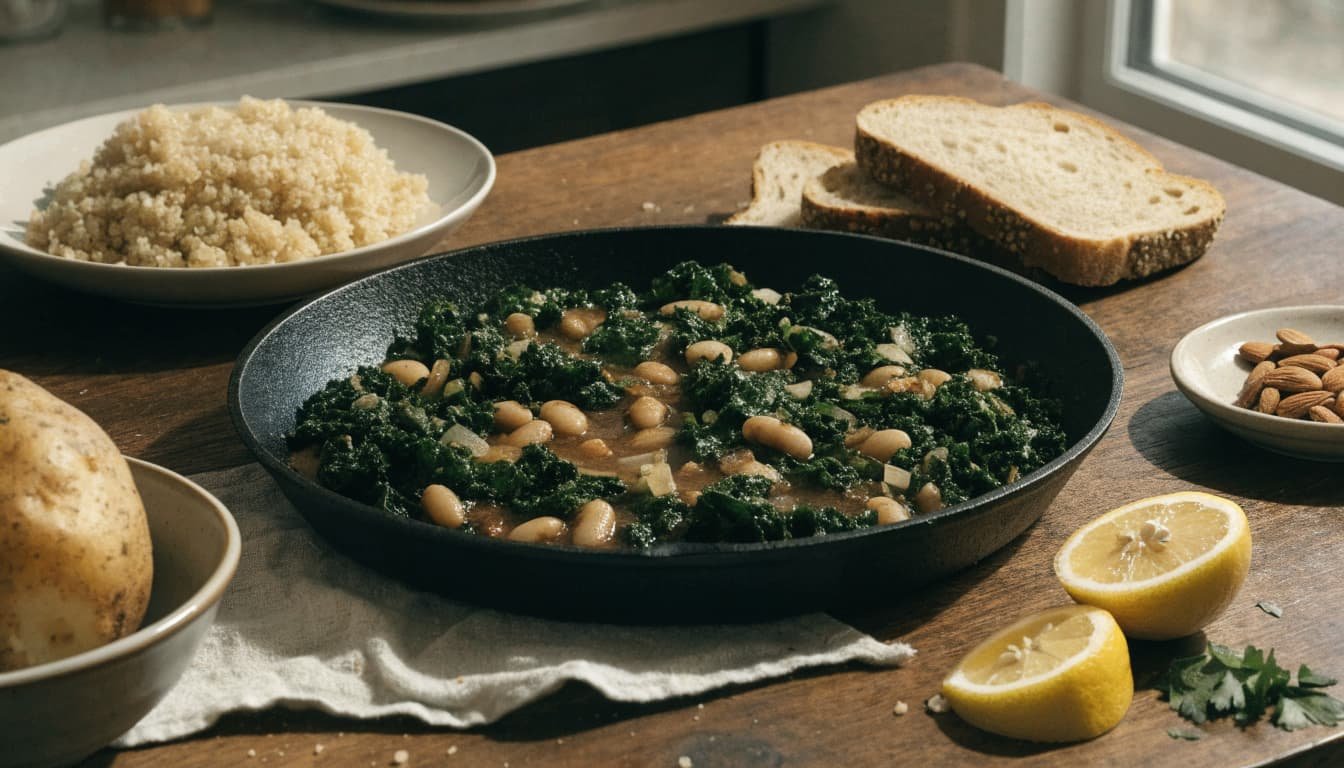
Spoon the skillet over warm brown rice, quinoa, or barley for a hearty bowl. These grains give the garlicky juices something to cling to, while the beans and kale stay at the center of the meal. Brown rice, quinoa, and barley are whole-grain choices; USDA MyPlate offers guidance on choosing whole grains.
Whole-grain toast or bread is an easy side for scooping up the beans and catching the lemony pan juices. A baked potato works well as a soft, filling base, too. Split it open and spoon the kale and beans on top, or serve the potato alongside the skillet.
For a low-effort dinner, use leftover cooked grains or a microwave grain pouch. Warm them while the skillet cooks, then serve each portion with as much or as little as needed. A smaller scoop keeps the meal light, while a generous grain or potato portion makes it more filling without changing the skillet recipe.
Set out toppings so everyone can customize a plate
A few toppings let everyone adjust their own serving while the main dish stays simple. Set out lemon wedges, chopped parsley or other herbs, chili flakes, toasted pine nuts, or another chopped nut. A little grated Parmesan or crumbled feta is an option for anyone who wants cheese.
Keep stronger flavors on the side. One person can add chili flakes for heat, while another keeps the skillet mild. Lemon, herbs, and cheese can stay optional, too, which makes it easier to serve people with different preferences or dietary needs.
Add crunchy toppings just before eating so they keep their texture. Toasted nuts lose some of their crispness if they sit in the warm skillet, so pass them at the table instead. A few small bowls are enough to make the meal feel flexible without adding much prep.
Store and reheat leftovers without drying them out
This garlic white bean and kale skillet keeps well for a quick lunch or another easy dinner. Store it promptly, then warm only the portion you plan to eat.
Cool and refrigerate leftovers promptly
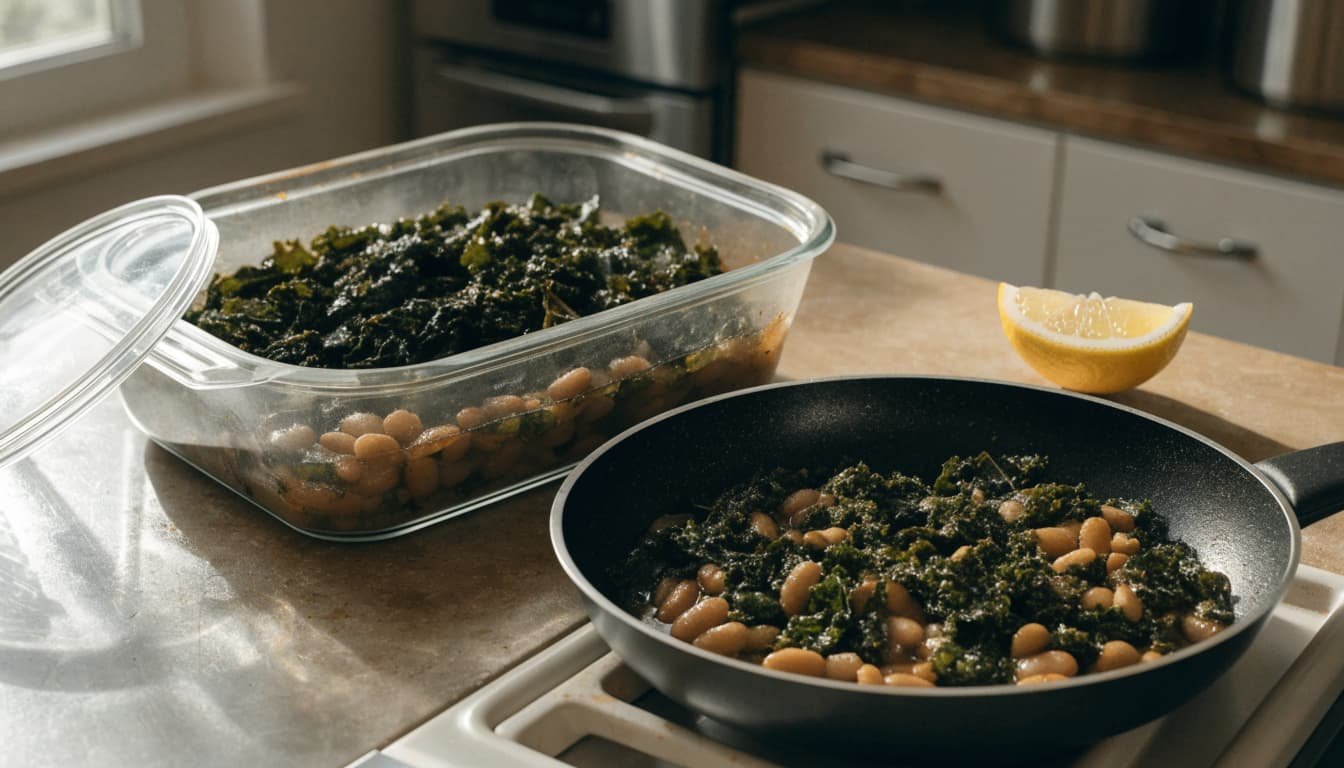
Transfer leftovers to a covered container and refrigerate them within 2 hours of cooking or serving. If the temperature is above 90°F, put them away within 1 hour. Divide a larger amount among shallow containers so it cools faster. You can refrigerate the food while it is still warm, rather than leaving it on the counter to cool completely.
Keep your refrigerator at 40°F or below, and use the skillet within 3 to 4 days. A date on the container can help you keep track. Follow the USDA’s leftover food safety guidance for these storage limits.
Reheat gently and refresh the flavor
Reheat only the amount you plan to eat. For the stovetop, place a serving in a skillet over low to medium-low heat and add a small splash of water or broth. Stir now and then, adding a little more liquid if the beans look dry. Use just enough to loosen the skillet without making it watery.
For the microwave, place a serving in a covered, microwave-safe dish. Stir partway through so it heats more evenly. Either way, heat leftovers to 165°F, checking the center with a food thermometer.
Kale softens further as it sits, so the reheated skillet will be more tender than it was fresh. Add a squeeze of lemon or a sprinkle of fresh herbs after warming to brighten the flavors. Keep toasted nuts and other crisp toppings separate until serving.
Conclusion
This garlic white bean and kale skillet makes a practical meatless dinner with familiar ingredients and about 15 minutes of cooking. Start with creamy beans, tender kale, garlic, and lemon, then choose a side that fits your table.
Serve it on its own or with toast, rice, quinoa, or potatoes. A few simple swaps or optional toppings let everyone enjoy the meal their way.

- Christmas Cookie Ideas for Every Holiday Baker - November 9, 2026
- Christmas Cocktails: Party Drinks, Cozy Sips, and Mocktails - November 9, 2026
- 20 Christmas Appetizer Ideas for Every Holiday Spread - November 9, 2026